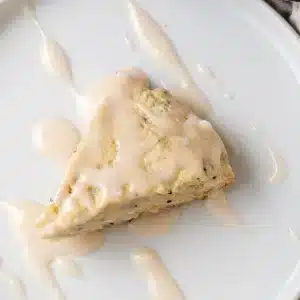
Lemon Poppy Seed Scones
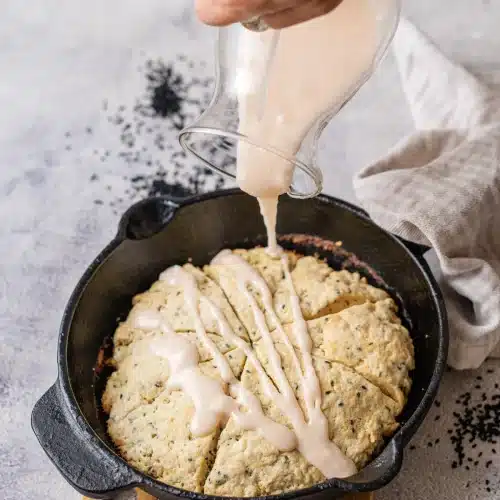
Tender, buttery lemon poppy seed scones with crisp edges, a crunch of poppy seeds and a sharp lemon glaze. Fifteen minutes of hands-on work and no mixer. The photos show the same dough baked as one scored round in a cast-iron skillet; that method is in the notes.
Ingredients
Scone Dough
- 2 cups all-purpose flour spooned and leveled
- 1/2 cup granulated sugar
- 1 1/2 tbsp poppy seeds
- 1 tbsp baking powder
- 1/2 tsp salt
- 2 tbsp lemon zest finely grated, from about 2 lemons
- 1/2 cup cold unsalted butter cut into small cubes
- 1 large egg
- 1 large egg yolk
- 1/2 cup whole milk or buttermilk
To Finish
- 2 tbsp heavy cream for brushing the tops
Lemon Glaze
- 1 cup powdered sugar sifted
- 2 to 3 tbsp fresh lemon juice plus more to adjust
- 1/2 tsp vanilla extract
- 1 drop red food coloring optional, for the pale pink glaze pictured
Equipment
- Baking sheet
- Parchment paper
- Mixing bowls
- Whisk
- Pastry Cutter or Fork
Instructions
Make the Dough
- Get ready. Line a baking sheet with parchment and set an oven rack in the upper third of the oven.
- Whisk the dry ingredients. In a large bowl, whisk together the flour, sugar, poppy seeds, baking powder, salt and lemon zest until evenly combined and fragrant.
- Cut in the butter. Add the cold cubed butter and work it into the flour with your fingertips or a pastry cutter until it looks like coarse crumbs with some pea-sized pieces.
- Add the wet ingredients. Whisk the egg, egg yolk and milk together in a small bowl. Pour over the dry mixture and stir with a fork just until the dough comes together in shaggy clumps.
Shape and Bake
- Shape the round. Turn the dough out onto a lightly floured surface and press and fold it over itself a few times until it holds together. Pat it into a round about 8 inches wide and an inch thick. (For the pictured skillet version, press the round into a buttered 8-inch cast-iron skillet instead; see the notes.)
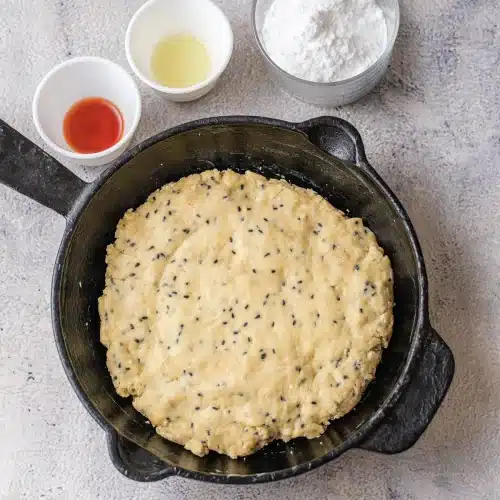
- Cut the wedges. Cut the round into 8 wedges and space them on the prepared sheet. In the skillet, score the top into 8 wedges about halfway down and leave the round whole. Brush the tops with heavy cream.
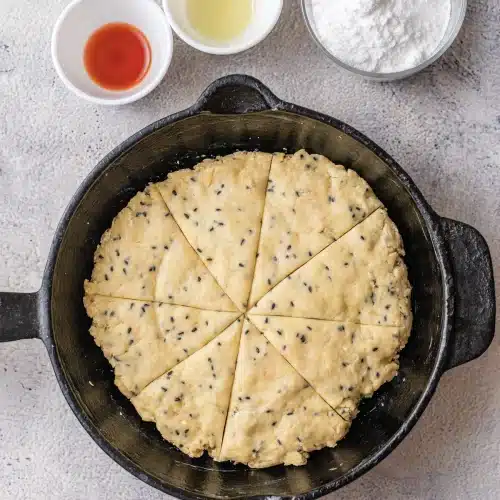
- Freeze briefly. Put the tray (or skillet) in the freezer for 15 minutes while you heat the oven to 425°F (220°C), or 400°F (200°C) for the skillet round.
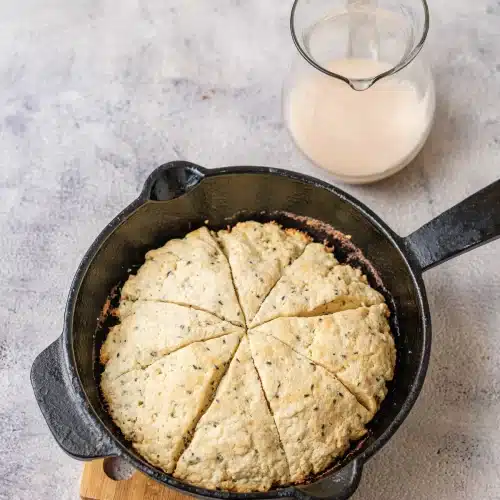
- Bake. Bake the wedges for 15 to 18 minutes, until golden on top and around the edges. A skillet round takes 22 to 26 minutes, until a skewer in the center comes out clean. Cool on the pan for 5 minutes, then move the wedges to a wire rack.
Glaze
- Mix the glaze. Whisk the sifted powdered sugar with 2 tablespoons of lemon juice and the vanilla until smooth, adding more juice a teaspoon at a time until it drizzles from the whisk. Add the drop of red food coloring for a pale pink glaze, if using.
- Glaze and serve. Pour the glaze over the cooled scones, or over the skillet round so it runs into the score lines, and let it set for a few minutes before serving.
Notes
Pictured version, baked as one round: butter an 8-inch cast-iron skillet, press the dough into it in an even round about an inch thick, score the top into 8 wedges about halfway down, brush with cream and freeze for 15 minutes while the oven heats to 400°F. Bake 22 to 26 minutes, until golden and a skewer in the center comes out clean. Cool 10 minutes, pour the glaze over, and cut through the score lines to serve. The pale pink glaze in the photos has a single drop of red food coloring in it; leave it out for a white glaze.
Doneness: deep golden tops and edges, and a top that springs back when pressed.
Make ahead: freeze the unbaked wedges on the tray, then bag them for up to 2 months and bake from frozen with 2 to 3 extra minutes. The glaze keeps in the fridge for a week.
Storage: airtight at room temperature for 2 days; reheat in a 300°F oven for a few minutes. Freeze baked scones, unglazed, for up to 2 months.
Substitutions: orange or grapefruit for the lemon; buttermilk or a plant milk for the whole milk; a cold block-style plant butter for the dairy butter.
Nutrition values are an estimate.
Nutrition
Calories: 320kcal | Carbohydrates: 46g | Protein: 5g | Fat: 13g | Saturated Fat: 8g | Cholesterol: 62mg | Sodium: 230mg | Potassium: 100mg | Fiber: 1g | Sugar: 19g | Vitamin A: 430IU | Vitamin C: 3mg | Calcium: 84mg | Iron: 1.8mg