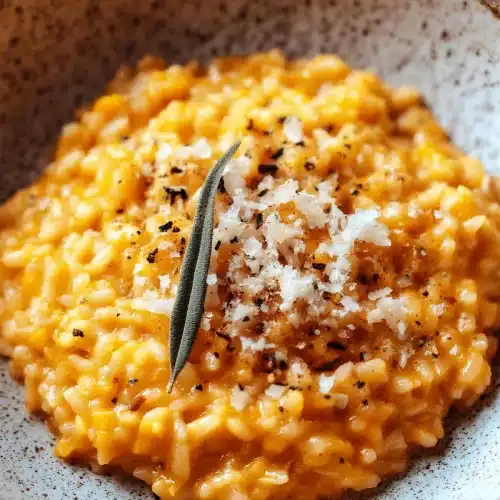
Pumpkin Risotto
Roasted squash, not boiled, is what separates a deep, autumnal pumpkin risotto from a bowl of sweet orange porridge. Two thirds is blended into the hot stock so the color runs through every grain, and the last third goes back in as cubes.
Ingredients
For the Roasted Squash
- 2 pounds pumpkin or butternut squash about 900 g peeled and seeded, cut into 3/4-inch cubes
- 2 tablespoons olive oil
- 1/2 teaspoon kosher salt
For the Risotto
- 5 tablespoons unsalted butter 3 for the base, 2 kept cold for the finish
- 2 large shallots finely chopped, or 1 medium onion
- 2 cloves garlic minced
- 2 1/2 cups arborio rice 500 g, or carnaroli, never rinsed
- 1/2 cup dry white wine optional but recommended
- 7 cups vegetable stock kept at a bare simmer, plus more if needed
- 1 cup finely grated parmesan cheese 80 g, or pecorino
- 1/4 teaspoon grated nutmeg freshly grated if possible
- 1 1/2 teaspoons kosher salt plus more to taste
- 1/2 teaspoon black pepper coarsely ground
- 8 leaves fresh sage to serve, fried in butter if you like
Equipment
- Oven
- Baking tray
- Knife
- Cutting board
- Blender or Food Processor
- Large saucepan
- Large Skillet or Sauté Pan
- wooden spoon
Instructions
Roast the Squash
- First, heat the oven to 400F. Toss the cubed squash with the olive oil and 1/2 teaspoon salt, spread it on a sheet pan in one layer, and roast for about 25 minutes, until the edges have browned and a fork meets no resistance.
- Set aside a third of the cubes. Blend the remaining two thirds until completely smooth, adding a ladle of stock if the blender needs help.
- Whisk that puree into the stock in a saucepan and hold it at a bare simmer beside the risotto pan. Cold stock stalls the rice, which is the usual reason risotto takes twice as long as it should.
Build the Base
- Next, melt 3 tablespoons of the butter in a wide, heavy pan over medium heat. Cook the shallots gently for 5 minutes until soft and translucent, then add the garlic and cook for 1 minute more.
- Then add the rice and toast it for 2 minutes, stirring, until the grains look glassy at the edges with a white dot at the center. Do not rinse the rice at any point, because that surface starch is the only thing that will make the dish creamy.
Add the Stock
- After that, pour in the wine and stir until it has almost disappeared. Add the hot pumpkin stock one ladle at a time, stirring every twenty to thirty seconds and waiting for each addition to be absorbed before the next goes in.
- Keep going for 18 to 22 minutes. The rice is ready when a grain is tender through with only the faintest firmness at the center and no chalky white core.
Finish and Serve
- Finally, stir the reserved roasted cubes back in, then pull the pan off the heat. Beat in the cold butter, the parmesan, the nutmeg, 1 1/2 teaspoons salt and the pepper for a full minute, which is the step that emulsifies the fat into the starch.
- Shake the pan. The surface should ripple like slow lava and settle flat, and if it moves as one mass, loosen it with a little more hot stock. Serve at once, with sage leaves and more parmesan.
Notes
Squash: kabocha, red kuri or a sugar pie pumpkin are best. Butternut is available all year and is never fibrous. Skip carving pumpkins, which are watery and bland.
Canned puree: whisk 1 1/2 cups of pure pumpkin puree, never pie filling, into the hot stock and skip the oven entirely.
Make-ahead: cook the rice through about three quarters of the stock, spread it thin on a sheet pan and chill it uncovered, then finish with the remaining hot stock in 6 to 8 minutes.
Doneness: shake the pan. The surface should move like slow lava and settle flat within a second or two. It stiffens off the heat, so finish it looser than you want to eat it.
Storage: 3 days refrigerated or 2 months frozen. Reheat in a pan with a splash of stock. Do not hold cooked rice warm for hours.
Nutrition values are an estimate.
Nutrition
Serving: 1bowl | Calories: 535kcal | Carbohydrates: 74g | Protein: 14g | Fat: 18g | Saturated Fat: 10g | Polyunsaturated Fat: 0.4g | Monounsaturated Fat: 3g | Trans Fat: 0.3g | Cholesterol: 42mg | Sodium: 940mg | Potassium: 610mg | Fiber: 4g | Sugar: 8g | Vitamin A: 11401IU | Vitamin C: 14mg | Calcium: 172mg | Iron: 2mg