
A pan of homemade popcorn costs about thirty cents, takes four minutes and is better than anything that comes out of a bag, and the only reason more people do not make it is that the first attempt usually burns. The fix is not a special pot. It is two test kernels and a lid left slightly open.
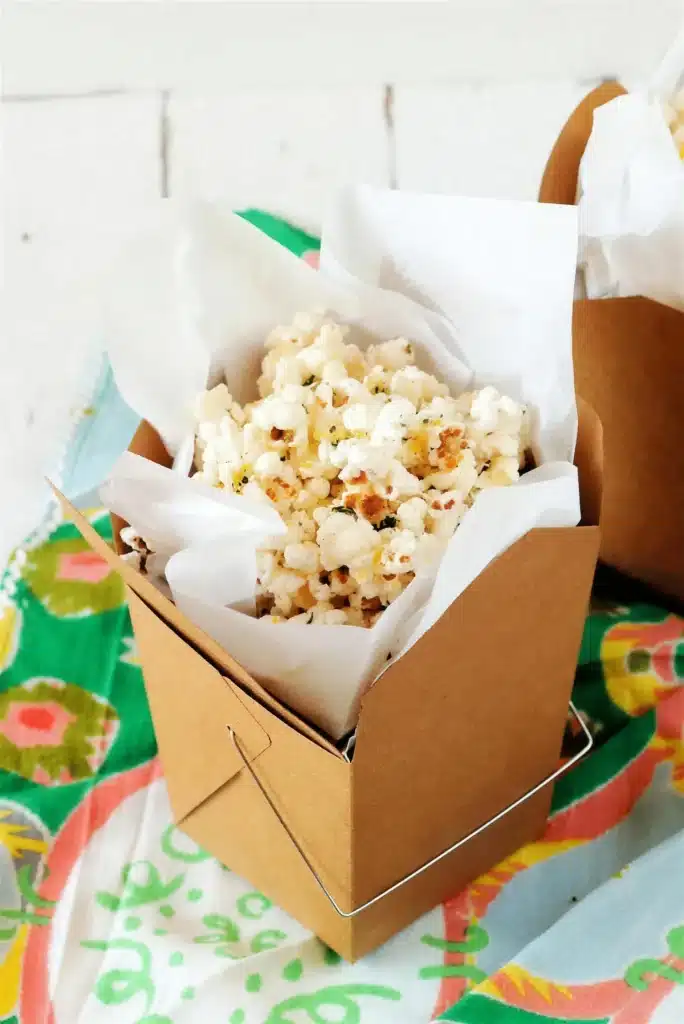
- Ten cups from a third of a cup of kernels, which is about thirty cents of snack
- Four minutes of popping and nothing to preheat
- The two test kernels method takes the guesswork out of when the oil is ready
- Thyme goes into the warm butter rather than onto the corn, so it softens and sticks
- No microwave bag, no diacetyl, no palm oil and no fee for the flavor
- The seasoning mix works on anything else you feel like popping
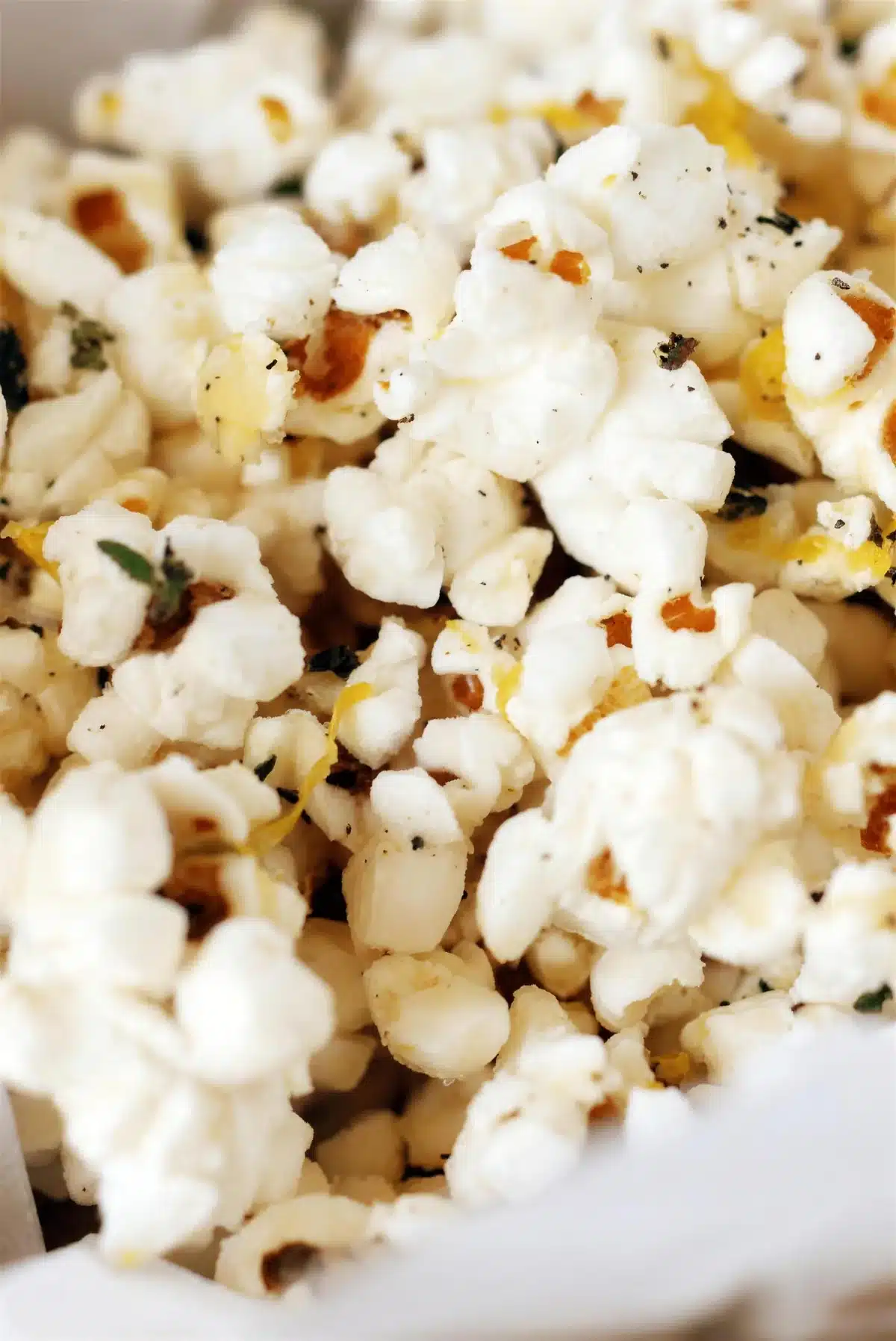
What goes on it here is parmesan grated to dust, thyme warmed in the butter and the zest of half a lemon. Cheese on popcorn is its own small problem, because coarsely grated parmesan slides straight off buttered corn and collects at the bottom of the bowl. Grated on a microplane it behaves like a powder and sticks to everything.

The method below is the part worth learning. The cheese is what you do with it afterward.
- Why Homemade Popcorn Beats the Bag
- Ingredient Notes
- Choosing the Oil and the Pan
- How To Make Homemade Popcorn
- Getting the Cheese to Stick
- How To Tell When the Popping Is Done
- Kernels, and Why Some Never Pop
- Seasoning Homemade Popcorn Beyond Cheese
- Make It Ahead
- Storing Homemade Popcorn
- What to Serve with Homemade Popcorn
- Homemade Popcorn FAQ
Why Homemade Popcorn Beats the Bag
The case is mostly economic and partly about what is actually in the bag.
Cost. A pound of kernels makes about fifty cups of homemade popcorn for the price of two or three bags of the microwave kind.
Fat, and which fat. You choose the oil and how much butter, rather than accepting whatever fat survives shipping and a year on a shelf.
Salt you can dial. Bagged popcorn is salted for the average palate at the factory and there is no undoing it.
It is fresher. Popcorn goes stale by taking up moisture from the air, so a bowl popped four minutes ago is crisper than anything sealed in February.
The seasoning is the point. Once you are popping your own you can put lemon and thyme on it, or lime and chili, or nothing but salt.
Save this recipe
Enter your email and I’ll send this recipe straight to your inbox.
Ingredient Notes
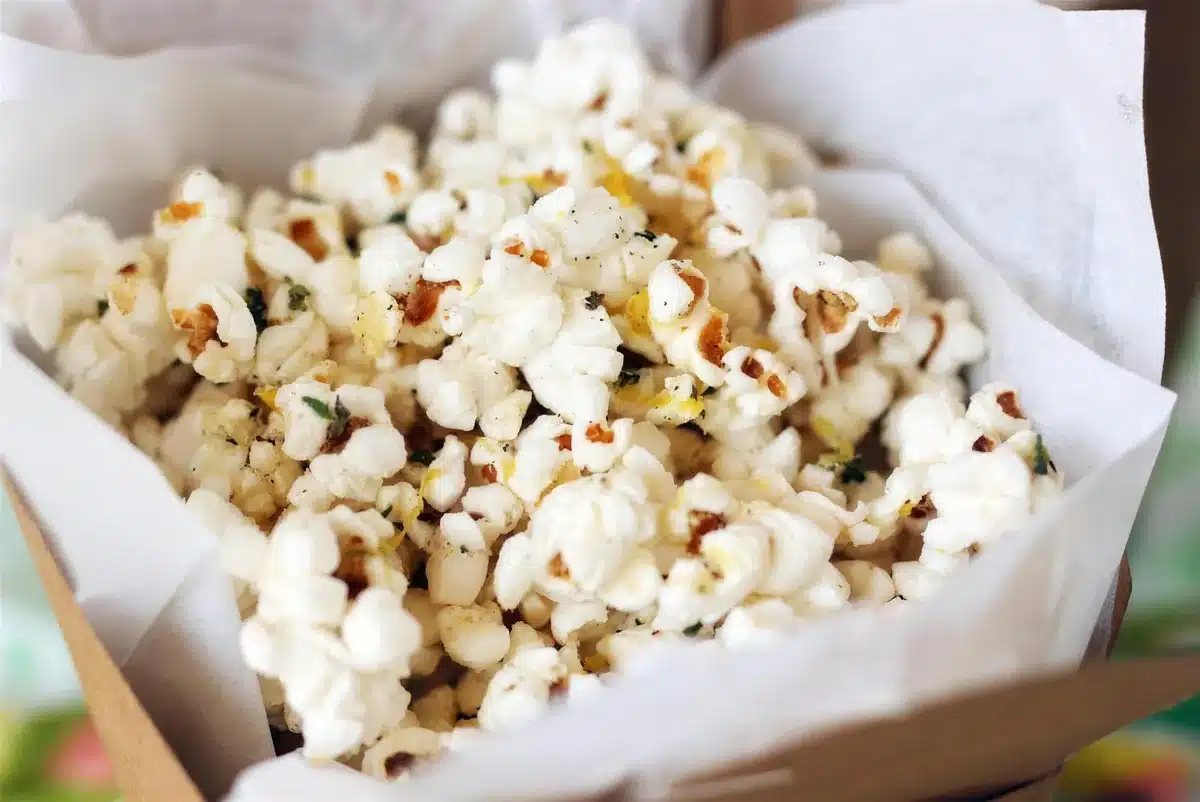
Homemade popcorn with cheese on it runs to seven items and none of them unusual. Exact amounts are in the recipe card below.
- Popcorn kernels: a third of a cup, which expands to roughly ten cups. The Popcorn Board explains what makes popcorn pop: the kernel needs 13.5 to 14 percent moisture, and the steam inside reaches about 135 pounds per square inch before the hull gives way.
- Neutral oil: two tablespoons of something with a high smoke point. Refined coconut, grapeseed, avocado or plain vegetable oil. Not olive oil and not butter, both of which burn well below popping temperature.
- Unsalted butter: three tablespoons, melted and left to settle. Two is not enough for ten cups and five makes it soggy.
- Parmesan: three quarters of a cup finely grated, which is about two ounces. Grate it yourself on a microplane. Pre-grated cheese is coated in cellulose to stop it caking, and that coating is exactly what stops it sticking to the corn.
- Fresh thyme: a teaspoon of leaves, stripped from the stems and warmed in the butter. Dried thyme works at half the quantity and tastes dustier.
- Lemon zest: a teaspoon, from about half a lemon, grated straight over the bowl so the oils land on the corn.
- Salt and pepper: half a teaspoon of fine sea salt and half a teaspoon of black pepper, plus more salt to taste once the cheese is on. Fine salt matters; coarse crystals bounce off and sit in the bottom of the bowl.
Choosing the Oil and the Pan
Two decisions about homemade popcorn, made once, and then you never think about them again.
Use a wide heavy pan with a lid, four quarts or more. Kernels expand to forty or fifty times their size, so a small pan forces the popped corn to sit on the hot base and scorch.
Refined coconut oil is the movie theater answer. It has a high smoke point, it is solid at room temperature so it clings, and it carries the flavor people associate with a cinema.
Never olive oil or butter for the popping. Both smoke somewhere around 350F and popcorn pops at nearer 347F inside the kernel, so the pan is well past that. Butter goes on afterward.
Two tablespoons for a third of a cup of kernels. The kernels should sit in a single layer with the oil just coating them, not swimming.
A stainless or enameled pan beats nonstick here, only because a scratched nonstick surface does not enjoy being shaken across a burner.
How To Make Homemade Popcorn
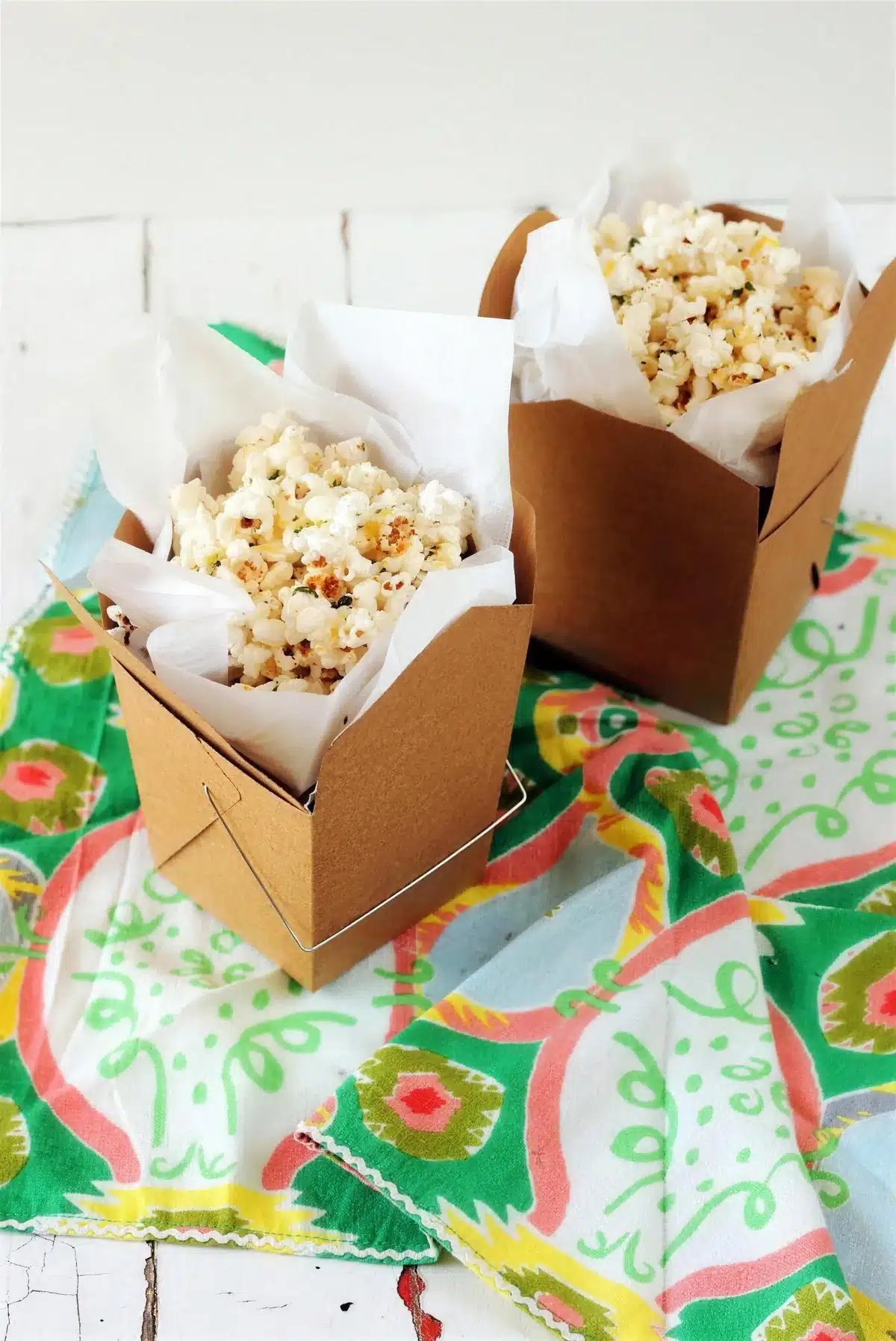
Have the seasoning mixed and the bowl ready before you start. Homemade popcorn goes from perfect to burnt in about fifteen seconds.
- First, stir the 3/4 cup of finely grated parmesan with the lemon zest in a small bowl, and melt the 3 tablespoons of butter with the thyme leaves in it so the herb softens and gives up its oil.
- Next, put the 2 tablespoons of oil in a wide heavy pan over medium heat with 2 test kernels and the lid on.
- Then, when both of those pop, the oil is at temperature. Add the rest of the 1/3 cup of kernels, shake the pan flat once so they lie in a single layer, and set the lid slightly ajar.
- After that, shake the pan back and forth across the burner every few seconds. The popping builds, peaks and then thins out, which takes about 3 minutes in total.
- Finally, pull the pan off the heat when the gap between pops reaches 2 to 3 seconds, tip everything into a large bowl, drizzle over the thyme butter, toss, then add the cheese in three goes with the salt and pepper, tossing between each one.
Getting the Cheese to Stick
This is where most savory homemade popcorn recipes quietly fail.
Grate the parmesan on a microplane until it is a fluffy powder rather than shreds. Powder has enough surface area to grip a film of butter; a shred is heavy enough to fall off.
Skip pre-grated cheese entirely. The anti-caking coating on it does the opposite of what you want here.
Add the cheese in three batches, tossing between each, rather than dumping it all on top. The first batch takes up the free butter and the rest sticks to that.
Toss with your hands or two big spoons from the bottom of the bowl upward, not with a stirring motion, which just breaks the corn.
Do it while the corn is hot. Warm butter is thin and spreads; cooled butter is a set film and the cheese slides straight over it.
How To Tell When the Popping Is Done
The clock is useless for homemade popcorn and your ears are not.
Listen for the gap. When two to three seconds pass between pops, the pan is finished. Waiting for silence guarantees a scorched layer on the base.
Expect about three minutes from the moment the main batch goes in, but altitude, pan weight and burner all move that.
Keep shaking to the end. Popped corn sitting still on a hot pan base is what makes a whole batch taste burnt, even when only ten pieces actually are.
Tip it out immediately. The pan holds enough heat to keep cooking for another minute after the burner is off.
Leave the last few kernels behind. Trading fifteen unpopped kernels for a bowl that does not taste of smoke is a good deal every time.
Kernels, and Why Some Never Pop
The unpopped ones at the bottom of a pan of homemade popcorn have a name, and it is a moisture problem.
A kernel needs about 13.5 percent moisture. Below that, the steam pressure never gets high enough to burst the hull, and the kernel just toasts.
Old kernels dry out. A jar open in a dry kitchen for a year will leave you a lot of duds.
Store them in an airtight jar at room temperature, not in the refrigerator, where the cold dry air pulls moisture out faster than the counter does.
Rescue a dry jar by adding a teaspoon of water per cup of kernels, shaking, and leaving it sealed for three days.
Expect a few regardless. Two percent is normal even with fresh kernels, and any batch that leaves none behind has probably been cooked too long.
Seasoning Homemade Popcorn Beyond Cheese
The parmesan version is one of about six that come out of the same pan.
- Lime and chili: zest of a lime, half a teaspoon of chili powder, a pinch of sugar.
- Nutritional yeast, three tablespoons, for a dairy-free version that tastes surprisingly close to cheese.
- Smoked paprika and garlic powder, a teaspoon of the first and half of the second.
- Rosemary and black pepper, with the rosemary fried in the butter for thirty seconds first.
- Furikake, two tablespoons, which brings its own salt so cut the sea salt in half.
- Brown butter alone, which is worth doing once to see how much of the flavor was the butter.
Make It Ahead
Homemade popcorn is a bad make-ahead dish and a very good make-ahead project.
The corn itself does not wait. An hour in, it has taken up enough moisture from the air to go leathery.
The seasoning does. Mix the parmesan, zest and pepper up to a day ahead and keep it covered in the refrigerator.
Strip the thyme in advance and keep the leaves in a small covered dish.
Pop plain, season later. If you must get ahead, plain popped corn holds up better than seasoned, and you can butter and dress it at the last minute.
For a party, do two batches back to back rather than one enormous one. A crowded pan steams instead of popping.
Storing Homemade Popcorn
- At its best: within 30 minutes of coming out of the pan, which is the honest answer.
- Airtight at room temperature: plain homemade popcorn keeps 2 days before it goes soft. Buttered and cheesed, one day.
- Never the refrigerator. Cold damp air is exactly what makes it chewy.
- Crisp it back up on a sheet pan at 250F for five minutes, which works once and not twice.
- Unpopped kernels keep 2 years in a sealed jar in a cupboard, and lose popping power slowly after that.
What to Serve with Homemade Popcorn
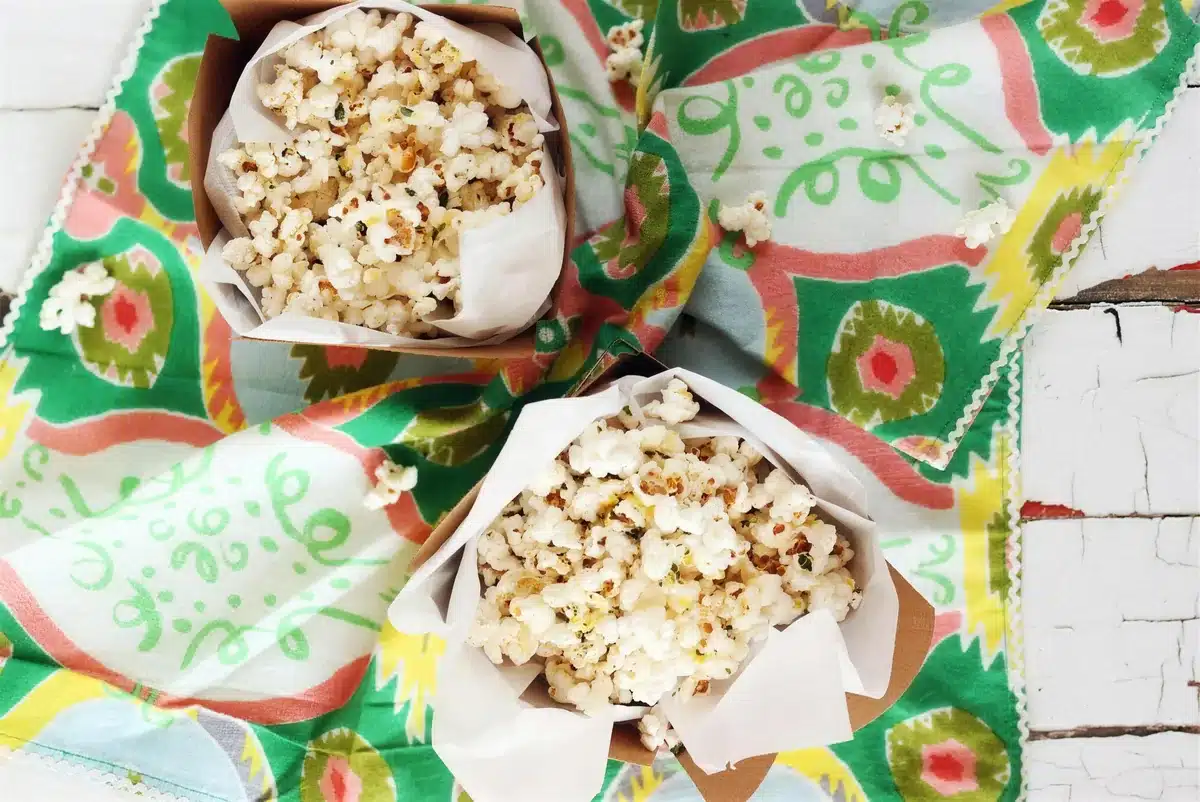
A bowl of homemade popcorn is a first course for people standing up.
- A bowl of spiced mixed nuts beside it, which covers salty and sweet at once.
- Black bean hummus and something to dip in it, for anyone who wants a spoon.
- Spicy guacamole, if the lime and chili version is the one you made.
- Cold beer or a dry sparkling wine, both of which like the salt and the parmesan.
- A summer plate of charred corn salad, so the same grain shows up twice in one evening.
Here is what readers ask most often.
Homemade Popcorn FAQ
Frequently Asked Questions
Can I use an air popper?
Yes, and it changes one thing. Air-popped corn has no oil on it, so the butter has to do all the work of holding the cheese, and you will want the full three tablespoons rather than less. Air popping is drier and lighter and slightly less flavorful, and it is the better route if you are watching the fat.
Why is my homemade popcorn chewy?
Steam. Either the lid was fully closed while it popped, or the corn sat in a covered bowl afterward. Both trap water that condenses back into the corn. Leave the lid a finger’s width open in the pan and never cover the finished bowl.
How much does a third of a cup of kernels make?
About ten cups popped, which serves four people generously as a snack. A single kernel expands to forty or fifty times its size, so a small measure goes a long way and a full cup of kernels will overflow most pans.
More Questions About Oil and Kernels
Good to Know
Can I pop it in butter?
Not for the popping itself. Butter is about eighty percent fat and the rest is water and milk solids, and those solids burn at around 300F, well under the temperature the pan reaches. Pop in a neutral oil and add melted butter afterward, which is also when it actually tastes of butter.
Is there a difference between yellow and white kernels?
Yellow pops larger with a firmer hull and is what most cinemas use. White pops smaller and more tender and is a little sweeter. Mushroom kernels pop into round balls that hold up to heavy coatings, which makes them the right choice for caramel corn rather than for this.
More Questions About Cheese and Salt
Good to Know
My cheese all fell to the bottom. What happened?
It was grated too coarsely, or it went on all at once, or the corn had cooled. Microplane the parmesan to a powder, add it in three goes with tossing between, and do it while the butter is still warm and thin. Those three things solve it completely.
What salt should I use?
Fine sea salt or popcorn salt, which is ground extra fine for exactly this reason. Kosher and flaky salts have crystals too heavy to cling to a dry surface, so they end up in a salty pile at the bottom of the bowl while the corn tastes of nothing.
Can I make it dairy-free?
Yes. Pop in refined coconut oil, dress with two tablespoons of melted vegan butter or more of the same oil, and use three tablespoons of nutritional yeast in place of the parmesan. Keep the lemon zest and the thyme, which are doing more of the work here than people expect.
Once you have made homemade popcorn twice you will stop buying the bags, and the two test kernels are the only part you have to remember.
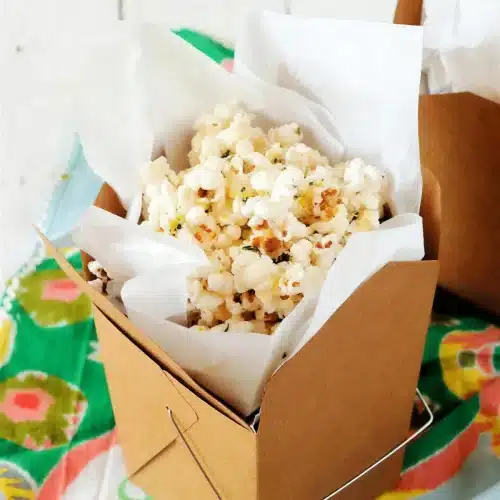
Homemade Popcorn with Parmesan, Lemon and Thyme
Save this recipe
Enter your email and I’ll send this recipe straight to your inbox.
Ingredients
For Popping
- 2 tablespoons refined coconut oil or grapeseed, avocado or vegetable oil
- 1/3 cup popcorn kernels 2 of them held back as test kernels
For the Butter and Cheese
- 3 tablespoons unsalted butter melted with the thyme in it
- 1 teaspoon fresh thyme leaves stripped from the stems, or 1/2 teaspoon dried
- 3/4 cup finely grated Parmesan about 2 ounces, microplaned to a powder
- 1 lemon zest only, about 1 teaspoon, grated fine
- 1/2 teaspoon fine sea salt plus more to taste
- 1/2 teaspoon freshly ground black pepper
Equipment
- Medium saucepan with lid
- Microwave-safe dish
- Zester or microplane
- Large mixing bowl
- Measuring spoons
- Measuring cup
Instructions
Mix the Seasoning
- Stir the grated parmesan and the lemon zest together in a small bowl. Melt the butter in a separate dish with the thyme leaves in it so the herb softens and gives up its oil, and set both aside within reach of the stove. Popcorn goes from perfect to burnt in about fifteen seconds, so nothing can be prepared afterward.
Pop the Corn
- Put the oil in a wide heavy pan of at least 4 quarts over medium heat, drop in 2 kernels and cover it. When both of them pop, the oil is at temperature.
- Add the rest of the kernels, shake the pan flat once so they lie in a single layer, and set the lid slightly ajar. A gap about a finger's width wide lets the steam out, which is what keeps the corn crisp rather than chewy.
- Shake the pan back and forth across the burner every few seconds so nothing sits still on the hot base. The popping builds, peaks and thins out over about 3 minutes. Pull the pan off the heat when the gap between pops reaches 2 to 3 seconds; waiting for silence scorches the bottom layer.
Butter, Cheese and Serve
- Tip the corn straight into a large bowl, leaving the last few unpopped kernels in the pan, and drizzle the thyme butter over it. Toss from the bottom of the bowl upward with two big spoons rather than stirring, which breaks the corn.
- Scatter the parmesan and lemon mixture over in three batches, tossing between each one, then season with the salt and the pepper. Taste and add more salt if it needs it. Serve immediately and do not cover the bowl.