
Ice cream needs a custard, a thermometer and an afternoon of nerves. Homemade frozen yogurt needs a pan, five minutes and a whisk. This one is half-and-half warmed with a spoonful of dried lavender, sweetened with maple syrup rather than sugar, and whisked into thick Greek yogurt with a splash of bourbon.
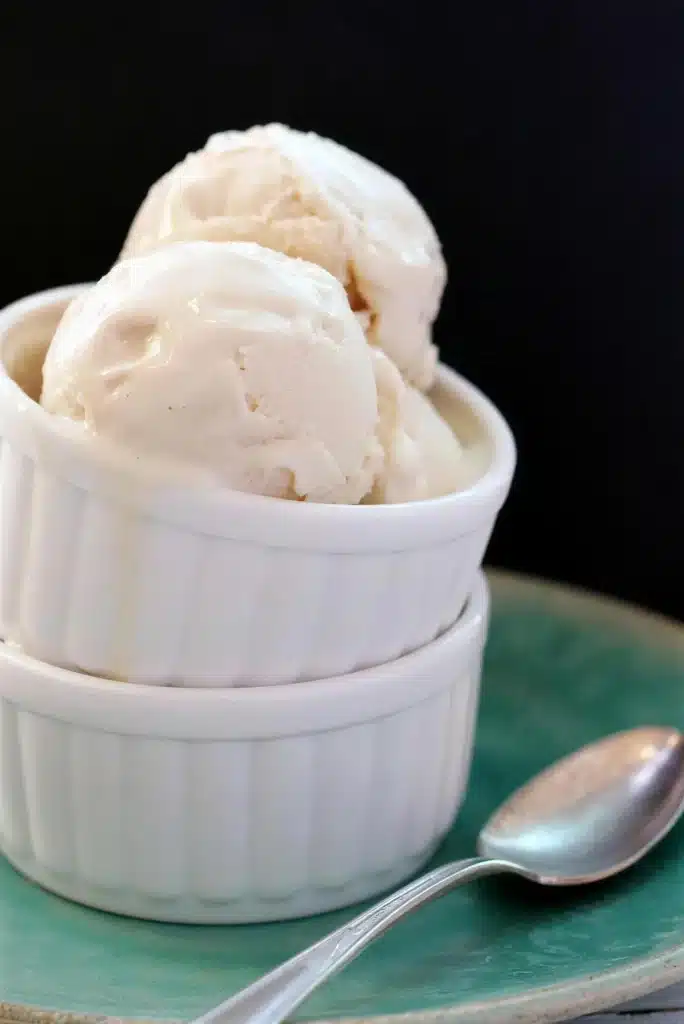
- Six ingredients, no eggs, no custard and no thermometer
- Five minutes of cooking, and the rest of the time is the refrigerator and the freezer
- Maple syrup instead of sugar, which brings its own caramel note
- The bourbon keeps it scoopable straight from the freezer, which most versions are not
- Lavender in a dessert is unexpected in a way people ask about
- The base can sit in the refrigerator for two days before it is churned
The bourbon is not there for flavor, or not mainly. Alcohol does not freeze at freezer temperatures, so a tablespoon and a half keeps the finished batch soft enough to scoop instead of setting into the block of ice that ruins most homemade frozen yogurt on day two.

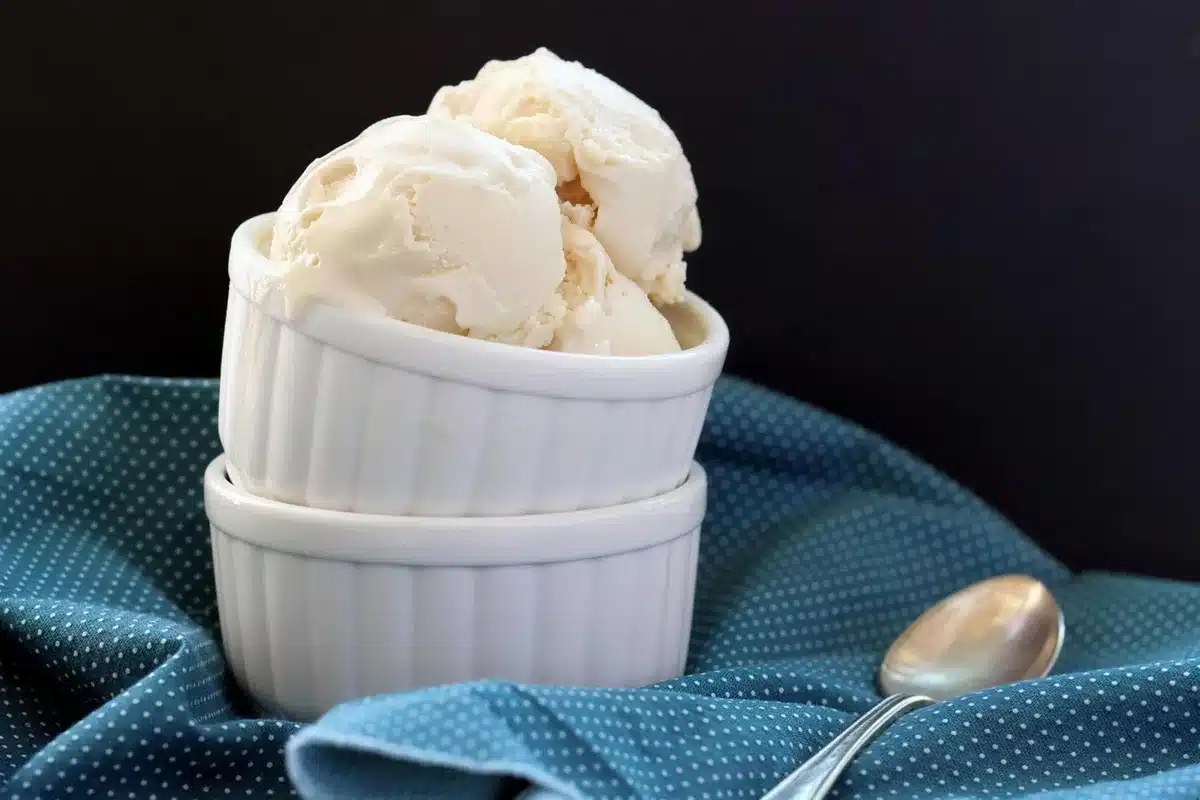
Two things decide whether homemade frozen yogurt comes out creamy or icy, and neither of them is the churning. One is the fat in the yogurt and the other is how cold the base is when it goes into the machine.
- Frozen Yogurt Is Not Ice Cream, and the Difference Is Fat
- Ingredient Notes
- Cooking with Lavender Without Making Soap
- How To Make Homemade Frozen Yogurt
- How To Tell When Homemade Frozen Yogurt Is Ready
- Make It Ahead
- Storing Homemade Frozen Yogurt
- Variations and Substitutions
- What to Serve with Homemade Frozen Yogurt
- Homemade Frozen Yogurt FAQ
Frozen Yogurt Is Not Ice Cream, and the Difference Is Fat
The gap between ice cream and homemade frozen yogurt is almost entirely butterfat. Ice cream is mostly cream, usually thickened with egg yolks, and runs somewhere between 14 and 20 percent butterfat. That fat is doing structural work: it coats the ice crystals as they form and keeps them small, which is what “creamy” actually means.
Yogurt has far less of it. Greek yogurt is strained to remove the liquid whey, which makes it thicker, tangier and roughly twice as high in protein as regular yogurt, but straining does not add fat. So homemade frozen yogurt has to make up the difference somewhere else, and there are only three levers: fat, sugar and alcohol.
This recipe pulls all three. Whole-milk Greek yogurt rather than the 2 percent originally called for, half-and-half instead of milk, two thirds of a cup of maple syrup, and a tablespoon and a half of bourbon. The original used 2 percent yogurt and came out noticeably icier, and the photographs on this post show scoops that hold their shape, which 2 percent will not give you.
The protein in the yogurt helps too. It gets in the way of ice crystals in much the same way fat does, which is why a Greek yogurt base freezes better than a thin stirred one.
Save this recipe
Enter your email and I’ll send this recipe straight to your inbox.
Ingredient Notes
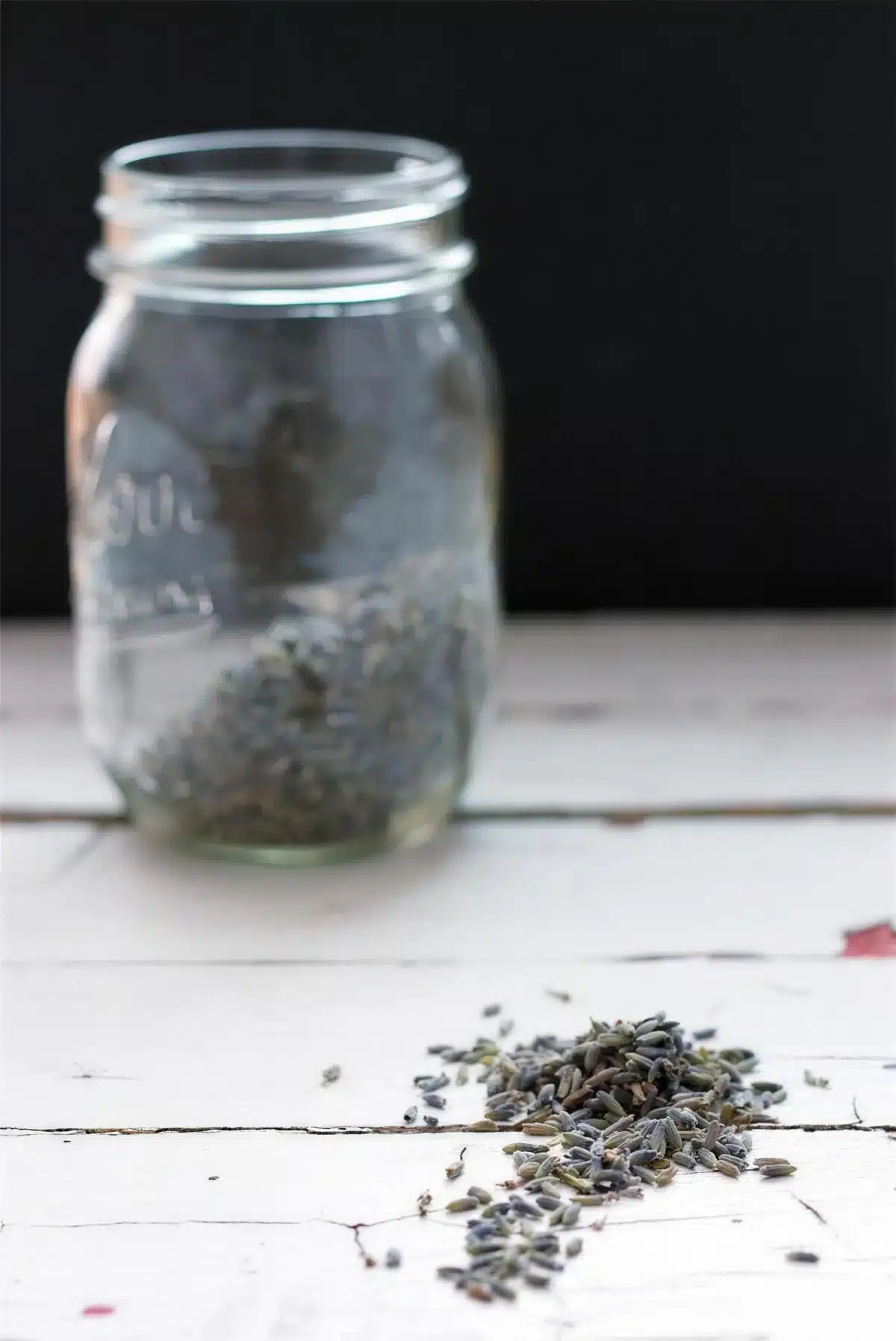
Homemade frozen yogurt takes six things, and two of them decide the texture. Exact amounts are in the recipe card below.
- Greek yogurt: two cups, whole milk. Not 2 percent, not fat free. This is the single biggest decision in the recipe and everything else is adjusting around it.
- Half-and-half: three quarters of a cup, which is also the infusing liquid. Whole milk works and gives a slightly leaner result; heavy cream makes it rich enough to stop tasting like yogurt.
- Maple syrup: two thirds of a cup, and grade A dark is worth seeking out. Because it is a liquid sugar it also lowers the freezing point slightly, which is a second small win on texture.
- Dried culinary lavender: a teaspoon and a half, loosely packed. Culinary is not a marketing word here. Buy it from a spice merchant rather than a florist, since ornamental lavender may have been sprayed with things never intended to be eaten.
- Bourbon: a tablespoon and a half. Leave it out if you must, and expect a firmer batch that wants ten minutes on the counter.
- Salt: a pinch. The original had none, and a sweet dairy base without any salt tastes flat in a way that is hard to place.
Cooking with Lavender Without Making Soap
Lavender is the easiest flavor to overdo in homemade frozen yogurt or anything else, and the failure is instantly recognizable: perfumed, bitter and vaguely like a bar of hotel soap. Illinois Extension’s note on growing and using lavender puts it plainly, saying it can be used in beverages and savory dishes but advising caution because a little goes a long way.
A teaspoon and a half in three quarters of a cup of dairy, steeped for five minutes off the heat, is deliberately restrained. Five minutes is enough to pull out the floral top notes and stop short of the tannic, resinous compounds that come out with longer contact.
Steep off the heat, never at a simmer. Boiling lavender extracts the harsh part fast. Bring the half-and-half just to the point where the surface shivers, take it off, stir the buds in and set a timer.
Strain it properly. A fine mesh sieve, and press the buds gently rather than wringing them out. Stray buds left in the base do not soften in the freezer; they stay woody and turn up unpleasantly in a spoonful.
If you are unsure, steep for three minutes, taste, and give it another two if it is too faint. You cannot take it back out.
How To Make Homemade Frozen Yogurt
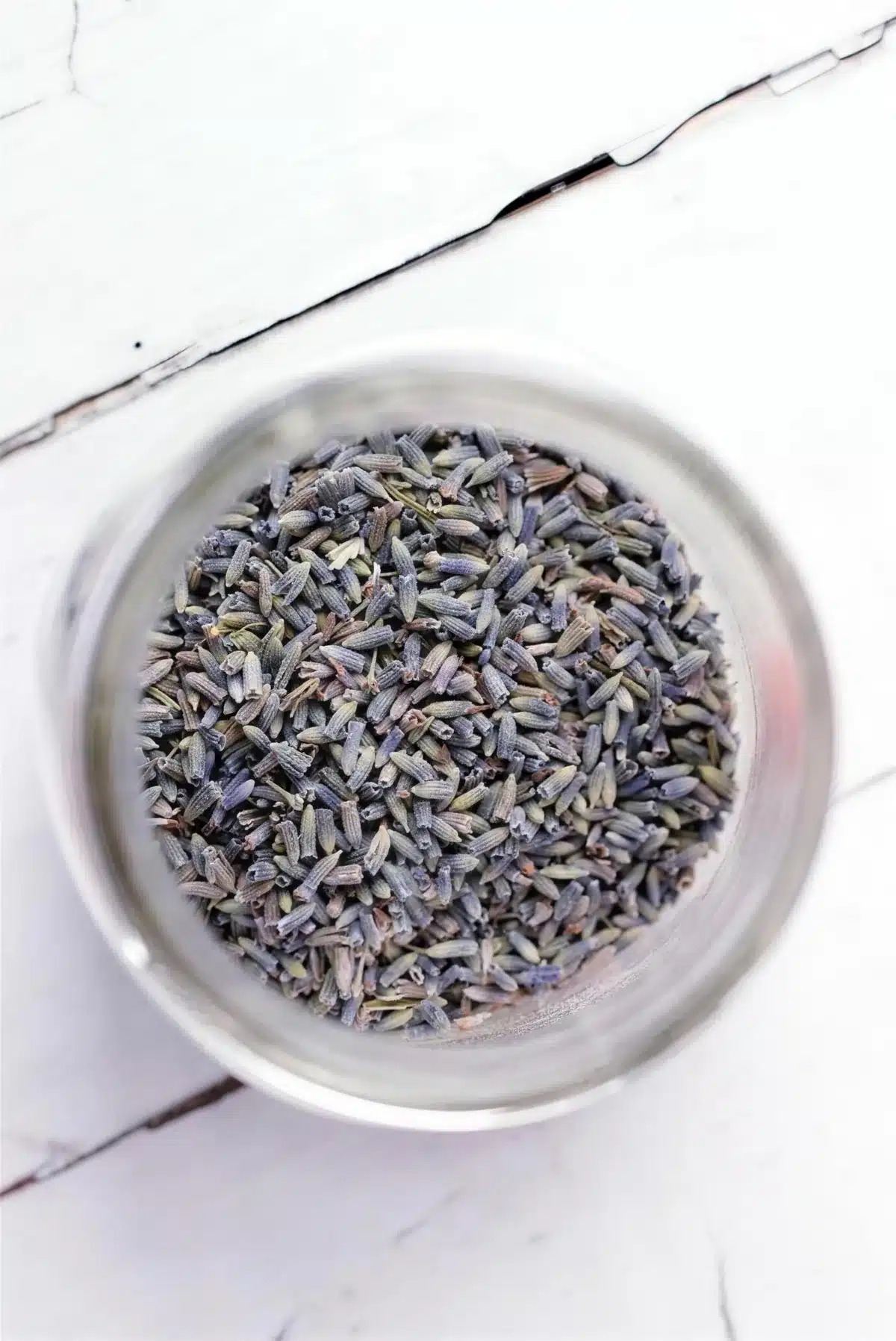
The active part of this homemade frozen yogurt takes about fifteen minutes. Everything else is waiting.
- First, bring the half-and-half just to a simmer, pull it off the heat, stir in the lavender and steep 5 minutes.
- Next, strain out the buds, whisk in the maple syrup and the salt, and let the mixture cool to room temperature.
- Then whisk the cooled maple mixture into the yogurt along with the bourbon and vanilla until completely smooth.
- After that, cover and refrigerate at least 4 hours or overnight, until the base is genuinely cold rather than merely cool.
- Finally, churn 20 to 25 minutes until it holds the ridges of the paddle, then scrape it into a chilled container and freeze 3 to 4 hours to firm up.
How To Tell When Homemade Frozen Yogurt Is Ready
There are two finish lines here, and stopping at the first one is the mistake almost everybody makes.
Out of the machine it should look like soft serve: thick, matte, holding the ridges the paddle draws through it, and pulling away from the sides of the bowl in a mass rather than sloshing. If it is still pourable after twenty five minutes the base was not cold enough, and no amount of extra churning will fix that.
Out of the freezer is the real test, and it takes another three to four hours. A spoon should meet firm resistance and then give, and a scoop should come away in a curl rather than in shards. The original recipe stopped at the churn and never mentioned this stage at all, which is why it read as a twenty minute job.
If it is rock hard, it either went too long in the freezer or the bourbon was left out. Ten minutes on the counter solves both, and there is nothing wrong with the batch.
If it is grainy, it churned too long or the base was warm. Grainy homemade frozen yogurt is still perfectly good blended into a smoothie, so it is not a wasted batch.
Make It Ahead
The base for homemade frozen yogurt is the part worth making early, and it actually improves for sitting.
Mix it completely, including the bourbon and vanilla, and keep it covered in the refrigerator for up to two days before churning. The lavender goes slightly rounder and less sharp over that time, and being properly cold is the main thing standing between you and a good texture.
Churn on the day you want it, or the day before. Freshly churned and then frozen for four hours is the best it will ever be.
For a party, churn in the morning and let it firm up all day. Take it out ten minutes before you plan to serve it and put it back promptly, since a container that half melts and refreezes is where large ice crystals come from.
The lavender infusion alone also keeps a week refrigerated, and it is very good stirred into iced coffee.
Storing Homemade Frozen Yogurt
In the freezer: homemade frozen yogurt is at its best for about two weeks and edible for a month. Homemade frozen yogurt has none of the stabilizers a commercial tub carries, so it degrades faster than anything you buy.
Press wrap onto the surface. Parchment or plastic wrap directly against the top of the batch, then the lid. Air is what forms the crust of large crystals, and a lid alone does not stop it.
Use a shallow container rather than a deep one. It freezes faster the first time and it thaws more evenly every time after, which matters more than it sounds.
Do not refreeze a fully melted batch. The structure churning built is gone, and what refreezes is essentially flavored ice. Blend it with milk and drink it instead.
Variations and Substitutions
- No ice cream maker: pour the base into a shallow metal pan, freeze, and whisk it hard every 30 minutes for about 3 hours. Slightly icier, entirely workable.
- No alcohol: leave the bourbon out and add two more tablespoons of maple syrup, which lowers the freezing point in a similar way without the spirit.
- Honey instead of maple: use half a cup, since honey is sweeter, and steep a strip of lemon zest with the lavender.
- Richer: swap the half-and-half for heavy cream. It stops tasting much like yogurt at that point, but it scoops beautifully.
- Other florals: a teaspoon of dried rose petals or two tablespoons of chamomile in place of the lavender, steeped the same way.
- With fruit: fold a cup of roasted stone fruit through the churned batch before the freezer, which is the same trick I use for my strawberry cantaloupe sorbet.
What to Serve with Homemade Frozen Yogurt
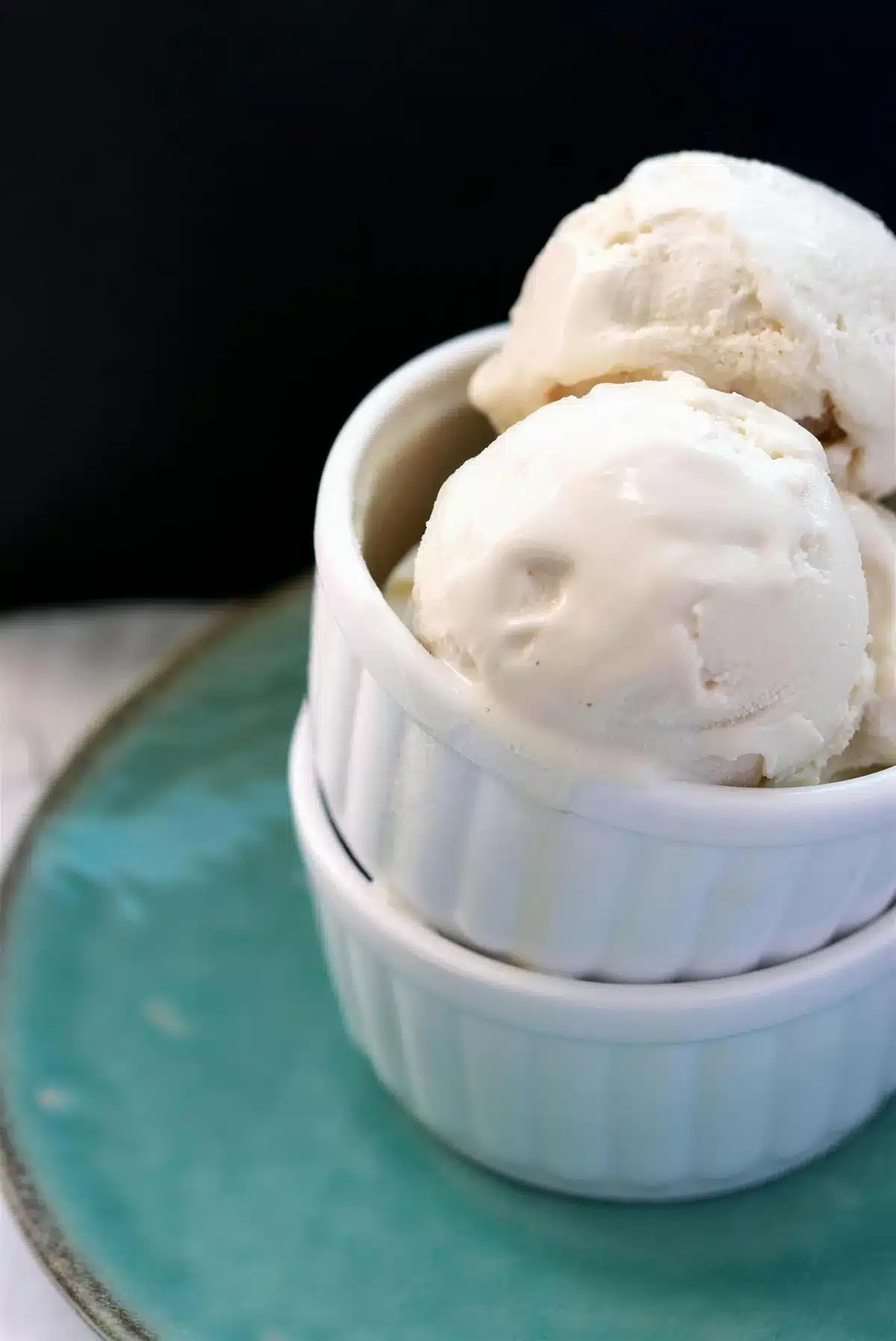
The lavender in this homemade frozen yogurt is delicate, so anything served alongside should stay out of its way.
- Shortbread, plain and buttery, which is the classic partner for anything floral.
- Fresh blueberries or blackberries, cold, with nothing on them.
- A drizzle of the same maple syrup, warmed for ten seconds.
- Beside something sharp, like my kiwi sorbet with grapefruit, for two scoops that do not fight.
For a frozen dessert at the opposite end of the spectrum, my chocolate ice cream with smoked salt is as dark and heavy as this is pale and light.
Here is what readers ask most often.
Homemade Frozen Yogurt FAQ
Frequently Asked Questions
What kind of yogurt is best for frozen yogurt?
Whole-milk Greek yogurt, and for homemade frozen yogurt it is not a close call. Straining removes whey, which concentrates both the fat and the protein, and both of those get in the way of ice crystals forming. Regular yogurt makes a thinner base that freezes harder and tastes more sour. Fat free Greek is the worst of both, since you keep the tang and lose the only thing softening the texture. If all you have is regular yogurt, strain it through cheesecloth for a few hours first.
Can you just freeze regular yogurt to make frozen yogurt?
You can freeze it, but you will not enjoy it. A tub of yogurt put straight in the freezer sets into a solid block with large crystals and no air in it at all, because nothing has been churned and nothing has been sweetened enough to keep it soft. Sugar, fat and agitation are the three things that separate frozen yogurt from frozen yogurt-shaped ice, and plain freezing gives you none of them.
Do I need an ice cream maker?
No, though it is easier with one. Without a machine, pour the base into a shallow metal pan, put it in the freezer, and whisk it thoroughly every thirty minutes for about three hours, breaking up the crystals each time as they form at the edges. The result is a little icier than churned homemade frozen yogurt but recognizably the same dessert, and the maple syrup and bourbon do a lot of the work for you.
More Questions About Churning and Texture
Good to Know
Why is mine icy rather than creamy?
Homemade frozen yogurt goes icy for three usual reasons, in order of likelihood. The base was not cold enough going into the machine, so it churned too long and beat in too much air. The yogurt was low fat, which leaves nothing to coat the crystals. Or it was stored in a deep container with air above it and formed a crust. Cold base, whole-milk yogurt and wrap pressed onto the surface fix nearly every icy batch.
How long should I churn it?
Twenty to twenty five minutes in a domestic machine with a pre-frozen bowl. Judge it by look rather than by clock: it is done when it thickens to soft serve, holds the paddle marks and climbs the sides slightly. Past about thirty minutes the bowl is losing its chill anyway, and continuing simply whips air in and coarsens the texture.
Is the alcohol still in the finished dessert?
Yes. Nothing in this homemade frozen yogurt is cooked after the bourbon goes in, so all of it stays, which is exactly why the texture works. It comes to roughly half a teaspoon of bourbon per serving, but it is worth knowing about if you are serving children. The alcohol-free variation above uses extra maple syrup to do the same job.
More Questions About the Lavender and the Maple
Good to Know
Can I use fresh lavender instead of dried?
Yes, and use about three times as much, since fresh buds hold water and are milder by volume. It must still be a culinary variety grown without pesticides, which rules out anything from a florist or a garden center display. Strip the buds off the stems, because the woody stems carry the resinous, bitter compounds you are trying to avoid.
Will it taste strongly of maple?
In this homemade frozen yogurt the maple is present rather than dominant. Two thirds of a cup across six servings gives a clear caramel note underneath the tang of the yogurt, and dark grade A pushes it further than amber does. If you want it obvious, use dark and drizzle a little more over each bowl at the table rather than adding it to the base, where more syrup would start to make the texture soft.
My batch tastes soapy. Can it be saved?
Not really, once it is in. Over-steeped lavender is a one-way trip and the compounds responsible do not fade in the freezer. The practical rescue is to dilute it: whisk the base into another two cups of plain yogurt and a little more maple syrup, which roughly halves the concentration. Next time steep for three minutes and taste before you commit.
Made with whole-milk yogurt and given its four hours in the freezer, homemade frozen yogurt is a genuinely different dessert from the icy version most people have tried once and given up on. For something equally cold with no dairy at all, there are my spicy coconut lime popsicles.
Homemade Frozen Yogurt with Maple and Lavender
Save this recipe
Enter your email and I’ll send this recipe straight to your inbox.
Ingredients
The Lavender Maple Infusion
- 3/4 cup half-and-half
- 1 1/2 teaspoons dried culinary lavender loosely packed
- 2/3 cup pure maple syrup grade A dark for the strongest flavor
- 1 pinch fine sea salt
To Finish the Base
- 2 cups whole-milk Greek yogurt not 2 percent and not fat free
- 1 1/2 tablespoons bourbon keeps the finished batch scoopable
- 1/2 teaspoon vanilla extract
Instructions
Infuse and Sweeten
- Bring the half-and-half just to a simmer in a small pot, take it straight off the heat, stir in the lavender and leave it to steep for exactly 5 minutes. Any longer and it turns bitter.
- Strain the buds out through a fine mesh sieve, pressing gently rather than wringing, then whisk in the maple syrup and the salt and let the mixture cool to room temperature.
Chill the Base
- Whisk the cooled maple mixture into the Greek yogurt with the bourbon and vanilla until completely smooth, with no streaks of thick yogurt left.
- Cover and refrigerate for at least 4 hours or overnight, until the base is thoroughly cold. This is what decides the texture, so do not shorten it.
Churn and Freeze
- Churn the cold base in an ice cream maker for 20 to 25 minutes, until it thickens to soft serve, holds the ridges of the paddle and starts to climb the sides of the bowl.
- Scrape it into a chilled shallow container, press parchment or plastic wrap directly onto the surface, and freeze for 3 to 4 hours until it is firm enough to scoop.
- Soften at room temperature for 5 to 10 minutes before serving if it has been in the freezer overnight.