
Almost every chocolate caramel ice cream is a chocolate base with a caramel sauce rippled through it after churning. This chocolate caramel ice cream is built the other way round: the caramel goes in first, before any dairy, and the chocolate is layered on top of it.
That means starting by cooking a cup of sugar until it is genuinely dark, past golden and into something that smells nutty and faintly burnt. Deglaze that with hot cream, build a custard on it, then dissolve cocoa into it and pour the whole thing over chopped 70 percent chocolate. The finished ice cream is bittersweet rather than sweet, and a scattering of coarse smoked sea salt folded in off the churn is what keeps it from being merely rich.

- The caramel is in the base, not swirled on afterward, so every spoonful has it
- Chocolate caramel ice cream that is bittersweet rather than sugary, so a small scoop is enough
- Cocoa and chopped dark chocolate together, for depth and for body
- Five yolks, so it scoops soft straight from the freezer instead of setting like a brick
- The custard can be made two days before you churn
- Coarse smoked salt folded in last gives bursts of smoke rather than an evenly salty base


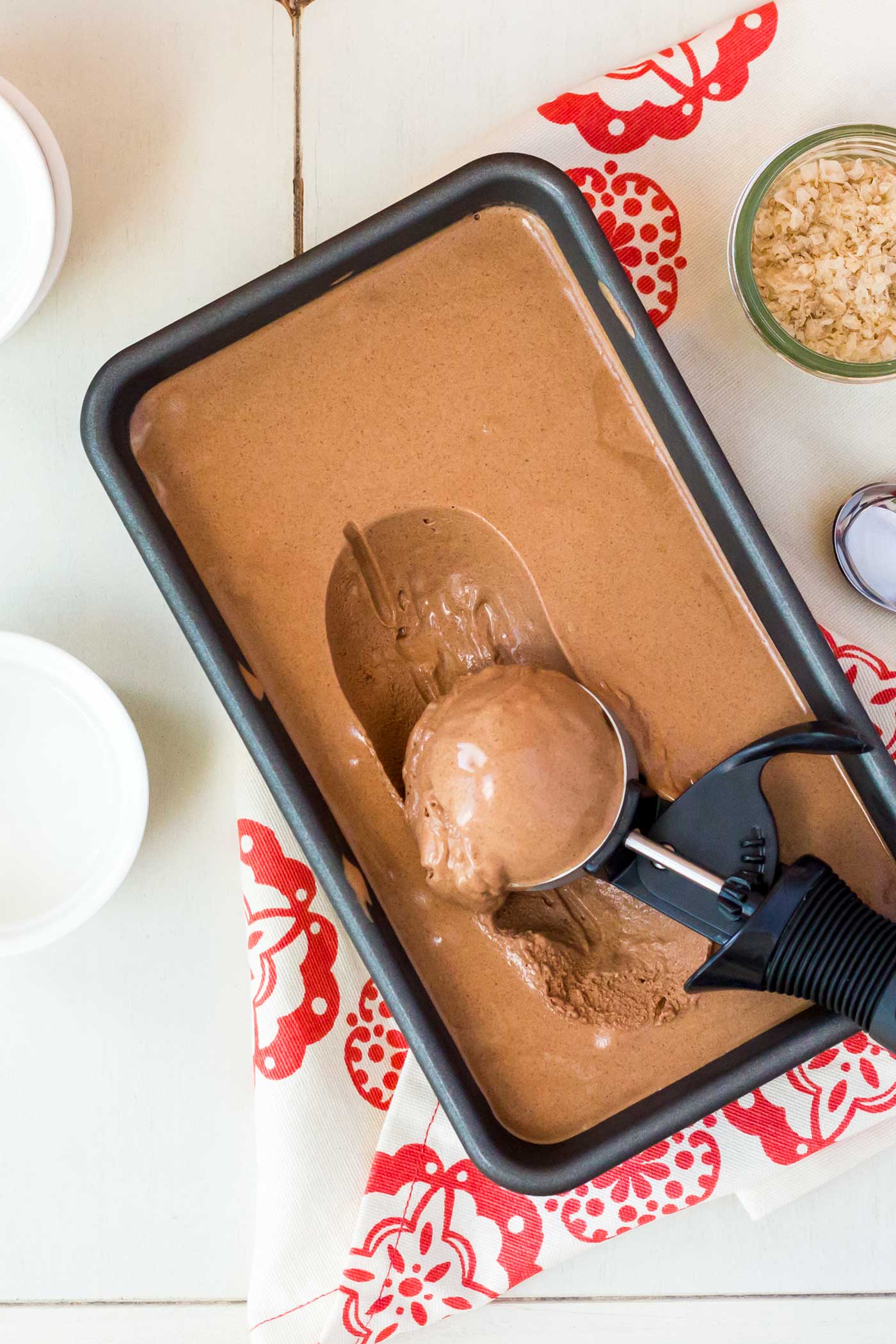
A chocolate caramel ice cream built this way rests on one step, and it is the first one.
- Burnt Caramel Is What Makes This Chocolate Caramel Ice Cream Different
- How Far To Take the Caramel
- Ingredient Notes
- How To Make Chocolate Caramel Ice Cream
- Tempering the Eggs Without Scrambling Them
- Why Homemade Ice Cream Goes Icy and Rock Hard
- Make It Ahead
- Storing Chocolate Caramel Ice Cream
- Variations and Substitutions
- What to Serve with Chocolate Caramel Ice Cream
- Chocolate Caramel Ice Cream FAQ
Burnt Caramel Is What Makes This Chocolate Caramel Ice Cream Different
Sugar cooked to a deep amber is a different ingredient from sugar. Heat breaks it apart and rebuilds it into hundreds of new compounds, among them maltol, one of the aroma compounds produced when sugars brown. That is why a caramel smells of something and a syrup does not.
It also destroys a good deal of the sweetness. Caramelizing a cup of sugar leaves you with less sweetening power than you started with, plus a distinct bitterness. In most recipes that is a problem to be corrected. In a chocolate caramel ice cream it is the entire point, because chocolate is bitter too and the two bitternesses reinforce each other rather than competing.
Compare it to the alternatives. A caramel sauce swirled through finished ice cream gives you pockets of very sweet caramel in a plain chocolate base, which is a good thing and a completely different one. A no-churn version built on sweetened condensed milk cannot go anywhere near this, because the sugar is already dissolved and cannot be browned.
The trade-off is that it is less sweet than people expect. If you are serving this to someone expecting a supermarket flavor, warn them. It reads as adult, and a scoop next to something plain works better than two scoops on their own.
Save this recipe
Enter your email and I’ll send this recipe straight to your inbox.
How Far To Take the Caramel
This is the only genuinely demanding part of a chocolate caramel ice cream, and it takes about eight minutes of attention.
Use the wet method: sugar and a little water in the pan, stirred only until the sugar is wet, then left completely alone. Stirring a dry pan of melting sugar is what causes crystallization, and the original version of this recipe called for exactly that.
Pale gold, around 320F. Sweet, one-dimensional, no use here.
Amber, around 340F. This is where most caramel recipes stop. Good for sauce, still too timid for this.
Deep amber, around 350F to 355F. The color of an old copper penny. It smells nutty and slightly smoky and you will start to feel nervous. This is where you want it.
Dark brown and acrid, past 360F. Gone. There is no rescuing it and it will make the whole quart taste of ashtray. Start again; it costs a cup of sugar.
The color changes fast at the end, sometimes in fifteen seconds, so have the hot cream standing right beside the pan before you begin. Take it off the heat a shade before it looks right, because the residual heat in a heavy pan keeps it cooking.
Ingredient Notes
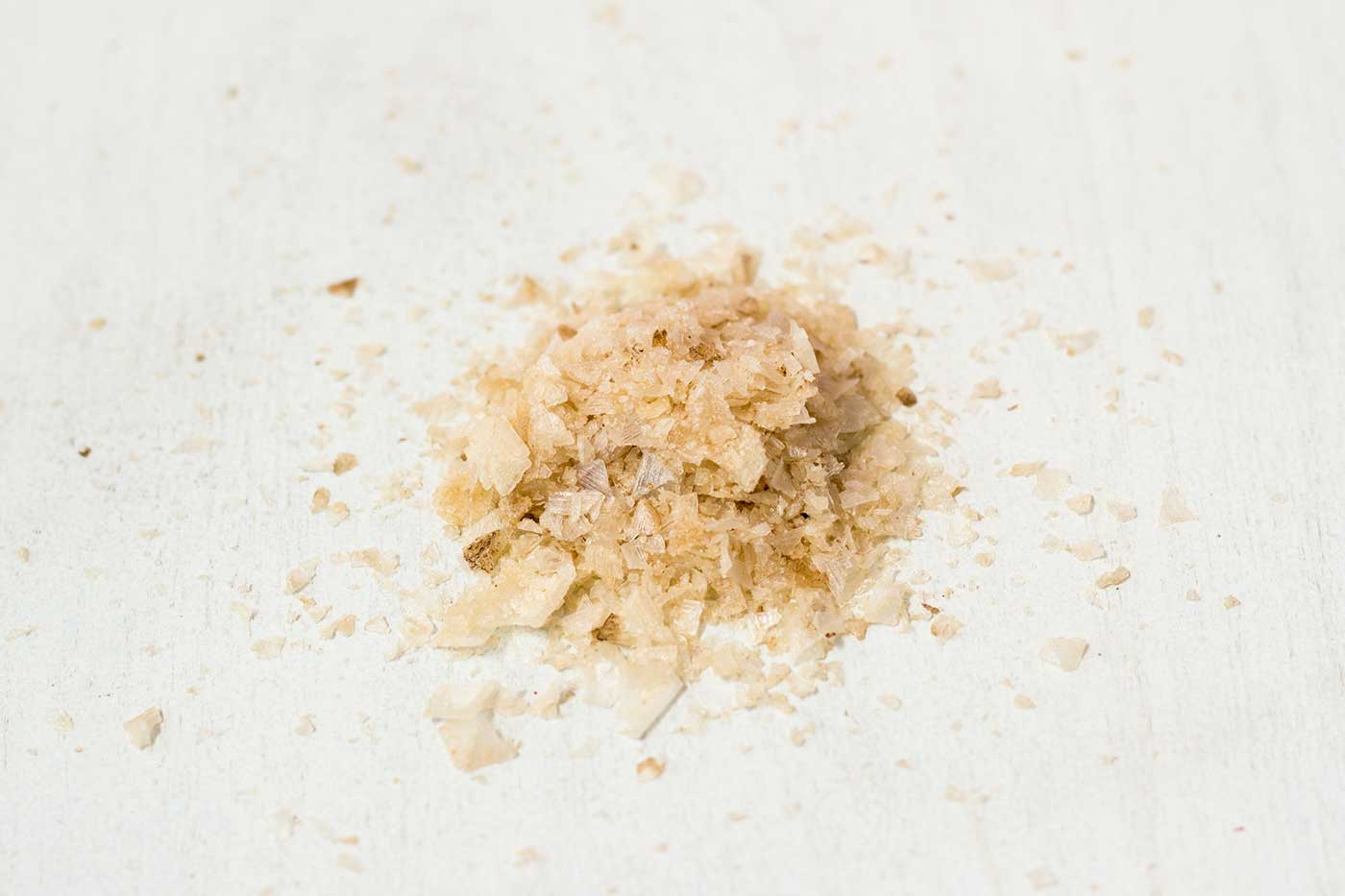
Chocolate caramel ice cream runs to eight ingredients, two of them worth shopping for properly. Exact amounts are in the recipe card below.
- Coarse smoked sea salt: two teaspoons, flaky rather than fine. Maldon smoked is the benchmark. Coarse crystals stay distinct in the frozen base and give you bursts; fine smoked salt dissolves and simply makes the whole thing salty. The original called for a full tablespoon, which is genuinely too much.
- Dark chocolate: four ounces at 70 percent, chopped small so the hot custard melts it evenly. Milk chocolate makes this cloying and defeats the caramel.
- Cocoa powder: half a cup, whisked into the hot caramel cream rather than into the finished custard. Dry cocoa added to a thin, hot custard clumps, and the strainer then takes the clumps out, so you lose both the cocoa and the color.
- Egg yolks: five. Three is what the original used, and three yolks against three cups of dairy barely thickens anything. Five gives a custard that coats a spoon properly and, more importantly, an ice cream that stays scoopable.
- Sugar: one cup in total, three quarters caramelized and a quarter whisked into the yolks. The original carried one and three quarter cups, which is a great deal of sugar for a quart.
- Heavy cream and whole milk: two cups and one cup. Do not substitute half-and-half throughout, since the fat is what stops the base freezing hard.
- A pinch of fine salt in the custard itself, separate from the smoked salt at the end. It sharpens the chocolate; the smoked salt is texture and aroma.
How To Make Chocolate Caramel Ice Cream
Set the ice bath up before you light the burner. Once the sugar is going you will not have a spare hand.
- First, warm the cream and milk together until steaming and keep them beside the stove. Set a bowl over ice with a fine sieve resting in it, and put the chopped chocolate in a second bowl.
- Next, cook the sugar and water in a heavy pan, without stirring, until it reaches a deep amber and smells nutty, about 8 to 10 minutes. Take it off the heat.
- Then pour in the hot dairy a little at a time, standing back because it will seize and spit. Return it to low heat and stir until every hardened piece of caramel has dissolved, then whisk in the cocoa.
- After that, whisk the yolks with the remaining sugar, temper in about half the hot liquid, return it all to the pan and cook to 175F to 180F, stirring constantly.
- Finally, pour the custard over the chocolate, whisk smooth, strain into the iced bowl and chill it hard. Churn, fold in the smoked salt, and freeze for four hours before serving.
Tempering the Eggs Without Scrambling Them
Yolks set at around 150F and the custard for this chocolate caramel ice cream needs to reach 175F, so the margin is real but not enormous.
Whisk the yolks with the sugar first and keep whisking until they lighten. Sugar physically gets between the proteins and raises the temperature at which they set, which buys you room.
Add the hot liquid slowly at first. A thin stream for the first cup, whisking the whole time, then you can go faster. A ladle at a time is the traditional advice and it is sound.
Go back on low heat, not medium. The last twenty degrees should take three or four minutes. Rushing it is how people end up straining out scrambled egg.
Stir with a flat spatula and scrape the corners. The base of the pan and the join where it meets the side are where custard catches first.
Use a thermometer. The old test, drawing a finger through the custard on the back of a spoon and looking for a clean line, works, but it tells you nothing until you are already there.
What To Do If It Curdles Anyway
Small flecks are almost always recoverable, and this is exactly why the recipe strains everything into the ice bath before it becomes chocolate caramel ice cream.
Take the pan off the heat the second you see graininess and pour it straight through the sieve into the iced bowl. The cold stops the cooking and the mesh catches the solids.
If it has gone further than flecks, an immersion blender for twenty seconds will usually pull it back together. It is not a miracle worker but it saves more custards than it ruins.
If it has genuinely scrambled, into a thick lumpy mass, it is done. The fat has separated and no amount of blending brings that back.
The good news is that a chocolate caramel ice cream hides small imperfections better than a vanilla one would, because the cocoa gives the base body and the color hides everything.
Why Homemade Ice Cream Goes Icy and Rock Hard
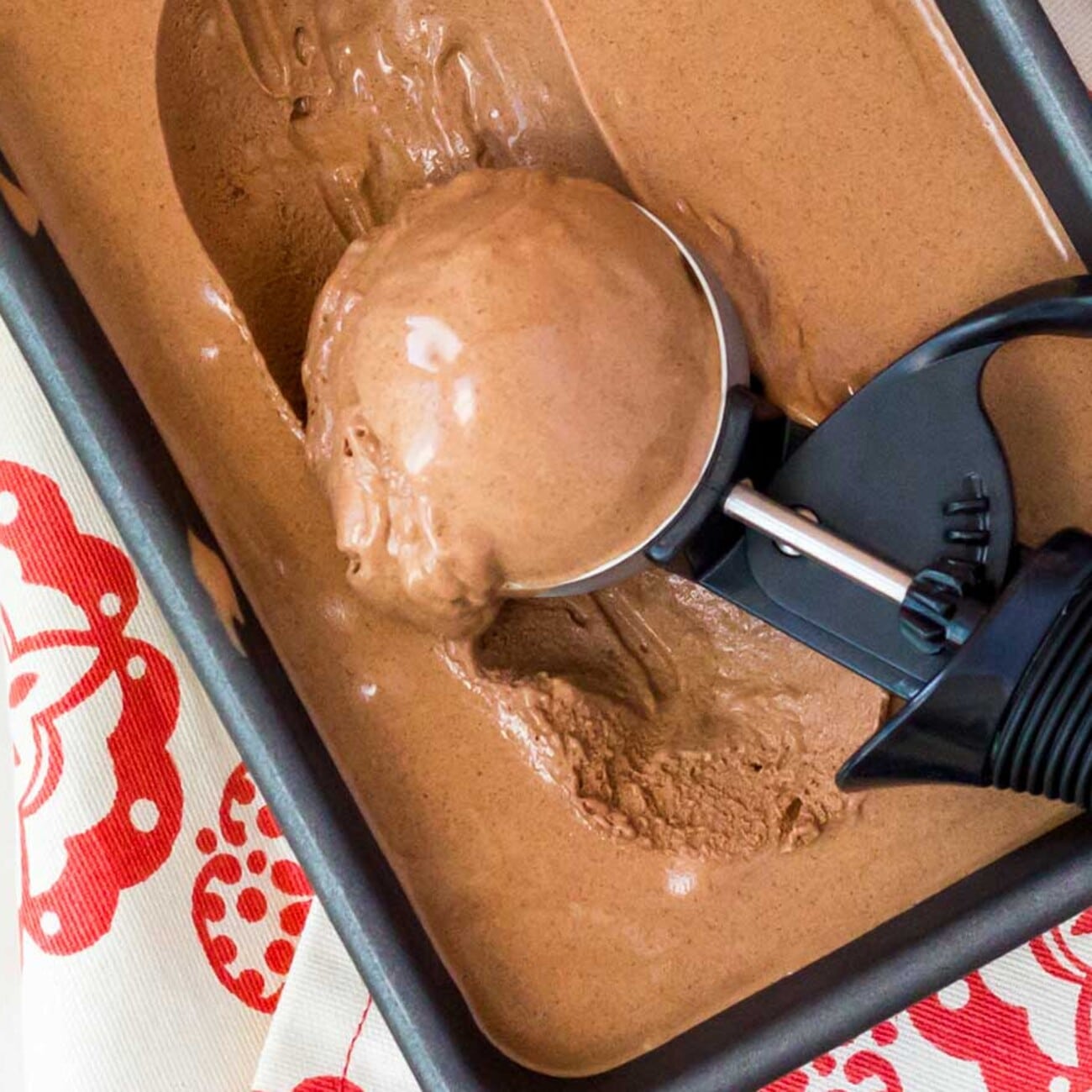
Two separate problems, with different causes and different fixes, and chocolate caramel ice cream is prone to both.
Icy means large ice crystals, and they form when the base freezes slowly. The commonest cause is churning a base that was not cold enough. It should be refrigerator cold, not merely cool, before it goes into the machine, and the machine’s bowl should have had a full twenty-four hours in the freezer.
Rock hard means not enough of what stops water freezing: sugar, fat and egg yolk. This is why the five yolks matter and why cutting the sugar further is a bad idea. Commercial ice cream also carries air and stabilizers, which is why a supermarket tub scoops straight from a home freezer and this will not.
Both are made worse by a long, slow churn. Twenty to twenty-five minutes is right. Beyond that the base warms at the edges as it is whipped and you get grain.
Store it in a shallow container with parchment pressed onto the surface. A deep tub freezes slowly through the middle and grows crystals on the way.
Let it sit out for five to ten minutes before scooping. That is not a failure, it is what a home-made custard base does, and this one is softer than most because of the yolks.
Make It Ahead
Almost all of a chocolate caramel ice cream is better done in advance, which makes it a good dinner party dessert.
The custard base keeps two days covered in the refrigerator and genuinely improves overnight. The cocoa hydrates fully, the caramel flavor settles and a thoroughly cold base churns faster and smoother.
Churn the day before serving. Four hours in the freezer is the minimum for it to firm up, and overnight is better.
Chop the chocolate and measure the salt before you start rather than during. The caramel stage leaves no time for anything else.
Freeze the machine bowl a full day ahead, not overnight in a busy freezer that keeps being opened.
What you cannot do ahead is fold the smoked salt in early. Put it in before churning and it dissolves into the base; fold it in straight off the paddle and it stays as distinct crystals.
Storing Chocolate Caramel Ice Cream
- Freezer, airtight: chocolate caramel ice cream keeps 1 week at its proper texture, with parchment pressed onto the surface.
- Best in the first 2 to 3 days. After that chocolate caramel ice cream firms up and the smoked salt slowly dissolves into the base.
- The custard base, unchurned: 2 days refrigerated, and it improves.
- Shallow and wide beats deep and narrow. A metal loaf pan freezes faster and more evenly than a plastic tub.
- Never refreeze it soft. Once it has melted at the edges, refreezing gives you a gritty, crystalline block.
Variations and Substitutions
In a chocolate caramel ice cream the caramel and the custard are structural. The finish is open.
- No smoked salt: use flaky sea salt and it becomes an excellent salted chocolate caramel ice cream without the smoke.
- Cacao nibs: a third of a cup folded in with the salt, for crunch and more bitterness.
- A spoon of bourbon or dark rum stirred in before churning, which softens the texture and suits the burnt sugar.
- Espresso: a teaspoon of instant espresso powder into the hot cream, which reads as more chocolate rather than as coffee.
- Leave the cocoa out and you have a straight burnt caramel ice cream, which is worth making once on its own.
- Milder: take the caramel only to amber and use 60 percent chocolate for something closer to a conventional scoop.
What to Serve with Chocolate Caramel Ice Cream
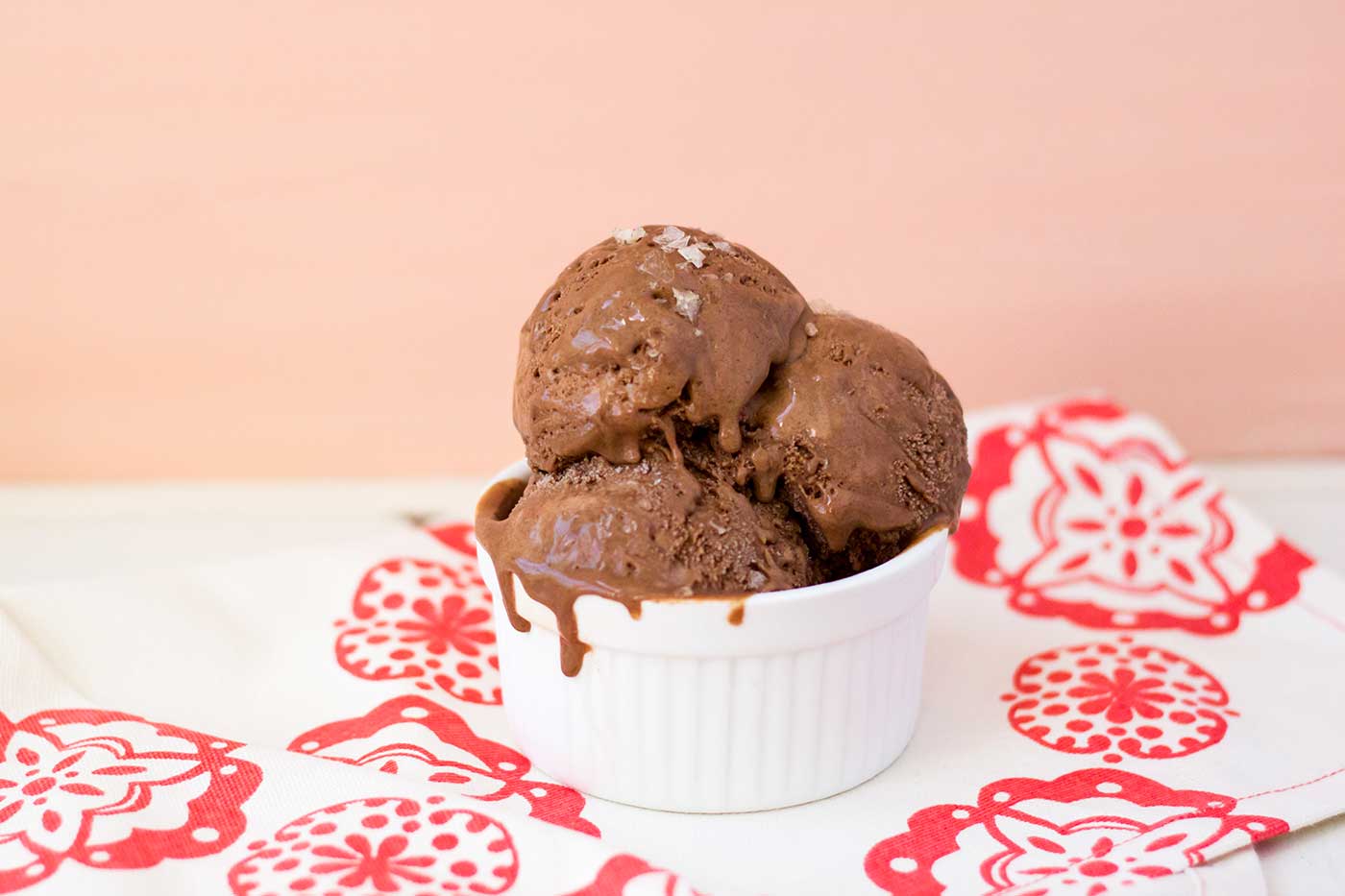
Chocolate caramel ice cream is intense, so the best partners are plain ones that give it somewhere to go.
- Plain butter shortbread or a thin wafer, which is all the contrast it needs.
- A shot of hot espresso poured over it, affogato style, which is the single best thing to do with a scoop.
- Fresh raspberries or sour cherries, for acidity against all that fat.
- A slice of nine-inch chocolate cake if you want to go all the way in one direction.
- Alongside my salted caramel cupcakes on a table where the same flavor appears twice and nobody objects.
For lighter frozen desserts from the same freezer, there is my maple lavender frozen yogurt and a sharp kiwi grapefruit sorbet.
Here is what readers ask most often.
Chocolate Caramel Ice Cream FAQ
Frequently Asked Questions
How dark should the caramel go?
For chocolate caramel ice cream, deep amber, the color of an old copper penny, at about 350F to 355F. It should smell nutty and faintly smoky rather than sharp. Too pale and you have simply added sugar; too far and the bitterness turns acrid and there is no rescuing it. Have the hot cream standing beside the pan, because the last stretch of color can happen in fifteen seconds.
Can I make it without an ice cream maker?
Not well. Chocolate caramel ice cream made this way is a custard base and it needs churning to break up ice crystals as it freezes. The freeze-and-stir method, beating it with a fork every half hour for three hours, gives a dense and slightly grainy result that is still worth eating. A proper no-churn version would need sweetened condensed milk, and that base cannot be caramelized, which removes the point of the recipe.
Why is my ice cream rock hard?
Chocolate caramel ice cream sets hard when it is short of sugar, fat or egg yolk, all three of which lower the freezing point. This recipe uses five yolks for exactly that reason, so do not cut them back. Commercial tubs also carry whipped-in air and stabilizers that a home machine cannot match. Five to ten minutes on the counter before scooping is normal and is not a fault.
More Questions About Caramel and Churning
Good to Know
Can I use fine smoked salt?
You can, but halve it and expect a different effect. Fine crystals dissolve into the base and give you an evenly salty, evenly smoky ice cream rather than the bursts that coarse flakes produce. If flaky smoked salt is unavailable, flaky sea salt plus a single drop of liquid smoke whisked into the cooled custard gets you closer than fine smoked salt will.
My caramel seized when I added the cream. Is it ruined?
No, and it happens every time. Cold or even warm liquid hitting sugar at 350F makes it harden into lumps instantly. Put the pan back on low heat and stir, and every piece will dissolve back into the cream within two or three minutes. Warming the dairy first makes the seizing less dramatic but does not prevent it.
How long does it need to chill before churning?
Four hours is the minimum and overnight is noticeably better. A base at refrigerator temperature freezes fast in the machine, so the crystals stay small and it churns in twenty minutes rather than thirty. Resting also lets the cocoa hydrate fully.
How much does this make?
About a quart, or six generous servings, and it is rich enough that a small scoop satisfies. It doubles on paper but not in a domestic machine, which struggles past a quart of base. Churn two batches in sequence, refreezing the bowl in between.
A chocolate caramel ice cream built on burnt sugar rather than a swirl is a different dessert altogether, and the smoked salt is what stops it being merely rich. For something lighter out of the same machine, try my kiwi grapefruit sorbet.

Chocolate Caramel Ice Cream with Smoked Salt
Save this recipe
Enter your email and I’ll send this recipe straight to your inbox.
Ingredients
The Burnt Caramel Base
- 3/4 cup granulated sugar for the caramel
- 3 tablespoons water just enough to wet the sugar
- 2 cups heavy cream warmed until steaming
- 1 cup whole milk warmed with the cream
- 1/2 cup unsweetened cocoa powder sifted if it is lumpy
The Custard and the Finish
- 5 large egg yolks
- 1/4 cup granulated sugar for the yolks
- 1/4 teaspoon fine sea salt in the custard, separate from the smoked salt
- 4 ounces dark chocolate 70 percent, chopped small
- 2 teaspoons coarse smoked sea salt flaky, folded in off the churn
Instructions
Set Up and Caramelize
- Warm the cream and milk together in a saucepan until steaming and keep them beside the stove. Set a bowl in an ice bath with a fine sieve resting in it, and put the chopped chocolate in a separate heatproof bowl.
- Stir the 3/4 cup sugar and the water together in a heavy saucepan until the sugar is wet, then bring to a boil and do not stir again. Cook 8 to 10 minutes to a deep amber, about 350F to 355F, swirling the pan once or twice near the end. Take it off the heat the moment it smells nutty.
Build the Chocolate Base
- Pour the hot cream and milk into the caramel a little at a time, standing back because it will seize and spit. Return the pan to low heat and stir until every hardened piece has dissolved, 2 to 3 minutes.
- Whisk in the cocoa powder until it is completely smooth. Doing this now, while the liquid is hot and thin, is what stops it clumping later.
Cook the Custard
- Whisk the yolks with the 1/4 cup sugar and the fine sea salt until pale. Pour about half the hot chocolate cream into them in a thin stream, whisking constantly, then return everything to the pan.
- Cook over low heat, stirring with a flat spatula and scraping the corners, until it reaches 175F to 180F and coats the back of the spoon, 4 to 6 minutes. Do not let it boil.
Chill, Churn and Salt
- Pour the hot custard over the chopped chocolate and whisk until smooth, then strain it through the sieve into the bowl in the ice bath. Stir occasionally until cold, then cover and refrigerate at least 4 hours, preferably overnight.
- Churn 20 to 25 minutes in a machine whose bowl has been frozen a full day. Fold the coarse smoked salt through straight off the paddle, pack into a shallow container with parchment pressed onto the surface, and freeze 4 hours before serving.