
A pot of hot brine, two clean jars and whatever is crowding the crisper drawer: pickled vegetables take about twenty five minutes of actual work and then look after themselves in the refrigerator for months.
These are refrigerator pickles, not canned ones, which is the distinction that makes them so easy. Nothing is processed, nothing is sealed and nothing has to be tested, because they live in the cold from the moment the brine cools. The trade is that they never become shelf-stable, and that is a trade worth making for a jar of crisp dilled carrots you can start eating the same afternoon.
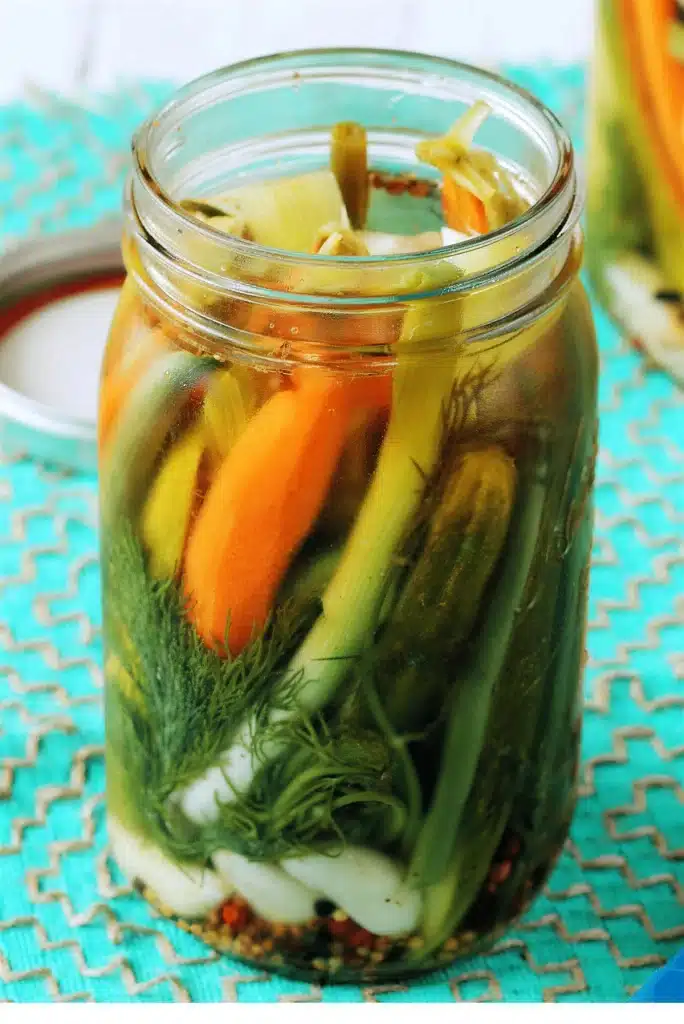
- Twenty five minutes of work, and the jars do the rest in the refrigerator
- Uses up the odd carrot, the half cauliflower and the beans nobody ate
- Good after a few hours, better after two days, excellent after a week
- No canner, no jar lifter, no processing time and nothing to sterilize
- Two quart jars from one pot of brine, for the price of a bag of chips
- Naturally vegan, gluten-free and about ten calories a spear

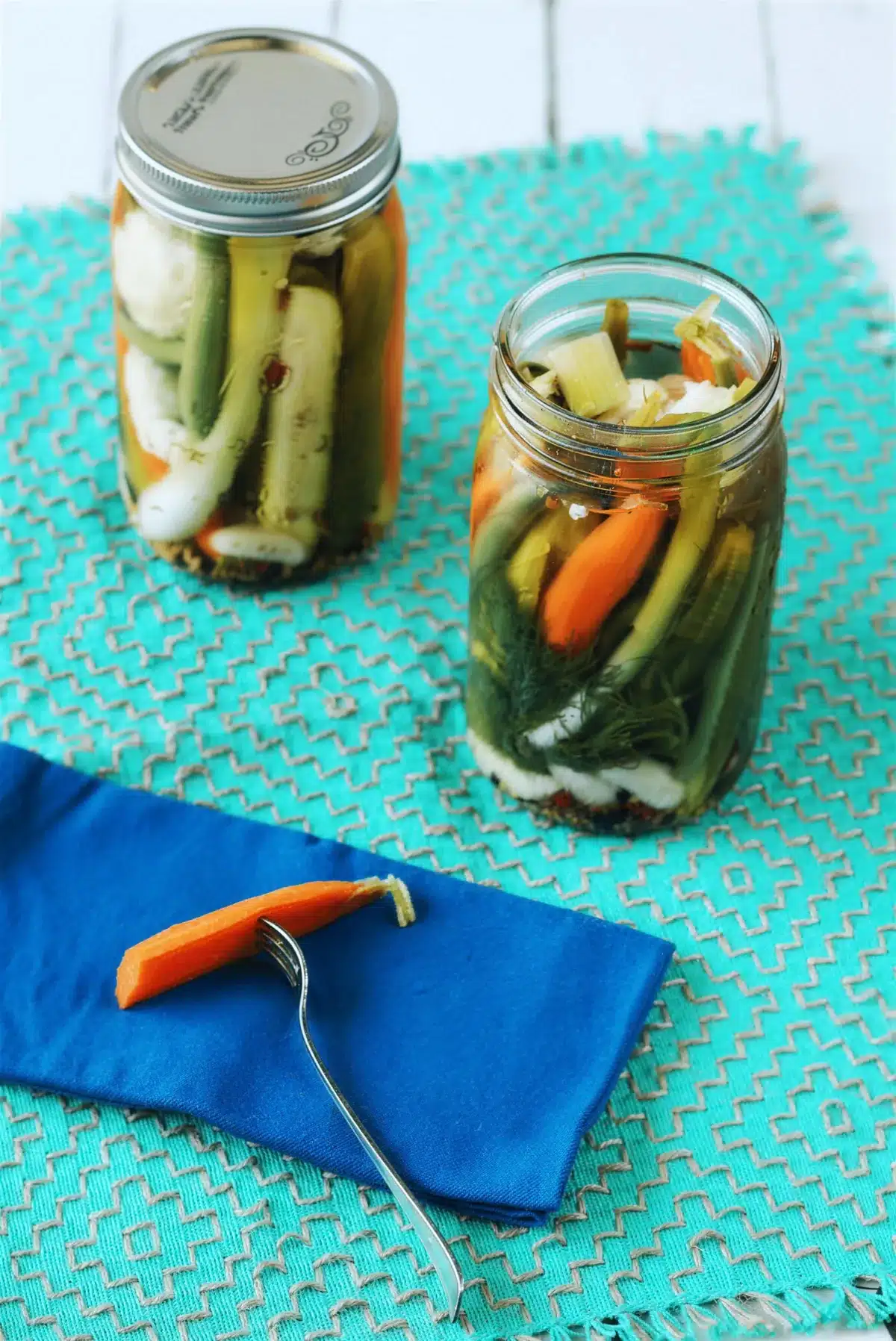
Everything that follows really turns on two numbers: how much vinegar goes into the brine, and how long the jars sit before you open one. Get those right and pickled vegetables are almost impossible to ruin.
- What Vegetables Are Good Pickled?
- The 3 2 1 Rule and the Brine Ratio
- Ingredient Notes
- How To Make Pickled Vegetables
- Refrigerator Pickles vs Canning
- How Long Pickled Vegetables Take to Cure
- Make It Ahead
- Storing Pickled Vegetables
- Variations and Substitutions
- What to Serve with Pickled Vegetables
- Pickled Vegetables FAQ
What Vegetables Are Good Pickled?
The rule for pickled vegetables is firmness. Anything with structure holds up in brine; anything soft or watery turns to mush within a day.
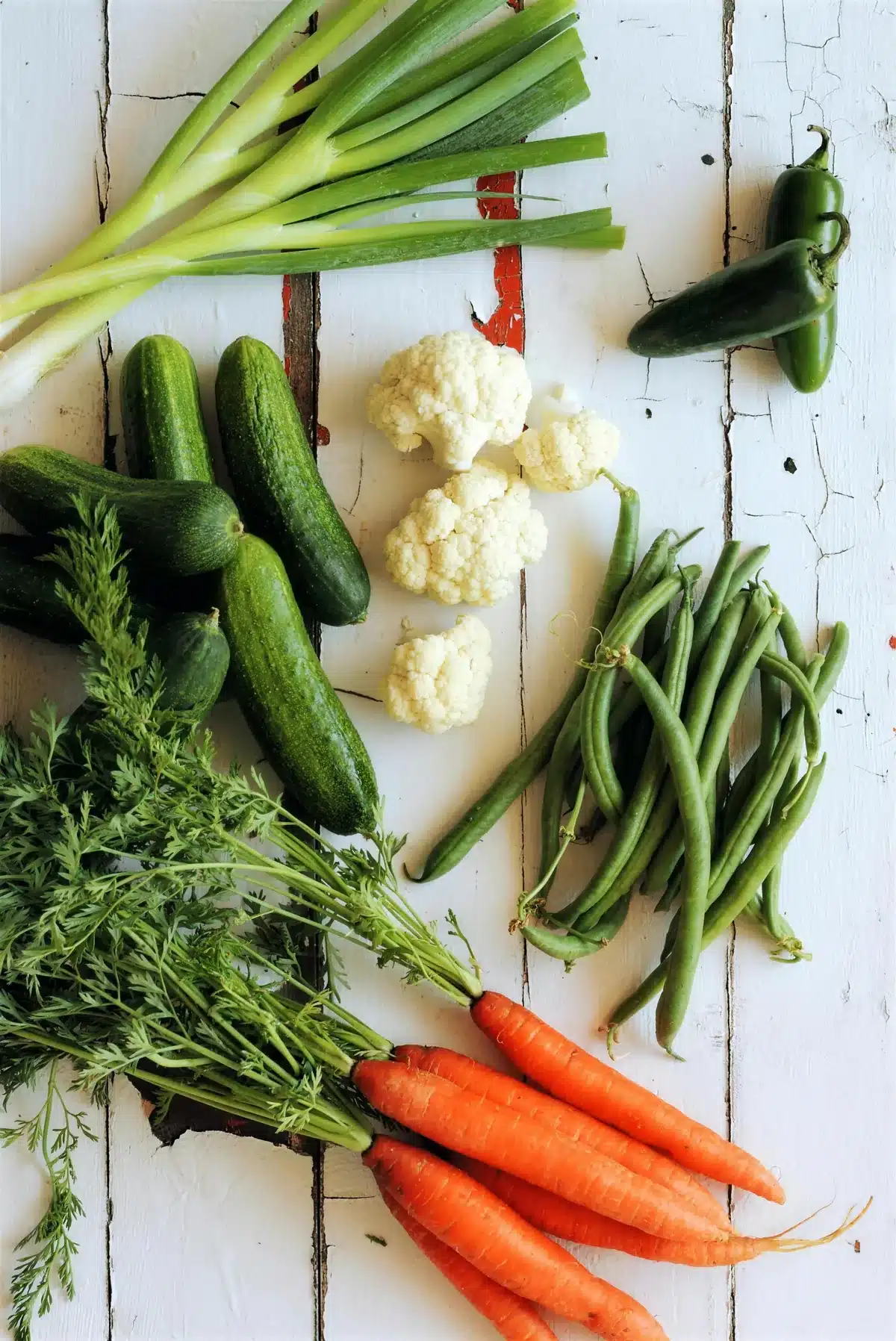
Excellent: kirby cucumbers, carrots, green beans, cauliflower, radishes, red onion, fennel, turnip, asparagus, jalapenos and other chiles, garlic scapes, celery and green tomatoes.
Good with a caveat: beets and red cabbage both work but dye everything else in the jar magenta, so give them their own. Zucchini and summer squash go limp unless sliced thick and eaten within a week.
Avoid: leafy greens, mushrooms, tomatoes, avocado, potatoes and anything already cooked soft. Slicing cucumbers, the long waxy ones, collapse; kirbies are bred for this and stay crisp.
Cut everything to a similar thickness so the brine gets through at the same rate. Spears and coins pickle faster than whole vegetables.
Mix no more than four or five kinds in one jar. Beyond that the flavors blur into a single generic sourness and you lose the point of putting a carrot next to a green bean.
Save this recipe
Enter your email and I’ll send this recipe straight to your inbox.
The 3 2 1 Rule and the Brine Ratio
The 3 2 1 rule is the shorthand most people meet first, and it describes a sweet quick-pickle brine: three parts vinegar, two parts water, one part sugar. It makes a bread-and-butter style pickle and it is a fine starting point.
This recipe does not use it. These are savory dilled pickles, so there is no sugar at all and the ratio is a straight one to one, three cups of water to three cups of five percent vinegar.
That percentage is the part to take seriously. The National Center for Home Food Preservation’s general guidance on pickling recommends white distilled or cider vinegar of five percent acidity, warns against altering the vinegar, food or water proportions in a tested recipe, and specifies canning or pickling salt rather than table salt, whose anticaking agents cloud the brine.
For pickled vegetables that live at 40°F you have more latitude than a canner does, but there is no reason to take it. One to one tastes right and stays safely sour.
Ingredient Notes
Pickled vegetables need almost nothing from a store you would not already have. Exact amounts are in the recipe card below.
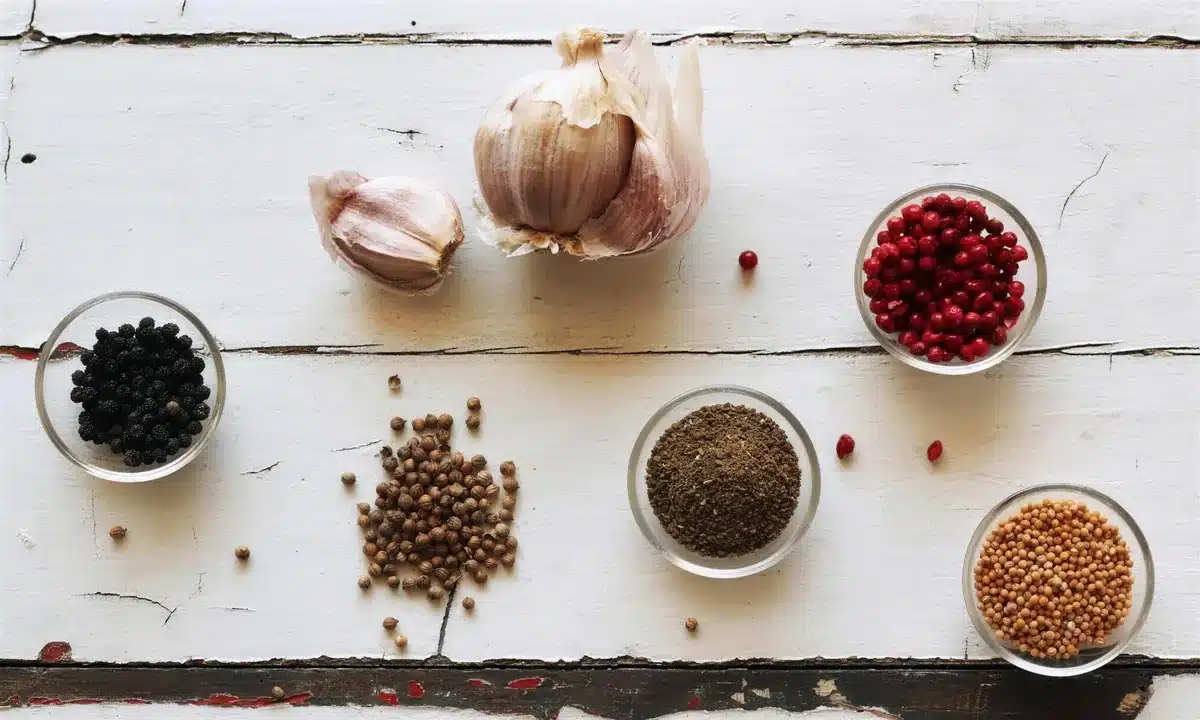
- White distilled vinegar: five percent acidity, which is what the label on a standard bottle says. Cider vinegar works and browns the brine slightly.
- Water: filtered if yours is very hard, since minerals can cloud the jar and soften the vegetables.
- Salt: pickling or canning salt is ideal. Kosher salt is fine; iodized table salt will turn the brine murky.
- Garlic: ten cloves, simmered in the water first, which takes the raw bite off and perfumes the whole batch.
- Fresh dill: whole fronds and stems, several per jar. Dried dill weed is a poor substitute here.
- Mustard, coriander and celery seed: the backbone of a dill pickle. Whole seeds only, never ground.
- Peppercorns: black for heat and pink for the look, which is the one purely decorative ingredient on the list.
- Chiles: four small hot red ones, or two halved jalapenos, and they get noticeably hotter over the first week.
Two wide-mouth quart jars with plastic or lined lids. Bare metal lids corrode in vinegar over a few months.
How To Make Pickled Vegetables
Cut everything before the brine goes on the stove and have the jars standing ready by the pot. Once it boils, pickled vegetables come together in about four minutes and hot brine waits for nobody.
- First, wash the jars in hot soapy water and rinse them well. There is no need to sterilize, since these never leave the refrigerator, but they do need to be genuinely clean.
- Next, bring the water to a boil, drop the heat to a simmer and cook the peeled garlic cloves for 5 minutes. Add the vinegar and salt, raise the heat and boil, stirring until the salt dissolves.
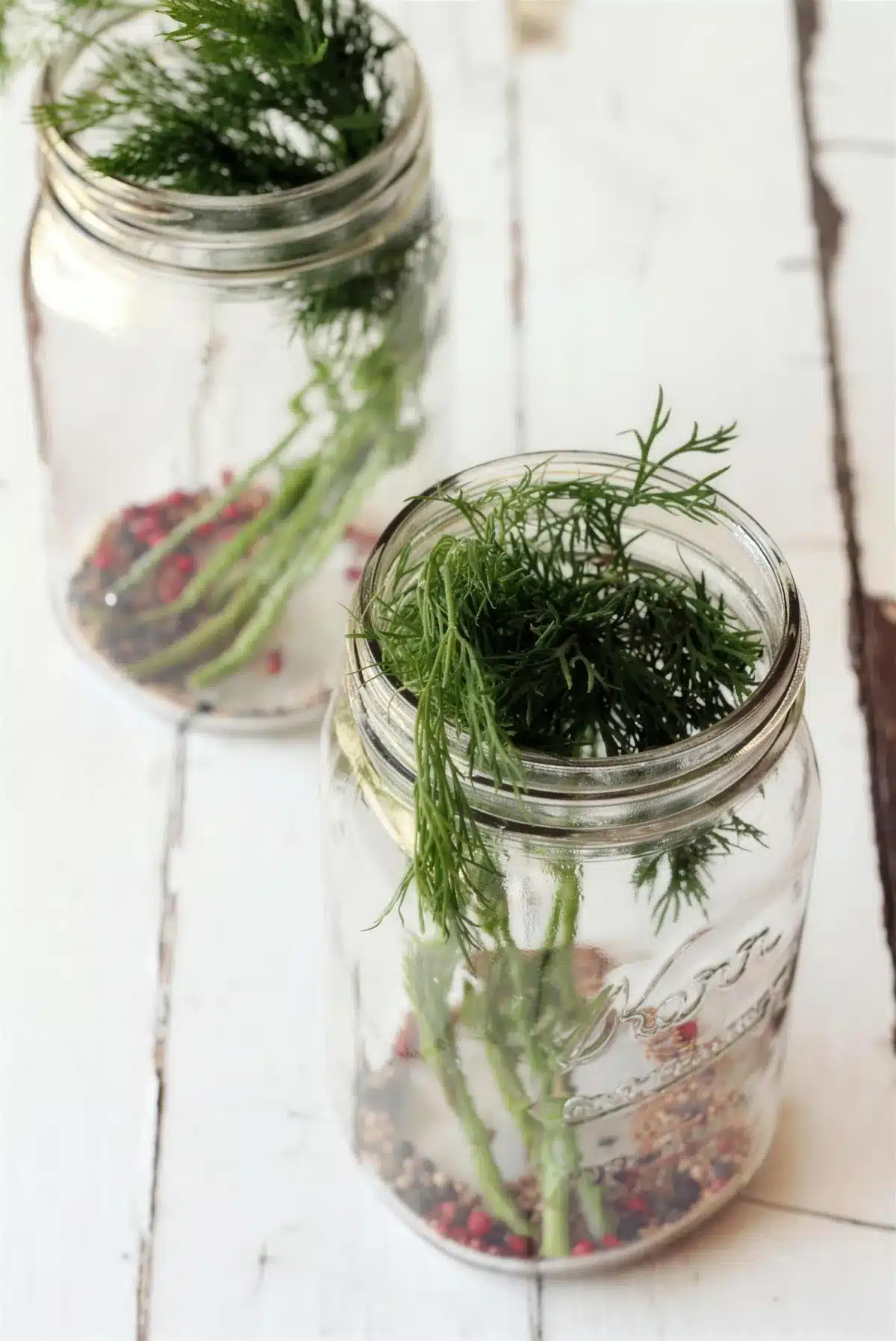
- Then put a few fronds of dill in the bottom of each jar and divide the seeds and peppercorns between them. Lift the garlic out of the brine with tongs and put five cloves in each.
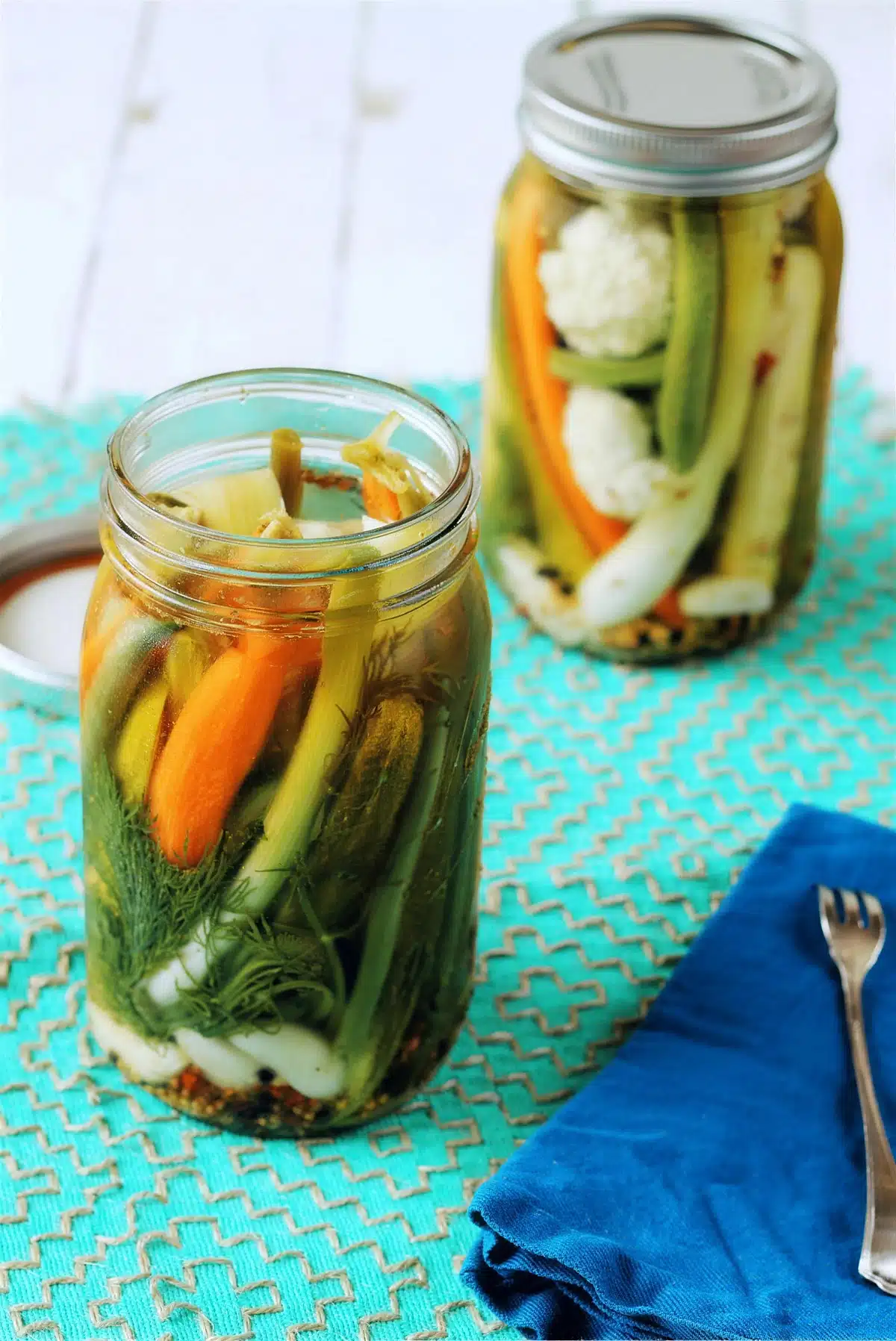
- After that, pack the jars tightly, standing the cucumbers and carrots upright and wedging cauliflower and beans into the gaps. Tight packing is what keeps everything submerged later.
- Bring the brine back to a full boil and pour it over the vegetables until they are completely covered, leaving about half an inch at the top.
- Finally, let the jars cool on the counter for about an hour, then cap them and refrigerate. They are good in a few hours and much better after two days.
Hot Brine or Cold Brine
Hot brine, poured over raw vegetables, is what this recipe for pickled vegetables does. The heat drives the salt and acid in quickly, so the jars taste like pickles within hours rather than days, at the cost of a little crunch in the thinnest pieces.
Cold brine keeps every bit of the snap but takes three or four days to taste of anything. If you are pickling radishes or very thin cucumber coins, let the brine cool to room temperature first.
You do not need to boil the vegetables themselves at any point. Blanching is only worth it for asparagus and thick green beans, and only for about thirty seconds.
Refrigerator Pickles vs Canning
This is the single most important distinction in the whole subject of pickled vegetables, and the one most recipes gloss over.
Refrigerator pickles, which is what these are, are never heat processed. They rely on cold and acid together, they keep for about three months, and the recipe can be adjusted freely because refrigeration is doing the safety work.
Canned pickles are packed into sterilized jars and processed in a boiling water bath so the seal and the acidity alone hold off spoilage at room temperature. That only works with a tested recipe followed exactly, because the acid level has to be uniform throughout the jar.
Never water-bath process this recipe and never leave these jars in a cupboard. If a jar has been at room temperature for more than a couple of hours after cooling, put it back in the cold.
How Long Pickled Vegetables Take to Cure
There is no single answer, because how quickly pickled vegetables cure depends entirely on how thickly you cut things.
Thin coins of radish or cucumber taste pickled in about an hour. Quartered kirby spears and halved carrots want two days. Whole green beans, cauliflower florets and anything left thick need a full week to get all the way to the middle.
The texture changes on its own schedule. Everything is crispest in the first three days, settles into a pleasant firm chew for the next few weeks, and softens slowly after that without ever becoming unpleasant.
Taste one at day two and again at day seven. Pickled vegetables are one of the few things in the kitchen that reward simply waiting, and the difference between those two days is dramatic.
The brine tells you as much as the pickle does. It starts out sharp and thin, and by the end of the first week it has picked up garlic, dill and a little sweetness from the carrots, which is exactly when it becomes worth saving for salad dressing.
Make It Ahead
Making pickled vegetables ahead is the entire point, so there is not much to organize.
The brine itself can be made up to a week in advance and kept in the refrigerator, then brought back to a boil when the jars are packed. That turns pickling day into a ten minute job.
Vegetables can be washed and cut the night before and held in a bag in the crisper. Do not salt them in advance, because they will weep and lose the crunch you are trying to protect.
Storing Pickled Vegetables
- Refrigerator: up to 3 months, sealed, with everything under the brine. The flavor peaks somewhere in the first month.
- Never the pantry: these are not shelf-stable at any point, however sour they taste.
- Freezer: no. Freezing ruptures the cell walls and the vegetables thaw into limp strings.
- The leftover brine: reuse it once for a second, quicker batch, or use it in salad dressing, potato salad and marinades. Do not boil and reuse it a third time, because it has been diluted by the vegetables.
- When to throw it out: a cloudy brine on its own is usually just garlic or salt, but any fizzing, a slimy film, a soft mushy texture or a lid that bulges means the jar goes in the bin.
Variations and Substitutions
- Sweet and sour: add half a cup of sugar to the brine, which lands somewhere near bread-and-butter pickles.
- Giardiniera: cauliflower, celery, carrot and bell pepper, then drained and covered in olive oil once cured.
- Banh mi style: carrot and daikon in matchsticks, rice vinegar in place of white, and two tablespoons of sugar.
- Escabeche: mostly jalapenos and carrots with oregano and bay, which is what taquerias put on the counter.
- Turmeric and ginger: a teaspoon of ground turmeric and a few coins of ginger, which turns the whole jar gold.
- Less salt: drop to a tablespoon and eat them within a month, since salt is part of what preserves them.
What to Serve with Pickled Vegetables
Pickled vegetables belong beside anything rich, fatty or fried, which is most of what people actually want to eat.
- On a cheese or charcuterie board, where they do the job a chutney would.
- Chopped into potato salad, egg salad or tuna salad instead of shop-bought relish.
- Piled onto a burger or alongside beer battered fish tacos, where the acid cuts straight through the batter.
- Next to something creamy and cold, such as an Asian cucumber salad, for a summer table of contrasts.
Here is what readers ask most often.
Pickled Vegetables FAQ
Frequently Asked Questions
Do you have to boil vegetables before pickling?
No. For refrigerator pickles the vegetables go into the jar raw and the boiling brine is poured over them, which is enough to drive the salt and acid in without cooking them soft. The only exceptions worth making are thick asparagus and large green beans, which benefit from about thirty seconds in boiling water first. Boiling anything longer than that guarantees a limp pickle.
What is the 3 2 1 rule for pickling?
Three parts vinegar to two parts water to one part sugar, by volume, which produces a sweet quick-pickle brine. It is a useful thing to remember at the stove, but it is not the only correct ratio. These savory dilled pickled vegetables use equal parts water and vinegar and no sugar at all, which suits cucumbers, carrots and cauliflower far better.
What is the healthiest pickled vegetable?
Anything vinegar-brined is essentially the raw vegetable plus salt, so the nutrition is close to what you started with. Carrots keep their carotenoids, cauliflower its vitamin C and green beans their fiber. The real variable is sodium, which is high in every pickle, so a lower-salt brine eaten within a month is the honest answer. Fermented pickles, made with salt and no vinegar, additionally carry live cultures.
More Questions About Pickling
Good to Know
Why did my pickles go soft?
Usually the wrong cucumber. Waxy slicing cucumbers have thin skins and high water content and cannot stay firm in a jar of pickled vegetables; kirbies can. The other causes are leaving the blossom end on, which carries an enzyme that softens the flesh, hard water, and simply keeping them past about three months.
Can I reuse the brine?
Once, for a quick second batch of something thin like radishes or red onion, kept in the refrigerator and eaten within two weeks. The vegetables release water each time, so the acidity drops with every round. Never reuse brine for anything you intend to keep for months.
Do I need to sterilize the jars?
Not for refrigerator pickles. Hot soapy water and a thorough rinse is enough, because the cold and the acid together are doing the preserving. Sterilizing is a canning requirement, where jars sit at room temperature for a year.
Why is my brine cloudy?
Table salt is the usual culprit, since its anticaking agents do not dissolve. Garlic clouds brine harmlessly too, and so does hard water. Cloudiness combined with bubbles, a slippery film or an off smell is different, and that jar should be thrown away.
Once a jar of pickled vegetables lives in the door of the refrigerator, it quietly improves almost every sandwich and every cheese board for the next three months. For another sharp, crunchy thing to keep on hand, try my mango and jicama salad.
Pickled Vegetables
Save this recipe
Enter your email and I’ll send this recipe straight to your inbox.
Ingredients
For the Brine
- 3 cups water filtered if yours is hard
- 3 cups white distilled vinegar 5 percent acidity
- 2 tablespoons pickling or kosher salt never iodized table salt
Aromatics for the Jars
- 6 sprigs fresh dill whole fronds and stems
- 1 teaspoon celery seed
- 2 teaspoons yellow mustard seed whole
- 1 teaspoon coriander seed whole
- 10 cloves garlic peeled
- 1/2 teaspoon black peppercorns
- 1/2 teaspoon pink peppercorns optional, for color
For the Jars
- 6 kirby cucumbers quartered lengthwise, blossom ends trimmed
- 6 young carrots peeled and halved lengthwise
- 1 handful green beans or scallions trimmed to fit the jar
- 1 cup cauliflower florets cut small enough to wedge into gaps
- 4 small hot red chiles or 2 jalapenos, halved
Equipment
- Medium saucepan
- 2 1-quart jars
- Tongs
Instructions
Make the Brine
- First, wash two wide-mouth quart jars in hot soapy water and rinse them well. There is no need to sterilize them, because these pickles never leave the refrigerator, but they do have to be genuinely clean.
- Next, bring the water to a boil in a medium saucepan, drop it to a simmer and cook the peeled garlic cloves for 5 minutes. Add the vinegar and salt, raise the heat and bring it back to a boil, stirring until the salt has dissolved. Take it off the heat.
Pack the Jars
- Then put a few fronds of dill in the bottom of each jar and divide the celery seed, mustard seed, coriander seed and both kinds of peppercorn between them. Lift the garlic out of the brine with tongs and put 5 cloves in each jar.
- After that, pack the jars tightly. Stand the cucumber quarters and carrot halves upright, then wedge the cauliflower, beans and chiles into the gaps. Tight packing is what keeps everything below the brine later.
Pour and Chill
- Bring the brine back to a full boil and pour it over the vegetables until they are completely covered, leaving about half an inch of headspace. Tuck a folded dill frond under the shoulder of each jar to hold everything down.
- Finally, let the jars cool on the counter for about an hour, then cap them and refrigerate. They taste good within a few hours, much better after 2 days, and best after a week.