
Most greens are cooked fast, in a hot pan, for as short a time as possible. Braised kale goes the other way: butter first, then beans, then tomato paste and stock, and twenty unhurried minutes with the lid off until the leaves give up entirely and the liquid around them turns into a sauce.
That long simmer is the whole trick. Lacinato kale is tough enough to take it, and cannellini beans that have been knocked about in brown butter break down just enough to thicken everything around them. What comes out of a pan of braised kale is somewhere between a side dish and a stew, and it is better on the second day than the first.
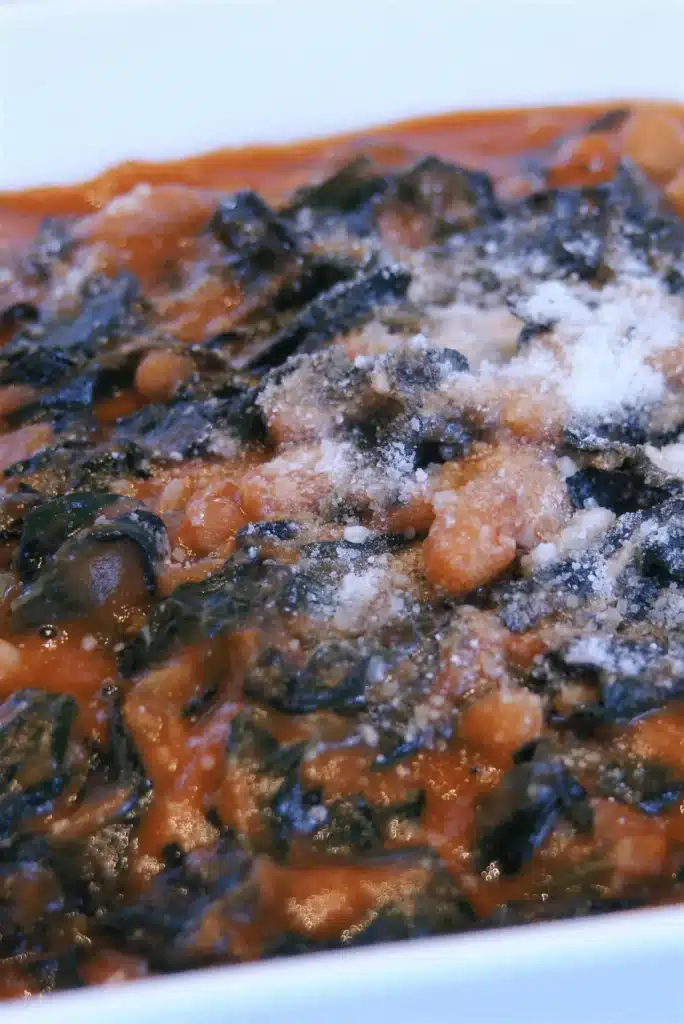
- One pan, about forty minutes, and most of that is unattended simmering
- The beans thicken the sauce themselves, so there is no flour and no cream
- Brown butter gives it a savory depth that olive oil alone does not reach
- Hearty enough to be dinner with bread, restrained enough to sit beside a roast
- Swap the stock and it is vegetarian without changing anything else
- It reheats better than almost any other green vegetable dish

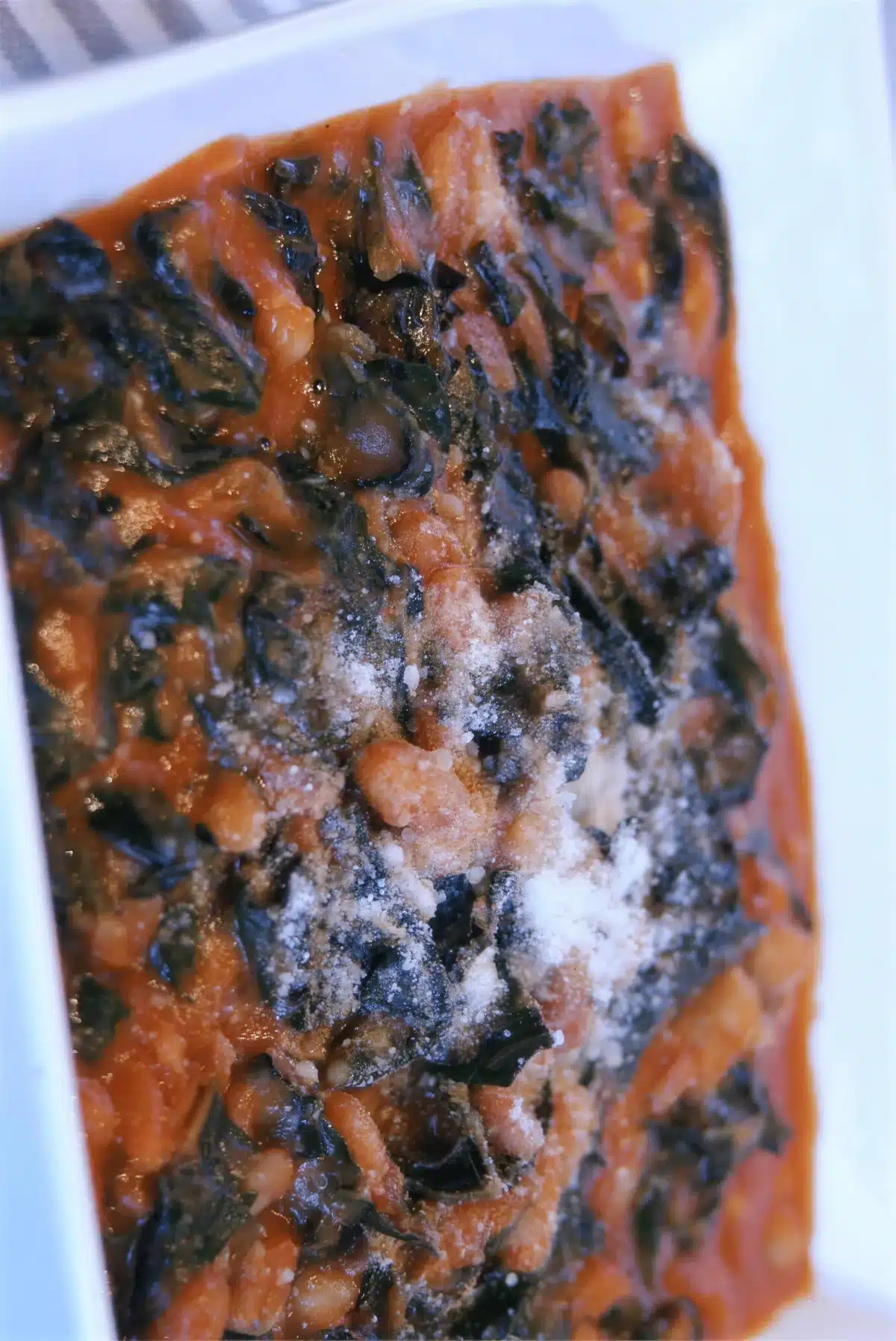
Braised kale rewards patience more than technique, so it is worth understanding what the long cook is actually doing.
What Braised Kale Is, and Why It Works with White Beans
Braising means cooking in a small amount of liquid, covered or uncovered, long enough for tough tissue to soften. With meat that means collagen. With kale it means the cell walls, which are stiffened with cellulose and lignin and simply do not yield to a two minute saute.
Kale sauteed quickly stays squeaky and assertive. Braised kale, given twenty minutes in hot liquid, turns silky and loses most of its sulfurous edge. The flavor goes from raw and mineral to something closer to a cooked green bean, faintly sweet, and it stops fighting whatever it is served with.
The beans are structural, not decorative. Cannellini are a large, thin-skinned white bean that break apart readily. Stirred into hot brown butter before any liquid goes in, some of them crush against the pan and release starch, and that starch is what makes the finished sauce cling instead of pooling. You are effectively thickening the dish with its own ingredients.
The comparison worth making is with a quick saute. Garlic, oil, kale, five minutes, lemon. That is a good dish and a completely different one: bright, chewy, and best eaten immediately. Braised kale is soft, savory and forgiving, and it is the version that keeps.
Save this recipe
Enter your email and I’ll send this recipe straight to your inbox.
Ingredient Notes
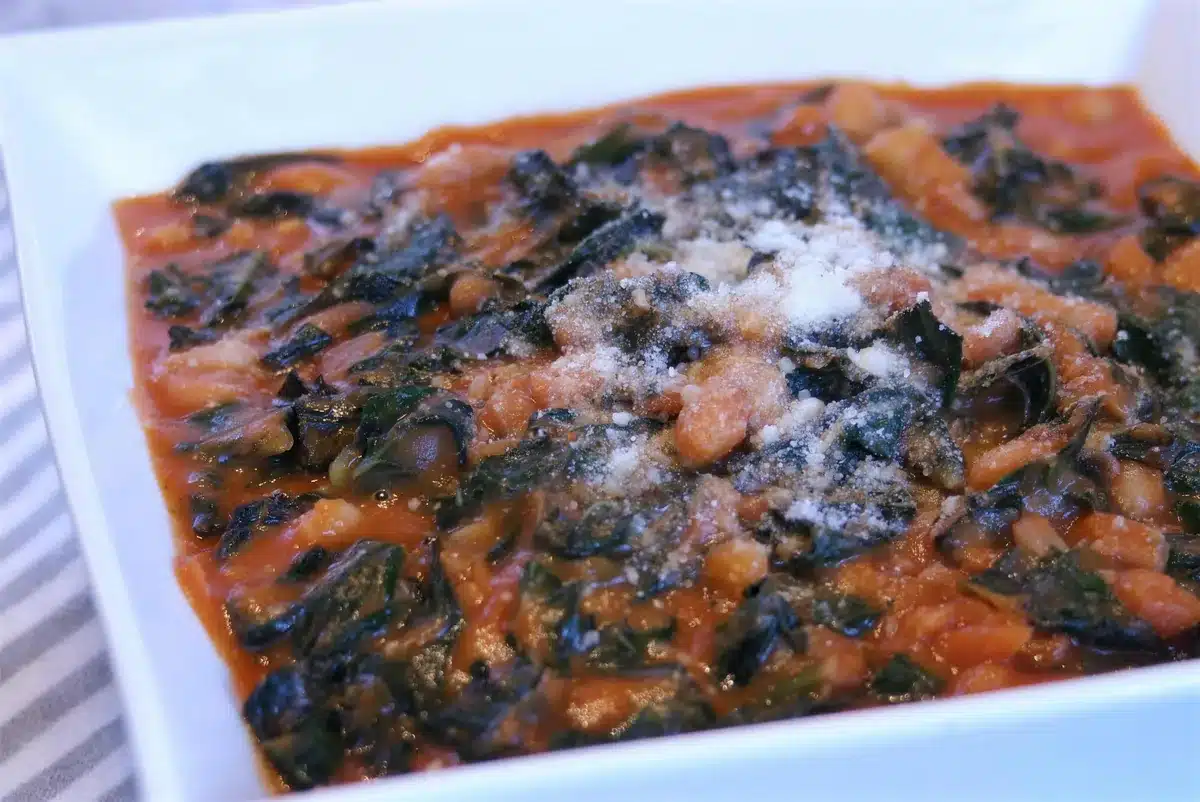
Braised kale runs to nine ingredients, and only two of them are worth being fussy about. Exact amounts are in the recipe card below.
- Lacinato kale: about twelve ounces, which is two small bunches or one large one. Also sold as dinosaur or Tuscan kale, it has flat, dark, blistered leaves and a milder, sweeter flavor than the curly sort. Curly kale works but stays chewier and needs an extra five minutes.
- Cannellini beans: two 15-ounce cans, drained and rinsed. These are the large white kidney beans described by the US Dry Bean Council’s guide to bean varieties. Great Northern beans are a fine stand-in; navy beans are smaller and hold their shape more, which gives you less thickening.
- Butter: four tablespoons, browned. This is not a place for olive oil if you want the flavor the dish is built on. Browning it takes three or four minutes and the milk solids toasting is where the nuttiness comes from.
- Tomato paste: a 6-ounce can. That is a lot, deliberately. Cooked briefly in the fat before liquid goes in, it loses its tinny edge and becomes the backbone of the sauce rather than a background note.
- Stock: three cups to start, with another cup standing by. Chicken gives more body, vegetable keeps it meat-free, and either wants to be low sodium since the sauce reduces.
- Parmesan: a quarter cup stirred in off the heat, plus more at the table. Added while the pan is still boiling it turns stringy and separates.
- Lemon zest: from half a lemon, at the very end. Twenty minutes of simmering flattens everything slightly and the zest is what lifts it back up.
Choosing and Prepping the Kale
The stems are the part people get wrong in braised kale. Lacinato stems are woody all the way up and never soften in twenty minutes, so they have to come out. Hold the base of the stem in one hand and strip the leaf away with the other, or fold the leaf in half along the rib and cut it out.
Then slice the leaves crosswise into ribbons about 1-inch wide. Do not go finer. Thin shreds disintegrate over a long braise into something closer to a puree, and the pleasure of this dish is that the leaves stay identifiable.
Wash after cutting, not before. Kale grown in sandy soil holds grit in the blistered surface, and a bowl of cold water with the cut ribbons swirled through it drops the sand to the bottom. Lift the leaves out rather than pouring, and do not bother drying them; the water clinging to the leaves is welcome in a braise.
A quick note on volume: twelve ounces of raw kale looks like an absurd amount and will not fit in the pan at once. It collapses to about a fifth of its bulk. Add it in two or three handfuls, letting each wilt before the next goes in.
How To Make Braised Kale
The order matters more than the timings when you make braised kale. Everything that needs fat browns first, and the liquid goes in only once that is done.
- First, melt the butter in a large, wide pan over medium heat and let it keep cooking until it foams, quiets down and smells nutty, about 3 to 4 minutes. It should be the color of weak tea.
- Next, tip in the drained beans and cook them for 3 to 4 minutes, pressing a few against the side of the pan so they break up and start to thicken things.
- Then stir in the garlic and red pepper flakes for one minute, add the tomato paste, and keep it moving for another minute until it darkens and smells sweet rather than sharp.
- After that, pour in three cups of stock and scrape the base of the pan, then add the kale in handfuls with the salt and pepper, letting each batch wilt before adding more.
- Finally, simmer uncovered for about 20 minutes, stirring now and then and adding stock if it tightens too far. Off the heat, stir through the lemon zest and parmesan.
How To Tell When the Kale Is Done
Clock time is a guide, not an answer, because bunches vary and pans vary more. Three tests, in order of reliability.
Bite a ribbon. It should be completely tender with no squeak and no resistance at the spine of the leaf. If it still snaps back, it needs another five minutes and probably a splash more stock.
Look at the liquid. When it is ready the sauce coats the back of a spoon and a spatula drawn across the pan leaves a track that fills in slowly. Thin, watery liquid means it needs longer uncovered; a dry pan means it needed more stock ten minutes ago.
Taste for the tomato. Underdone, the paste still reads as raw and slightly metallic. Properly cooked it tastes round and savory, and that shift usually happens at the same time the leaves give up.
Kale is very hard to overcook here. Past thirty minutes it simply gets softer and darker, which is a matter of taste rather than a fault.
Make It Ahead
Braised kale is one of the few vegetable dishes that genuinely improves overnight. The starch from the beans keeps hydrating, the tomato loses its last edge, and the whole thing tastes more like itself the next day.
Cook it completely, but hold back the lemon zest and the parmesan. Cool it uncovered for half an hour, then refrigerate. Reheat gently with a few tablespoons of stock or water, since it thickens considerably when cold, and stir in the zest and cheese only once it is hot.
For a party, it holds well in a low oven at 200F for up to an hour, covered, which is why it works beside a roast that needs resting.
Storing Braised Kale
Refrigerated: four days in an airtight container, which is longer than most cooked greens manage because the acidity of the tomato works in your favor.
Frozen: up to three months. Braised kale freezes better than any quick-cooked green because the texture is already soft, so ice crystals have nothing to ruin. Cool it fully, portion it flat in freezer bags, and thaw overnight in the refrigerator.
Reheating: a wide pan over medium-low with a splash of liquid, stirring, about five minutes. The microwave works but heats unevenly and can split the cheese, so add the parmesan afterward if you go that route.
What does not keep is the brightness. Refresh a reheated batch with a little more lemon zest and a fresh grating of cheese and it tastes newly made.
Variations and Substitutions
- Vegan: olive oil in place of butter, vegetable stock, and a tablespoon of nutritional yeast or a little white miso instead of the parmesan. You lose the brown butter note, so add a pinch of smoked paprika to compensate.
- With sausage: brown eight ounces of crumbled Italian sausage first, lift it out, and use the rendered fat in place of half the butter. Return it with the stock.
- Other greens: collards want an extra ten minutes, Swiss chard about eight minutes less, and spinach should go in for the last two minutes only.
- Brothier: use five cups of stock and serve it in bowls over toasted bread rubbed with garlic, closer to a pasta fagioli in spirit.
- Spicier: double the pepper flakes or add a chopped Calabrian chili with the garlic.
What to Serve with Braised Kale
Braised kale is substantial, so it works better next to simple things than next to other rich ones.
- Crusty bread and nothing else, which is how it gets eaten in this house most often.
- A roast chicken, where the pan juices and the tomato sauce belong together.
- Alongside red beans and rice for a table built entirely on beans.
- A sharp green salad such as my celery salad with parmesan to cut through it.
For a sweeter bean dish from the other end of the spectrum, there is my root beer baked beans.
Here is what readers ask most often.
Braised Kale FAQ
Frequently Asked Questions
Can I use curly kale instead of lacinato?
Yes, with two adjustments. Curly kale has more surface area and a coarser rib, so strip the stems more aggressively and give it an extra five minutes of simmering. It also holds more water, so start with two and a half cups of stock rather than three and add from there. The finished braised kale will be a little chewier and a little more assertive, which some people prefer.
Do I have to use canned beans?
No. Dried cannellini cooked from scratch are better, and about a cup and a half of dried beans yields the equivalent of two cans. Cook them until fully tender before they go anywhere near this pan, because the tomato paste is acidic enough to stop underdone beans softening any further. Save a cup of the cooking liquid and use it in place of some of the stock.
Why is my sauce watery?
Almost always because the beans were added with the liquid rather than before it. They need those few minutes in the hot butter, with some of them crushed, to release the starch that thickens everything. If it has already happened, mash half a cup of the beans against the side of the pan and simmer uncovered for another five minutes.
More Questions About Browning and Timing
Frequently Asked Questions
How do I know when the butter is browned enough?
Listen rather than look. Butter foams loudly while its water boils off, then goes quiet, and about thirty seconds after the noise stops it smells like toasted nuts and the solids at the bottom turn the color of weak tea. That is the moment. A pale-bottomed pan helps enormously, because in a dark skillet you cannot see the color change until it has gone too far.
Can I make this in a slow cooker?
Partly. Brown the butter, beans, garlic and tomato paste on the stove first, since a slow cooker cannot do any of that, then transfer everything with the kale and two cups of stock and cook on low for three hours. Use less liquid than the stovetop version because nothing evaporates. Stir in the zest and cheese at the end as usual.
More Questions About Serving and Flavor
Frequently Asked Questions
Is this a main course or a side?
Both, depending on the bread. As written it serves five as a side dish alongside something else. With thick toast underneath and a poached egg on top it feeds three as dinner, and the recipe scales up cleanly in a wide enough pan.
My kale tastes bitter. What went wrong?
Usually old kale rather than bad technique. Leaves that have been in the refrigerator over a week develop a harsher edge that cooking will not remove. A teaspoon of sugar or an extra minute of browning on the tomato paste covers a little of it. Choose bunches with firm, deeply colored leaves and no yellowing at the tips.
Braised kale made this way is a dish about time rather than skill, and the twenty minutes you leave it alone are doing all of the work. If you want the same comfort in soup form, try my pasta fagioli.
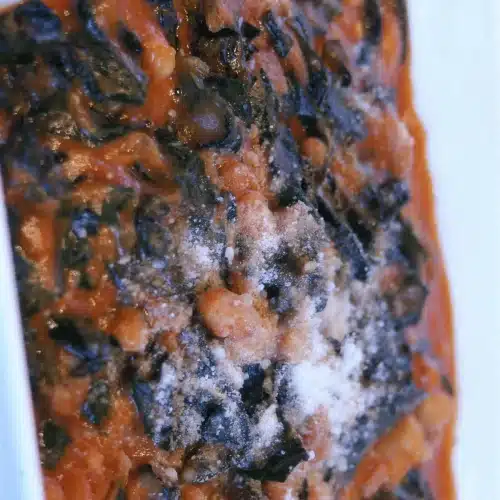
Braised Kale and Cannellini Beans
Save this recipe
Enter your email and I’ll send this recipe straight to your inbox.
Ingredients
The Brown Butter Base
- 4 tablespoons unsalted butter
- 2 cans cannellini beans 15 ounces each, drained and rinsed
- 2 cloves garlic minced
- 1/2 teaspoon red pepper flakes
- 1 can tomato paste 6 ounces
The Greens and the Finish
- 3 cups low-sodium chicken or vegetable stock plus up to 1 cup more as needed
- 12 ounces lacinato kale stems stripped, leaves sliced into 1-inch ribbons
- 1 teaspoon kosher salt
- 1/2 teaspoon freshly ground black pepper
- 1/4 cup grated parmesan cheese plus more for serving
- 1 teaspoon finely grated lemon zest from about half a lemon
Equipment
- Large Pan
Instructions
Brown the Butter and Beans
- Melt the butter in a large wide pan over medium heat and keep cooking it until it foams, falls quiet and smells nutty, about 3 to 4 minutes. The solids on the bottom should be the color of weak tea.
- Tip in the drained beans and cook for 3 to 4 minutes, pressing a few against the side of the pan with a spoon so they break up and release their starch.
Build the Sauce
- Stir in the garlic and red pepper flakes and cook for 1 minute, until fragrant but not colored.
- Add the tomato paste and keep it moving for another minute, until it darkens a shade and smells sweet rather than sharp and tinny.
Braise the Kale
- Pour in 3 cups of the stock and scrape the browned paste off the base of the pan, then add the kale in two or three handfuls with the salt and pepper, letting each batch wilt before the next goes in.
- Simmer uncovered for about 20 minutes, stirring occasionally, until a ribbon of kale is completely tender with no squeak and the liquid coats the back of a spoon. Splash in more stock if the pan tightens too far.
Finish Off the Heat
- Remove the pan from the heat, stir through the lemon zest and the parmesan, and check the seasoning, keeping in mind that more cheese goes on at the table. Serve hot with extra parmesan.