
These cornbread muffins are built on the fat left in the pan after the bacon comes out, with fresh corn cut off the cob and a generous handful of basil stirred through at the last second.
The thinking behind them was not complicated. There was cornbread on the mind and a pile of corn in the refrigerator, and once corn was going in there was no argument against bacon, and once bacon was going in the rendered fat was obviously going to replace the butter. Basil was the thing that stopped it becoming too heavy. Corn and basil in August is one of the better accidents in cooking.
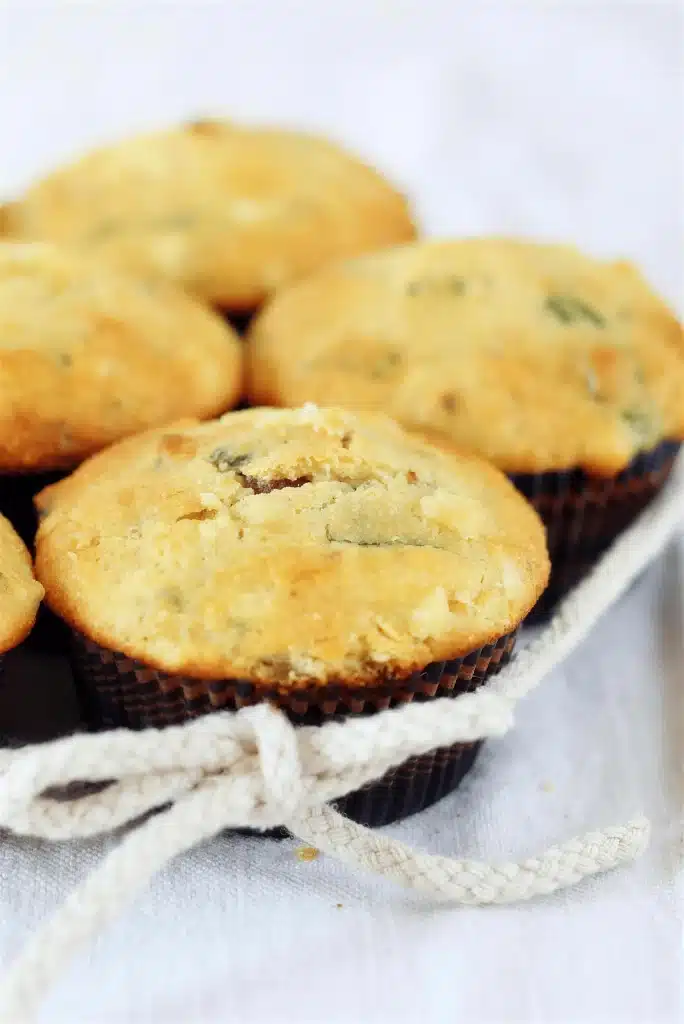
- Rendered bacon fat replaces the butter, so the flavor is in the crumb and not just the add-ins
- Fresh corn kernels keep the middle moist for a full day longer than a plain batch
- One bowl for the dry, one for the wet, one for the add-ins, and a spoon
- They bake in under twenty minutes and go with soup, chili, eggs or nothing at all
- The batter can be mixed the night before and baked straight from the refrigerator
- Basil is the part nobody expects and the part everybody asks about

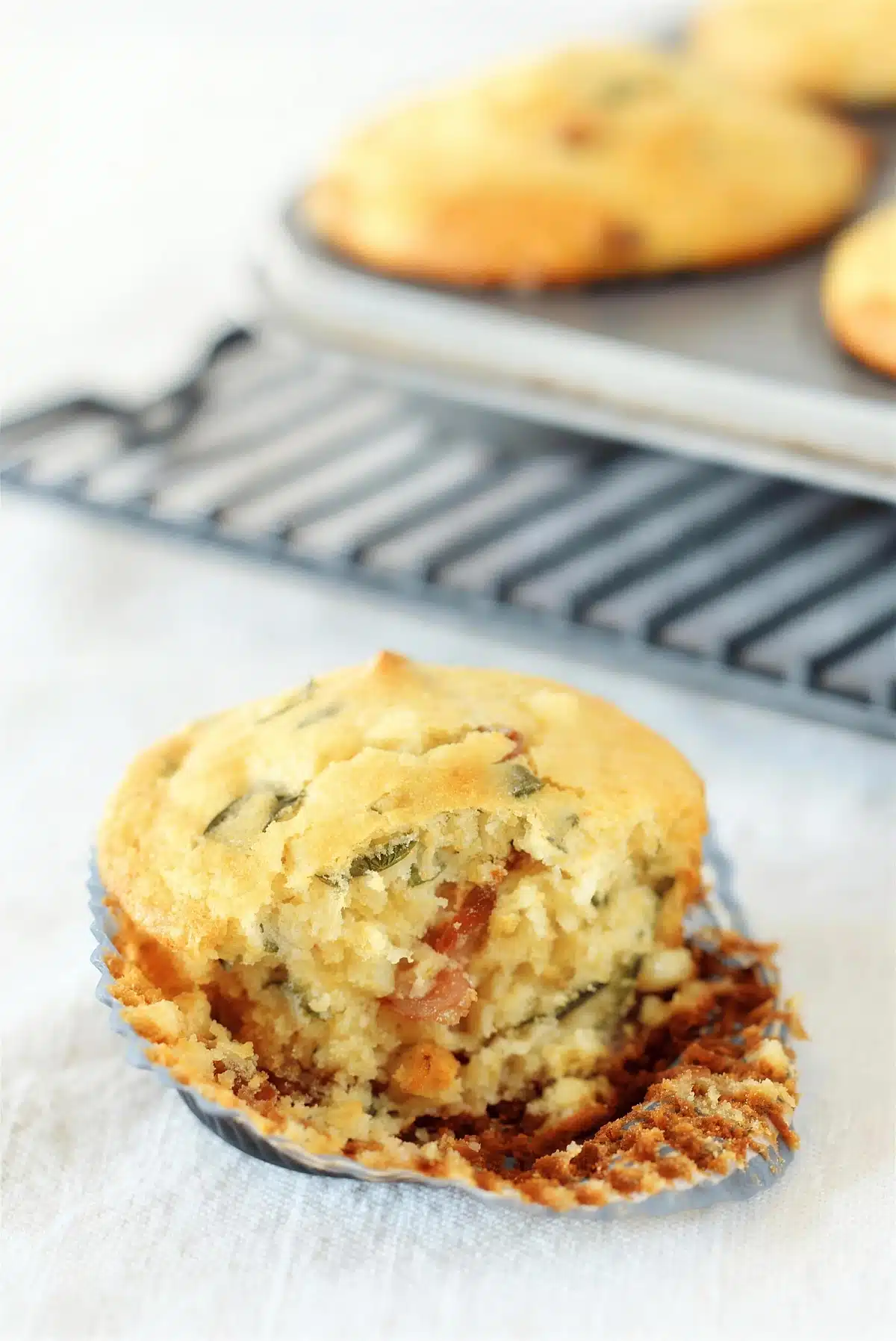
Everything below is a straightforward method with two small decisions that matter more than the rest of the recipe.
- What Makes These Cornbread Muffins Different
- Ingredient Notes
- Sweet or Savory: Where These Sit
- How To Make Cornbread Muffins
- How To Tell When They Are Done
- Common Mistakes with Corn Muffins
- Make It Ahead
- Storing Cornbread Muffins
- Variations and Substitutions
- What to Serve with Cornbread Muffins
- Cornbread Muffins FAQ
What Makes These Cornbread Muffins Different
Most recipes for cornbread muffins are a cornmeal batter with butter in it and nothing else going on.
The fat is rendered bacon fat, which carries smoke and salt into every part of the crumb rather than leaving it sitting in the pockets of meat.
The corn is fresh and raw, cut straight off the cob, so it steams inside the batter and bursts rather than turning to starch the way canned corn does.
Honey does the sweetening instead of granulated sugar, which browns the tops faster and keeps them soft on the second day.
The basil goes in whole leaves chopped coarse, tossed with flour along with the corn and the bacon so nothing sinks to the bottom of the cup.
The result reads savory first. There is sugar in there, but these cornbread muffins land closer to a bread you eat with dinner than to a cake you eat with coffee.
Save this recipe
Enter your email and I’ll send this recipe straight to your inbox.
Ingredient Notes
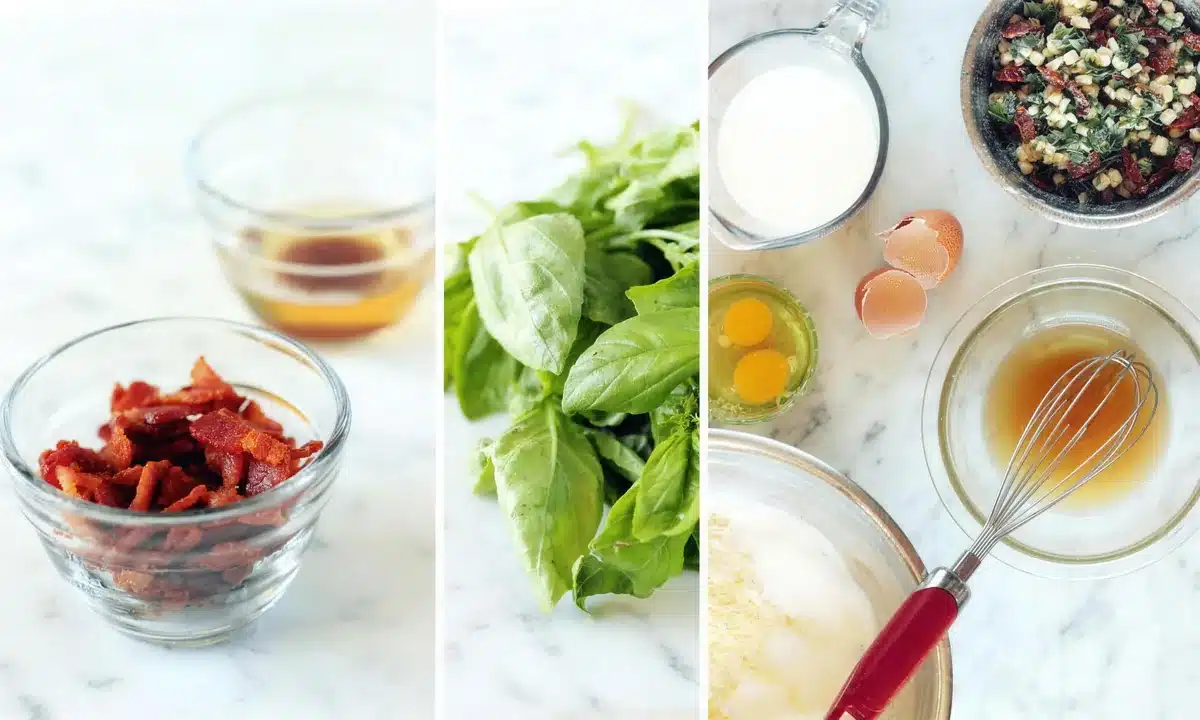
Cornbread muffins this good run to nine items, and three of them are the reason the recipe exists. Exact amounts sit in the recipe card at the foot of the page.
- Bacon: six ounces, thick cut and diced small. Six slices give a reliable three tablespoons of fat, where four slices usually do not. The National Pork Board’s own oven method for bacon is worth knowing if you would rather not stand at the stove, though for this recipe the skillet is better because you need the fat in one place.
- Cornmeal: one cup, medium grind and preferably stone ground. The Whole Grains Council explains that cornmeal and grits are milled from dent corn rather than the sweet corn you eat off the cob, which is why the two behave so differently in a batter.
- All-purpose flour: one cup in the batter and three tablespoons held back to toss with the add-ins. Without that second measure the corn and the bacon end up in a layer at the bottom.
- Fresh corn: one cup of kernels, roughly two ears. Frozen works and should be thawed and patted dry first. Canned is the one to avoid because it is already cooked soft.
- Basil: a third of a cup, chopped, which sounds like a lot and is not. Basil loses most of its perfume to a hot oven, so the quantity is set for what survives rather than for what it smells like raw.
The Rest of the List, and Why the Add-Ins Work
- Honey: a quarter cup. It is mildly acidic, which is why there is a little baking soda in the recipe as well as baking powder.
- Whole milk: one cup. Buttermilk is a fine swap and gives a tangier, slightly softer crumb.
- Eggs: two large, at room temperature so they do not seize the warm bacon fat into specks.
- Salt: three quarters of a teaspoon of fine sea salt, which accounts for the bacon already in the batter.
The bacon fat, the fresh corn and the basil are what separate this batch from a plain tin.
Bacon fat behaves differently from butter in a batter. It is almost entirely fat where butter is about sixteen percent water, so the crumb comes out shorter and a little denser, and it stays soft for longer.
Raw corn kernels release their liquid as steam inside a sealed pocket of batter, which is why they burst rather than dry out. Precooked corn has nothing left to give.
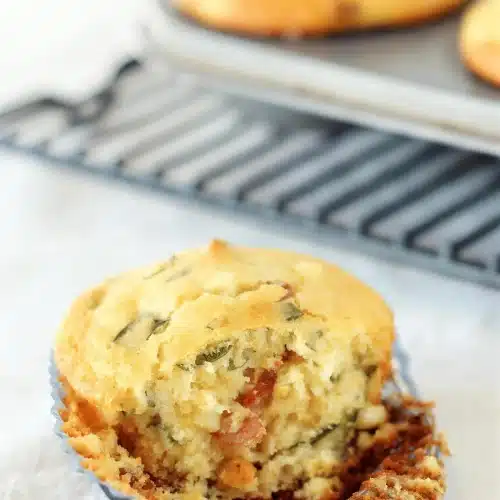
Basil browns at the edges in a hot oven and that is normal. The flecks in the photographs are darker than raw basil and they still taste of basil, which is the whole point of using a third of a cup.
Sweet or Savory: Where These Sit
The argument about sugar in cornbread is older than any of us, and it is what decides whether cornbread muffins land as a side dish or as a breakfast.
Southern cornbread is savory, usually all cornmeal, often with no sugar at all, baked in a skillet with bacon fat or lard.
Northern cornbread is sweeter and softer, cut with wheat flour, closer in texture to a cake and the version most muffin recipes follow.
This batch sits between the two. There is a quarter cup of honey in it, which is roughly half what a sweet recipe carries, and the flour is half the dry weight rather than most of it.
The bacon pushes it further savory than the honey pushes it sweet, so it works beside chili and it also works with butter and jam if that is your preference.
Cut the honey to two tablespoons if you want plainly savory cornbread muffins, and add two more if you want them to read as a sweet muffin. Nothing else in the recipe needs changing either way.
How To Make Cornbread Muffins
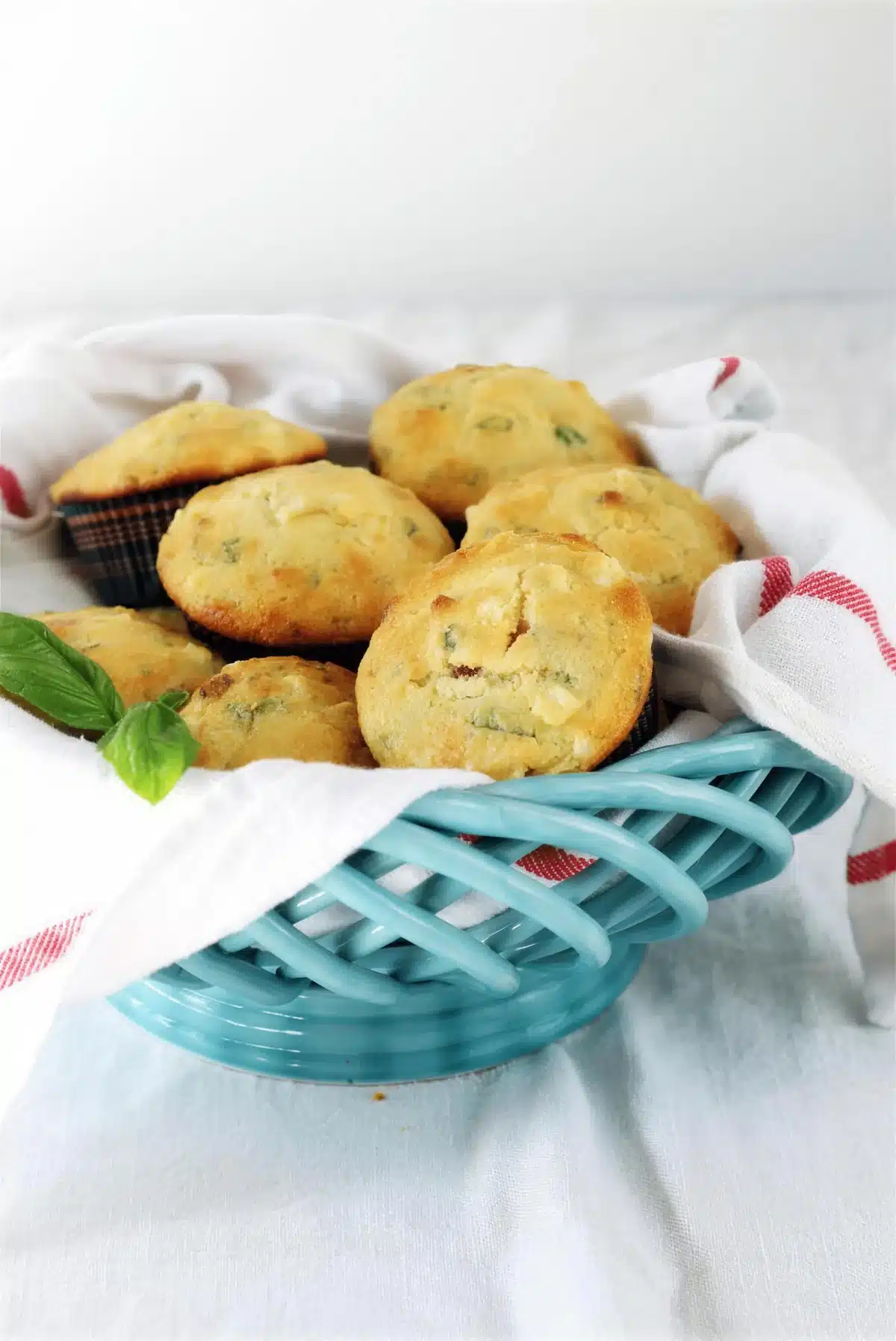
Cornbread muffins take three bowls and about fifteen minutes of work. The oven should be fully preheated before anything is mixed.
- First, render the 6 ounces of diced bacon in a skillet over medium heat until it is brown and crisp, about 8 minutes, then lift it out with a slotted spoon and keep the fat.
- Next, whisk the cornmeal, the 1 cup of flour, the baking powder, the baking soda and the salt in a large bowl, and whisk the milk, eggs, 1/4 cup of warm bacon fat and the honey in a second bowl.
- Then toss the corn, the bacon and the chopped basil with the reserved 3 tablespoons of flour in a third bowl until everything is dusted.
- After that, pour the wet into the dry and fold about ten strokes, until there are still streaks of flour showing, then fold the add-ins through with another few strokes and stop.
- Finally, let the batter stand 10 minutes so the cornmeal hydrates, divide it between twelve lined cups and bake at 400F for 15 to 17 minutes.
How To Tell When They Are Done
Color alone is unreliable on these cornbread muffins because the honey browns the tops early.
Take the internal temperature. An instant-read thermometer pushed into the middle of the center muffin should read 200F to 205F, which is where a quick bread has finished setting.
The tops should spring back when pressed gently with a fingertip and leave no dent.
A skewer comes out clean apart from the odd smear of melted corn, which is not batter and can be ignored.
The edges pull away slightly from the paper liner at the top, which happens in the last two minutes.
Fifteen minutes is usually enough in a properly preheated oven, and anything past eighteen dries them out. Start checking at fourteen.
Common Mistakes with Corn Muffins
Five faults account for almost every disappointing batch of cornbread muffins.
Overmixing is the big one. Ten folds and a few streaks of dry flour still showing is correct. A smooth batter builds gluten and gives you a tough, tunneled crumb.
Old baking powder loses its lift quietly. Drop half a teaspoon into hot water; if it does not fizz hard, buy a new tin.
Pouring hot bacon fat onto cold eggs scrambles them into little threads. Let the fat cool for a minute or two and have the eggs at room temperature.
Filling the cups to the brim gives a flat mushroom top rather than a dome. Three quarters full is the mark.
Skipping the flour toss sends the corn and the bacon straight to the bottom of every cup, which is the single most visible fault in a finished batch.
Make It Ahead
Cornbread muffins are a good thing to have half prepared before people arrive.
The bacon can be cooked two days ahead and refrigerated with its fat in the same container. Warm the fat gently to loosen it before measuring.
The dry mixture keeps a month in a sealed jar at room temperature. Label it with the wet ingredients you still need.
The full batter holds overnight. Cover it and refrigerate, then bake straight from cold and add two minutes to the time. The rise is very slightly lower and nobody has ever noticed.
Corn can be cut off the cob days early and kept in a sealed box in the refrigerator, or frozen on a tray.
Basil is the one thing to leave until the end. Chopped basil goes black at the cut edges within a few hours, so cut it while the oven heats.
Storing Cornbread Muffins
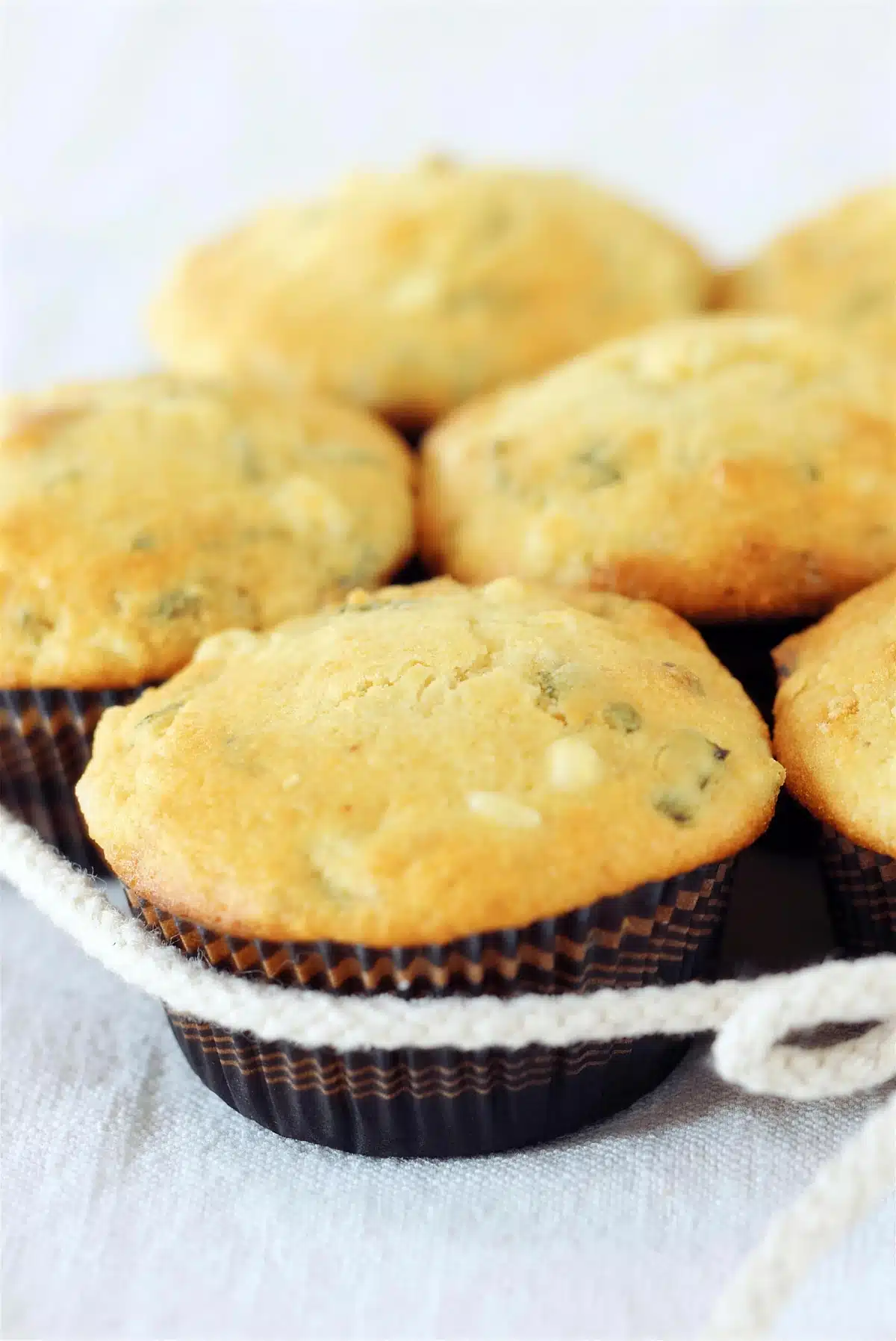
- At room temperature: cornbread muffins keep 2 days in an airtight box with a paper towel underneath them to take up condensation.
- In the refrigerator: up to 5 days, but they firm up noticeably. Fifteen seconds in the microwave brings them back.
- In the freezer: 3 months, wrapped individually and then bagged. Bacon fat holds its flavor well when frozen.
- To reheat: 8 minutes at 325F from frozen, or split and toast them cut side down in a dry pan, which is the better option of the two.
- Do not seal them warm. Steam trapped in the box softens the tops and can make the liners peel away.
Variations and Substitutions
Cornbread muffins are forgiving as long as the ratio of wet to dry stays where it is.
- Cheddar: three quarters of a cup, grated coarse and tossed in with the corn. Sharp cheddar stands up to the bacon better than a mild one.
- Jalapeno: one, seeded and minced, added with the add-ins. It sits well with the honey.
- No pork: leave the bacon out and use a quarter cup of melted butter or olive oil. Raise the salt to a full teaspoon to make up for what the bacon was bringing.
- Buttermilk: swap it one for one for the whole milk and raise the baking soda to half a teaspoon.
- Scallions or chives in place of the basil, at the same volume, for a version that is savory all the way through.
- A skillet instead of a tin: pour the batter into a hot buttered 9-inch cast iron pan and bake for 22 to 25 minutes at the same temperature.
- Mini muffins: the same batter gives about 30, and they need 10 to 12 minutes.
What to Serve with Cornbread Muffins
Savory cornbread muffins are a side dish first, and they are best beside something with a sauce or a broth.
- Roasted carrot parsnip soup, which is sweet enough to meet the honey halfway.
- Mussels in white wine, where a split muffin does the job the usual crusty bread does and does it better.
- A pot of chili, which is the traditional answer and still the right one.
- Bacon jam roasted chicken and vegetables, if you want to run the bacon idea all the way through a meal.
- Fried eggs and hot sauce, with the muffin split and toasted in the pan first.
- Honey butter, whipped with a pinch of flaky salt, for anyone who wants them sweeter than the recipe makes them.
If you are baking your way through a corn and squash summer, the pumpkin beer bread is the same kind of one-bowl quick bread in a loaf pan.
Here is what people ask most often.
Cornbread Muffins FAQ
Frequently Asked Questions
Can I use a boxed cornbread mix?
You can, and the add-ins are what make this recipe anyway. Prepare one 8.5 ounce box to the packet directions, then fold in the cooked bacon, a cup of corn and the basil tossed with two tablespoons of flour, and cut the honey to one tablespoon because the mix is already sweet. You will get about eight muffins rather than twelve.
Why did mine turn out dry?
Almost always time in the oven rather than the recipe itself. Cornbread muffins have a shorter window than most quick breads. Cornmeal has no gluten to hold moisture, so the window between set and dry is short. Pull them at 200F internal, and if you are baking without a thermometer start checking at fourteen minutes. A second cause is measuring flour by scooping the cup straight into the bag, which packs in an extra ounce or more.
What is the difference between cornbread and cornbread muffins?
The batter is the same. Cornbread muffins bake faster because each portion is small, so they carry more crust for their size and a slightly drier crumb, and they need a little more fat to compensate. Cornbread baked in a skillet has one broad crust and a softer middle. Anything baked in a pan can be baked in a tin at a shorter time, and the reverse is also true.
More Questions About Corn and Cornmeal
Good to Know
Can I use self-rising cornmeal?
Yes, and leave out the baking powder, the baking soda and the salt entirely. Self-rising cornmeal already carries all three. Use one cup of it in place of the plain cornmeal and keep the all-purpose flour as it is, since self-rising mixes vary and the flour is what gives these their structure.
Is fine or coarse cornmeal better here?
Medium grind is the sweet spot for cornbread muffins. Fine cornmeal gives a smooth, cakey crumb that loses the character of the grain, and coarse polenta stays gritty even after the ten minute rest. If coarse is all you have, soak it in the milk for thirty minutes before mixing and it will come out fine.
Do I have to use fresh corn?
No. Frozen kernels work well and only need thawing and drying on a towel first, because the water they carry thins the batter. Canned corn is the one worth avoiding; it has already been cooked soft in the can and it collapses into the crumb instead of bursting.
Can I make these gluten-free?
Replace the cup of all-purpose flour with a cup of a measure-for-measure gluten-free blend, including the three tablespoons used to toss the add-ins. Do not simply use more cornmeal, because without the flour there is nothing holding the crumb together and they fall apart in the liner.
A batch of cornbread muffins costs two ears of corn, six slices of bacon and a bunch of basil, and it turns a bowl of soup into supper.
Cornbread Muffins with Bacon and Basil
Save this recipe
Enter your email and I’ll send this recipe straight to your inbox.
Ingredients
For the Muffins
- 6 ounces thick-cut bacon about 6 slices, diced small
- 1 cup medium-grind cornmeal stone ground if you have it
- 1 cup all-purpose flour spooned and leveled
- 2 teaspoons baking powder
- 1/4 teaspoon baking soda the honey is acidic enough to activate it
- 3/4 teaspoon fine sea salt the bacon brings the rest
- 1 cup whole milk or buttermilk
- 2 large eggs at room temperature
- 1/4 cup honey cut to 2 tablespoons for a plainer version
- 1 tablespoon unsalted butter melted, to top up the bacon fat if you are short
The Add-Ins
- 1 cup fresh corn kernels from about 2 ears, or thawed and dried frozen corn
- 1/3 cup chopped fresh basil loosely packed
- 3 tablespoons all-purpose flour for tossing the add-ins
Equipment
- Muffin tin
- Large skillet
- Mixing bowls
Instructions
Render the Bacon
- Heat the oven to 400F and line a standard 12-cup muffin tin with paper liners. Dice the bacon small and cook it in a skillet over medium heat, stirring often, until it is brown and crisp, about 8 minutes.
- Lift the bacon out with a slotted spoon onto a paper towel and pour the fat into a measuring cup. You want 1/4 cup. Six ounces of thick-cut bacon usually gives about 3 tablespoons, so top it up with the melted butter and let it cool for a minute or two before it meets the eggs.
Mix the Batter
- Whisk the cornmeal, the 1 cup of flour, the baking powder, the baking soda and the salt together in a large bowl.
- Beat the milk, the eggs, the warm bacon fat and the honey together in a second bowl until they are smooth. In a third bowl, toss the corn kernels, the cooked bacon and the chopped basil with the reserved 3 tablespoons of flour until everything is lightly dusted.
- Pour the wet mixture into the dry and fold with a spatula about ten strokes, stopping while streaks of dry flour are still visible. Add the floured corn, bacon and basil and fold four or five more strokes, no further. Let the batter stand on the counter for 10 minutes so the cornmeal hydrates and the mixture thickens.
Bake and Cool
- Divide the batter between the twelve liners, filling each about three quarters full. Bake for 15 to 17 minutes, until the tops spring back and an instant-read thermometer in the center muffin reads 200F to 205F. Start checking at 14 minutes.
- Rest the tin on a wire rack for 5 minutes, then lift the muffins out so the bottoms do not steam. Serve them warm. Once they are completely cool they can go into an airtight box, but never while any warmth is left in them or the liners will peel away.