Arugula is almost always eaten raw, which is a shame, because sauteed arugula is a completely different vegetable. Thirty seconds in garlic butter takes the peppery bite down to something closer to a mild mustard green, and the leaves collapse to a fraction of their volume, so a bag that looked like enough for a salad becomes two generous spoonfuls.
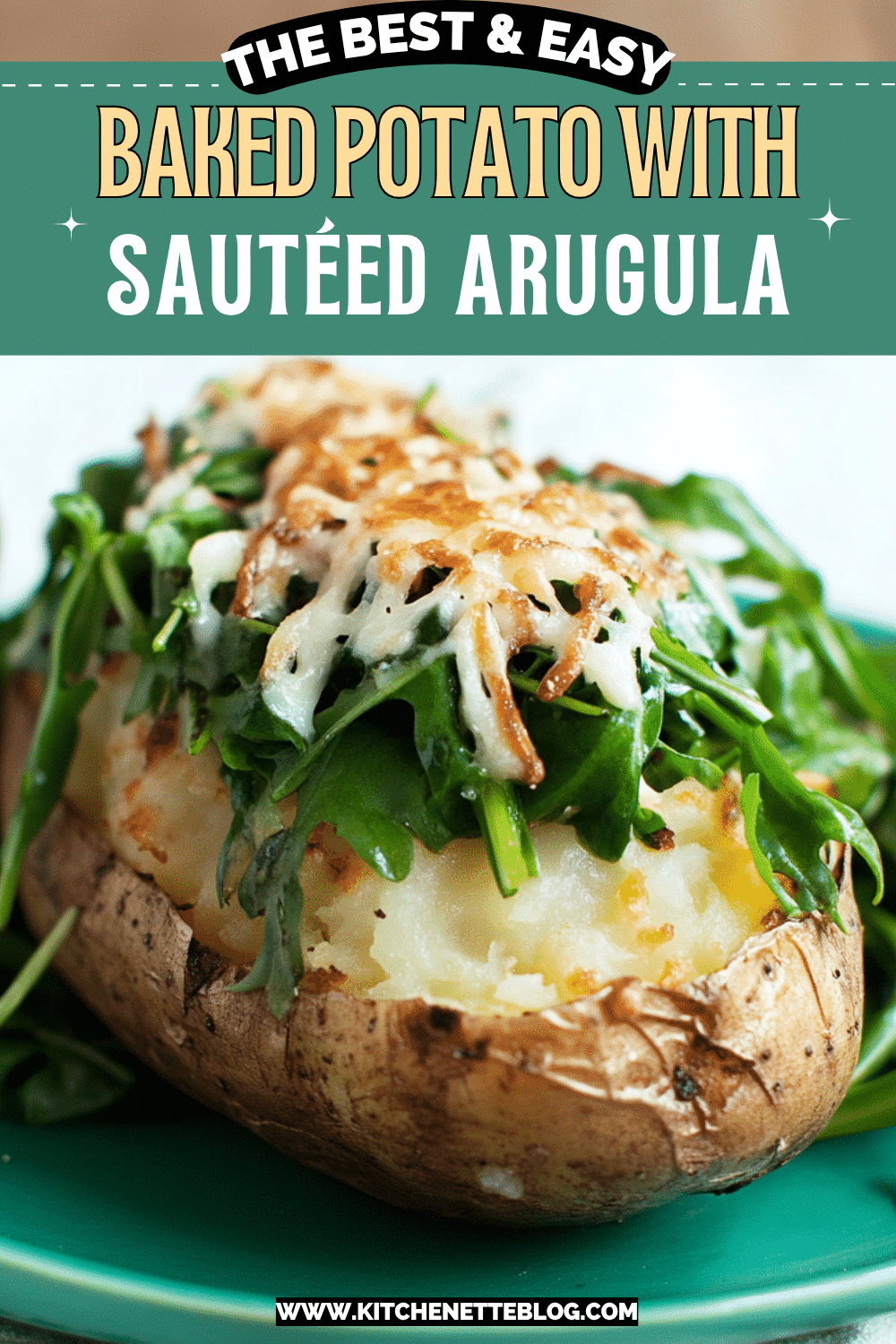
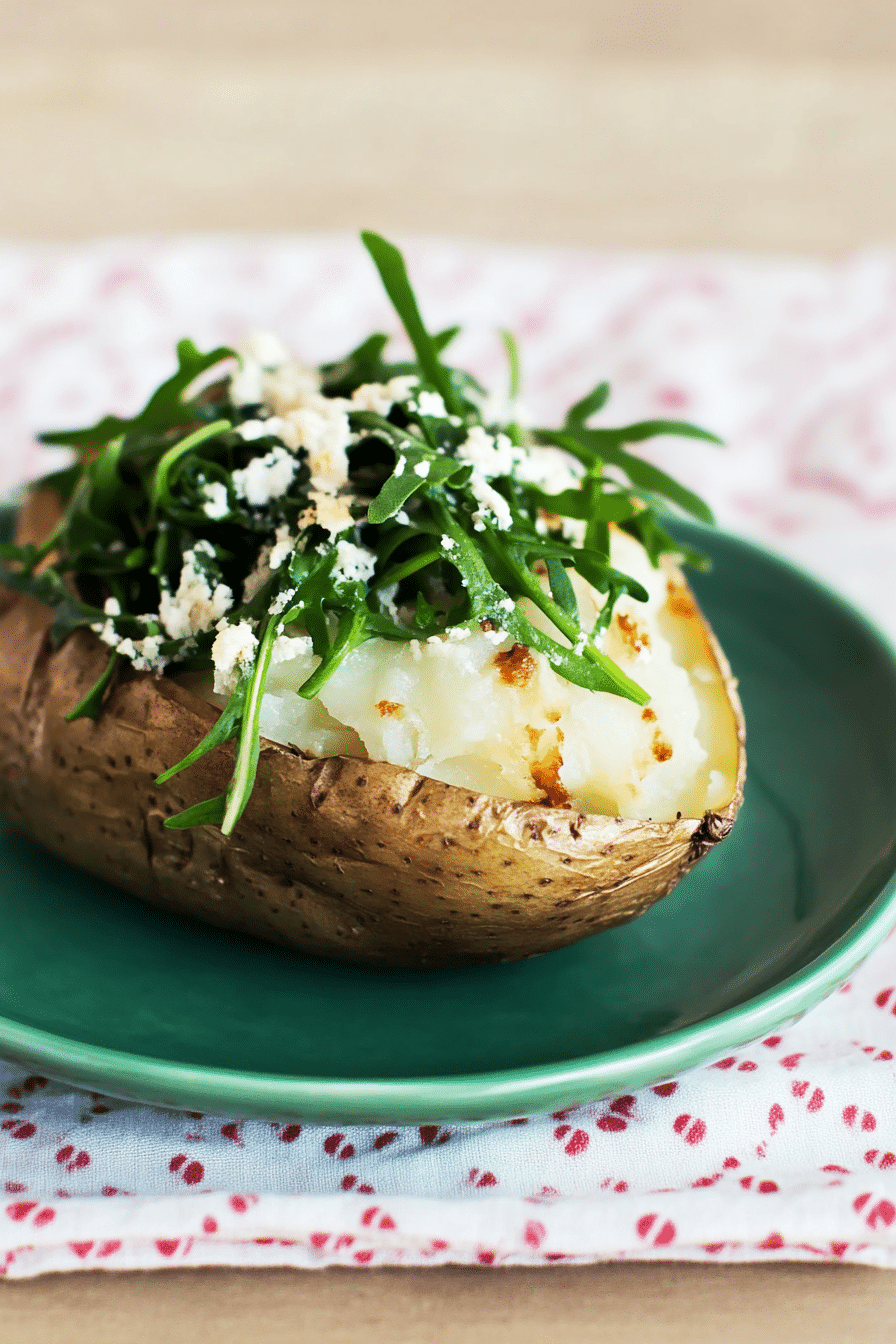
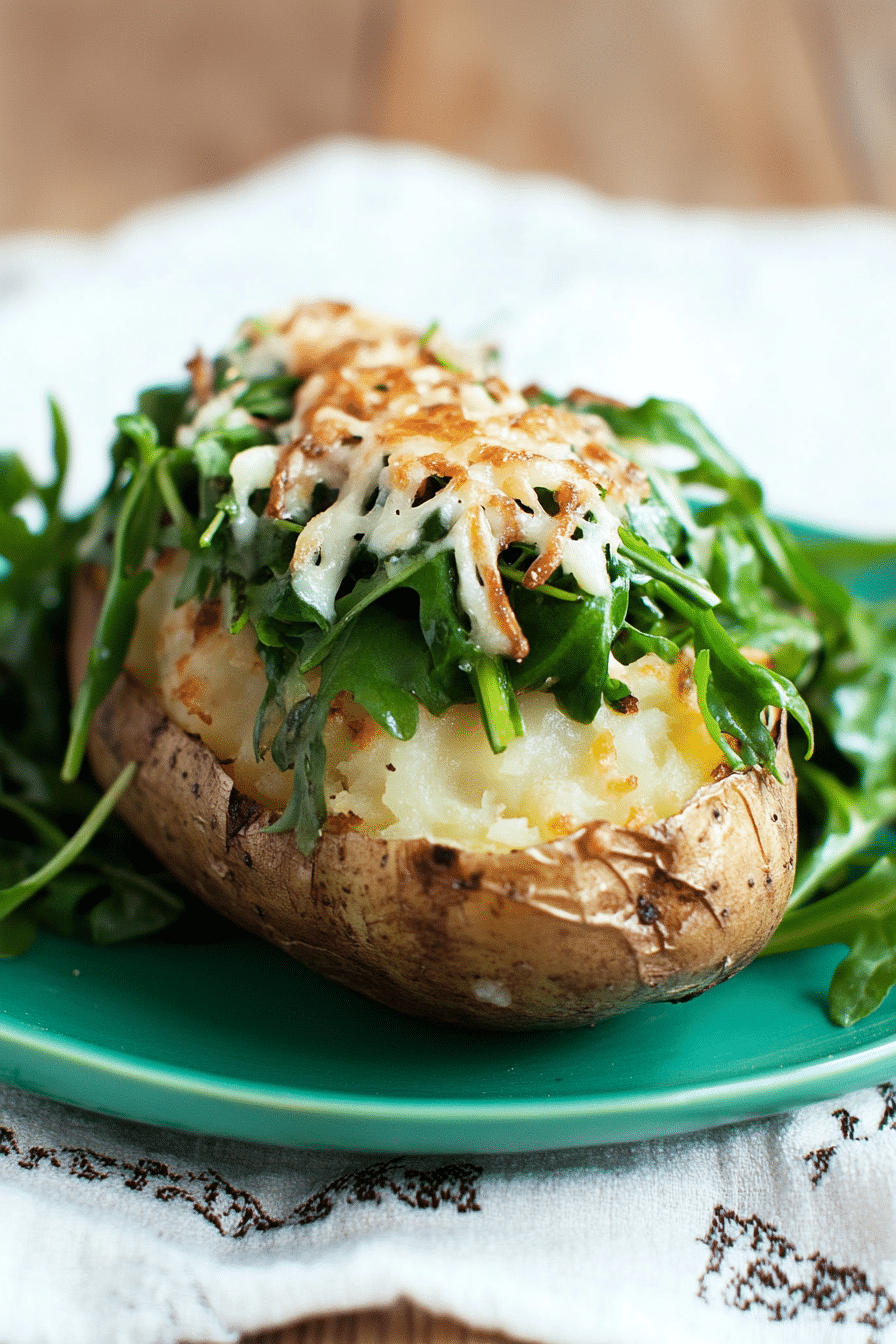
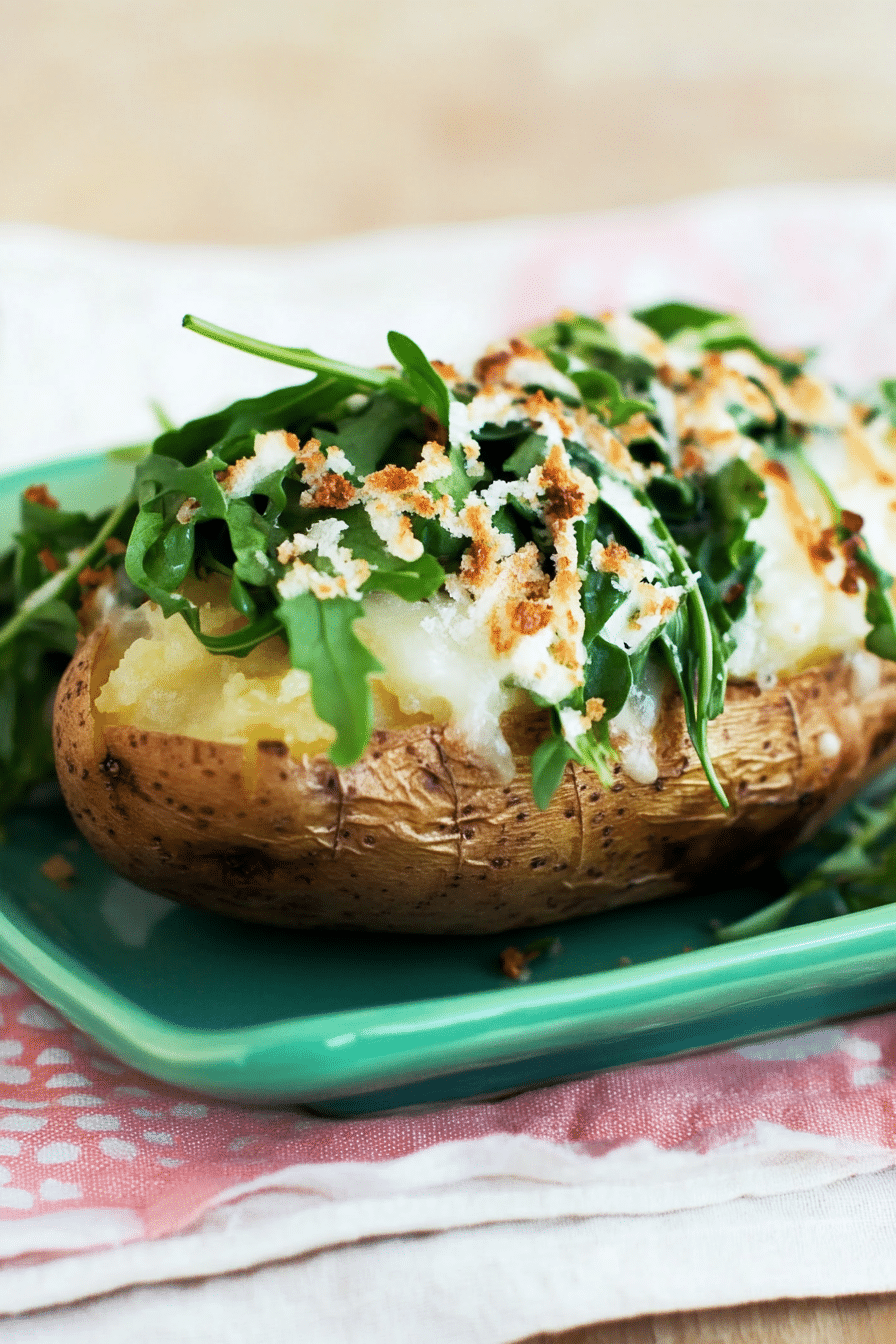
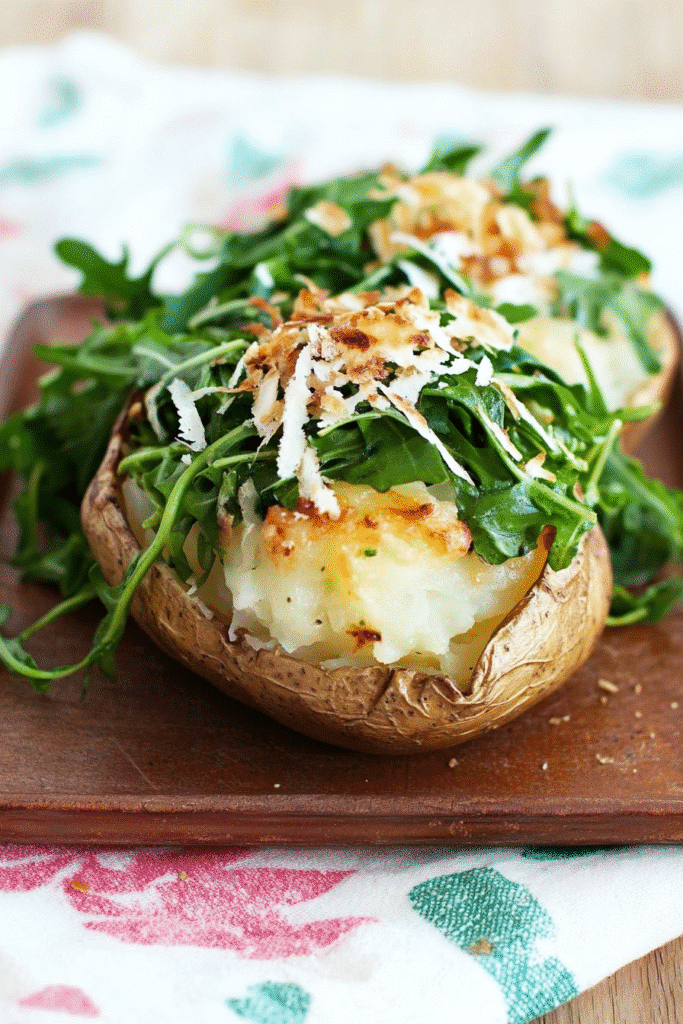
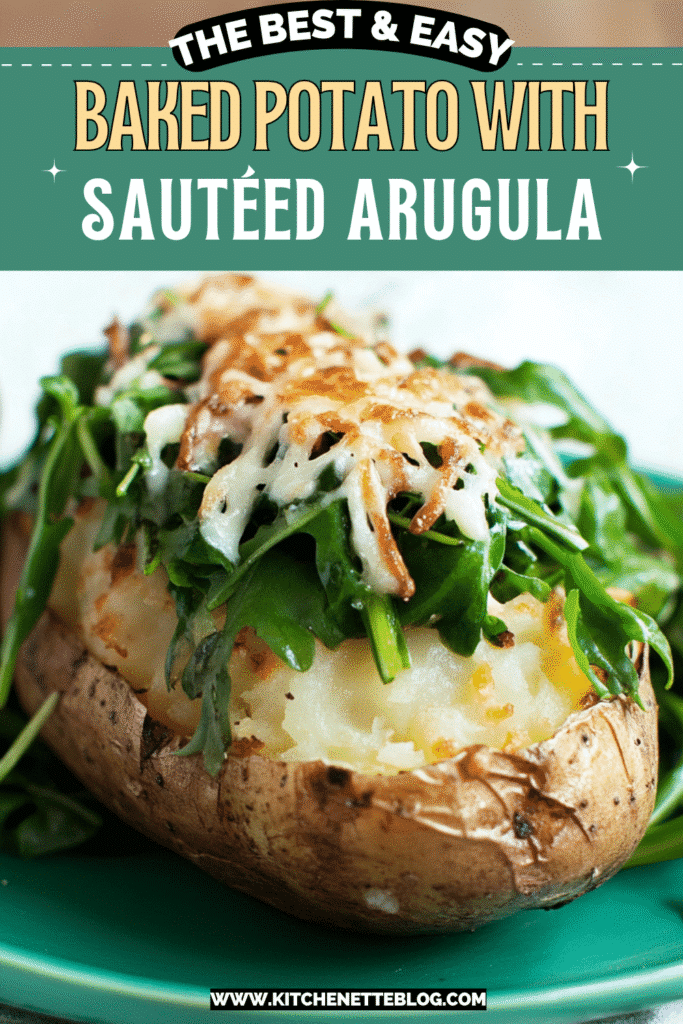
Here it goes over a properly baked russet, with parmesan browned under the broiler. The potato is bland and fluffy on purpose. It exists to carry the garlic butter and the greens, and the whole thing is a side dish that eats like a small meal.

- The greens take under a minute, so they can be done while the potato rests
- Garlic is infused into the butter and then removed, so nothing burns or turns bitter
- Five ingredients if you do not count salt and pepper
- A use for the bag of arugula that is about to turn in the crisper drawer
- The potato method here gives a genuinely fluffy interior rather than a dense one
- Works as a side dish, a light lunch or a vegetarian main

Cooking arugula at all is the part most people have never tried, so it is worth explaining what changes.
What Sauteed Arugula Actually Tastes Like
Sauteed arugula starts from a leaf that is sharp because of the same family of compounds that make mustard and horseradish hot. They are produced when the leaf is damaged, which is why a salad gets more peppery the longer it sits after tossing.
Heat deactivates the enzyme that produces them. Sauteed arugula therefore loses most of its bite within about twenty seconds in a hot pan, and what is left is a green, slightly nutty flavor with a faint bitterness at the edge. People who dislike raw arugula usually like it cooked.
The volume loss is dramatic and catches everyone out. Five ounces of baby arugula is roughly eight packed cups raw and yields a little under a cup cooked. Plan on at least two ounces of raw leaves per person, which looks absurd going into the pan.
The comparison is spinach, but arugula is better here. Spinach releases far more water and goes slippery. Arugula holds together, keeps a little texture in the stems, and does not need wringing out in a towel before it can be used.
Save this recipe
Enter your email and I’ll send this recipe straight to your inbox.
Ingredient Notes
Sauteed arugula needs six things, and the potato variety is the only one with a wrong answer. Exact amounts are in the recipe card below.
- Russet potatoes: two, around ten to twelve ounces each. Russets are the high-starch, low-moisture variety that bakes dry and fluffy, as set out in the Potatoes USA guide to potato types. A red or a yellow waxy potato bakes dense and slightly gluey and cannot be fluffed.
- Baby arugula: five ounces. Mature arugula with long stems works but is much more peppery and wants an extra fifteen seconds. Do not use it if the leaves have gone limp and yellow at the edges, since cooking concentrates the bitterness rather than hiding it.
- Butter: two tablespoons for the greens. Butter rather than oil, because the milk solids brown slightly and that is most of the flavor. Olive oil works and tastes cleaner and less rich.
- Garlic: one clove, crushed but left whole, and taken out before the greens go in. This perfumes the butter without leaving anything to catch and burn in a pan that is about to get very hot.
- Parmesan: one ounce, finely grated, about half a cup. Grated rather than shaved, because it needs to melt and brown under the broiler rather than sit in curls.
- Lemon juice: two teaspoons at the end. The original recipe had no acid at all, and sauteed greens with butter and cheese and nothing sharp taste flat and heavy.
Baking the Potato Properly
A baked potato under sauteed arugula is only as good as the potato, and this is where the original method fell down. It called for 400F for 40 to 50 minutes, and a twelve-ounce russet is simply not done in that time.
The number that matters is 205F to 210F in the center. Potato starch granules gelatinize across a range that finishes around 205F, and that gelatinization is what makes the interior fluffy rather than waxy. A potato pulled at 195F looks cooked, cuts cleanly and tastes dense. Ten more minutes transforms it.
425F, directly on the oven rack, 50 to 60 minutes. Straight on the rack rather than on a sheet pan means dry air circulates underneath and the skin crisps all the way round. Rub the skin with oil and salt first.
Do not wrap it in foil. Foil traps steam and gives you a steamed potato with a soft, damp skin. It is the single most common thing people do wrong.
Pierce each potato four or five times with a fork before it goes in. This is not folklore; a sealed potato can and occasionally does burst.
How To Make Sauteed Arugula
Start the sauteed arugula when the potatoes come out. The whole thing takes about a minute and cannot be done in advance.
- First, melt the butter in a wide skillet over medium heat and add the crushed garlic clove, letting it sizzle gently for about 1 minute until fragrant but not colored.
- Next, fish the garlic out and discard it, then turn the heat up to medium-high.
- Then add the arugula in two handfuls with the salt, stirring constantly and letting the first batch collapse before the second goes in.
- After that, cook for 30 to 45 seconds total, until the leaves have just wilted and are still bright green, and take the pan off the heat immediately.
- Finally, stir the lemon juice through, split the potatoes, fluff the insides with a fork, pile the sauteed arugula on top with the parmesan, and brown it under the broiler for 1 to 2 minutes.
How To Tell When the Greens Are Done
The window for sauteed arugula is narrow, which is the only difficult thing about this dish. There are perhaps twenty seconds between right and overcooked.
Color is the test. Properly cooked sauteed arugula is a deep, vivid green, brighter than the raw leaf. When it starts to shift toward olive or khaki it has gone too far.
The leaves should be limp but still distinguishable from one another. If it has become a single mass in the pan, it is overcooked.
There should be almost no liquid. A little butter and a few drops of moisture is right. A pool of green water in the pan means the heat was too low and the leaves stewed rather than wilted.
Overcooked arugula is not inedible, but it turns noticeably bitter and loses the nuttiness entirely. Undercooking is the safer error, since it keeps wilting on the plate.
Make It Ahead
The two parts of this sauteed arugula dish split cleanly, and only one of them can be prepared in advance.
The potatoes can be baked hours ahead and reheated at 400F for about fifteen minutes, which actually crisps the skin further. They can also be baked a day early and refrigerated whole, unsplit.
The greens cannot. Sauteed arugula reheated is olive-colored and bitter, and it will have wept liquid overnight. It takes under a minute to cook, so there is no real benefit to trying.
What you can do ahead is the prep: wash and dry the arugula, grate the parmesan, and crush the garlic. Everything then happens in the ninety seconds after the potatoes come out of the oven.
Storing Sauteed Arugula
Cooked sauteed arugula: two days refrigerated, and honestly they are not good on day two. Fold leftovers into eggs or a soup rather than reheating them as they are.
Baked potatoes: four days refrigerated, whole and unsplit. Reheat at 400F for fifteen to twenty minutes. A microwave gives you a soft skin and a rubbery texture.
Raw arugula: about five days in the bag, or a week if you line a container with a paper towel. It is the first salad green to turn, so buy it for the day you need it.
Assembled: do not. Once the greens sit on the hot potato they keep steaming and lose their color within a few minutes, which is why the broiler step is measured in seconds.
Variations and Substitutions
- With an egg: a fried or poached egg on top turns this into a full dinner and the yolk works as a sauce.
- Toasted breadcrumbs: two tablespoons of panko fried in the pan before the greens adds the crunch this otherwise lacks.
- Other greens: spinach behaves similarly but wetter, and Swiss chard needs the stems started two minutes earlier.
- Sweet potato: works well against the pepperiness, though it bakes faster and wants checking at 45 minutes. My crispy oven sweet potato hash browns use the same variety differently.
- Vegan: olive oil in place of butter and nutritional yeast in place of parmesan, with the lemon juice increased slightly.
- Chili and anchovy: melt an anchovy fillet into the butter with a pinch of chili flakes for a much more assertive version.
What to Serve with Sauteed Arugula
Sauteed arugula is rich and peppery, so it sits best next to plain roasted or grilled protein.
- A roast chicken or a steak, where it replaces both the vegetable and the starch.
- Grilled sausages, with mustard on the side.
- As one of two potato dishes alongside my rosemary roasted potatoes for a crowd.
- A bowl of soup, which turns it into an easy weeknight dinner.
For another way with potatoes and salt, there is my Syracuse salt potatoes.
Here is what readers ask most often.
Sauteed Arugula FAQ
Frequently Asked Questions
Does cooking ruin arugula?
No, it changes it. The peppery heat comes from compounds formed when the raw leaf is damaged, and heat stops that reaction, so sauteed arugula is far milder than the same leaf raw. What remains is green, nutty and slightly bitter. The one genuine risk is overcooking, which turns it khaki and properly bitter, and that happens in about twenty seconds past the right moment.
How much raw arugula do I need?
Roughly four times more than looks sensible. Five ounces, about eight packed cups, cooks down to a little under a cup, which tops two potatoes generously. Arugula is mostly water and it collapses almost completely. If you are scaling this up, cook it in batches rather than crowding the pan, since a full pan steams instead of wilting.
Why is my potato dense instead of fluffy?
Almost always because it came out of the oven too early. The starch needs to reach about 205F in the center to gelatinize fully, and a potato at 195F cuts cleanly and still eats waxy. Use an instant-read thermometer, or push a thin skewer in and check it meets no resistance at all. The other cause is using a waxy red or yellow potato instead of a russet.
More Questions About the Greens
Frequently Asked Questions
Can I use frozen or pre-washed bagged arugula?
Bagged pre-washed arugula is exactly what this is for, and it needs only a quick check for slimy leaves. Frozen arugula is not really sold, and frozen spinach is a poor substitute here because it arrives waterlogged and has to be squeezed dry, at which point it has no texture left to contribute.
Why do you throw the garlic away?
Because the pan gets hot enough in the next step to burn it. A crushed clove infuses the butter in about a minute, and removing it means you get the garlic flavor without any of the acrid taste that scorched garlic gives. If you want visible garlic, mince a second clove and stir it in at the very end, off the heat.
Can I make this without the potato?
Yes, and the greens stand alone perfectly well as a side dish for four. Keep everything else the same and serve them with a little more lemon. They also work stirred through pasta with some of the cooking water, or piled on toast with ricotta underneath.
More Questions About the Potato
Frequently Asked Questions
Can I microwave the potato to save time?
You can get it edible in about ten minutes, but you will not get a crisp skin or a genuinely fluffy interior. The compromise that works is eight minutes in the microwave followed by twenty minutes at 425F in the oven, which gets you most of the texture in half the time.
Should I salt the skin?
Yes. Rubbing the damp skin with oil and a generous amount of kosher salt draws out a little surface moisture and seasons the part of the potato most people eat last. It is the difference between a skin worth finishing and one left on the plate.
Do I have to use the broiler?
No, but it is thirty seconds of work for a noticeably better result. The broiler browns the parmesan into a patchy crust rather than leaving it as damp grated cheese. Watch it constantly, since the arugula underneath will scorch if you leave it much past two minutes.
Sauteed arugula deserves to be better known than it is, and this is the easiest possible introduction to it. For more oven potatoes, try my rosemary roasted potatoes.

Baked Potato with Sauteed Arugula
Save this recipe
Enter your email and I’ll send this recipe straight to your inbox.
Ingredients
The Baked Potatoes
- 2 large russet potatoes 10 to 12 ounces each, scrubbed and dried
- 2 teaspoons olive oil for rubbing the skins
- 1 teaspoon kosher salt divided between the skins and the flesh
- 1/4 teaspoon freshly ground black pepper
The Sauteed Arugula
- 2 tablespoons unsalted butter
- 1 clove garlic crushed, peeled and left whole
- 5 ounces baby arugula about 8 packed cups
- 1/8 teaspoon fine sea salt
- 2 teaspoons lemon juice
- 1 ounce parmesan cheese finely grated, about 1/2 cup
Equipment
- Baking sheet
- Fork
- Small skillet
- Chef’s knife
- Cutting board
Instructions
Bake the Potatoes
- Heat the oven to 425F with a rack in the middle. Pierce each potato four or five times with a fork so steam can escape.
- Rub the potatoes all over with the olive oil and half the kosher salt, set them directly on the oven rack with a sheet pan on the shelf below, and bake 50 to 60 minutes, until a thin skewer meets no resistance and the center reads 205F to 210F. Do not wrap them in foil.
Cook the Sauteed Arugula
- Melt the butter in a wide skillet over medium heat, add the crushed garlic clove and let it sizzle gently for 1 minute until fragrant but not colored, then lift the garlic out and discard it. Turn the heat up to medium-high.
- Add the arugula in two handfuls with the fine sea salt, stirring constantly and letting the first batch collapse before the second goes in. Cook 30 to 45 seconds in total, until the leaves have just wilted and are still vivid green, then take the pan off the heat and stir in the lemon juice.
Split, Fill and Brown
- Cut a deep cross in the top of each potato, squeeze the ends toward each other to open it up, and fluff the interior with a fork. Season the flesh with the remaining kosher salt and the black pepper.
- Pile the sauteed arugula over the potatoes with any butter left in the pan, then scatter the grated parmesan over the top.
- Slide the potatoes under a hot broiler for 1 to 2 minutes, watching constantly, until the parmesan is melted and patchily browned. Serve immediately.