
Good homemade caramels are one of the few candies that reward a thermometer and almost nothing else. There is no tempering, no seeding, no marble slab. There is a pan of sugar, a jug of hot cream and a number to hit, and everything that goes wrong goes wrong at that number.
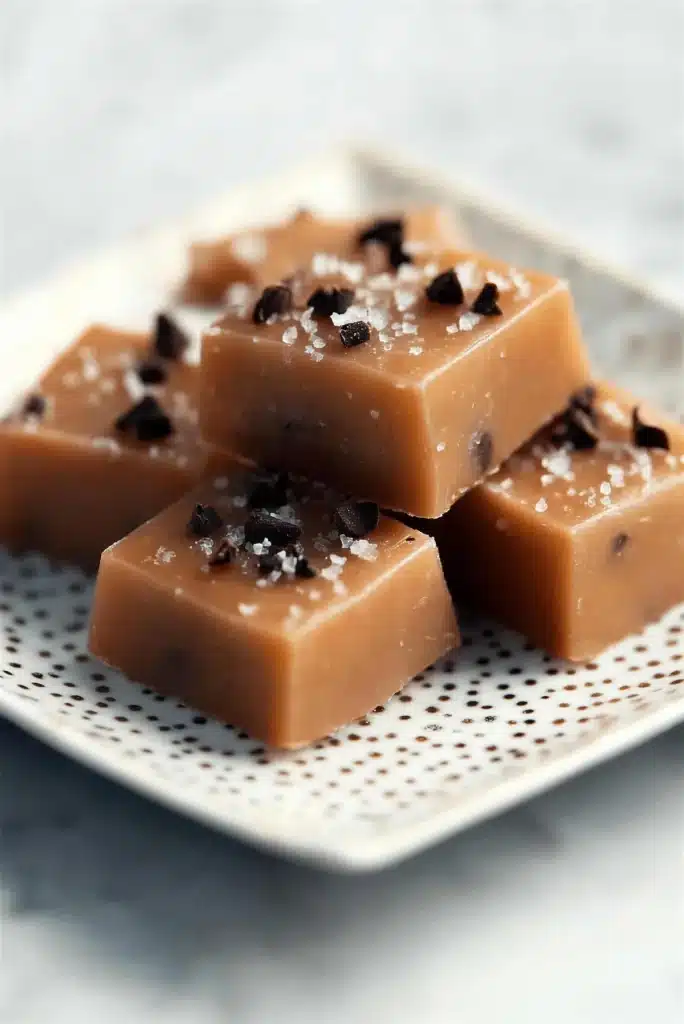
- Sixty-four thick squares from one pan, which is a lot of small gifts for the price of a bag of sugar
- The sugar is caramelized first, so they taste of caramel rather than of sweetened cooked cream
- Nibs fold through the batch as well as sitting on top, so the crunch is in every piece
- No candy funnel, no marble slab and no tempering
- They set overnight on the counter and cut cleanly the next morning
- Wrapped in wax paper they keep three weeks, and they freeze for three months
These are cut thick, folded through with cacao nibs and finished with more nibs and flaky salt on top. The nibs are roasted cocoa beans broken into pieces, so they are bitter and crunchy and taste of chocolate without any of the sweetness, which is exactly the thing a caramel is short of. The other change worth knowing about is that the sugar is caramelized on its own first, before the cream goes in, rather than boiled together with it from cold.

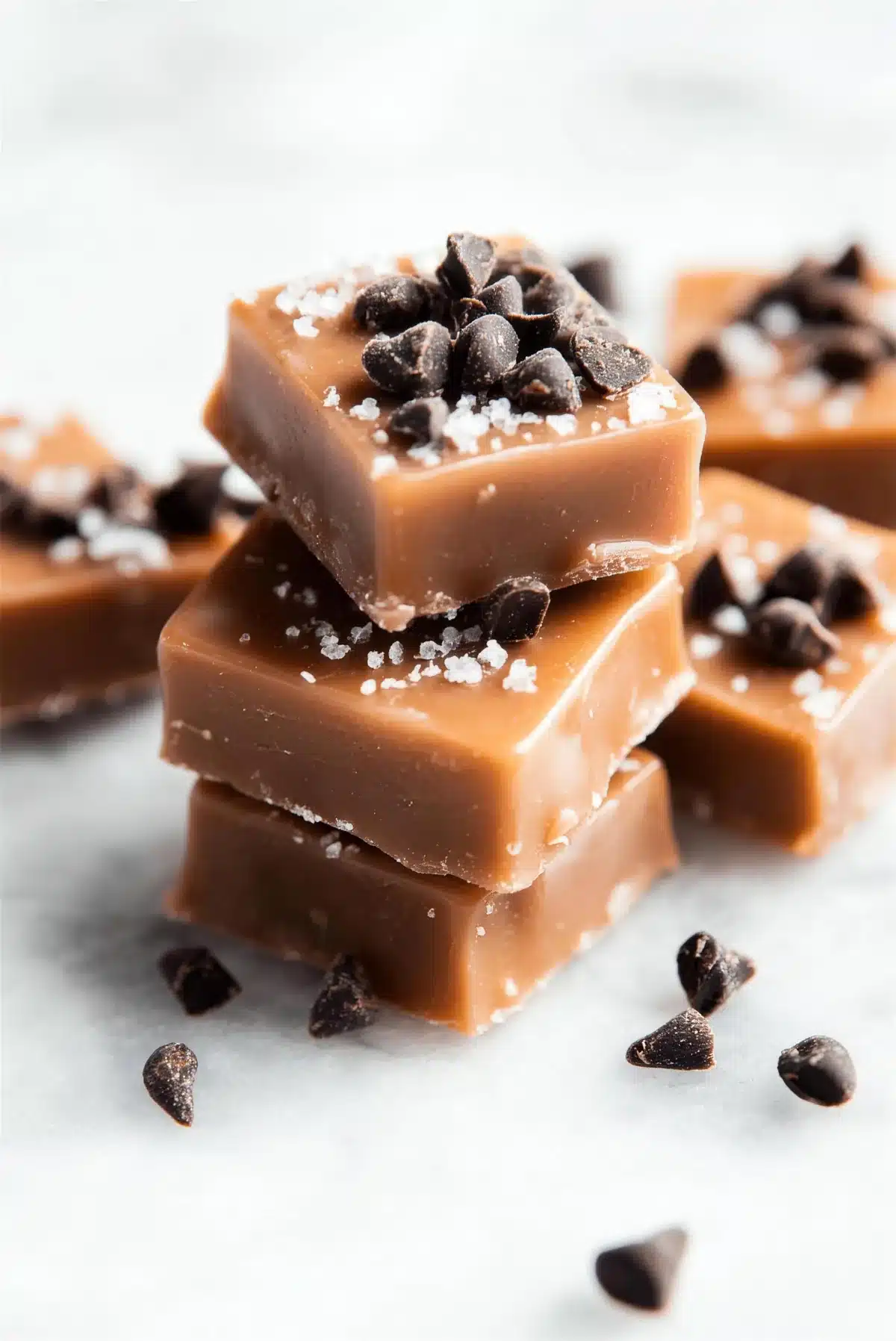
The whole recipe is one temperature and one decision about the pan.
- What Makes Homemade Caramels Chewy Rather Than Hard
- Ingredient Notes
- Equipment You Actually Need
- How To Make Homemade Caramels
- Reading the Thermometer Properly
- How To Tell When the Caramel Is Done
- Cutting and Wrapping Homemade Caramels
- Make It Ahead and Give Them Away
- Storing Homemade Caramels
- Variations and Substitutions
- What Went Wrong
- What to Serve With Them
- Homemade Caramels FAQ
What Makes Homemade Caramels Chewy Rather Than Hard
Everything about the texture of homemade caramels is decided by how much water is left in the pan when you stop cooking, and the thermometer is just a way of measuring that.
Water leaves, sugar concentrates, temperature climbs. The Exploratorium’s table of candy-making stages puts the firm-ball stage at 245F to 250F, which works out to about 87 percent sugar. That is the window a chewy caramel lives in.
Under 240F and you have caramel sauce. Delicious, unsliceable, and it will spread across the board an hour after you cut it.
At 246F the batch is soft enough to bite through cleanly and firm enough to hold a square edge at room temperature. This is where I stop.
Over 252F and it goes from chewy to jaw-locking, and past 265F it is a hard candy with cream in it.
Two degrees is the whole margin, which is why the thermometer matters more than the recipe does.
Save this recipe
Enter your email and I’ll send this recipe straight to your inbox.
Ingredient Notes
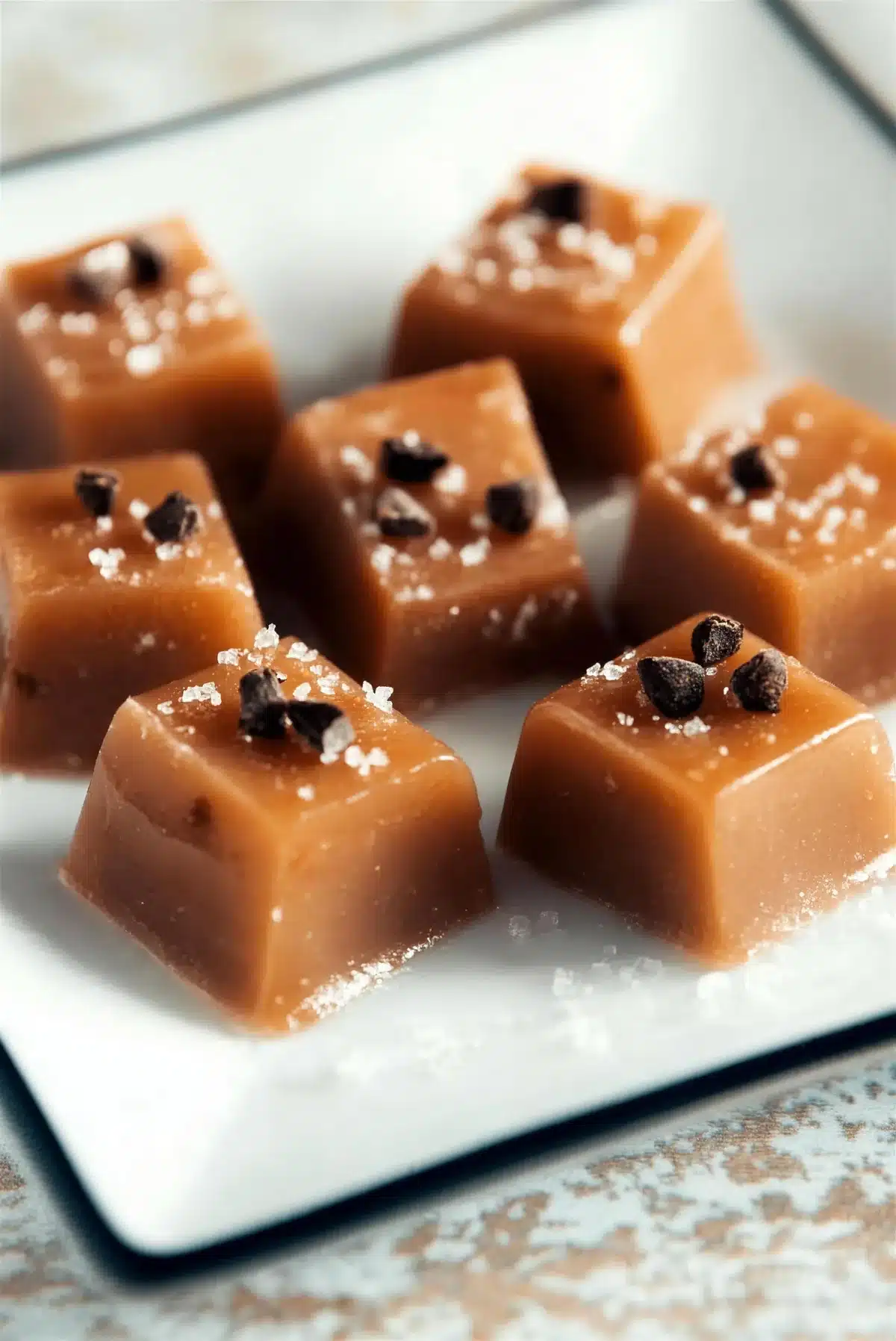
Homemade caramels run to seven items, and the corn syrup is the one people want to argue about. Exact amounts are in the recipe card below.
- Heavy cream: two cups, warmed. The fat is what keeps the finished candy soft and the milk solids are what brown and give it the flavor people call caramel in the first place.
- Granulated sugar: one and three quarter cups, which is less than most recipes of this size use. Caramelizing it first means you get more flavor from less of it.
- Light corn syrup: one cup. It is an interfering agent, not a sweetener: its glucose chains physically get between sucrose molecules and stop them lining up into crystals. Leave it out and you will very likely get a grainy batch.
- Unsalted butter: one stick, cubed and warmed with the cream. Adding cold butter to hot caramel is how you get a split, greasy pan.
- Cacao nibs: a third of a cup folded in and two tablespoons on top. Buy roasted rather than raw ones; raw nibs are astringent and taste faintly of green wood.
- Kosher salt: one and a half teaspoons of Diamond Crystal, or three quarters of a teaspoon of Morton or fine sea salt, which are close to twice as salty by volume.
- Flaky sea salt: a teaspoon, pressed into the surface. Maldon or fleur de sel, not the kosher salt from the batch, because you want crystals that stay crunchy.
Equipment You Actually Need
Homemade caramels need four things, and two of them are not optional.
A 4-quart heavy saucepan, minimum. When the cream hits the hot sugar the pan erupts to roughly three times its volume for about fifteen seconds. A 2-quart pan will put boiling caramel on your hand.
A digital thermometer, either a clip-on probe or an instant-read. Two degrees of accuracy is the difference between sauce and candy, and old dial thermometers are frequently ten degrees out.
An 8-inch square pan, lined with parchment and left with a generous overhang on two sides. A 9-inch by 13-inch dish holds the same batch at half the depth, and thin caramels feel mean.
Wax paper or cellophane, cut into squares roughly four inches across. Nothing else stops the pieces welding back into a slab.
Skip the silicone spatula for the pour and use a heatproof one. Boiling caramel is about 100 degrees hotter than boiling water.
How To Make Homemade Caramels

Read the whole method before you start. Once the sugar takes color, homemade caramels move fast and there is no pausing to look something up.
- First, line an 8-inch square pan with parchment leaving a wide overhang on two sides, and oil the parchment. Warm the 2 cups of cream with the 8 tablespoons of butter until it steams, and keep it warm.
- Next, stir the 1 3/4 cups sugar, 1 cup corn syrup and 1/4 cup water together in a 4-quart pan over medium heat until the sugar dissolves, then stop stirring and let it boil to a light amber, about 10 minutes.
- Then take the pan off the heat and pour in the hot cream and butter in a slow stream, standing back. It will foam violently and then settle.
- After that, return it to medium heat and cook, stirring occasionally, until it reaches 246F. This takes 25 to 35 minutes and the last ten degrees are much slower than the first thirty.
- Finally, stir in the salt, the vanilla and 1/3 cup of nibs off the heat, pour into the pan, scatter the remaining nibs and the flaky salt over the top, and leave it uncovered overnight.
Reading the Thermometer Properly
More batches of homemade caramels fail on the thermometer than on the recipe.
Calibrate it in boiling water first. It should read 212F at sea level, and about two degrees lower for every thousand feet of elevation. Whatever it actually reads, apply that difference to your target.
Keep the probe off the base of the pan. Metal touching metal reads the burner rather than the caramel, usually about fifteen degrees high, which is how people end up with candy that shatters.
Sit the probe in the middle of the depth and, if you are using an instant-read, stir first and then measure. The top and the bottom of an unstirred pan can differ by ten degrees.
Expect it to stall. The climb from 220F to 240F is quick and the last six degrees can take ten minutes on their own. Turning the heat up to hurry it is how a batch scorches.
Take it off two degrees early. A heavy pan carries enough stored heat to keep the temperature climbing after the burner is off.
How To Tell When the Caramel Is Done
The thermometer is the primary doneness test for homemade caramels and the cold water test is the backup.
Drop half a teaspoon into a glass of very cold water. Fish it out and roll it between your fingers. At the firm-ball stage it makes a ball that holds its shape but flattens when you squeeze it.
If it dissolves into threads, it is nowhere near ready and needs several more minutes.
If the ball is soft and slumps, you are at soft-ball and heading for a sauce. Keep going.
If it is hard and clicks against the glass, you have gone too far. Stir in two tablespoons of hot cream off the heat, which will pull it back a stage.
Color is not a doneness test here, because the sugar was already amber before the cream went in. Judge only by temperature and by that ball.
Cutting and Wrapping Homemade Caramels
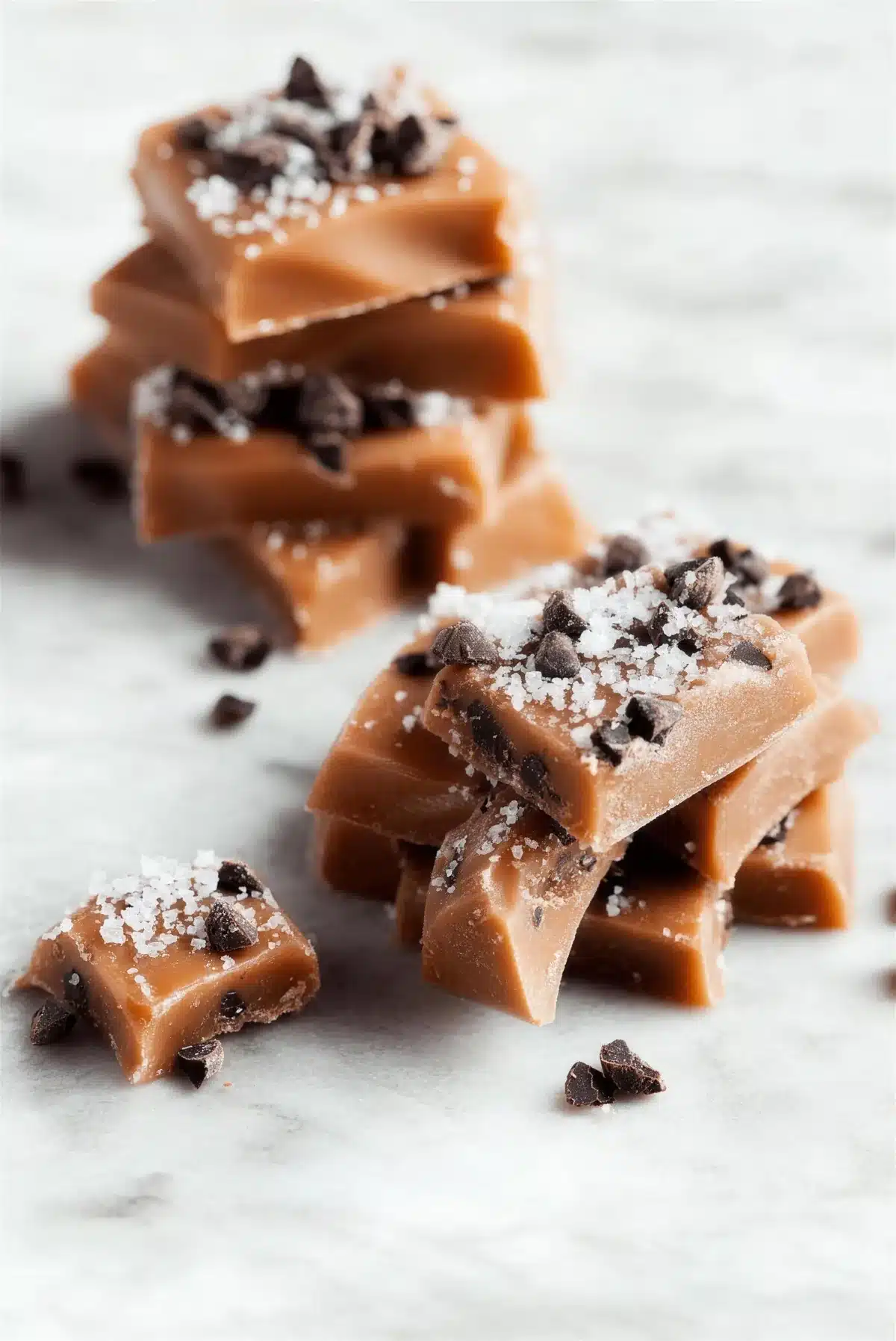
An overnight set is what makes homemade caramels cut cleanly, and eight hours is the minimum.
Leave the pan uncovered on the counter. Covered, the surface sweats and the flaky salt dissolves into wet patches.
Never refrigerate before cutting. Cold caramel cracks and tears rather than slicing, and it sweats as it warms back up.
Lift the slab out by the parchment onto a board, nib side up.
Use a long, heavy knife wiped with neutral oil and press straight down rather than sawing. Wipe and re-oil every few cuts. Eight rows by eight gives sixty-four square-inch pieces.
Wrap each piece in a four-inch square of wax paper, twisted at both ends. Unwrapped, they fuse into one large caramel within a day.
Make It Ahead and Give Them Away
Homemade caramels are the rare candy that is better made in advance.
The overnight set is compulsory, so a batch made on Saturday is a finished tin on Sunday morning.
Cut and wrapped, they are at their best for about a week and perfectly good for three.
Wrap warm rooms out of the plan. Above about 78F homemade caramels start to slump inside their papers, which matters if you are posting them.
Freeze the wrapped pieces in a rigid box for three months and thaw them still wrapped, so condensation lands on the paper rather than the candy.
For gifts, twenty pieces fills a small tin, so one batch is three tins with a few left for you.
Storing Homemade Caramels
- Room temperature, wrapped: homemade caramels keep 3 weeks in an airtight tin somewhere cool and dark.
- Unwrapped in a tin: about 2 days before they weld together. Layers of parchment help and do not solve it.
- Refrigerated: not recommended. They firm up, then sweat when they come back out, and the flaky salt dissolves.
- Frozen: 3 months wrapped and boxed. Thaw at room temperature, still wrapped, for a couple of hours.
- The uncut slab keeps a week in its pan under a loose sheet of parchment if you would rather cut them as you go.
Variations and Substitutions
The base for homemade caramels is stable enough to take a lot of interference.
- No nibs: leave them out entirely for a plain salted caramel, which is what most people mean when they ask for this recipe.
- Toasted nuts instead: two thirds of a cup of chopped toasted pecans or almonds, folded in at the same point.
- Espresso: two teaspoons of instant espresso powder stirred into the warm cream. It reads as depth rather than as coffee.
- Bourbon: a tablespoon added with the vanilla. Any more and the batch sets softer.
- Chocolate dipped: half-dip the cut pieces in tempered dark chocolate and press a nib into each one before it sets.
- Half batch in a loaf pan, at the same depth, if sixty-four pieces is more candy than your household needs.
- Corn syrup free is possible with a tablespoon of glucose syrup or an equal weight of golden syrup, but plain sugar alone crystallizes and I would not.
What Went Wrong
Five failures cover almost everything people write in about when homemade caramels go wrong.
Grainy and sandy: a sugar crystal fell back into the pan and seeded the rest. Wash the sides down with a wet brush early on, and do not stir once the sugar has dissolved.
Runs across the board: undercooked. Scrape it back into the pan with a splash of cream and take it to temperature properly.
Sticks to your teeth like a filling remover: overcooked, by less than you would think.
Split and greasy with a layer of butterfat on top: the cream or the butter went in cold, or the batch boiled hard once it was all in the pan. Stir it back together over low heat and it usually recovers.
Pale and bland: the sugar never really caramelized. Light amber is the color of clear honey, not the color of water.
What to Serve With Them
Homemade caramels are the sweet at the end rather than the dessert itself.
- Strong black coffee or an espresso, which is the whole point of the nibs.
- A small glass of bourbon, rum or tawny port.
- Alongside spiced mixed nuts on a table where people are standing up.
- Chopped and scattered over chocolate smoked salt ice cream, which shares the salt idea.
- On a cookie plate with salted toffee crunch cookies and something plain to balance them.
For a sit-down dessert from the same shelf of the pantry, the pots de creme use the other half of the cream.
Here is what readers ask most often.
Homemade Caramels FAQ
Frequently Asked Questions
Do I really need a thermometer?
Yes, or at least a glass of ice water and a lot of patience. The whole texture of homemade caramels sits inside a five degree window and there is no visual cue to tell you where you are, because the sugar has already taken its color before the cream goes in. A twelve dollar instant-read is the single best thing you can buy for candy.
What are cacao nibs and where do I buy them?
They are roasted cocoa beans cracked into small pieces, and they are chocolate before any sugar or cocoa butter has been added. Bitter, crunchy, faintly fruity. Most supermarkets keep them near the baking chocolate or the health food aisle, and they last a year in a sealed jar. Buy roasted rather than raw.
Can I halve the recipe?
Yes, in a loaf pan, and it will reach temperature considerably faster because there is less to evaporate. Watch it from 235F rather than walking away. A half batch of homemade caramels gives about thirty pieces at the same thickness.
More Questions About Corn Syrup and Sugar
Good to Know
Can I leave out the corn syrup?
Only if you replace it with another invert or glucose syrup. Its job is to sit between the sucrose molecules and stop them crystallizing, and sugar alone in this quantity of liquid will very often turn grainy on the second day even when the batch looks perfect coming out of the pan. Golden syrup by weight works. Honey works but takes over the flavor.
Why caramelize the sugar first?
Because it tastes better. The usual method boils cream, sugar, butter and corn syrup together from cold, and everything the batch tastes of comes from the milk solids browning. Taking the sugar to amber on its own first adds a second, deeper set of flavors, and it lets me use a quarter cup less sugar for a stronger result.
More Questions About Texture and Setting
Good to Know
Mine never set. Can I fix it?
Yes. Scrape the whole lot back into the pan, add two tablespoons of cream so it melts evenly rather than scorching, and cook it back up to 246F. Pour it into a freshly lined pan. Nothing is lost except the flaky salt on top, which you add again.
How long do they take to set?
Eight hours at room temperature, and overnight is easier to plan around. They are firm on top within an hour, which is misleading; the middle is still moving. Cutting early gives sloped edges that slump back together in the tin.
Why did the nibs all sink to the bottom?
The caramel was still too hot and too fluid when they went in. Stir them through, wait a full minute off the heat until the surface stops moving on its own, then pour. The two tablespoons on top go on straight away and get pressed in lightly with the back of a spoon.
A batch of homemade caramels is about forty minutes of standing at the stove and a night of doing nothing, and it produces sixty-four small presents. That is a good trade in December.
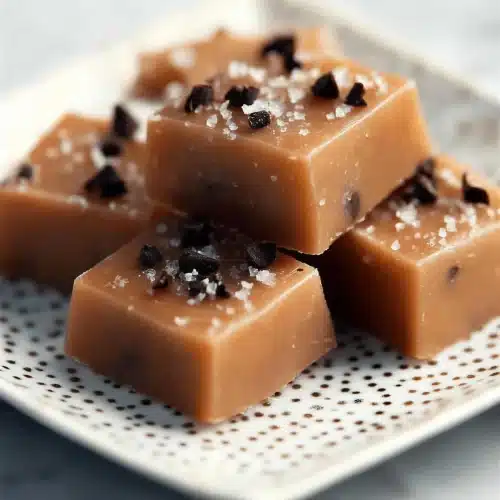
Homemade Caramels with Cacao Nibs and Sea Salt
Save this recipe
Enter your email and I’ll send this recipe straight to your inbox.
Ingredients
For the Caramel
- 2 cups heavy cream warmed with the butter
- 8 tablespoons unsalted butter cubed, 1 stick
- 1 3/4 cups granulated sugar
- 1 cup light corn syrup or golden syrup by weight
- 1/4 cup water
- 1 1/2 teaspoons Diamond Crystal kosher salt or 3/4 teaspoon Morton or fine sea salt
- 2 teaspoons vanilla extract stirred in off the heat
- 1/3 cup roasted cacao nibs folded through the batch
For the Pan and the Top
- 1 teaspoon neutral oil for the parchment and the knife
- 2 tablespoons roasted cacao nibs for scattering over the top
- 1 teaspoon flaky sea salt Maldon or fleur de sel
Equipment
- Large saucepan
- Candy thermometer
- Measuring cups and spoons
- Wooden spoon or heatproof spatula
- 9×13-inch rimmed baking sheet or glass dish
- Parchment paper
- Vegetable oil spray
- Sharp knife
- Wax paper or cellophane for wrapping
Instructions
Line the Pan and Warm the Cream
- Line an 8-inch square pan with parchment, leaving a wide overhang on two opposite sides so you can lift the slab out later, and brush the parchment with the neutral oil.
- Warm the cream and the cubed butter together in a small pan until the cream steams and the butter has melted. Keep it warm. Cold cream poured into hot sugar seizes part of it into a lump on the base of the pan.
Caramelize the Sugar
- Combine the sugar, corn syrup and water in a heavy saucepan of at least 4 quarts. Stir over medium heat only until the sugar has dissolved, then stop stirring and wash any crystals off the sides with a wet pastry brush.
- Let it boil undisturbed until it turns a light amber, the color of clear honey, which takes about 10 minutes. Swirl the pan rather than stirring if the color is going unevenly.
Cook to Firm Ball
- Take the pan off the heat and pour in the hot cream and butter in a slow steady stream, standing back as you do it. The pan will foam up violently and then settle. Return it to medium heat and cook, stirring occasionally with a heatproof spatula, until it reads 246F. Allow 25 to 35 minutes and expect the last ten degrees to be much slower than the first thirty.
- Check it in a glass of very cold water if you want a second opinion. Half a teaspoon should form a ball that holds its shape and flattens when you squeeze it. Pull the pan two degrees early, since a heavy pan keeps climbing off the heat.
Finish and Set
- Stir the kosher salt, the vanilla and the 1/3 cup of nibs into the caramel off the heat, then wait a full minute until the surface stops moving on its own before pouring, or the nibs sink. Pour into the lined pan.
- Scatter the remaining 2 tablespoons of nibs and the flaky sea salt over the top and press them in lightly with the back of a spoon so they stay put when the pieces are handled.
- Leave the pan uncovered at cool room temperature for at least 8 hours, or overnight. Covering it makes the surface sweat and dissolves the salt.
Cut and Wrap
- Lift the slab out by the parchment onto a board, nib side up. Cut it 8 rows by 8 with a long heavy knife wiped with oil, pressing straight down rather than sawing and re-oiling every few cuts.
- Wrap each piece in a square of wax paper about four inches across, twisted at both ends. Left unwrapped in a tin they fuse back into one large slab within a day.