
Sausage gravy is four ingredients and one skill, and the skill is knowing when to stop. Brown a pound of breakfast sausage, make a roux in the fat it leaves behind, whisk in milk, and hold it at a bare simmer until it coats a spoon. Hardee’s has been serving a version of it over a split biscuit since long before anyone thought to look up the recipe at home.
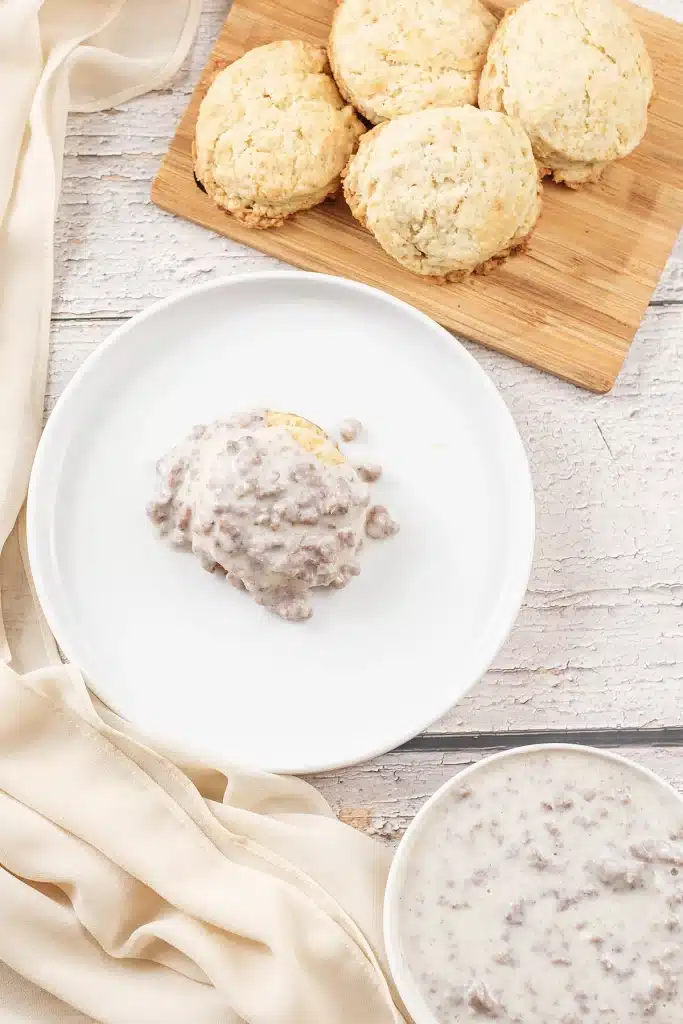
- Thirty minutes start to finish, in one skillet
- Five pantry ingredients, and no stock or cream to buy
- Thick enough to sit on a biscuit instead of running off the plate
- Reheats properly, which most cream sauces do not
- Feeds six, or four people who are being honest about portions
The copycat question about sausage gravy is really a question about texture and pepper. Restaurant gravy is thicker than most home versions, peppered far more aggressively than people expect, and made with whole milk rather than half and half. Get those three right and the rest of the recipe is just patience with a whisk.


What Makes Hardee’s Sausage Gravy Different
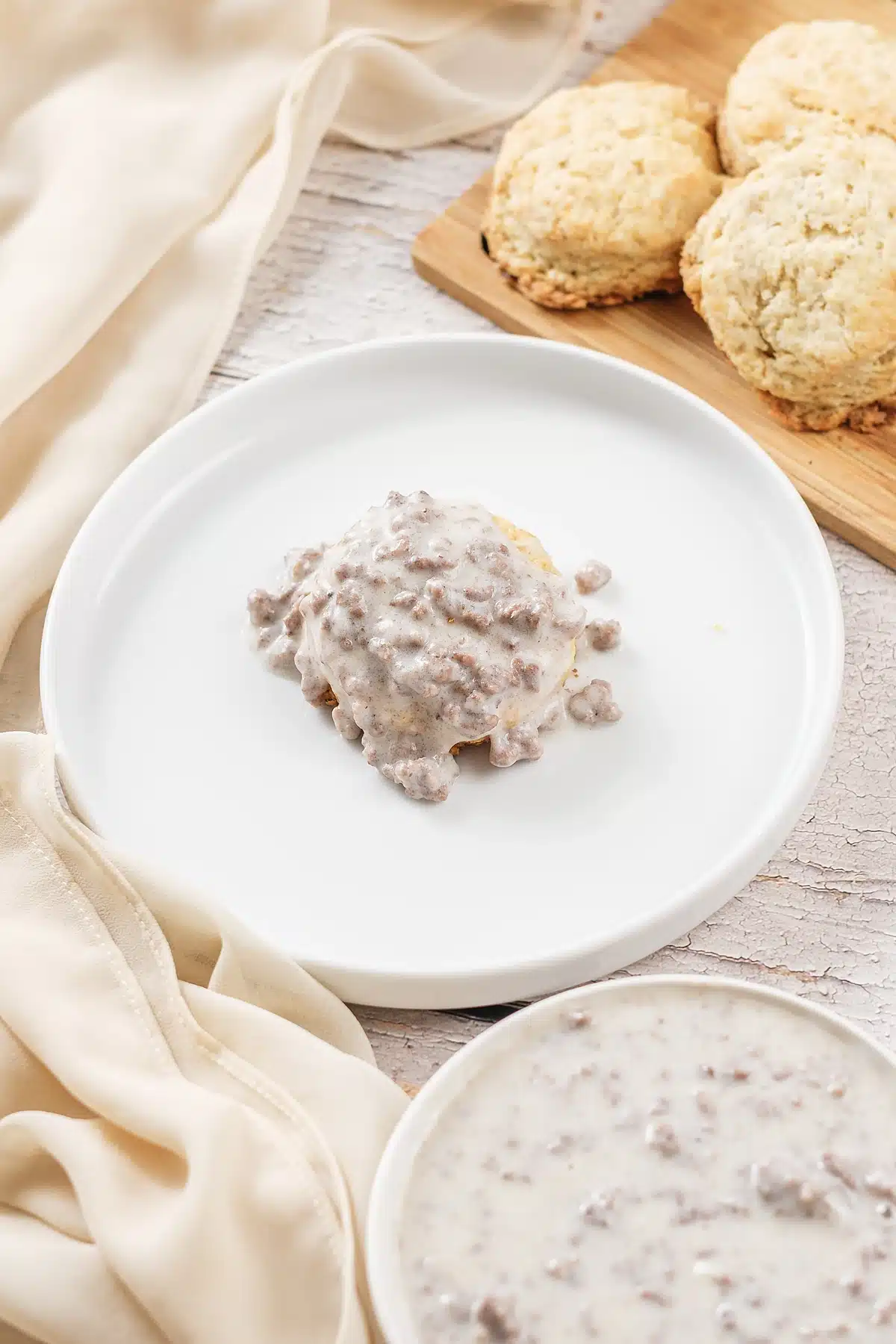
Chain sausage gravy is engineered to survive a warming pan and a drive-through window, and that shapes it in ways worth copying. It is noticeably thicker than a diner gravy, so it holds its shape on a split biscuit rather than soaking straight through. It is pale rather than beige, because the roux is cooked only until it loses its raw smell and not a minute longer.
The pepper level is the other giveaway. Two full teaspoons of coarsely ground black pepper in a batch this size sounds like a mistake on paper, and it is what people are actually tasting when they say a homemade version came out bland. Milk mutes pepper, and three cups of it will swallow anything less.
The last piece of a convincing sausage gravy is the sausage itself. A seasoned breakfast sausage brings sage, salt, and usually a little red pepper, and it is doing most of the seasoning work. Cook it hard enough to leave browned bits stuck to the pan, because that fond is the difference between sausage gravy and white sauce with meat in it.
Save this recipe
Enter your email and I’ll send this recipe straight to your inbox.
Sausage Gravy vs Country Gravy vs Sawmill Gravy
These three names get used for overlapping things, and the distinctions are worth having, because they explain why two recipes with almost identical ingredient lists produce different plates.
Country gravy, sometimes sold as white gravy, is a milk-based sauce built on a butter and flour roux with plenty of black pepper. It contains no meat at all. It is what goes over chicken fried steak.
Sausage gravy is country gravy with browned breakfast sausage stirred back in and made in the sausage drippings, which changes both the flavor and the color. Sawmill gravy is the older Southern name for the same thing, said to come from logging camp kitchens, and in most of the country the two terms are now interchangeable.
What all three share is the roux. Flour cooked in fat is what gives the sauce body without the floury taste you get from stirring flour into cold milk. The Wheat Foods Council has a clear explanation of how all-purpose flour is milled, which is worth reading if you have ever wondered why bread flour behaves differently in a pan.
Ingredient Notes
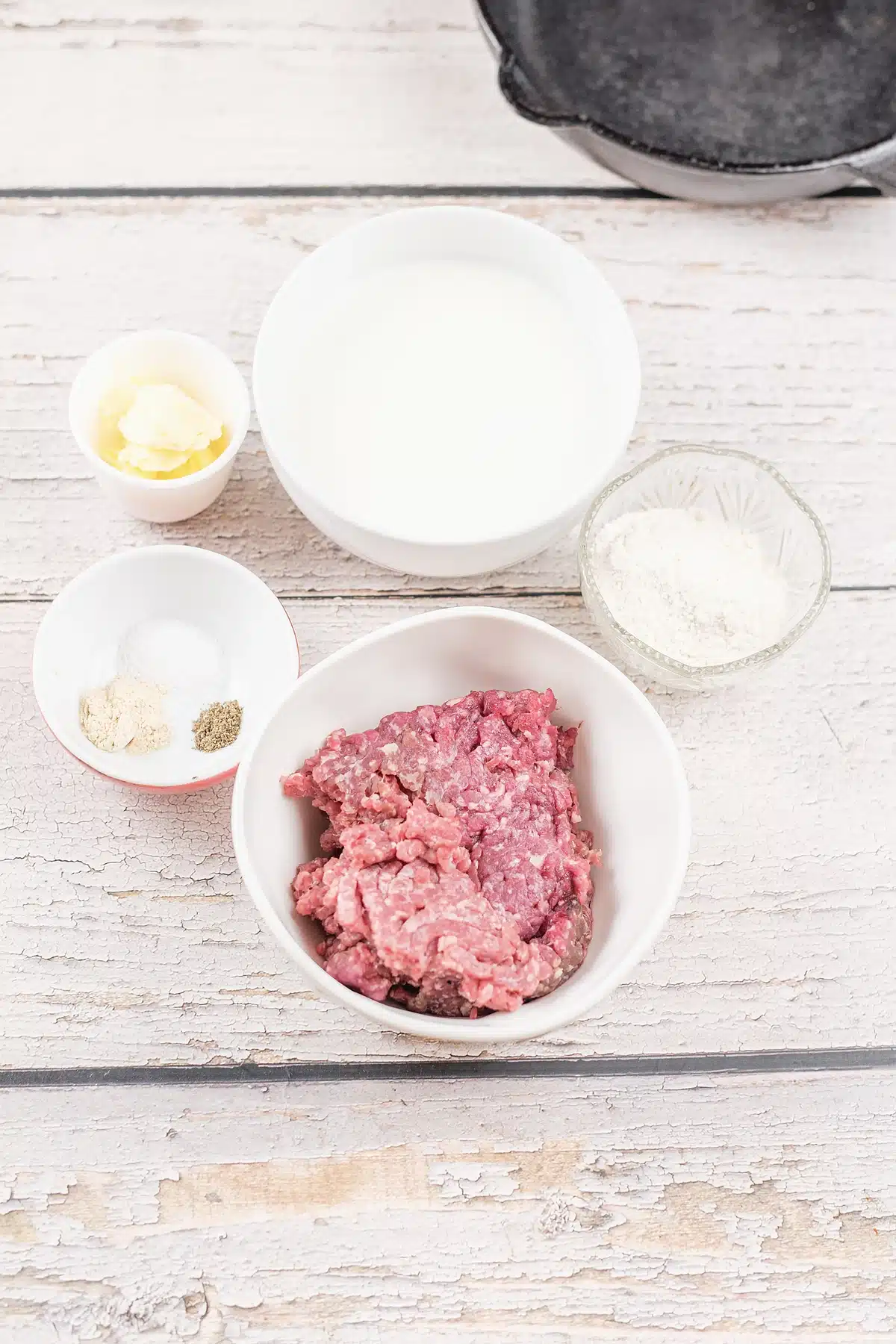
- Breakfast sausage. One pound of bulk pork sausage, not links. Bulk sausage crumbles into the size pieces you want, and links have to be squeezed out of their casings first. A sage-forward brand is the closest to what a chain kitchen uses. Hot sausage works and shifts the whole dish about one notch spicier.
- Whole milk. Three cups, and full fat. Two percent milk makes a thinner, chalkier gravy that separates as it sits. Half and half is richer than the original and turns the sauce ivory instead of white, which is worth knowing before you spend the money.
- All-purpose flour. A quarter cup. That is a heavy ratio to three cups of milk, and it is deliberate. It is what makes the gravy sit on a biscuit rather than run around it.
- Unsalted butter. Three tablespoons, added to the sausage drippings. Lean sausage can leave as little as a tablespoon of fat behind, and the roux needs a proper amount to work with.
Seasoning It Correctly
- Black pepper. Two teaspoons, coarsely ground. Pre-ground pepper from a shaker is a fraction of the strength of pepper you grind yourself, so taste before adding the second teaspoon if that is what you have.
- Kosher salt. One teaspoon, added at the end and adjusted from there. Sausage brands vary enormously in salt, so seasoning early is how home cooks end up with gravy that nobody can eat.
- Garlic powder. Half a teaspoon. It is not traditional and it is in almost every copycat that people say tastes right, because it fills in a savory note that plain milk and flour lack.
- Biscuits. Eight of them, warm and split. Homemade is better and canned is completely acceptable. What matters is that they are hot, because cold biscuits chill the gravy on contact.
How To Make Sausage Gravy
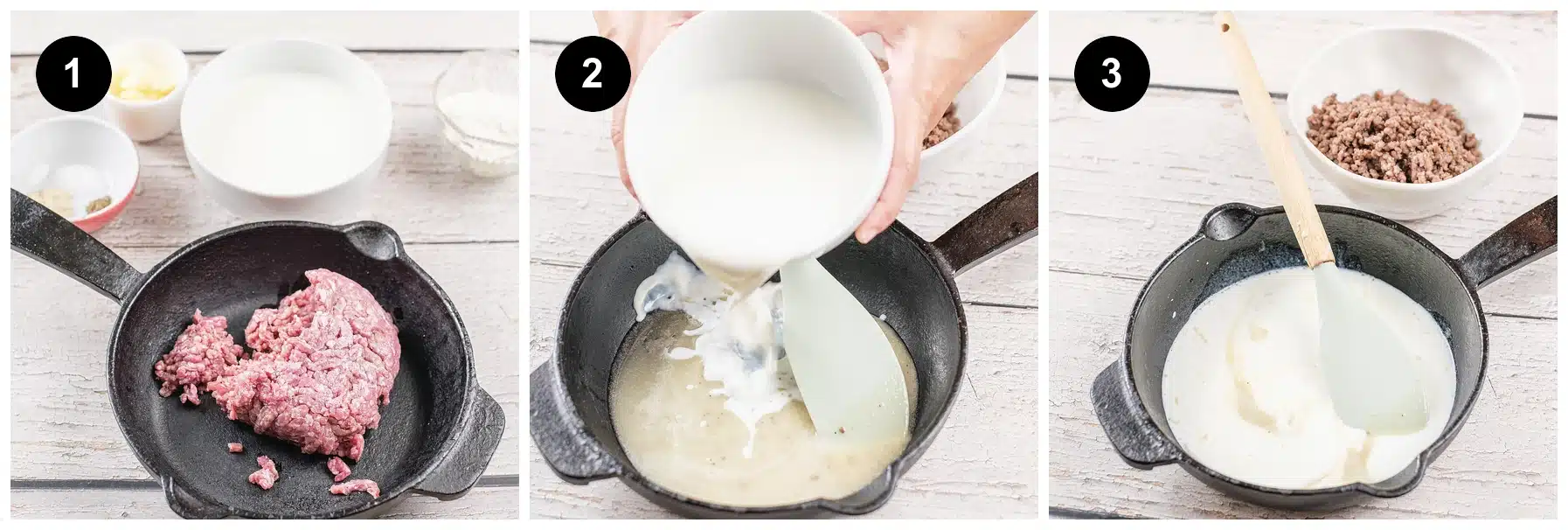
First, brown the sausage. Put it in a large skillet over medium heat and break it apart with a wooden spoon as it cooks, about eight minutes, until there is no pink left and the crumbles have taken on real color. Lift the sausage out with a slotted spoon and leave every bit of fat and every browned scrap in the pan.
Next, build the roux. Melt the butter into the drippings, then sprinkle in the flour and whisk constantly for one to two minutes. It will look like wet sand and then like a smooth paste, and it should smell toasty rather than raw. Do not let it brown.
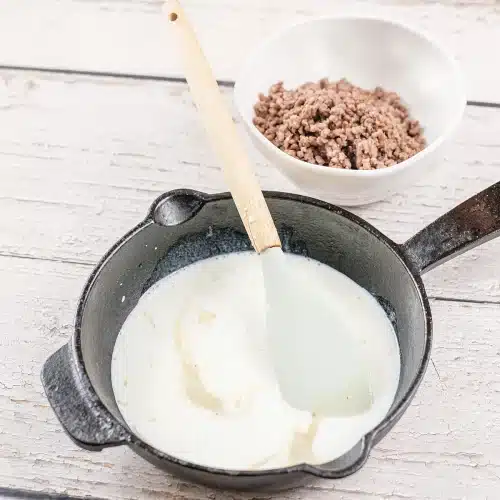
Then add the milk very slowly. Pour in the first half cup and whisk it into the roux completely before adding any more. This is the only moment lumps can form, and pouring in a steady stream at the start is what causes them.
Simmering and Seasoning
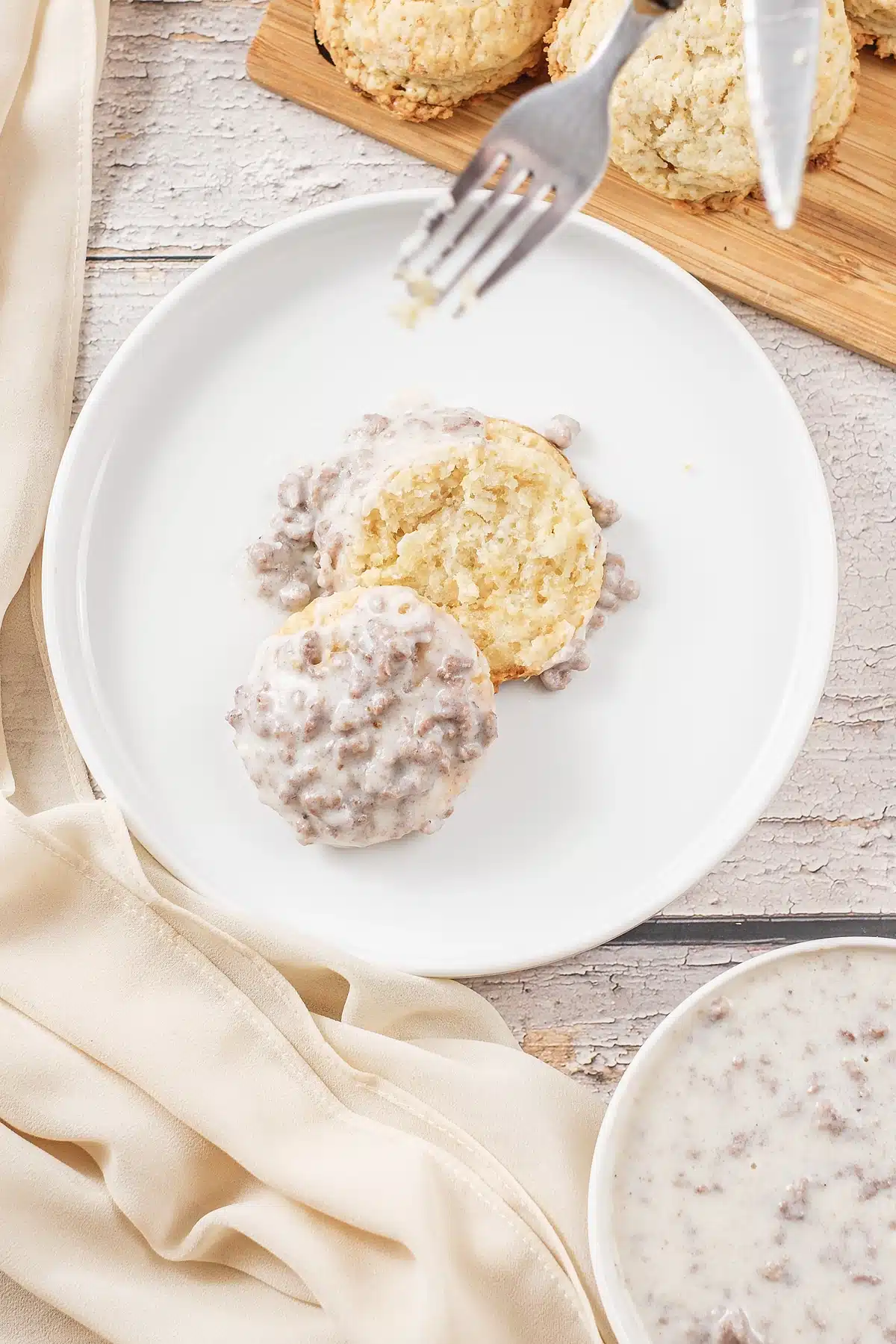
After that, simmer and thicken. Once all the milk is in, bring the pan to a gentle simmer and keep whisking. It will look alarmingly thin for several minutes and then thicken all at once, usually somewhere between five and eight minutes in.
Finally, return the sausage and season. Stir the crumbles back in along with the black pepper and the garlic powder, then simmer on low for another ten minutes so the flavors marry. Taste, add salt, taste again, and serve it over split biscuits straight away.
How To Tell When the Gravy Is Thick Enough

Sausage gravy tells you when it is ready if you know where to look. Drag a spoon across the bottom of the pan. If the trail holds open for a second before the gravy closes over it, you are there. If it fills in immediately, keep simmering.
The other test is the back of the spoon. Lift it out, let the excess run off, and draw a line through the coating with a fingertip. A clean line that stays put means the gravy will sit on a biscuit. A line that runs means another two or three minutes.
Remember that it thickens further off the heat, and considerably more in the fridge. Pull it a shade looser than you want it on the plate, because there is no easy way back once it goes past.
Make It Ahead
Sausage gravy is one of the better make-ahead breakfast components, which is most of why it works for a crowd. Make it a full day early, cool it, and refrigerate it in a sealed container. It will set almost solid, and that is expected rather than a problem.
Reheat it in a saucepan over low heat with a splash of milk, whisking, until it loosens back to a pourable sauce. Plan on a quarter cup of milk per two cups of gravy, added a little at a time so you do not overshoot.
For a brunch, the sensible split is gravy the night before and biscuits in the morning. The gravy is the part that takes attention and the biscuits are the part that has to be hot, so doing them in that order gets you both.
Storing Sausage Gravy
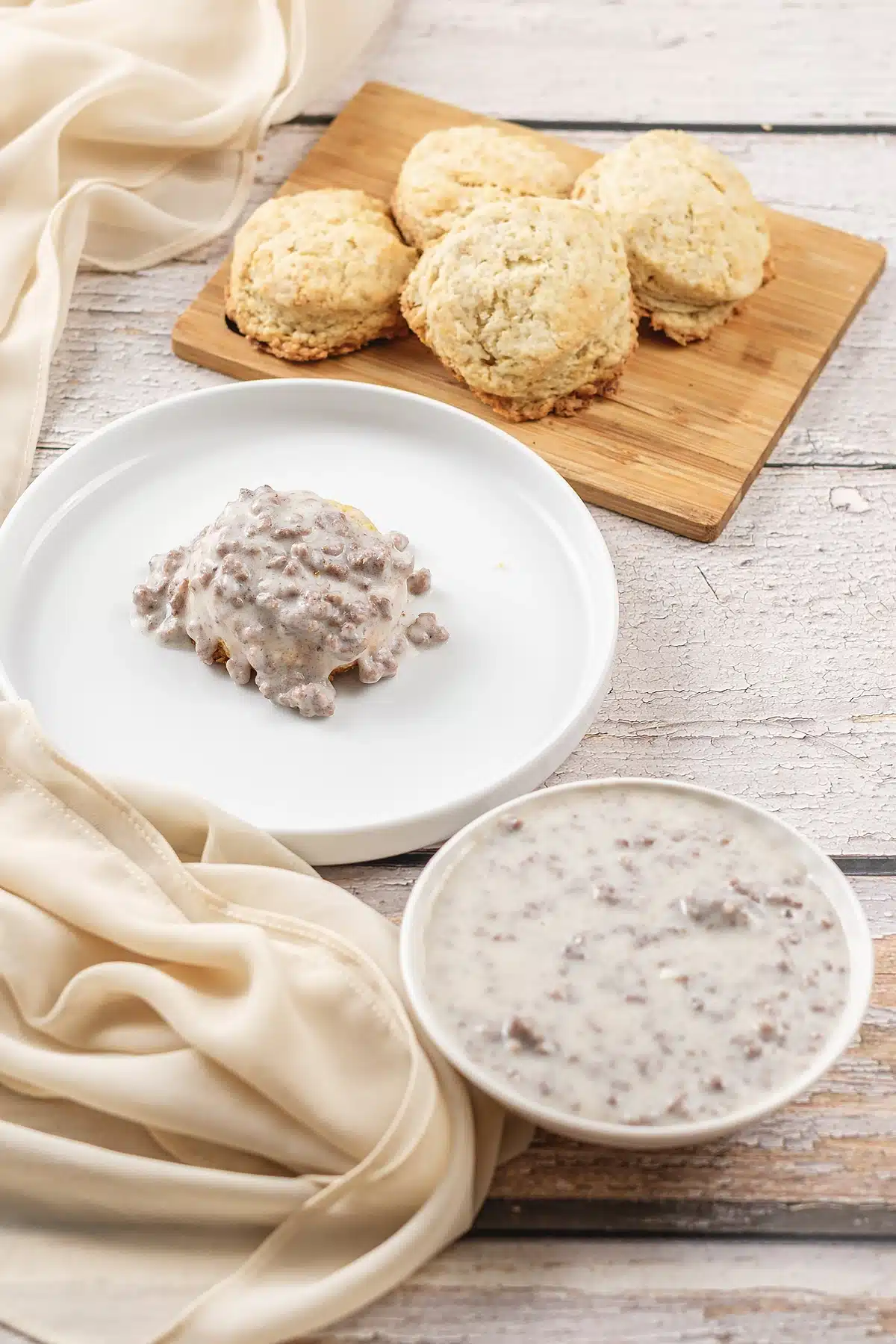
Refrigerated in an airtight container, sausage gravy keeps four days. Reheat gently and never in a hard boil, which splits the milk and leaves you with grainy sauce and a slick of fat on top.
It freezes for up to three months, with one caveat that nobody mentions. Flour-thickened milk sauces can separate on thawing, and the fix is a hard whisk over low heat rather than more flour. Thaw it overnight in the fridge rather than in a microwave, and it comes back together far more reliably.
Portion it before freezing if you can. Two-cup containers thaw in a fraction of the time a full batch does, and a breakfast for two is much likelier to happen than a breakfast for six on a weekday.
One thing not to do is freeze sausage gravy already ladled over biscuits. The biscuit absorbs the sauce as it thaws and what comes out of the oven is a single dense mass. Freeze the two separately and put them together on the plate.
Variations and Substitutions
Hot sausage. A straight swap that raises the heat across the whole pan rather than in spots, which is different from adding red pepper flakes at the end.
Turkey sausage. Much leaner, so add two extra tablespoons of butter to the pan. The gravy comes out lighter and slightly less savory.
Extra thick. Increase the flour to a third of a cup. Anything past that starts to taste pasty no matter how long you simmer it.
Thinner. Add another half cup of milk during the simmer. Diner gravy is looser than chain gravy, if that is the version you grew up with.
Sage and thyme. A quarter teaspoon of each with the pepper. It pushes the whole thing toward a Thanksgiving flavor, in a good way.
Cheesy. Half a cup of sharp cheddar melted in at the end. It is not traditional at all, and it is very good over a biscuit with a fried egg.
Gluten-free. A tablespoon of cornstarch slurried into cold milk, stirred in at the simmer instead of using a roux. The texture is slightly glossier and the flavor is close.
What to Serve with Sausage Gravy
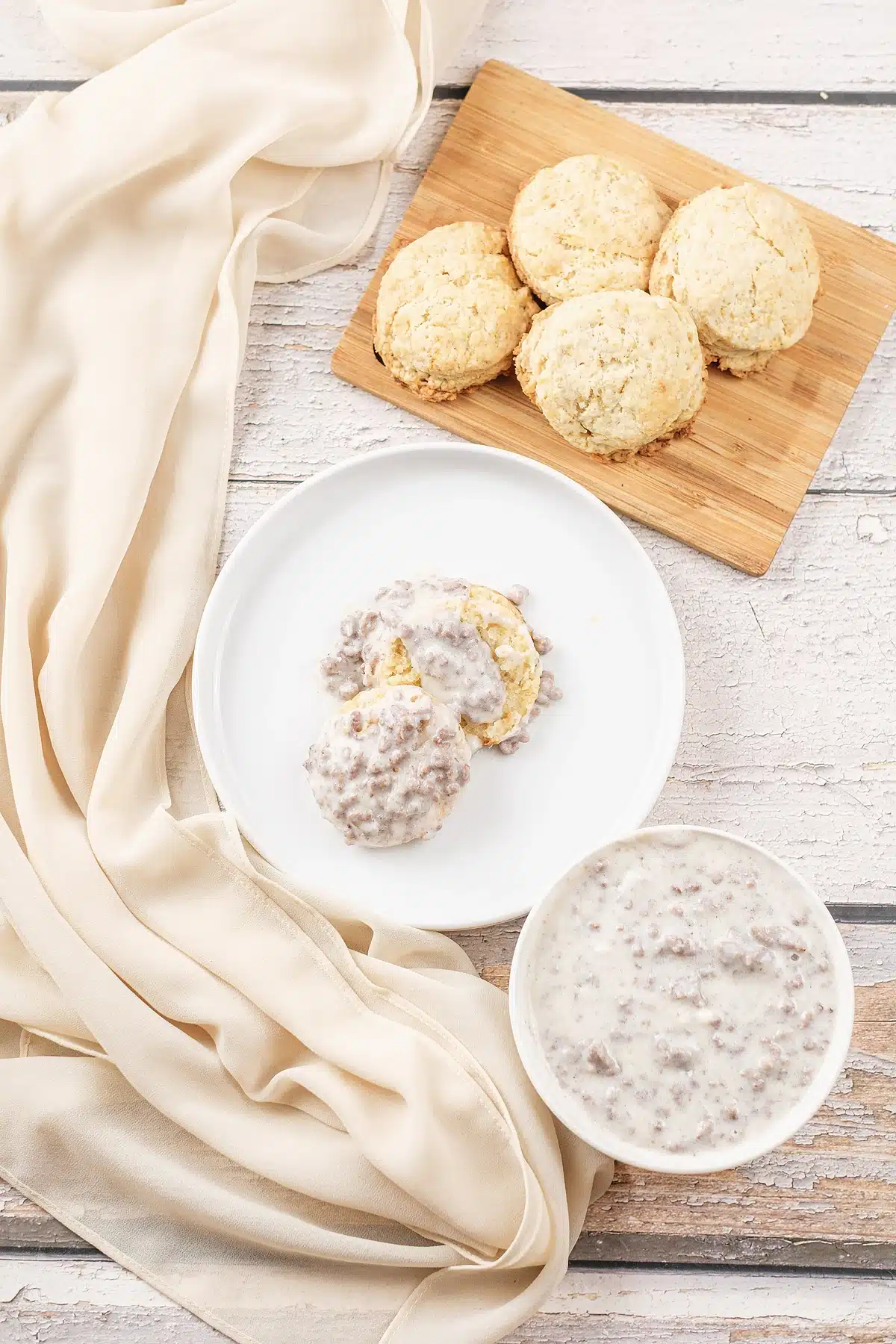
Biscuits, and everything else on the plate is a side. Tall buttermilk biscuits split while they are still steaming are the whole point of the exercise, and homemade biscuits are worth the extra twenty minutes if the morning allows it.
Past that, the plate wants something sharp or something crisp. Fried eggs with runny yolks, sliced tomatoes with salt, or a skillet of Potatoes O’Brien all cut the richness. Hot sauce on the table is not optional in most of the South.
For a full brunch spread, a cheesy potato breakfast casserole can go in the oven while the gravy simmers, and it feeds the people who do not want gravy at all.
Sausage Gravy FAQ
Frequently Asked Questions
What is the secret to good sausage gravy?
Browning the sausage properly and seasoning at the end. The browned bits stuck to the pan carry most of the flavor, and salting before the sauce has reduced is how batches end up inedible.
What kind of sausage does a copycat need?
Bulk pork breakfast sausage with sage in the seasoning. Brand matters less than the style. Italian sausage will taste of fennel and will not read as breakfast gravy.
Why is my gravy lumpy?
The milk went in too fast. Add the first half cup slowly and whisk it into the roux until it is completely smooth before the rest follows. If lumps do form, a stick blender or a quick pass through a sieve rescues it.
What is the difference between sawmill gravy and sausage gravy?
Very little. Sawmill gravy is the older Southern name, historically made with cornmeal rather than flour in some accounts. In practice today they describe the same milk gravy with browned sausage in it.
More Questions About Biscuits and Gravy
Good to Know
Can I make it without a roux?
Yes. Whisk a tablespoon of cornstarch into a half cup of cold milk and add it once the rest of the milk is simmering. The result is glossier and sets a little firmer as it cools.
How much does one batch serve?
Six generously, over eight split biscuit halves. Doubling it works without any change to the method, though it takes longer to come to a simmer in a bigger pan.
Can I keep it warm for a party?
A slow cooker on the warm setting holds it for about two hours. Whisk in a splash of milk every half hour, because a slow cooker keeps reducing it long after you stop looking.
If breakfast for a crowd is what you are planning, sausage balls use the same pound of pork and bake while the skillet is busy.

Hardee's Sausage Gravy
Save this recipe
Enter your email and I’ll send this recipe straight to your inbox.
Ingredients
The Gravy
- 1 lb bulk pork breakfast sausage sage-forward, not links
- 3 tablespoons unsalted butter
- 1/4 cup all-purpose flour
- 3 cups whole milk warmed slightly, if you can
- 2 teaspoons coarsely ground black pepper or to taste
- 1/2 teaspoon garlic powder
- 1 teaspoon kosher salt added at the end, to taste
For Serving
- 8 biscuits warm and split, homemade or canned
- 1 tablespoon fresh chives chopped, optional
Equipment
- Large skillet
- Slotted spoon
- Wooden spoon or spatula
- Whisk
- Measuring spoons
- Measuring cups
Instructions
Brown the Sausage
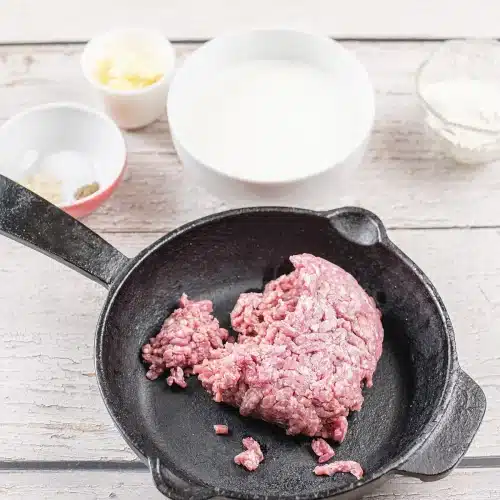
- Cook the sausage: Put the sausage in a large skillet over medium heat and break it apart with a wooden spoon as it cooks, about 8 minutes, until no pink remains and the crumbles have taken on real color.

- Lift it out: Remove the sausage with a slotted spoon and set it aside. Leave every bit of fat and every browned scrap in the pan, because that fond carries most of the flavor.
Make the Roux
- Cook the flour in the fat: Melt the butter into the drippings, sprinkle in the flour, and whisk constantly for 1 to 2 minutes. It should go from wet sand to a smooth paste and smell toasty rather than raw. Do not let it brown.
Build the Gravy
- Add the milk slowly: Pour in the first half cup and whisk it into the roux completely before adding any more. Lumps form here and nowhere else, and they are caused by pouring too fast at the start.
- Simmer and thicken: Bring the pan to a gentle simmer and keep whisking. It will look thin for several minutes and then thicken all at once, usually 5 to 8 minutes in. It is ready when a spoon dragged across the pan leaves a trail that holds for a second.

Season and Serve
- Return the sausage: Stir the crumbles back in with the black pepper and the garlic powder, then simmer on low for 10 minutes so the flavors marry. Taste, add the salt, and taste again.
- Serve hot: Split the warm biscuits, ladle the gravy over them, and scatter chives and extra black pepper on top. Serve straight away, because cold biscuits chill the gravy on contact.
Notes
Thickness: the gravy thickens off the heat and much more in the fridge, so pull it a shade looser than you want it on the plate.
Storage: keeps 4 days in an airtight container. Reheat over low heat with a splash of milk, whisking, and never at a hard boil.
Freezing: up to 3 months. Thaw overnight in the fridge and whisk hard over low heat if it separates. Freeze the gravy and the biscuits separately.
Substitutions: hot sausage for more heat, turkey sausage plus 2 extra tablespoons of butter for a leaner pan, or a cornstarch slurry in place of the roux for a gluten-free version. Nutrition values are an estimate.