
Almost every white bean crostini is the same three things: a can of beans, raw garlic and olive oil, buzzed smooth and spread on toast. It is fine. It also tastes exactly like what it is.
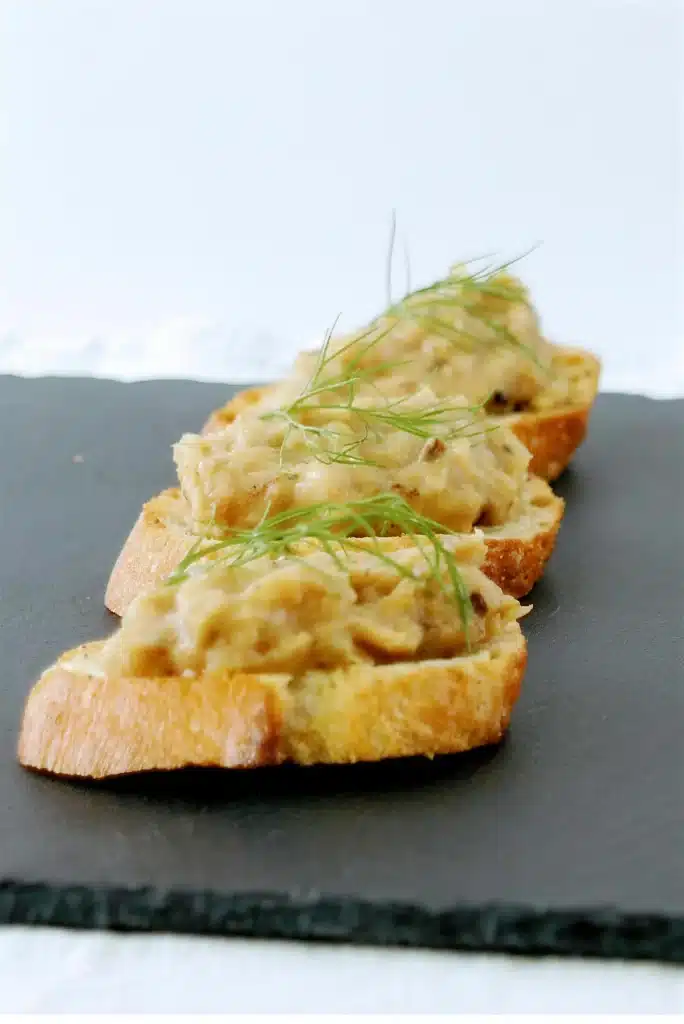
- Roasted fennel and roasted garlic instead of raw, so the spread tastes cooked rather than sharp
- The spread holds three days in the fridge, which makes this genuinely make-ahead party food
- One 15-ounce can of beans and two bulbs of fennel feeds a room
- Deliberately left chunky, so it sits on the toast instead of sliding off
- Vegan as written, and nobody notices
- The leftover spread is a dip for crudites the next day
This version puts two fennel bulbs and a whole head of garlic in a hot oven first and leaves them there until the fennel is collapsed and browned at the edges and the garlic is soft enough to squeeze out like paste. Roasting turns fennel’s raw anise bite into something round and sweet, and it turns garlic from sharp to nutty. Mashed into cannellini beans with lemon and rosemary, that gives you a spread with actual depth instead of a bean puree with a garlic problem.


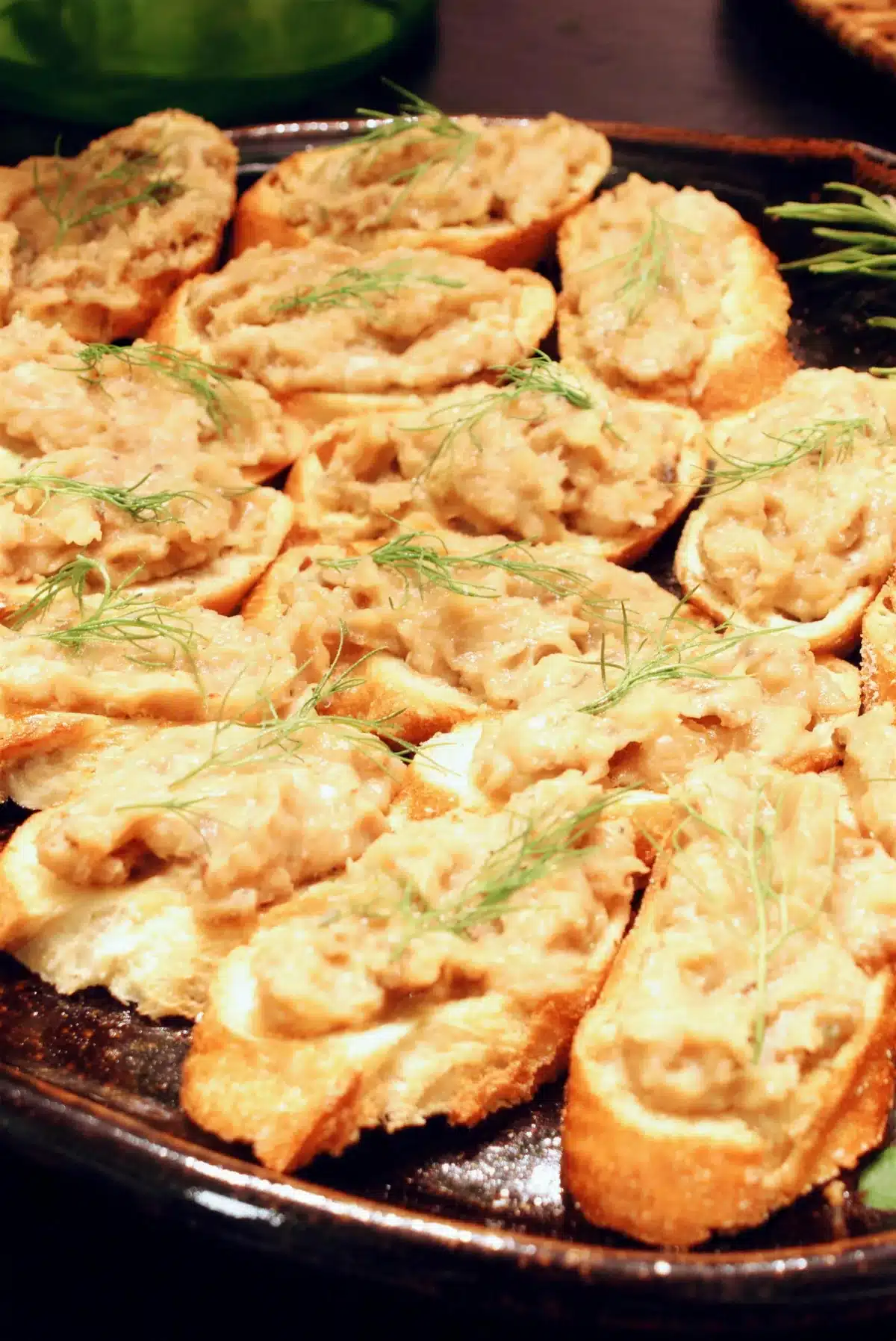
Everything good about a white bean crostini happens in the oven before the food processor is switched on.
What Makes This White Bean Crostini Different
The standard recipe is built on raw aromatics. Beans, a clove or two of raw garlic, lemon, oil. That combination is bright and a little aggressive, and it is why so much white bean crostini reads as hummus without the tahini.
Roasting changes what the aromatics are. Forty-five minutes at 400F drives water out of fennel and concentrates what is left, then browns the cut faces. The licorice note softens into something closer to sweet onion. A head of garlic given the same treatment loses its heat entirely and turns into a nutty paste you can eat by the spoonful.
The texture is deliberate too. This white bean crostini is pulsed, not pureed. Left slightly rough, the spread has enough structure to hold a mound on a piece of toast, and you get whole pieces of bean and shreds of fennel rather than a uniform paste.
What you give up is speed. A raw white bean crostini is a five minute job. This one takes an hour, most of it unattended. The trade is worth making once you taste them side by side, and the spread keeps, so the hour does not have to happen on the day.
Save this recipe
Enter your email and I’ll send this recipe straight to your inbox.
Roasting Fennel Until It Turns Sweet
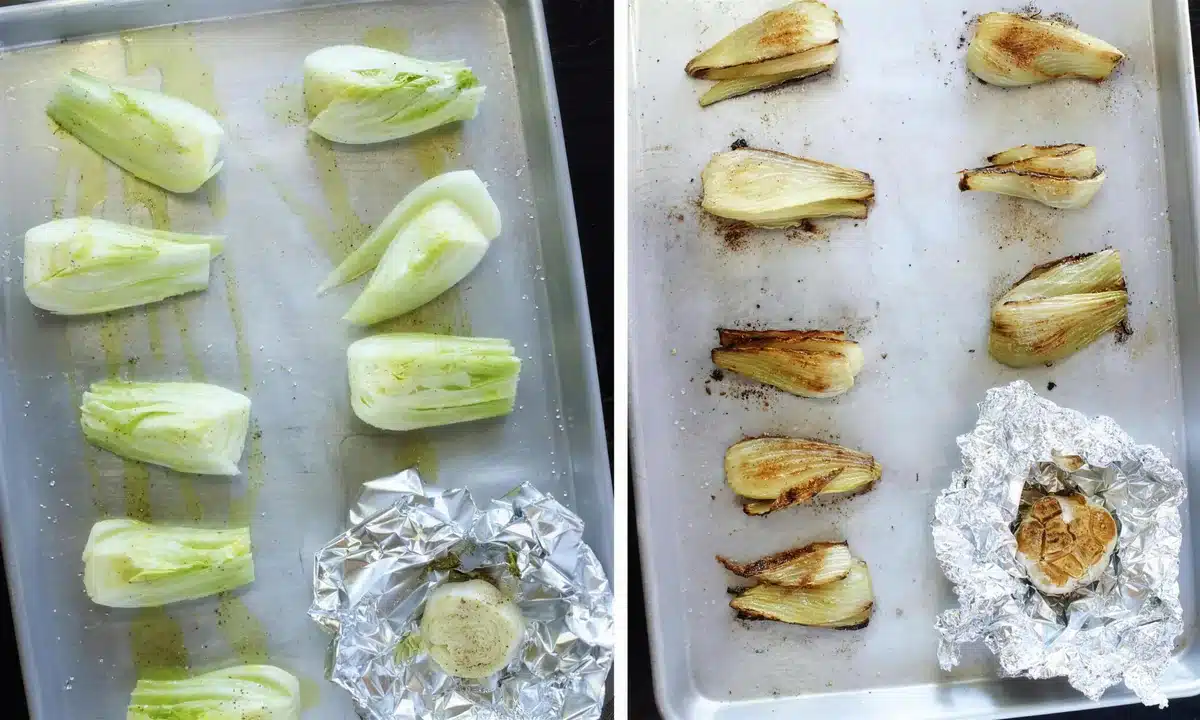
Fennel’s characteristic smell comes largely from anethole, the aromatic compound that also gives anise and star anise their flavor. It is volatile, which is exactly why roasting works: a good deal of it cooks off, and the sugars left behind caramelize.
Quarter the bulbs and cut out the core. Quarters roast faster than halves and still hold together on the pan, which is what you want for a white bean crostini spread with some texture left in it. Leave a little of the core in each piece so the layers do not fall apart before they brown.
Give them room. Crowded fennel steams and comes out pale and stringy. Two bulbs need a full half sheet pan. If you are doubling the recipe, use two pans rather than one packed one.
Turn them once or twice. The cut faces brown first and the rounded side needs help. Forty to forty-five minutes is right; the edges should be genuinely dark in places.
The garlic goes in a foil parcel on the same pan. Cut the top half inch off the head, drizzle oil in, season, seal it up. Wrapped like that it steams and roasts at once and comes out sweet rather than scorched.
Ingredient Notes
Eight ingredients, and the only one worth being fussy about is the bread. Exact amounts are in the recipe card below.
- Fennel: two medium bulbs, which cook down to about a cup. Buy them with the fronds still attached, because the fronds are the garnish and a bulb sold trimmed comes with nothing to finish the plate.
- Garlic: a whole head, roasted. That sounds like a lot and is not, since roasting removes almost all the heat.
- Cannellini beans: one 15-ounce can, drained and rinsed well. Great northern or butter beans work identically. Rinsing matters more than usual here because the canning liquid is where the tinny taste lives.
- Rosemary: half a teaspoon, minced fine. Any more and it takes over the fennel.
- Lemon: the juice of half a lemon, added at the end. The roasted vegetables are sweet and the spread falls flat without acid.
- Olive oil: good stuff, since it is barely cooked in the spread and raw on the bread.
- Baguette: a real one, day old if possible. Soft supermarket bread collapses under the spread.
A sheet pan, foil and a food processor are the whole equipment list for this white bean crostini. A fork and a bowl work if you want the spread rougher still.
How To Make White Bean Crostini
A white bean crostini has the oven doing two jobs at two temperatures, so read the order through before you start.
- First, heat the oven to 400F. Wrap the trimmed head of garlic in foil with oil, salt and pepper, and spread the quartered fennel on the same sheet pan with oil and seasoning.
- Next, roast 40 to 45 minutes, turning the fennel once or twice, until it is tender and well browned. Let everything cool enough to handle.
- Then squeeze the garlic cloves out of their skins into a food processor and add the fennel, the drained beans, rosemary, lemon juice, salt and pepper.
- After that, pulse to a coarse spread. Stop while there are still recognizable pieces of bean; a smooth puree is a different and worse thing.
- Finally, drop the oven to 350F, brush the baguette slices with oil, season them and toast 12 to 15 minutes until light gold. Top each one just before serving and finish with a frond.
Choosing and Toasting the Bread

Half the complaints about a white bean crostini are really complaints about the bread, so it is worth a section of its own. The spread is forgiving; the toast underneath it is not.
Cut on a steep angle, 1/4-inch to 1/2-inch thick. The angle gives you a longer slice with more surface. Thinner than a quarter inch and it shatters when someone bites it; thicker than half an inch and it is a piece of bread with a topping.
Day-old bread toasts better than fresh. It has already lost some water, so it crisps through instead of drying from the outside in.
Oil both sides. Brushed on one side only, the underside stays pale and chewy and the toast bends.
350F and slow, not 425F and fast. A hot oven colors the surface before the middle is dry, and the result goes soft an hour later. Twelve to fifteen minutes at a moderate heat dries the slice all the way through, which is what keeps it crisp under a wet topping.
Cool them on a rack. Left on the hot pan they steam underneath and undo the work of the last quarter hour.
Make It Ahead
This is the rare appetizer where making it in advance improves it, because the spread is better on day two than on day one.
The spread: up to three days. Refrigerate it in a sealed container with a film of olive oil on the surface. This is the part of a white bean crostini that rewards planning. The garlic and fennel keep melding, and the rosemary quietens down.
The toasts: up to two days. Cool them completely and keep them in a paper bag or a tin at room temperature, never in plastic and never in the fridge. Five minutes in a 300F oven brings them back if they soften.
Roast the vegetables even further ahead. Roasted fennel and garlic keep four days refrigerated, so you can split the work across two evenings.
Bring the spread back to room temperature before serving and stir in a little oil and a squeeze of lemon. Straight from the fridge it is stiff and tastes muted.
What cannot be done ahead is the assembly. Topped crostini go soft, and no amount of planning fixes it.
Storing White Bean Crostini
- Assembled white bean crostini: eat within the hour. There is no storing them; the bread is already going.
- The spread, refrigerated: 3 days sealed, with oil over the surface.
- The spread, frozen: 2 months. Thaw overnight in the fridge and beat in fresh oil and lemon, since freezing dulls both.
- Plain toasts: 2 days in a tin at room temperature. Refresh in a low oven.
- Leftover spread that has been sitting out at a party should be thrown away after two hours, like any bean dip.
Variations and Substitutions
The roasted fennel and garlic are the point. Almost everything else can move.
- Add parmesan: a quarter cup grated into the spread makes it richer and stops it being vegan.
- Swap the herb: thyme or oregano for the rosemary, or a spoonful of chopped fennel fronds stirred through at the end.
- Make it a dip: loosen the spread with olive oil and warm water until it is scoopable and serve it with crudites and pita, exactly as you would my black bean hummus.
- Chili and lemon zest on top, which cuts the sweetness of the roasted fennel.
- Grill the bread instead of toasting it if the grill is already lit. Char suits this spread.
- Gluten-free: spoon it onto endive leaves or cucumber rounds and skip the bread entirely.
What to Serve with White Bean Crostini
White bean crostini is rich and soft, so the rest of the table wants to be sharp and crunchy.
- A bowl of spiced mixed nuts, which is the other thing on this list that can be made a week early.
- Something raw and acidic like my shaved fennel and melon salad, which repeats the fennel in its uncooked form.
- Marinated olives, cornichons or pickled onions, straight from the jar, since anything vinegary resets the palate between bites.
- A dry white with some bite. Vermentino, Verdicchio or a Muscadet all work.
- For a supper rather than a party, braised kale and cannellini beans uses the other half of the bag.
Here is what readers ask most often.
White Bean Crostini FAQ
Frequently Asked Questions
Can I make white bean crostini ahead of time?
The components, yes. The finished thing, no. The spread keeps three days refrigerated and is better on the second day, and the plain toasts keep two days in a tin at room temperature. Assembled crostini start to soften within about fifteen minutes, so put them together in the kitchen doorway and carry them straight out.
Do I have to roast the fennel, or can I use it raw?
Raw fennel makes a completely different spread. It stays crunchy and the anise note is loud rather than sweet, so it reads as a crudite dip rather than a topping. If you are short of time, slice the fennel thin and cook it in olive oil in a skillet for fifteen minutes until it collapses. That is not the same as roasting but it is much closer than raw.
What beans work besides cannellini?
Any soft white bean. Great northern, navy and butter beans all behave the same way, and butter beans give the creamiest result. Chickpeas do not work as a substitute here, because they stay grainy and push the whole thing toward hummus. Dried beans cooked from scratch are better than canned if you have them, but the difference is small once the roasted garlic is in.
More Questions About Fennel and Beans
Good to Know
How many crostini does one batch top?
About 24 generously, from one 15-ounce can of beans and two bulbs of fennel, and there is usually spread left over. A whole baguette cut on a steep angle gives roughly 30 slices, so toast the lot and put the extra spread in a bowl with a spoon.
Why is my spread watery?
Underroasted fennel is almost always the cause. If it comes out of the oven pale and limp rather than browned, the water is still in it and it goes straight into the spread. Give it the full 45 minutes and use a big enough pan. Draining the beans properly helps too.
Can I freeze the spread?
Yes, for about two months. Freeze it without the lemon juice if you are organized, and beat fresh oil and lemon through it after it thaws overnight in the refrigerator. Both the acid and the olive oil flavor fade in the freezer, and adding them back is what makes the thawed version taste made rather than defrosted.
Roast the fennel and garlic properly and a white bean crostini stops being a beige appetizer and becomes the thing people stand next to. For another way to use the rest of the can, try my braised kale and cannellini beans.

White Bean Crostini with Roasted Fennel and Garlic
Save this recipe
Enter your email and I’ll send this recipe straight to your inbox.
Ingredients
For the Roasted Fennel and Garlic
- 3 tablespoons extra virgin olive oil for the pan and the garlic parcel
- 1 head garlic top 1/2-inch cut off to expose the cloves
- 2 medium fennel bulbs quartered, core trimmed, fronds reserved
- 1/2 teaspoon kosher salt for roasting
- 1/4 teaspoon black pepper for roasting
For the White Bean Spread
- 15 ounces canned cannellini beans one can, drained and rinsed well
- 1/2 teaspoon rosemary minced fine
- 1 1/2 tablespoons lemon juice from half a lemon
- 1 1/2 teaspoons kosher salt
- 1/4 teaspoon black pepper freshly ground
- 2 tablespoons extra virgin olive oil for the spread
For the Crostini
- 1 baguette cut on a steep angle into about 30 slices
- 3 tablespoons extra virgin olive oil for brushing the bread
- 2 tablespoons fennel fronds reserved, for garnish
Equipment
- Baking sheet
- Food Processor
- Aluminum foil
- Knife
- Oven
Instructions
Roast the Fennel and Garlic
- Heat the oven to 400F. Cut the top off the head of garlic, sit it on a square of foil, drizzle a tablespoon of the olive oil over the cut cloves, season, and seal the foil into a parcel.
- Spread the fennel quarters over the same sheet pan in a single layer with room around them, drizzle with the remaining oil and season with the salt and pepper. Roast 40 to 45 minutes, turning the fennel once or twice, until it is tender and genuinely browned at the edges. Cool until you can handle it.
Make the Spread
- Squeeze the roasted garlic cloves out of their skins into a food processor. Add the fennel, the drained beans, rosemary, lemon juice, salt, pepper and the 2 tablespoons of olive oil.
- Pulse to a coarse spread, scraping the bowl once. Stop while there are still recognizable pieces of bean and shreds of fennel. Taste and correct the salt and lemon, remembering that it will be eaten cold and needs to be assertive.
Toast the Crostini
- Drop the oven to 350F. Cut the baguette on a steep angle into slices between 1/4-inch and 1/2-inch thick and lay them on a baking sheet.
- Brush both sides with olive oil, season lightly, and bake 12 to 15 minutes until light gold and dry all the way through. Cool on a rack rather than on the pan.
Assemble and Serve
- Within fifteen minutes of serving, pile about a tablespoon of spread onto each toast and finish with a reserved fennel frond and a grind of pepper. Serve the leftover spread in a bowl alongside.