
A jar of strawberry syrup in the refrigerator door is the most useful thing you can do with two pounds of ripe berries. It goes into soda water, over pancakes, into a glass of prosecco or onto vanilla ice cream, and it costs about half an hour of standing at the stove.
This one is scented with rose water, and the rose water goes in after the pan comes off the heat. That is the only unusual instruction here and it is the one that matters. I bought my first bottle at an Indian market next to a very good vegetarian restaurant, boiled it into a pan of fruit the way the label seemed to suggest, and got a syrup that smelled of nothing. Stirred in cold instead, a tablespoon perfumes three cups.
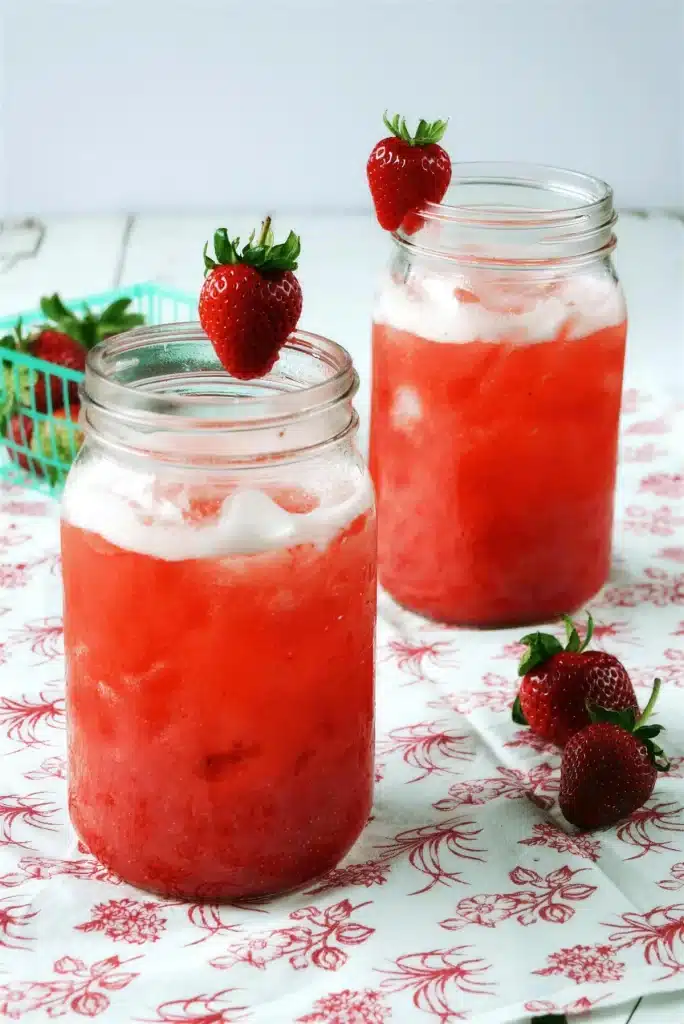
- Three cups out of one flat of berries, and it keeps two weeks cold or six months frozen
- The rose water goes in off the heat, so the jar still smells of roses a week later
- No pectin, no canning jars, no thermometer and one pan
- Macerating the fruit first means the sugar never sits on a dry hot pan and scorches
- One jar makes a soda, a spritz, a champagne cocktail and a pancake sauce
- The strained pulp is not waste. It is a rough jam for toast the next morning

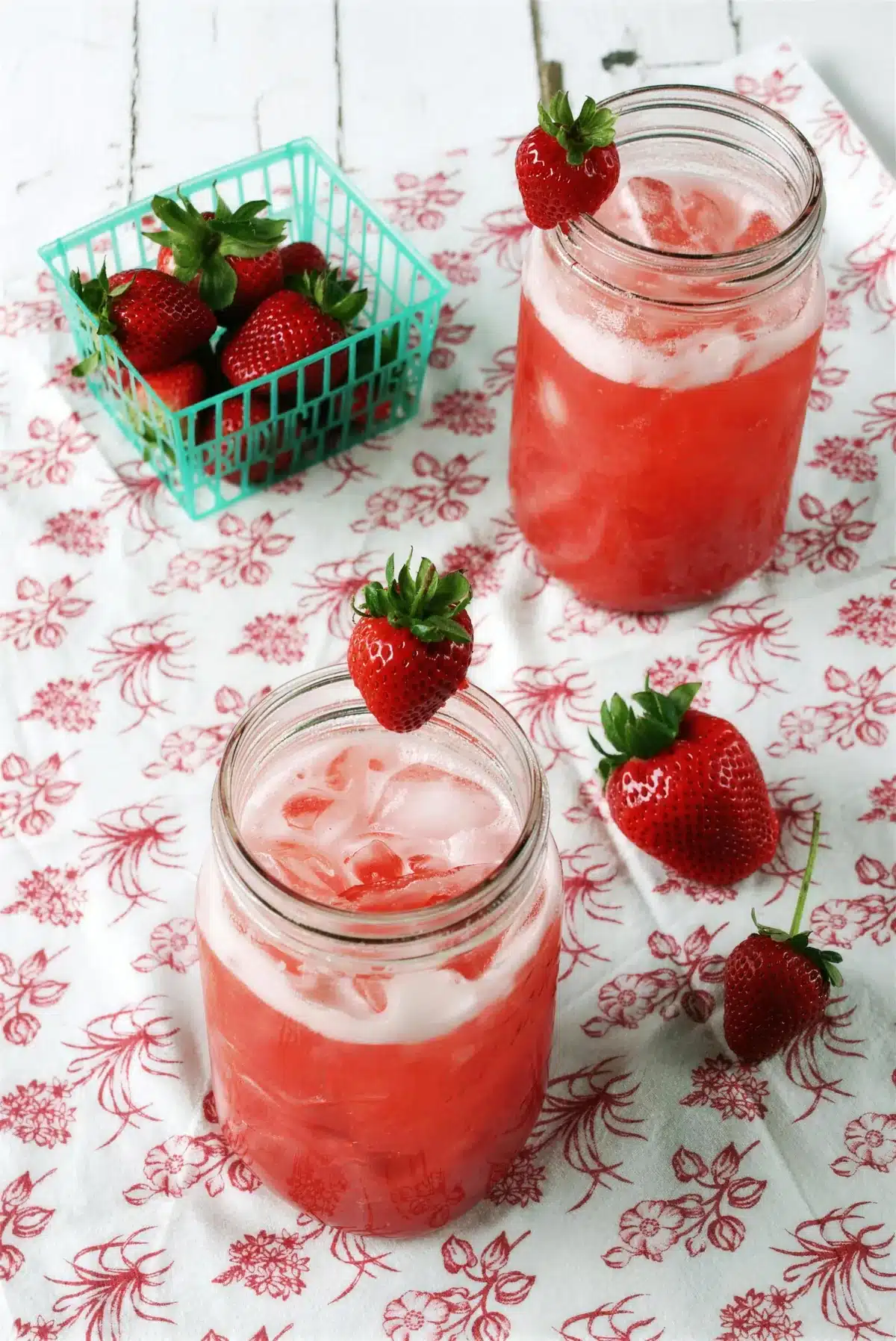
Everything below is about getting as much fruit flavor as possible into the jar, and then keeping it there.
What Strawberry Syrup Actually Is
Strawberry syrup is fruit, sugar and a little water, cooked briefly and strained. That is the whole definition, and the ratio inside it is what separates the versions you find.
Coulis and puree are all fruit, thickened only by what the fruit gives up. They are gorgeous and they last four days.
Strawberry syrup sits in the middle: enough sugar to hold the color and preserve the jar, thin enough to pour and to mix. Mine runs about a pound of sugar to two pounds of fruit, which lands near forty percent sugar in the finished syrup once the water has gone.
Jam and preserves keep going until the fruit sets, which needs pectin, acid and a much longer boil. That boil is also what turns a bright pink into a dull brick red.
Commercial pancake syrup is usually corn syrup with strawberry flavor and color, which is why the bottle is the same shade in March as it is in June.
The version here is deliberately at the thin end. A thick syrup coats a spoon nicely and then sinks to the bottom of a glass of soda water in a solid layer instead of mixing.
Save this recipe
Enter your email and I’ll send this recipe straight to your inbox.
Ingredient Notes
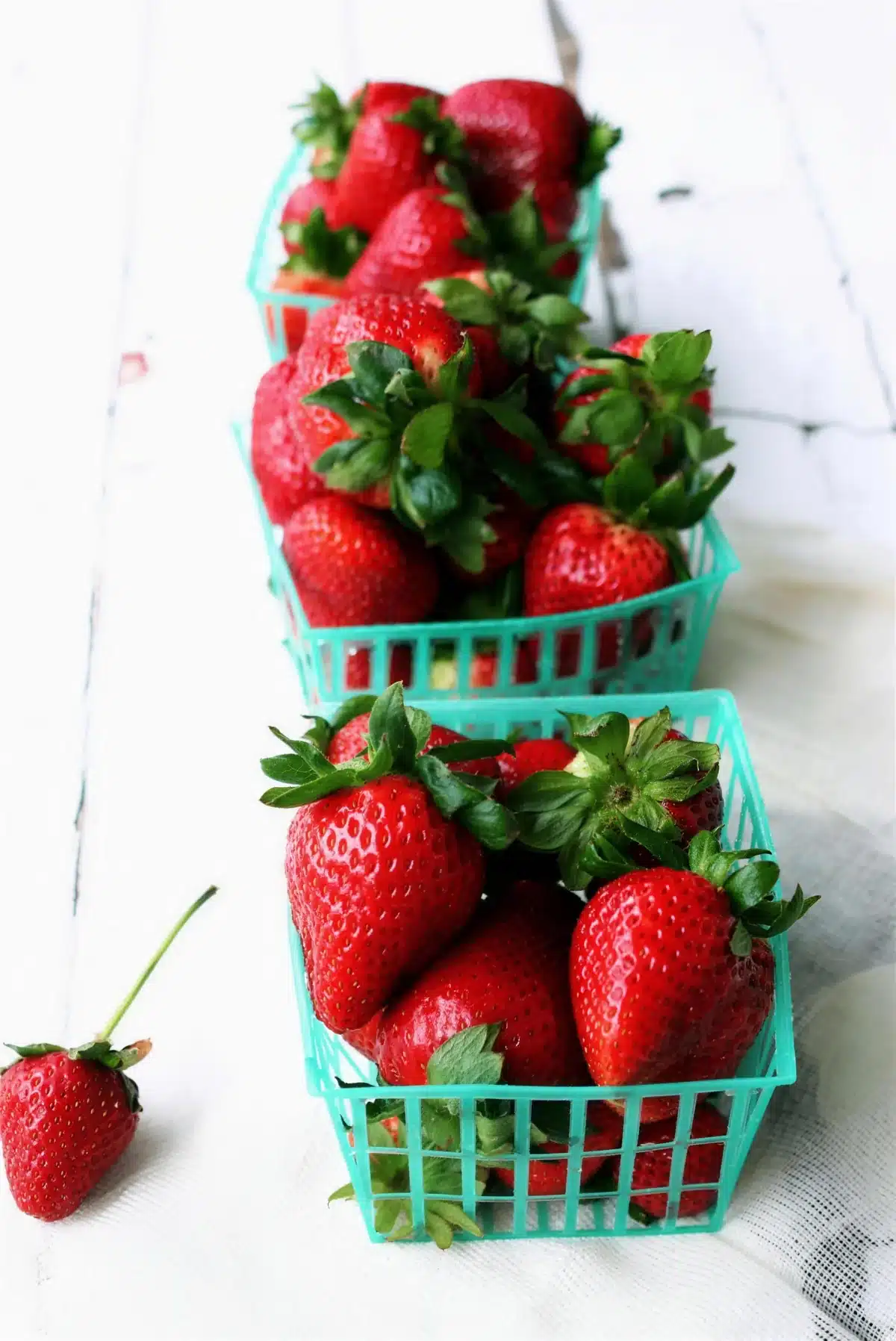
Six items, and two of them decide how good the jar is. Exact amounts are in the recipe card below.
- Strawberries: two pounds, hulled and quartered, and they have to be ripe when you buy them. The California Strawberry Commission is blunt about this in its guide to selecting and storing strawberries: the fruit is fully ripe when it is picked and does not ripen any further afterward. A pale berry stays a pale berry on your counter.
- Granulated sugar: one and a quarter cups. Plain white, because anything with molasses in it fights the fruit. Sugar is not only sweetness here; it is what pulls the juice out during maceration and what lets the jar keep.
- Water: three quarters of a cup, no more. The berries release a great deal of their own liquid and too much added water gives a thin, washed-out result that has to be boiled back down.
- Rose water: one tablespoon, added at the very end. Brands vary enormously in strength. Start with two teaspoons, taste, then decide.
- Lemon: the zest of one and a tablespoon of the juice. The acid brightens the fruit and stabilizes the red pigments, which is why an unacidified syrup goes brown faster.
- Salt: a pinch. It does the same job here that it does in a fruit pie.
Picking Berries for a Good Red
The color of a jar of strawberry syrup is decided in the store, not on the stove.
Buy small berries over large ones. The huge hollow-centered supermarket strawberries carry more water and less pigment, and they make a paler syrup.
Smell the box. Ripe fruit announces itself through the plastic. If a flat smells of nothing, it will taste of nothing.
Check the shoulders. White or green around the cap means the berry was picked early and it will never sweeten.
Frozen berries work and are often better than poor fresh ones in February. Use them straight from the freezer, do not thaw them first, and take the water down to half a cup because they carry ice.
Slightly overripe is ideal. The soft ones nobody wants to eat raw are the best value in the store and the sugar covers their flaws entirely.
How To Make Strawberry Syrup
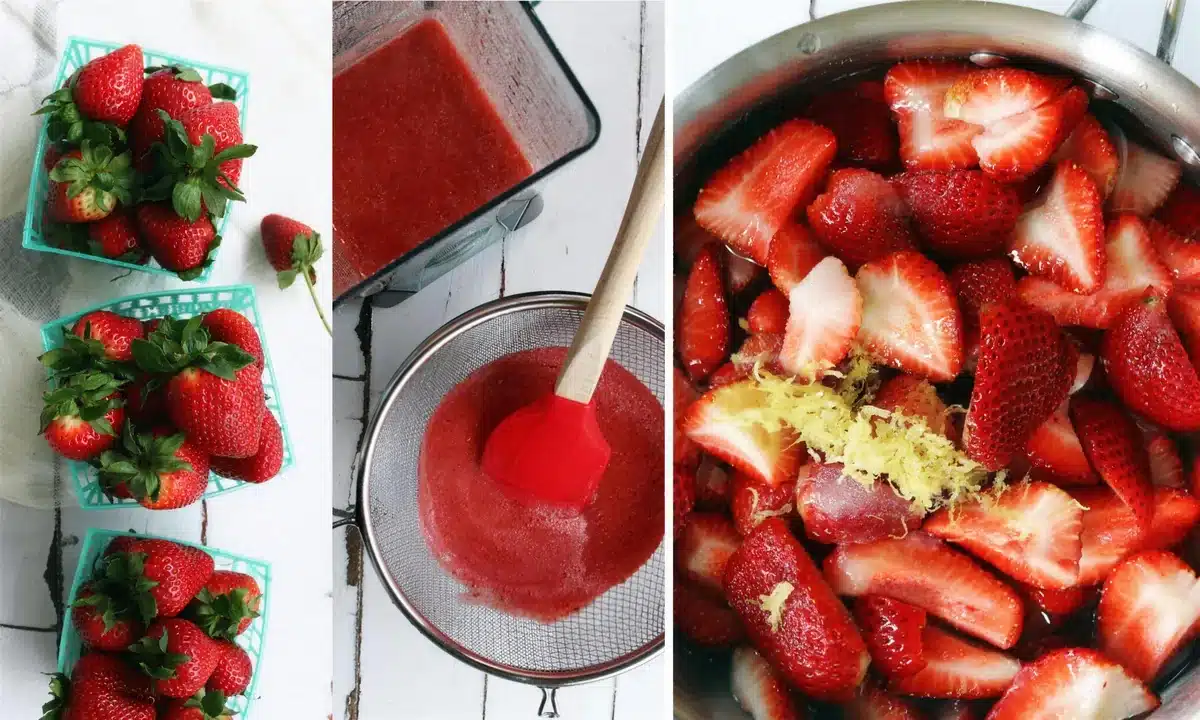
The whole method for this strawberry syrup is one maceration, one short simmer and one strain.
- First, hull and quarter 2 pounds of strawberries, toss them with the 1 1/4 cups of sugar and the lemon zest in a bowl, and leave them for 30 minutes. They will slump and sit in their own red juice.
- Next, tip the fruit and every drop of that juice into a heavy saucepan with the 3/4 cup of water and the pinch of salt.
- Then bring it to a simmer over medium heat, stirring until the sugar has dissolved, and hold it at a lazy simmer for 10 minutes. The fruit will go pale and collapse. That is the sign it has given up what it has.
- After that, blend the whole panful until smooth, then pour it in batches into a fine-mesh sieve set over a bowl and stir with a rubber spatula so the liquid keeps moving through. Do not press hard or you push seeds and pulp into the jar.
- Finally, stir the lemon juice and the rose water into the warm strained syrup, off the heat, and chill it for 2 hours before you use it.
Why the Rose Water Goes In Last
Nearly every version of this recipe simmers the rose water with the fruit, and it is the reason so many people report that they cannot taste it.
Rose water is an aromatic distillate. Its smell comes from a small group of volatile compounds carried in water, and volatile means exactly what it sounds like.
Ten minutes at a simmer removes most of them. The pan smells wonderful while it cooks, which is the tell. That aroma is leaving the pot rather than staying in it.
Stir it into the warm syrup instead, once the heat is off, and it stays where you put it.
Start with two teaspoons. Rose waters range from barely floral to soapy, and the difference between perfume and bathroom cleaner is about a teaspoon.
Give it an hour before judging. The aroma settles and softens as the syrup chills, and something that reads slightly strong when warm is usually right when cold.
Ways to Use Strawberry Syrup
One jar of strawberry syrup covers most of a summer.
The fizz, which is what the photographs show: a quarter cup of syrup, a tall glass of ice, soda water to the top, stir once.
A champagne cocktail: a tablespoon in the bottom of a flute, then prosecco poured slowly down the side.
Over pancakes or waffles, warmed for twenty seconds so it runs. It is thinner than bottled syrup and soaks in rather than sitting on top.
Stirred into lemonade or iced tea, two tablespoons per glass.
On vanilla ice cream, or on plain yogurt with the reserved pulp folded through.
In a milkshake, which is where the thin consistency finally becomes an advantage.
Make It Ahead
Strawberry syrup is a make-ahead recipe by nature. Nothing about it is better fresh from the pan.
The syrup needs two hours in the refrigerator anyway. Warm syrup in a glass of ice melts the ice and dilutes the drink before you have finished stirring.
Make it the day before a party. Overnight is better than two hours; the rose water and the fruit settle into each other.
Chill in a wide bowl, not the jar. Three cups of hot syrup in a narrow jar takes hours to come down and sits in the danger zone the whole time.
Bottle it once cold. A swing-top bottle pours more neatly into a glass than a jar does.
Freeze half. Poured into an ice cube tray and then bagged, you get single-drink portions that go straight into a glass.
Storing Strawberry Syrup
- Refrigerated: a properly strained strawberry syrup keeps 2 weeks in a sealed bottle. Unstrained, with pulp in it, expect four or five days.
- Frozen: 6 months in a freezer bag or an ice cube tray. It never freezes solid because of the sugar, so cubes are scoopable rather than rock hard.
- The pulp: 5 days refrigerated in its own container, or freeze it in a flat bag.
- Watch for fizzing. A strawberry syrup that has started to ferment smells yeasty and pushes bubbles up when you tilt the bottle. That one goes down the sink.
- Do not can it in a water bath unless you are following a tested preserving recipe. This one is not formulated for shelf storage and it is not acidified for it either.
Variations and Substitutions
The method holds for almost any soft fruit, so the syrup changes with the month.
- Leave the rose water out and you have a plain strawberry syrup, which is what most people actually want on pancakes.
- Vanilla instead: half a split bean simmered with the fruit, or a teaspoon of extract stirred in cold.
- Basil or mint: a small handful bruised and steeped in the hot strained syrup for ten minutes, then lifted out.
- Black pepper, a scant quarter teaspoon, cracked and added off the heat. It sounds wrong and it is very good in a spritz.
- Raspberry, blackberry or cherry at the same weights. Stone fruit needs the sugar cut to one cup because it starts sweeter.
- Honey for a third of the sugar gives a rounder, less clean flavor and a slightly darker jar.
- Sugar-free is a different recipe. Sugar is doing the maceration and the preserving here, and allulose or erythritol will not, so treat that version as a four-day puree.
The Strawberry Rose Water Fizz
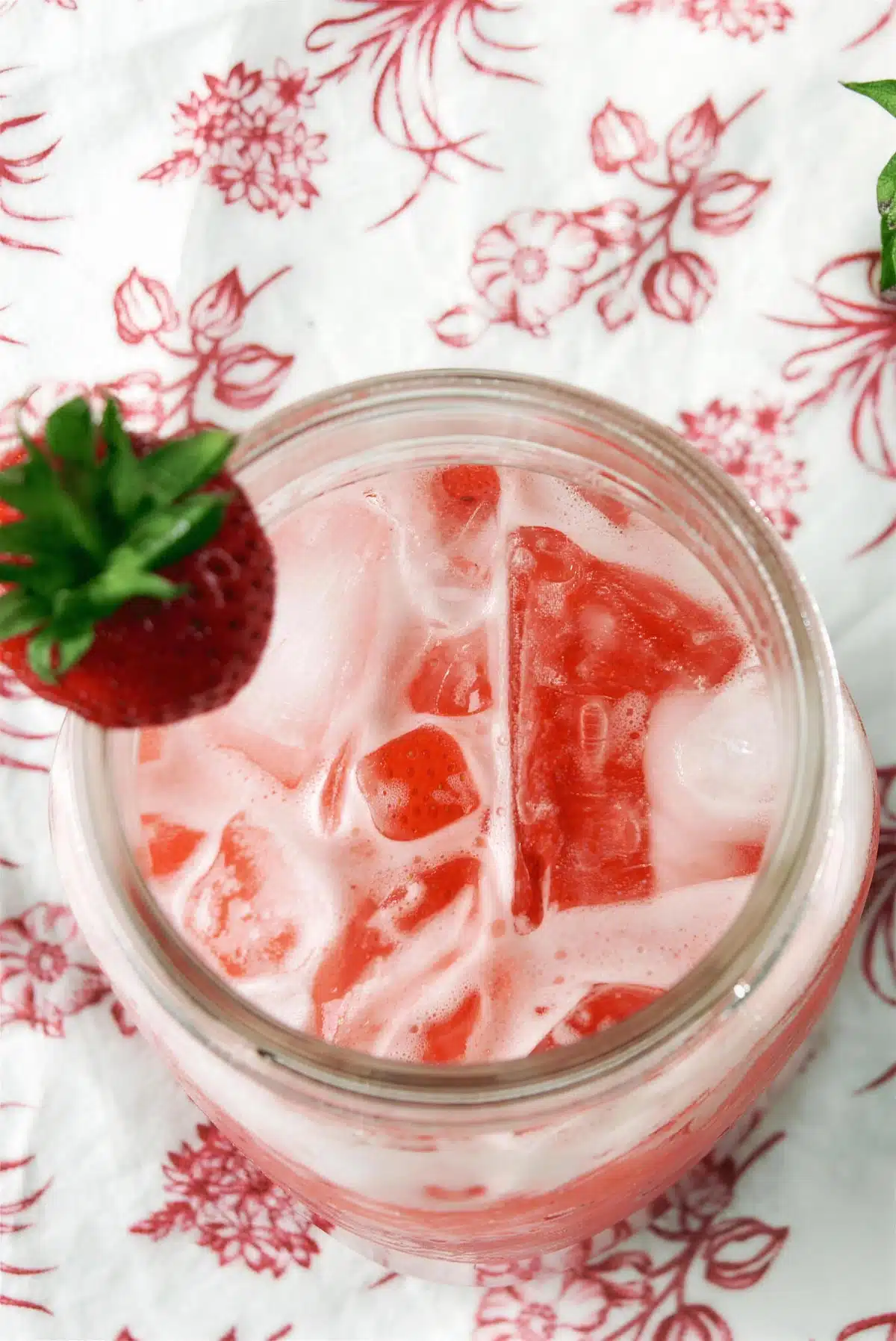
The drink this strawberry syrup was invented for takes about a minute to build.
Fill a tall glass or a pint jar with ice, pour in 1/4 cup of cold syrup, top with soda water and stir once from the bottom so the color comes up through the glass. A whole berry split halfway and hung on the rim is not compulsory. For the version with alcohol, use a tablespoon of syrup in a flute and fill it slowly with prosecco or champagne, because carbonation poured onto sugar syrup foams over the top of the glass in about two seconds.
For a jug, mix a cup of syrup with a liter of soda water at the last possible moment and pour over ice already in the glasses. Made up in advance it goes flat and tastes of warm fruit cordial. If you want a longer drinks list for the same table, there is a jug of gin lemonade and a blackberry sangria that both hold up in a pitcher, and the same fruit turns into a strawberry cantaloupe sorbet if the flat you bought is bigger than your thirst.
Here is what readers ask most often.
Strawberry Syrup FAQ
Frequently Asked Questions
How much does this recipe make?
About three cups, which is twenty-four servings of two tablespoons, or roughly twelve tall fizzes at a quarter cup each. Two pounds of berries sounds like a great deal of fruit for three cups of strawberry syrup, and it is: most of what you buy leaves as pulp and steam. That pulp is the reason not to feel bad about it, since you get a bowl of rough jam out of the same pan.
Can I use frozen strawberries?
Yes, and out of season they are usually the better buy. Skip the maceration step, since frozen fruit releases its juice as it thaws in the pan anyway, and cut the added water from three quarters of a cup to a half. Frozen berries are picked riper than the fresh ones shipped in winter, so the syrup is often a deeper red.
Why is my syrup brown rather than pink?
Almost always too long on the heat. Ten minutes at a lazy simmer is enough to break the fruit down; twenty minutes starts caramelizing the sugar and dulls the color. The lemon juice helps too, which is part of why it goes in at the end rather than being boiled away with everything else.
More Questions About Sugar and Rose Water
Good to Know
Can I cut the sugar?
Down to one cup, comfortably. Below that you are making a puree rather than a strawberry syrup and it will keep less than a week, because the sugar is doing real preservative work by tying up the water that spoilage organisms need. If you want it less sweet in the glass, use less syrup and more soda water instead of changing the recipe.
Where do I buy rose water and how much do I use?
Middle Eastern, Indian and Persian grocers all carry it, usually for a few dollars, and it is far cheaper there than in the baking aisle. Strength varies wildly between brands. Start with two teaspoons in the full batch, taste it cold, and work up to a tablespoon. Too much tastes like soap and there is no undoing it.
More Questions About Straining and Texture
Good to Know
Do I have to strain it?
No, but the two versions behave differently. Strained, you get a clear pourable strawberry syrup that mixes into a drink and keeps two weeks. Unstrained, you get a thick sauce that is excellent on ice cream, sinks to the bottom of a glass of soda water, and keeps about five days because there is far more fruit solid in it.
Is this the same as strawberry simple syrup?
Close, with one difference in method. A strawberry simple syrup is usually made by steeping berries in an already-made sugar syrup and then lifting them out, which is faster and tastes lighter. Cooking and blending the fruit, as here, pulls more color and more flavor into the liquid, and it is why this one is opaque rather than translucent.
Why did mine set like jelly?
Strawberries carry a little natural pectin and a long boil will set it, especially with lemon juice in the pan. Ten minutes at a lazy simmer is short enough that the strawberry syrup stays pourable. If a batch does thicken, whisk in warm water a tablespoon at a time until it pours off a spoon in a thin stream again.
Make a jar of strawberry syrup in the week the berries go cheap and you will find reasons to use it all month. For the other half of that flat, the crepes are the obvious place for it.
Strawberry Syrup with Rose Water
Save this recipe
Enter your email and I’ll send this recipe straight to your inbox.
Ingredients
For the Strawberry Syrup
- 2 pounds strawberries hulled and quartered, about 6 cups
- 1 1/4 cups granulated sugar plain white
- 2 teaspoons lemon zest finely grated, from 1 lemon
- 3/4 cup water 1/2 cup if the berries are frozen
- 1 pinch fine sea salt
- 1 tablespoon lemon juice stirred in off the heat
- 1 tablespoon rose water start with 2 teaspoons and taste
To Serve as a Fizz
- 1 glassful ice cubes per drink
- 1/4 cup strawberry syrup cold, per drink
- 8 ounces soda water cold, or prosecco for the alcoholic version
- 1 whole strawberry split halfway, for the rim
Equipment
- Medium Pot
- Blender
- Fine Mesh Strainer
- Large Bowl
Instructions
Macerate and Simmer
- Hull and quarter the strawberries, toss them in a bowl with the sugar and the lemon zest, and leave them for 30 minutes. They will slump and sit in a pool of their own red juice, which is the sugar doing the work a hot pan would otherwise have to do.
- Tip the fruit and every drop of the juice into a heavy saucepan with the water and the salt. Bring it to a simmer over medium heat, stirring until the sugar has dissolved, then hold it at a lazy simmer for 10 minutes. The fruit goes pale and collapses when it has given up what it has.
Blend, Strain and Finish
- Blend the whole panful until smooth, working in batches if your blender is small. Hot liquid expands, so fill the jar no more than half full and hold the lid down with a folded towel.
- Pour the puree in batches into a fine-mesh sieve set over a bowl and stir it with a rubber spatula so the liquid keeps moving through. Do not press the pulp; that gives a cloudy syrup that separates in the glass. Set the pulp aside as a loose jam.
- Stir the lemon juice and the rose water into the warm strained syrup, off the heat. Chill for at least 2 hours in a wide bowl, then bottle. It should pour off a spoon in a thin stream.
Build the Fizz
- Fill a tall glass or a pint jar with ice, pour in 1/4 cup of the cold syrup, top with soda water and stir once from the bottom so the color comes up through the glass. Hang a split berry on the rim. For the alcoholic version, put a tablespoon of syrup in a flute and fill it slowly with prosecco, because carbonation poured onto sugar syrup foams straight over the top.