
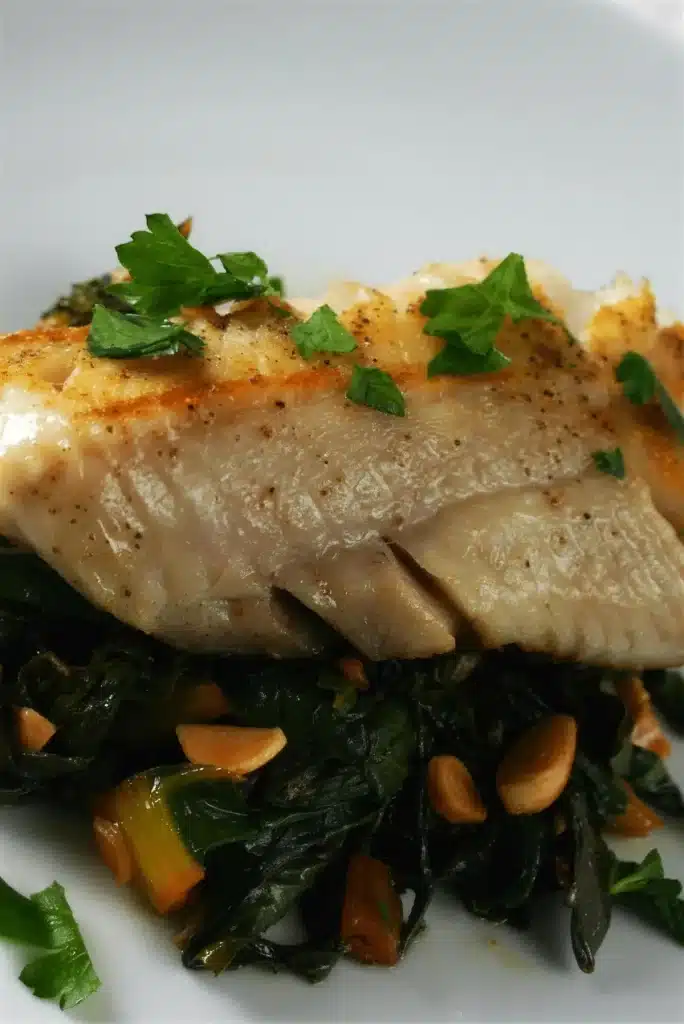
A dry fillet, a properly hot skillet and four minutes of leaving it alone: that is everything pan seared cod asks of you, and it is the whole difference between a lacquered golden crust and a pale piece of fish welded to the bottom of the pan.
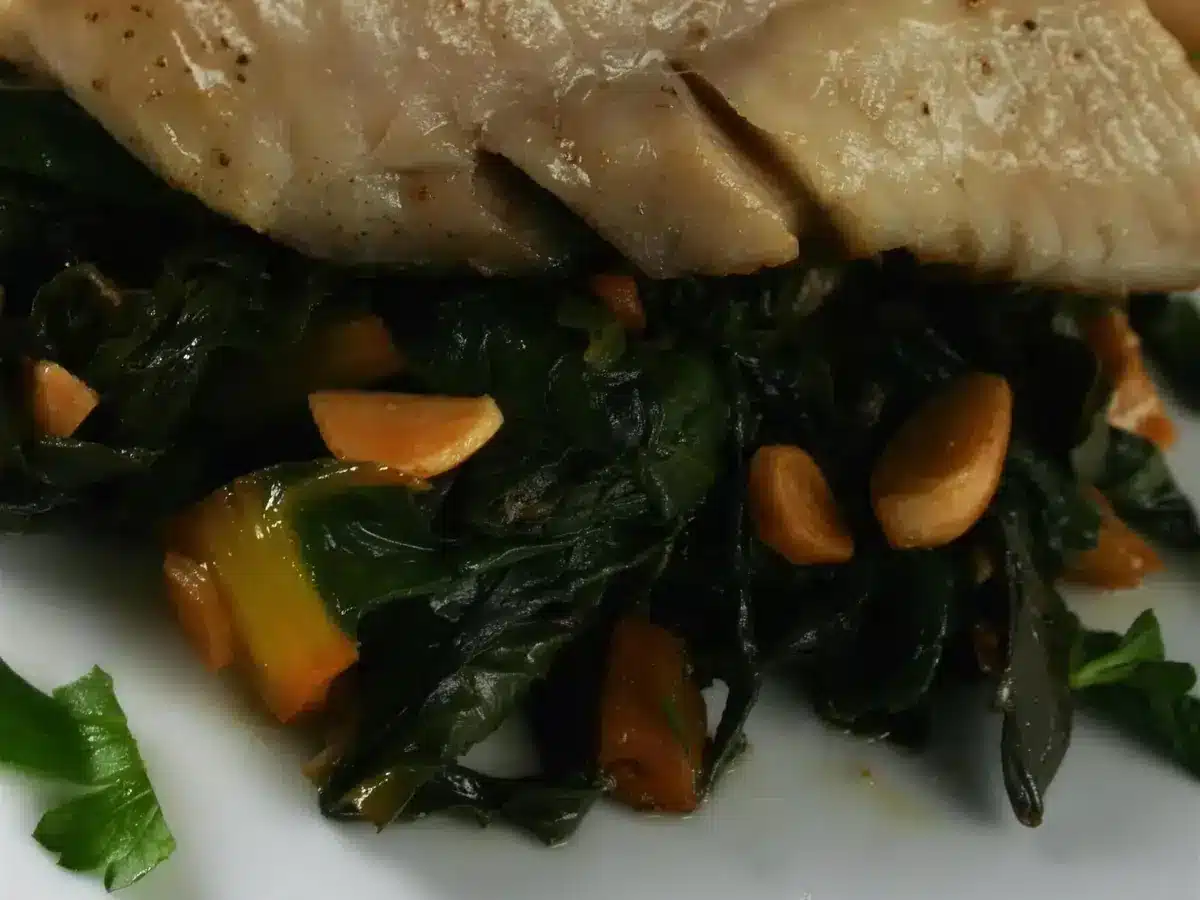
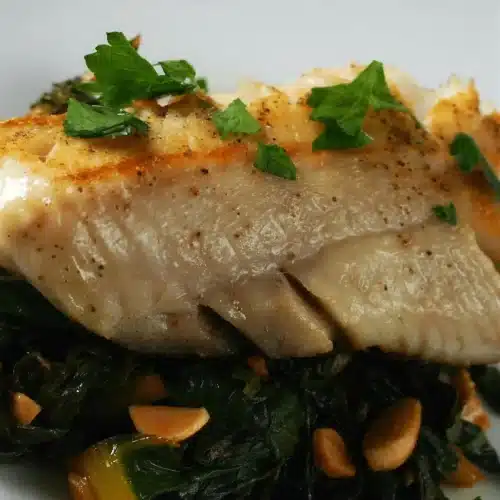
Cod is the fish I hand to people who tell me they cannot cook fish. It is thick, forgiving and cheap enough that a mistake costs six dollars instead of twenty. The rainbow chard underneath began as a way to use up a bunch going limp in the crisper drawer, and it stayed because garlicky, vinegar-sharpened greens do for white fish exactly what a squeeze of lemon does for roast chicken. The marcona almonds go over the top at the last second, for crunch.
- Eight minutes in the skillet, and the greens cook in the same window
- One skillet for the fish, one for the chard, and nothing else to wash
- Cod is the cheapest thick white fish at most counters and the hardest to ruin
- No breading, no batter and no flour, so it stays naturally gluten-free
- The vinegar and almonds turn a plain fillet into something restaurant-worthy
- Frozen fillets work as well as fresh, which makes it a pantry dinner

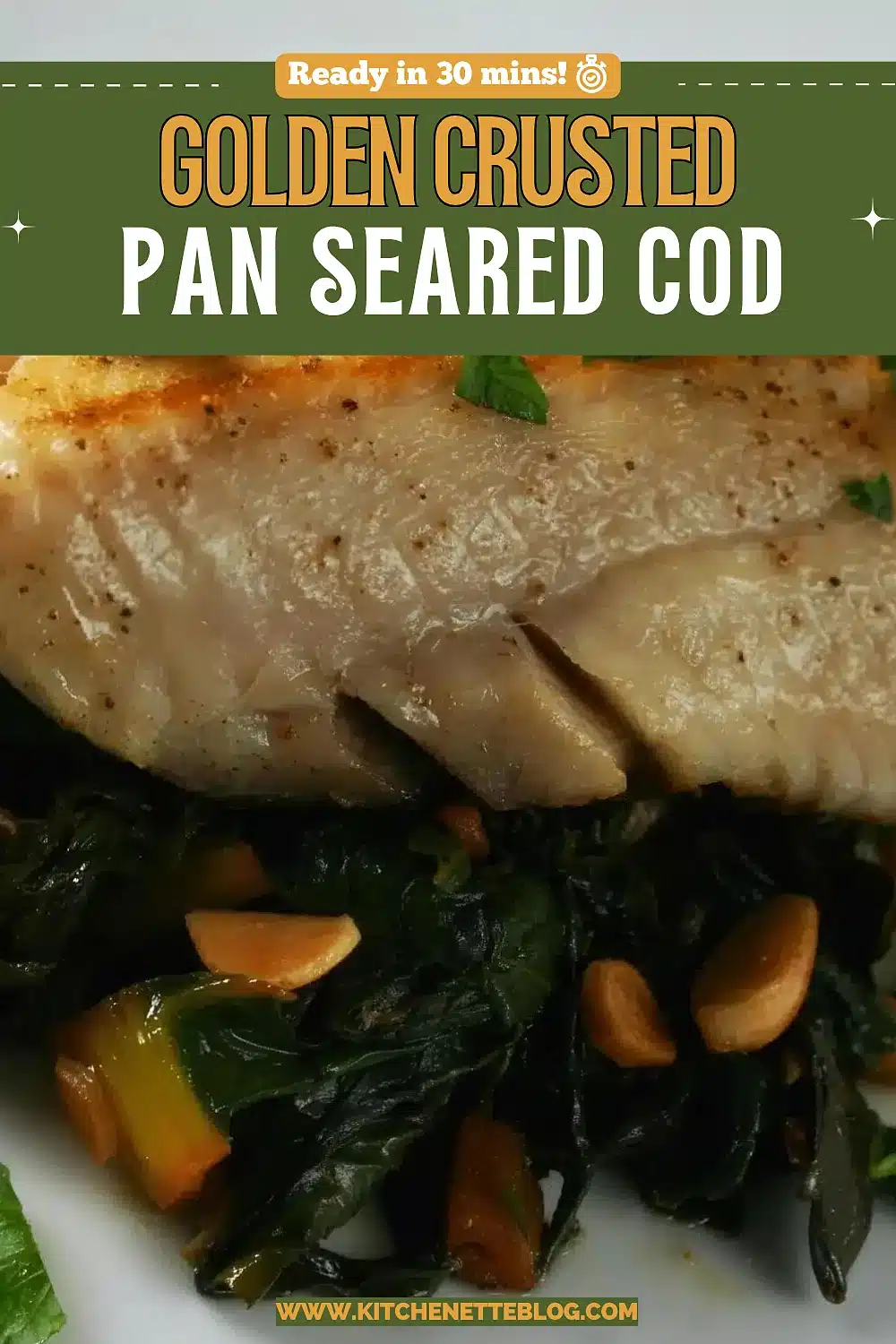
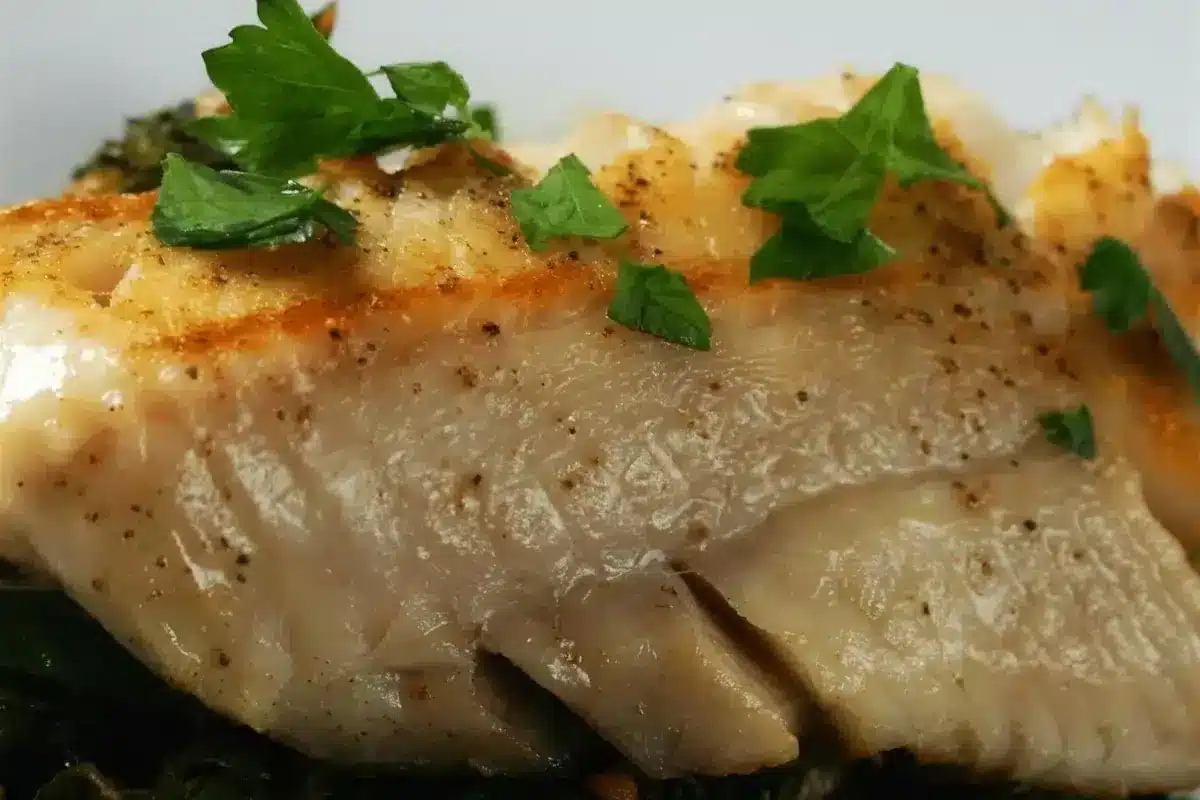
Everything below is really about the five minutes before the fish touches the skillet. That is where pan seared cod is won or lost, and it is the part almost every recipe skips over in a single line.
Which Cod to Buy, and Which Cut Sears Best
Two species turn up at American fish counters, and either one makes good pan seared cod. Atlantic cod is the sweeter, softer one; Pacific cod is firmer and flakes into slightly smaller pieces, which makes it marginally easier to keep in one piece. The NOAA Fisheries species profile for Atlantic cod describes its flavor as mild and clean and its texture as less firm than haddock, and it also notes that both United States stocks are still rebuilding, which is why Pacific cod is usually the cheaper and more plentiful choice.
For pan seared cod the cut matters more than the species. Ask for the loin, the thick center section, and refuse the tail. A loin piece is an even inch or so thick end to end, so it browns and cooks through on the same clock. A tail piece tapers, and by the time the thick end is opaque the thin end has gone chalky.
Frozen is genuinely fine, and often better. Most cod is frozen on the boat within hours. What ruins frozen cod is a rushed thaw: leave it overnight in the refrigerator on a rack over a plate, never in warm water, and never on the counter.
Save this recipe
Enter your email and I’ll send this recipe straight to your inbox.
Ingredient Notes
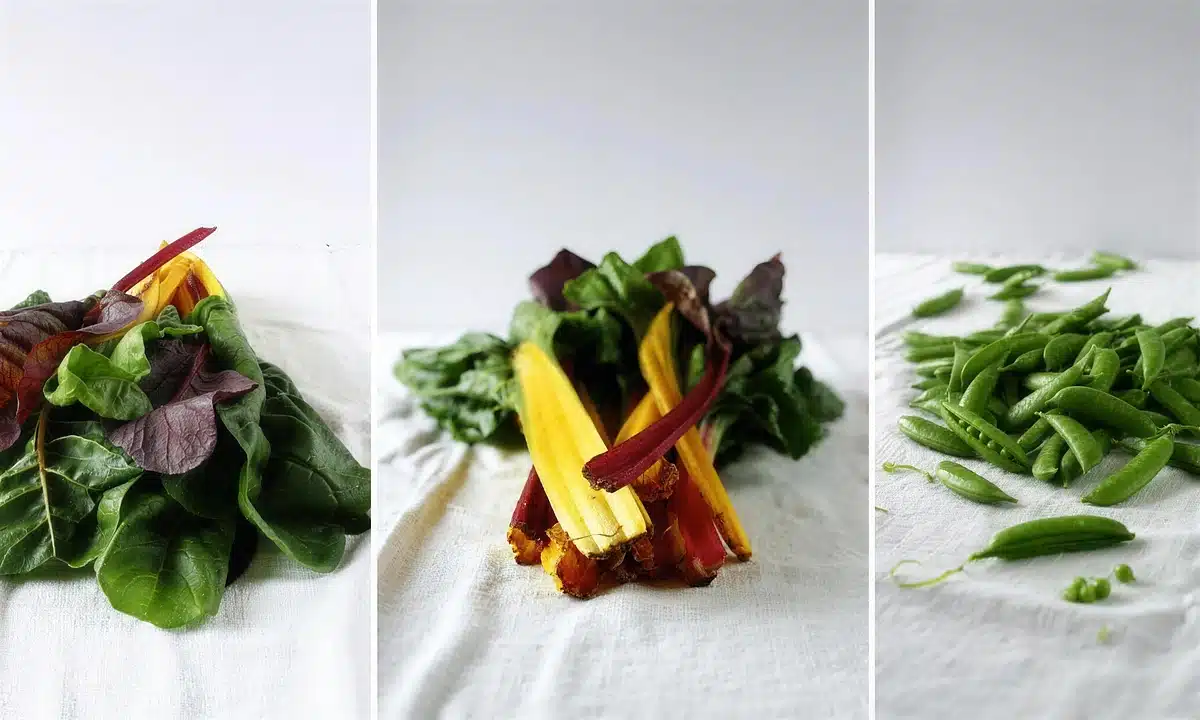
Pan seared cod runs on nine things, and six of them live in your kitchen already. Exact amounts are in the recipe card at the bottom.
- Cod fillets: Four pieces of about six ounces each, cut from the loin. Skinless is easier here, because cod skin does not crisp the way salmon skin does.
- Rainbow chard: Two bunches. The stems are edible and worth keeping. Slice them thin and give them a two minute head start on the leaves.
- Garlic: Sliced, not minced. Slices perfume the oil and toast to gold; mince scorches and turns bitter in the same time.
- Red pepper flakes: A pinch, bloomed in the oil at the start rather than sprinkled on at the end.
- Olive oil: Regular olive oil for the fish, not extra virgin. It has to hold a high heat without smoking.
- Red wine vinegar: Stirred through the greens off the heat. This is the seasoning that makes the plate taste finished.
- Marcona almonds: Fried and salted, sweeter and softer than raw almonds. Toasted regular almonds are a fair swap.
- Lemon and parsley: Both at the very end, both raw.
You need two skillets, ideally a wide stainless or cast iron one for the fish and anything at all for the greens.
Why Pan Seared Cod Sticks to the Skillet
Cod is roughly eighty percent water, which is more than salmon and far more than tuna. Every drop that is still on the surface has to boil off before browning can start, so a wet fillet steams itself gray in the time you were hoping to be searing it.
Blot both sides of the pan seared cod with paper towels until the fish looks matte rather than glossy. Then salt it and set it on a rack for ten minutes, and blot once more. Salting draws out a little more moisture, and that second blot is the step nobody does.
The other half is the skillet. Heat it empty over medium-high until a drop of water skitters instead of sitting, then add the oil and swirl. Lay the fillets down away from you and do not touch them. A fillet that resists the spatula is not stuck, it is not finished. The crust releases itself when it is set, usually at about the four minute mark.
Two more mistakes, both quiet ones: crowding the skillet, which drops the temperature and steams everything, and moving the fish to look at it, which tears the crust off in strips.
How To Make Pan Seared Cod with Rainbow Chard
Have the chard washed, the garlic sliced and the almonds chopped before the fish leaves the refrigerator. Once the pan seared cod goes down it needs eight uninterrupted minutes, and there is no time to go hunting for the vinegar.
- First, blot the fillets dry, salt them on both sides and let them sit on a rack while you deal with the greens. Blot them one more time right before they go in.
- Next, warm the olive oil in a large skillet over medium heat with the sliced garlic and the red pepper flakes. Cook for 2 minutes, until the garlic is pale gold, and watch it closely.
- Then add the sliced chard stems and a pinch of salt, cook for 2 minutes, and pile the torn leaves on top. Stir until everything is glossy and beginning to collapse, then turn the heat to low.
- After that, set a second skillet over medium-high heat until a drop of water dances across it. Add just enough oil to film the surface, lay the fillets in presentation side down, and leave them completely alone for 4 minutes.
- Flip once, with a thin metal spatula rather than tongs, and cook for another 2 to 3 minutes depending on thickness.
- Finally, take the greens off the heat, stir in the red wine vinegar and the almonds, and taste for salt. Divide the chard between four plates, set a fillet on each, and finish with lemon and chopped parsley.
Plating and Timing
The greens are happy sitting over low heat for ten minutes, so start them first and let the pan seared cod set the schedule. Warm the plates if you think of it, because cod goes lukewarm faster than almost anything else.
Serve it the moment it is plated. This is not a dish that waits well, and the crust softens within a few minutes of meeting the greens.
How To Tell When Pan Seared Cod Is Done
Pan seared cod gives you three tests, and the thermometer is the only one that never lies. Pull the fish at 140°F at the thickest point and let carryover heat take it the rest of the way; the safe finished temperature for fish is 145°F. Cod goes from silky to cottony in about ninety seconds, so the difference between the two numbers is the whole game.
Without a thermometer, press the top of the fillet with a fingertip. Raw cod feels squishy and springs back slowly. Done cod feels firm and pushes back at once.
The flake test is the traditional one and the most abused. Slide the tip of a knife into the thickest part and twist gently: the fish should separate into large moist flakes that still cling to each other. If it falls apart into dry shards on its own, it went too far several minutes ago.
Color helps as a cross-check. Raw cod is translucent and faintly gray, and cooked cod is bright opaque white all the way through. A thin translucent line at the very center means about one more minute.
Make It Ahead
Pan seared cod cannot be cooked in advance, but everything around it can, which is what turns this into a weeknight dinner rather than a project.
Wash and tear the chard up to two days ahead and keep it in a bag with a paper towel. Slice the stems and the garlic the night before. Chop the almonds and squeeze nothing until the last minute, because lemon juice loses its edge within an hour of being cut.
The one genuine head start on the fish itself is the dry brine. Salt the fillets, set them on a rack in the refrigerator uncovered, and leave them up to four hours. The surface dries out, which is precisely what the crust wants.
Storing and Reheating Cod
Leftover pan seared cod is a compromise, but it beats throwing it away.
- Refrigerator: keep the fish and the greens in separate airtight containers for up to 2 days. Together, the vinegar in the chard keeps softening the crust overnight.
- Reheating: a dry skillet over medium-low for two minutes a side, or five minutes in a 275°F oven. A microwave turns cod rubbery and makes the kitchen smell for hours.
- Freezer: cooked cod freezes poorly and thaws watery. Freeze the raw fillets instead, for up to 3 months.
- Second life: cold flaked leftovers are excellent in fish tacos, in a chowder, or folded through pasta with the leftover greens.
Variations and Substitutions
The pan seared cod method transfers to almost any thick white fillet, so treat these as different dinners rather than corrections.
- Other fish: halibut, haddock, pollock and black sea bass all behave the same way. Add a minute for halibut, which is denser.
- Other greens: Swiss chard is the obvious swap. Kale needs four minutes rather than two; spinach needs about forty seconds.
- Brown butter: tip the oil out after the flip, add two tablespoons of butter and a smashed clove, and spoon it over the fish for a minute.
- Cajun or blackened: rub the fillets with paprika, cayenne, thyme and garlic powder before searing, and open a window.
- Lemon caper sauce: deglaze the empty skillet with white wine, capers and a knob of butter while the fish rests.
- Currants instead of almonds: a spoonful plumped in the vinegar, which pushes the greens toward Sicily.
What to Serve with Pan Seared Cod
The chard that comes with this pan seared cod is already the vegetable, so the rest of the plate only has to soak up the juices.
- Crushed new potatoes or plain buttered orzo, which is what I make nine times out of ten.
- A bright starter such as roasted carrot and parsnip soup, served in small bowls.
- Something crunchy and cold alongside, like mango and jicama salad.
- A dry unoaked white: Muscadet, Albarino, Picpoul or a lean Sauvignon Blanc.
Here is what readers ask most often.
Pan Seared Cod FAQ
Frequently Asked Questions
What is the best way to pan sear cod?
Dry the fillets thoroughly, salt them ten minutes ahead, blot them again, and lay them into a skillet that is already hot enough to make a drop of water skitter. Use a thin film of regular olive oil rather than extra virgin, leave the fish untouched for four minutes, then flip once. That sequence is the entire technique behind good pan seared cod, and skipping the drying step is what produces gray, steamed fish.
How long does cod take to pan fry?
About six to seven minutes in total for an inch-thick loin: four minutes on the first side and two to three after the flip. Thinner tail pieces need closer to four minutes total, which is exactly why an even loin cut is worth asking for. Go by internal temperature rather than the clock, and pull the fish at 140°F.
What seasonings go well with pan seared cod?
Cod is mild, so it takes almost anything. Salt and black pepper are the baseline; garlic, lemon zest, smoked paprika, thyme and dill are the reliable additions. Acid matters more than spice, which is why the red wine vinegar in the chard does so much work here. Save delicate herbs such as parsley and dill for after the fish leaves the skillet, since they burn in a hot pan.
More Questions About Cooking Cod
Good to Know
What are the common mistakes when pan frying cod?
Five, in order of how often they happen: cooking the fish straight from a wet package, using a skillet that is not hot enough, crowding four fillets into a small pan, moving the fish before the crust has set, and taking it to 160°F because the edges looked underdone. All but the last are settled before the fish goes in.
Can I cook cod from frozen?
You can, but it becomes a different dish. Frozen fillets shed too much water to form a crust, so you end up poaching them. Thaw overnight in the refrigerator on a rack, or in a sealed bag under a trickle of cold water for thirty minutes.
Should I use butter or oil to sear cod?
Oil to sear, butter to finish. Butter solids burn well below the temperature you need for browning, so start with regular olive oil or another neutral oil, and add butter only after the flip if you want it. That way you get the crust and the flavor without the acrid smell.
Do I need to remove the skin?
For this recipe, yes. Cod skin is thin and does not crisp the way salmon or sea bass skin does, so it tends to turn leathery and pull away from the fillet. If your fish comes skin on, sear it skin side down first, then peel the skin off after the flip.
Once the drying and the four-minute rule are second nature, pan seared cod stops being a gamble. For another fast one-skillet fish dinner, try my pan seared salmon with pomegranate reduction, or go the other way with beer battered fish tacos.
Pan Seared Cod with Rainbow Chard
Save this recipe
Enter your email and I’ll send this recipe straight to your inbox.
Ingredients
For the Rainbow Chard
- 3 tablespoons olive oil not extra virgin
- 2 cloves garlic thinly sliced
- 1/4 teaspoon crushed red pepper flakes
- 2 bunches rainbow chard about 1 1/2 pounds, stems sliced thin and leaves torn
- 1/2 teaspoon kosher salt for the greens
For the Cod
- 4 cod fillets about 6 ounces each, 1-inch-thick loin pieces, skinless
- 2 tablespoons olive oil for searing
- 1 teaspoon kosher salt for the fish
- 1/2 teaspoon freshly ground black pepper
To Finish
- 1/3 cup marcona almonds roughly chopped
- 2 tablespoons red wine vinegar
- 1 lemon cut into wedges
- 2 tablespoons fresh parsley chopped
Equipment
- Large skillet
- Spatula
Instructions
Wilt the Chard
- First, blot the cod fillets dry on both sides with paper towels, season them all over with the salt and pepper, and set them on a rack while you start the greens.
- Next, warm 3 tablespoons of the olive oil in a large skillet over medium heat with the sliced garlic and the red pepper flakes. Cook for 2 minutes, until the garlic is pale gold, and do not let it brown.
- Then add the sliced chard stems with a pinch of salt and cook for 2 minutes. Pile the torn leaves on top, stir until they turn glossy and start to collapse, and turn the heat to low.
Sear the Cod
- After that, set a second large skillet over medium-high heat until a drop of water skitters across the surface instead of sitting still. Add the remaining 2 tablespoons olive oil and swirl to film the pan.
- Blot the fillets one last time and lay them in presentation side down, away from you. Leave them completely alone for 4 minutes, then flip once with a thin metal spatula and cook for 2 to 3 minutes more, until the thickest point reads 140F.
Finish and Serve
- Take the chard off the heat and stir in the red wine vinegar and the chopped marcona almonds. Taste, and add more salt if the greens need it.
- Finally, divide the greens between four warm plates and set a fillet on each one. Squeeze a lemon wedge over the top, scatter the chopped parsley, and serve straight away.
Delish😋