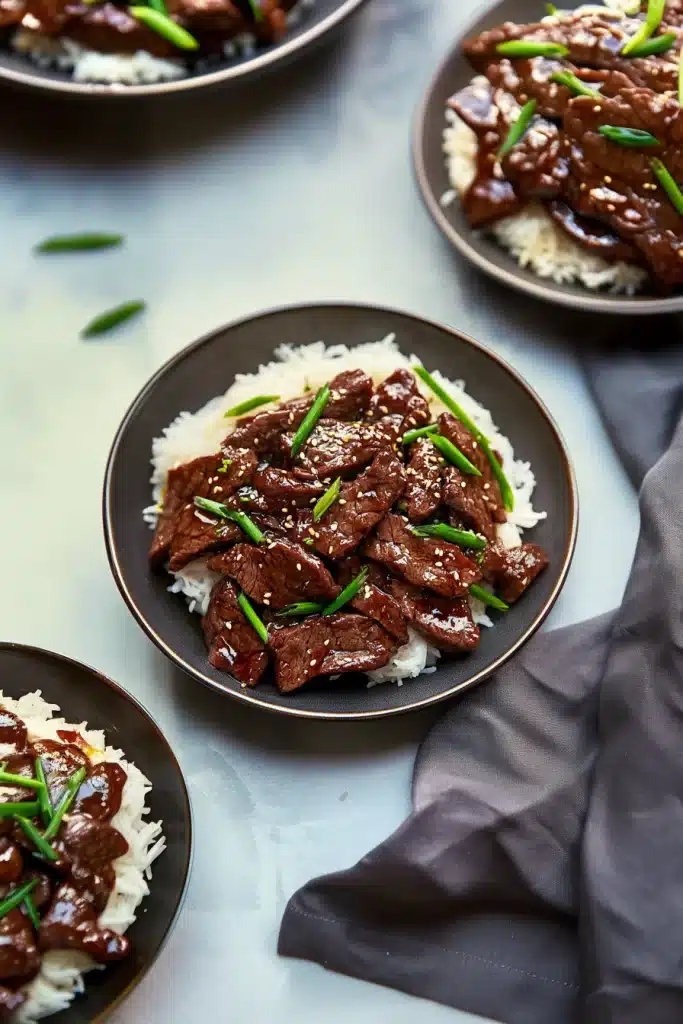

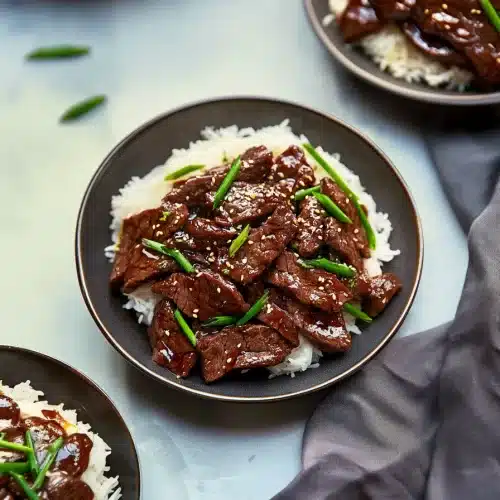
Savor the savory-sweet magic of mongolian beef made with tender flank steak, soy sauce, brown sugar, garlic, and a quick sear to caramelized glory.
If there’s a jar of soy sauce in your pantry and a pound-ish of steak in your fridge, you might be closer to Mongolian Beef greatness than you think. This dish has that sizzle-pop moment when it hits the hot skillet, the garlic and ginger send up their aromatic greetings, and suddenly the kitchen smells like you’ve just pulled up a stool at your favorite takeout spot.
It’s saucy. It’s sticky. It hits the sweet-tangy umami jackpot in the most delightful way. You can whip it up on a Tuesday or save it for when a friend stops by and you need something easy but impressive. Either way, invite your rice cooker to the party—it’s about to earn its keep.

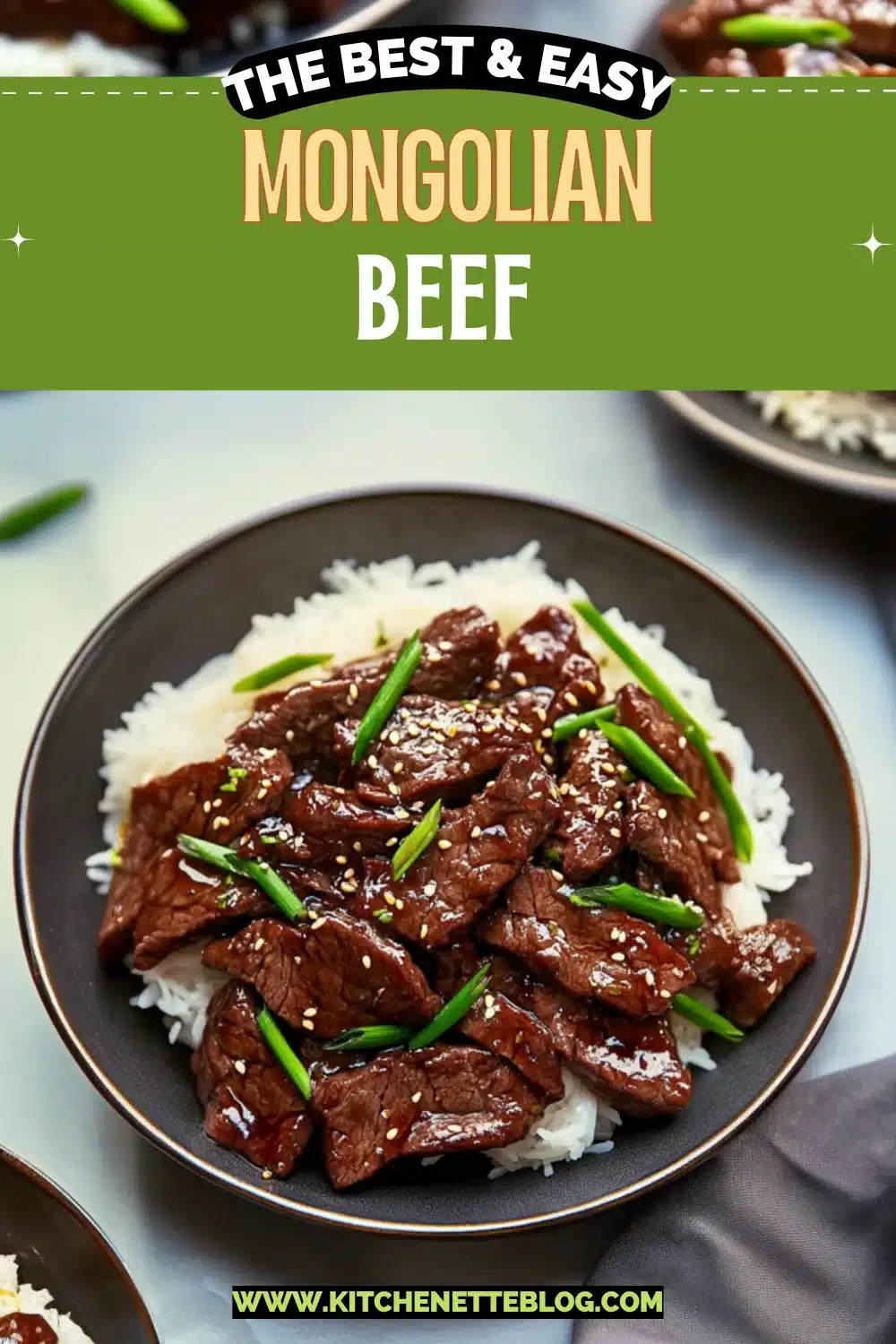

Why You’ll Love this Mongolian Beef
No pretenses here, just a saucy skillet of pure comfort. This Mongolian Beef is quick but delivers that deep, rich taste that usually takes half the night.
- Ridiculously simple to make: You slice, toss, sear, then swirl in that gleaming sauce. Done.
- Better than takeout vibes: Crispy edges meet glossy sweetness, and somehow your kitchen smells like a real-deal restaurant.
- Ready in under 30 minutes: Yes, including cleanup (unless you’re me and use ALL the spoons, whoops).
- Flexible for any night: Works for date night, solo snacking, or “it’s Thursday and I forgot to defrost dinner.”
- Customizable heat level: Add red pepper flakes—or don’t! Totally up to you and your spice tolerance.
- Leftovers reheat like a dream: Hello, slightly caramelized edges on Day Two. Big win.
Ingredient Notes
Everything here pulls more than its weight. The list may look humble, but each one plays a part in the flavor symphony.
- Flank steak: This lean, flavorful cut slices beautifully across the grain. If it’s a bit thick, give it a freeze for 20 minutes before cutting so it’s easier to handle.
- Cornstarch: Helps create those golden, slightly crispy edges and subtly thickens the sauce as it all comes together. Don’t skip it.
- Low-sodium soy sauce: Brings salty umami depth without going overboard. Regular soy works too, but watch the salt level.
- Water: Yep, plain ol’ water. It thins the sauce just enough to cling instead of drown.
- Brown sugar: Sweet molasses-y magic. It balances the salty soy and gives the sauce its shiny, lacquered finish.
- Red pepper flakes (optional): A little whisper of heat—for balance, not burn. You can dial it up or leave it out.
- Vegetable oil: Neutral and high heat-friendly, perfect for getting a solid sear on the beef.
- Ginger and garlic: These are the flavor frontmen. Use fresh if possible—jarred just doesn’t dance the same.
- Green onions: They add color and that mellow onion bite at the end. Don’t skip; they’re the chorus in this flavor song.
- Sesame seeds (optional): Little nutty pops on top. Great for texture and just a hint of toastiness.
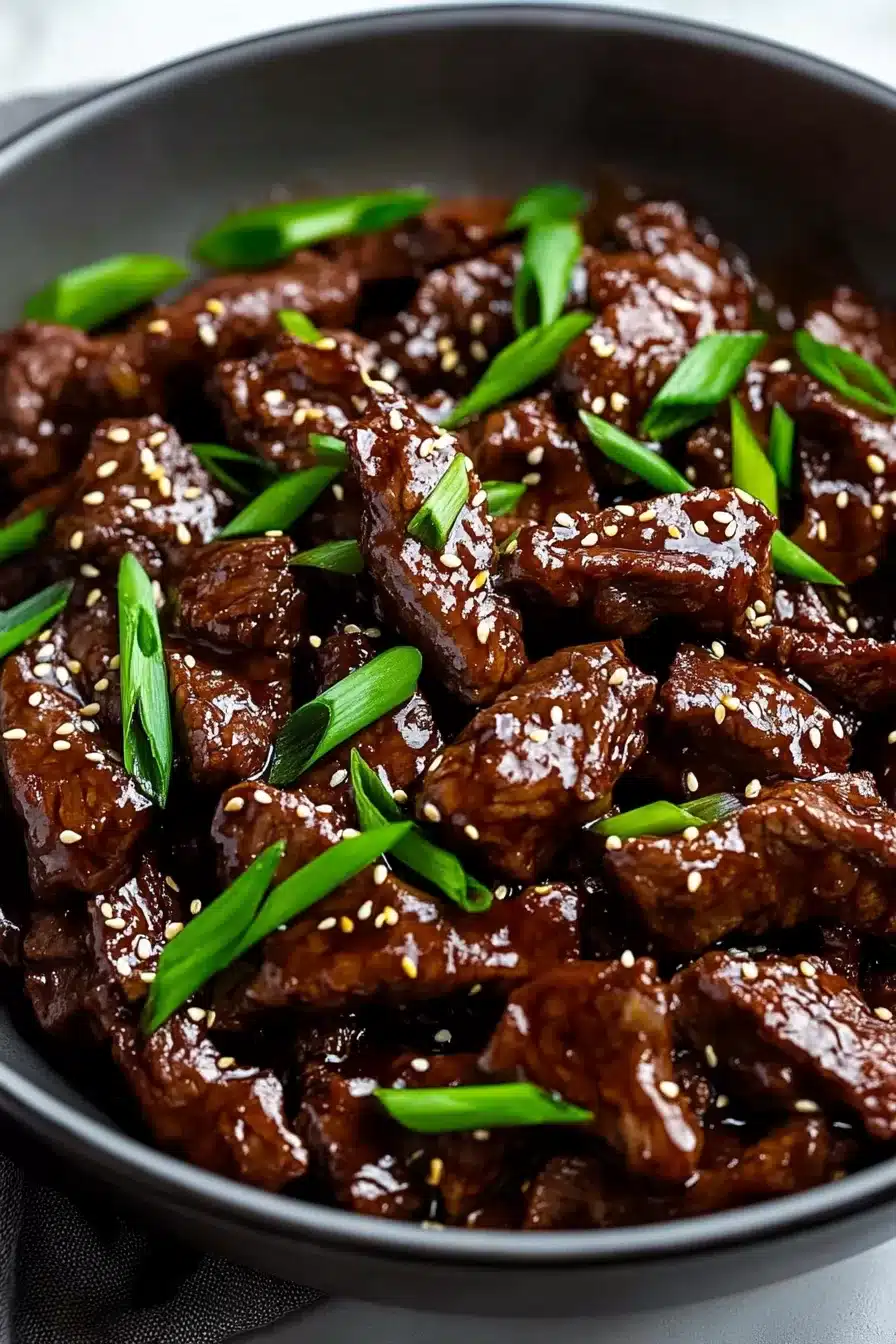
How To Make This Mongolian Beef
We’re not building Rome. This is a straight-shot skillet recipe with results that feel fancier than the effort involved.
-
Slice the flank steak: Cut against the grain into ¼-inch slices. This keeps them tender instead of chewy. A slightly chilled steak is easier to slice thin, so don’t be afraid to let it firm up in the freezer for a bit first.
-
Toss the beef in cornstarch: Coat the slices in a bowl with cornstarch until every surface has a little dusting. This helps the meat brown and gives it that signature crispy edge.
-
Whisk the sauce: In a small bowl, combine soy sauce, water, brown sugar, and pepper flakes if you’re using them. Stir until sugar dissolves and set aside—this part moves fast once the pan’s hot.
-
Sear the beef in batches: Heat 2 tablespoons of oil over high heat and lay the beef in without crowding the pan. Think sizzling steakhouse moment, not steam bath. Flip after a minute or so. When both sides are browned, set aside.
-
Sauté the aromatics: In the same skillet, turn down the heat just slightly and add the remaining oil. Toss in the garlic and ginger and stir like you mean it for about 30 seconds, until everything is fragrant, golden, and slightly softened.
-
Simmer the sauce: Pour in your sauce mixture and let it bubble for 2–3 minutes. It should reduce just a bit, becoming glossy and thick-ish.
-
Return beef and toss with onions: Toss in the cooked beef and chopped green onions. Stir it all together over the heat for a minute or two, just enough to coat everything in that rich sauce.
-
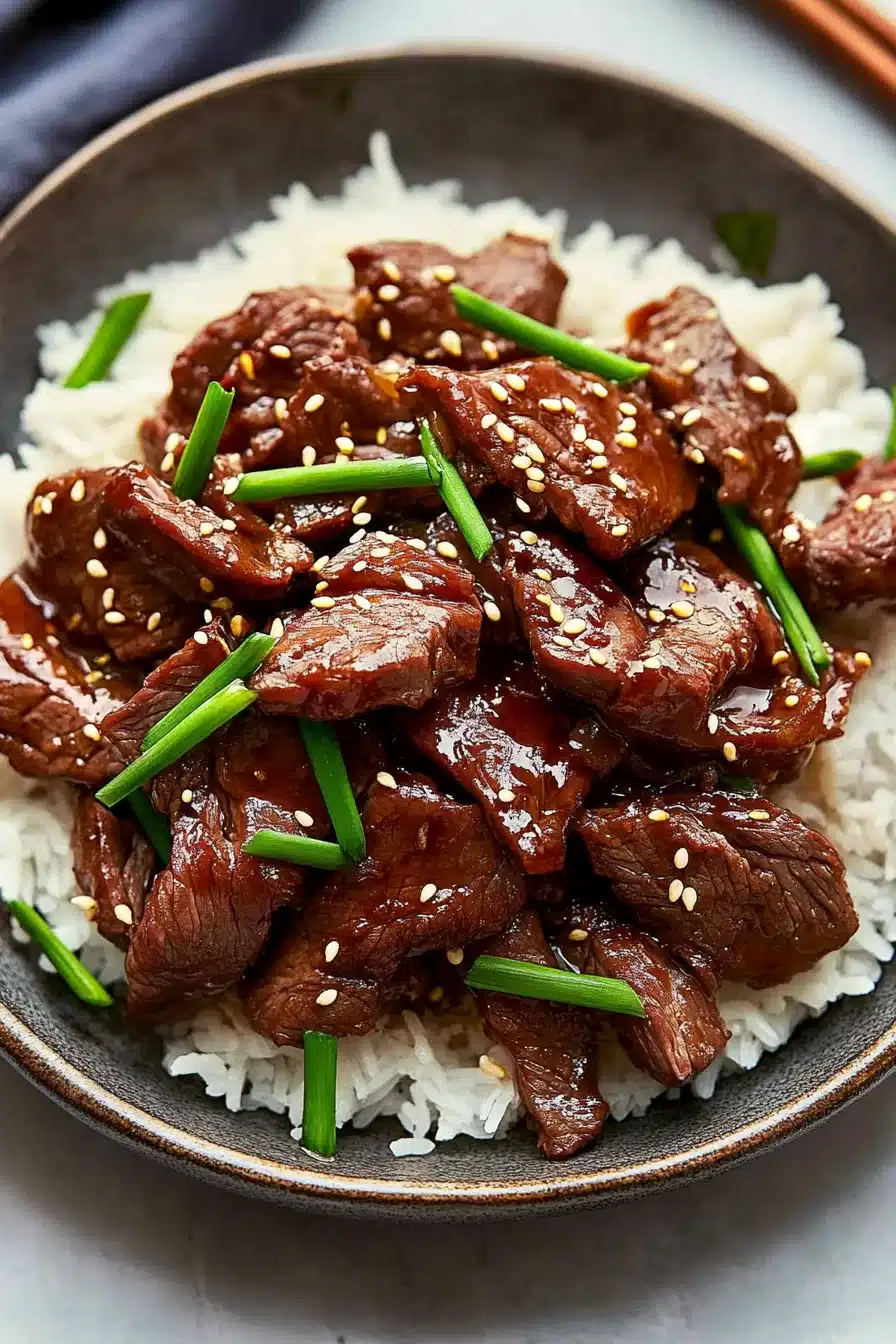
Serve hot: Pile onto steamed rice or noodles, sprinkle sesame seeds if using, and enjoy while it’s hot and sticky.
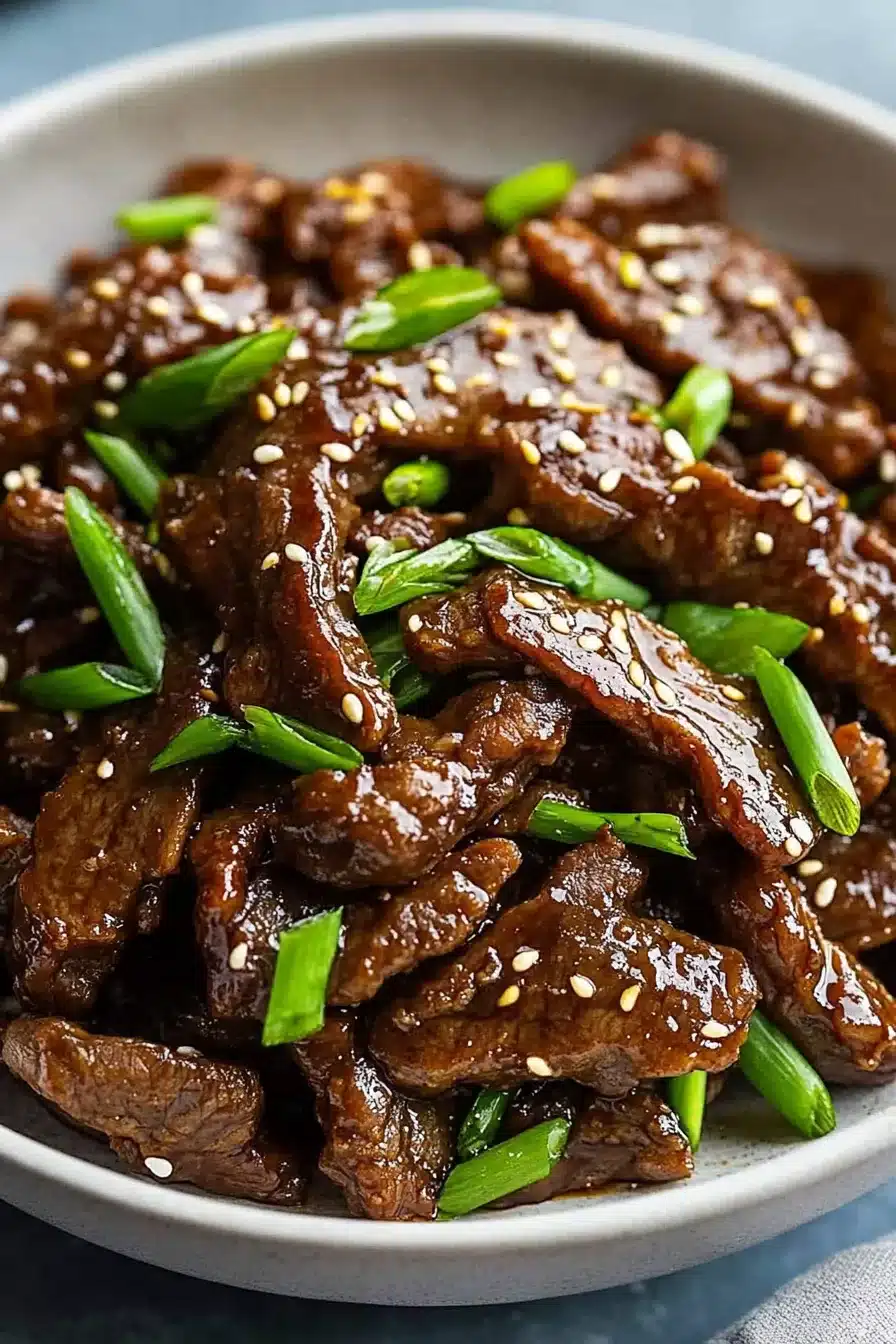
Storage Options
Let’s talk leftovers—because they’re actually awesome with Mongolian beef. You shouldn’t have to suffer through soggy takeout vibes on Day Two.
Once cooled, stash the beef in an airtight container in the fridge for up to four days. For best results, keep the rice separate if you can. That way, reheating doesn’t turn everything into a mildly tasty mush mountain.
Reheating is a breeze: a quick stir-fry in a warm pan wakes everything up (just add a splash of water to loosen the sauce). The microwave also works, though the beef won’t crisp again—it’ll still taste fab, just softer.
Concerned about freezing? You totally can! Freeze the cooked, sauced beef in a zipper bag or container for up to two months. Thaw in the fridge overnight, then reheat as above. It’s perfect for that week where every day feels like a Thursday.
Variations and Substitutions
Want to play around with the recipe? Go for it. This one’s flexible like that.
- Different protein: Swap the steak for sliced chicken breast or even tofu (pressed well!). Just be sure to adjust cooking times accordingly.
- Make it gluten-free: Use tamari or a certified gluten-free soy sauce. Everything else is already worry-free.
- Add more veggies: Toss in snow peas, bell peppers, or broccoli florets when you add the sauce. Instant stir-fry vibes.
- Skip the sugar bomb: Cut the brown sugar to ⅓ cup for a less sweet (but still delish) version.
- Try different aromatics: A dash of Chinese five spice changes the whole flavor profile in a fascinating way—worth a little test-drive.
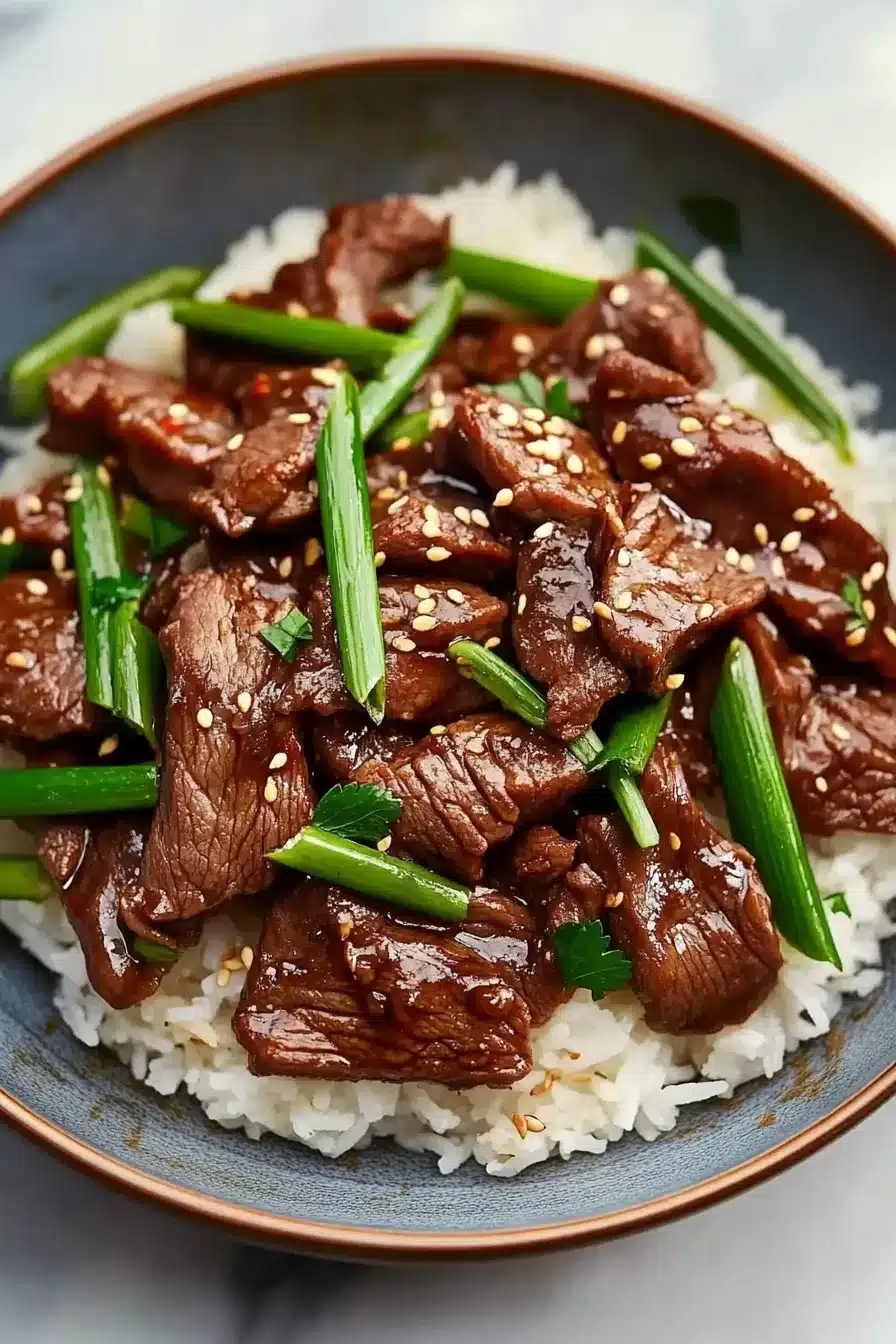
What to Serve with Mongolian Beef
Once you’ve got this deeply savory beef ready to go, you need just a few simple pals to complete the plate.
-
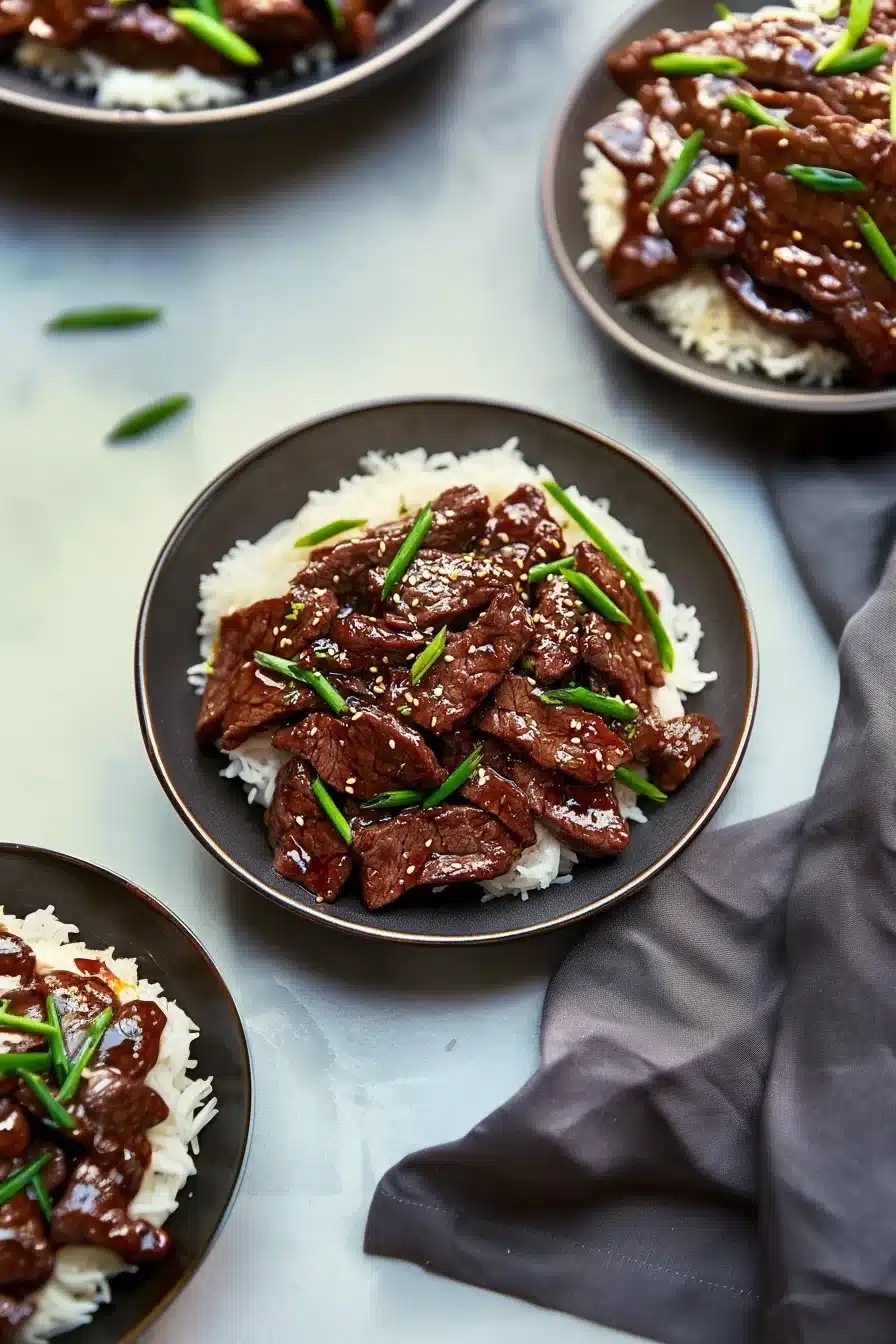
A bowl of fluffy, jasmine rice is classic and perfect. It soaks up every drop of sauce and balances the sweetness and salt. Sticky rice works too, or go wild with fried rice if you’ve got time.
-
Steamed or stir-fried vegetables are a lovely contrast. Broccoli, bok choy, or snap peas bring vibrant color and a nice crunch that keeps things lively. If you’re low on time, frozen stir-fry blends are perfectly okay (you know I won’t judge).
-
A crisp, quick cucumber salad brings a cooling contrast. Slice, toss with rice vinegar and sesame oil, then chill for five minutes. Yep, five. Just enough to mellow the edges.
-
Want a little variety on the plate? Try these bacon basil cornbread muffins. Not traditional, but the smoky-sweet combo oddly works here.
-
For dessert, something light and cold feels right. These peanut butter & banana ice cream sandwiches hit that nostalgic note without needing anything fancy.
Frequently Asked Questions
Can I make Mongolian beef ahead of time?
Totally! You can cook the entire dish up to two days in advance, then store it in the fridge. The sauce might thicken a little more as it sits, but that’s honestly a bonus. When you’re ready to serve, warm it gently on the stove or microwave and maybe add just a spoonful of water to loosen the sauce.
What’s the best cut of beef for this recipe?
Flank steak is the go-to because it stays tender when sliced thin and seared quickly. But you can also use skirt steak or sirloin if that’s what you have. Just be sure to slice against the grain to keep things juicy and tender.
Can I make this recipe spicy?
Absolutely! The red pepper flakes listed are your best friend here, but feel free to crank things up with a drizzle of chili oil, some fresh sliced chilies, or a dab of sambal oelek stirred into the sauce. Just remember to taste as you go!
Is it okay to use pre-minced garlic and ginger?
You could, and I won’t send the garlic police. But fresh just gives you a punchier, more vibrant flavor that really matters in such a simple dish. If you’re in a pinch, the pre-minced stuff from the fridge will still work—just use a tiny bit more.
Mongolian Beef
Ingredients
For the Beef
- 1 lb (450 g) flank steak thinly sliced against the grain
- 1/4 cup (30 g) cornstarch
For the Sauce
- 1/2 cup (120 ml) low-sodium soy sauce or regular soy sauce
- 1/2 cup (120 ml) water
- 1/2 cup (100 g) brown sugar light or dark
- 1/2 tsp red pepper flakes optional, more or less to taste
For Cooking & Garnish
- 3 tbsp (45 ml) vegetable oil divided
- 4 cloves garlic minced
- 1 tbsp (15 g) fresh ginger minced
- 4 green onions chopped, both white and green parts
- sesame seeds for garnish; optional
- steamed rice or noodles for serving
Equipment
- Large skillet or wok
- Mixing bowls
- Knife
- Tongs or spatula
Instructions
- Slice the flank steak thinly against the grain into ¼-inch slices. If needed, freeze the steak for 20 minutes first to make slicing easier.
- Place the steak slices in a bowl and toss with cornstarch until evenly coated. Set aside.
- In a small bowl, whisk together the soy sauce, water, brown sugar, and red pepper flakes (if using). Set aside.
- Heat 2 tablespoons of vegetable oil in a large skillet or wok over high heat. Working in batches, sear the steak slices in a single layer until browned and just cooked through, about 1–2 minutes per side. Don’t overcrowd the pan. Transfer cooked beef to a plate and repeat with remaining beef.
- Reduce heat to medium-high and add the remaining tablespoon of oil to the pan. Add the minced garlic and ginger. Sauté for 30 seconds, stirring constantly, until fragrant and golden.
- Pour in the sauce mixture. Allow it to come to a simmer and cook for 2–3 minutes, or until slightly thickened and glossy.
- Return the beef to the pan along with the chopped green onions. Toss everything together for 1–2 minutes until well-coated and heated through.
- Serve hot over steamed rice or noodles. Garnish with sesame seeds, if desired.