
Chicken tikka masala is cubes of chicken marinated in yogurt and spices, seared hard until the edges char, then simmered in a spiced tomato and onion sauce with a little cream. It takes about an hour of actual cooking, and every part of it can be made at home with a skillet and a jar of garam masala.
This is the easy version, which means no skewers, no grill and no hunting for kasuri methi. The chicken sears in the same pan the sauce is built in, the spice list is short and repeats between the marinade and the sauce, and the cream is optional in amount. Finish it loose and creamy, or take it the way it is pictured here: reduced until the sauce is thick and tomato-forward and clings to every piece of chicken.
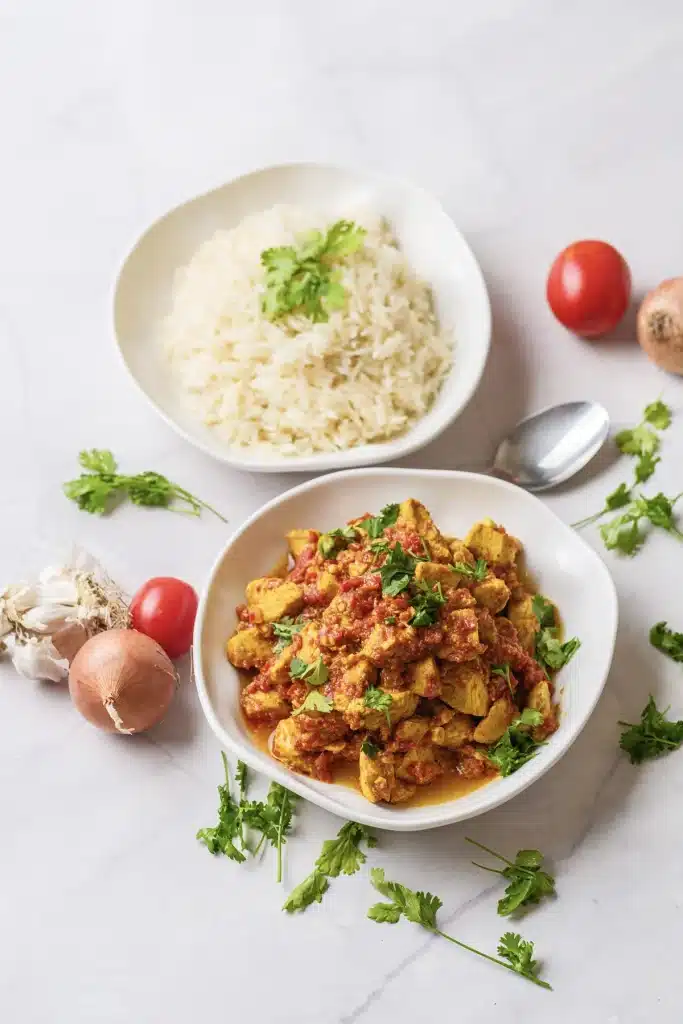
- Restaurant flavor from one skillet, with no grill or skewers
- A short spice list that does double duty in the marinade and the sauce
- Yogurt keeps the chicken tender even after a hard sear
- Creamy or thick and tomato-forward, your choice, with the same recipe
- Better the next day, so it is a natural make-ahead dinner
- Freezes well for up to three months

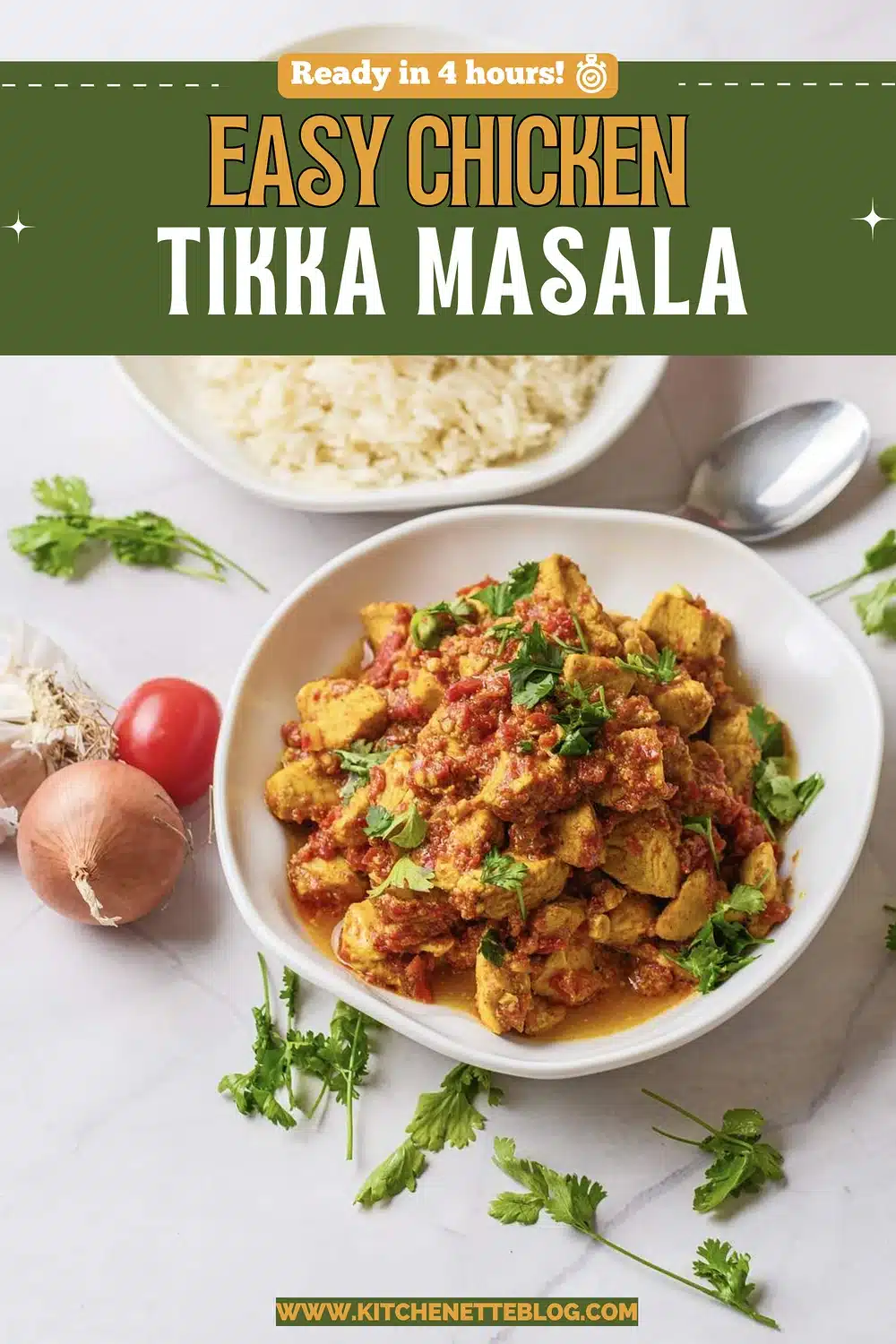
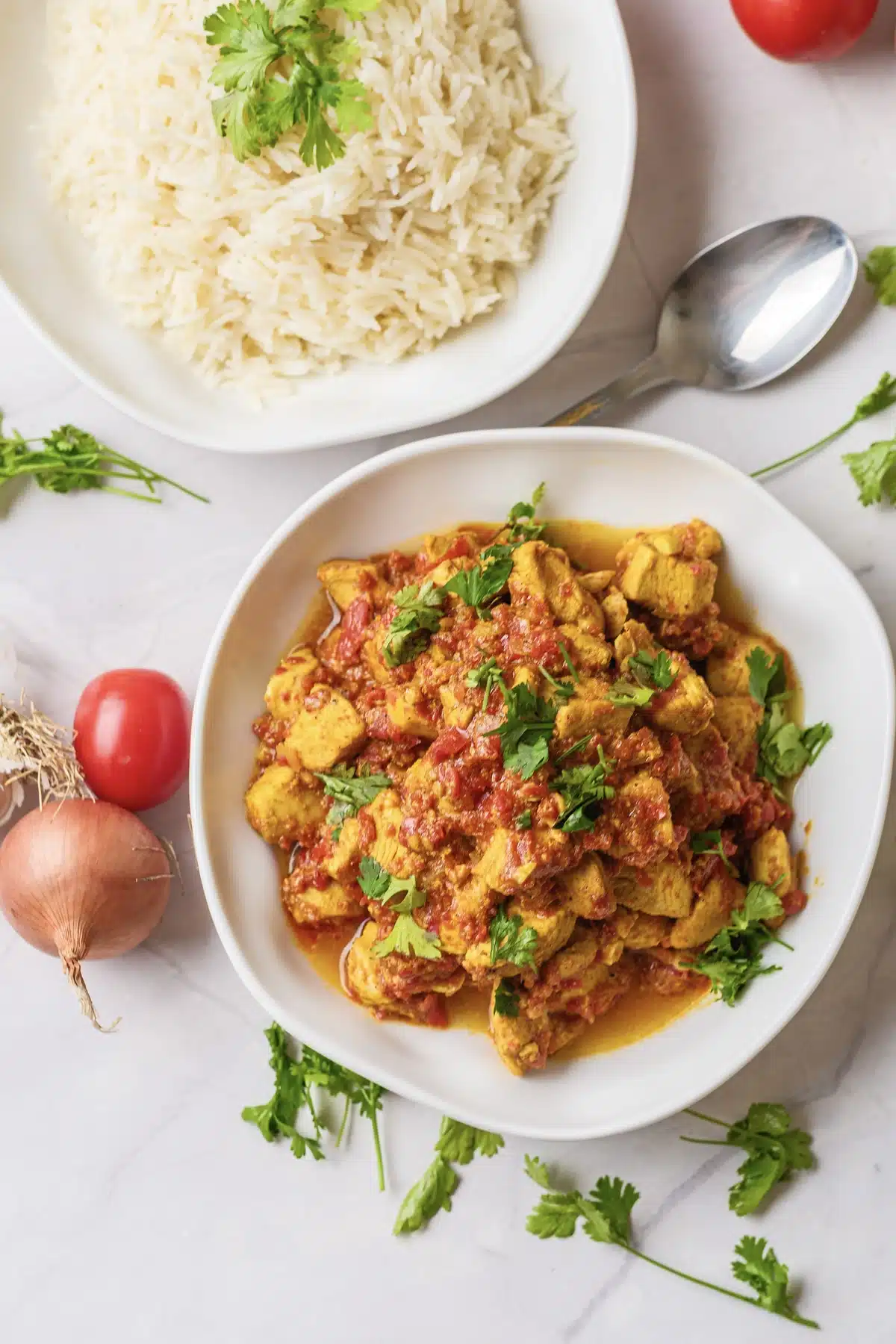
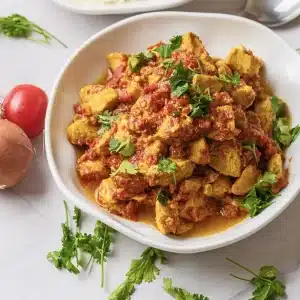
Pictured: the thicker, less-cream finish from the Variations section, with the sauce reduced until it coats the chicken and only a quarter cup of cream stirred in at the end, served over basmati rice with fresh cilantro. The recipe card gives the classic creamy version and the thicker option as a note.
What Is Chicken Tikka Masala?
Tikka means small pieces, and chicken tikka is boneless chicken marinated in yogurt and spices and cooked over high heat, traditionally in a tandoor oven. Masala is the spiced sauce. Put the two together and you have chicken tikka masala: charred, marinated chicken simmered briefly in a tomato and onion gravy seasoned with garam masala, cumin, ginger and garlic, and finished with cream.
The dish is usually credited to South Asian cooks in Britain in the 1960s and 1970s, who added a tomato-based sauce to grilled chicken tikka for customers who wanted gravy. It is now on the menu of nearly every Indian restaurant in the UK and the US. That history explains why chicken tikka masala tastes the way it does: it is Punjabi in its spices and technique, and British in its love of a rich, saucy plate.
At home the tandoor becomes a very hot skillet. The yogurt marinade does the same job it does in a restaurant, which is to tenderize the chicken and to give it a coating that chars and browns, and the sauce is built in the same pan afterward, so none of the browned bits are wasted.
Save this recipe
Enter your email and I’ll send this recipe straight to your inbox.
Ingredient Notes
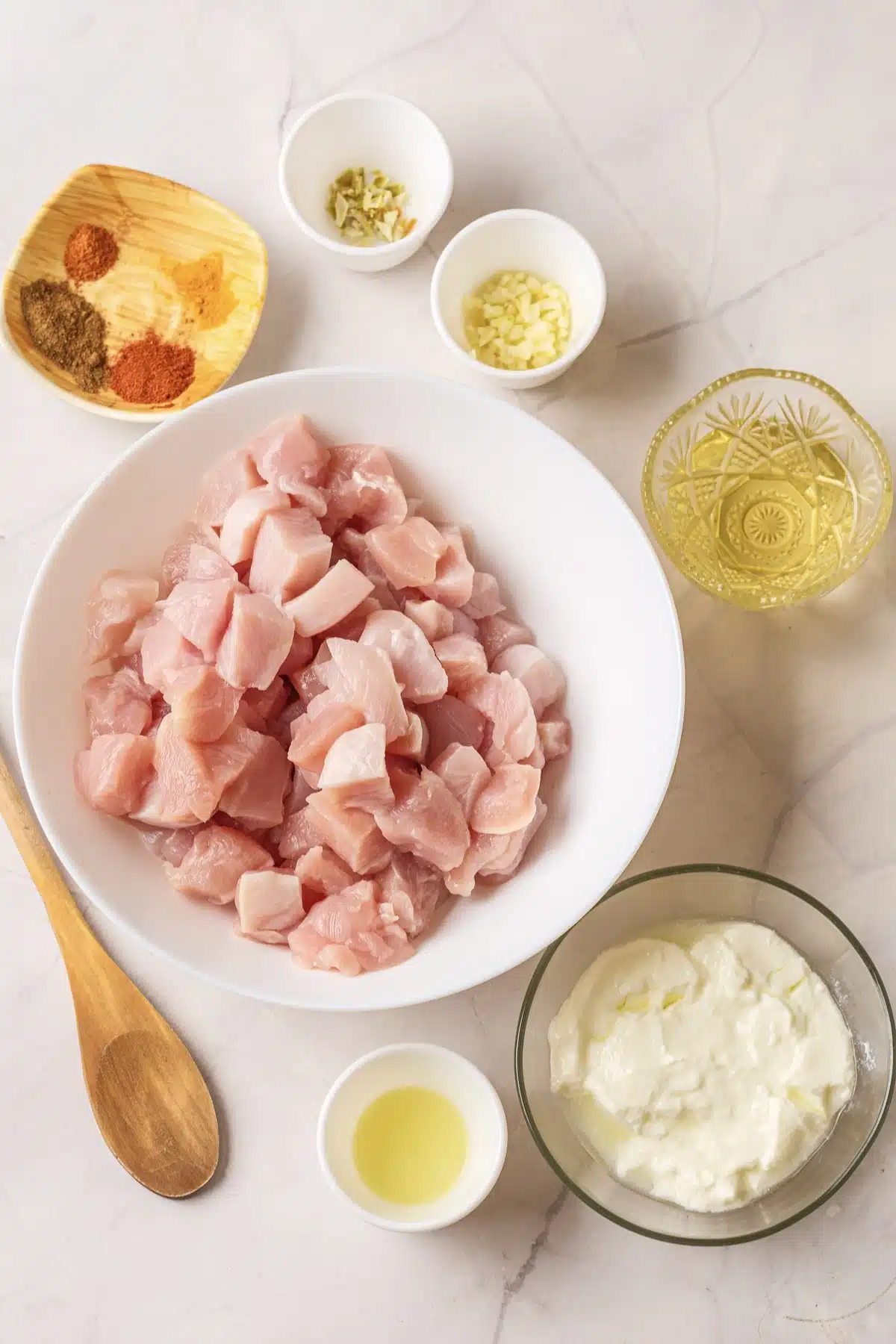
- Chicken. One and a half pounds of boneless, skinless chicken, cut into pieces a little bigger than an inch. Thighs are the classic choice and stay juicy no matter what; breast is leaner and works well, because the yogurt protects it. The cubes pictured are breast. Do not cut the pieces small or they overcook before they brown.
- Greek yogurt. One cup, full fat and thick. Thin yogurt slides off the chicken and steams in the pan instead of charring. Strain regular yogurt through a coffee filter for an hour if that is what you have.
- Lemon juice. Two tablespoons, fresh. It brightens the marinade and helps the yogurt tenderize.
- Ginger and garlic. Fresh, grated, in both the marinade and the sauce. Jarred ginger garlic paste is a fine shortcut; use a tablespoon for each.
- Garam masala. The backbone spice, used twice. Brands vary a lot, so if yours is mild, add an extra teaspoon to the sauce.
- Kashmiri chili powder. It gives the color without much heat. Hot paprika is the closest swap, or use sweet paprika plus a pinch of cayenne.
- Cumin, turmeric and cayenne. Ground cumin for earthiness, turmeric for color, and cayenne only if you want the dish hot. Half a teaspoon in the sauce makes it medium.
- Salt. A teaspoon in the marinade, then to taste at the end.
For the Masala Sauce
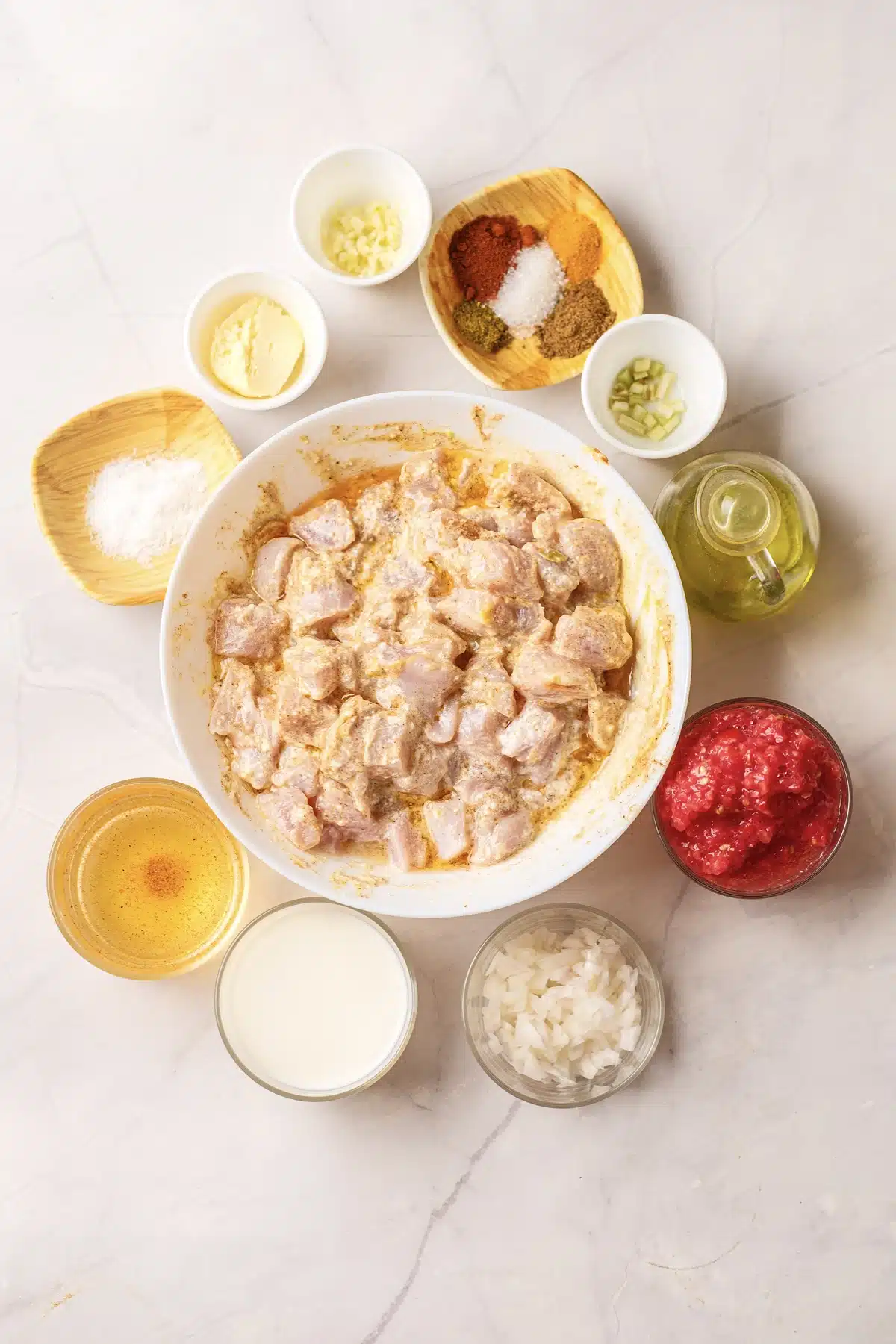
- Ghee and oil. Two tablespoons of ghee for flavor, or butter with a splash of oil so it does not burn. Plain oil works, and the sauce will taste a little cleaner and less rich.
- Onion. One large yellow onion, finely chopped and cooked until golden, which takes a full seven or eight minutes. Undercooked onion is the most common reason a homemade masala tastes raw.
- Crushed tomatoes. One 14-ounce can, or the same amount of passata. Check the label for citric acid and avoid it if you can, because it makes the sauce sharp. A teaspoon of sugar rounds it out either way.
- Heavy cream. Half a cup for the classic creamy sauce, or a quarter cup for the thicker finish pictured. Full-fat coconut milk works for dairy-free.
- Chicken stock. A third of a cup, only if the sauce is thicker than you like. Skip it for the pictured version.
- Cilantro. A big handful, chopped, over the top. It is not optional in our kitchen.
Chicken Tikka Masala vs Butter Chicken
They look alike on a menu and use most of the same spices, but they are different dishes. Butter chicken, or murgh makhani, has a smooth, sweet, mildly spiced sauce made from pureed tomatoes, a great deal of butter and cream, and often cashews or fenugreek. The chicken is gentle and the sauce is silky and orange.
Chicken tikka masala is spicier, tangier and chunkier. The sauce is built on browned onions rather than pureed tomatoes, it uses oil or ghee rather than a block of butter, and the cream is a finishing touch rather than the base. The chicken is charred harder, and the sauce is meant to taste of tomato and spice first. If you like the sauce on the sweeter, smoother side, this recipe moves toward butter chicken with an extra tablespoon of butter and a little more cream; if you like it bold, follow the thicker finish below.
How To Make Chicken Tikka Masala
The order is marinate, sear, sauce, combine. The sear and the sauce happen in the same skillet, and the whole thing after the marinade takes about forty minutes.
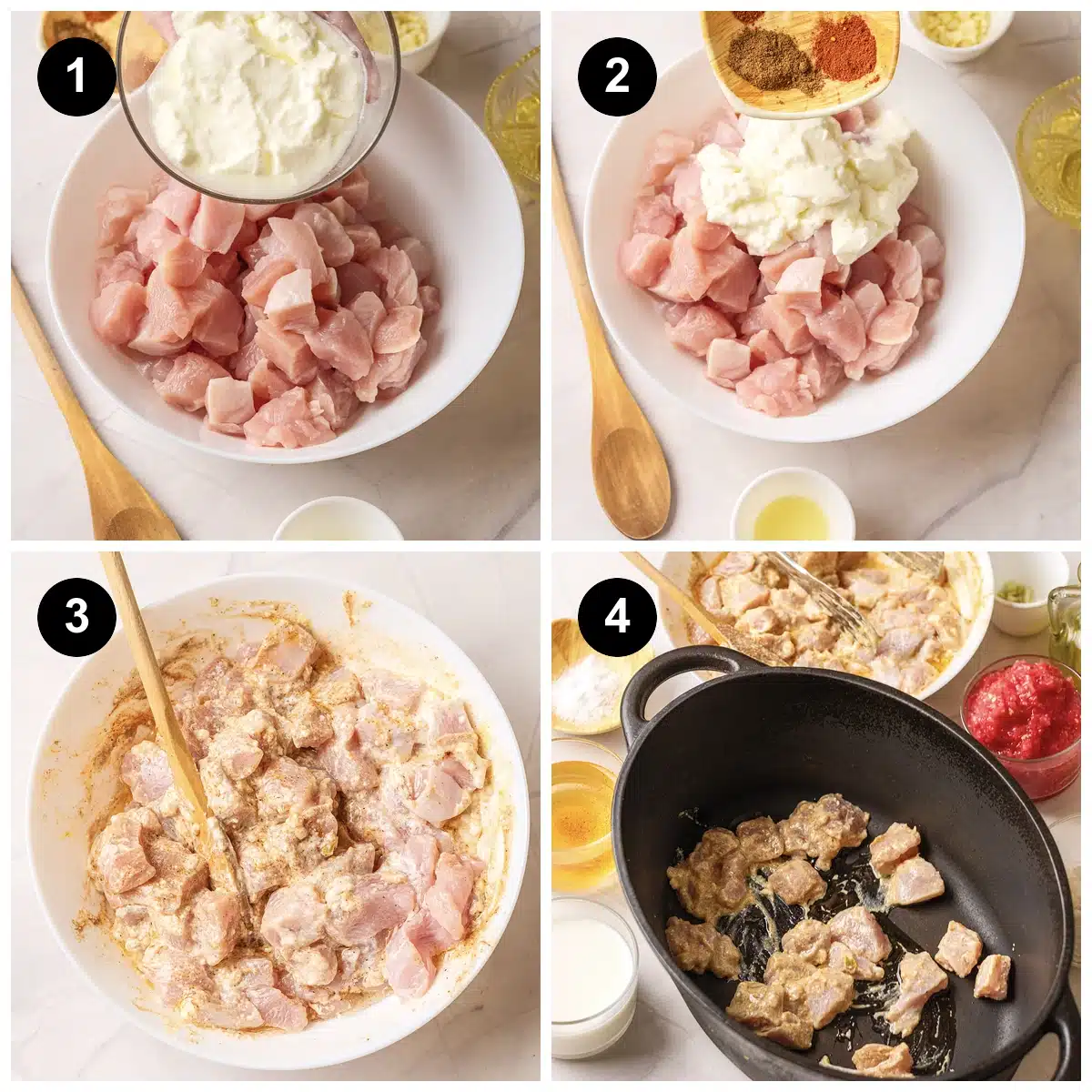
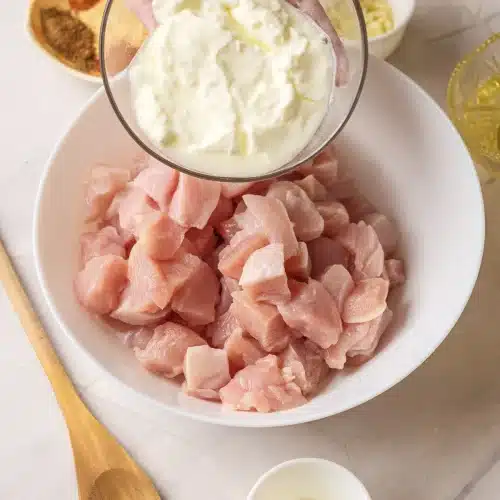
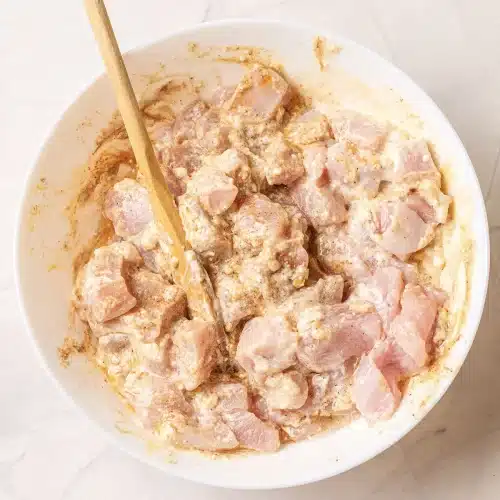
First, marinate the chicken. Put the cubes into a large bowl and add the yogurt, then the lemon juice, ginger, garlic, garam masala, cumin, Kashmiri chili powder, turmeric, oil and salt. Stir until every piece is coated, cover, and refrigerate for at least three hours, or overnight if you can. Even a single hour makes a difference if that is all the time there is.
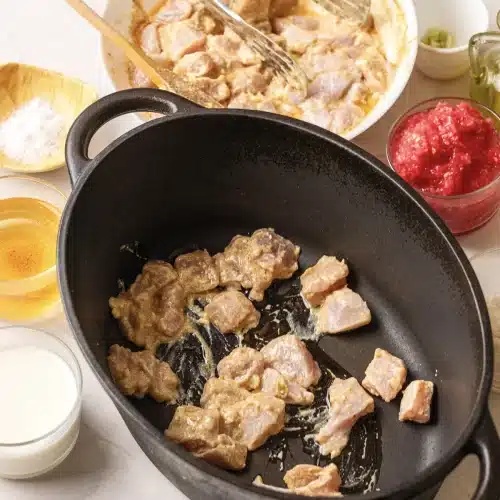
Next, sear it. Heat a tablespoon of oil in a large heavy skillet or a cast-iron pot over medium-high heat until it shimmers. Lift the chicken out of the marinade, letting the excess drip off, and lay the pieces in a single layer without crowding. Cook for two to three minutes a side, until the yogurt coating chars in spots. It will not be cooked through, and it should not be. Set it aside on a plate and do the second batch.
Build the Sauce and Finish
Then build the sauce. Drop the heat to medium, add the ghee, and cook the onion for seven to eight minutes until soft and golden, scraping up the browned marinade from the bottom of the pan. Stir in the ginger, garlic, garam masala, cumin, chili powder, turmeric and cayenne for one minute, then pour in the crushed tomatoes and the sugar. Cover and simmer for ten minutes, stirring now and then.
After that, return the chicken and any juices to the pan and stir in the cream. Simmer gently, uncovered, for five to eight minutes until the chicken is cooked through and the sauce has thickened. Add a splash of stock if it looks tight.
Finally, taste and salt the sauce, scatter over the cilantro, and serve with rice or naan.
How To Tell When Chicken Tikka Masala Is Done
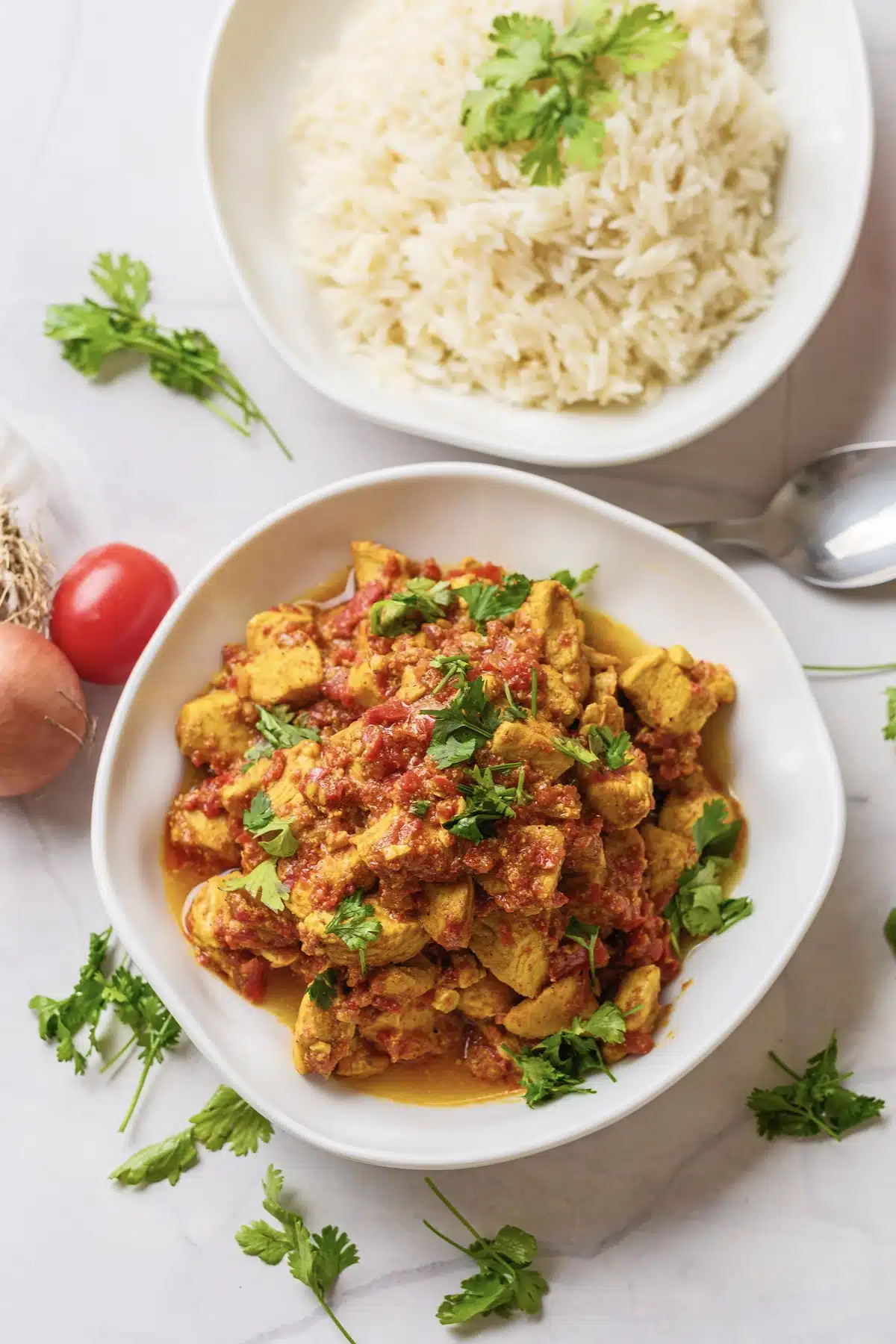
The chicken and the sauce are two separate checks. The chicken is done when the largest piece reads 165°F on an instant-read thermometer, which the National Chicken Council’s safety guidance gives as the safe internal temperature for all poultry. Without a thermometer, cut the biggest cube in half: the center should be white all the way through with no pink and the juices should run clear.
The sauce is done when it has lost its raw tomato edge and thickened enough to coat a spoon. For the classic creamy version, that is a sauce that flows slowly and pools around the rice. For the thicker finish pictured, keep simmering uncovered until a spoon dragged across the pan leaves a trail that fills in slowly, and the sauce sits on the chicken rather than under it. Taste for salt at the very end, because the sauce concentrates as it reduces.
Make It Ahead
Chicken tikka masala is one of the few dishes that is honestly better the next day. The spices settle, the sauce thickens, and the chicken picks up more flavor sitting in it. Make it in full, cool it, and refrigerate. Reheat gently in a covered pan over medium-low heat with a splash of water or stock, and hold back the cilantro until serving.
Two shortcuts split the work across days. The marinade can be mixed and the chicken left in it for up to 24 hours, and the sauce can be made through the tomato simmer up to three days ahead and kept in the fridge. On the night, sear the chicken, reheat the sauce, combine, and add the cream.
Storing Chicken Tikka Masala
Refrigerate leftovers in a covered container for up to four days. Reheat on the stovetop over low heat, stirring, or in the microwave in one-minute bursts with a stir between each, and loosen with a spoonful of water if the sauce has set.
Chicken tikka masala freezes well for up to three months, better without the cream. If you plan to freeze a batch, stop before the cream goes in, freeze the chicken and sauce together, then thaw overnight in the fridge and stir in the cream as you reheat.
Variations and Substitutions
The Thicker, Less-Cream Finish (Pictured)
This is the version on every plate in this post. The sauce is reduced until it is thick and tomato-forward and clings to the chicken, with just enough cream to soften the edges and none of the loose orange gravy of the restaurant version. It is closer to a dry-style tikka masala and it is the better one to spoon over rice, because nothing runs off the plate.
Method. Follow the recipe card through returning the chicken to the sauce, but do not add the stock. Simmer uncovered over medium heat for ten to twelve minutes, stirring often, until the sauce has reduced by about a third and a spoon dragged across the pan leaves a trail. Take it off the heat, stir in a quarter cup of heavy cream instead of half, and let it sit for two minutes before adding the cilantro. Serve over basmati rice.
Because there is less cream to tame it, this version tastes spicier from the same amount of cayenne. Start with a quarter teaspoon if your table is mixed.
Other Ways to Change It
Dairy-free. Full-fat coconut milk in place of the cream, and a thick plant-based yogurt in the marinade. The sauce tastes faintly of coconut, which suits it.
Paneer or vegetable tikka masala. Swap the chicken for a pound of paneer cubes or a head of cauliflower cut into florets. Marinate for an hour, sear the same way, and add to the sauce for the last five minutes. A cup of frozen peas stirred in at the end is good with either.
Grilled or broiled chicken. For a closer copy of the restaurant char, thread the marinated chicken onto skewers and broil on the top rack for five to six minutes a side, then add it to the sauce. This is the one time the skillet sear is worth skipping.
Slow cooker. Sear the chicken, make the sauce through the tomato step, and put both in the slow cooker on low for three hours. Stir in the cream for the last fifteen minutes. The chicken will be softer and the sauce looser than the skillet version.
What to Serve with Chicken Tikka Masala
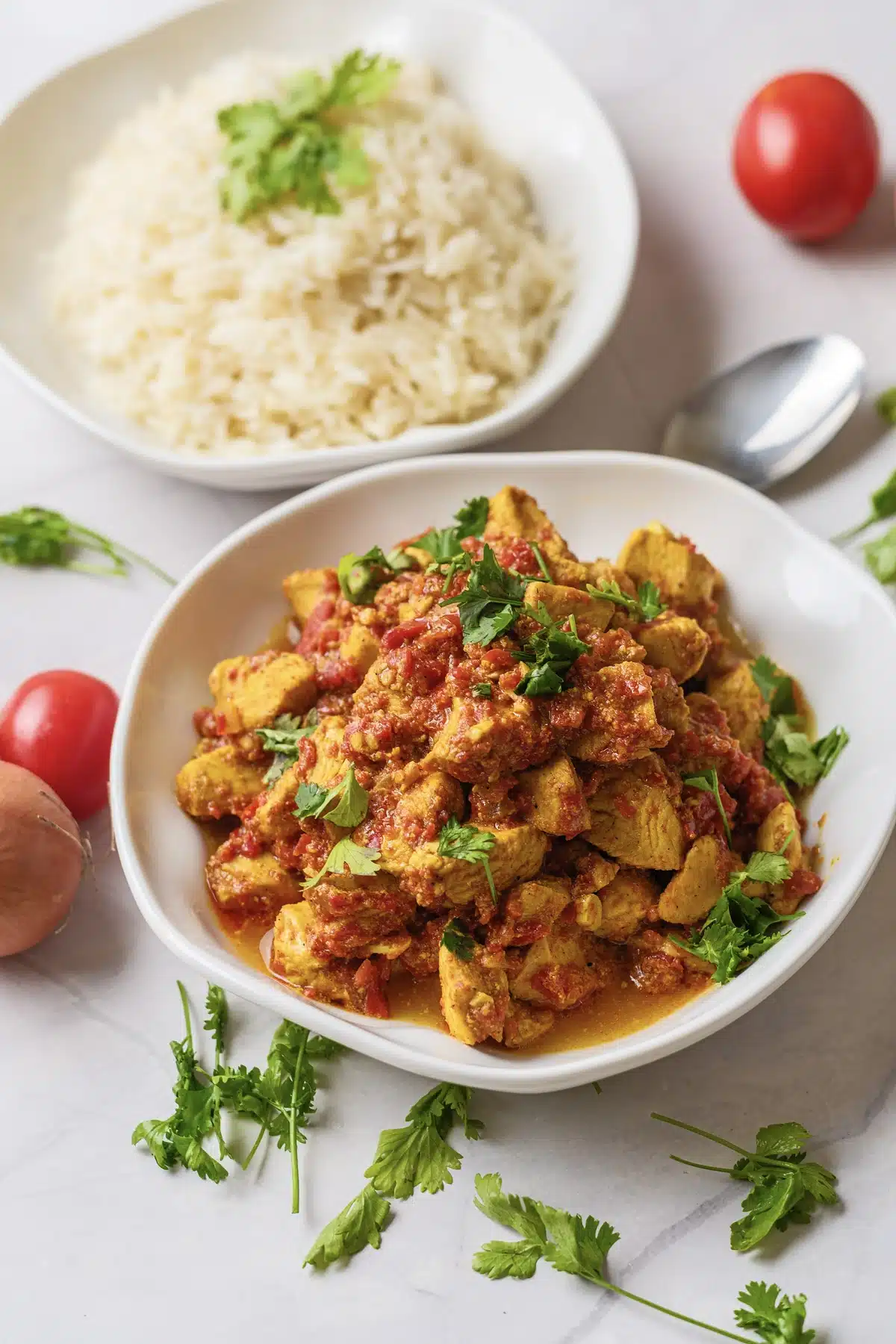
Basmati rice is the classic and it is what is on the plate here. Rinse it until the water runs clear, cook it with a pinch of salt, and fluff it with a fork. Naan for scooping is the other half of the restaurant plate, and a spoonful of plain yogurt or raita on the side cools the spice.
If you are cooking Indian for a crowd, start with garam masala chicken wings while the curry simmers, and put a pot of curry lentil soup on the table for the vegetarians. A cucumber and red onion salad with lemon juice is the only green you need.
For another skillet chicken in a tomato sauce that goes in a different direction, braised chicken thighs in pink peppercorn tomato sauce uses the same brown-then-simmer method with an Italian pantry.
Chicken Tikka Masala FAQ
Frequently Asked Questions
What is the secret to a great tikka masala?
Three things: a thick yogurt marinade with time to work, a hard sear so the chicken chars before it goes into the sauce, and onions cooked until they are truly golden before the spices and tomatoes go in. Skip any one of them and the dish tastes flat. Cream is the least important ingredient in chicken tikka masala, which is why the thicker version with less of it works so well.
Is tikka masala spicier than butter chicken?
Usually, yes. Butter chicken is sweet and mild with a lot of butter and cream. Chicken tikka masala has more chili and garam masala and less dairy, so the spice comes through. This recipe is medium as written; halve the cayenne for mild or double it for hot.
Can I use chicken breast instead of thighs?
Yes, and the chicken pictured is breast. Cut it into pieces a little larger than an inch, marinate for the full three hours, and take it out of the sauce as soon as it reaches 165°F, because breast dries out faster than thigh.
Why is my sauce sour or sharp?
Canned tomatoes with added citric acid are the usual cause. Use passata or a can without it, cook the tomatoes the full ten minutes, and add the teaspoon of sugar. A tablespoon more cream also rounds it out.
More Questions About the Sauce
Good to Know
Can I make chicken tikka masala without cream?
Yes. Coconut milk is the easiest swap. For a dairy-free sauce with the same body, blend a quarter cup of soaked cashews with a quarter cup of water until smooth and stir that in instead. Or simply leave it out and reduce the sauce as in the thicker finish; it will be brighter and more tomato-forward.
Should the sauce be smooth or chunky?
Either is correct. Restaurant versions are often blended smooth; the version here has visible onion and tomato, which is closer to a home-style masala. Blend the sauce with a stick blender before the chicken goes back in if you want it silky.
How do I make it less spicy for kids?
Leave out the cayenne entirely and use sweet paprika in place of the Kashmiri chili. The garam masala and cumin carry the flavor without heat, and the full half cup of cream keeps it gentle.
Once the marinade is in the fridge, chicken tikka masala is a forty-minute dinner that tastes like it took all day. Make a double batch of the sauce, freeze half, and the second one is faster still. Put a tray of Indian chicken wings on the table first and you have a whole night sorted.
Easy Chicken Tikka Masala
Save this recipe
Enter your email and I’ll send this recipe straight to your inbox.
Ingredients
Chicken Marinade
- 1 1/2 lb boneless, skinless chicken thighs or breast, cut into pieces a little bigger than an inch
- 1 cup plain Greek yogurt full fat
- 2 tbsp lemon juice fresh
- 1 tbsp fresh ginger grated
- 3 cloves garlic minced
- 2 tsp garam masala
- 1 tsp ground cumin
- 1 tbsp olive oil
- 1 tsp Kashmiri chili powder or hot paprika
- 1/2 tsp ground turmeric plus 1/4 teaspoon cayenne if you like heat
- 1 teaspoon salt
Masala Sauce
- 2 tbsp ghee or butter with a splash of oil, plus 1 tablespoon oil for searing
- 1 large yellow onion finely chopped
- 4 cloves garlic minced
- 1 tbsp fresh ginger grated
- 2 tsp garam masala
- 1 tsp Kashmiri chili powder or hot paprika
- 14 ounces crushed tomatoes one can, or passata
- 1 tsp ground cumin plus 1/2 teaspoon turmeric and 1/4 to 1/2 teaspoon cayenne
- 1 tsp granulated sugar
- 1/2 cup heavy cream 1/4 cup for the thicker finish pictured
- 1/3 cup chicken stock optional, to thin the sauce
- 1 handful fresh cilantro chopped, plus salt to taste
Equipment
- Large Skillet or Cast Iron Pan
- Mixing bowl
- wooden spoon
Instructions
Marinate the Chicken
- Add the yogurt. Put the chicken pieces into a large bowl and add the Greek yogurt, lemon juice, ginger, garlic and olive oil.

- Add the spices. Sprinkle over the garam masala, cumin, Kashmiri chili powder, turmeric, cayenne if using, and the salt.
- Marinate. Stir until every piece is coated, cover, and refrigerate for at least 3 hours, or overnight.

Sear the Chicken
- Sear in batches. Heat 1 tablespoon oil in a large heavy skillet or cast-iron pot over medium-high heat until it shimmers. Lift the chicken out of the marinade, letting the excess drip off, and sear in a single layer for 2 to 3 minutes a side, until charred in spots. It will not be cooked through. Set aside on a plate and repeat with the rest.
Make the Sauce
- Cook the onion. Reduce the heat to medium and add the ghee. Cook the onion for 7 to 8 minutes, until soft and golden, scraping up the browned marinade from the bottom of the pan.
- Bloom the spices. Stir in the garlic, ginger, garam masala, chili powder, cumin, turmeric and cayenne and cook for 1 minute, until fragrant.
- Simmer the tomatoes. Pour in the crushed tomatoes and the sugar. Cover and simmer over low heat for 10 minutes, stirring now and then.
Finish and Serve
- Return the chicken. Add the seared chicken and any juices to the sauce and stir in the cream. Simmer gently, uncovered, for 5 to 8 minutes, until the chicken reaches 165°F and the sauce coats a spoon. Add the stock only if the sauce is thicker than you like. For the thicker finish pictured, see the notes.
- Season and serve. Taste and add salt, scatter over the cilantro, and serve hot over basmati rice or with naan.