
There is a version of pumpkin risotto that tastes like sweet orange porridge, and there is a version that tastes like an autumn dinner in northern Italy. The difference is almost entirely whether the pumpkin was roasted first.
I learned that the hard way, boiling squash into the stock for years because it seemed efficient. It is efficient, and it is also how you end up with something flat and faintly baby-food sweet. Roasting drives water off and concentrates the sugars instead of diluting them, and it is the one step in pumpkin risotto I would never skip.
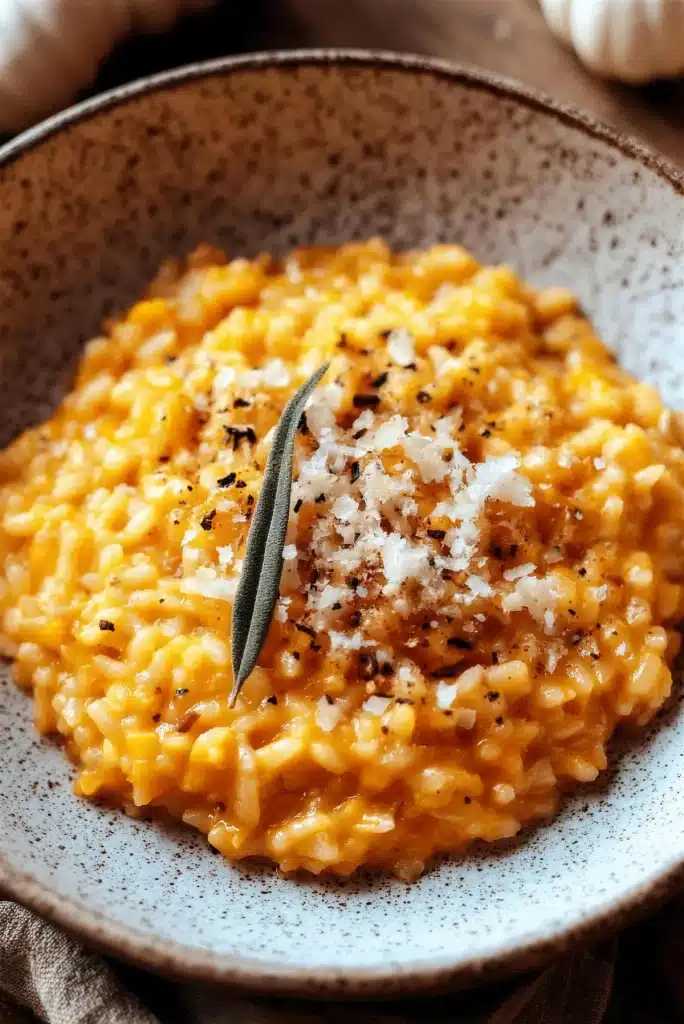
- Roasted squash, not boiled, so the flavor is deep instead of watery
- One pan for the rice and one tray for the oven, and nothing else to wash
- Two thirds goes in as a puree and one third stays in cubes, so every bite has texture
- Vegetarian as written, and vegan with olive oil in place of the butter
- The rice can be parcooked hours ahead, which is how restaurants serve it in eight minutes
- Leftovers turn into arancini, which is arguably the better meal

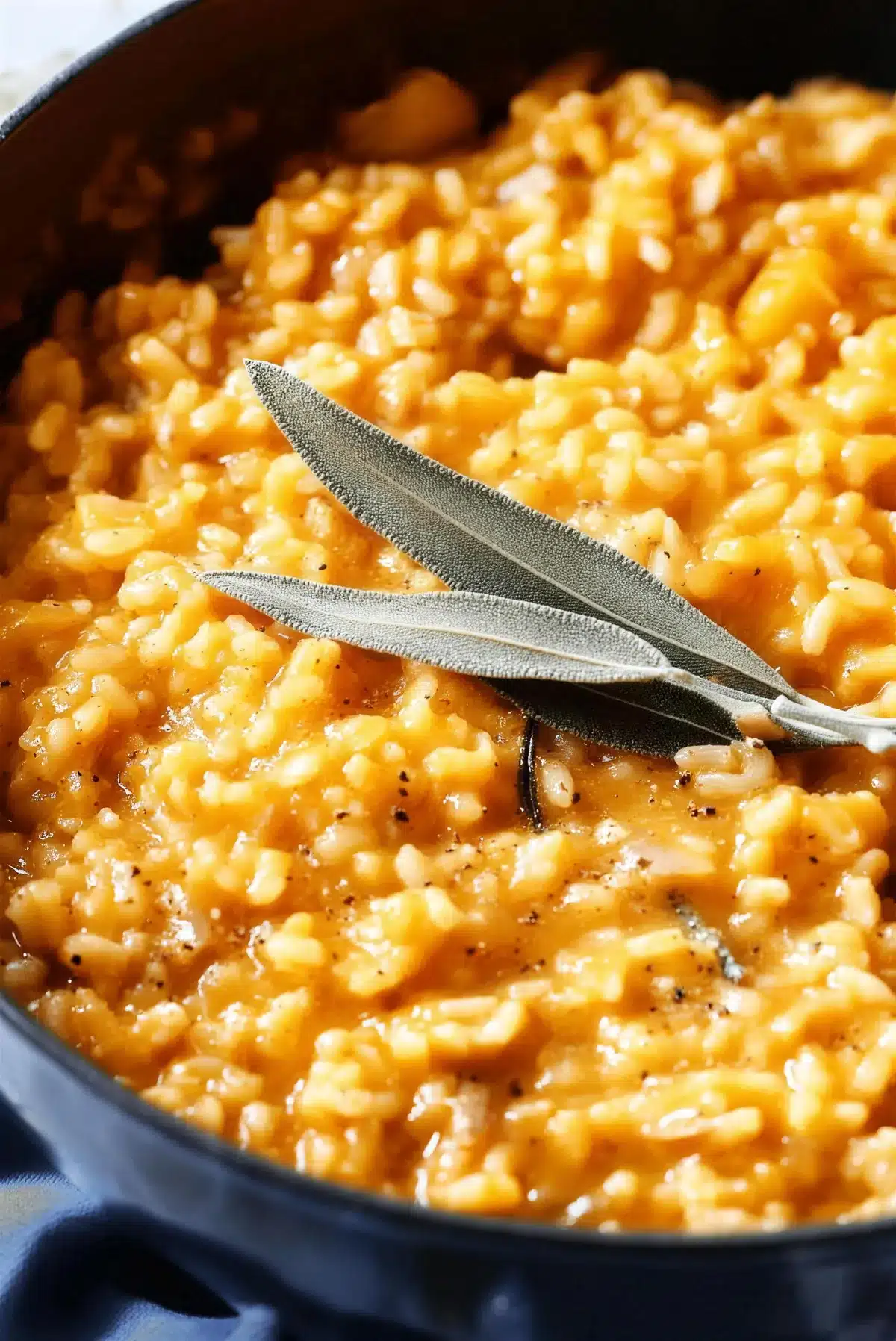
Two decisions carry a pot of pumpkin risotto: which squash goes in the oven, and which rice goes in the pan. Everything after that is stirring and patience.
What Pumpkin to Use for This Dish
The large field pumpkin sold for carving is the wrong ingredient, and it is the single most common reason a pan of pumpkin risotto turns out stringy and bland. Illinois Extension is blunt about it: processing pumpkins, sometimes called pie or sweet pumpkins, have a high sugar content, more flavor, less water and smooth-textured flesh, while the ornamental ones are bred for size and a sturdy stem. They also recommend staying between four and eight pounds and picking one that feels heavy for its size.
Best of all. Kabocha, red kuri or a proper sugar pie pumpkin. Dense, dry, sweet and deeply colored, which is what you want when two thirds of it becomes a puree.
Just as good. Butternut squash, and I use it more often than pumpkin because it is available all year and never fibrous. Nobody at the table has ever noticed.
Avoid. Jack-o’-lantern pumpkins and any squash that feels light for its bulk. Light means water, and water is the enemy here.
One more thing worth saying plainly: fresh squash and canned puree are not interchangeable in this dish, for reasons covered further down.
Save this recipe
Enter your email and I’ll send this recipe straight to your inbox.
Ingredient Notes
Pumpkin risotto runs to nine ingredients, and three of them are salt, pepper and nutmeg. Exact amounts are in the recipe card at the bottom.
- Rice: arborio is the standard and it is what I call for. Carnaroli holds its shape better and is more forgiving if you get distracted, and vialone nano cooks fastest. Long grain, basmati and jasmine will not work, because the creaminess comes from starch shed by short grain rice.
- Pumpkin: two pounds of peeled, seeded flesh, cut into cubes about three quarters of an inch. Larger cubes stay firm in the middle, smaller ones collapse into mush on the tray.
- Stock: seven cups of something light. A heavy beef or dark chicken stock bullies the squash. Vegetable stock keeps the dish vegetarian and lets the pumpkin lead.
- Butter: five tablespoons, and it matters that it is split. Three go into the onions at the start and two go in cold at the very end, which is the step Italians call the mantecatura.
- Parmesan: a cup, finely grated, stirred in off the heat. Pecorino or grana padano both work. Mozzarella and ricotta do not, whatever the old version of this recipe said.
- Shallots: two large, or one medium onion. Shallots are sweeter and disappear more completely into the base.
- White wine: half a cup, optional but recommended. It gives the finished pan an acidity that sweet squash badly needs.
- Nutmeg: a quarter teaspoon, grated fresh. In Lombardy nutmeg and squash are a fixed pair, and the dish tastes underdressed without it.
Use a wide, heavy pan rather than a tall pot. Surface area is what lets the liquid reduce at the same rate the rice absorbs it.
Roasted Squash or Canned Puree
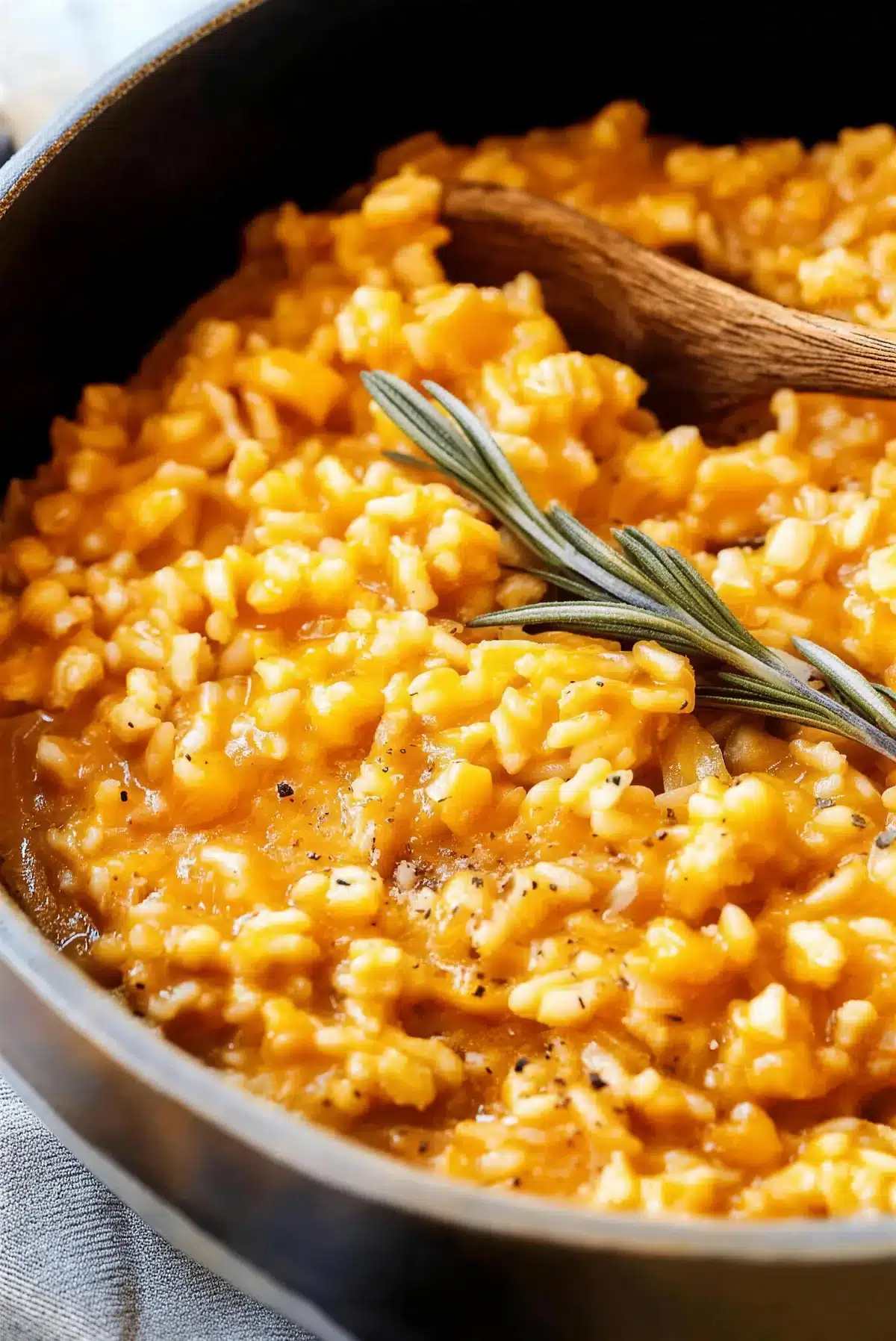
Canned puree is not a bad shortcut. It makes a different pumpkin risotto, and it is worth knowing which one you are making before you open the can.
Roasted, which is this recipe. An hour of your evening, most of it unattended, and the payoff is caramelization. Sugars brown on the tray, edges char slightly, and the third of the cubes you hold back gives the finished bowl something to chew.
Canned, which is faster. Stir one and a half cups of pure pumpkin puree, never the pie filling, into the warm stock and skip the oven entirely. You lose the browning and the texture, and you save forty minutes. On a Tuesday that is a fair trade.
Frozen cubes. These work, but they carry ice, so roast them straight from frozen at a higher heat and give them ten extra minutes to drive the water off.
The reason roasting matters so much is concentration. Raw squash is roughly ninety percent water, and any of that water which ends up in the pan is water the rice absorbs instead of stock. Drive it off in the oven and what is left is sugar and flavor.
How To Make Pumpkin Risotto
Have the stock hot in a saucepan before the rice goes in. Cold liquid stalls pumpkin risotto every time you add a ladle, and that is what turns twenty minutes into forty.
- First, roast the cubed squash with olive oil and salt at 400F for about 25 minutes, until the edges are browned and a fork goes through without resistance.
- Next, set aside a third of the cubes and blend the rest smooth, then whisk that puree into the hot stock so the two go into the pan together.
- Then soften the shallots and garlic in butter, add the rice, and toast it for 2 minutes until the grains look glassy at the edges with a white dot in the center.
- After that, pour in the wine, let it disappear, and start adding the pumpkin stock a ladle at a time, stirring often and waiting for each addition to be absorbed before the next.
- Finally, after about 18 minutes, stir the reserved cubes back in, pull the pan off the heat, and beat in the cold butter, the parmesan and the nutmeg until the whole thing loosens and gleams.
Common Mistakes That Ruin a Batch
Four things go wrong with pumpkin risotto, and all four are avoidable.
Cold stock. Every cold ladle drops the pan temperature and stalls the starch release. Keep the stock at a bare simmer beside you.
Rinsing the rice. Rinsing washes off the surface starch, which is the entire mechanism of the dish. Never rinse rice for risotto.
Drowning it. Adding all the liquid at once boils the rice instead of coaxing starch out of it. You get rice soup with orange in it.
Serving it stiff. It should ripple when you shake the pan. A bowl that holds a peak was cooked too dry, and it sets like cement by the time it reaches the table.
How To Tell When Pumpkin Risotto Is Done
There are two separate tests, and both have to pass.
The grain. Bite one. It should be tender all the way through with the faintest firmness at the very center, and no chalky white core. Chalk means it needs another ladle and three more minutes.
The wave. Italians call finished risotto all’onda, meaning on the wave. Shake the pan and the surface should move like slow lava, settling flat within a second or two. If it moves as a single mass it is too dry, and if it sloshes it needs another two minutes uncovered.
Pumpkin risotto keeps thickening after the heat is off, so finish it looser than you want to eat it. A batch that looks perfect in the pan will be noticeably stiffer in the bowl ninety seconds later. Most home cooks undershoot the liquid rather than overshoot it.
Total time in the pan runs 18 to 22 minutes from the first ladle. Carnaroli sits at the long end of that, vialone nano at the short end.
Make It Ahead
Restaurants do not start pumpkin risotto when you order it, and neither do I when people are coming over.
Cook the rice through about three quarters of the stock, roughly 12 minutes, then spread it in a thin layer on a sheet pan and refrigerate it uncovered until cold. Spreading it thin is the whole trick, because a warm heap keeps cooking itself.
At dinner, tip the parcooked rice back into the pan with the remaining hot stock and finish as normal. It takes six to eight minutes, and nobody can tell. The parcooked rice keeps a full day in the refrigerator.
The squash can be roasted and pureed up to three days ahead, which removes the messiest part of the job from the evening entirely.
Storing Pumpkin Risotto
- Refrigerator: up to 3 days in a sealed container. It sets solid when cold, which is normal and completely reversible.
- Freezer: up to 2 months. The texture softens slightly on thawing, so freeze it with arancini in mind rather than a repeat dinner.
- Reheating: in a pan with a splash of stock or water over medium-low heat, stirring until it flows again. A microwave dries the edges before the middle warms.
- Arancini: cold leftovers roll into balls around a cube of mozzarella, then crumb and fry. This is the best reason to make extra on purpose.
- Do not reheat twice. Rice held warm for hours is a genuine food safety issue, so cool it quickly and warm only what you plan to eat.
Variations and Substitutions
The rice, the fat and the hot stock are structural in any pumpkin risotto. The rest is negotiable.
- Crisped sage: fry whole leaves in butter for thirty seconds and scatter them over. The best single addition on this list.
- Brown butter: brown the finishing butter before it goes in, which adds a nutty depth that suits sweet squash perfectly.
- Bacon or pancetta: render it first and cook the shallots in the fat, which turns a vegetarian side into a main course.
- Goat cheese: two ounces crumbled in at the end alongside the parmesan, for a tang that cuts the sweetness.
- Vegan: olive oil in place of both butters, nutritional yeast or a vegan hard cheese in place of the parmesan, and a little extra salt.
- Balsamic: a few drops of aged balsamic on each bowl at the table, which sounds strange and is genuinely excellent.
What to Serve with Pumpkin Risotto
Pumpkin risotto is rich and sweet, so everything around it should be sharp, bitter or crunchy.
- A bitter leaf salad with lemon, such as radicchio, endive or arugula dressed simply.
- Parmesan crisps broken over the top, which gives the bowl the crunch it otherwise lacks.
- Roasted brussels sprouts or broccolini with chile and garlic, cooked hard enough to char.
- As a first course before roast chicken, in the Italian order, with roasted butternut squash salad alongside if you are leaning into the season.
- Or a glass of something with acid and no oak, since sweet pumpkin risotto flattens a big buttery white completely.
Here is what readers ask most often.
Pumpkin Risotto FAQ
Frequently Asked Questions
What to put in pumpkin risotto?
The non-negotiable list is short: short grain rice, hot light stock, a soffritto of shallot and butter, roasted squash in two forms, parmesan and nutmeg. After that the traditional additions are sage, white wine and a hard aged cheese. Crisped sage leaves, brown butter and a few drops of aged balsamic are the three that change the bowl most for the least effort. Bacon, goat cheese and toasted pumpkin seeds all belong here too, though each one pulls the dish somewhere slightly different.
What are some common mistakes to avoid when making pumpkin risotto?
Using a carving pumpkin, adding cold stock, rinsing the rice, and stopping while it is still stiff. Cold stock is the one that costs the most time, since every ladle drops the pan below the temperature at which starch is released. Rinsing is the one that does the most damage, because that surface starch is the only thing making the dish creamy. And the most common of all is boiling the squash instead of roasting it, which dilutes exactly the flavor you were trying to build.
What is the Italian name for pumpkin risotto?
Risotto alla zucca, zucca being the general Italian word for pumpkin and winter squash. It is a northern dish, strongly associated with Lombardy and the area around Mantua, where squash and nutmeg turn up together in tortelli as well. Traditional versions there are usually plainer than the ones you find online: squash, rice, stock, butter, parmesan and nutmeg, with no cream and often no wine.
More Questions About Rice and Roasting
Good to Know
Can I use canned pumpkin puree?
Yes. Whisk one and a half cups of pure puree, not pie filling, into the hot stock and skip the roasting. You lose the browned edges and the cubes that give the dish texture, so fry a little sage in butter to put back some complexity. Read the label, because pie filling is already sweetened and spiced and will make the pan taste like dessert.
Do I really have to stir constantly?
No, and the myth costs people a lot of arm ache. Frequent stirring is enough, roughly every twenty to thirty seconds, which keeps the grains rubbing together and shedding starch without letting anything catch. Constant stirring changes nothing measurable. Walking away for three minutes does.
Can I make it in a rice cooker or pressure cooker?
You can get close. A pressure cooker manages a decent approximation in seven minutes at pressure with the liquid added all at once, then finished off the heat with butter and cheese. A rice cooker is less controllable, though my notes on what a rice cooker handles well apply. Neither produces the wave, because nothing agitates the starch.
What is Jamie Oliver’s pumpkin risotto?
His published version roasts butternut squash with chile and herbs, then stirs most of it through a plain white risotto base at the end. I have not cooked it, so I will not compare results. The structural difference is that this pumpkin risotto whisks the puree into the stock, so color and flavor run all the way through the grain.
Make it once with a kabocha and hot stock and you will stop thinking of this as a fussy restaurant dish. For the same squash in a form you can freeze by the quart, try my butternut squash carbonara.

Pumpkin Risotto
Save this recipe
Enter your email and I’ll send this recipe straight to your inbox.
Ingredients
For the Roasted Squash
- 2 pounds pumpkin or butternut squash about 900 g peeled and seeded, cut into 3/4-inch cubes
- 2 tablespoons olive oil
- 1/2 teaspoon kosher salt
For the Risotto
- 5 tablespoons unsalted butter 3 for the base, 2 kept cold for the finish
- 2 large shallots finely chopped, or 1 medium onion
- 2 cloves garlic minced
- 2 1/2 cups arborio rice 500 g, or carnaroli, never rinsed
- 1/2 cup dry white wine optional but recommended
- 7 cups vegetable stock kept at a bare simmer, plus more if needed
- 1 cup finely grated parmesan cheese 80 g, or pecorino
- 1/4 teaspoon grated nutmeg freshly grated if possible
- 1 1/2 teaspoons kosher salt plus more to taste
- 1/2 teaspoon black pepper coarsely ground
- 8 leaves fresh sage to serve, fried in butter if you like
Equipment
- Oven
- Baking tray
- Knife
- Cutting board
- Blender or Food Processor
- Large saucepan
- Large Skillet or Sauté Pan
- wooden spoon
Instructions
Roast the Squash
- First, heat the oven to 400F. Toss the cubed squash with the olive oil and 1/2 teaspoon salt, spread it on a sheet pan in one layer, and roast for about 25 minutes, until the edges have browned and a fork meets no resistance.
- Set aside a third of the cubes. Blend the remaining two thirds until completely smooth, adding a ladle of stock if the blender needs help.
- Whisk that puree into the stock in a saucepan and hold it at a bare simmer beside the risotto pan. Cold stock stalls the rice, which is the usual reason risotto takes twice as long as it should.
Build the Base
- Next, melt 3 tablespoons of the butter in a wide, heavy pan over medium heat. Cook the shallots gently for 5 minutes until soft and translucent, then add the garlic and cook for 1 minute more.
- Then add the rice and toast it for 2 minutes, stirring, until the grains look glassy at the edges with a white dot at the center. Do not rinse the rice at any point, because that surface starch is the only thing that will make the dish creamy.
Add the Stock
- After that, pour in the wine and stir until it has almost disappeared. Add the hot pumpkin stock one ladle at a time, stirring every twenty to thirty seconds and waiting for each addition to be absorbed before the next goes in.
- Keep going for 18 to 22 minutes. The rice is ready when a grain is tender through with only the faintest firmness at the center and no chalky white core.
Finish and Serve
- Finally, stir the reserved roasted cubes back in, then pull the pan off the heat. Beat in the cold butter, the parmesan, the nutmeg, 1 1/2 teaspoons salt and the pepper for a full minute, which is the step that emulsifies the fat into the starch.
- Shake the pan. The surface should ripple like slow lava and settle flat, and if it moves as one mass, loosen it with a little more hot stock. Serve at once, with sage leaves and more parmesan.