
Good pan seared scallops are the cheapest restaurant trick there is. Twelve ounces of scallops, a hot skillet and about ten minutes gets you a plate that looks like it cost forty dollars, and the only genuinely difficult part happens before the pan is even on: getting the scallops dry enough to brown.
This version finishes them with a pan sauce built from red miso and blood orange juice, which arrives at exactly the right time of year. Blood oranges are a January fruit and scallops are at their best in the same cold months. Miso brings the salt and the savory depth that a squeeze of citrus on its own cannot, and the two together make a sauce that is rust colored, glossy and about ninety seconds of work in the pan the scallops just came out of.
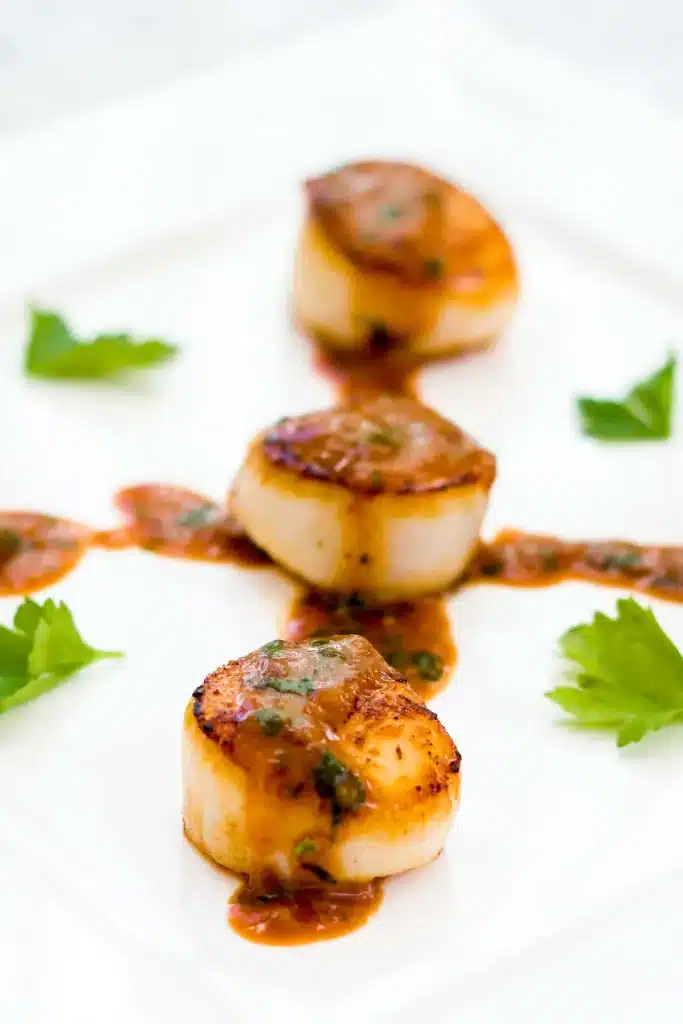
- Dinner in about ten minutes of actual cooking, from a single skillet
- The sauce is built in the pan the scallops came out of, so nothing is wasted
- Red miso does the work of salt, anchovy and stock all at once
- Blood orange is sharp enough to cut the butter without any added acid
- It doubles cleanly and serves four as a first course
- Everything except the searing can be measured and mixed an hour ahead

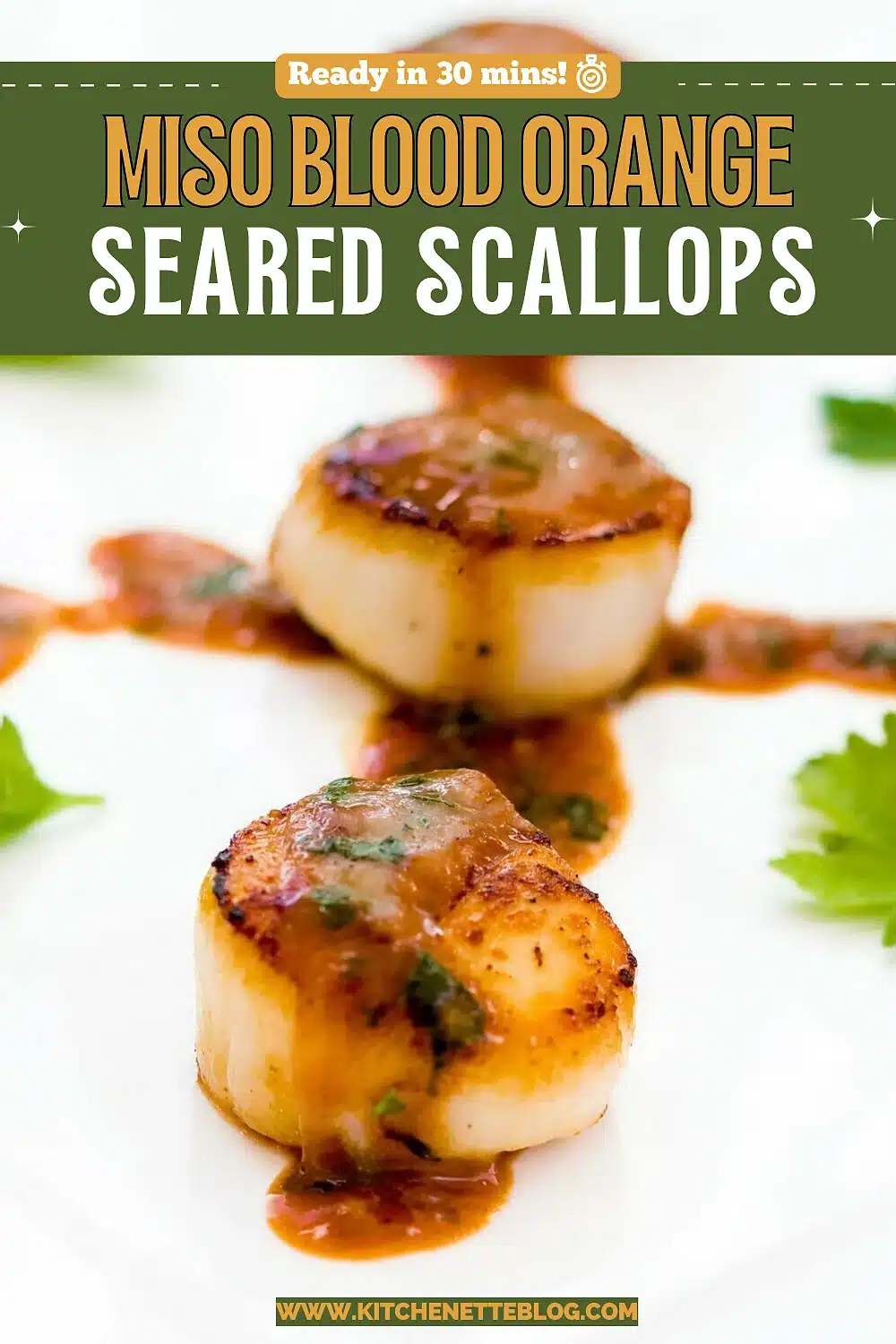

The whole thing turns on two decisions: which scallops you buy, and how dry you get them.
- Dry Scallops Versus Wet Scallops
- Ingredient Notes
- The Miso and Blood Orange Sauce
- How To Make Pan Seared Scallops
- Getting a Real Crust
- How To Tell When Pan Seared Scallops Are Done
- Make It Ahead
- Storing Pan Seared Scallops
- Variations and Substitutions
- What to Serve with Pan Seared Scallops
- Pan Seared Scallops FAQ
Dry Scallops Versus Wet Scallops
This is the single most important sentence on the page about pan seared scallops, and it happens at the fish counter rather than at the stove.
Wet scallops have been soaked in a phosphate solution. The treatment makes them absorb water, which makes them heavier, whiter and cheaper by weight. It also means they release that water the second they hit a hot pan.
They cannot be browned. A wet scallop steams in its own liquid, goes rubbery around the outside while the middle is still cold, and comes out pale. No amount of heat fixes it, because the water keeps arriving.
Dry scallops are untreated. They look ivory or faintly pink or tan rather than uniformly bright white, they smell of nothing much, and they sit in the case without a milky pool underneath them.
Ask, and read the label. The words to look for are dry, dry-packed or chemical-free. The FDA’s advice on selecting and serving seafood safely is that scallop flesh should be clear with a pearl-like color and little or no odor, which describes a dry scallop exactly.
Frozen dry scallops beat fresh wet ones every single time. Thaw them overnight in the refrigerator and you will get better pan seared scallops than the fresh-looking white ones in the case.
Save this recipe
Enter your email and I’ll send this recipe straight to your inbox.
Ingredient Notes
Pan seared scallops run to nine items, and the shopping decision above matters more than any of them. Exact amounts are in the recipe card below.
- Sea scallops: twelve ounces of dry, untreated scallops, which is nine to twelve of the large ones. Sizes are sold as U-10 or U-15, meaning under ten or under fifteen to the pound. Bigger is easier, because there is more margin between a brown crust and an overcooked middle.
- Red miso paste: one tablespoon. Red miso is fermented longer than white and is considerably saltier and more assertive, so it goes a long way. Two tablespoons in a quarter cup of juice, which is what this recipe used to call for, is a salt bomb rather than a sauce.
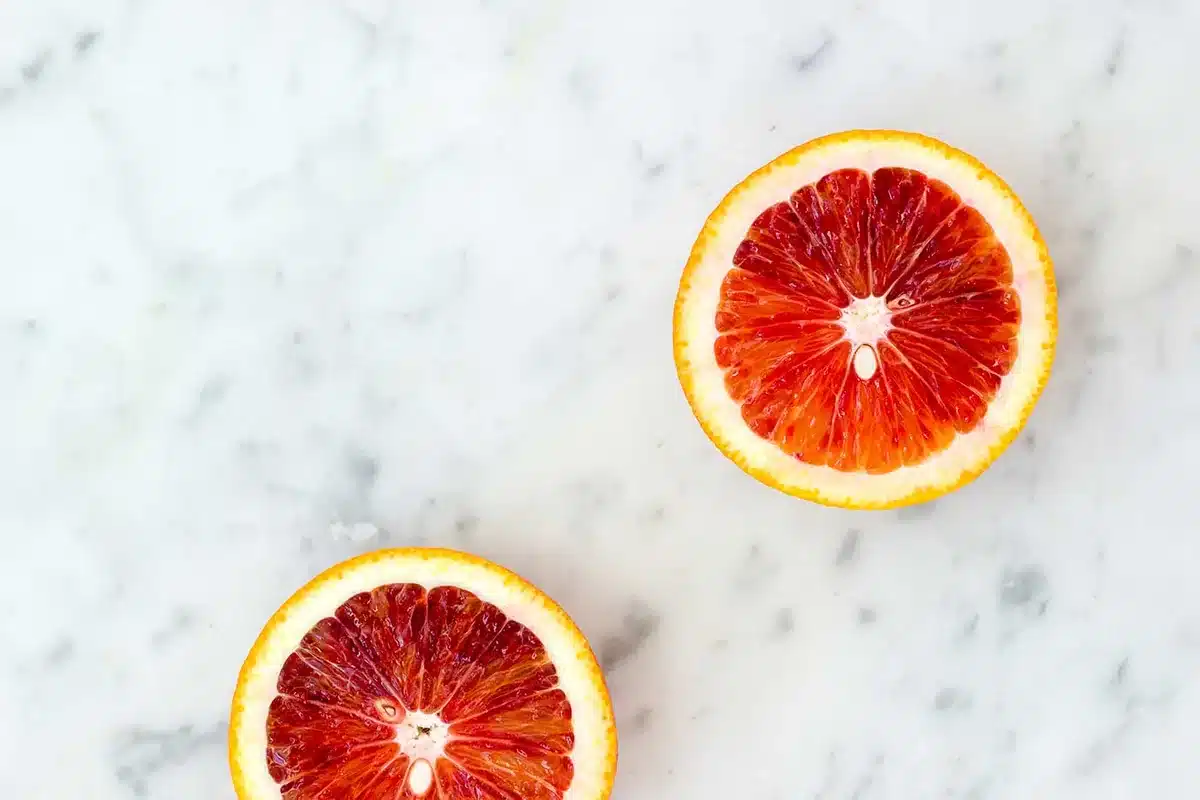
- Blood orange juice: a quarter cup, from one or two oranges depending on size. Zest them before you juice them.
- Blood orange zest: half a teaspoon, taken off with a microplane and only the colored part.
- Unsalted butter: two tablespoons, split. One goes in at the end of the sear for basting and one is whisked into the sauce off the heat.
- Olive oil: one tablespoon, for the sear itself. Butter alone burns long before a crust forms.
- Shallot: two tablespoons, minced fine. Onion is too coarse for a sauce that cooks for a minute.
- Fresh thyme: two sprigs, dropped in for the basting.
- Parsley: a tablespoon, minced, stirred in at the very end so it stays green.
The Miso and Blood Orange Sauce
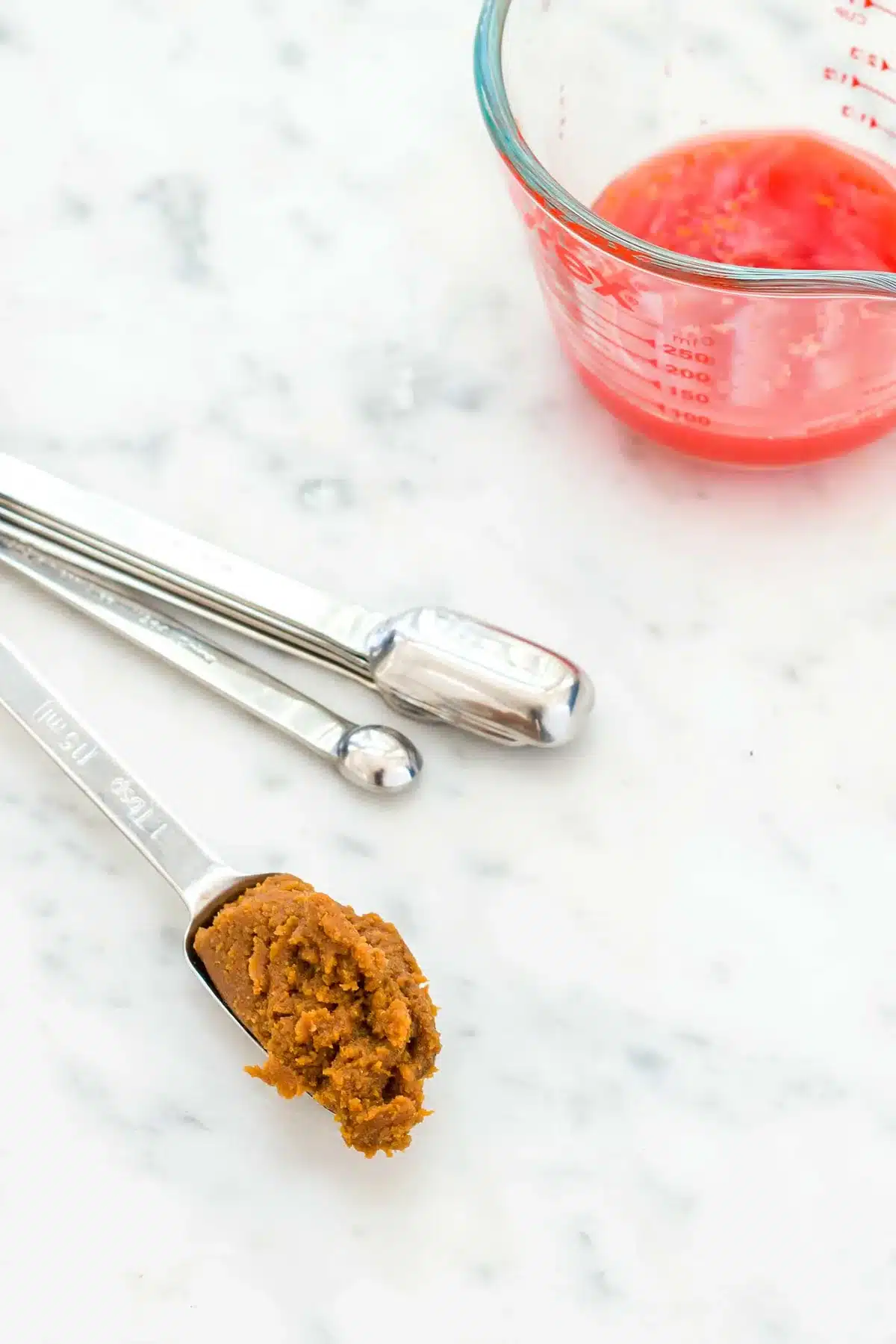
The sauce for these pan seared scallops is four ingredients whisked in a bowl before the pan is even hot, and then ninety seconds of attention afterwards.
Blood oranges are a genuinely different fruit, not a novelty. The UC Riverside citrus collection’s entry on the Moro blood orange notes that its color comes from anthocyanin, the pigment that colors purple grapes, and that it ripens between December and February. That pigment carries a berry note that ordinary orange juice does not have.
Miso is salt, umami and body in one spoon. It also thickens slightly, which is why this sauce clings rather than running off.
Mix it cold and whisk it smooth. A tablespoon of water loosens the paste enough that it dissolves. Miso dropped into a hot pan in lumps stays in lumps.
Do not boil it. Miso is a living, fermented thing and hard boiling turns it bitter and grainy. Thirty to forty five seconds at a bare bubble is all it needs.
Off the heat is where the butter goes. Whisking cold butter into a sauce below a simmer is what makes it glossy. Boil it after the butter goes in and it splits into oil and juice.
How To Make Pan Seared Scallops
Read it through first. Once the scallops are in the pan there is no time to look anything up, and the sear on pan seared scallops is over inside four minutes.
- First, whisk the zest, 1/4 cup juice, 1 tablespoon miso and 1 tablespoon water together until smooth and set the bowl beside the stove.
- Next, pull the small side muscle off each scallop, pat them very dry, and leave them uncovered on a fresh paper towel for 10 minutes. Season one side with the salt and pepper just before they go in.
- Then heat a 12-inch stainless or carbon steel skillet over medium-high for 2 to 3 minutes, add the 1 tablespoon of oil, and lay the scallops in seasoned side down without letting them touch. Do not move them for 2 to 3 minutes.
- After that, flip them, add 1 tablespoon of butter and the thyme, and spoon the foaming butter over them for 45 to 60 seconds. Move them to a warm plate.
- Finally, pour off all but a film of fat, soften the shallot over medium-low for a minute, pour in the miso mixture off the heat, bubble it gently for 30 to 45 seconds, then whisk in the last 1 tablespoon of butter and the parsley off the heat and spoon it over.
Why the Drying Step Matters
Getting a Real Crust
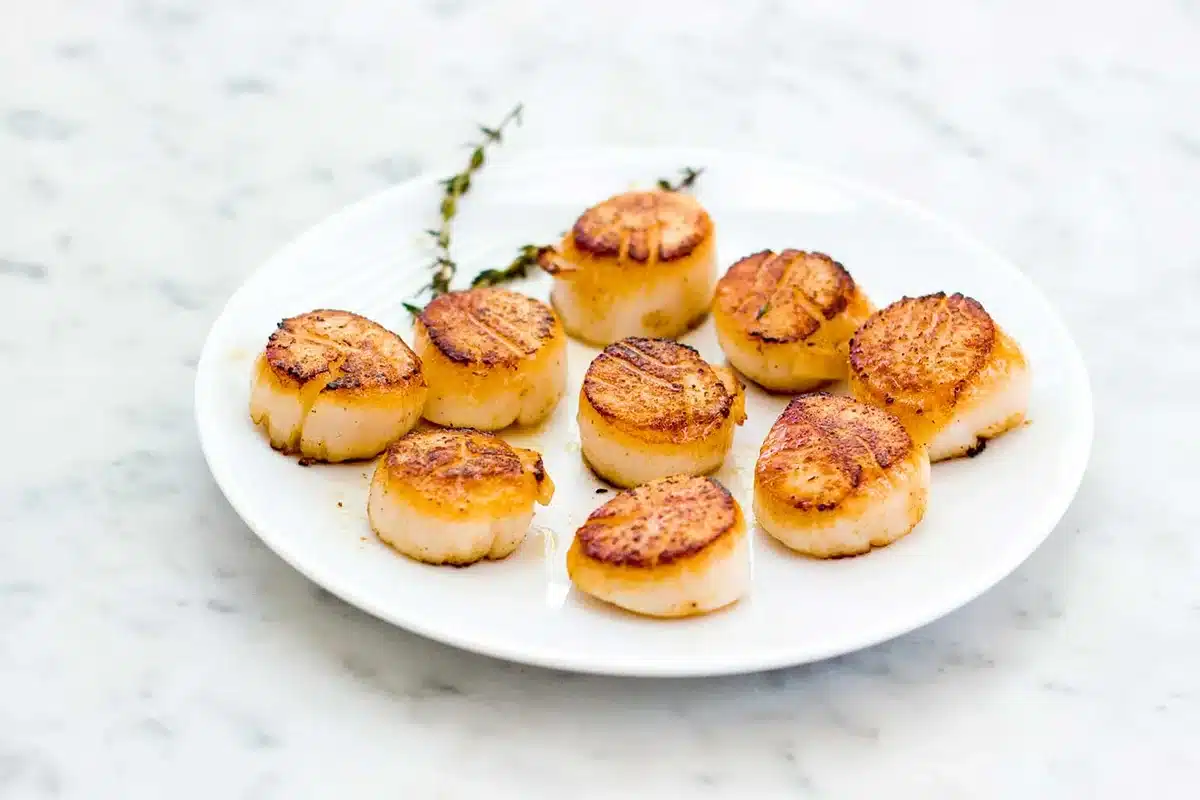
Five things stand between you and the brown edge on the pan seared scallops in the photographs, and four of them are free.
Use a pan that browns. Stainless or carbon steel, not nonstick. A nonstick surface cannot get hot enough or hold heat well enough, and the fond it refuses to build is the entire flavor of the sauce.
Twelve inches for twelve ounces. Crowding drops the pan temperature and the scallops release liquid faster than it can evaporate. If your largest skillet is small, cook them in two batches.
Get the pan properly hot first. Two to three minutes over medium-high, until a drop of water skitters. Cold pan, no crust.
Oil for the sear, butter for the finish. Butter has milk solids that blacken in about ninety seconds at this heat. Sear in oil and add the butter at the flip.
Then leave them alone. The crust releases the scallop from the pan by itself when it is ready. If it sticks when you nudge it, it is not done, and lifting it early tears the crust off and leaves it in the pan.
How To Tell When Pan Seared Scallops Are Done
The window between perfect and rubbery on pan seared scallops is about sixty seconds wide, so it is worth knowing all four cues.
The FDA recommends 145F for seafood, and describes done scallops as firm, pearly and opaque. That is the number to plan around and the description is a good one.
Watch the side. As it cooks, the opaque band climbs up from the bottom. When it has reached two thirds of the way up, flip. When it reaches the top, they are done.
Press one gently. Raw, it is soft and gives completely. Springy, like the pad of your thumb, means it is there. Hard means it has gone too far.
Look at the middle if you cut one open. It should be barely translucent at the center, because the residual heat finishes it on the plate. Many cooks pull scallops earlier than 145F for exactly this reason, which is a personal call about risk rather than about technique.
Total time in the pan is three to four minutes for large scallops. If yours have been in for six, they are overcooked no matter what the thermometer says, because they have squeezed out most of their water.
Make It Ahead
Very little of a plate of pan seared scallops can be done in advance, and it is worth being honest about which parts.
The sauce mixture, yes. Zest, juice, miso and water can be whisked and refrigerated for a day. Bring it back to room temperature before it goes into the pan.
The shallot and parsley, yes. Minced and covered, they hold overnight.
The drying, yes and preferably. Scallops on a rack, uncovered, in the refrigerator for up to four hours gives a better crust than ten minutes on a towel does.
The searing, no. Nothing about pan seared scallops survives being cooked and held. They go from springy to rubbery within about five minutes of sitting.
Which makes this a good dinner-party dish anyway, because everything except four minutes of cooking is finished before anyone arrives.
Storing Pan Seared Scallops
- Raw, refrigerated: 1 to 2 days on a plate on the coldest shelf, loosely covered. Buy scallops the day you plan to cook them if you can, because pan seared scallops are only as good as the day they were bought.
- Raw, frozen: 3 months. Thaw overnight in the refrigerator, never at room temperature or in warm water.
- Refrigerated after cooking: 2 days in a sealed container. They do not reheat well and are much better cold, sliced into a salad.
- Frozen after cooking: not worth doing. The texture collapses on thawing.
- The sauce on its own: 3 days refrigerated. Warm it gently and whisk, because the butter separates when it chills.
Variations and Substitutions
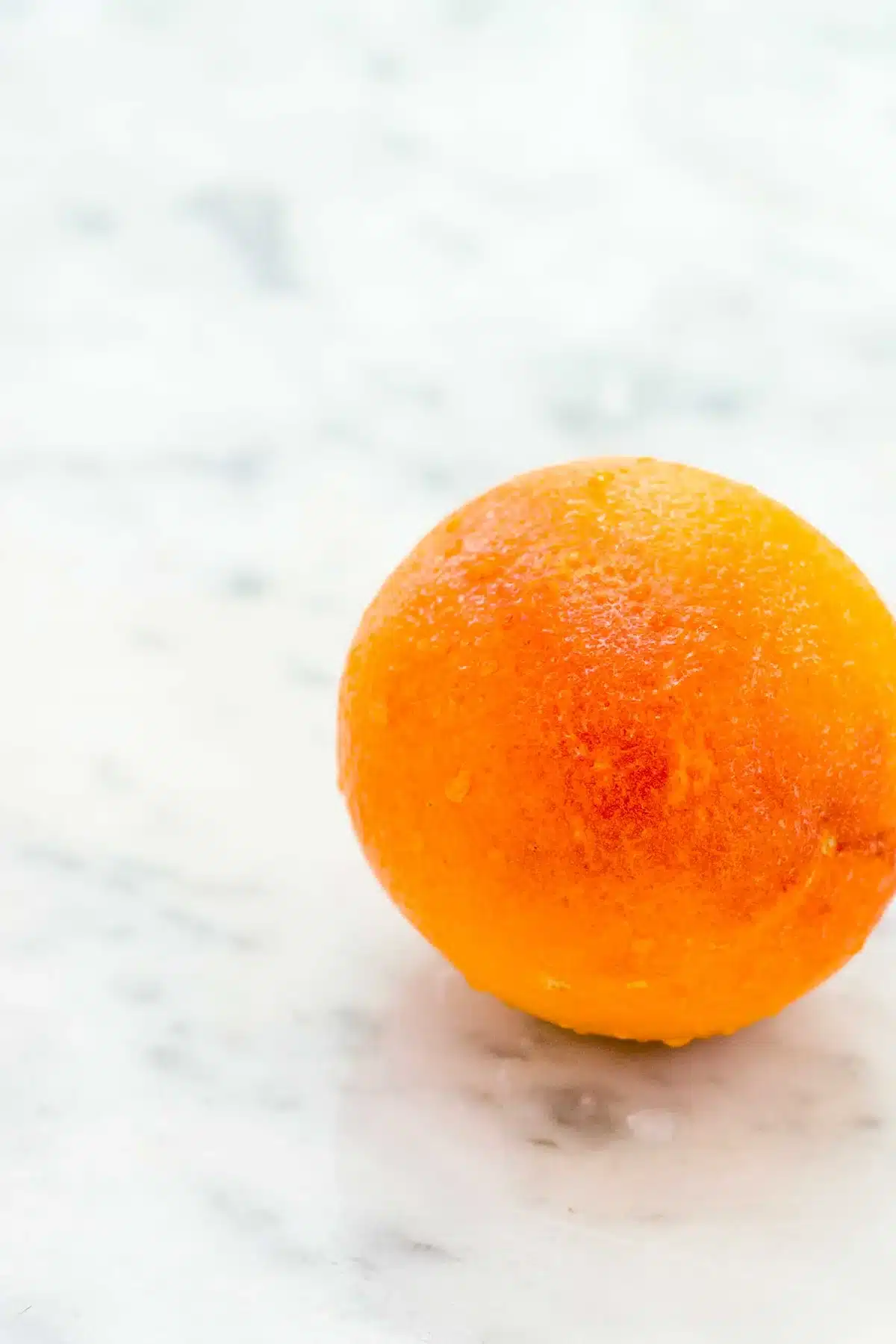
The method for pan seared scallops is fixed; almost everything else on the plate can move.
- No blood oranges: a quarter cup of regular orange juice with two teaspoons of lemon juice gets you close. You lose the color and the berry note.
- White miso instead of red: use two tablespoons, since it is milder and less salty. The sauce comes out paler and sweeter.
- Add mirin: two teaspoons in the sauce mixture, which is the traditional partner for miso and rounds the citrus off.
- Ginger: a teaspoon, grated, cooked with the shallot for a sharper, more obviously Japanese plate.
- Chile: a pinch of togarashi or Aleppo pepper over the top at the end.
- Shrimp: the same sauce works with a pound of large shrimp, seared for about ninety seconds a side.
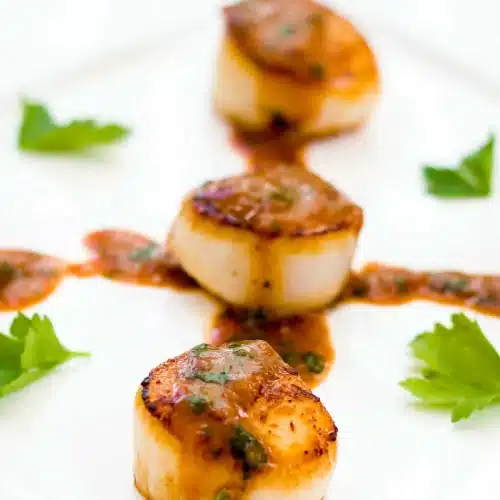
- Serve it as a first course by doubling everything and plating three scallops each for four people, which is what the photographs show.
What to Serve with Pan Seared Scallops
Pan seared scallops need starch or greens under them, and nothing on the plate that competes with the sauce.
- Soft polenta or a plain risotto, which catches the sauce better than anything else.
- Sauteed arugula on the side, wilted in the same pan afterwards if you are quick.
- Roasted butternut squash salad, which is in season at the same moment blood oranges are.
- Plain white rice and a wedge of blood orange, for the least fussy version of this dinner.
- A dry white wine with some weight to it, or a cold beer if the miso is dialed up.
For a louder seafood night with your hands in it instead, the beer battered fish tacos are the opposite end of the same shelf, and the blood orange cocktail uses the other half of the bag of oranges.
Here is what readers ask most often.
Pan Seared Scallops FAQ
Frequently Asked Questions
Why did my scallops not brown?
Almost always one of three things: they were wet-packed rather than dry, they were not dried before they went in the pan, or the skillet was crowded or not hot enough. Wet-packed scallops release phosphate solution continuously and simply cannot be browned. Pan seared scallops need a dry surface, a hot heavy pan and room between them, and getting all three right fixes it almost every time.
Do I need to remove anything from a scallop?
Yes, the side muscle. It is the small rectangular tab attached to one side, slightly tougher and paler than the rest, and it peels off with your fingers in a second. Many are sold with it already removed. It is edible but chewy.
Can I use frozen scallops?
Yes, and frozen dry-packed scallops are better than fresh wet-packed ones. Thaw them overnight in the refrigerator, then dry them thoroughly, because thawing releases a good deal of water. Never thaw them on the counter.
How many scallops per person?
Six ounces each as a main course, which is four to six large scallops, or three each as a starter. Twelve ounces of pan seared scallops feeds two people dinner or four people a first course.
More Questions About Miso and Blood Oranges
Good to Know
What kind of miso should I buy?
Red miso, sometimes labeled aka miso, for this sauce. It is fermented longer, darker and much saltier than white, so a tablespoon carries the whole dish. A tub keeps close to a year in the refrigerator and is one of the most useful things you can have in there, in dressings, marinades and soups.
Is the sauce salty enough without added salt?
The sauce needs none at all, which is why the scallops in these pan seared scallops are seasoned on one side only. A tablespoon of red miso brings roughly as much sodium as half a teaspoon of table salt. Taste before you reach for the salt cellar.
When are blood oranges in season?
Roughly December through February for the Moro variety, which is the darkest and the most widely sold. They are best late in that window, when the flesh has gone almost violet. Outside those months you are looking at cold storage fruit and orange juice with lemon is the better swap.
Can I make the sauce without butter?
You can finish it with a tablespoon of olive oil whisked in instead, and it will be thinner and sharper. The butter is what makes it glossy and what softens the salt in the miso, so I would keep it if you can.
Pan seared scallops are a fifteen minute dinner that reads as an occasion, and the miso and blood orange sauce is the part people ask about afterwards. If you have oranges left over, the blood orange cocktail with tequila and ginger beer is where the rest of them go.
Pan Seared Scallops with Miso Blood Orange Sauce
Save this recipe
Enter your email and I’ll send this recipe straight to your inbox.
Ingredients
For the Miso Blood Orange Sauce
- 1/2 teaspoon blood orange zest zest the fruit before you juice it
- 1/4 cup blood orange juice from 1 to 2 blood oranges
- 1 tablespoon red miso paste or 2 tablespoons white miso, which is milder
- 1 tablespoon water to loosen the miso so it whisks smooth
For the Scallops and the Pan
- 12 ounces dry sea scallops about 9 to 12 large ones, U-10 to U-15, side muscle removed
- 1/2 teaspoon Diamond Crystal kosher salt or 1/4 teaspoon Morton or fine sea salt
- 1/4 teaspoon freshly ground black pepper
- 1 tablespoon olive oil for the sear
- 2 tablespoons unsalted butter divided, 1 for basting and 1 for the sauce
- 2 sprigs fresh thyme
- 2 tablespoons shallot minced fine
- 1 tablespoon fresh parsley finely minced, added off the heat
Instructions
Mix the Sauce and Dry the Scallops
- Whisk the blood orange zest, blood orange juice, miso and water together in a small bowl until completely smooth, and set it beside the stove. Miso dropped into a hot pan in lumps stays in lumps.
- Pull the small rectangular side muscle off each scallop with your fingers, then pat the scallops very dry on paper towels.
- Leave them uncovered on a fresh dry towel for 10 minutes, or uncovered on a rack in the refrigerator for up to 4 hours. This is what produces a crust; patting alone only takes off the surface water.
Sear the Scallops
- Season the scallops on one side only with the kosher salt and the black pepper, just before they go into the pan. The sauce carries plenty of salt from the miso.
- Heat a 12-inch stainless or carbon steel skillet over medium-high for 2 to 3 minutes, until a drop of water skitters across it, then add the olive oil. Do not use nonstick; it will not build the browned fond the sauce is made from.
- Lay the scallops in seasoned side down, spaced so they do not touch, and do not move them for 2 to 3 minutes. The crust releases them from the pan by itself when it is ready. If one sticks, it is not done.
- Flip them, add 1 tablespoon of the butter and the thyme sprigs, tilt the pan and spoon the foaming butter over them for 45 to 60 seconds. Pull them when the flesh is firm, pearly and opaque, at an internal 145F, and move them to a warm plate.
Build the Pan Sauce
- Take the pan off the heat for 30 seconds so it stops smoking, pour off all but a thin film of fat, then return it to medium-low and cook the shallot for 1 minute, stirring.
- Off the heat, pour in the miso mixture and whisk, scraping up everything stuck to the base of the pan. Return it to low and let it bubble gently for 30 to 45 seconds. Do not boil it hard, or the miso turns bitter and grainy.
Finish and Serve
- Take the pan off the heat again and whisk in the remaining 1 tablespoon of butter a piece at a time until the sauce is glossy, then stir in the parsley. Butter whisked into a boiling sauce splits.
- Return the scallops and any juices from the plate to the pan, turn them once to coat, and serve straight away over polenta, risotto or plain rice.