
Italian drunken noodles is a dish with a borrowed name and no real ancestry, and it is very good anyway. Wide ribbons of pappardelle, crumbled Italian sausage, three colors of sweet pepper, and a sauce built on white wine and crushed tomatoes, all finished in the pan the sausage started in.
The name comes from Thai drunken noodles, which share the wide noodle and almost nothing else. No basil-and-chili heat, no fish sauce, no soy. What carried over was the idea: a fast skillet dish where the noodles finish in the sauce instead of arriving under it.
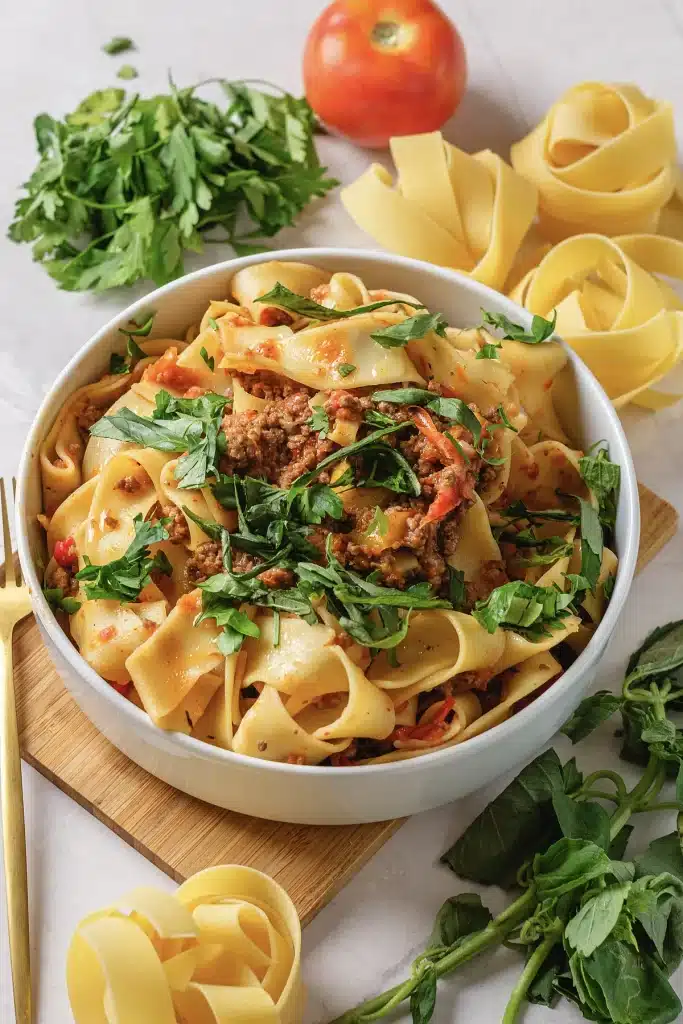
- One skillet, 45 minutes, and the pasta finishes in the sauce
- Sweet peppers and sausage do all the work, so the ingredient list stays short
- Half a cup of white wine gives it a depth that tomatoes alone cannot
- Reheats better than most pasta because the sauce is loose to begin with
- Easy to stretch with more pasta when someone brings a friend
Italian drunken noodles have become a weeknight staple in a lot of American kitchens for a plain reason. One pan, one pot of pasta water, and a plate that looks like far more effort than 45 minutes.

- What Are Italian Drunken Noodles?
- Ingredient Notes
- Pappardelle Is the Right Pasta
- The Wine Is Not Optional
- How To Make Italian Drunken Noodles
- How To Tell When Italian Drunken Noodles Are Done
- Make It Ahead
- Storing Italian Drunken Noodles
- Variations and Substitutions
- What to Serve with Italian Drunken Noodles
- Italian Drunken Noodles FAQ
What Are Italian Drunken Noodles?
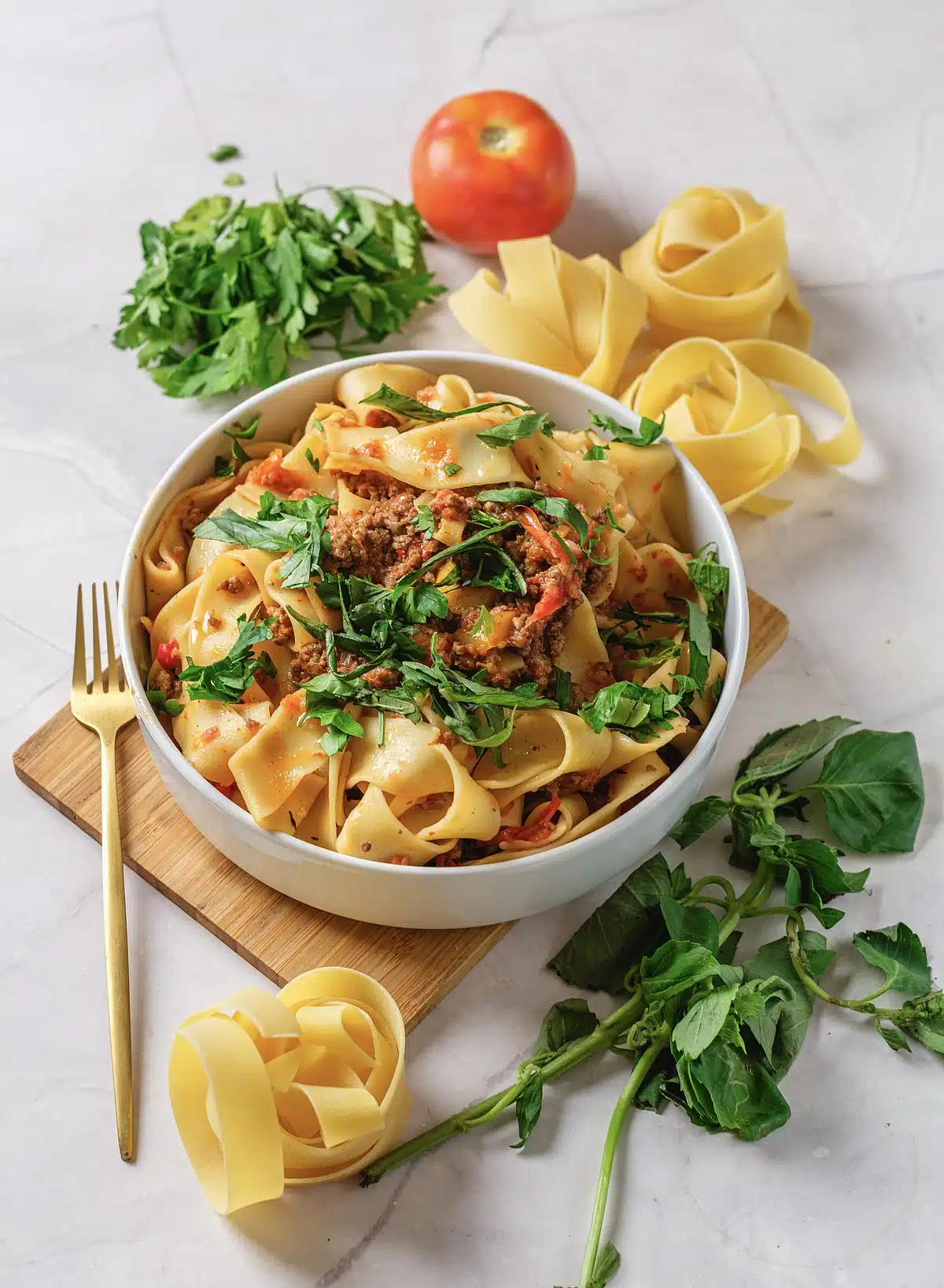
Italian drunken noodles are a skillet pasta of sausage, peppers, tomato and wine, tossed with wide egg noodles. The recipe was popularized by American food blogs in the early 2010s as a riff on Thai drunken noodles, and it has been passed around ever since. You will not find it on a menu in Rome.
The “drunken” part is the wine, and there is not much of it. Half a cup goes into the pan to deglaze, most of the alcohol cooks off during the simmer, and what stays behind is acidity and a savory depth that reads as long-cooked even though the whole thing takes 45 minutes.
The dish sits somewhere between a sausage and peppers sandwich and a pasta bake, which is exactly why it works on a weeknight. It is substantial without being heavy, and it uses one pan from start to finish.
Save this recipe
Enter your email and I’ll send this recipe straight to your inbox.
Ingredient Notes
Nothing here is hard to find, and two of the eleven items decide how good the pan turns out.
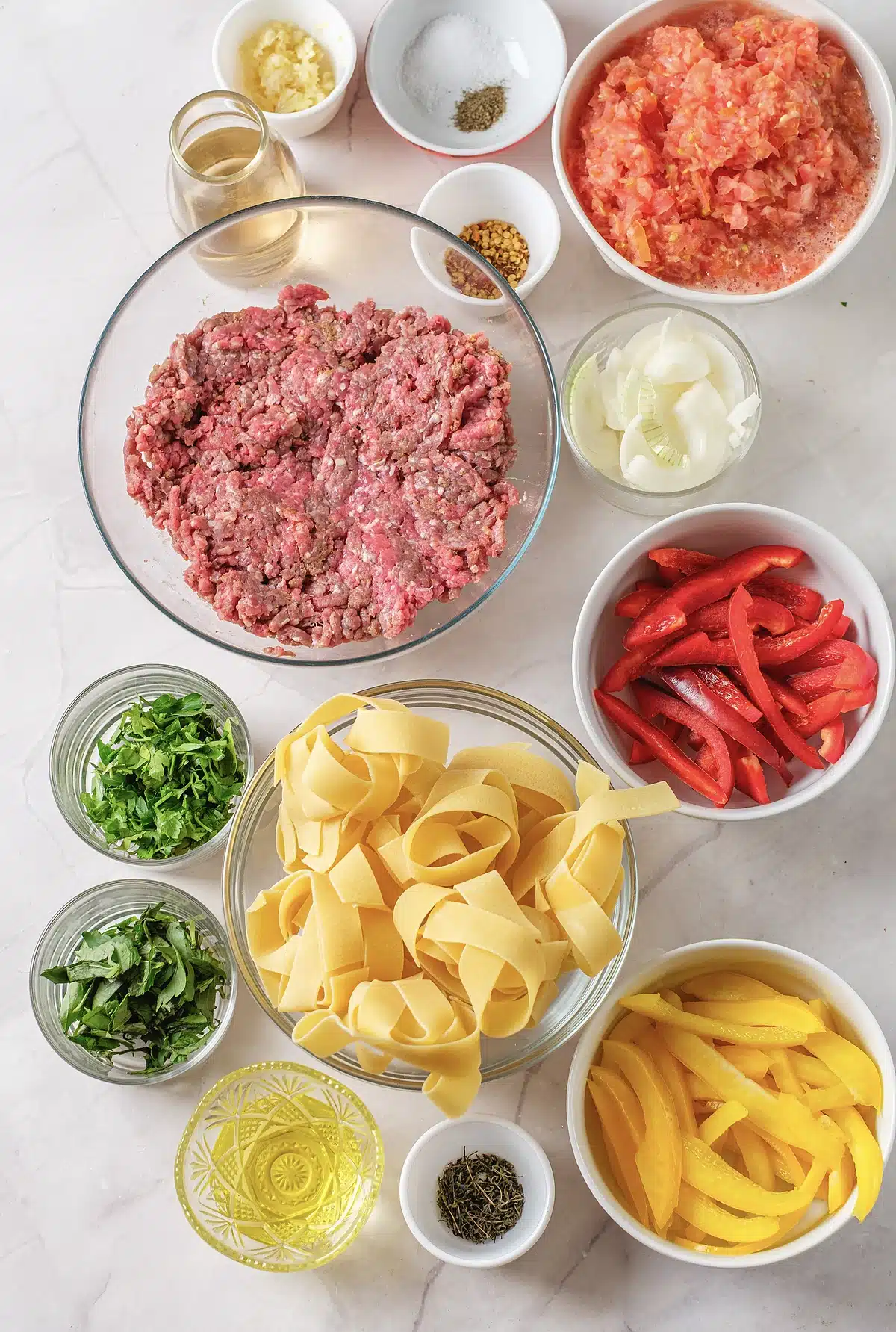
- Italian sausage. A pound, casings removed and crumbled. Mild or hot, both work. Bulk sausage saves a step if your store sells it.
- Pappardelle. Twelve ounces. The wide ribbon is the point, and fettuccine or tagliatelle are the closest substitutes if you cannot find it.
- Bell peppers. Three, sliced into strips, in as many colors as you can manage. They cook down into the sauce and provide most of the sweetness.
- Yellow onion. One, sliced thin rather than diced, so it stays in ribbons alongside the peppers instead of disappearing.
- Garlic. Four cloves, minced. It goes in with the dried herbs and gets one minute in the hot fat, no longer, or it turns bitter.
- Dry white wine. Half a cup. Pinot grigio or a plain sauvignon blanc. Do not use anything labeled cooking wine, which is salted and thin.
- Diced tomatoes. One can with its juices. The juices are part of the sauce, so nothing gets drained here.
- Italian seasoning. Two teaspoons, bloomed in the fat with the garlic. Dried herbs need oil and heat to release anything at all.
- Red pepper flakes. Half a teaspoon, optional, and worth including even if you used mild sausage.
- Parmesan. Half a cup, grated fine, plus more at the table. It melts into the sauce and thickens it slightly.
- Fresh basil. A quarter cup, torn and added off the heat. Cooked basil goes black and tastes of nothing.
Pappardelle Is the Right Pasta
The noodle in Italian drunken noodles is doing real work, not just filling the bowl. Wide, flat ribbons hold a chunky sauce in a way that tubes and twists do not. Sausage crumbles and pepper strips catch in the folds instead of sliding to the bottom of the bowl, which is the whole reason this dish uses a ribbon.
Most dried pappardelle is made from durum wheat semolina, which has more protein than the flour in a soft wheat pasta and holds its bite through the final toss in the pan. The Wheat Foods Council sets out how durum differs from the other wheat classes.
Cook it two minutes shy of the box time. It spends its last minutes in the skillet absorbing sauce, and pasta boiled to perfection in water arrives at the table overdone.
Save the pasta water. Half a cup of starchy water is what turns a broken, oily sauce into one that clings, and it is the single most useful thing to have on hand at the end.
Salt the water properly while you are at it. Pasta is the only chance you get to season the noodle itself rather than the sauce around it, and unsalted pappardelle tastes flat no matter how good the pan is.
The Wine Is Not Optional
This is the step that gives Italian drunken noodles their name and most of their depth. The wine goes in after the peppers and before the tomatoes, into a pan carrying browned sausage fat and dark bits stuck to the metal. It lifts all of that into the sauce, which is the actual job it is doing.
Reduce it by half before the tomatoes go in, about two to three minutes. Skipping the reduction leaves a raw, sharp edge that the simmer never quite fixes, and it is the most common thing people get wrong here.
If you would rather not cook with wine, use half a cup of chicken stock with a teaspoon of white wine vinegar or lemon juice stirred in. It is not identical, and it gets you the acidity, which is the part the dish actually needs.
How To Make Italian Drunken Noodles
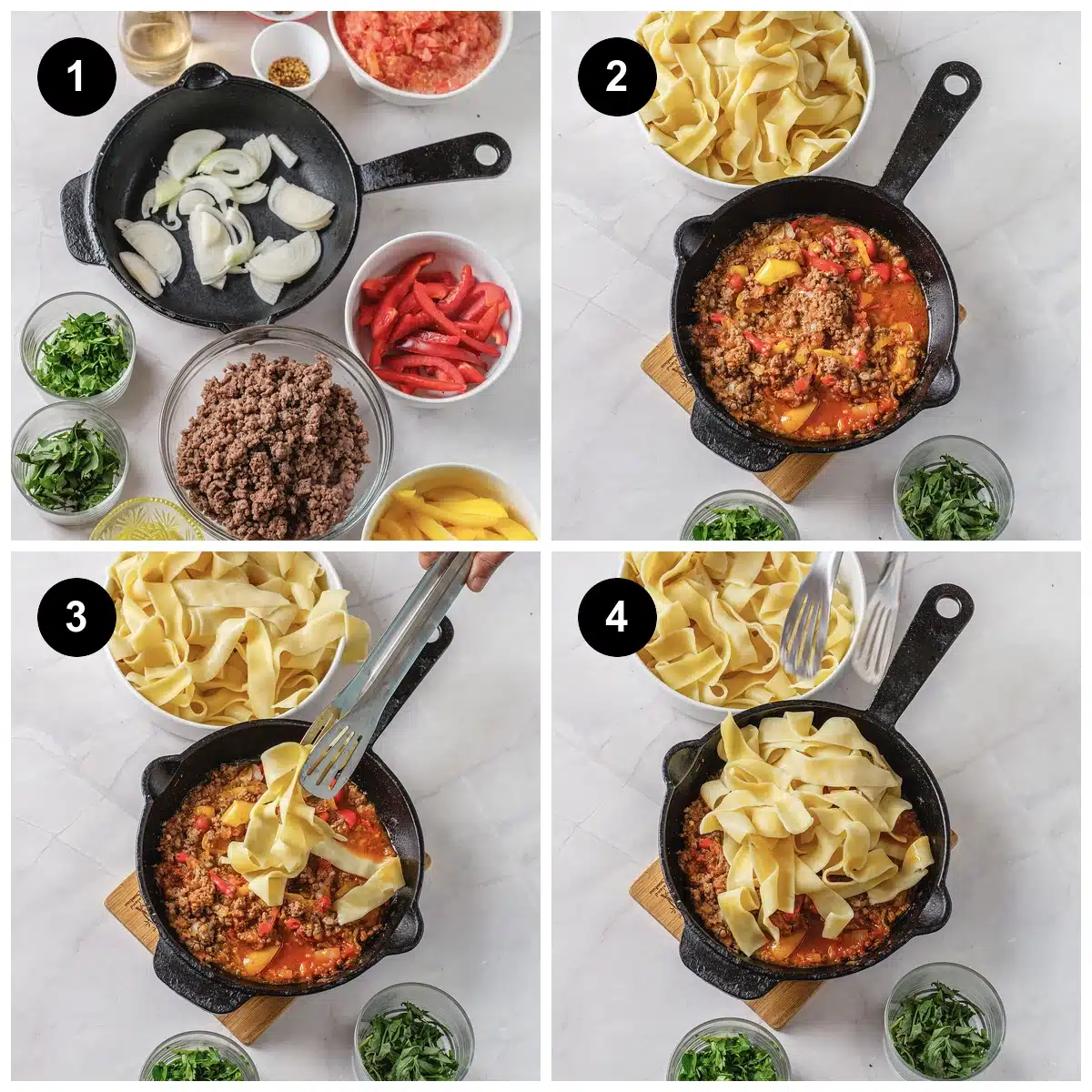
Italian drunken noodles come together in one skillet, with the pasta pot going alongside. First, brown the sausage. Heat the olive oil in a large skillet over medium heat, add the crumbled sausage, and break it up as it cooks until it is browned through. Lift it onto a plate and leave every bit of the fat in the pan.
Next, soften the onion. Add the sliced onion to that fat and cook it for about five minutes, until it has gone limp and translucent. Stir in the garlic, Italian seasoning, red pepper flakes, salt and black pepper and give it one minute.
Then add the peppers and the wine. The pepper strips need two to three minutes to lose their raw edge. Pour in the wine, scrape the base of the pan clean, and let it reduce by half.
After that, simmer and boil. Add the tomatoes with their juices, return the sausage, and let it simmer gently for ten minutes. Meanwhile cook the pappardelle in well-salted water until it is two minutes short of done, and reserve half a cup of the water before draining.
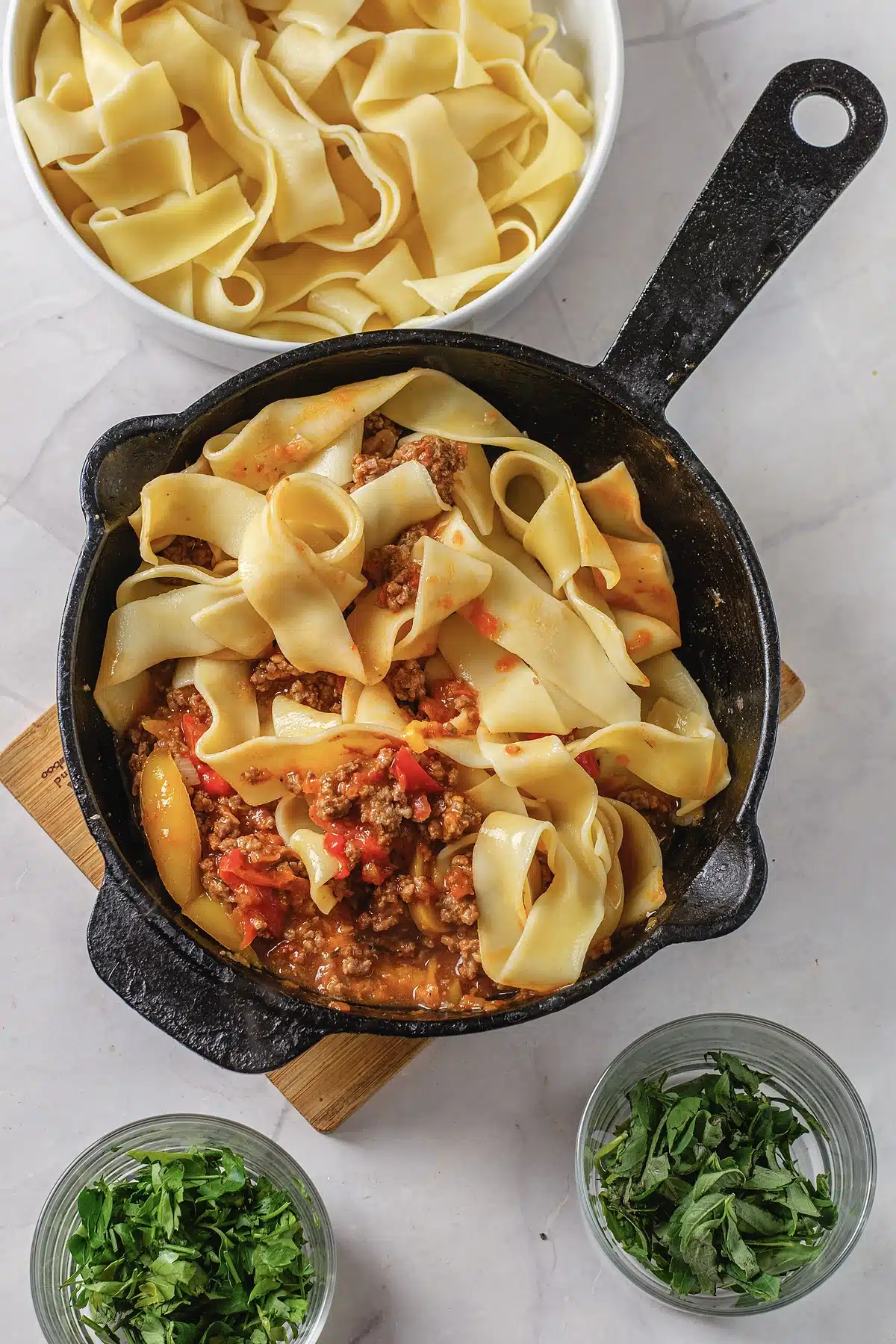
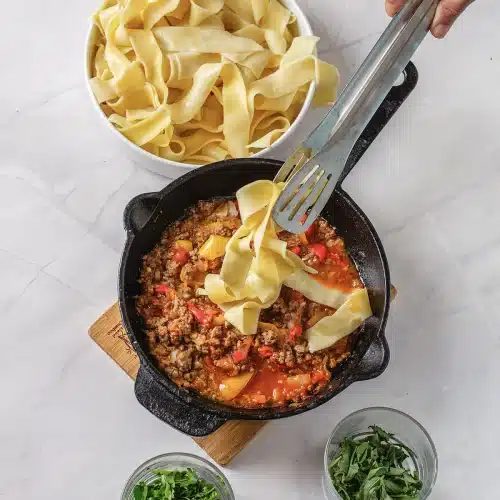
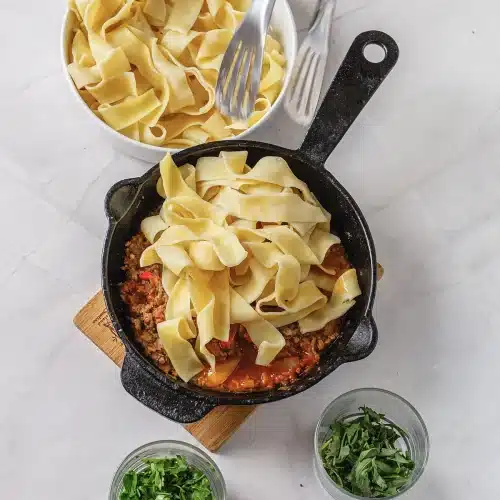
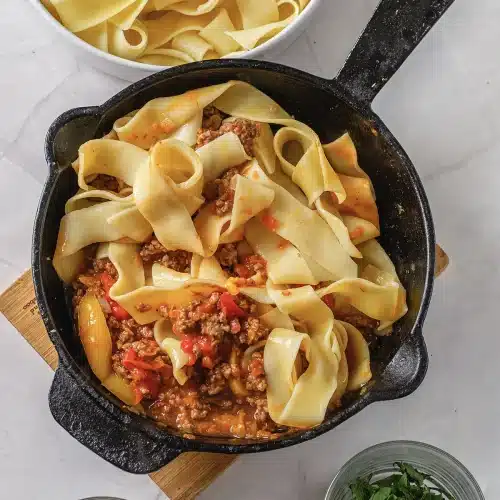
Finally, toss and finish. Add the drained pasta to the skillet with a splash of the reserved water and toss until every ribbon is coated. Stir in the Parmesan off the heat, scatter the torn basil over the top, and serve straight from the pan.
How To Tell When Italian Drunken Noodles Are Done
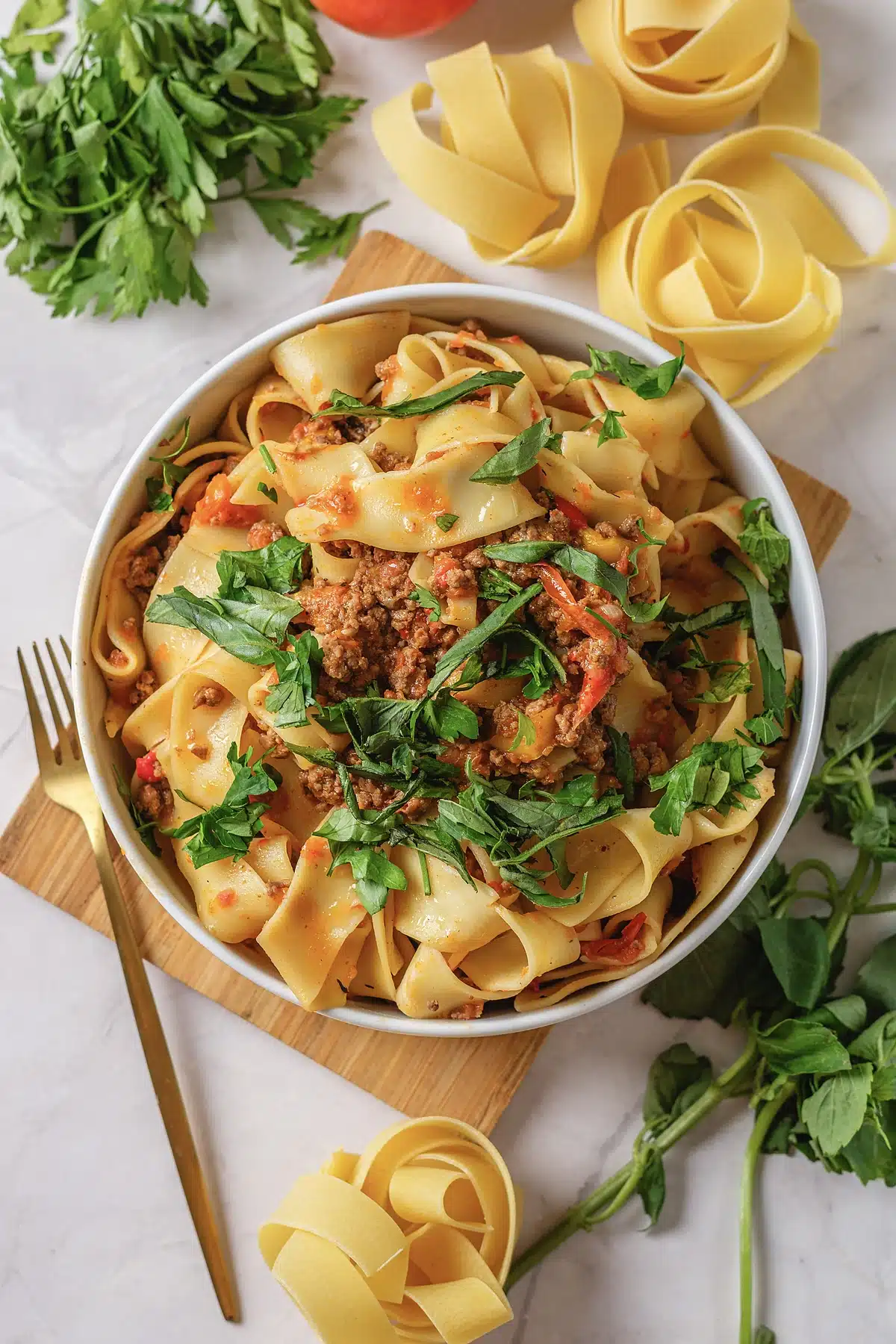
Italian drunken noodles give you three checks, and the sauce is the first. Drag a spoon across the base of the pan; if the trail stays open for a second before the sauce closes over it, the tomatoes have reduced enough. If it floods back instantly, keep simmering.
The peppers are the second check. They should be soft enough to cut with the side of a fork and still hold their shape as strips. Peppers that have collapsed into shreds went in too early or simmered too long.
The pasta is the last one, and it happens fast. Once the ribbons are glossy and no loose sauce is pooling at the bottom of the pan, take it off the heat. Another minute and the pappardelle turns soft and starts to tear.
Taste before it leaves the stove. Sausage varies enormously in salt, and a pan that needs a pinch is common while one that needs none is rare. A squeeze of lemon is the other correction worth knowing, and it works when the sauce tastes flat rather than under-salted.
Make It Ahead
Half of Italian drunken noodles can be made a day early, and it is the half that takes the time. The sauce is the make-ahead component, and it improves overnight. Cook it through the ten-minute simmer, cool it, and refrigerate it for up to three days. Reheat it gently while the pasta boils and finish as normal.
You can also prep without cooking anything. Slice the peppers and onion a day early and keep them in a covered container, which turns the active work into about twelve minutes on the night.
What does not work is cooking the whole dish early. Pappardelle sitting in sauce keeps absorbing it, and by the second hour the ribbons are soft and the pan is dry. Cook the pasta when you intend to eat it.
For a dinner party, the useful trick is to hold the sauce hot on the lowest burner and drop the pasta as people sit down. Two minutes of tossing, a handful of basil, and the pan goes straight to the table while it is still steaming.
Storing Italian Drunken Noodles
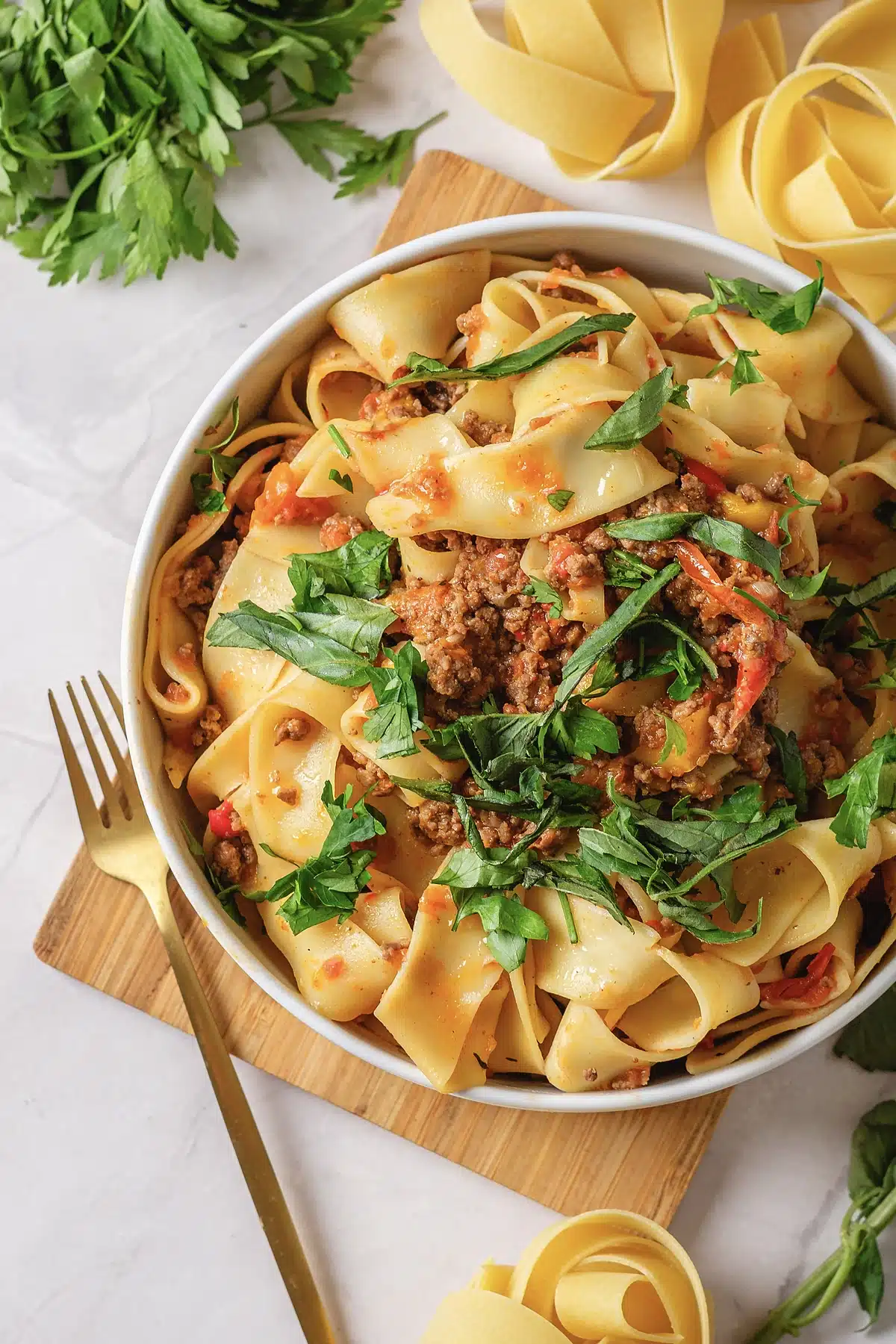
Italian drunken noodles keep three to four days in an airtight container in the refrigerator, and they reheat better than most pasta because the sauce starts out loose. Warm them in a covered skillet over low heat with a splash of water or stock, stirring once or twice.
The microwave works if you cover the bowl and stop at half power. Uncovered high heat dries the edges and leaves the middle cold, which is how good leftovers get a bad reputation.
Freezing is best done with the sauce alone. Cool it, freeze it flat in a bag for up to three months, and thaw it overnight before cooking fresh pasta to go with it. Frozen and thawed pappardelle turns mushy, so it is not worth including.
Variations and Substitutions
Chicken. Sliced chicken thigh, browned first in place of the sausage, with an extra tablespoon of oil. Add half a teaspoon of fennel seed to get the sausage flavor back.
Vegetarian. Skip the sausage and add a pound of sliced cremini mushrooms, browned hard before the onion goes in. Fennel seed and a little smoked paprika fill the gap.
Creamy. A quarter cup of heavy cream stirred in with the Parmesan turns it pink and rounds off the acidity. It is a different dish, and a popular one.
Spicy. Hot Italian sausage plus a full teaspoon of red pepper flakes, and a spoonful of calabrian chili paste if you keep it in the fridge.
Red wine. It works, and it makes the sauce darker and heavier. Reduce it a minute longer than you would white.
Gluten-free. Any wide gluten-free ribbon works. Cook it separately to the box time rather than under, because gluten-free pasta does not absorb sauce the same way and it falls apart if you push it.
What to Serve with Italian Drunken Noodles
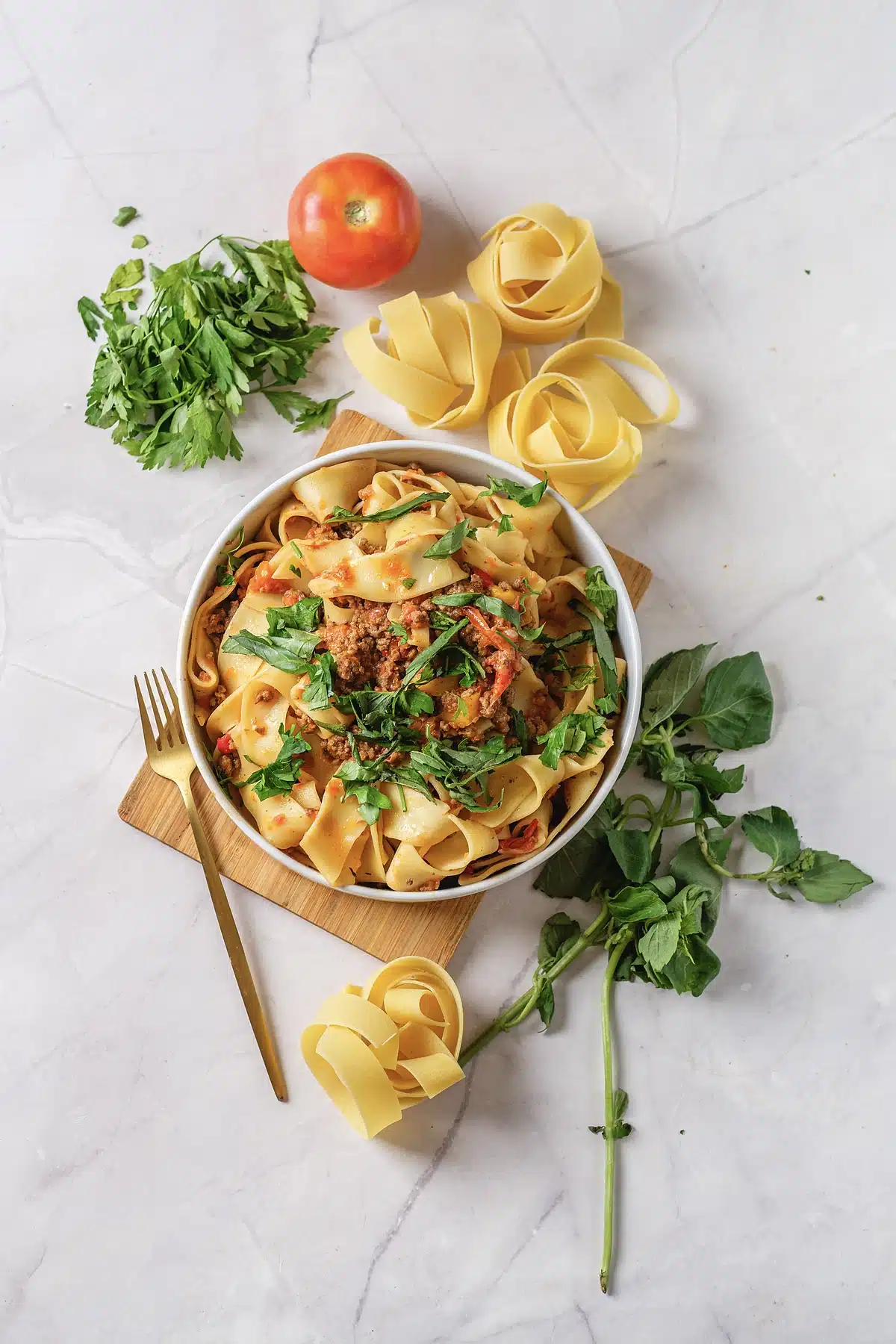
Italian drunken noodles are rich and saucy, so keep the sides plain. Bread is the first answer, because there is sauce at the bottom of every bowl. Cheesy garlic bread bakes while the sauce simmers and needs no attention.
A sharp green salad is the other half of the meal. Arugula with lemon and shaved Parmesan, or a chopped salad with red wine vinegar, cuts through a rich pan of sausage and cheese without adding work.
For a bigger table, start with something light. An Italian sausage soup repeats the sausage, so a simple minestrone or a plate of marinated olives and roasted peppers is the better opener.
Italian Drunken Noodles FAQ
Frequently Asked Questions
What are Italian drunken noodles?
A one-skillet pasta of Italian sausage, sweet peppers, onion, garlic and tomatoes, deglazed with white wine and tossed with wide pappardelle. It borrows its name from Thai drunken noodles and shares only the shape of the noodle.
Why are they called drunken noodles?
Because of the wine in the sauce, though the borrowed name came first. Thai pad kee mao is said to be named for how well it goes with a drink rather than for containing one, and the Italian version took the name literally and added half a cup of white wine.
Is there alcohol in the finished dish?
Very little survives in the finished Italian drunken noodles. Half a cup goes into a hot pan and reduces by half before the tomatoes are added, then simmers another ten minutes. What remains is a trace, though it is not zero if that matters for your table.
Can I use a different pasta?
Fettuccine and tagliatelle are the closest and both work well. Rigatoni is fine if that is what is in the cupboard. Anything small like orzo or ditalini loses the point, because the sauce needs surface to cling to.
More Questions About Sausage and Pepper Pasta
Good to Know
My sauce is watery. What happened?
Watery Italian drunken noodles usually mean the wine was not reduced or the simmer was too short. Give it another five minutes uncovered, and add the Parmesan off the heat, which thickens it as it melts.
Can I double it?
Yes, if the pan is wide enough to hold the pasta in a loose layer. In a crowded skillet the sauce steams rather than reduces. Two pans are better than one overloaded one.
Do I have to remove the sausage from the pan?
It helps. Sausage left in while the vegetables soften keeps cooking and dries out, and the pieces break down into the sauce rather than staying as distinct crumbles.
If a fast skillet pasta is what you are after on a weeknight, a simple penne arrabbiata is the shorter version of the same idea, and an oven penne bolognese is where to go when you want the oven to do the work instead.
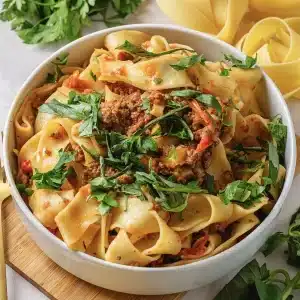
Italian Drunken Noodles
Save this recipe
Enter your email and I’ll send this recipe straight to your inbox.
Ingredients
Sausage and Vegetables
- 2 tbsp (30 ml) olive oil extra virgin, for sautéing
- 1 lb (450 g) Italian sausage mild or spicy, casings removed and crumbled
- 1 yellow onion thinly sliced
- 4 cloves garlic minced
- 2 tsp Italian seasoning
- 1/2 tsp (0.5 tsp) crushed red pepper flakes optional, or to taste
- Salt and freshly ground black pepper to taste
- 3 bell peppers mixed colors (red, yellow, orange), seeded and sliced into strips
Sauce and Pasta
- 1/2 cup (120 ml) dry white wine
- 1 can (410 g) diced tomatoes with juices (about 14.5 ounces / 410g)
- 12 oz (340 g) pappardelle pasta or fettuccine/tagliatelle
- 1/2 cup (50 g) Parmesan cheese freshly shredded, plus more for serving
- 1/4 cup (10 g) fresh basil chopped, for serving (optional)
Equipment
- Large skillet
- Pot for pasta
- wooden spoon
- Colander
Instructions
Brown the Sausage
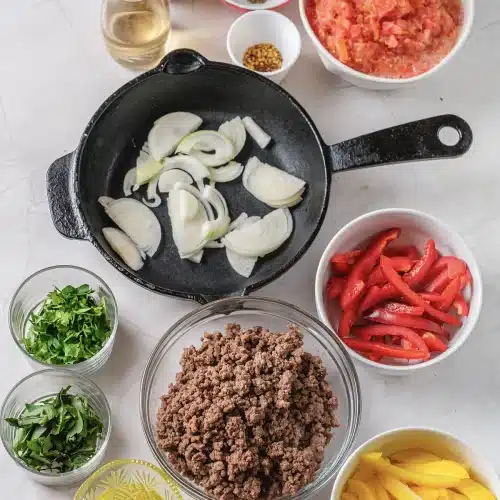
- Brown the sausage: Heat the olive oil in a large skillet over medium heat. Add the crumbled sausage and cook, breaking it up with a wooden spoon, until browned through. Lift it onto a plate and leave the fat in the pan.
Build the Sauce
- Soften the onion: Add the sliced onion to the fat in the pan and cook until limp and translucent, about 5 minutes. Stir in the garlic, Italian seasoning, red pepper flakes, salt and black pepper and cook 1 minute more, until fragrant.

- Add the peppers: Stir in the sliced bell peppers and cook 2 to 3 minutes, just until they lose their raw edge. They should still hold their shape.
- Deglaze with the wine: Pour in the white wine and scrape the base of the pan clean with a wooden spoon. Cook until the wine has reduced by half, about 2 to 3 minutes.
Simmer and Boil the Pasta
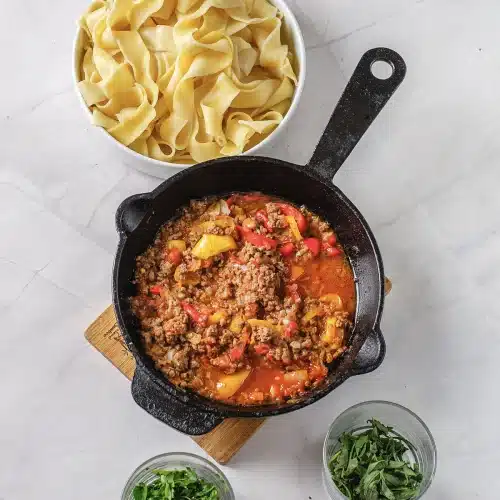
- Simmer the sauce: Add the diced tomatoes with their juices and return the browned sausage to the pan. Let it bubble gently for 10 minutes, then taste and adjust the seasoning.
- Boil the pappardelle: Meanwhile, cook the pappardelle in well-salted water until 2 minutes short of al dente. Reserve 1/2 cup of the cooking water, then drain.
Toss and Serve
- Add the pasta: Tip the drained pappardelle into the skillet with the sauce.
- Toss it through: Add a splash of the reserved pasta water and toss gently for about 2 minutes, until every ribbon is coated and glossy. Add more water only if the pan looks dry.
- Finish and serve: Take the pan off the heat, stir in the Parmesan, and scatter the torn basil over the top. Serve straight from the skillet with more Parmesan at the table.
I haven’t made it yet, but as SOON as I do I will publish the results in PHOTOS and Comments!