
Lipton Onion Soup Meatloaf is the one my grandmother made without ever looking at a recipe, because there was nothing to look at. A packet of soup mix does the entire seasoning job, and what comes out of the oven is a loaf that tastes deeply of onion without a single onion having been chopped.
The version below fixes the two things that go wrong with the classic. It uses a loaf pan rather than a sheet pan, so the sides stay moist instead of drying into a crust, and the glaze goes on partway through the bake rather than at the start. Ketchup with brown sugar in it will scorch over a full hour in the oven. Give it the last twenty minutes and it turns glossy and slightly sticky instead.
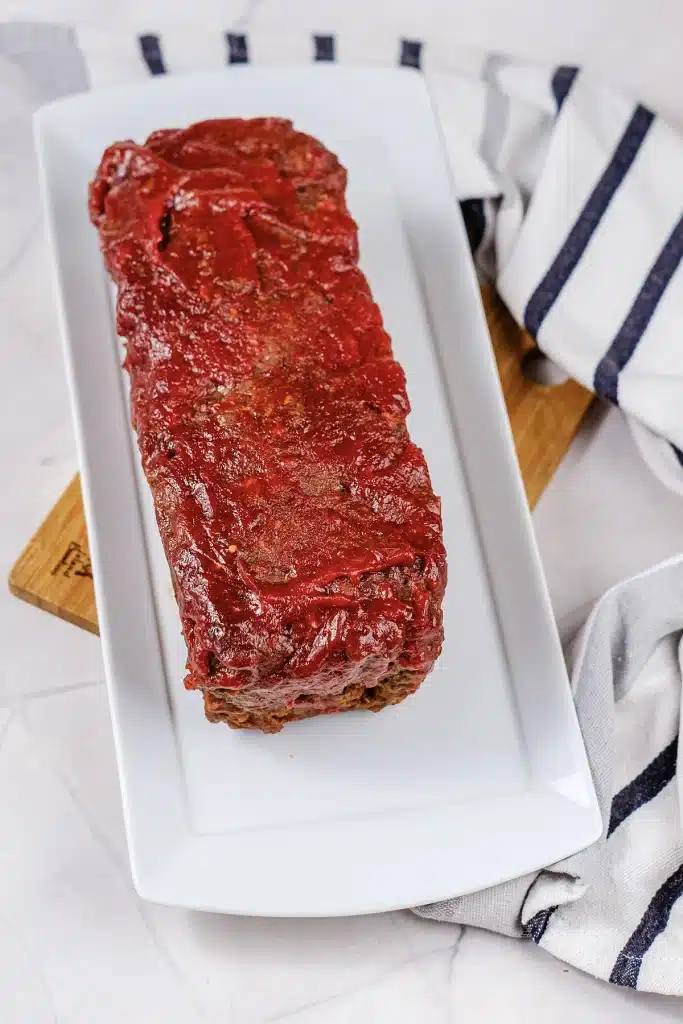
- One packet of soup mix seasons the whole loaf, so there is no long spice list
- Fifteen minutes of hands-on work, then the oven does the rest
- The sweet and tangy glaze goes on late, so it stays glossy instead of scorching
- Slices clean the next day, which makes it the best sandwich in the fridge
- Freezes for three months, cooked or raw, in one piece or in portions

- What Makes Lipton Onion Soup Meatloaf Different
- Ingredient Notes
- The Glaze, and When to Put It On
- How To Make Lipton Onion Soup Meatloaf
- How To Tell When It Is Done
- Make It Ahead
- Storing Lipton Onion Soup Meatloaf
- Variations and Substitutions
- What to Serve with Lipton Onion Soup Meatloaf
- Lipton Onion Soup Meatloaf FAQ
What Makes Lipton Onion Soup Meatloaf Different
A standard meatloaf asks you to sweat an onion, measure four or five dried herbs and hope the balance lands. Lipton onion soup meatloaf asks for none of that. The packet has already done that. Dehydrated onion, onion powder, salt, a little beef flavoring and cornstarch are premeasured in a ratio that has not changed in decades, and the dried onion rehydrates inside the loaf as it bakes, releasing flavor into the meat rather than sitting on top of it.
That is the real advantage, and it is a texture advantage as much as a flavor one. Fresh onion carries a lot of water. Enough of it in a loaf and the mixture loosens, spreads in the pan and steams rather than roasts. Dried onion goes in dry, absorbs the milk and the beef juices, and swells into soft flecks that hold the loaf together. That is why Lipton onion soup meatloaf slices cleanly while a fresh onion version often crumbles.
The trade is salt. A packet carries a substantial amount of sodium, so Lipton onion soup meatloaf needs no added salt at all, and salting on top of the packet is the single most common way people ruin it.
Save this recipe
Enter your email and I’ll send this recipe straight to your inbox.
Ingredient Notes
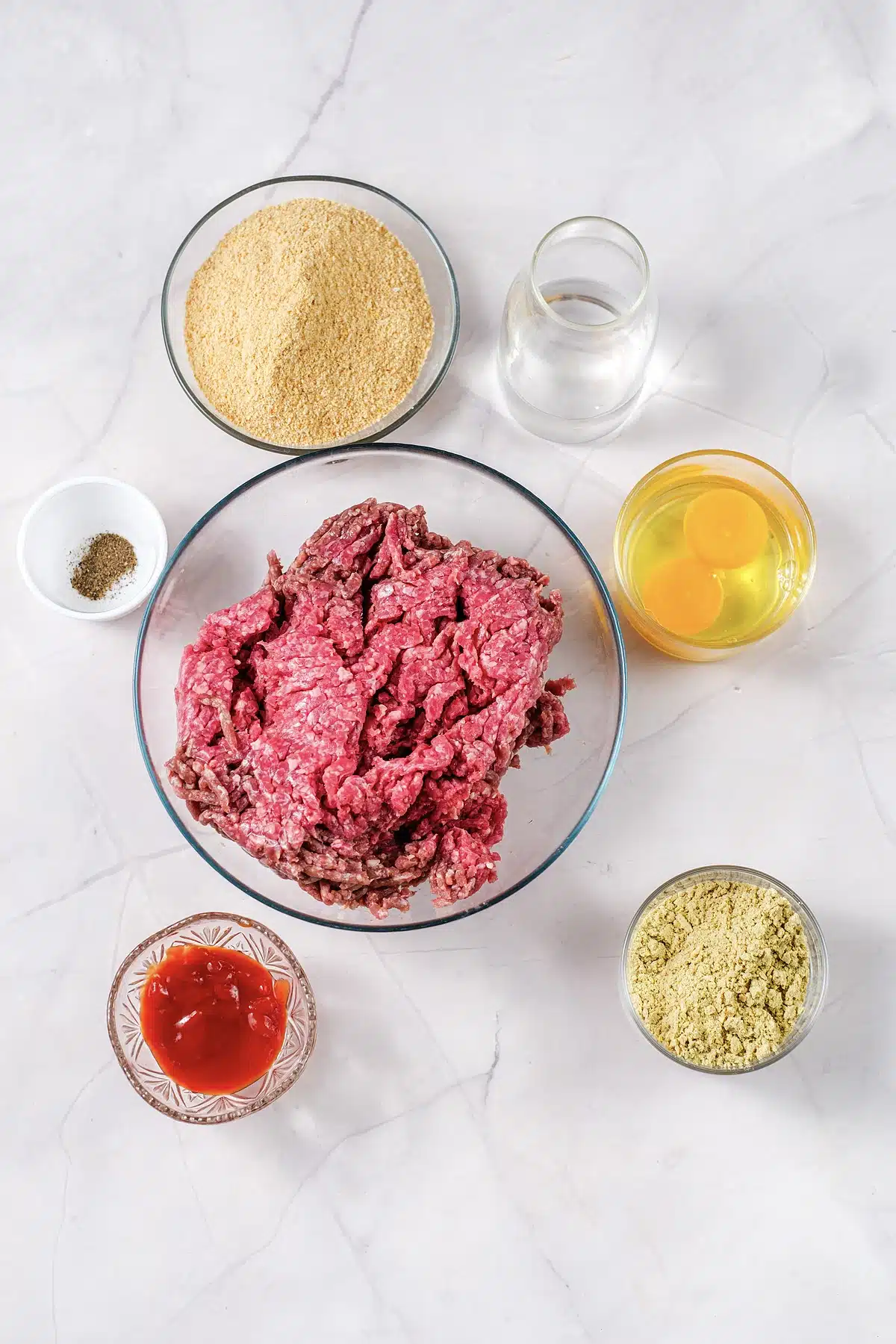
- Ground beef. Two pounds of 80/20 chuck, which is the standard batch size for Lipton onion soup meatloaf. Leaner than that and the loaf goes dry and crumbly, because fat is what keeps a long slow bake tender. Ground chuck is the right cut; ground round and ground sirloin both sit too lean for this.
- Onion soup mix. One envelope, which is one ounce or 28 grams. Two envelopes in a double batch, not three, however tempting it looks. Store-brand onion soup mix works and tastes almost identical.
- Dry breadcrumbs. One cup of plain, unseasoned crumbs. Seasoned crumbs pile more salt onto an already salty packet. Crushed saltines or rolled oats both substitute well, oats giving a slightly softer, more open texture.
- Milk. Two thirds of a cup. Soaking the crumbs in milk before the meat goes in is the classic panade, and it is what stops the loaf from tightening into a meatball the size of a brick. Do not skip it and do not swap in water.
- Eggs. Two large, lightly beaten. They bind, and two is the right number for two pounds of beef. Three make the loaf springy in a way that reads as rubbery.
- Ketchup and brown sugar. A third of a cup of ketchup goes into the loaf itself for moisture and a little acidity, and half a cup more into the glaze with brown sugar, cider vinegar and Worcestershire. The vinegar is what keeps the glaze from tasting like plain sweet ketchup.
The Glaze, and When to Put It On
Most recipes tell you to spread the glaze before the loaf goes into the oven. That is an hour of direct heat on a mixture that is roughly a quarter sugar, and the result is a dark, slightly bitter skin with a burnt edge where it ran down the side of the pan. It is the most common complaint about Lipton onion soup meatloaf and it is entirely avoidable.
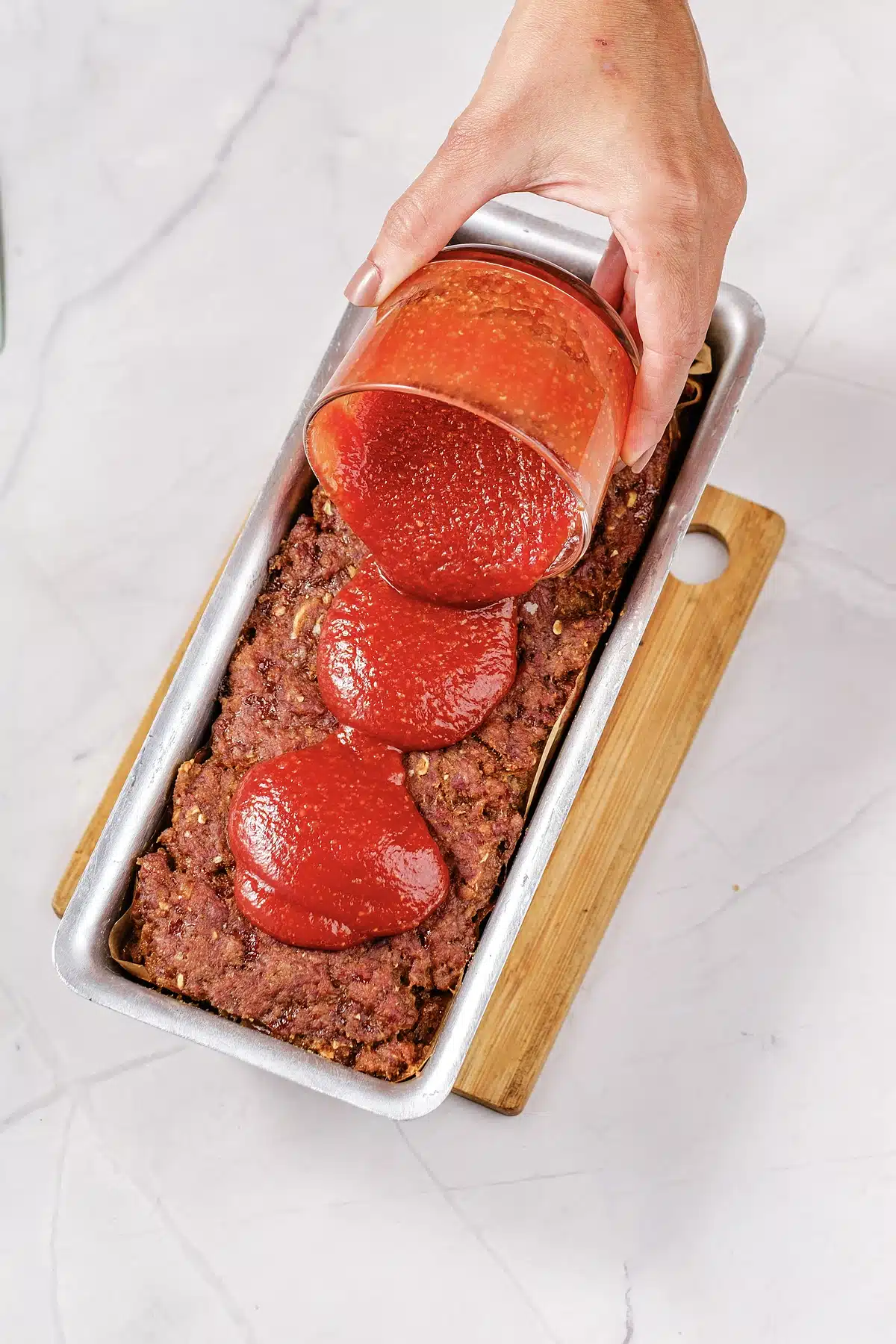
Bake the loaf naked for forty minutes instead. Pull it out, spread the glaze across the top with the back of a spoon, and return it for a final fifteen to twenty minutes. The sugar has just enough time to caramelize into a lacquer without ever getting close to burning, and the surface stays a bright brick red instead of going brown.
The glaze is also worth making properly rather than squeezing ketchup straight from the bottle. Half a cup of ketchup, two tablespoons of brown sugar, two teaspoons of cider vinegar, a teaspoon of Worcestershire and a little onion and garlic powder, whisked smooth. It takes ninety seconds and it is the difference between a homemade loaf and a diner one.
How To Make Lipton Onion Soup Meatloaf
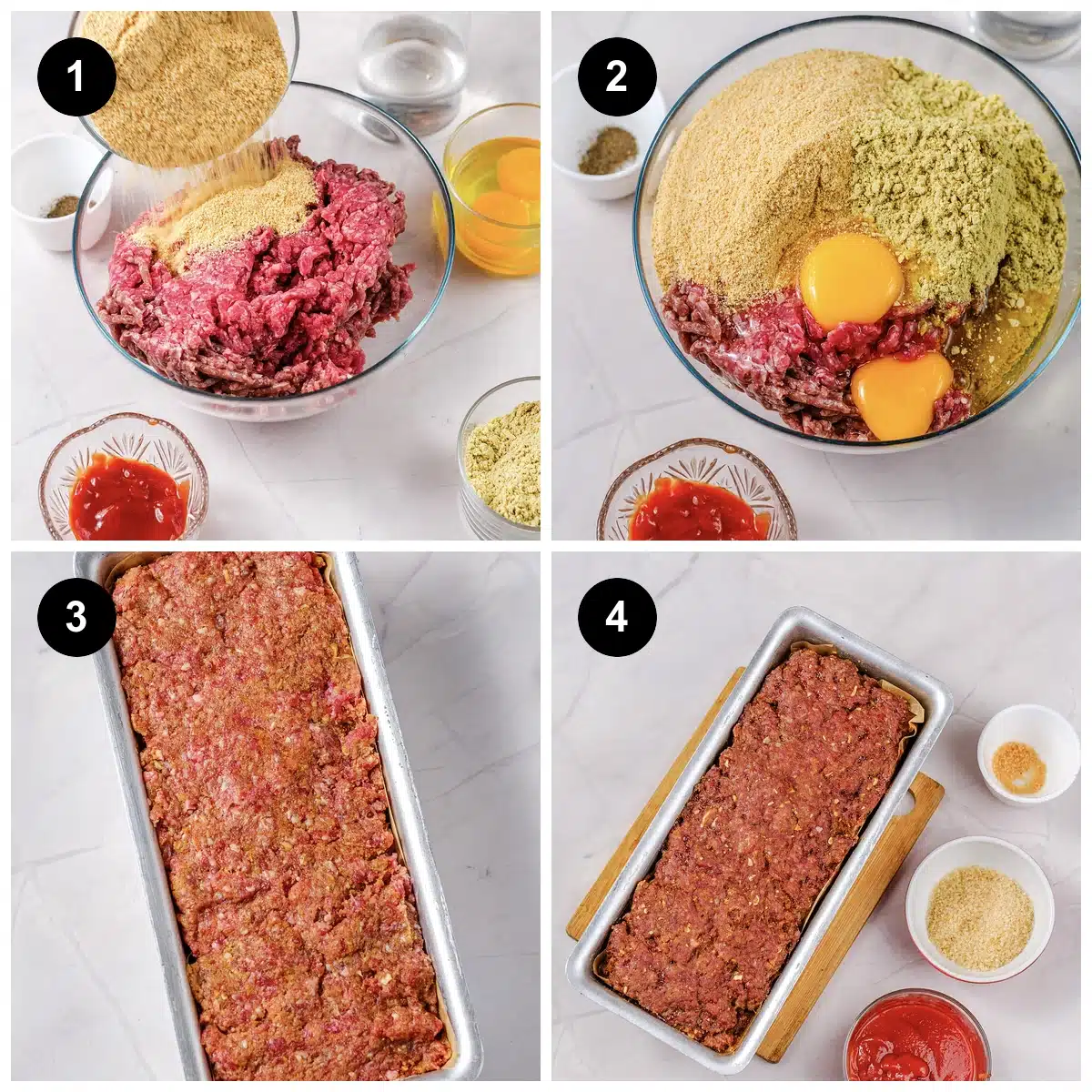
First, soak the crumbs. Beat the eggs in a large bowl, stir in the milk, the third of a cup of ketchup and the Worcestershire, then add the breadcrumbs and leave them for five minutes to drink it all up. This is the step that decides how tender the finished Lipton onion soup meatloaf is.
Next, bring in the beef. Add the ground beef, the packet of soup mix and the garlic powder, and work it together with your hands only until no dry crumbs are visible. Hands are better than a spoon here, because you can feel when the beef stops taking the crumbs and starts compacting. Stop there. Overworked meat goes dense and springy, and the difference between just combined and slightly overmixed is about fifteen seconds of extra handling.
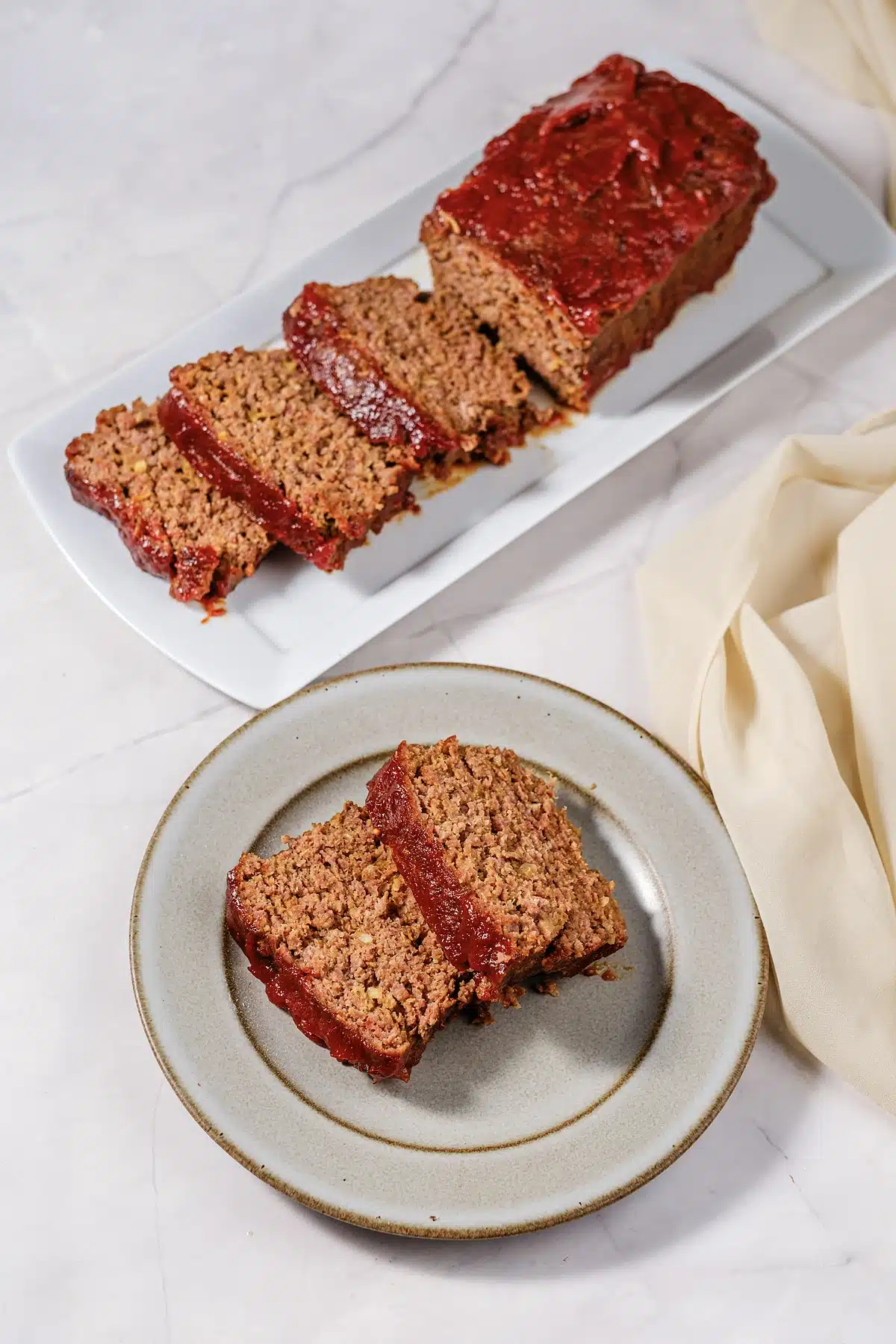
Then shape it. Press the mixture into a greased nine-by-five-inch loaf pan and smooth the top with damp fingers. A loaf pan gives you straight sides and even slices; a free-formed loaf on a sheet pan spreads and browns unevenly. The photographs on this page are all of Lipton onion soup meatloaf baked in a standard metal loaf tin.
Baking and Glazing
After that, bake it in two stages. Give it forty minutes uncovered at 350 degrees, then take it out, spread the glaze over the top, and return it for fifteen to twenty minutes more. You are looking for 160 degrees on an instant-read thermometer pushed into the middle of the loaf.
Finally, rest it. Ten minutes on the counter before the knife goes anywhere near it. A meatloaf cut straight from the oven sheds juice onto the board and the slices fall apart; ten minutes of rest and they come away whole.
How To Tell When It Is Done
A thermometer is the only honest answer, and it matters more for Lipton onion soup meatloaf than for most things you bake. Ground beef needs to reach 160 degrees all the way through, and color tells you almost nothing, because the cured seasonings in the packet can keep the interior looking pink well past the safe point.
Push the probe into the thickest part of the loaf, not through the top into the glaze, and give it a couple of seconds to settle. If it reads 155, put it back for five minutes; carryover heat during the rest will finish the job.
Two other signs back it up. The loaf will have pulled away from the sides of the pan by a fraction of an inch, and the juices at the edge will run clear rather than pink. Neither is a substitute for the thermometer, but both usually agree with it.
Make It Ahead
The whole loaf can be mixed, pressed into the pan, covered and refrigerated for up to twenty-four hours before baking. Add about ten minutes to the bake because it starts cold, and hold the glaze back until the last twenty minutes as usual. Made this way, Lipton onion soup meatloaf is a genuinely good dish to prepare on a Sunday for a Monday.
You can also mix it up to two days ahead and keep it as loose mixture in a covered bowl, which is easier to fit in a full fridge. Press it into the pan on the day. If you are cooking for a crowd, two loaves in two pans bake more evenly than one enormous one, and they both come out of the oven at the same time.
Storing Lipton Onion Soup Meatloaf

Cooled and wrapped, it keeps three to four days in the fridge, which matches the guidance Colorado State University Extension gives for cooked ground beef and other refrigerated leftovers. Store Lipton onion soup meatloaf whole rather than sliced if you can, because cut faces dry out much faster than an intact loaf does.
Reheat individual slices covered in the microwave for about a minute, or lay them in a baking dish with a spoonful of beef broth, cover with foil and warm at 325 degrees for fifteen minutes. The broth is what stops reheated meatloaf from tasting like it was reheated.
For the freezer, wrap the cooled loaf tightly in plastic and then foil and freeze for up to three months. Raw mixture freezes just as well, pressed into a foil pan and covered; bake it from frozen at 350 degrees for about an hour and a half, glazing in the last twenty minutes. Portioning cooked slices individually before freezing turns Lipton onion soup meatloaf into a lunch you can pull out one at a time.
Variations and Substitutions
Beef and pork. Swap half a pound of the beef for ground pork. The loaf comes out a little richer and noticeably more tender.
Bacon wrapped. Lay six strips across the top before the first bake, then glaze over them. The bacon renders down into the loaf and crisps under the glaze.
Turkey. Ground turkey works if you add two tablespoons of olive oil to make up for the missing fat. Anything leaner than 93/7 will still come out dry.
Gluten-free. Use gluten-free breadcrumbs or rolled oats and check the soup mix packet, since some contain wheat.
Hidden vegetables. A grated carrot or half a grated zucchini, squeezed dry in a towel first, disappears into the loaf and adds moisture. Squeeze it properly or you undo the work the dried onion is doing.
Cheese-filled. Press half the mixture into the pan, lay a line of mozzarella or sharp cheddar down the middle, then cover with the rest and seal the edges. Keep the cheese well away from the sides or it leaks out and burns on the tin.
What to Serve with Lipton Onion Soup Meatloaf
Mashed potato is the default partner for Lipton onion soup meatloaf and it earns the position, because the glaze and the pan juices want something soft to run into. A bowl of creamy mashed potatoes is the classic plate, and garlic butter potatoes do the same job with crisp edges instead.
For something green, roasted broccoli or green beans with lemon cut through the richness better than a salad does. Buttered corn is the diner answer. If you want the whole thing in one dish, cheesy ranch potatoes can go into the oven alongside the loaf at the same temperature and come out together.
The best meal, though, is the next day. Two cold slices, white bread, mayonnaise and a little of the leftover glaze, pressed flat and eaten standing at the counter.
Lipton Onion Soup Meatloaf FAQ
Frequently Asked Questions
Is Lipton onion soup mix good in meatloaf?
It is the whole seasoning in one packet, and it works because the dried onion rehydrates inside the loaf without adding the water that fresh onion brings. Just remember it is salty, so add no extra salt.
How many packets do I need for two pounds of beef?
One envelope, one ounce. That ratio is right for two pounds. Doubling the packet makes the loaf too salty to eat rather than twice as flavorful.
What is the one ingredient upgrade for a better meatloaf?
Milk. Soaking the breadcrumbs in it before the meat goes in creates a panade, and a panade is the difference between a tender slice and a dense one. It costs nothing and takes five minutes.
Can I make it without breadcrumbs?
Yes. A cup of rolled oats or about twenty crushed saltines both work, soaked in the milk the same way. Oats give the softest result of the three.
More Questions About Meatloaf
Good to Know
Why is my Lipton onion soup meatloaf falling apart?
Usually too little binder or not enough rest. Two eggs and a cup of soaked crumbs per two pounds of beef holds it together, and ten minutes out of the oven lets the proteins set before you cut.
Should I cover it while it bakes?
No. Uncovered lets the top dry slightly and take the glaze well. Covered, the loaf steams and the surface stays pale and wet.
Loaf pan or sheet pan?
A loaf pan gives moister sides and clean, even slices. A sheet pan gives you more browned surface but a drier loaf, and it needs the mixture to be stiff enough to hold its shape.
If a packet of dried seasoning doing the heavy lifting appeals to you, the same trick carries a hamburger potato casserole on a night when nobody wants to measure anything.
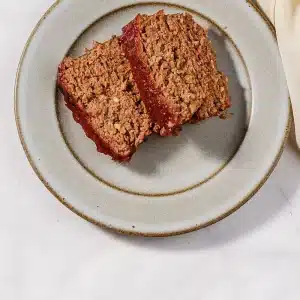
Lipton Onion Soup Meatloaf
Save this recipe
Enter your email and I’ll send this recipe straight to your inbox.
Ingredients
For the Meatloaf
- 2 lbs ground beef 80/20 ground chuck
- 1 envelope Lipton onion soup mix 1 oz / 28 g
- 2 large eggs lightly beaten
- 2/3 cup whole milk
- 1 cup plain dry breadcrumbs unseasoned
- 2 tablespoons Worcestershire sauce
- 1/3 cup ketchup for the loaf itself
- 1 teaspoon garlic powder
For the Glaze
- 1/2 cup ketchup for the top
- 2 tablespoons brown sugar light or dark
- 1 teaspoon Worcestershire sauce
- 2 teaspoons apple cider vinegar
- 1/2 teaspoon onion powder
- 1 pinch freshly ground black pepper
- 1/2 teaspoon garlic powder
Equipment
- 9x13 inch Baking Dish
- Mixing bowl
- Measuring cups and spoons
- Aluminum foil or parchment paper
Instructions
Mix the Meatloaf
- Heat the oven and soak the crumbs: Preheat to 350°F (175°C) and grease a 9-by-5-inch loaf pan. Beat the eggs in a large bowl, stir in the milk, the 1/3 cup ketchup and the Worcestershire sauce, then add the breadcrumbs and leave them for 5 minutes to absorb it all.

- Add the beef and the packet: Tip in the ground beef, the envelope of onion soup mix and the garlic powder. Add no salt; the packet carries plenty.
- Combine gently: Work it together with your hands only until no dry crumbs are visible, then stop. Overworked meat bakes up dense and springy.


Shape and Bake
- Fill the pan: Press the mixture into the greased loaf pan and smooth the top with damp fingers so it bakes level.
- First bake: Bake uncovered for 40 minutes. Carefully tip off the fat that has rendered into the pan.


Glaze and Finish
- Make the glaze: Whisk the 1/2 cup ketchup, brown sugar, Worcestershire sauce, cider vinegar, onion powder, black pepper and garlic powder together until smooth and glossy.
- Glaze the loaf: Spread it evenly over the top with the back of a spoon.
- Second bake: Return the pan to the oven for 15 to 20 minutes, until the glaze is bubbling at the edges and an instant-read thermometer pushed into the middle of the loaf reads 160°F (71°C).
- Rest before slicing: Let the loaf sit for 10 minutes on the counter, then lift it out and cut into thick slices. Serve warm.

Looks & sounds yummy😋