
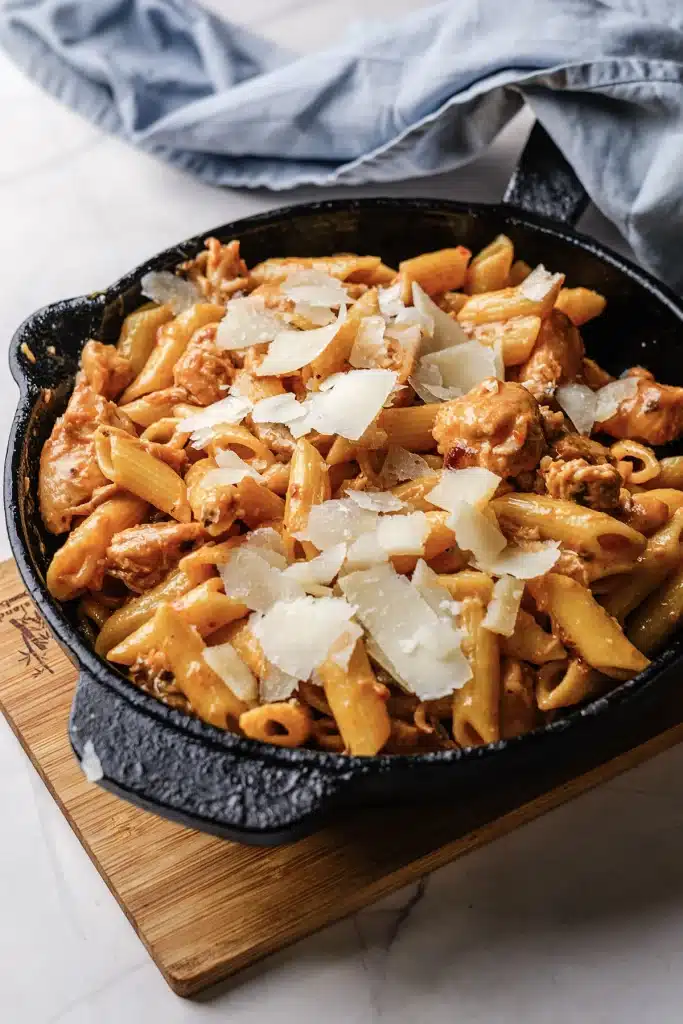
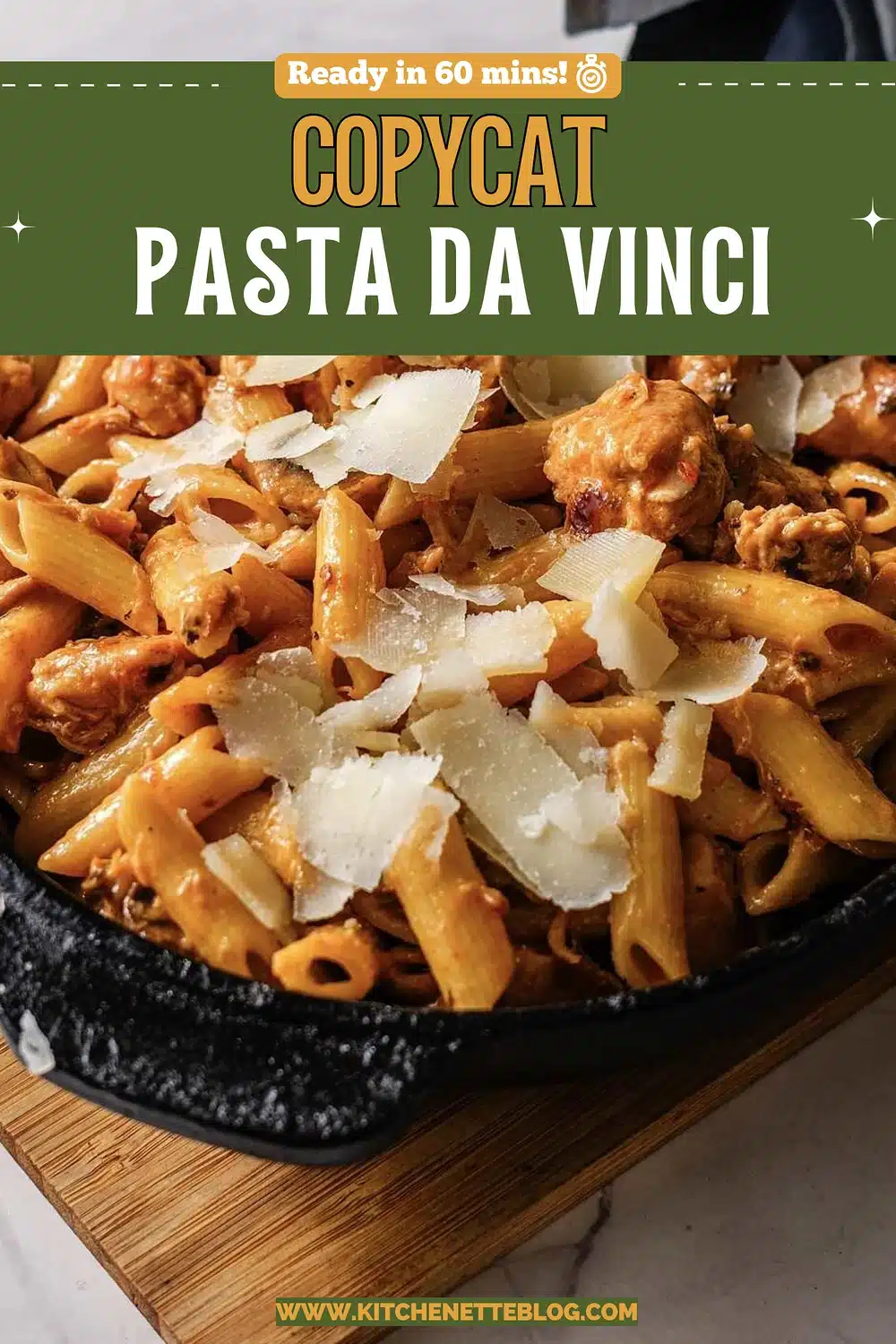
Pasta Da Vinci is the Cheesecake Factory dish people order without reading the rest of the menu: penne, seared chicken, mushrooms and red onion in a Madeira cream sauce, finished with enough Parmesan to make the whole thing glossy. It is one pan, it is on the table in an hour, and it is far less complicated than the restaurant makes it look.
The part that matters is the wine. Madeira reduces down to something nutty and faintly sweet that neither white wine nor stock will imitate, and it is what stops a cream sauce tasting like plain cream. Get that reduction right and everything else is just cooking pasta.
- One skillet, plus a pot for the penne, and nothing else to wash
- A Madeira cream sauce with real depth rather than plain cream
- Restaurant portions for four at a fraction of the check
- Ready in an hour, most of which is unattended simmering
- Works just as well with thighs, shrimp or no meat at all

What Pasta Da Vinci Is
On the Cheesecake Factory menu it is described as sauteed chicken, mushrooms and onion in a Madeira wine sauce tossed with penne. That is accurate as far as it goes, and it leaves out the two things that actually define the dish.
The first is that the onion in Pasta Da Vinci is red, sliced rather than diced, and cooked long enough to go sweet and almost jammy. The second is that the sauce is built on the fond, the browned residue left in the pan after the chicken sears. Deglazing that with Madeira is where the color and most of the flavor come from.
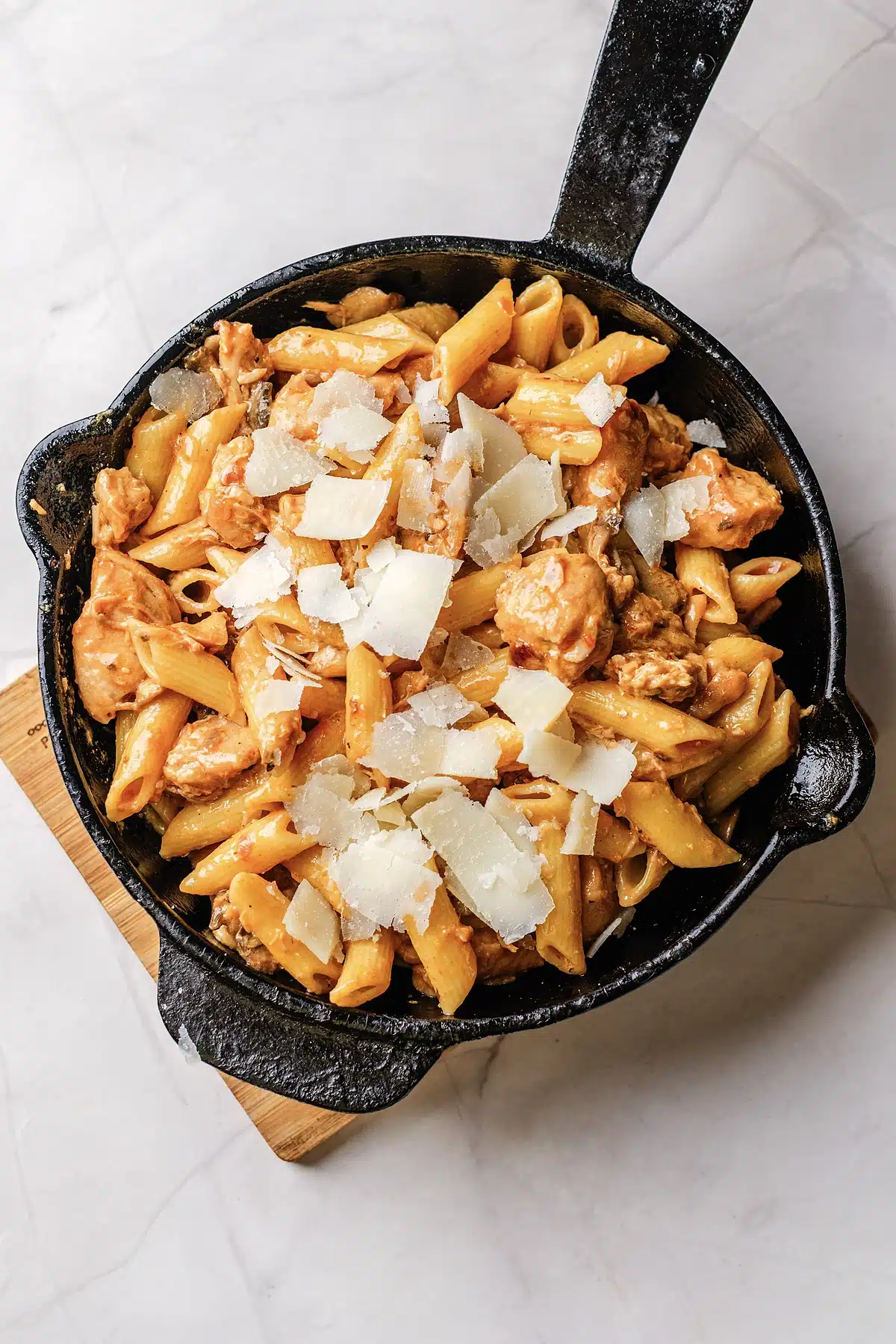
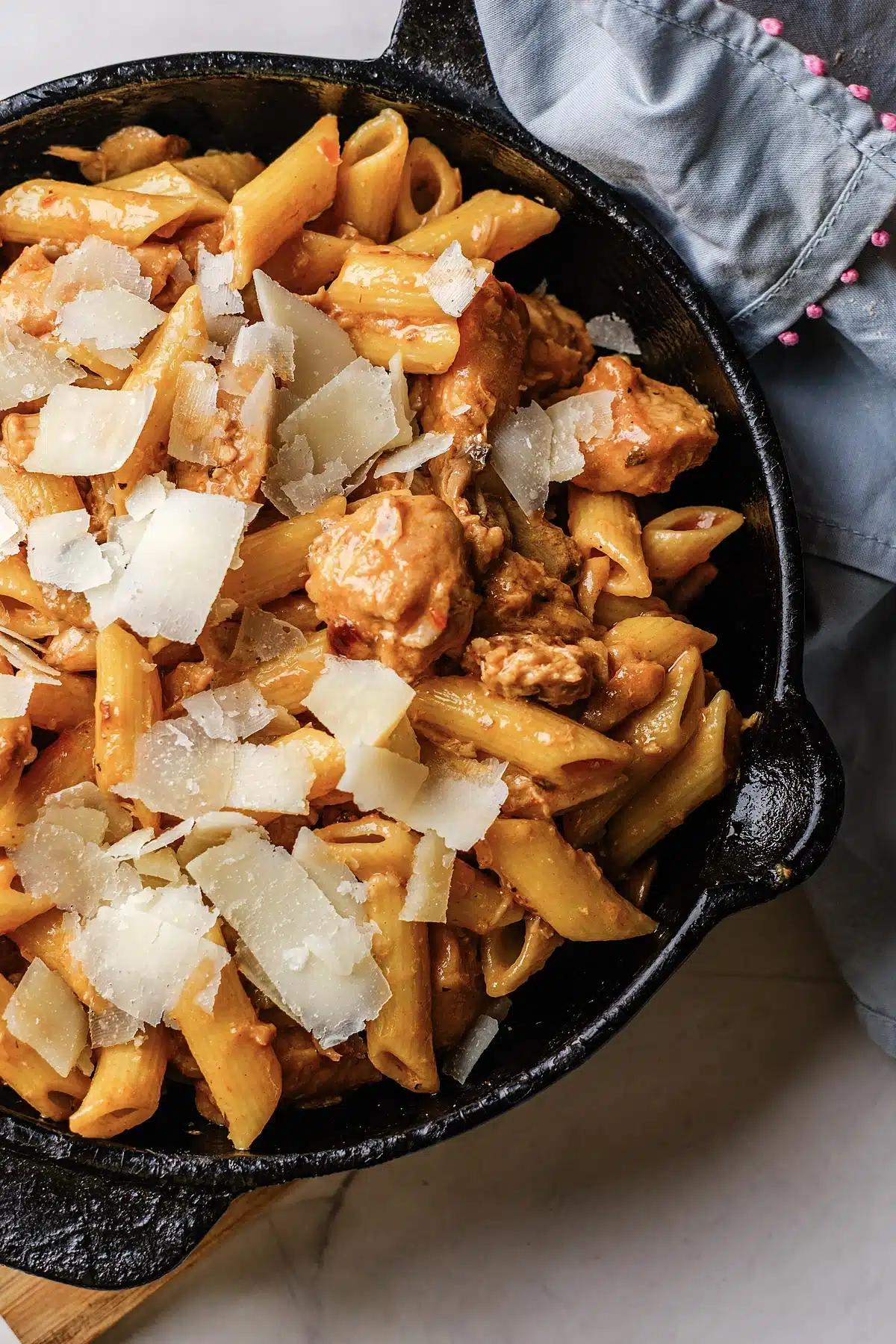
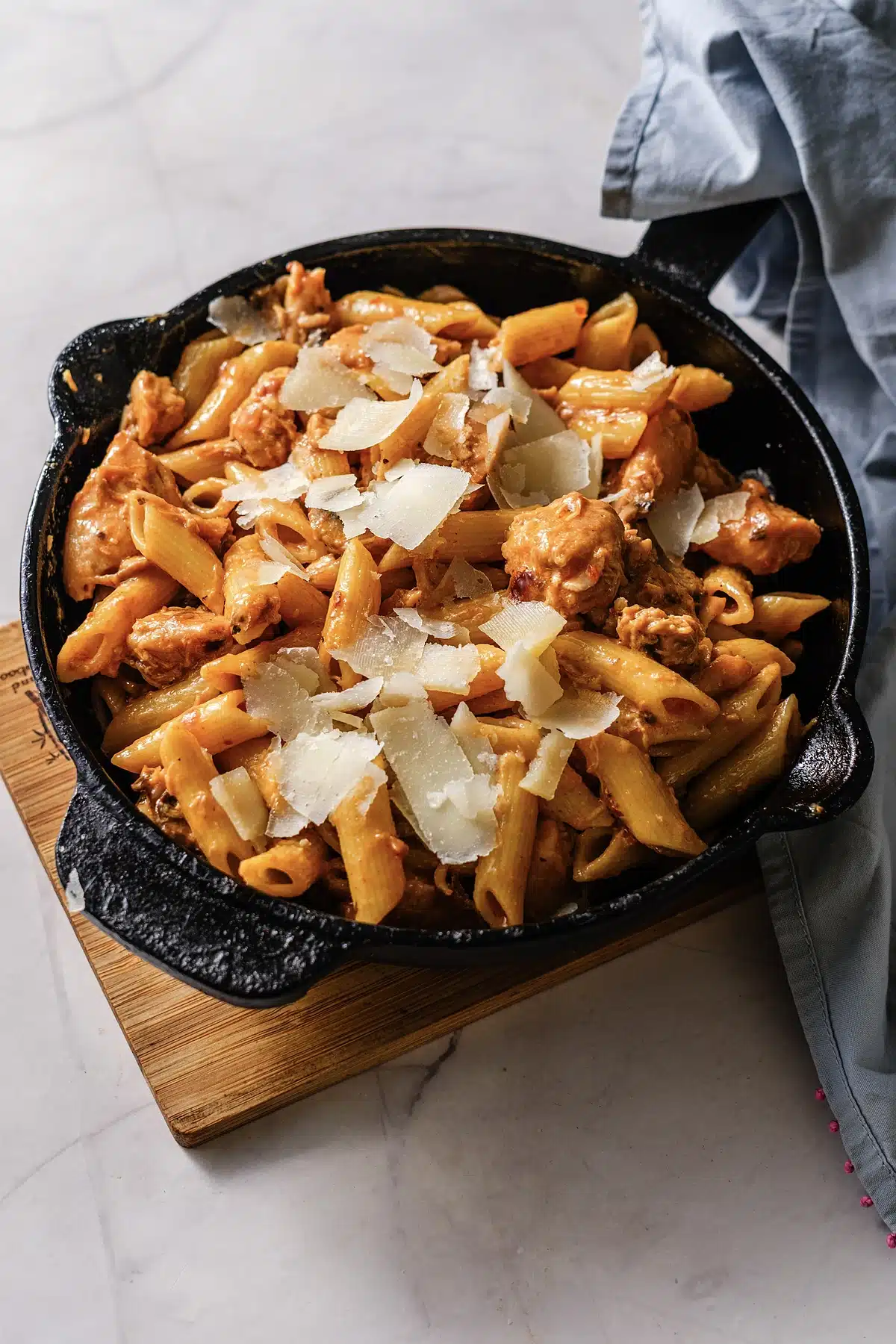
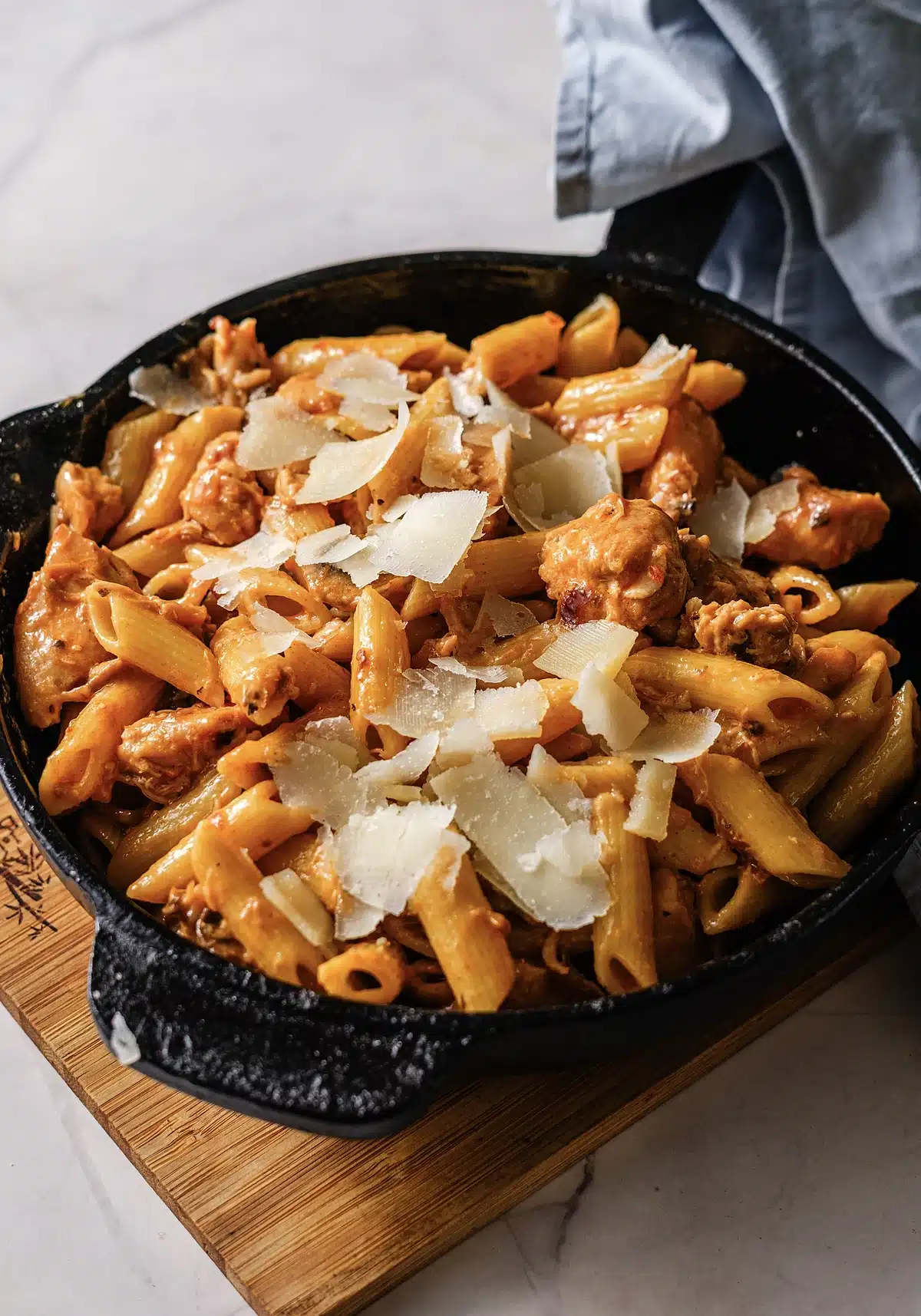
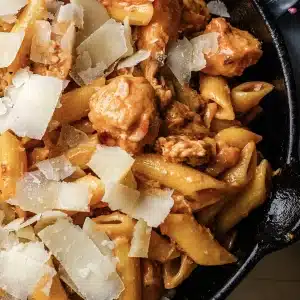
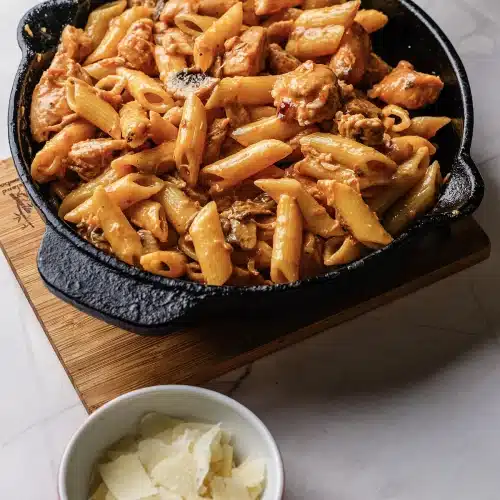
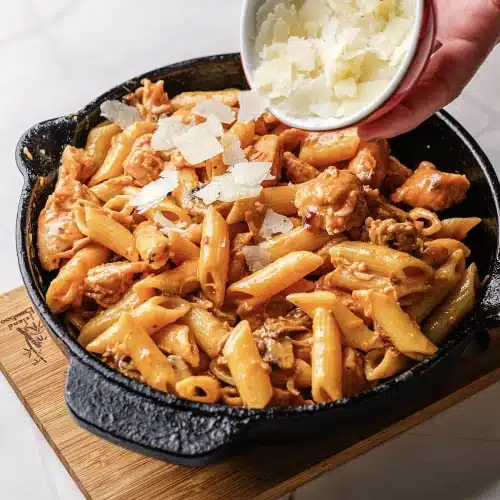
Which is worth saying plainly, because the sauce is not ivory. A properly made Pasta Da Vinci comes out a warm russet, the color you can see in the photographs, because reduced Madeira and dissolved fond both carry a lot of brown. If yours is pale, you either did not brown the chicken hard enough or you did not reduce the wine far enough.
It is also a genuinely easy dish to scale, which is part of why it turns up at so many family dinners. Everything happens in one wide pan, the sauce is forgiving about resting for a few minutes while you drain pasta, and the only component with a narrow window is the chicken.
Save this recipe
Enter your email and I’ll send this recipe straight to your inbox.
Ingredient Notes
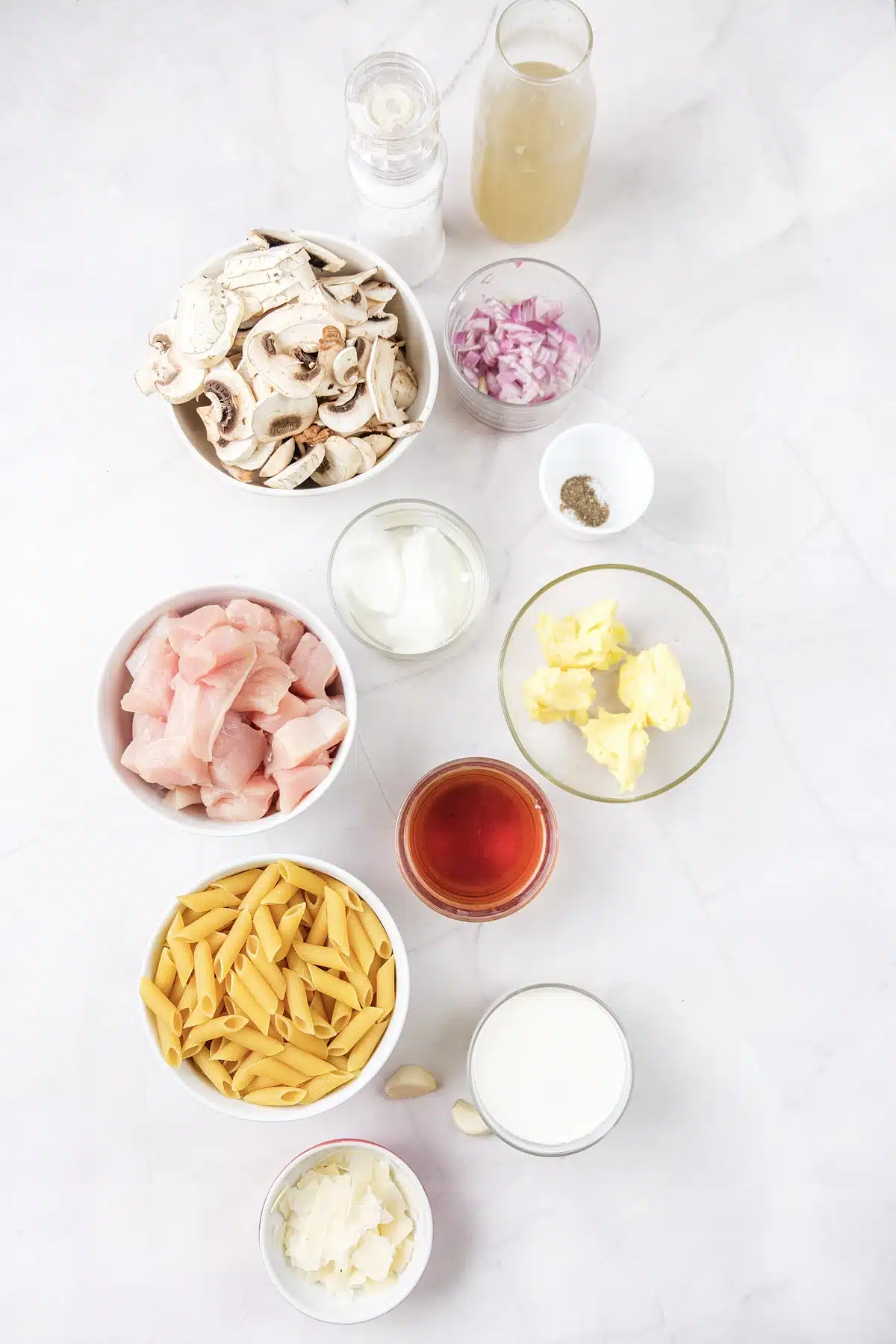
- Penne. Twelve ounces, cooked one minute short of the package time. It finishes in the sauce, and pasta that went in already soft turns to mush by the time it is coated.
- Chicken breast. A pound, cut into bite-size pieces and patted dry. Dry surfaces brown; wet ones steam. Thighs work and are more forgiving if you tend to overcook white meat.
- Red onion. One large, sliced into half moons rather than chopped. Slices hold their shape through a long simmer and give you something to find in the bowl.
- Cremini mushrooms. Eight ounces, sliced thick. Thin slices disappear entirely. Shiitake are the upgrade if you want more savory weight, and Illinois Extension has a straightforward primer on choosing and storing mushrooms that is worth two minutes of reading.
For the Sauce
- Madeira. Three quarters of a cup. Use a dry or medium-dry bottle from the wine aisle, not the salted cooking wine near the vinegar. A bottle keeps for months once opened, which makes it a better buy than it first looks.
- Chicken broth. Six ounces of low-sodium broth. The sauce reduces by about a third, so anything salted to begin with concentrates into something you cannot correct.
- Heavy cream. Three quarters of a cup, and it has to be heavy. Half-and-half splits when it meets acidic reduced wine over heat.
- Parmesan. A cup, grated fine for the sauce, plus shavings for the top. Grate it yourself; the anti-caking starch on pre-grated cheese makes a gritty sauce.
- Flour. Two tablespoons, cooked into the vegetables for a full minute before any liquid goes in. This is what gives the sauce body without a long reduction.
Madeira, Marsala or Sherry
Madeira is what Pasta Da Vinci was built on and it is worth seeking out. It is a fortified wine from a Portuguese island, deliberately heated during production, which leaves it tasting of caramel and toasted nuts. In a cream sauce that reads as depth rather than as wine.
Dry Marsala is the closest substitute and the easiest to find. It is a little sweeter and a little less nutty, and nobody at the table will identify the swap. Use the same quantity.
Dry sherry works too and gives a sharper, more savory result. What does not work is white wine, which has none of the caramel notes and leaves the sauce tasting thin and slightly sour. If you have no fortified wine at all, use extra broth with a teaspoon of brandy and accept that it is a different dish.
How To Make Pasta Da Vinci
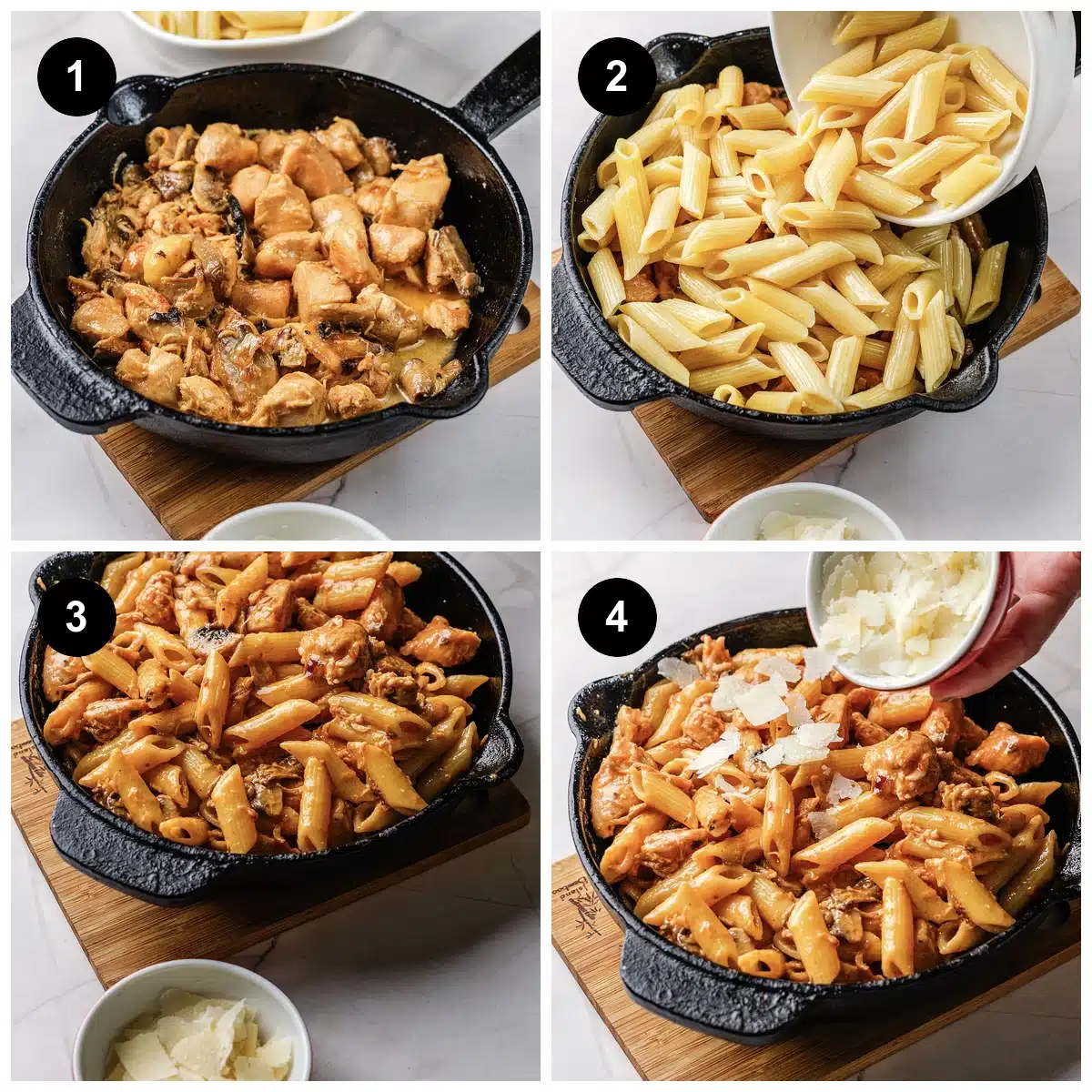
First, cook the penne. Salt the water properly and pull the pasta a minute before the package says. Drain it, but keep a cup of the water; it is the fix for a sauce that tightens up later.
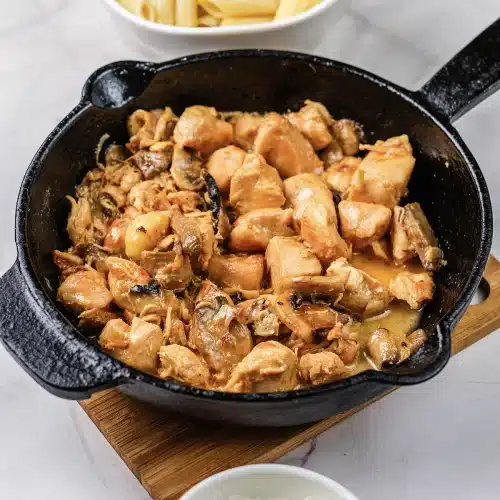
Next, sear the chicken. Season the pieces, heat a tablespoon of oil in a large skillet over medium-high, and brown them in a single layer without moving them for the first two minutes. Take them out while the centers are barely done. They will finish in the sauce.
Then build the base. Add the remaining oil and the butter, drop the heat to medium, and cook the sliced red onion for three minutes until it slackens. Add the mushrooms and garlic and keep going another five to seven minutes, until the mushrooms have given up their water and started to brown.
After that, deglaze and reduce. Scatter the flour over and stir for a minute, then pour in the Madeira and scrape every brown patch off the bottom of the pan. Let it bubble two to three minutes before the broth and cream go in, then simmer gently for ten to fifteen minutes until it coats a spoon.
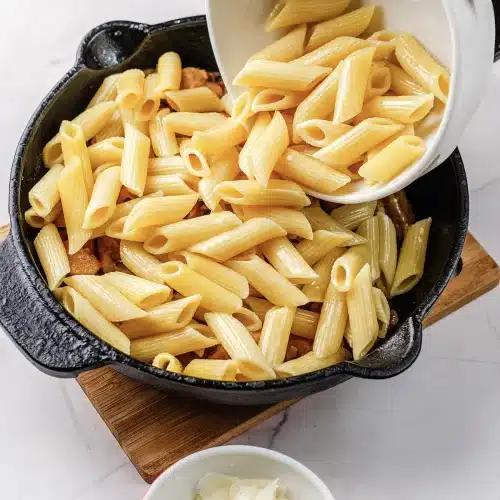
Finally, bring it together. Stir in the Parmesan off the boil, return the chicken and the drained penne, and toss for two minutes until everything is coated. Loosen with the reserved pasta water a splash at a time if it looks tight.
Why the Sauce Splits and How to Stop It
The cream in Pasta Da Vinci splits when it is boiled hard, when it meets too much acid at once, or when cheese is added while the pan is still bubbling. All three are avoidable and all three happen in the same five minutes of this recipe.
Keep the simmer lazy, at the point where a bubble breaks the surface every second or two rather than a rolling boil. Reduce the Madeira before the cream goes in, not after, so the acidity has already cooked off. Then pull the pan off the heat before the Parmesan goes in and stir it through the residual warmth.
If it does break, take it off the heat and whisk in a tablespoon of cold cream. That usually brings it back. A splash of the starchy pasta water helps too, because the starch acts as an emulsifier and holds the fat in suspension.
How To Tell When the Sauce Is Ready
Drag a spoon through the sauce. The sauce should part and close slowly, leaving a visible track for a second or two. If the track fills instantly it needs another few minutes; if it stays open, you have gone too far and should loosen it with broth.
The other test is color. A finished Pasta Da Vinci sauce is a warm tan or light russet, never white and never gray. Gray means the mushrooms went in before the pan was hot enough and stewed instead of browning.
Make It Ahead
Pasta Da Vinci divides neatly for a make-ahead night, because the sauce can be made a day early through the simmering stage, before the Parmesan and the pasta. Cool it, refrigerate it in a sealed container, and reheat it gently in the skillet before you stir in the cheese and toss the freshly cooked penne through.
Do not cook the pasta ahead. Penne that has sat in the fridge overnight and then been reheated in a cream sauce goes soft and chalky, and there is no way to bring it back. It takes eleven minutes to boil, which is less time than the sauce needs to warm through.
The chicken can be seared in advance along with the sauce, which turns this into a fifteen-minute dinner on the night. Keep it separate from the sauce so it does not carry on cooking in the residual heat.
Storing Pasta Da Vinci
Leftover Pasta Da Vinci keeps three to four days in an airtight container in the refrigerator. The pasta absorbs sauce overnight, so what looked glossy in the pan will look dry by morning. That is normal and fixable.
Store the pasta and any extra sauce together rather than apart. The penne keeps absorbing either way, and separating them means you end up with dry pasta in one tub and a skin on the sauce in another.
Reheat in a skillet over medium-low with a splash of cream or broth, stirring until the sauce loosens and coats again. The microwave works if you cover the bowl and stir halfway, though it heats unevenly and the chicken suffers for it.
Freezing is possible and I would not recommend it. Cream sauces separate when frozen and thawed, and cooked penne turns spongy. If you want a freezer meal, freeze the sauce alone before the cheese goes in and cook fresh pasta on the day.
Variations and Substitutions
Chicken thighs. Boneless thighs, cut the same size, are juicier and much harder to overcook. Sear them a minute longer per side.
Shrimp. Add peeled shrimp in the last three minutes rather than searing them first. They need almost no time and go rubbery if you treat them like chicken.
Vegetarian. Leave the chicken out, double the mushrooms and use vegetable broth. Brown the mushrooms in two batches so they sear rather than steam.
Sun-dried tomato. A quarter cup, slivered, added with the garlic. Not traditional, and it pushes the sauce a shade redder and brighter.
Lighter version. Replace half the cream with evaporated milk. The sauce is thinner but it holds together far better than half-and-half does.
Different shapes. Rigatoni, ziti and cavatappi all work. Anything with ridges or a hollow catches this sauce; long strands do not.
What to Serve with Pasta Da Vinci
Something green and sharp, because Pasta Da Vinci is rich and soft all the way through. A plain green salad with a lemon vinaigrette is the correct answer, and a bowl of dressed arugula takes thirty seconds.
Roasted vegetables work if you want something warm alongside. Broccolini or green beans with lemon and olive oil hold their own against a cream sauce, and both can share the oven while the skillet is busy.
Bread is worth having on the table for the sauce left in the bowl. Garlic bread is the obvious choice, though a plain baguette does the job without competing.
For wine, drink whatever you deglazed with, or a medium-bodied red such as a Chianti. If you want another skillet dinner in the same family, chicken Madeira uses the same wine without the pasta, and penne arrabbiata is the opposite end of the spectrum on a night when cream is too much.
Pasta Da Vinci FAQ
Frequently Asked Questions
What can I use instead of Madeira?
Dry Marsala is the closest match, in the same quantity. Dry sherry works and reads sharper. Avoid regular white wine; it lacks the caramel notes and leaves the sauce tasting sour.
Why is my sauce grainy?
Pre-grated Parmesan, or cheese added while the pan was boiling. Grate your own, take the skillet off the heat, and stir the cheese through the residual warmth.
Can I make Pasta Da Vinci without alcohol?
Use extra chicken broth with a teaspoon of balsamic vinegar and a pinch of brown sugar. It is not the same, but it gets you closer than plain broth on its own.
How many does it serve?
Four generous restaurant-size portions, or six if there is bread and a salad on the table.
More Questions About Copycat Restaurant Pasta
Good to Know
Do I have to use cast iron?
No. Any wide skillet works, and stainless steel actually builds a better fond than a well-seasoned pan does. Avoid nonstick, which browns poorly.
Can I double it?
Yes, but sear the chicken in two batches and brown the mushrooms in two batches. Crowding the pan is the one thing that will ruin a doubled recipe.
Why did my mushrooms go gray?
They stewed rather than seared. Get the pan properly hot, add them in a single layer, and leave them alone until they have released and re-absorbed their water.
If one skillet dinner a week is the goal, chicken and wild rice casserole works on the same principle with almost no attention once it is in the oven.
Pasta Da Vinci
Save this recipe
Enter your email and I’ll send this recipe straight to your inbox.
Ingredients
Pasta Da Vinci Ingredients
- 12 oz (340 g) penne pasta
- 1 lb (450 g) boneless, skinless chicken breasts cut into bite-size pieces
- 2 tbsp (30 ml) olive oil divided
- 2 tbsp (28 g) unsalted butter
- 1 large red onion sliced
- 8 oz (227 g) baby bella or cremini mushrooms sliced
- 3 cloves garlic minced
- 2 tbsp (16 g) all-purpose flour
- 3/4 cup (180 ml) Madeira wine Marsala or dry sherry may be used
- 6 ounces low-sodium chicken broth
- 3/4 cup (180 ml) heavy cream
- 1 cup (100 g) freshly grated Parmesan cheese plus more for serving
- Salt and black pepper to taste
- Chopped fresh parsley for garnish (optional)
Equipment
- Large Skillet or Sauté Pan
- Large pot
- Colander
- wooden spoon
- Knife
Instructions
Cook the Pasta and Sear the Chicken
- Boil the penne: Cook the penne in well salted water 1 minute short of the package time. Drain it and reserve a cup of the cooking water.
- Sear the chicken: Pat the pieces dry and season with salt and pepper. Heat 1 tablespoon of olive oil in a large skillet over medium-high and brown the chicken in a single layer, leaving it undisturbed for the first 2 minutes. Remove it while the centers are barely done.

Build the Sauce
- Soften the onion: Add the remaining olive oil and the butter, drop the heat to medium, and cook the sliced red onion for 2 to 3 minutes until it slackens.
- Brown the mushrooms: Add the mushrooms and garlic and cook 5 to 7 minutes, until the mushrooms have released their water, re-absorbed it and started to brown.
- Flour, then deglaze: Scatter the flour over the vegetables and stir for 1 minute. Pour in the Madeira and scrape every brown patch off the bottom of the pan, then let it bubble 2 to 3 minutes.
- Simmer: Add the chicken broth and heavy cream, drop the heat, and simmer gently for 10 to 15 minutes, until a spoon dragged through leaves a track that closes slowly.
Finish and Toss
- Add the cheese off the heat: Pull the skillet off the burner and stir in the grated Parmesan through the residual warmth. Adding it while the pan is bubbling makes the sauce grainy. Taste and season.
- Return the chicken and pasta: Tip the drained penne and the seared chicken back into the skillet.
- Toss to coat: Toss over low heat for about 2 minutes, loosening with the reserved pasta water a splash at a time if the sauce tightens.
- Serve: Shave more Parmesan over the top, add chopped parsley if you like, and serve straight from the pan.
I made this today and my goodness was it delicious! My family loved it and made sure there weren’t any leftovers. Thank you so much for such a wonderful recipe that will be made often in my house!
Sonya, this just made my day! I love hearing that the whole family devoured it with no leftovers because that is honestly the best compliment a recipe can get. I hope it becomes a regular at your table!