
Oh Henry bars are a Midwestern church-basement classic that has almost nothing to do with the candy bar they are named after. A buttery, chewy oat base bakes for fifteen minutes, a two-ingredient chocolate and peanut butter layer melts over the top while it is still warm, and an hour in the fridge turns the whole tray into twenty four squares.
Oh Henry bars are also one of the least demanding bar recipes in the file. There is no creaming, no eggs, no flour, and no leavening to measure. One saucepan, one pan, and a microwave-safe bowl. The only thing that can really go wrong is pressing the base in loosely, and there is a fix for that below.
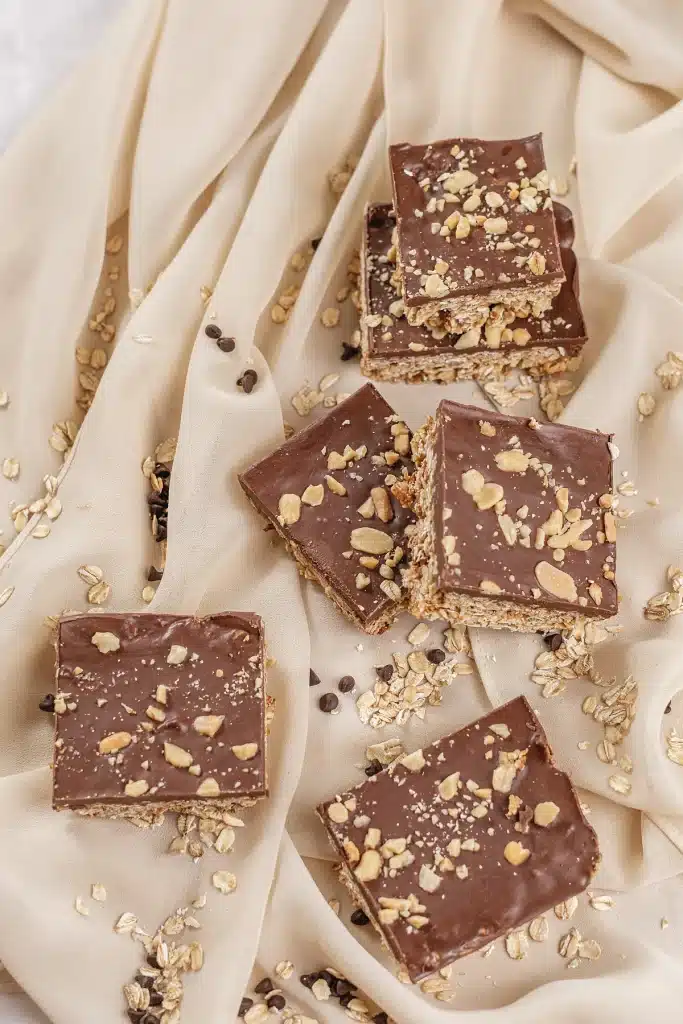
- Six ingredients, and you probably have five of them right now
- No eggs, no flour, and no mixer to wash afterward
- Twenty four generous squares from one nine-by-thirteen pan
- The topping is two ingredients melted together in the microwave
- They freeze well, so half the tray can disappear until you want it

What Are Oh Henry Bars?
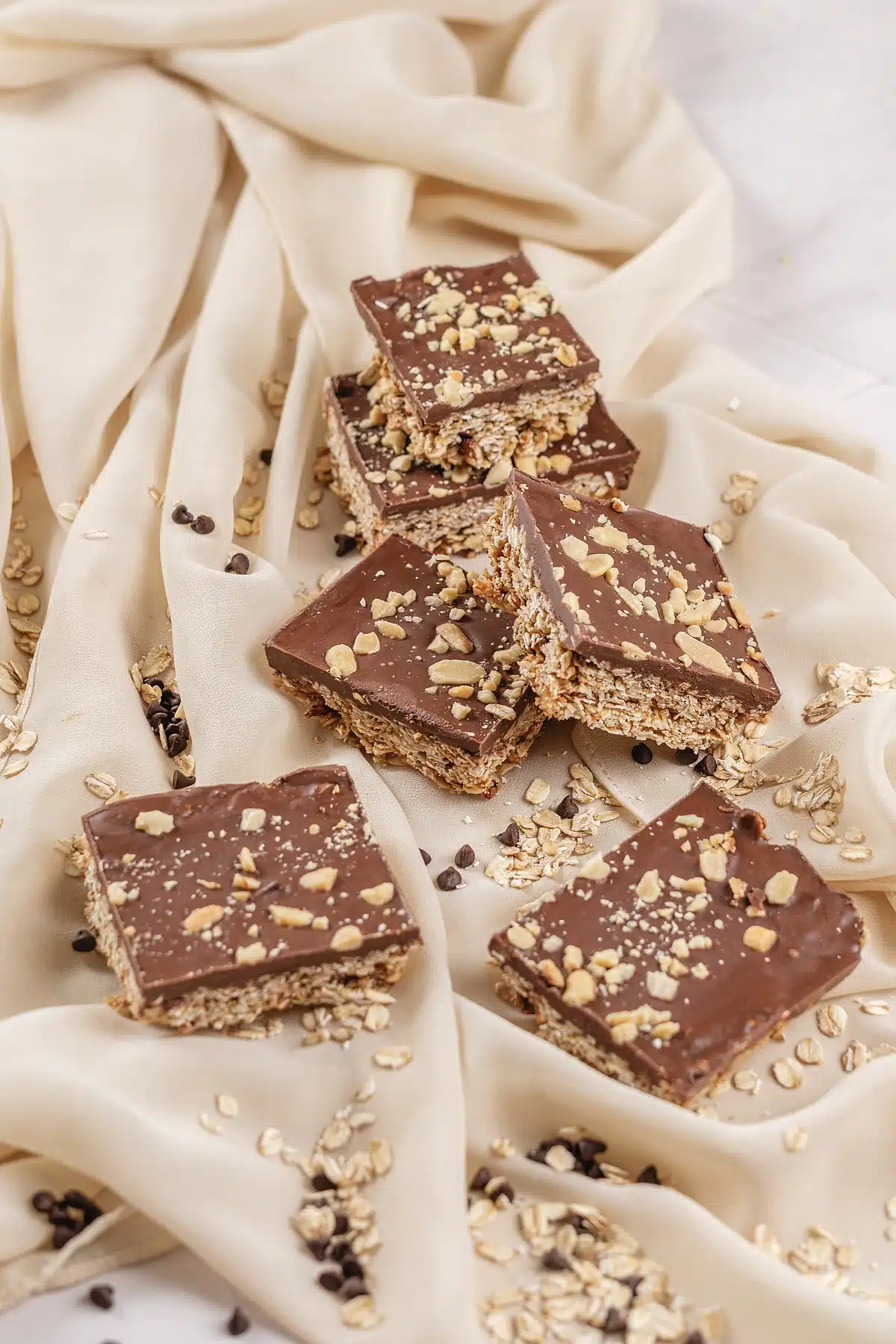
Oh Henry bars are a chewy oat bar with a chocolate peanut butter topping, and they belong to the same family as seven layer bars and magic cookie bars: an American potluck dessert built from pantry staples and cut into squares. Butter, brown sugar, corn syrup, vanilla, and oats make the base. Chocolate chips and peanut butter melted together make the top, poured over while the base is still warm from the oven.
The name comes from the Oh Henry! candy bar, which pairs peanuts, caramel, and chocolate. The bars borrow the flavor combination rather than the construction. As for the candy itself, it has come and gone from American shelves over the years and remains an everyday fixture in Canada, which is why the question of whether it still exists comes up so often.
What you get from Oh Henry bars is nothing like a granola bar. The oat base is a caramel candy that happens to contain oats, and it sets firm and chewy rather than crumbly. That is the whole appeal, and it is why the corn syrup in the ingredient list is not optional in the way it is in most recipes.
Save this recipe
Enter your email and I’ll send this recipe straight to your inbox.
Oh Henry Bars vs Scotcharoos
These two are constantly confused, and some regions use the names interchangeably, which does not help. They are different recipes, and the difference is not subtle once you have eaten both.
Scotcharoos are no-bake. Crispy rice cereal is bound with peanut butter, sugar, and corn syrup, then topped with melted butterscotch and chocolate chips. The texture is light and crunchy, and nothing goes in the oven.
Oh Henry bars are baked, oat based, and chewy. Fifteen minutes in a hot oven caramelizes the brown sugar and firms the base into something you have to bite rather than snap. If you have made Scotcharoos and thought they were too airy, this is the version you were looking for.
There is a third relative worth knowing about, which is the no-bake oat bar made with the same butter and brown sugar mixture but never put in the oven. It sets in the fridge, it stays softer, and it is what a lot of people mean when they say their grandmother’s Oh Henry bars were different. All three are good. Only one of them caramelizes.
Ingredient Notes
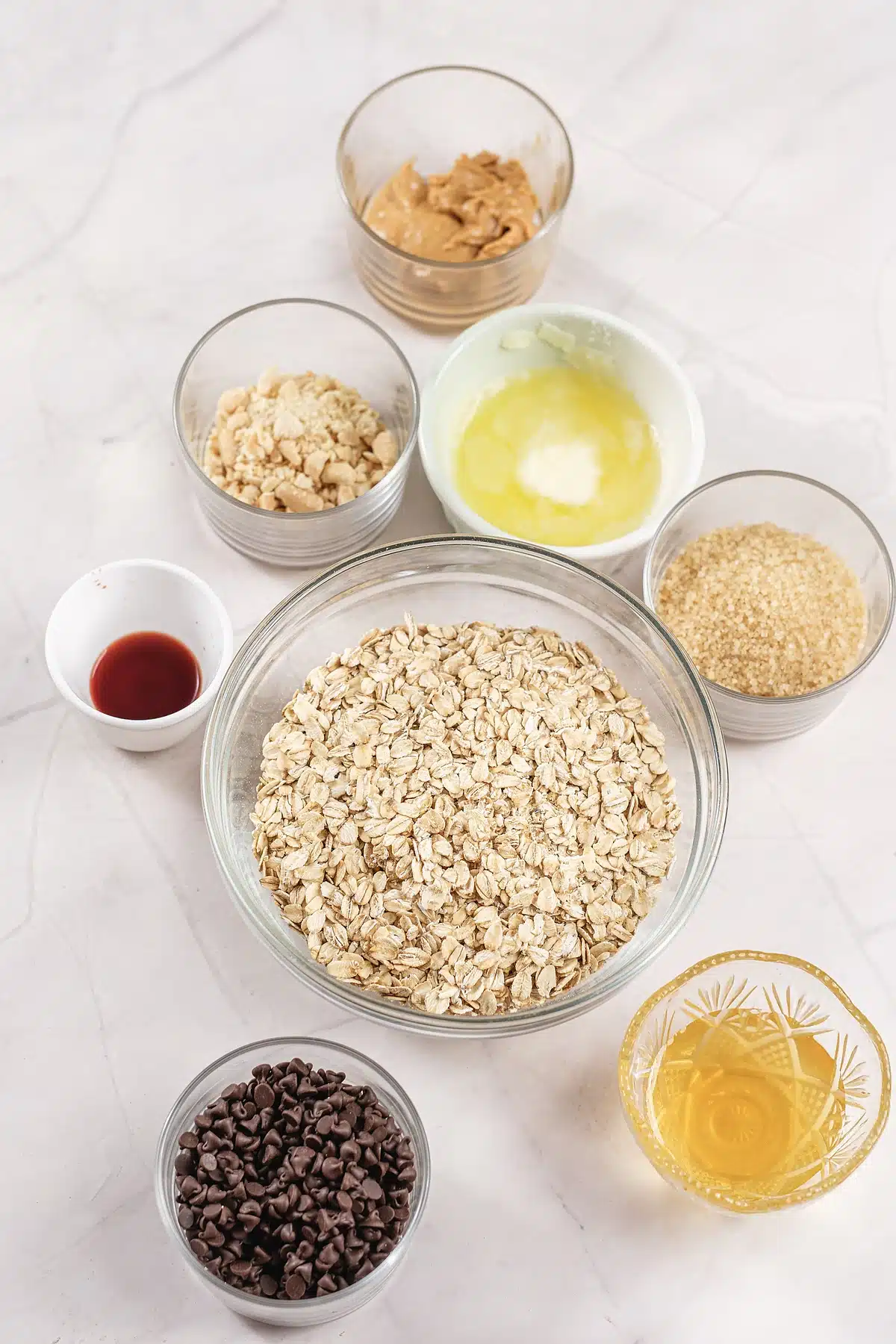
- Oats. Four cups. Quick-cooking oats give the tighter, chewier bar most people picture, because the smaller flakes pack together and absorb more of the butter and sugar. Old-fashioned rolled oats also work and give a looser, more rustic bar with visible flakes, which is what the photographs here show. Steel-cut oats do not work at all.
- Light brown sugar. Two cups, packed. Dark brown sugar makes a noticeably molasses-heavy bar. It is not wrong, it is just a different cookie, and it fights with the peanut butter rather than supporting it.
- Light corn syrup. One cup, and this is the one people want to substitute. It is what keeps the base chewy instead of grainy, because it stops the sugar recrystallizing as it cools. Honey works and makes a softer, more fragrant bar. Maple syrup is too thin.
- Unsalted butter. One cup, melted. Salted butter is fine if that is what you have, in which case skip any added salt entirely.
The Topping
- Semisweet chocolate chips. A cup and a half. Semisweet balances a very sweet base better than milk chocolate does. Chips are formulated to hold their shape, so they need patience in the microwave, and a chopped bar melts faster and smoother if you have one.
- Creamy peanut butter. A cup and a half of the shelf-stable kind, not the natural kind that separates. Natural peanut butter has no stabilizers, so the topping splits into an oily layer and a dense layer as it cools. If you are curious about why the two behave so differently, the National Peanut Board walks through how each one is made.
- Vanilla extract. Two teaspoons in the base. It sounds like a lot for a bar built on sugar, and it is exactly right, because it is the only thing rounding off all that caramel.
How To Make Oh Henry Bars
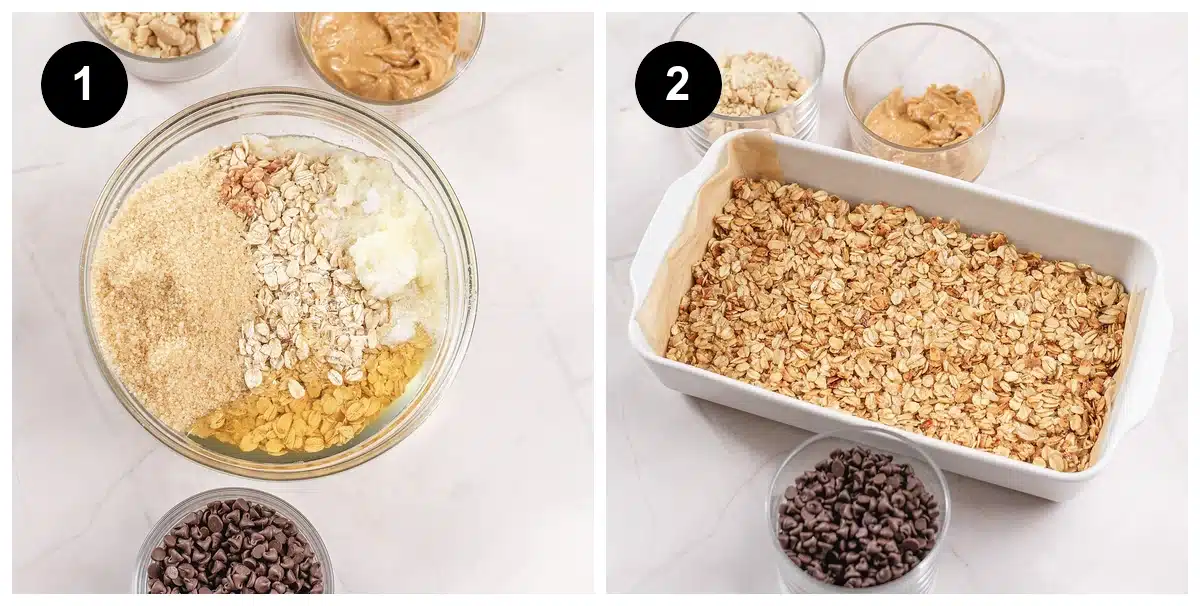
First, melt and mix the base of the bars. Melt the butter in a large saucepan over medium heat, then stir in the brown sugar, the corn syrup, and the vanilla. Heat it until the mixture is thick and just bubbling at the edges, then take it off the burner.
Next, add the oats. Stir them in until every flake is coated. The mixture will be thick, sticky, and difficult, and that is correct. If it pours easily, it has not been cooked long enough.
Then press it in hard. Scrape the mixture into a greased or parchment-lined nine-by-thirteen pan and compact it with the back of a spoon or a flat measuring cup. Loose spots crumble when you cut them, so push down across the whole surface rather than only smoothing the top.
Baking and Topping
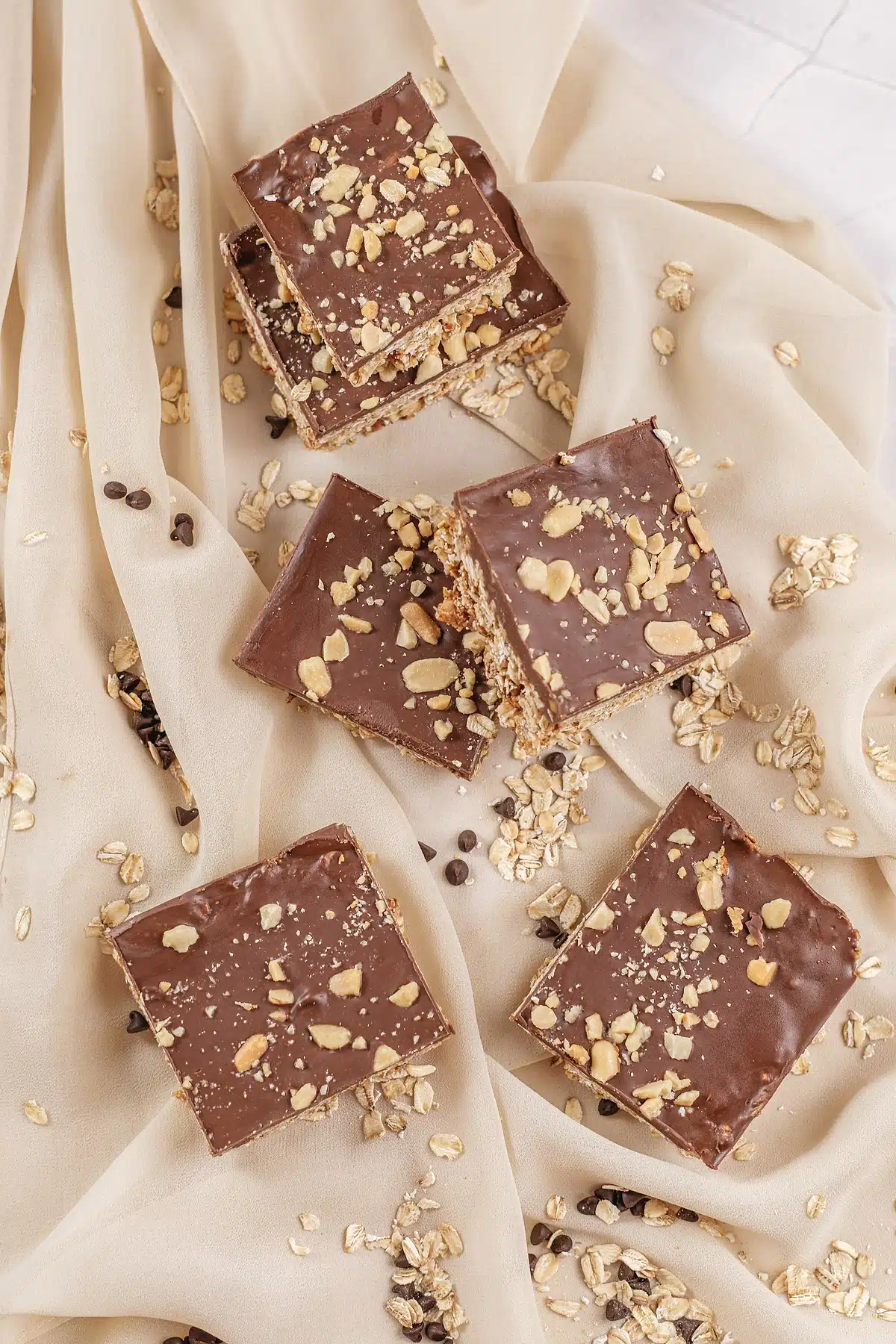
After that, bake for fifteen minutes at 350 degrees. The bars will barely change color, which is unnerving the first time. Look at the edges instead: they should be bubbling gently and pulling in slightly from the sides of the pan.
Finally, melt the topping and pour it on. Microwave the chocolate chips and peanut butter together in thirty second bursts, stirring between each, until the mixture is smooth and glossy. Pour it over the warm base and spread it to the corners with an offset spatula.
How To Tell When They Are Set
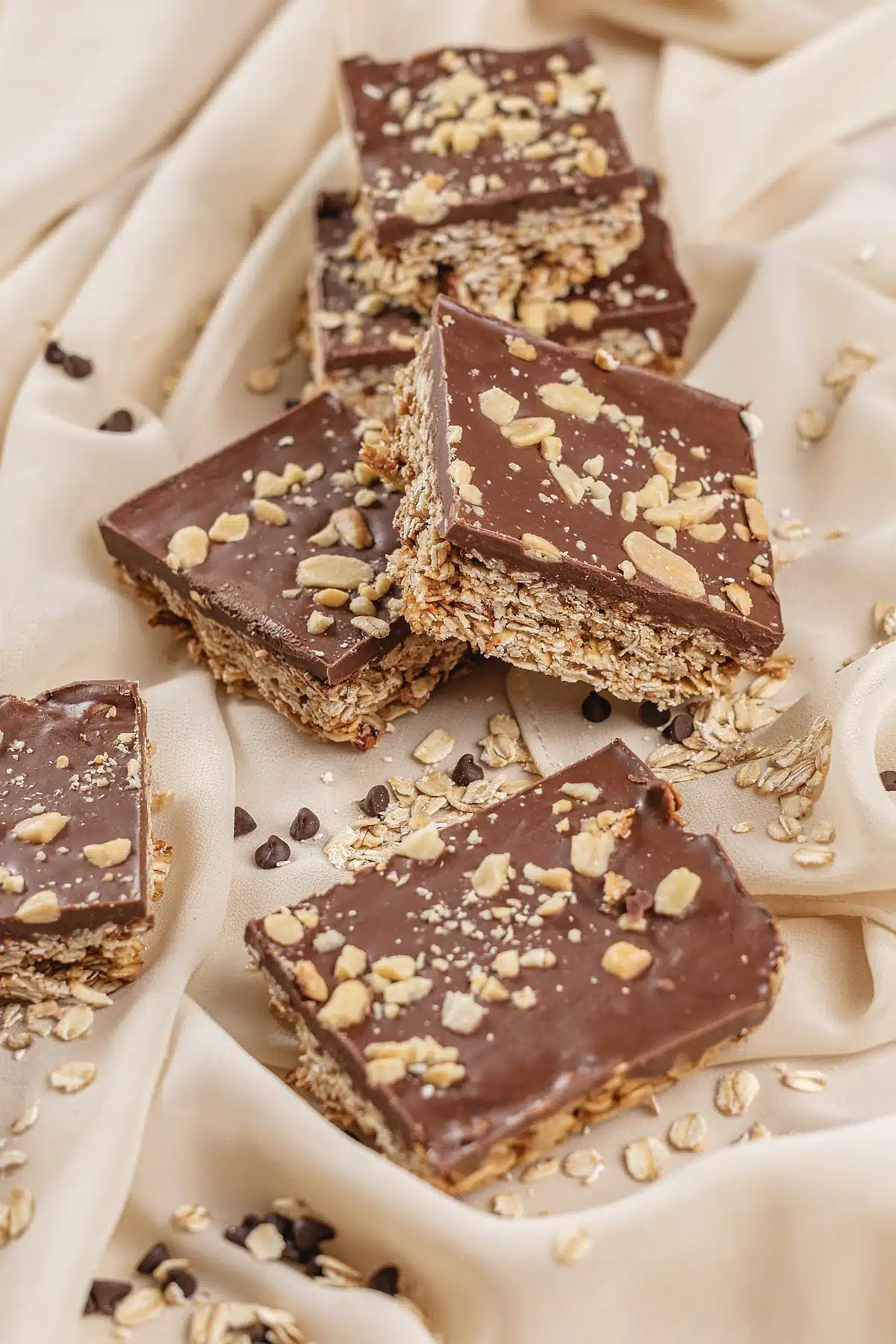
Let the pan cool on the counter until the chocolate loses its shine and stops moving when you tilt it, which takes roughly forty minutes in a normal kitchen. Then move the pan to the fridge for at least an hour.
Oh Henry bars are ready when a fingertip pressed on the topping leaves no mark and the base feels solid rather than tacky through the chocolate. Cut them cold, with a large knife warmed under hot water and wiped dry between cuts, and you get clean edges instead of dragged chocolate.
Resist the urge to speed this up in the freezer. Chocolate chilled too fast can bloom into a dull gray film, which is harmless and looks like a mistake. Forty minutes on the counter and an hour in the fridge is the sequence that gives you a glossy top.
Make It Ahead
Oh Henry bars are a genuinely good make-ahead dessert, which is most of why they turned up at every church supper in the upper Midwest. The base and topping can be made a full two days before you need them, left in the pan, covered, and cut on the day.
Leaving them uncut is the better plan for anything more than a day out. A whole slab holds moisture far better than twenty four cut squares with their edges exposed, and the difference in chew after two days is obvious.
If you want to split the work further, line the pan with parchment ahead of time and measure the oats and sugar into a bowl. The active cooking is under fifteen minutes once everything is out on the counter.
One warning about travel. Oh Henry bars are sturdy in a container and vulnerable in a car, because the topping softens above about seventy five degrees and takes a fingerprint from anything it touches. Chill them hard before a long drive and carry them in a single layer if you can.
Storing Oh Henry Bars
Store Oh Henry bars in an airtight container, and where you keep them decides what you get. At room temperature they stay soft and chewy for about four days. In the fridge they last a week and firm up considerably, which some people prefer and which makes them cleaner to pack in a lunchbox.
Separate the layers with parchment or wax paper either way. The chocolate topping will fuse to whatever is stacked on top of it within a few hours, especially in a warm kitchen.
Oh Henry bars freeze beautifully for up to two months. Cut them first, layer them with parchment in a rigid container, and thaw what you want at room temperature for twenty minutes. Frozen ones eaten straight from the container are also a legitimate way to live.
Variations and Substitutions
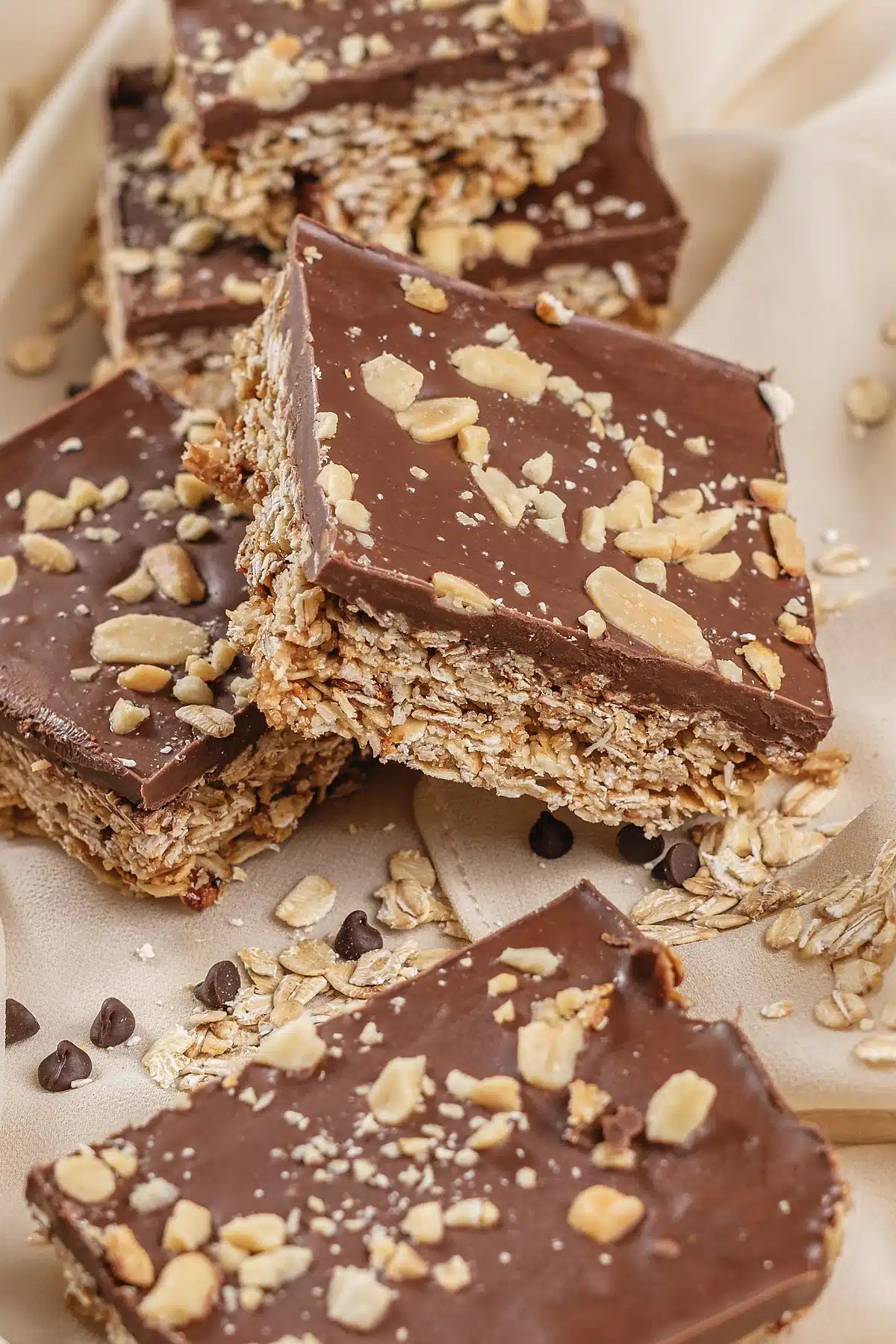
Chopped peanuts. A half cup scattered over the topping before it sets, which is what the photographs here show. It adds crunch and it makes the candy bar reference obvious.
Butterscotch chips. Swap half the chocolate chips for butterscotch and you are most of the way to a Scotcharoo without giving up the chewy base.
Flaky salt. A generous pinch across the topping while it is still soft. These bars are sweet, and salt is the cheapest way to make them taste more expensive.
Honey instead of corn syrup. A straight swap by volume. The bars come out softer and slightly floral, and they will not hold as sharp an edge when cut.
Gluten-free. Certified gluten-free oats and gluten-free chocolate chips, and nothing else changes. There is no flour in the recipe to begin with.
Almond or sunflower butter. Both behave like shelf-stable peanut butter in the topping. Sunflower seed butter is the one to reach for if you are baking for a school.
Thicker bars. Use a nine-by-nine pan and add five minutes to the bake. You get sixteen tall squares instead of twenty four flat ones.
What to Serve with Oh Henry Bars
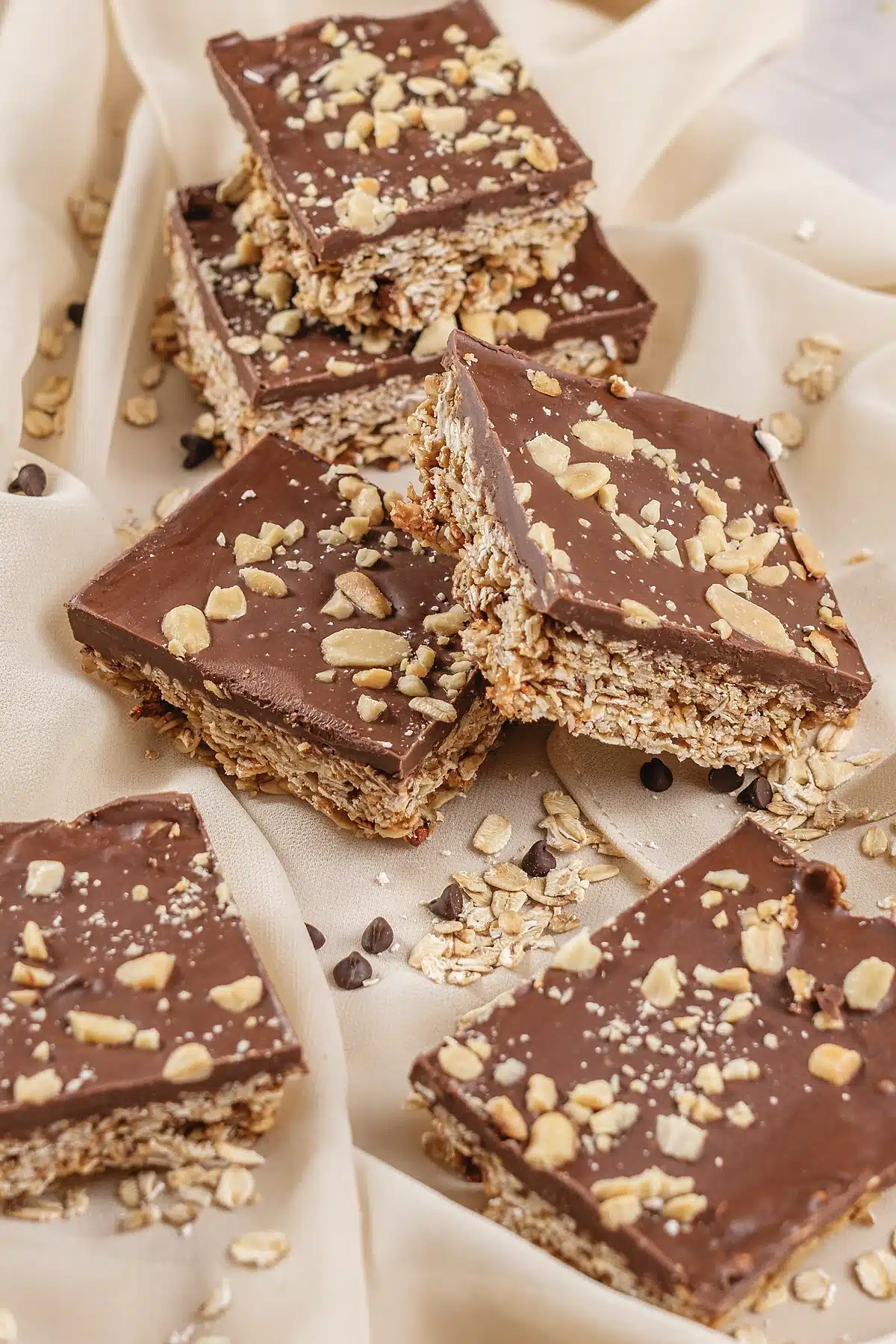
Cold milk with Oh Henry bars, and it is not a joke answer. These are sweet enough that something plain and cold alongside is doing real work. Black coffee does the same job for adults.
On a dessert table they are the anchor rather than an accent, so pair them with something sharper. Fruit, or a lemon or berry bar, keeps a tray from reading as one long note of caramel. Raspberry jam bars are the contrast I reach for most often.
For a bigger spread, seven layer bars come from exactly the same tradition and cut to the same size, and chocolate cheesecake bars give the table something that needs a fork.
Oh Henry Bars FAQ
Frequently Asked Questions
Are Oh Henry bars the same as the candy bar?
No. The dessert bars borrow the peanut and chocolate flavor of the Oh Henry! candy bar but are a completely different recipe, with an oat base and a poured topping rather than a nougat center.
Why did my bars fall apart?
The base was not pressed in firmly enough, or it was cut warm. Compact it hard with a flat measuring cup before baking, and chill the pan for a full hour before the knife goes anywhere near it.
Can I use old-fashioned oats?
Yes. The bar comes out looser and more rustic with visible flakes rather than tight and dense. Both are good, and quick oats are the traditional choice for this recipe.
Can I make them without corn syrup?
Honey is the closest substitute by volume. Expect a softer bar with a slight floral note. Skipping a syrup entirely leaves you with a grainy base, because there is nothing to stop the sugar recrystallizing.
More Questions About Bar Cookies
Good to Know
Do these need to be refrigerated?
Not for safety, only for texture. Four days at room temperature is fine in an airtight container. The fridge keeps them a week and makes them firmer.
Why is my topping oily?
Natural peanut butter, almost every time. Without stabilizers the oil separates as the topping cools and pools on the surface. Use a shelf-stable creamy peanut butter for a topping that sets evenly.
Can I double the recipe?
Yes, in two separate pans rather than one deep one. Two pans are better than one, because a double-depth base does not cook through in fifteen minutes and the middle stays raw and greasy.
If pantry bar cookies are your kind of baking, banana bread bars with brown butter frosting feed the same crowd from the same size pan.
Oh Henry Bars
Save this recipe
Enter your email and I’ll send this recipe straight to your inbox.
Ingredients
Oat Base
- 1 cup unsalted butter melted
- 2 cups light brown sugar packed
- 1 cup light corn syrup or honey for a softer bar
- 2 teaspoons vanilla extract
- 4 cups quick-cooking oats not steel-cut
- 1/4 teaspoon fine sea salt omit if using salted butter
Chocolate Peanut Butter Topping
- 1 1/2 cups semisweet chocolate chips
- 1 1/2 cups creamy peanut butter shelf-stable, not natural
- 1/2 cup salted peanuts chopped, optional, for scattering on top
Equipment
- 9x13-inch Baking Pan
- Saucepan
- Microwave-safe bowl
- Spatula
- Offset spatula or butter knife
- Parchment paper (optional)
Instructions
Make the Oat Base
- Heat the oven: Preheat to 350°F (175°C). Grease a nine-by-thirteen pan or line it with parchment, leaving an overhang so the slab can be lifted out later.
- Cook the caramel: Melt the butter in a large saucepan over medium heat. Stir in the brown sugar, corn syrup, vanilla, and salt, and heat until the mixture is thick and just bubbling at the edges. Take it off the burner.
- Stir in the oats: Add the oats and stir until every flake is coated. The mixture will be thick and sticky, which is correct. If it pours easily it has not cooked long enough.

Press and Bake
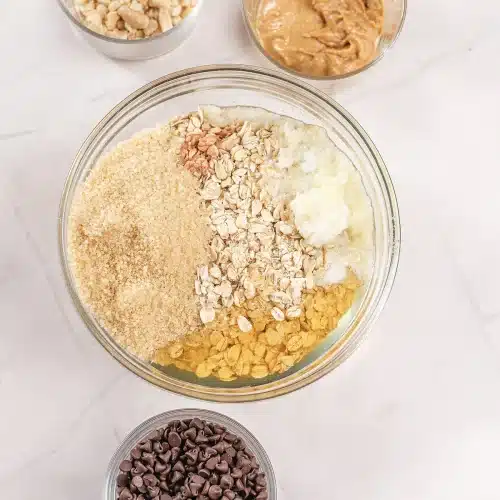
- Press it in firmly: Scrape the mixture into the prepared pan and compact it with the back of a flat measuring cup, corner to corner, until the surface is even and dense.
- Bake: Bake for 15 minutes. The base barely changes color, so watch the edges instead: they should bubble gently and pull in slightly from the sides of the pan.
Melt and Spread the Topping
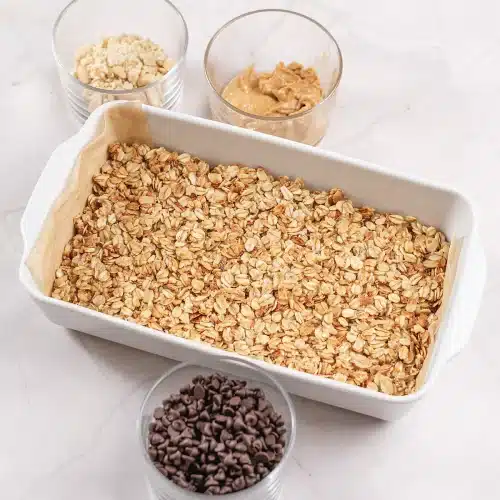
- Melt the topping: Combine the chocolate chips and peanut butter in a microwave-safe bowl. Heat in 30 second bursts, stirring between each, until smooth and glossy. A saucepan over low heat works just as well.
- Spread it over the warm base: Pour the topping over the hot bars and spread it to the corners with an offset spatula. Scatter the chopped peanuts over it now, while the surface is still soft.
Chill and Cut
- Set the topping: Cool the pan on the counter for about 40 minutes, until the chocolate loses its shine, then refrigerate for at least 1 hour.
- Cut cold: Slice into 24 squares with a large knife warmed under hot water and wiped dry between cuts. Cutting them cold is what gives clean edges instead of dragged chocolate.
Notes
Oats: quick-cooking oats give the tighter, chewier bar. Old-fashioned rolled oats work too and give a looser, more rustic result.
Peanut butter: use the shelf-stable creamy kind. Natural peanut butter separates and the topping sets oily.
Storage: 4 days in an airtight container at room temperature, or a week in the fridge, layered with parchment. Freeze up to 2 months.
Make-ahead: better made a day early and left uncut in the pan.
Gluten-free: use certified gluten-free oats and chocolate chips. Nutrition values are an estimate.