
One pot, two kinds of lentil and a can of coconut milk: curry lentil soup goes from a cold stove to six deep bowls in forty five minutes, and it thickens itself while you do something else.
I started making this on the kind of January evening where the alternative was crackers standing up at the counter. Curry lentil soup needs no soaking and no thinking ahead, which is the whole reason a bag of lentils lives in the cupboard. What surprised me was how much better the pot tasted the next day, and the day after that.
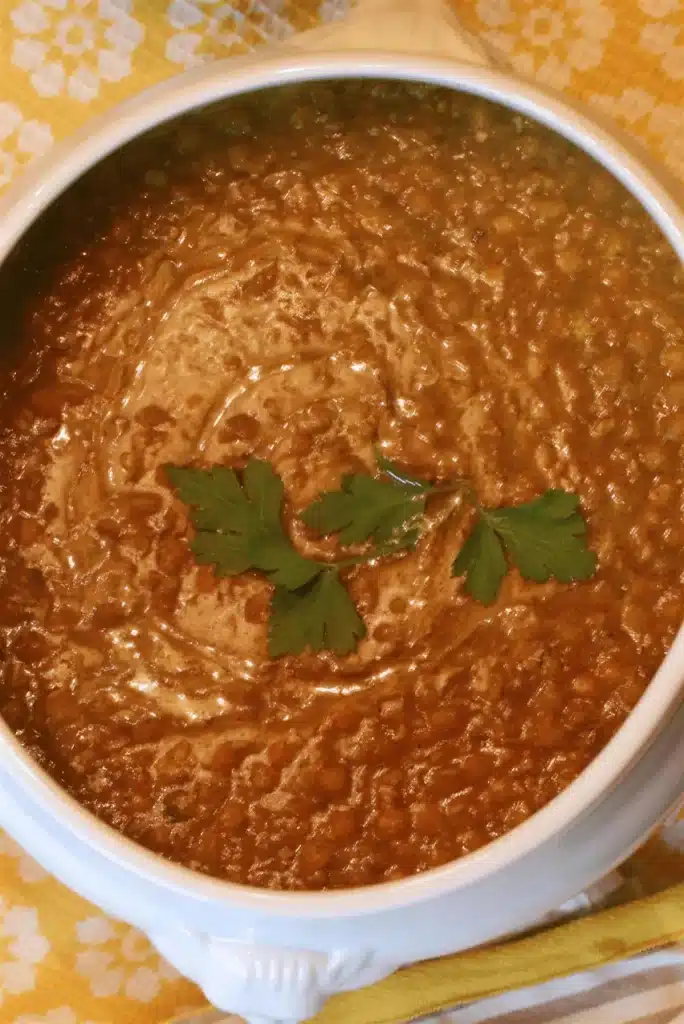
- One pot, no soaking, no blender, and forty five minutes from cold stove to bowl
- Two kinds of lentil, so it is creamy and spoonable at the same time
- Naturally vegan and gluten-free when you use vegetable stock
- Cheaper per serving than almost anything else you can put in a bowl
- It freezes for three months and tastes better on day two than on day one
- The heat, the thickness and the richness are all yours to adjust at the end

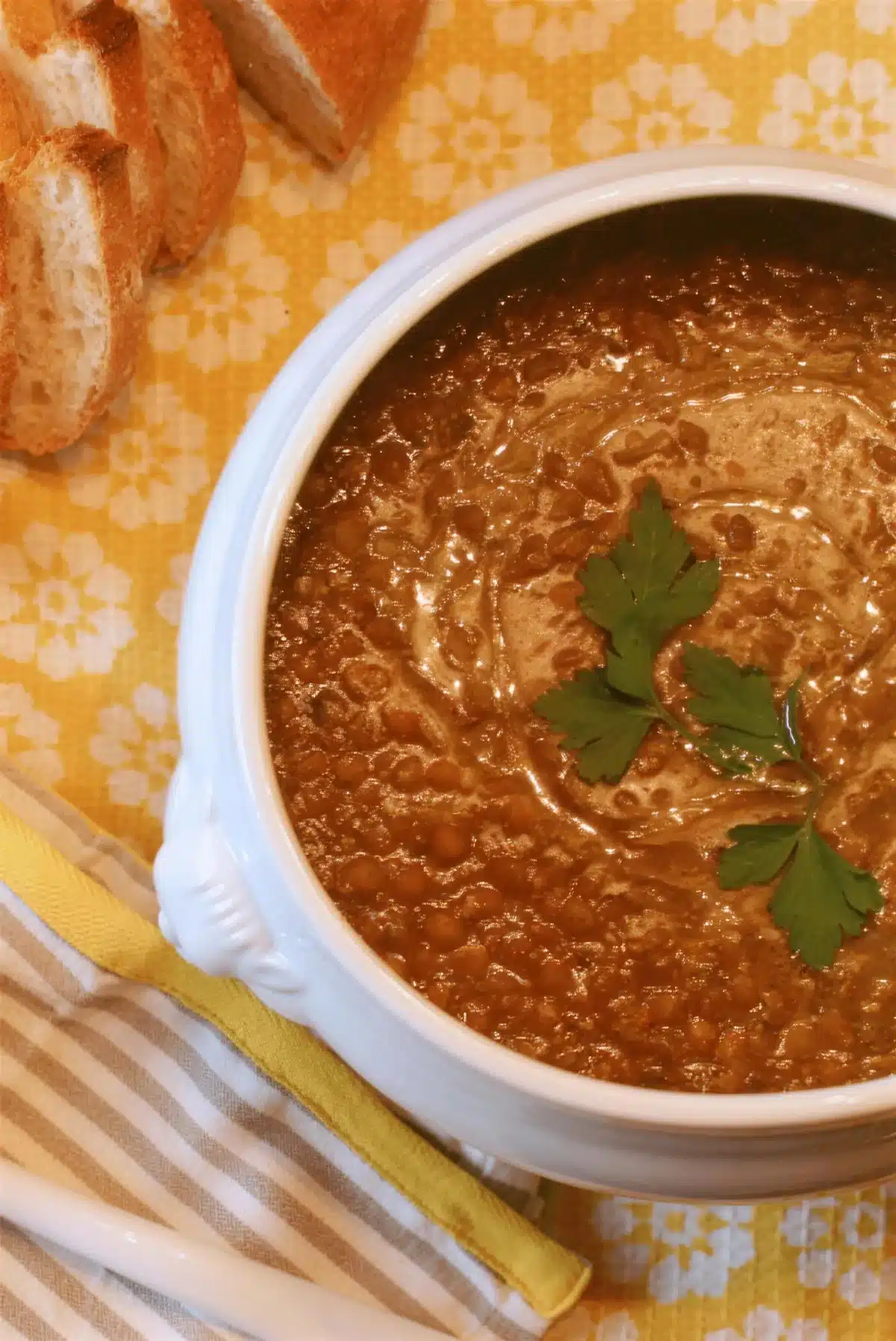
Two choices decide what lands in the bowl: which lentils go in the pot, and whether the coconut milk goes in at the start or at the end. Everything else is forgiving.
Red Lentils or Green: Which Lentil to Use
Most recipes pick one. This curry lentil soup uses both, in equal measure, and that is the single biggest reason the texture is right.
Red lentils have no seed coat, so they collapse completely in about twenty minutes and dissolve into the liquid. They are what makes a pot thick and creamy without any cream, blending or mashing. On their own they give you a smooth purée with nothing to chew.
Green and brown lentils keep their skins and hold their shape for a good forty minutes. On their own they leave a thin, brothy pot with lentils sitting at the bottom.
Together, three quarters of a cup of each, the red ones melt into the body of the soup while the green ones stay whole and give the spoon something to find. That is the texture people remember.
French green lentils, sometimes sold as Puy, are firmer still and take closer to fifty minutes. Use them if that is what you have, and add ten minutes.
Yellow split lentils behave like red ones and can replace them exactly. Brown lentils replace the green ones exactly. What you should not do is use only the fast kind or only the slow kind and expect the same bowl.
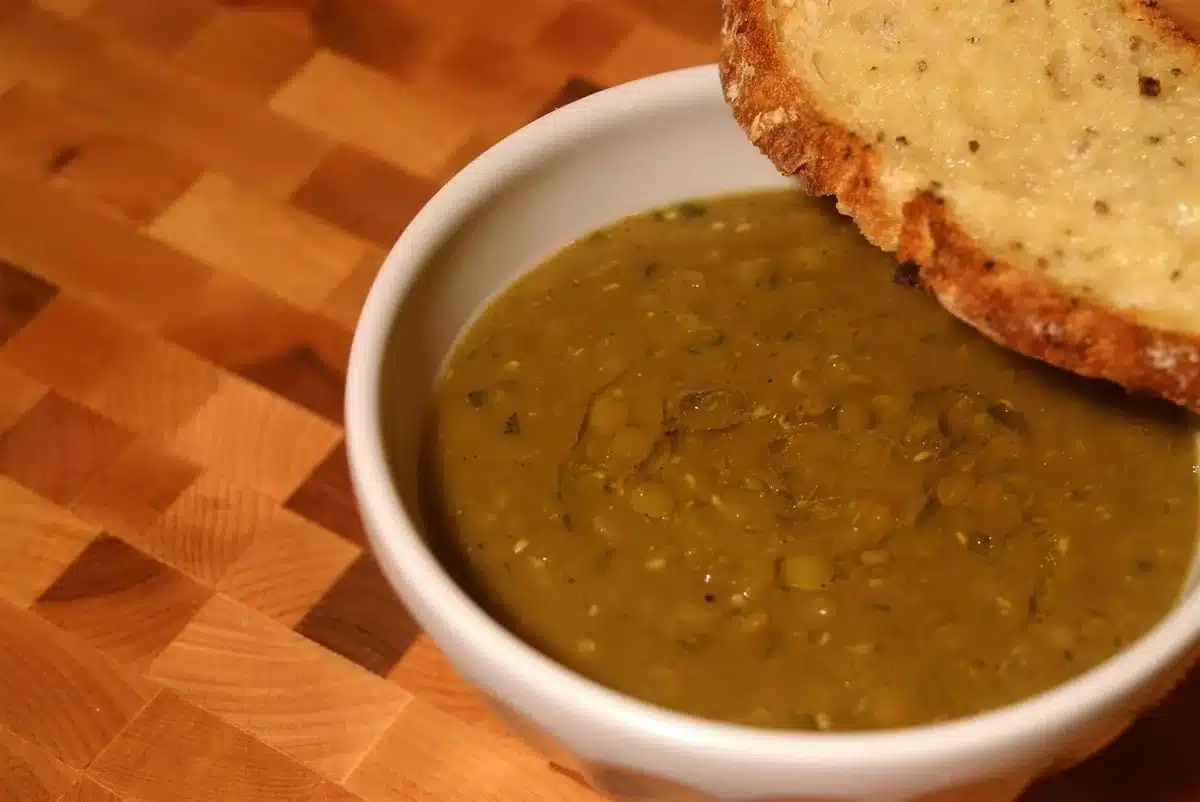
Lentils also need no soaking at all, which is the practical advantage over dried beans. Illinois Extension puts it plainly in its note that lentils do not need to be soaked first, unlike dried beans. Rinse them in a sieve until the water runs clear and they go straight into the pot.
Save this recipe
Enter your email and I’ll send this recipe straight to your inbox.
Ingredient Notes

Curry lentil soup asks for nothing hard to find, and most of it keeps for a year. Exact amounts are in the recipe card below.
- Red and green lentils: three quarters of a cup of each. Rinse both, pick over the green ones for the occasional small stone.
- Coconut oil: it belongs to the same flavor family as the finish. Neutral oil or butter both work.
- Onion, garlic and fresh ginger: the base. Dried powders are not a substitute here, and the ginger in particular has to be fresh.
- Curry powder: one tablespoon of a mild blend. See the note below on which one to buy, because it matters more than the brand of lentil.
- Turmeric: a teaspoon on top of the curry powder, for color and a little earthiness.
- Stock: six cups, vegetable or chicken. Whichever you use, taste it first, because a salty stock changes how much salt goes in later.
- Full-fat coconut milk: one can, stirred in near the end. The light version separates and tastes thin.
- Lime and cilantro: both go in off the heat. They are not garnish, they are the thing that stops the pot tasting flat.
A wide heavy pot rather than a tall narrow one. Lentils settle and catch, and a wide base gives you room to stir the bottom properly.
Why Coconut Milk Belongs in Curry Lentil Soup
A pot of curry lentil soup made with stock alone is fine. It is also a little austere, and the spices sit right on the front of your tongue with nothing to hold them.
Fat is what carries curry flavor. Coconut milk rounds the whole thing out, softens the chile, and turns the color from muddy brown to gold. It is also what lets you add real heat without the soup becoming punishing.
Add it at the end, not the beginning. Coconut milk simmered for half an hour splits into oil and solids and loses its sweetness. Stirred in for the last five minutes it stays emulsified and creamy.
Full-fat only. Light coconut milk is mostly water and gives you a pale soup with none of the body. If you want it leaner, use half a can rather than a whole can of the light one.
If you skip it entirely, add a tablespoon of butter or olive oil at the end instead, and a spoonful of yogurt in each bowl. The pot needs fat from somewhere.
How To Make Curry Lentil Soup
Have the onion chopped and the garlic and ginger ready before you turn the heat on. After that, curry lentil soup is mostly waiting.
- First, warm the coconut oil in a wide heavy pot and cook the chopped onion over medium heat for 6 to 8 minutes, until soft and translucent but not browned.
- Next, add the garlic, ginger, curry powder, turmeric and pepper flakes and stir for a full minute, until the whole kitchen smells of it and the spices look darker.
- Then tip in both lentils, the stock and the bay leaf. Bring it to a boil, drop it to a bare simmer, cover partly and cook for 30 minutes, stirring now and then so nothing catches.
- After that, fish out the bay leaf and stir in the coconut milk and salt. Simmer uncovered for five minutes, which is long enough to marry and short enough not to split.
- Finally, take the pot off the heat and stir in the lime juice and most of the cilantro. Taste it now, and expect to want more salt and more lime than you think.
Choosing a Curry Powder
Curry powder is a blend, not a spice, and it is the ingredient that decides what a pot of curry lentil soup tastes like. A standard mild supermarket curry powder leans on turmeric, coriander and cumin, which is exactly right here.
Madras curry powder is the same idea with far more chile and will make a noticeably hot pot from one tablespoon. Start with two teaspoons if that is what is in the cupboard.
Whatever you buy, smell it. Curry powder that has been open two years smells of dust and will taste of nothing, and it is the most common reason a bowl comes out bland.
How To Tell When the Lentils Are Done
The red lentils have vanished and the green ones are tender but still whole. That is the only test that matters in curry lentil soup, and it usually happens between twenty eight and thirty five minutes.
Fish out a green lentil and bite it. It should give completely with no chalky center. If it still has a core, keep simmering and check every five minutes, because old lentils from the back of the cupboard can take fifteen minutes longer than fresh ones.
The pot will look thinner than you expect while it is hot and will thicken as it cools. If it is genuinely too thick, loosen it with stock or water a splash at a time; if it is too thin, simmer it uncovered for another ten minutes.
One warning worth repeating: do not salt heavily until the lentils are soft. Salt early slows them down, and acid does the same, which is why the lime goes in at the very end and not at the start.
Make It Ahead
Curry lentil soup is a better dish on day two, which is not something you can say about many recipes.
Cook it completely, cool it, and refrigerate it. Overnight the spices settle into the lentils and the raw edge on the ginger softens. Reheat gently with a splash of stock, because it sets almost solid in the cold.
If you are making it more than a day ahead, hold back the lime and cilantro and add them fresh when you reheat. That is the difference between a pot that tastes made today and one that tastes reheated.
Storing Curry Lentil Soup
- Refrigerator: up to 5 days in a sealed container. It thickens dramatically overnight, which is normal.
- Freezer: up to 3 months. Freeze it flat in bags and it thaws in a sink of cool water in twenty minutes.
- Reheating: gently, on the stove, with stock or water stirred in to bring it back. A hard boil breaks the coconut milk.
- Portions: freeze it in single bowls rather than one block, since curry lentil soup is the sort of thing you want one serving of at a time.
- When to throw it out: any sourness, any fizz, or a lid that has domed. Lentils are starchy and spoil quietly.
Variations and Substitutions
The two lentils and the finishing acid are worth keeping. Everything else in a curry lentil soup is a suggestion.
- Tomato version: a can of fire-roasted diced tomatoes with the stock, which sharpens the whole pot and makes it closer to a dal.
- Spinach or kale: a few big handfuls stirred in with the coconut milk, wilted for the last three minutes.
- Thai style: two tablespoons of red curry paste in place of the powder, plus a teaspoon of fish sauce at the end.
- Chicken curry lentil soup: two shredded cooked thighs added with the coconut milk, and chicken stock instead of vegetable.
- Smooth: blend half the pot and stir it back in, for something closer to a bisque without losing everything to chew.
- Hotter: a whole fresh chile sliced in with the onion, or a spoonful of chile crisp in each bowl at the table.
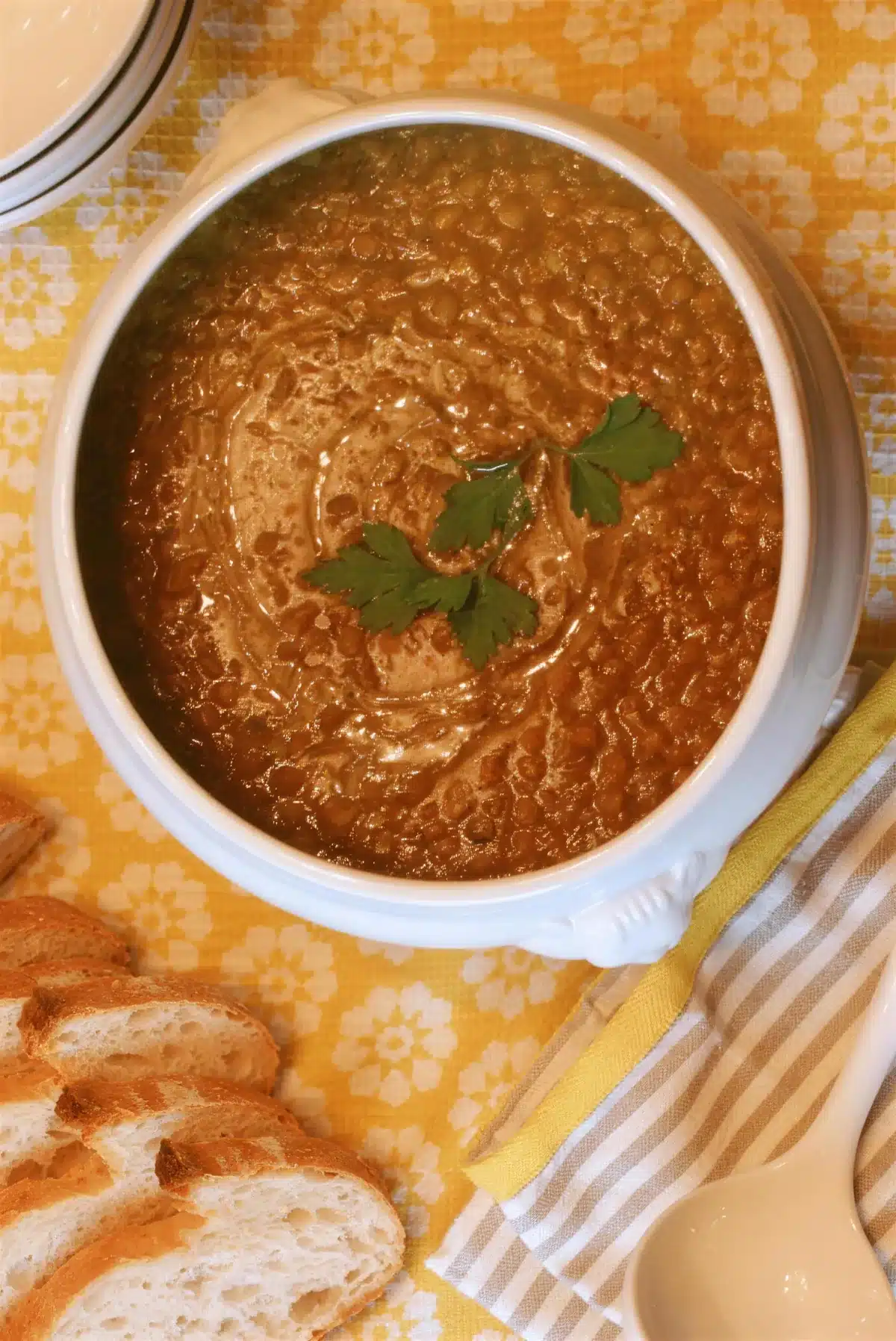
What to Serve with Curry Lentil Soup
Bread is the obvious answer and the right one, because curry lentil soup is thick enough to want something to push it around with.
- Naan, warmed in a dry pan, or herb scallion biscuits straight out of the oven.
- Steamed basmati rice underneath rather than alongside, which turns a bowl into a full plate.
- Something sharp on the side, such as a jar of refrigerator pickled vegetables, to cut through the coconut milk.
- A spoonful of thick yogurt and a scatter of toasted cashews in each bowl, for contrast in temperature and texture.
- Greens with a lot of garlic, like braised kale and cannellini beans, if you want a bigger table.
Here is what readers ask most often.
Curry Lentil Soup FAQ
Frequently Asked Questions
Do I have to soak the lentils first?
No. That is the main practical advantage lentils have over dried beans, and it is why curry lentil soup can be a weeknight decision rather than a weekend project. Rinse them in a sieve until the water runs clear, pick over the green ones for the occasional small stone, and put them straight into the pot. Soaking only shaves a few minutes off and makes the red ones turn to paste.
What curry powder should I use?
A mild standard blend built on turmeric, coriander and cumin. Madras blends carry much more chile, so start with two teaspoons rather than a tablespoon. Whichever jar you reach for, open it and smell it first: curry powder loses almost everything after about a year, and a tired jar is the single most common reason a pot tastes of nothing.
Why is my soup bland?
Curry lentil soup goes flat for three reasons: salt, acid or old spice, in that order. Lentils absorb a startling amount of salt, so a pot that tasted seasoned at the start will taste flat once they are cooked. Add salt, then the lime, then taste again before you reach for more curry powder. If it is still dull after all three, the powder itself is stale.
More Questions About Cooking Lentils
Frequently Asked Questions
Why are my lentils still hard after an hour?
They are old. Lentils dry out over years on a shelf and eventually refuse to soften at all. Hard water and salting or acidifying the pot early make it worse. Add the salt once they are tender and keep the lime until the heat is off, and if a bag has been in the cupboard since you cannot remember when, buy a new one.
Can I make this in a slow cooker or pressure cooker?
Yes to both. On low in a slow cooker it wants about six hours, with the coconut milk, lime and cilantro added in the last twenty minutes. In an electric pressure cooker, sauté the aromatics, then cook at high pressure for nine minutes with a natural release, and stir in the coconut milk afterward.
Why did my coconut milk curdle?
It boiled. Coconut milk holds together at a simmer and splits into oil and solids at a rolling boil, especially with the acid from lime nearby. Stir it in during the last five minutes over low heat, and reheat leftovers gently rather than blasting them.
Is this soup actually filling?
Yes, more than the calorie count suggests. A cup and a half of dry lentils across six bowls brings roughly fifteen grams of fiber and fifteen grams of protein per serving, and the fat from a full-fat can of coconut milk slows all of it down. Served over rice it is a complete dinner rather than a first course.
A pot of curry lentil soup in the refrigerator on Sunday quietly solves three lunches, and it is better every time you reheat it. For another one-pot bowl built on lentils, try my chicken and lentil stew.

Curry Lentil Soup
Save this recipe
Enter your email and I’ll send this recipe straight to your inbox.
Ingredients
Aromatics and Spices
- 2 tablespoons coconut oil or neutral oil
- 1 large yellow onion chopped
- 4 cloves garlic minced
- 2 tablespoons minced fresh ginger about a 2-inch piece
- 1 tablespoon mild curry powder 2 teaspoons if using Madras
- 1 teaspoon ground turmeric
- 1/2 teaspoon crushed red pepper flakes or to taste
- 1 bay leaf
Lentils and Liquid
- 3/4 cup red lentils rinsed
- 3/4 cup green or brown lentils rinsed and picked over
- 6 cups vegetable or chicken stock
- 14 ounces full-fat coconut milk 1 can, stirred smooth
- 2 teaspoons kosher salt less if the stock is salted
- 2 tablespoons fresh lime juice added off the heat
- 1/2 cup chopped fresh cilantro or flat-leaf parsley
Equipment
- Large pot
Instructions
Build the Base
- First, warm the coconut oil in a wide heavy pot over medium heat and cook the chopped onion for 6 to 8 minutes, until soft and translucent but not browned.
- Next, add the garlic, ginger, curry powder, turmeric and red pepper flakes. Stir for a full minute, until the spices darken slightly and the kitchen smells of them. This step matters more than an extra spoonful of curry powder would.
Simmer the Lentils
- Then tip in both lentils, the stock and the bay leaf. Bring it to a boil, drop it to a bare simmer, cover partly and cook for 30 minutes, stirring now and then so nothing catches on the bottom.
- After that, check the lentils. The red ones should have vanished into the liquid and the green ones should be tender with no chalky center. Give them another 5 to 10 minutes if they are not there yet.
Finish and Serve
- Fish out the bay leaf, then stir in the coconut milk and salt. Simmer uncovered for 5 minutes over low heat. Do not let it boil hard, or the coconut milk will split.
- Finally, take the pot off the heat and stir in the lime juice and most of the cilantro. Taste and expect to want more salt and more lime. Ladle into bowls and scatter the rest of the cilantro over the top.