
Built on whatever is left of the roast and finished with a lid of puff pastry that shatters under a spoon, this turkey pot pie is the reason I am always slightly relieved when there is too much bird.
There is no bottom crust here, which is deliberate. The filling goes into individual dishes, a disc of puff pastry goes over each one, and the pastry puffs upward in dry oven heat instead of steaming into a soggy base. Butternut squash and rainbow chard go in alongside the usual carrot and celery, and a spoonful of Greek yogurt and parmesan off the heat gives the sauce body without a pint of cream.
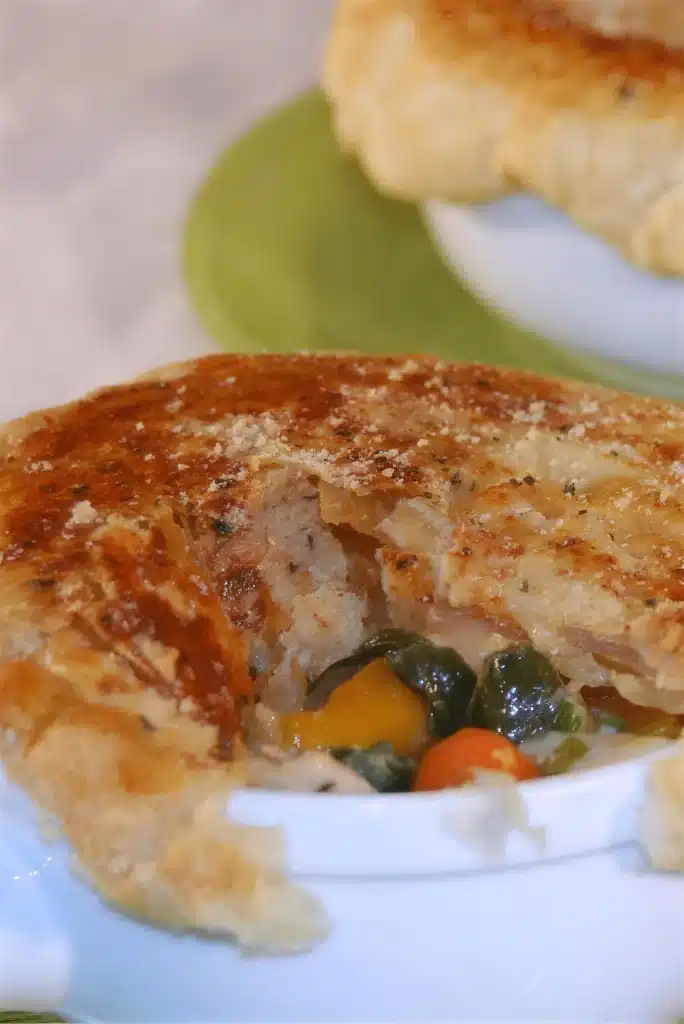
- Turns four cups of leftover turkey into six turkey pot pies that taste nothing like the roast
- Store-bought puff pastry means no rolling, no chilling and no blind baking
- On the table in about seventy minutes, most of it hands off
- No bottom crust, so there is no soggy base to worry about
- Freezes unbaked, which is the whole point of cooking on a holiday weekend
- Squash and chard make it feel like a real vegetable dish rather than beige filler

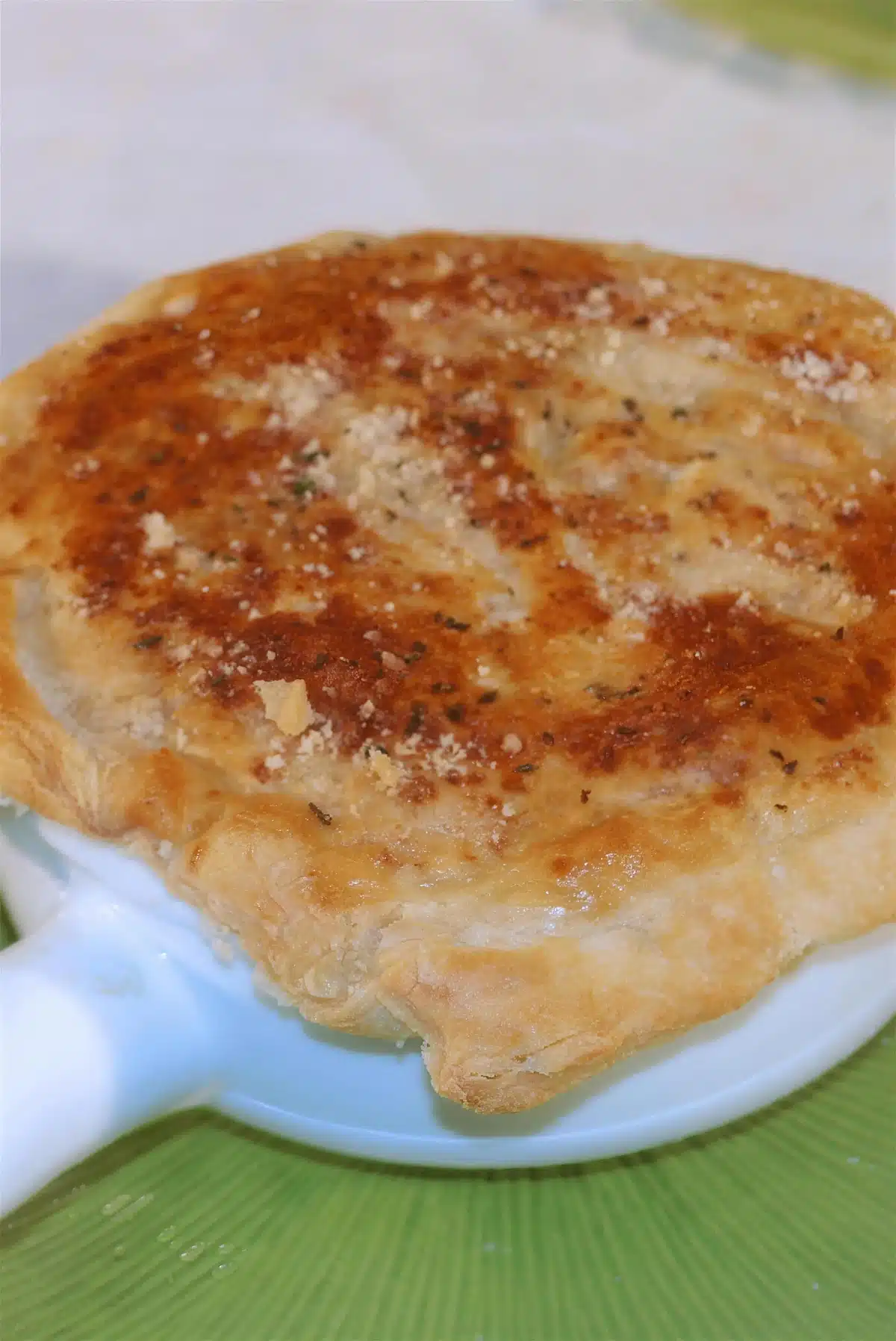
Turkey pot pie has a reputation for being an all-day project. That comes from the pastry, and store-bought puff pastry removes the entire problem. What is left is a stew you would happily eat on its own, and twenty minutes in a hot oven.
Puff Pastry, Pie Crust or Biscuits
The topping decides how much work a turkey pot pie is, and each of the three common choices behaves differently. Worth knowing before you commit.
Puff pastry is what this recipe uses. It is laminated with butter, so it rises into hundreds of separate leaves and browns very fast. Buy it frozen, thaw it in the fridge overnight, and keep it cold right up to the moment it goes on. Warm puff pastry does not puff, it melts.
Shortcrust pie dough gives you the diner version, sturdier and more sandy in texture. Use it if you want a bottom crust as well, and blind bake that bottom for fifteen minutes first. A wet filling poured into raw dough is exactly how a soggy base happens.
Drop biscuits are the fastest route of all and turn the dish into something closer to a cobbler. Spoon the dough over hot filling in rough mounds and bake until the undersides are cooked through, which takes longer than you expect.
Whichever you choose, the filling must be hot when the topping goes on. A cold filling means the underside of the topping sits in the danger zone for texture: not raw, not cooked, just damp.
Save this recipe
Enter your email and I’ll send this recipe straight to your inbox.
Ingredient Notes
Turkey pot pie is mostly a mirepoix and a roux. Exact amounts are in the recipe card below.
- Cooked turkey: Four cups, shredded or torn rather than cubed. Torn edges hold sauce; neat cubes shed it. Dark meat is better here than breast, which can go stringy on a second cooking.
- Butternut squash: About two pounds, cut small. It is the ingredient people are surprised by, and it turns sweet and silky against the savory sauce.
- Rainbow chard: Ribs removed and chopped. It wilts down to almost nothing and stops the filling reading as beige.
- Leek and onion: Both, not one or the other. The leek brings sweetness and the onion brings backbone.
- Dry white wine: One cup, cooked off almost completely. It lifts a rich sauce that would otherwise sit heavy.
- Flour and stock: A quarter cup of flour cooked into the pan for a minute or two, then two cups of stock. Homemade turkey stock from the carcass is a genuine upgrade.
- Greek yogurt and parmesan: Stirred in off the heat, never over it, or the yogurt will split. Together they do the job cream would do, with more flavor and less fat.
- Puff pastry and egg white: Two sheets, thawed but cold. Egg white alone gives a crisp, glassy shine without the heavy color an egg yolk brings.
You need a large saute pan, six ramekins or ovenproof bowls, and a baking sheet to catch drips.
Using Up the Leftover Turkey Safely
Turkey pot pie is a leftovers recipe, so the timeline matters more than it would otherwise. Nobody wants to be cautious about this on day five and wrong.
Cooked turkey needs to be in the fridge within two hours of coming off the table, and it keeps for three to four days, according to University of Illinois Extension. Their guidance also puts frozen cooked turkey at two to three months. Strip the carcass the same evening rather than refrigerating the whole bird, because a dense mass of meat and bone cools slowly and unevenly.
Store the meat in shallow containers, no more than two inches deep, which lets it drop below 40 degrees F quickly. Keep the light and dark meat separate if you can, since the dark is what you want for this turkey pot pie.
If day four arrives and you have not got to it, freeze the shredded meat in two-cup portions instead. It thaws overnight and goes straight into the pan. My turkey tetrazzini is the other dish I make from the same bag.
How To Make Turkey Pot Pie
Get the pastry out of the freezer the night before. A turkey pot pie moves quickly once the pan is hot.
- First, thaw the puff pastry in the fridge and heat the oven to 400 degrees F.
- Next, soften the onion and leek in butter and oil over medium heat for 5 to 7 minutes, until lightly browned, then add the carrot, celery and squash and cook 5 minutes more.
- Then stir in the chard and garlic and cook only until the chard wilts.
- After that, pour in the wine, raise the heat and boil it down until the pan is nearly dry. Sprinkle over the flour and cook it for 1 to 2 minutes.
- Add the stock, turkey, rosemary, thyme and celery leaves and simmer until the sauce thickens enough to coat a spoon.
- Off the heat, stir in the lemon zest, yogurt and parmesan, then taste and season firmly.
- Finally, ladle into ramekins, cap each with cold pastry pressed over the rim, brush with egg white and bake 20 to 25 minutes, until deeply golden.
Ramekins, One Big Dish or a Casserole
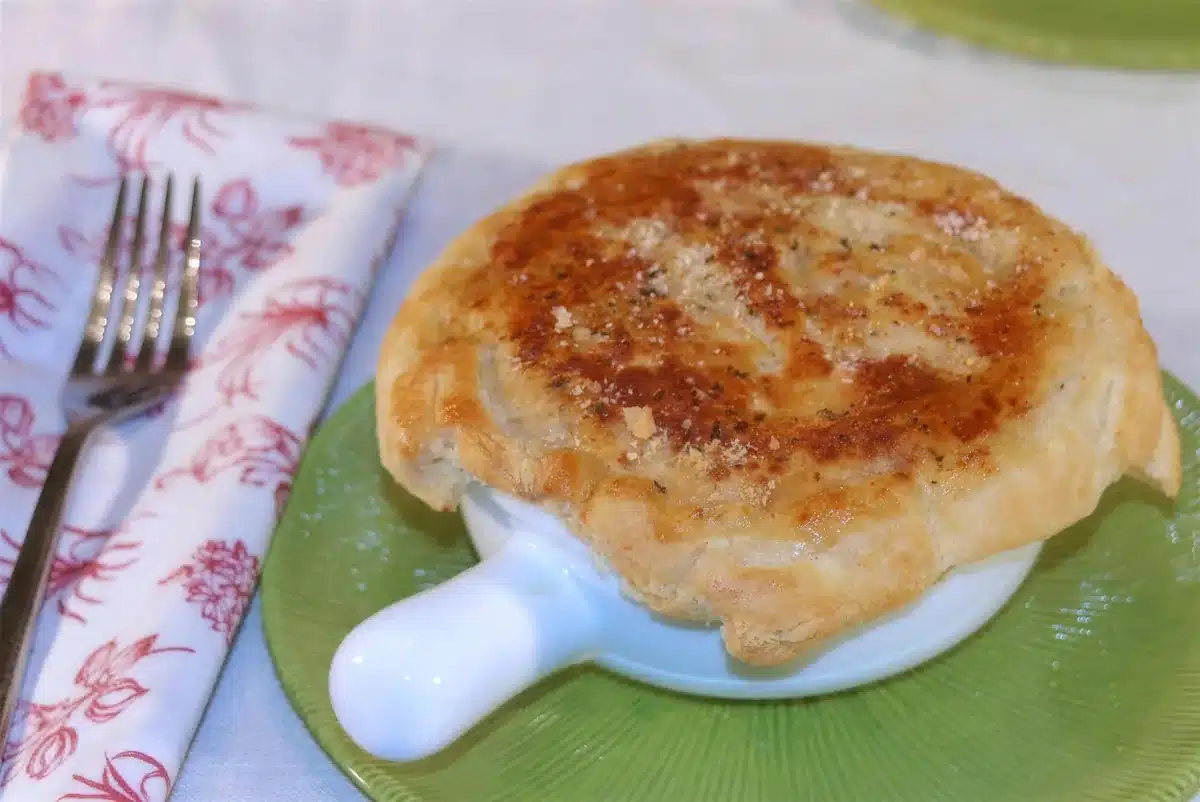
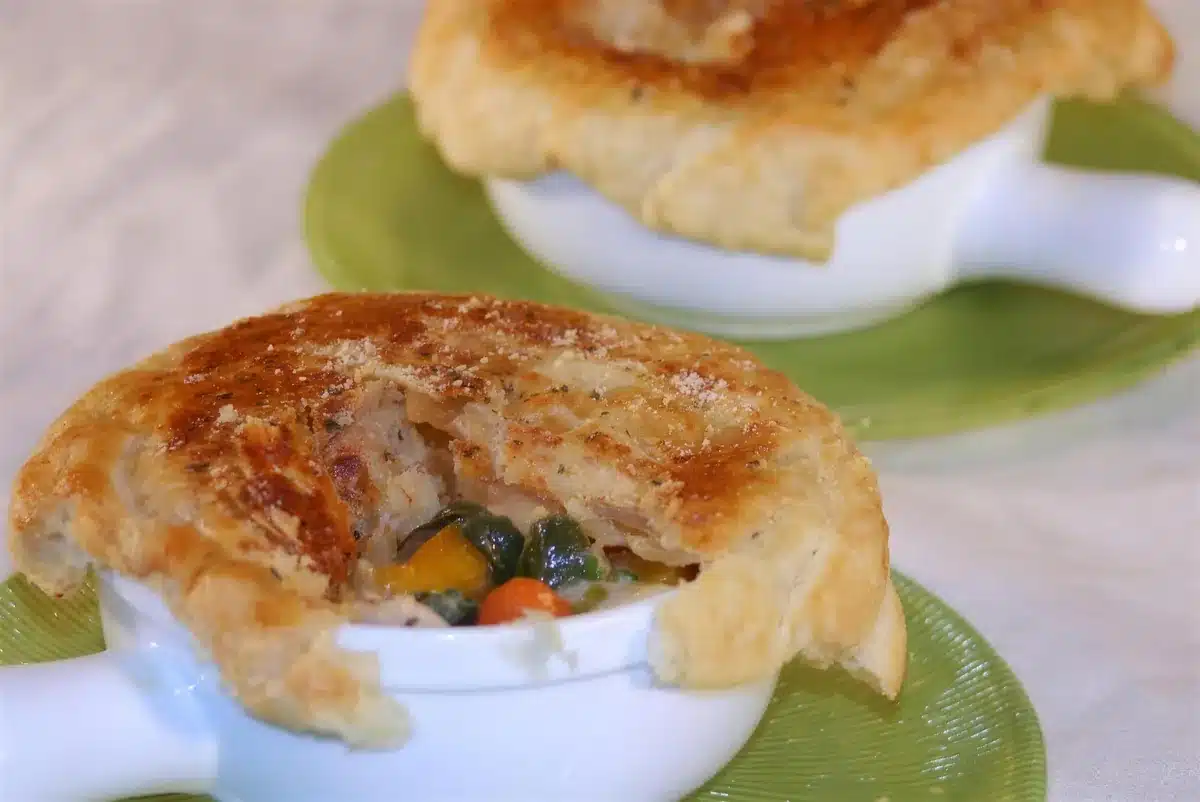
Individual dishes are the version in the photographs, and for turkey pot pie they are the best of the three. Every serving gets its own crisp lid, and they freeze and reheat in single portions.
For one large pie, use a 9×13-inch dish and a single sheet of pastry rolled to fit. Bake for 30 to 35 minutes, since a deeper dish takes longer to bubble through. Cut it into squares rather than trying to lift out neat wedges.
A skillet works too. Build the filling in a 12-inch ovenproof pan, lay the pastry straight on top and move the whole thing to the oven, which saves a dish. Whatever you use, set it on a baking sheet, because this filling boils over given the slightest chance.
How To Tell When Turkey Pot Pie Is Done
The filling in a turkey pot pie goes in already cooked, so what you are watching for is the pastry and the bubble.
The pastry is done when it has risen to two or three times its raw thickness and gone a deep, even gold across the whole surface, not just at the edges. Pale patches in the middle mean the leaves underneath are still doughy. Give it another five minutes rather than pulling it early.
You also want to see the sauce bubbling up around the edge of the pastry. That tells you the filling is hot through, which matters when the turkey has come out of the fridge or the freezer.
Then let the dishes stand for five minutes. Ramekins hold a startling amount of heat, and the sauce thickens as it settles. Serving straight from the oven is a good way to burn the roof of your mouth and get a runny turkey pot pie into the bargain.
Make It Ahead
Nearly all of a turkey pot pie can be done in advance, which is what makes it worth cooking on a holiday weekend.
The filling keeps for three days in the fridge and honestly improves overnight. Cool it quickly, spread out in a shallow container rather than left in the hot pan. Warm it through before it goes into the dishes, since cold filling under pastry is what produces a damp underside.
Assembled and unbaked, the dishes hold for a day in the fridge, covered loosely. Longer than that and the pastry starts absorbing moisture from the filling.
For anything beyond a day, freeze instead. Assembled turkey pot pie goes from freezer to oven with no thawing at all, which is the single most useful thing about it.
Storing and Freezing Turkey Pot Pie
Pastry never comes back quite as crisp as it went in, but a hot oven gets it most of the way.
- Fridge: baked pies keep 3 days covered. Reheat uncovered at 350 degrees F for about 20 minutes, never in the microwave, which turns pastry to leather.
- Freezing unbaked: assemble, wrap each dish tightly and freeze for up to 3 months. Bake from frozen at 375 degrees F for 45 to 55 minutes, covering the tops with foil if they color before the middle is bubbling.
- Freezing baked: also up to 3 months. Reheat from frozen at 350 degrees F for about 40 minutes.
- Filling alone: freezes for 3 months in two-cup portions and makes a fast weeknight base for pasta or rice.
Label the dishes with the date. Frozen pastry all looks the same in February.
Variations and Substitutions
The turkey pot pie method is a template, so almost every part of it will take a swap.
- Chicken: four cups of shredded rotisserie chicken behaves identically and needs no other change.
- No wine: use an extra half cup of stock plus a teaspoon of cider vinegar to replace the acidity.
- Biscuit topping: drop-biscuit dough spooned over hot filling, baked until the undersides are cooked, about 25 minutes.
- Gluten-free: thicken with a cornstarch slurry instead of flour and use gluten-free pastry, which needs a slightly cooler oven.
- Dairy-free: olive oil in place of butter, and skip the yogurt and parmesan. Finish with a spoonful of white miso for savoriness.
- Other vegetables: sweet potato, parsnip, mushrooms or frozen peas all work. Kale or spinach replace the chard one for one.
- Richer: a splash of heavy cream with the stock, in place of the yogurt.
What to Serve with Turkey Pot Pie
Turkey pot pie puts protein, starch and vegetables under the lid already, so keep the sides light and sharp.
- A green salad with a mustardy vinaigrette, which is all most people want alongside.
- Something with fruit and crunch, like a fall harvest salad.
- A spoonful of homemade cranberry sauce on the side of the plate, which is very good against the pastry.
- Quick-braised greens or roasted brussels sprouts.
- A dry, unoaked white, or a glass of cider.
Here is what readers ask most often about turkey pot pie.
Turkey Pot Pie FAQ
Frequently Asked Questions
Can I use raw turkey instead of leftovers?
Yes, though it is a different job. Poach or roast about a pound and a half of turkey thighs first, then shred them and build the turkey pot pie as written. Raw meat dropped into the sauce will not cook through in the time the filling takes to thicken, and the sauce will thin out as the meat releases liquid.
Why is my pot pie filling runny?
The flour was not cooked into the pan long enough, or the sauce never came to a proper simmer after the stock went in. Give it a full minute or two of stirring after the flour, and let it bubble until it coats the back of a spoon. Squash also releases water, so a filling that looks right in the pan can loosen slightly in the oven.
Do I need a bottom crust?
No, and this recipe deliberately skips it. A top crust only is the classic turkey pot pie, and it sidesteps the soggy bottom entirely. If you want one, blind bake it for 15 minutes before the filling goes in.
More Questions About Leftover Turkey
Good to Know
How long is leftover turkey good for?
Three to four days refrigerated, provided it went into the fridge within two hours of serving, and two to three months in the freezer. Store it in shallow containers rather than one deep tub, so it chills quickly. Anything with an off smell or a slippery surface goes in the bin regardless of the date.
Can I put frozen puff pastry straight onto the filling?
No. It needs to be thawed enough to unfold and cut without cracking, which takes a night in the fridge. It should still be properly cold when it goes on, though. Cold pastry hitting a hot oven is exactly what makes the layers separate and rise.
Can I make one large pot pie instead of six?
Yes. One large turkey pot pie wants a 9×13-inch baking dish, a single sheet of pastry rolled to fit, and 30 to 35 minutes in the oven. Set it on a baking sheet, cut a couple of vents in the top, and serve it in squares.
Can I skip the squash and chard?
You can, and it will still be good. Add another two carrots and a cup of frozen peas so the filling keeps its bulk. Those two ingredients are what make this version taste like a vegetable dish rather than a bowl of sauce, though, so try it once as written.
Make turkey pot pie once with the carcass still in the fridge and it becomes an annual habit. For another way to stretch a cooked bird across a week, try my Amish chicken and noodles.

Turkey Pot Pie
Save this recipe
Enter your email and I’ll send this recipe straight to your inbox.
Ingredients
For the Filling
- 2 tbsp butter
- 2 tbsp olive oil
- 1 medium yellow onion chopped
- 1 medium leek split lengthwise, washed well and chopped
- 3 carrots peeled and chopped
- 2 celery stalks chopped
- 1 butternut squash about 2 pounds, cut into small chunks
- 1 small bunch rainbow chard ribs removed, chopped
- 2 cloves garlic minced
- 1 cup dry white wine
- 1/4 cup all-purpose flour
- 2 cups turkey or chicken stock homemade if you have it
- 4 cups cooked turkey shredded or torn, dark meat preferred
- 1 tsp fresh rosemary chopped, plus extra to garnish
- 1 tsp fresh thyme chopped, plus extra to garnish
- 1/4 cup celery leaves roughly chopped
- 1/2 tsp lemon zest
- 1/4 cup Greek yogurt stirred in off the heat
- 1/4 cup grated parmesan cheese plus extra for the tops
- kosher salt and black pepper to taste
For the Topping
- 2 sheets puff pastry thawed overnight in the fridge, kept cold
- 1 egg white lightly beaten
Equipment
- Large sauté pan
- Medium or small ramekins
- Baking sheet
Instructions
Build the Filling
- First, thaw the puff pastry in the fridge overnight and heat the oven to 400 degrees F.
- Next, heat the butter and oil in a large saute pan over medium heat. Add the onion and leek with a pinch of salt and cook until lightly browned, 5 to 7 minutes. Add the carrot, celery and butternut squash, season, and cook 5 minutes more, stirring.
- Then stir in the chard and garlic and cook only until the chard wilts.
- After that, pour in the wine, raise the heat and boil until the pan is nearly dry. Sprinkle over the flour and cook, stirring, for 1 to 2 minutes. Add the stock, turkey, rosemary, thyme and celery leaves and simmer until the sauce is thick enough to coat a spoon.
- Off the heat, stir in the lemon zest, yogurt and parmesan. Taste and season firmly, since the pastry adds none of its own salt.
Top and Bake
- Roll the cold pastry out on a floured surface and cut a disc for each dish, large enough to overlap the rim. Prick each one a few times with a fork.
- Finally, ladle the hot filling into the ramekins, leaving a finger of space at the top. Cap each with pastry, pressing the overlap onto the rim, brush with egg white and scatter over the extra parmesan and herbs. Set the dishes on a baking sheet and bake for 20 to 25 minutes, until deeply golden and bubbling at the edges. Rest 5 minutes before serving.