
Most bowls sold as spicy guacamole carry one seeded jalapeno across two pounds of avocado, which is not spicy, it is guacamole with a rumor in it. This one uses two serranos with some of the ribs left in, plus cayenne and smoked paprika, and it is hot enough that people notice on the second chip.
The other half of the problem is texture. Avocado whipped smooth in a food processor tastes flat however much chile goes in, because there is nothing for the heat to sit against. Cut rather than mashed, in half-inch pieces, and the fat, the acid and the burn arrive one after another instead of all at once.
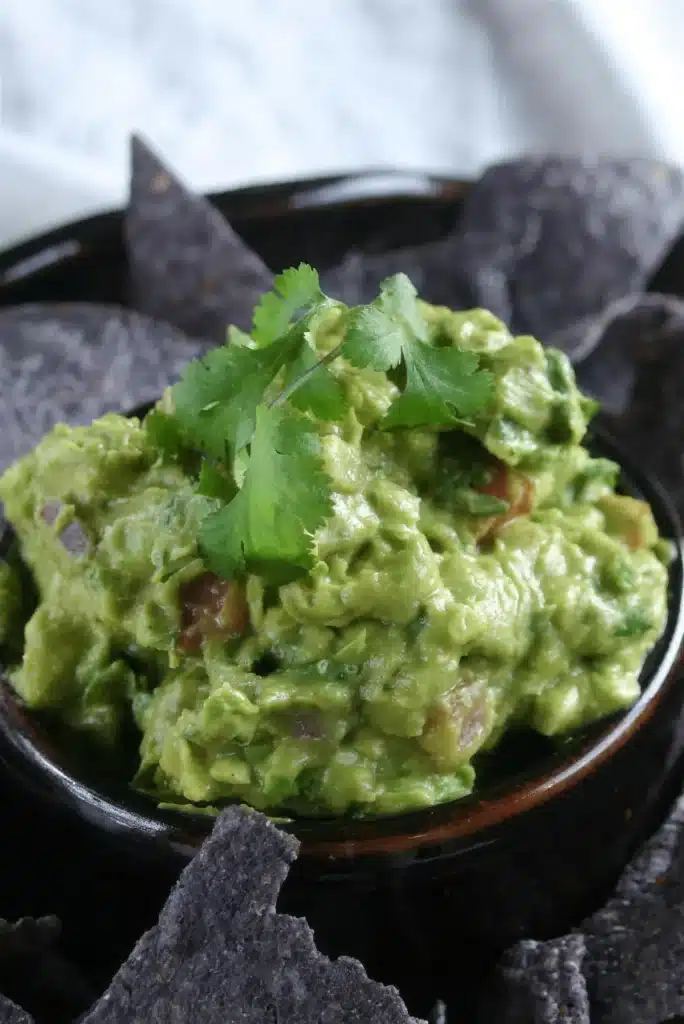
- Two serranos rather than one timid jalapeno, so it earns the name
- Cut into half-inch chunks instead of mashed, which is what keeps it tasting of avocado
- Cumin, cayenne and smoked paprika, so the heat has depth behind it as well as sharpness
- Fifteen minutes, one bowl, no cooking and nothing to preheat
- The heat is a dial you set at the chile stage, so one recipe covers a whole table
- It feeds eight as a dip, which is roughly one football game

Everything here turns on two decisions: how much of the chile you keep, and when to stop mashing.
- What Makes This Spicy Guacamole Actually Spicy
- Ingredient Notes
- Choosing and Ripening the Avocados
- How To Make Spicy Guacamole
- How Hot Should It Be
- Keeping Spicy Guacamole From Turning Brown
- Make It Ahead
- Storing Spicy Guacamole
- Variations and Substitutions
- What to Serve with Spicy Guacamole
- Spicy Guacamole FAQ
What Makes This Spicy Guacamole Actually Spicy
Heat in a spicy guacamole is not just a quantity of chile. It is which part of the chile, what else is in the bowl, and how the fat is behaving.
Serrano rather than jalapeno. A serrano runs roughly twice as hot as a jalapeno of the same size and has thinner walls, so you get heat without adding much watery flesh. Two of them across six avocados is assertive rather than punishing.
The ribs are where the heat lives. Not the seeds, despite what everyone says. The pale membrane the seeds attach to carries most of the capsaicin, so leaving one chile’s ribs in and stripping the other is how you set the level precisely.
Fat mutes chile. Avocado is about fifteen percent fat and capsaicin dissolves straight into it, which is why a dip needs noticeably more chile than a salsa to read the same. This is the single commonest reason a spicy guacamole comes out bland.
Cayenne fills a different gap. Fresh chile is bright and front of palate. Ground cayenne is slower and sits at the back. A quarter teaspoon gives the heat a tail rather than a spike.
Smoked paprika is not for heat. Half a teaspoon adds smoke and color and makes the whole bowl taste as though something was charred, which it was not.
Save this recipe
Enter your email and I’ll send this recipe straight to your inbox.
Ingredient Notes
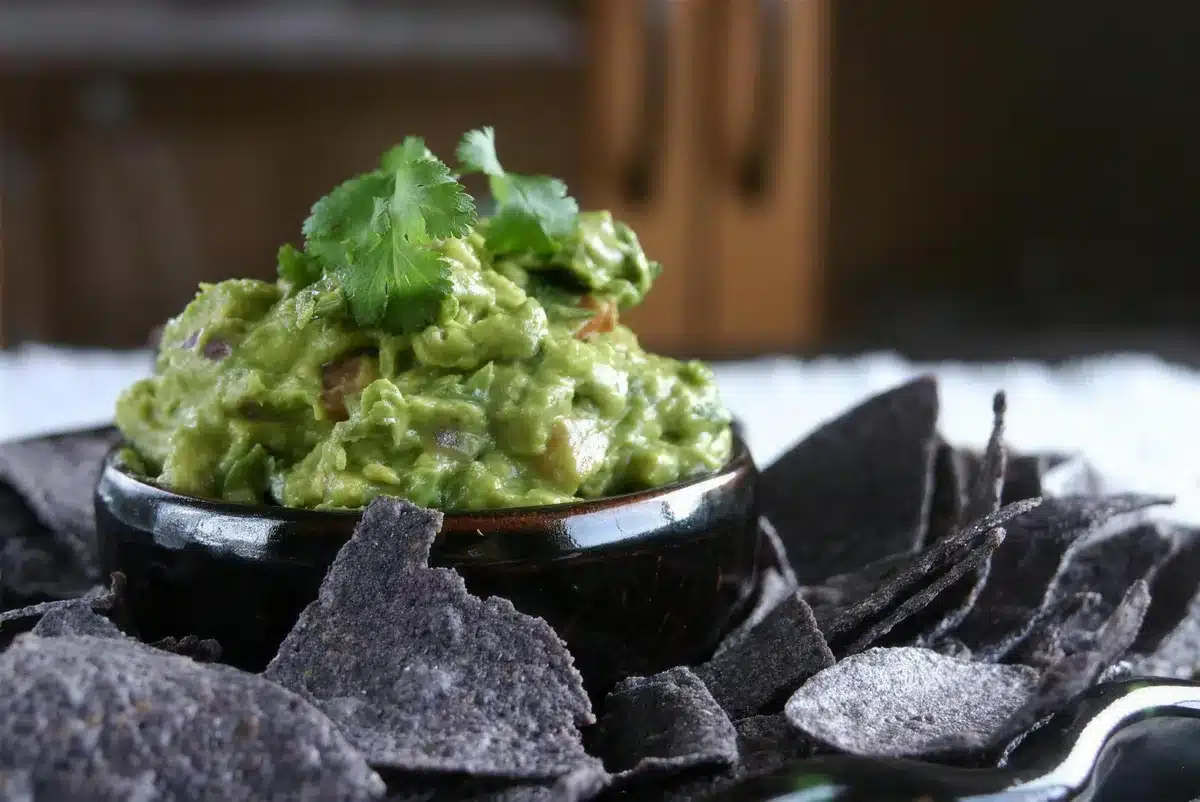
Spicy guacamole runs to eleven items and no cooking at all. Exact quantities are in the recipe card below.
- Hass avocados: six large, about two pounds. Hass rather than the smooth green ones, which are watery and mild. They should give to gentle pressure at the stem end without feeling hollow.
- Serrano chiles: two, and how you trim them is the whole heat control. Wash your hands and the board afterward, since capsaicin does not rinse off easily with cold water.
- Lime juice: three tablespoons, from about two limes, and more to taste at the end. Bottled juice tastes cooked and this dip has nowhere to hide it.
- Red onion: half a cup, finely diced. Rinse it under cold water for ten seconds if raw onion tends to overwhelm you, which takes the harsh edge off without losing the crunch.
- Tomato: one large, seeded and diced. Seeding matters. The jelly around the seeds is mostly water and it makes a spicy guacamole loose within twenty minutes.
- Cilantro: half a cup chopped, stems included, since the stems carry more flavor than the leaves and disappear once chopped.
- Kosher salt: a teaspoon and a half. Avocado needs more salt than people expect and underseasoning reads as flatness rather than as low salt.
Choosing and Ripening the Avocados
Six avocados all ripe on the same day is the hardest part of a spicy guacamole, and it is a scheduling problem rather than a cooking one.
Buy them hard and ripen them at home. Supermarket avocados that are already soft have usually been handled and are bruised inside. Firm fruit in a paper bag on the counter takes two to four days.
Speed it up with a banana. Ethylene from a ripening banana or apple in the same closed bag cuts a day or more off. It is a real effect and not a kitchen myth.
Stop the clock in the refrigerator. Once an avocado gives to pressure it will hold for two or three days chilled, so ripen a few early rather than hoping all six land together.
Test at the stem, not the belly. Flick the small stem cap off. Green underneath means ready, brown means overripe, and stuck fast means it needs more days. Squeezing the sides is how you bruise them.
Inside, look for even pale green. Gray strings or dark patches mean it went too far. One bad avocado in six is not worth rescuing when the whole bowl is at stake.
How To Make Spicy Guacamole
Spicy guacamole is fifteen minutes of knife work and nothing else. Have the bowl and the lime juice ready before the first avocado is opened.
- First, halve the avocados around the pit, twist them apart and lift the pits out with a spoon rather than striking them with a knife blade. Scoop the flesh into a wide bowl.
- Next, pour the lime juice over straight away and add the salt, then cut through the flesh with a blunt knife or the side of a fork until the pieces are about 1/2-inch across. Stop there.
- Then mince the serranos, keeping the ribs from one and stripping the other, and wash your hands and the board.
- After that, add the chiles, onion, tomato, cumin, cilantro, smoked paprika, cayenne and black pepper, and fold everything together with a spatula, turning the bowl rather than stirring hard.
- Finally, taste it on a plain tortilla chip rather than off a spoon, adjust the lime and salt, and serve.
How Hot Should It Be
The point of building a spicy guacamole around fresh chile is that the level is yours to set, and you set it in about thirty seconds.
Mild: one serrano, ribs and seeds removed. Warmth at the back of the throat and nothing more.
Medium: two serranos, both stripped. This is where most people are happy and it is the default in the recipe card.
Hot: two serranos, one of them left whole with its ribs. Noticeable on the second chip and building through the bowl.
Very hot: both chiles whole, plus half a teaspoon of cayenne. Worth doing once so you know where the ceiling is.
Chiles vary enormously. Two serranos off the same plant can be several times apart in heat, which is why you taste before serving rather than trusting a number. New Mexico State University’s Chile Pepper Institute, which maintains the reference list of the hottest chiles ever measured, is the place to go if you want to understand where any given variety sits.
Have a cold dairy fix on the table. Sour cream or cotija next to a hot bowl lets people manage their own portion, and it works where water does not.
Keeping Spicy Guacamole From Turning Brown
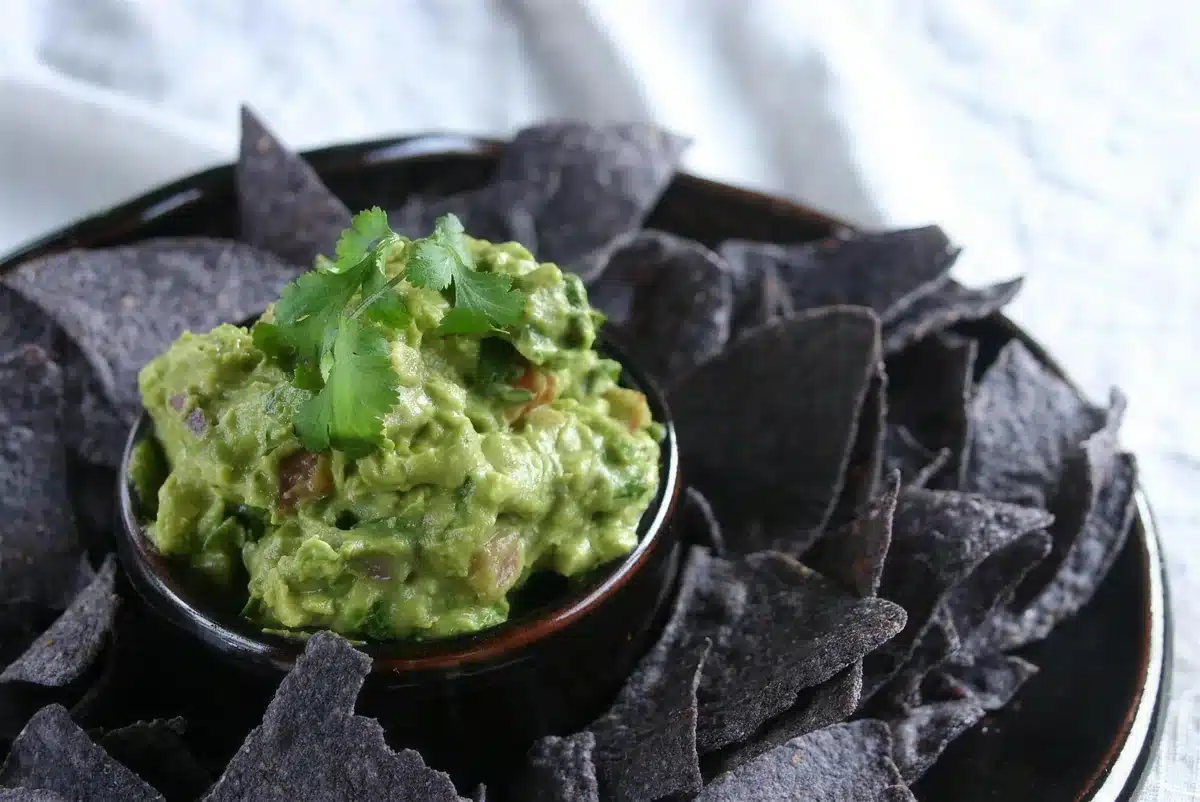
Browning is oxidation, not spoilage. It is ugly rather than dangerous, and there are only two things that genuinely help.
Acid, from the start. Lime juice goes on the flesh the moment it hits the bowl, not at the end. Every minute of exposed cut surface is a minute of browning you cannot undo.
Exclude the air. Press plastic wrap flat onto the surface so there is no gap at all. This is the one that actually works, and it will hold a bowl for a day.
The pit trick does not work. Burying a pit in the bowl protects the small circle of guacamole directly underneath it. That is all it does, and it has been tested repeatedly.
A thin layer of water on top is the restaurant method: half an inch of cold water poured over the surface, refrigerated, then poured off and stirred. It looks wrong and it works.
Brown on top is fine to eat. Scrape off the discolored layer if it bothers you and the spicy guacamole underneath is unchanged.
Make It Ahead
Spicy guacamole rewards a little planning even though it takes fifteen minutes.
Chop everything but the avocado a day ahead. Onion, tomato, chile and cilantro keep well in a sealed box, and the assembly then takes five minutes.
Mix the dry spices in advance and keep them in a twist of foil. Cumin, cayenne, smoked paprika and pepper, ready to tip in.
The finished bowl holds a day with plastic wrap pressed onto the surface. Longer than that and the onion starts to dominate as it leaches into the fat.
Give it fifteen minutes if you can. The ground spices need a little time in the fat to open up, and a bowl rested briefly tastes rounder than one served straight off the spatula.
Do not freeze it. Avocado cells rupture and thaw to a gray paste, and the tomato and onion turn to water.
Storing Spicy Guacamole
- Refrigerated, wrap pressed to the surface: spicy guacamole keeps 1 day at full quality.
- Under a water seal: 2 days. Pour off the water and stir before serving.
- At room temperature: 2 hours out on a table, after which both texture and food safety start to go.
- Never freeze it. The texture does not survive and no amount of stirring brings it back.
- Prepped components, avocado excluded: 1 day sealed and refrigerated.
Variations and Substitutions
In a spicy guacamole the avocado, the lime and the salt are fixed. The rest is a set of dials.
- Jalapeno instead of serrano: use three or four, since they are milder and thicker walled.
- Chipotle in adobo: one minced chile plus a teaspoon of the sauce, for smoke and a slower burn than fresh chile gives.
- Roasted garlic, two or three cloves mashed in, which rounds the whole bowl and suits a very hot version.
- No cilantro: flat-leaf parsley plus an extra squeeze of lime, which is a genuinely good bowl rather than a consolation prize.
- Charred corn or crumbled cotija folded in at the end, for sweetness or salt against the heat.
- Pomegranate seeds, which sounds odd and is excellent, since the sharp bursts cut through the fat.
What to Serve with Spicy Guacamole
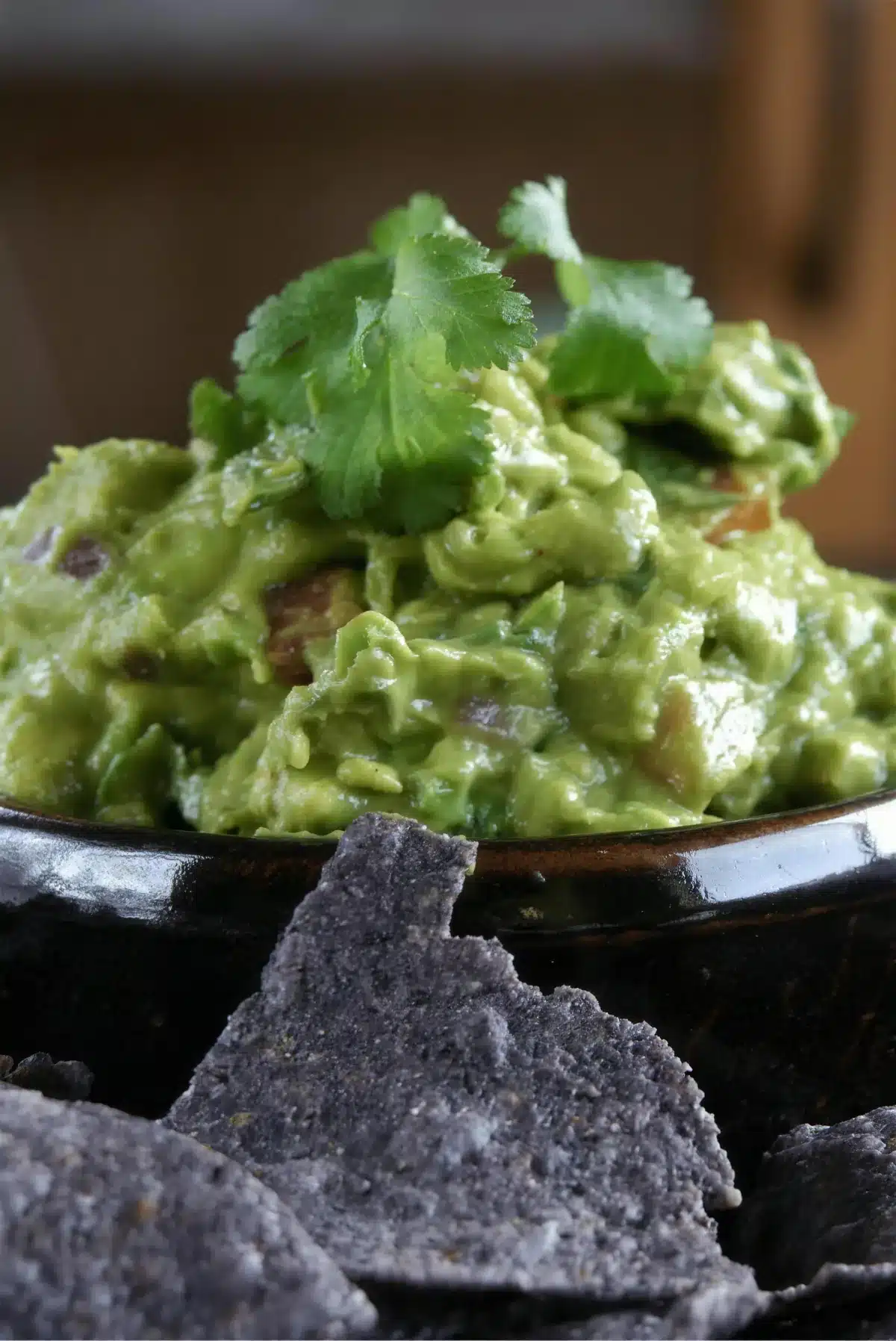
Spicy guacamole is rich and hot, so the useful partners are salty, crisp or cold.
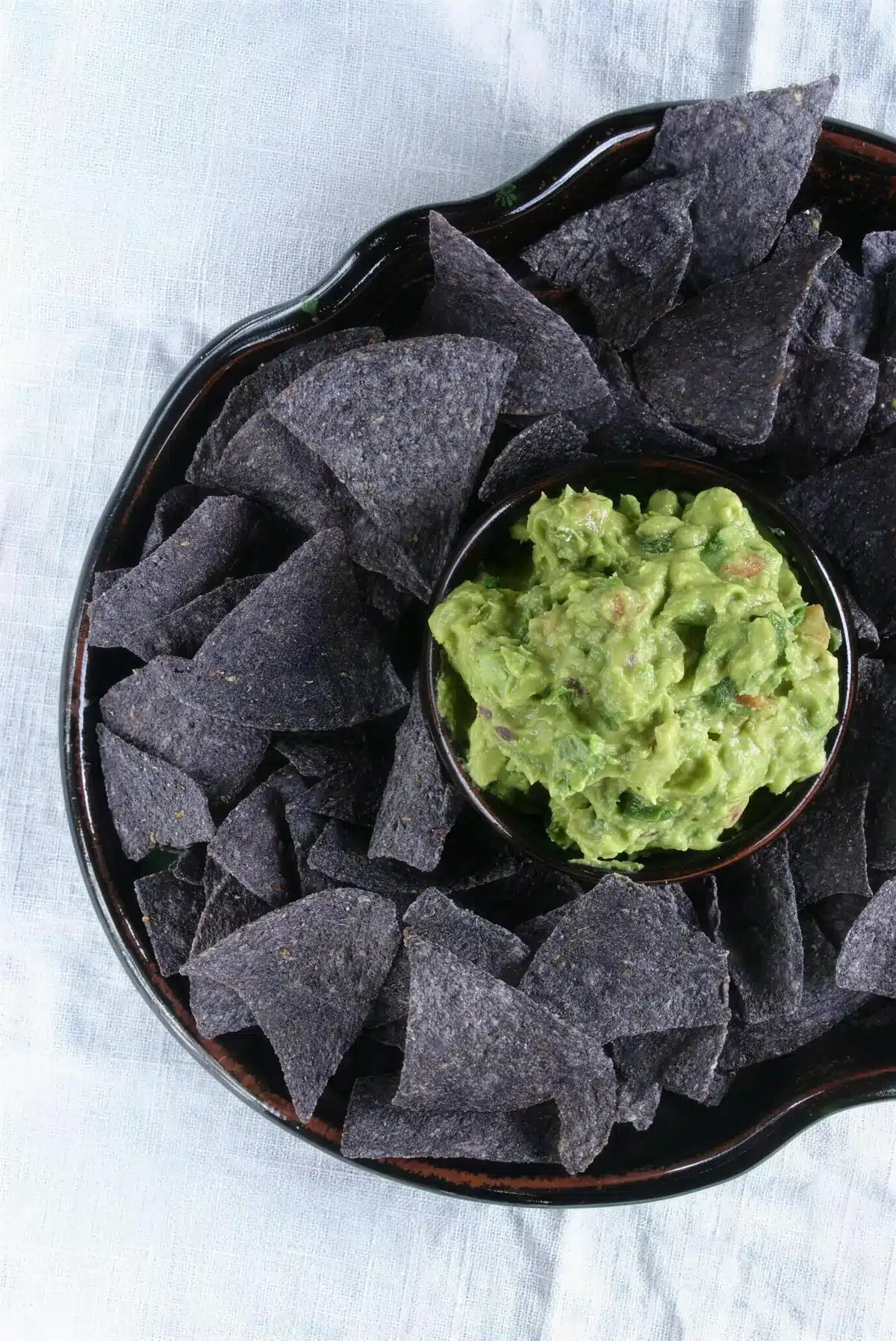
- Thick blue corn chips, which are sturdier than yellow ones and do not snap in a chunky dip.
- Jicama batons or cucumber spears for something cold and crunchy that is not fried.
- Cold beer or a lime soda, both of which do more against capsaicin than water.
- A bowl of black bean hummus beside it, so the table has something mild as well.
- My beer battered fish tacos, where a spoonful of this goes straight onto the tortilla.
For the rest of the spread, there is a charred corn salad that echoes the smoked paprika, and a Mexican breakfast hash for what to do with the leftovers the next morning.
Here is what readers ask most often.
Spicy Guacamole FAQ
Frequently Asked Questions
How do I make spicy guacamole hotter without ruining the texture?
Leave the ribs in the chiles rather than adding more chile flesh. The pale membrane inside carries most of the capsaicin, so one whole unstripped serrano adds far more heat than two stripped ones while adding almost no extra bulk or water. Ground cayenne is the other lever, since it adds heat with no volume at all. A quarter teaspoon is noticeable and half a teaspoon is a lot.
Should I use a food processor?
No. A processor emulsifies the avocado into something closer to a mousse, and once the fat is broken up that finely it coats the tongue and mutes both the chile and the lime. Cutting through the flesh with a blunt knife takes two minutes and leaves the half-inch chunks that make the dip taste of avocado rather than of dip.
How far ahead can I make it?
A day, with plastic wrap pressed flat onto the surface so no air touches it, or two days under a half-inch layer of cold water that you pour off before serving. Beyond that the raw onion takes over. If you want it fresher than that, chop everything except the avocado the day before and assemble in five minutes.
More Questions About Chiles and Avocados
Good to Know
Do avocado pits stop it browning?
Only directly underneath the pit. The pit blocks air from the small circle it is sitting on and does nothing at all for the rest of the bowl, which is why guacamole with a pit in the middle still goes brown everywhere else. Press plastic wrap onto the surface instead. It is the only method that reliably works.
My avocados are not ripe. Can I speed them up?
Yes. Put them in a paper bag with a banana or an apple and leave them on the counter. Both give off ethylene, which is the ripening hormone, and a closed bag concentrates it. Expect to cut a day or two off. Once an avocado yields to gentle pressure, move it to the refrigerator to stop it going further.
Why does mine taste bland even with plenty of chile?
Almost always salt, and second most often acid. Avocado is fatty and fat blunts everything, so a spicy guacamole needs more salt and more lime than the amounts look on paper. Taste on a chip rather than a spoon, since salted corn shifts your reading of both, and add lime a teaspoon at a time until the bowl tastes lively rather than heavy.
How much does this make?
About four cups, or eight generous servings. It halves cleanly but does not scale up much, since a bowl deeper than a few inches is hard to fold without mashing the avocado at the bottom.
Make it once with two serranos and a knife rather than a processor. For something mild beside it, try my black bean hummus.
Spicy Guacamole with Serrano Chiles
Save this recipe
Enter your email and I’ll send this recipe straight to your inbox.
Ingredients
The Base
- 6 large ripe Hass avocados about 2 pounds
- 3 tablespoons lime juice from about 2 limes, plus more to taste
- 1 1/2 teaspoons kosher salt plus more to taste
The Heat and the Mix-ins
- 2 medium serrano chiles minced, ribs left in on one for a hot bowl
- 1/2 cup red onion finely diced, about half a small onion
- 1 large tomato seeded and diced
- 1/2 teaspoon ground cumin
- 1/2 cup chopped cilantro packed, stems included
- 1/2 teaspoon smoked paprika
- 1/4 teaspoon cayenne pepper
- 10 turns freshly ground black pepper
Equipment
- Wide mixing bowl
- Blunt table knife
- Rubber spatula
Instructions
Mash the Base
- Halve the avocados around the pit, twist the halves apart and lift each pit out with a spoon rather than striking it with a knife blade. Scoop the flesh into a wide bowl.
- Pour the lime juice over the flesh straight away and add the kosher salt. Cut through it with a blunt table knife or the side of a fork until the pieces are about 1/2-inch across, then stop. It will break down further while you fold everything in.
Build the Heat
- Split the serranos lengthwise. Strip the ribs and seeds from one and leave the other intact for a hot bowl, or strip both for a medium one. Mince them finely, then wash your hands and the board, since capsaicin does not rinse off in cold water alone.
- Add the minced chiles, red onion, tomato, cumin, cilantro, smoked paprika, cayenne and black pepper to the bowl.
- Fold everything together with a rubber spatula, turning the bowl as you go rather than stirring hard, until the seasoning is even and there are still visible chunks of avocado.
Taste and Serve
- Taste it on a plain tortilla chip rather than off a spoon. Add lime juice a teaspoon at a time and salt a pinch at a time until the bowl tastes lively rather than heavy.
- Serve straight away, or press plastic wrap flat onto the surface and give it 15 minutes in the refrigerator so the ground spices open up in the fat.