
Chewy in the middle, crackled and sugar-crusted on top, and flavored with nothing but browned butter and dark brown sugar, these butterscotch cookies taste more like real butterscotch than any recipe built on a bag of chips.
That is the whole argument for making them this way. Butterscotch is butter and brown sugar cooked together, so if you brown the butter first and lean hard on dark brown sugar, the flavor comes from inside the dough rather than from something stirred into it. A dredge in more brown sugar before baking, and a few flakes of sea salt on top, and you have a cookie that tastes like the inside of a butterscotch candy.
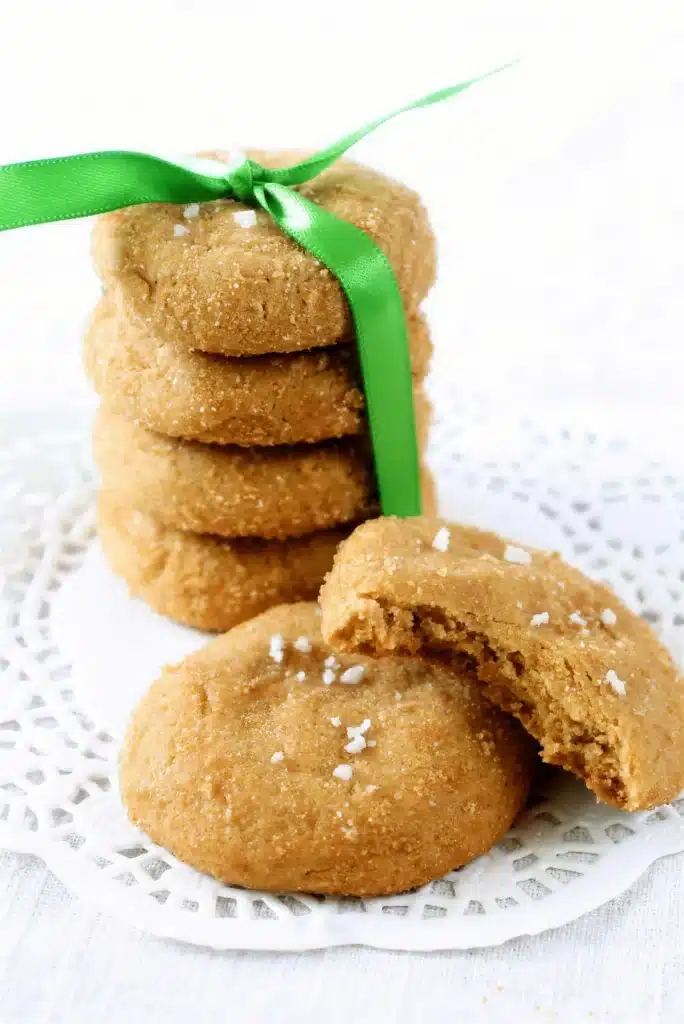
- Pantry ingredients only, with no specialty chips to hunt down
- Browned butter does all the work, and it takes five minutes
- Thirty large cookies from one batch, which is a lot of gifting
- Soft and chewy in the center with crisp, sugary edges
- The dough freezes as rolled balls and bakes straight from frozen
- Flaky salt on top turns them from sweet into genuinely good

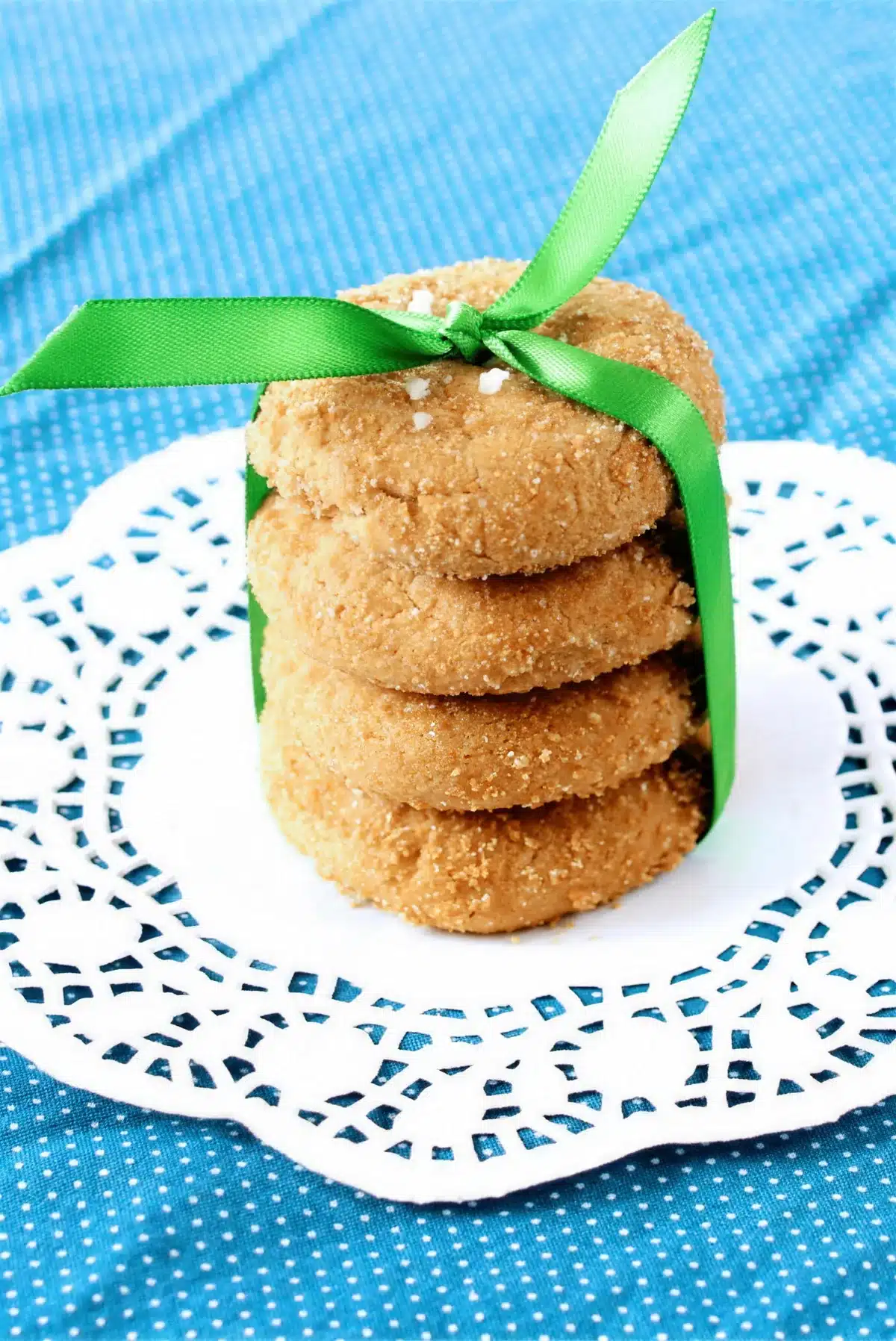
They are also very forgiving. There is no chilling step, no rolling pin and no icing, and the dough is thick enough that the cookies hold their shape even if your oven runs hot. If you have ever been disappointed by butterscotch cookies that came out flat and one-note, the problem was almost certainly the chips.
- What Is Butterscotch?
- Butterscotch Cookies Without Butterscotch Chips
- Ingredient Notes
- How To Brown Butter Without Burning It
- How To Make Butterscotch Cookies
- The Secret to Chewy Butterscotch Cookies
- Make It Ahead and Freeze the Dough
- Storing Butterscotch Cookies
- Variations and Substitutions
- What to Serve with Butterscotch Cookies
- Butterscotch Cookies FAQ
What Is Butterscotch?
Butterscotch is not a flavoring so much as a reaction. Butter and brown sugar heated together break down into a family of aromatic compounds, one of which is diacetyl. The PubChem entry for butanedione records it as having a very strong buttery odor even in dilute solution, and that molecule is a large part of what your nose reads as butterscotch.
So the two flavors that make butterscotch are butter and brown sugar. Nothing else is required, which is why a recipe that browns the butter and uses dark brown sugar throughout does not need chips to taste of anything.
The name is older than the flavoring industry and has nothing to do with Scotland. It is generally traced to Doncaster in Yorkshire in the 1810s, and the likeliest reading of the second half is the old sense of scotch meaning to score or cut, since the cooled slab was scored into squares before it set hard.
It helps to know where butterscotch sits among its neighbors. Caramel is white sugar cooked until it darkens, with dairy added afterward. Toffee is butter and sugar cooked much further, to around 300 degrees F, so it sets hard and snaps, as it does in these toffee bars. Butterscotch stops earlier and uses brown sugar rather than white, which keeps it soft, molasses-scented and pourable.
Save this recipe
Enter your email and I’ll send this recipe straight to your inbox.
Butterscotch Cookies Without Butterscotch Chips
Nearly every butterscotch cookies recipe online is a sugar cookie carrying a bag of butterscotch chips. Those chips are worth understanding before you decide whether you want them.
Commercial butterscotch chips are mostly sugar and palm or partially hydrogenated oil, with artificial butterscotch flavoring and colorant. They contain little or no butter and often no brown sugar at all. They hold their shape in the oven and deliver sweet pockets, but the base cookie around them tastes of nothing in particular.
Browning the butter takes the opposite approach. The flavor is spread through every bite instead of arriving in bursts, it is less sweet overall, and it tastes distinctly of caramelized dairy rather than of candy.
There is a practical benefit as well. Chips carry a lot of sugar, so a chip-loaded cookie needs its base dough dialed back to stay edible. Leaving them out means the dough itself can hold nearly two cups of dark brown sugar without tipping over, and that sugar is doing double duty as flavor and as the thing that keeps these butterscotch cookies chewy.
You can absolutely have both. Fold a cup of butterscotch chips into this dough at the end and you get the burst as well as the base. The recipe card lists them as optional for exactly that reason.
Ingredient Notes
Ten items, and nine of them are already in a baking cupboard. Exact quantities are in the recipe card below.
- Unsalted butter: Twelve tablespoons. Ten get browned and two are stirred in afterward off the heat, which cools the pan and stops the browning going too far.
- Dark brown sugar: A cup and three quarters in the dough, plus more for the dredge. Dark rather than light, because the extra molasses is most of the flavor and all of the chew.
- Egg plus one yolk: The extra yolk adds fat and emulsifiers without extra water, which is a large part of why these butterscotch cookies stay soft for days.
- Vanilla extract: A full tablespoon, which sounds excessive and is not. Vanilla and butterscotch amplify each other.
- All-purpose flour: Two and a half cups. Spoon it into the cup and level it rather than scooping, or you will pack in an extra ounce and get a dry cookie.
- Baking soda and baking powder: Both, in small amounts. Soda browns and spreads, powder lifts. Together they give a cookie with crisp edges and a soft dome.
- Salt, and flaky salt for the top: Fleur de sel, Maldon or any flaky sea salt. Use it sparingly, because a little goes a long way against this much sugar.
You need a heavy light-colored skillet for the butter, a stand mixer or hand mixer, and parchment-lined baking sheets.
How To Brown Butter Without Burning It
This is the only technical step, and it takes about five minutes. The milk solids in butter toast and turn nutty, and they go from perfect to acrid in roughly thirty seconds.
Use a light-colored pan, not a dark nonstick one, so you can actually see the color of the solids at the bottom. Cut the butter into tablespoon slices so it melts evenly.
Melt over medium heat and swirl the pan every so often. It will foam up loudly, then the foam subsides and the noise drops as the water boils off. Once it quiets down, watch it constantly. When the specks on the bottom turn the color of a hazelnut and the kitchen smells like toffee, pull it off the heat immediately.
Stir the reserved two tablespoons of cold butter in straight away. The pan holds enough heat to keep cooking the solids on its own, and the cold butter stops that.
How To Make Butterscotch Cookies
Everything after the butter is a straightforward creaming method, and the dough comes together in one bowl.
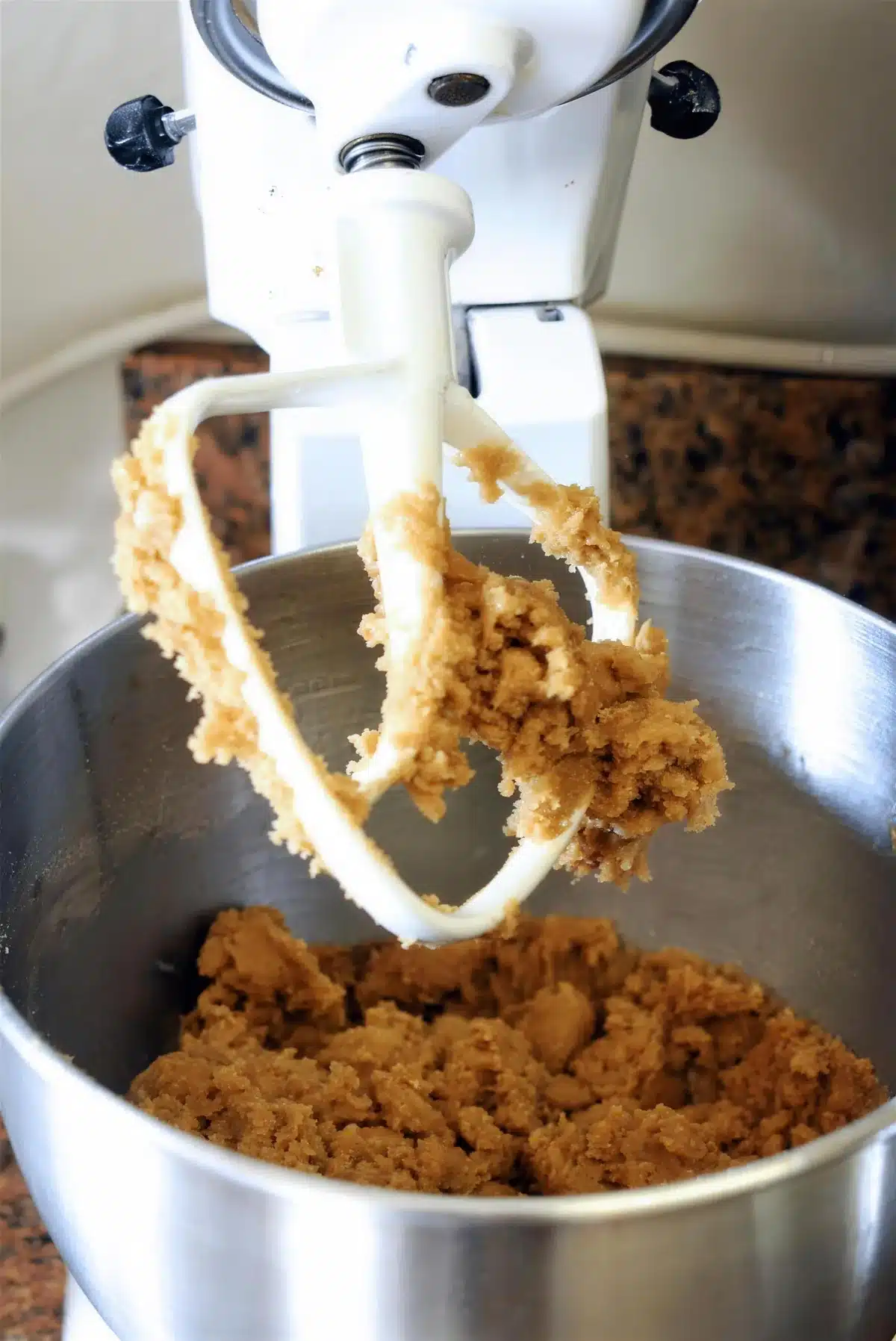
- First, heat the oven to 375 degrees F and line your baking sheets with parchment. Whisk the flour, baking soda and baking powder together and set it aside.
- Next, brown 10 tablespoons of the butter as described above, then stir in the remaining 2 tablespoons off the heat.
- Then pour the warm butter into the mixer bowl with the dark brown sugar and salt and beat until combined.
- After that, add the egg, the extra yolk and the vanilla, and beat again, scraping the bowl down at least once.
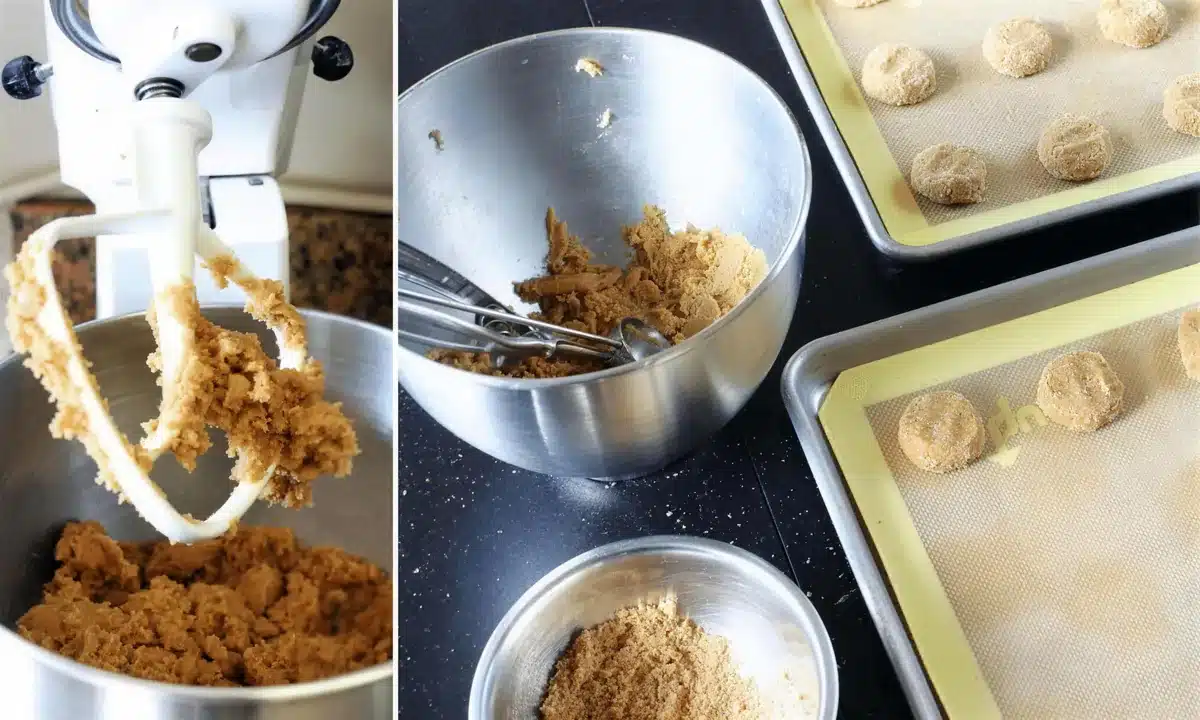
- Add the flour mixture in three additions on low speed, scraping between each. Stop the moment the flour disappears. The dough will be very thick.
- Roll tablespoon-sized pieces into balls, keeping them all the same size so they bake evenly.
- Finally, dredge each ball in the sugar mixture, space them well apart on the sheets, sprinkle with a few flakes of salt and bake for 10 to 12 minutes, or 13 to 15 for large ones, until the edges have just browned.
The Sugar Dredge and Why It Matters
Rolling the dough in a quarter cup of dark brown sugar mixed with two tablespoons of white sugar does two things. The white sugar melts into a thin crackled shell, and the brown sugar keeps the surface tacky enough for the salt flakes to stick. This makes 30 large cookies.
The Secret to Chewy Butterscotch Cookies
Chew is engineering, not luck, and four things control it here.
Brown sugar instead of white. Molasses is hygroscopic, meaning it pulls in and holds moisture from the air. A cookie made with dark brown sugar is still soft on day three, while the same cookie made with white sugar is a biscuit.
The extra yolk. Fat and lecithin without extra water gives a denser, chewier crumb. Whites do the opposite and make cookies cakey.
Underbaking on purpose. Take them out while the middles still look wet. Carryover heat from the sheet finishes them, and those two minutes are the entire difference between chewy butterscotch cookies and crunchy ones.
Not overmixing the flour. Every extra turn of the paddle after the flour goes in builds gluten and moves the texture toward bread. Three additions, low speed, stop early.
Make It Ahead and Freeze the Dough
Cookie dough is the most useful thing in a freezer, and this one behaves perfectly.
Roll the balls, dredge them in sugar, and freeze them on a tray until solid. Bag them and they keep for three months. Bake straight from frozen at the same temperature and add two minutes, with the salt sprinkled on just before they go in.
The dough also keeps in the fridge for three days, covered. It will be very firm straight from the cold, so let it sit out for twenty minutes before you try to roll it.
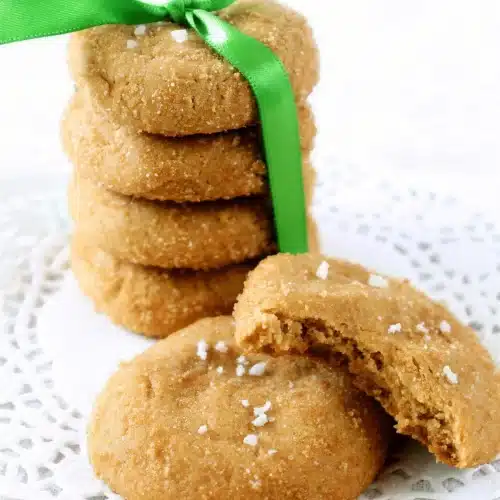
For gifting, bake them a day ahead rather than on the morning itself. Stack five or six flat, tie them with a ribbon, and sit the stack on a paper doily inside a tin. They travel far better than a thin, crisp cookie, and the flaky salt on top survives the journey.
Browned butter can be made a week ahead too. Keep it refrigerated, then melt it gently back to a liquid before you start, since solid browned butter creams differently.
Storing Butterscotch Cookies
These keep better than most, which is the other benefit of all that molasses.
- Counter: an airtight container at room temperature for up to 5 days. They are at their best on day two.
- The bread trick: drop a slice of sandwich bread into the container. The cookies pull moisture from it instead of drying out, and the bread goes stale in their place.
- Freezer: baked butterscotch cookies freeze for 3 months in a bag with the air pressed out. Thaw at room temperature for an hour.
- Refreshing: ten seconds in the microwave brings a day-old cookie right back, though only once.
Variations and Substitutions
The browned butter base takes additions well, so long as you keep the dough thick.
- Butterscotch chips: fold in a cup at the end for the classic version, listed as optional in the card.
- Chocolate: a cup of dark chocolate chunks is the single best addition, since bitterness cuts the sweetness.
- Pecans or walnuts: a cup, toasted and roughly chopped.
- Oatmeal: swap half a cup of the flour for rolled oats for a chewier, heartier cookie.
- Espresso: a teaspoon of instant espresso powder in the dry ingredients deepens everything without tasting of coffee.
- Bars: press the dough into a lined nine by thirteen pan and bake for 22 to 25 minutes, much like these butterscotch bars.
- Bourbon: a tablespoon in place of some of the vanilla, which suits browned butter particularly well.
What to Serve with Butterscotch Cookies
They are rich and salty-sweet, so anything alongside should be plain or bitter.
- Cold whole milk, which remains the correct answer.
- Strong black coffee or an espresso, since the bitterness resets your palate between cookies.
- Vanilla ice cream, with two cookies pressed around a scoop.
- A cookie plate with something spiced next to them, such as gingerbread latte cookies.
- A glass of bourbon or a tawny port for a grown-up version of milk and cookies.
Here is what readers ask most often about butterscotch cookies.
Butterscotch Cookies FAQ
Frequently Asked Questions
What two flavors make butterscotch?
Butter and brown sugar, cooked together. That is the entire definition. The molasses in brown sugar is what separates butterscotch from caramel, which starts with white sugar, and the cooking temperature is what separates it from toffee, which is taken much further until it sets hard.
What is the secret to chewy butterscotch cookies?
Dark brown sugar, an extra egg yolk, and taking them out of the oven while the centers still look underbaked. The molasses holds moisture for days, the yolk adds fat without water, and carryover heat on the hot sheet finishes the middles without drying them. Overmixing the flour undoes all three.
Do I need butterscotch chips?
No, and leaving them out is the point of this recipe. Browned butter and dark brown sugar produce the flavor throughout the cookie rather than in isolated pockets. If you want the chips as well, fold in one cup at the end. Adding them does make the finished cookie noticeably sweeter.
More Questions About Baking Cookies
Frequently Asked Questions
Why did my cookies spread too much?
Usually butter that was too hot when the flour went in. Browned butter comes out of the pan at well over 200 degrees, so let it cool until it is warm rather than hot before creaming. Too little flour causes it too, which is why you should spoon flour into the measuring cup and level it instead of scooping.
Do I have to chill the dough?
Not for this recipe. The dough is thick enough to hold without it, which is unusual and is largely down to the amount of flour and the extra yolk. Chilling for an hour does deepen the flavor slightly if you have the time, and it makes the dough easier to roll.
Can I make them smaller?
Yes. Use half-tablespoon pieces and bake for 8 to 9 minutes, which yields around sixty. The important part is that every ball in a batch is the same size, or the small ones will be dry by the time the large ones are set.
Can I double the batch?
Yes, and the recipe scales cleanly, though brown the butter in two separate pans rather than doubling it in one. A deeper layer of butter takes much longer to lose its water and the milk solids scorch unevenly at the bottom before the rest catches up.
Can I use salted butter?
You can, but reduce the added salt to a quarter teaspoon and taste the dough. Salted butter varies enormously between brands, and this recipe already carries flaky salt on top, so it is easy to end up with something that reads as salty rather than salted.
For another cookie built on a warm spice rather than chocolate, try my frosted eggnog cookies.
Butterscotch Cookies
Save this recipe
Enter your email and I’ll send this recipe straight to your inbox.
Ingredients
For the Cookie Dough
- 12 tablespoons unsalted butter cut into tablespoon slices, 10 browned and 2 reserved cold
- 1 3/4 cups dark brown sugar packed
- 1/2 teaspoon salt
- 1 egg
- 1 egg yolk extra, for chew
- 1 tablespoon vanilla extract
- 2 1/2 cups all-purpose flour spooned and leveled
- 1/2 teaspoon baking soda
- 1/4 teaspoon baking powder
- 1 cup butterscotch chips optional, folded in at the end
For the Sugar Dredge and Finish
- 1/4 cup dark brown sugar packed
- 2 tablespoons granulated sugar
- flaky sea salt fleur de sel or Maldon, for sprinkling
Equipment
- Skillet
- Oven
- Mixing bowl
- Paddle Attachment
- Whisk
- Wire rack
- Baking Sheets
- Parchment paper
Instructions
Brown the Butter
- First, heat the oven to 375 degrees F and line your baking sheets with parchment. Whisk the flour, baking soda and baking powder together and set aside, and stir the dredging sugars together in a separate small bowl.
- Next, put 10 tablespoons of the butter in a light-colored heavy skillet over medium heat, swirling occasionally. It will foam and then quiet down as the water boils off. The moment the specks on the bottom turn hazelnut brown and it smells nutty, take it off the heat and stir in the remaining 2 tablespoons of cold butter.
Mix the Dough
- Then pour the warm browned butter into a mixer bowl fitted with the paddle, add the dark brown sugar and salt, and beat until combined. Let it cool to warm rather than hot if the butter is still steaming.
- After that, add the egg, the extra yolk and the vanilla and beat again, scraping down the sides and bottom of the bowl at least once.
- Add the flour mixture in three additions on low speed, scraping between each, and stop the moment the flour disappears. The dough will be very thick. Fold in the butterscotch chips now if you are using them.
Shape and Bake
- Roll tablespoon-sized pieces of dough into balls, keeping every ball in a batch the same size so they bake evenly, then dredge each one in the sugar mixture until well coated.
- Finally, space them well apart on the sheets, sprinkle each with a few flakes of sea salt, and bake for 10 to 12 minutes, or 13 to 15 for large ones, until the edges have just browned and the centers still look underbaked. Cool on the sheet for one minute before moving them to a rack.