
A good chorizo hash is really a potato dish that happens to have sausage in it. Get the potatoes crisp and everything else falls into place; leave them pale and soft and no amount of chorizo will save the pan.
This is the Mexican version, built on fresh pork chorizo rather than the cured Spanish kind, with a little serrano, garlic and paprika, eggs stirred through at the end and crumbled queso fresco, lime and salsa on top. It takes about forty-five minutes, most of which is the potatoes doing two things in sequence: a short boil, then a long unhurried browning in the fat the sausage left behind.
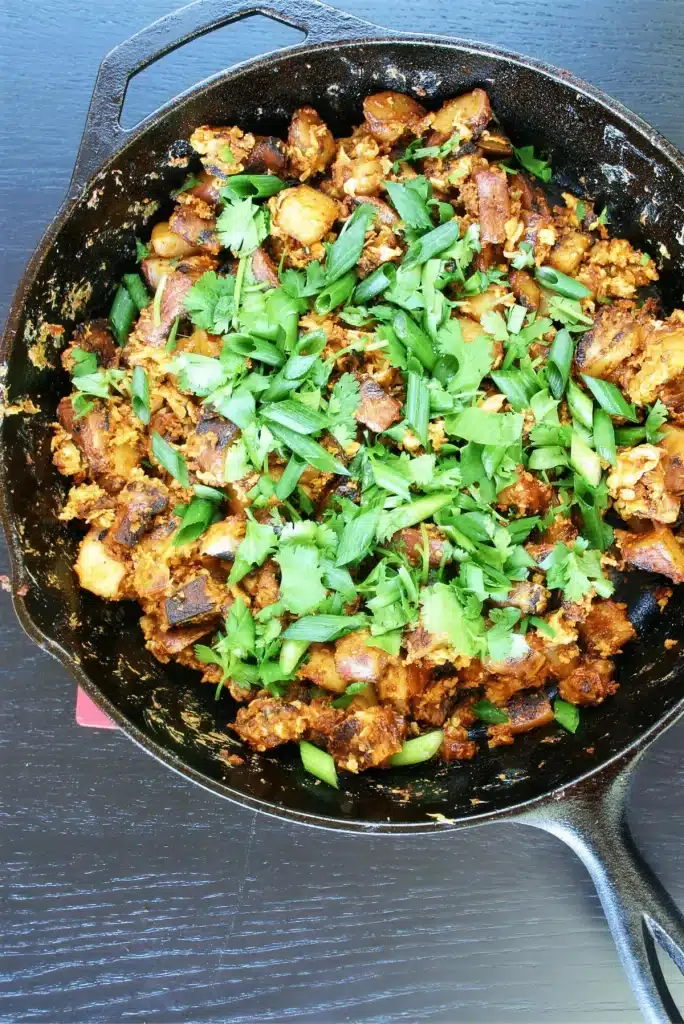
- The potatoes brown in rendered chorizo fat, which is the whole flavor of the dish
- One skillet, about 45 minutes, and it feeds four
- Eggs go in scrambled and stirred through rather than fried on top, so every forkful has some
- Queso fresco, lime and salsa at the table means everybody seasons their own
- The potatoes can be parboiled the night before
- It reheats better than most egg dishes because the potatoes carry it

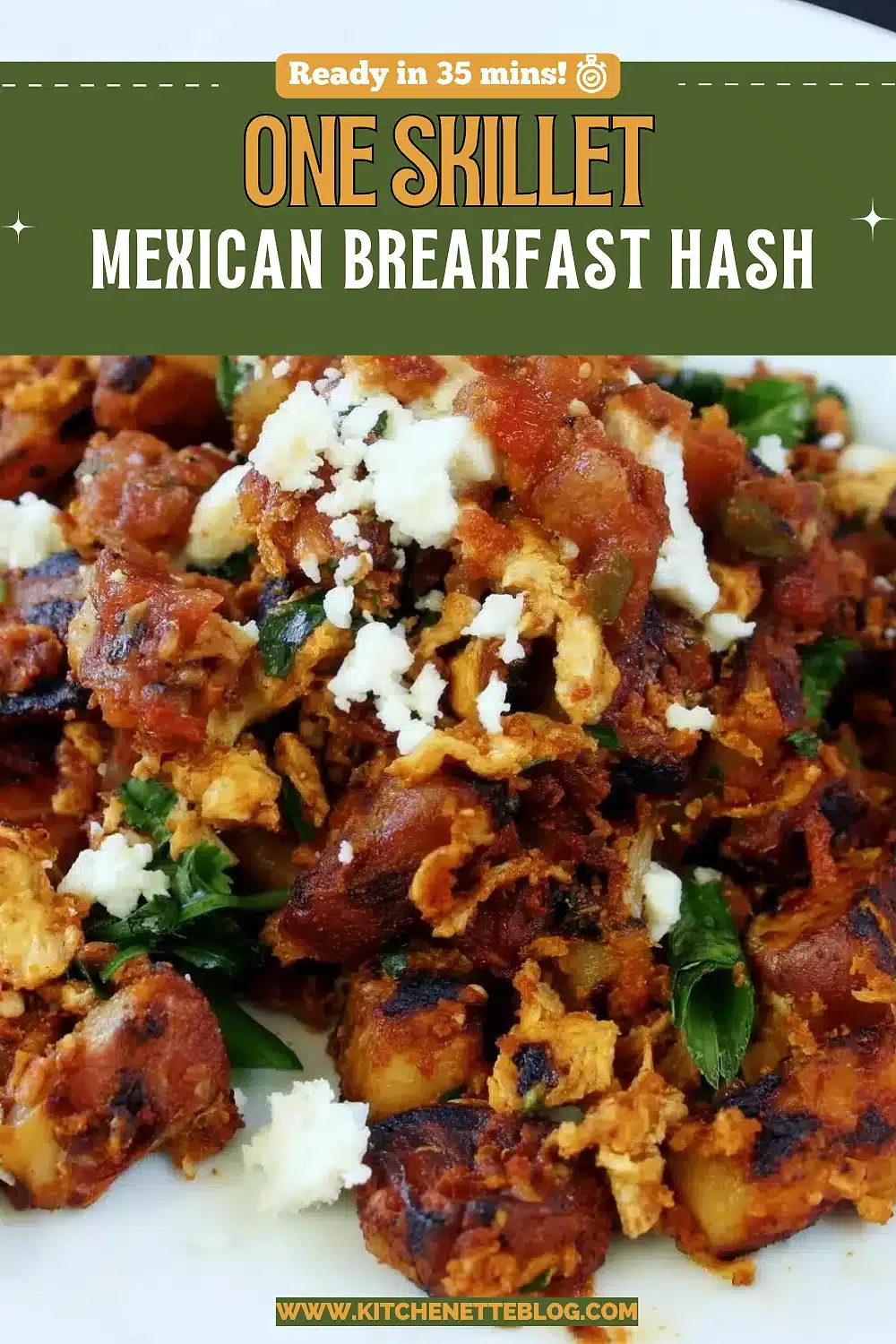
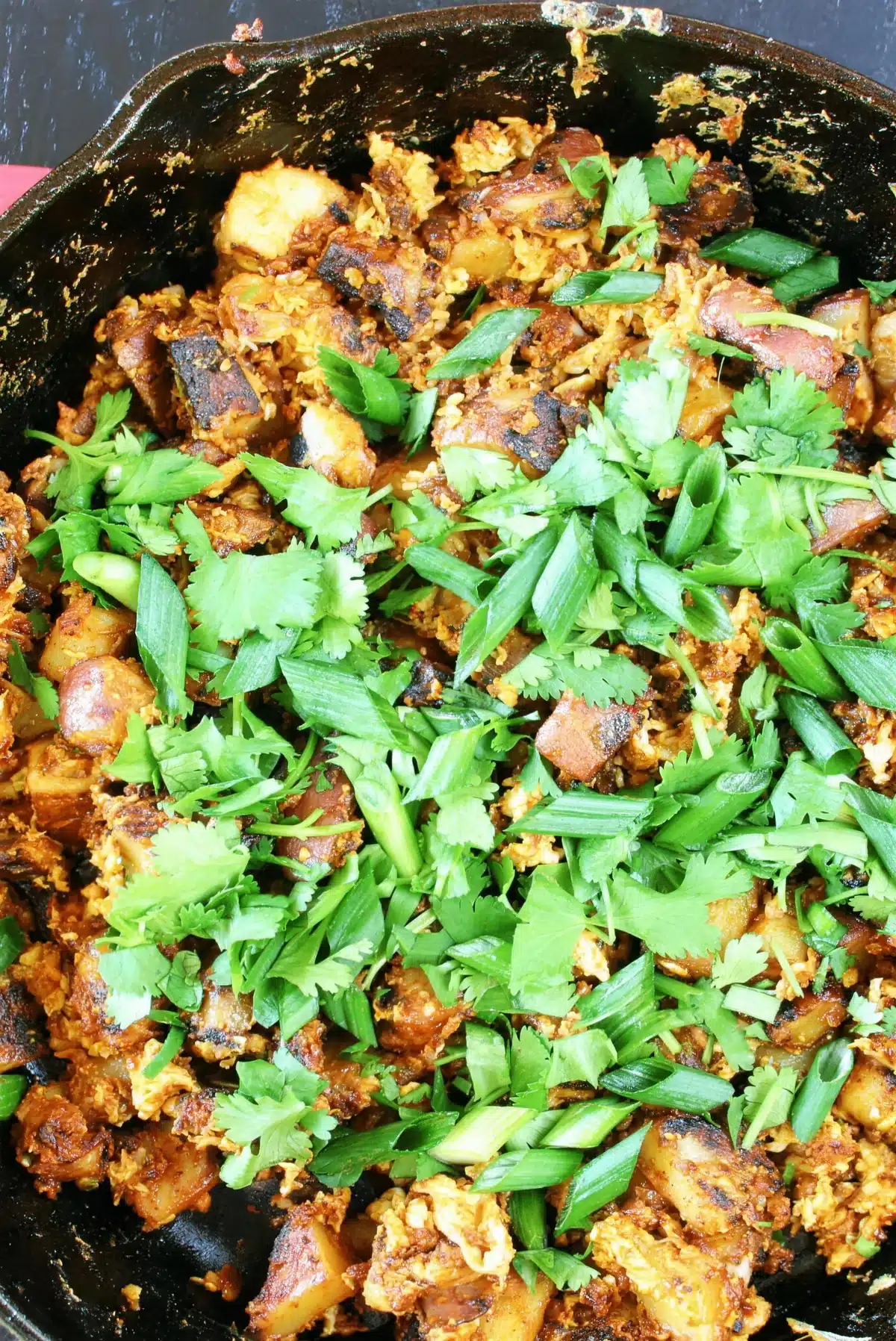
There are only two techniques here, and one of them is the reason most versions disappoint.
What Makes a Good Chorizo Hash
Every chorizo hash lives or dies on the same question: are the potatoes actually crisp?
Two-stage cooking is not optional. Raw potato dropped straight into a skillet browns on the outside long before the middle is cooked, so you end up choosing between burnt and raw. A short boil cooks the inside; the skillet then only has to do the crust.
The chorizo fat is the seasoning. Fresh Mexican chorizo renders a startling amount of brick-red, chile-scented fat. Pour that away and you have thrown out the best thing in the pan. This chorizo hash browns the potatoes in it, which is why the recipe needs almost no added oil.
The pan has to be big enough. A pound and a half of potatoes needs a 12-inch skillet. Crowd them into a 10-inch pan and they steam, which is the single commonest reason a chorizo hash comes out beige and soft.
Restraint with the spatula. Stir constantly and nothing browns. Let the potatoes sit still for two or three minutes at a time and they build a crust.
Save this recipe
Enter your email and I’ll send this recipe straight to your inbox.
Getting the Potatoes Crisp Instead of Steamed
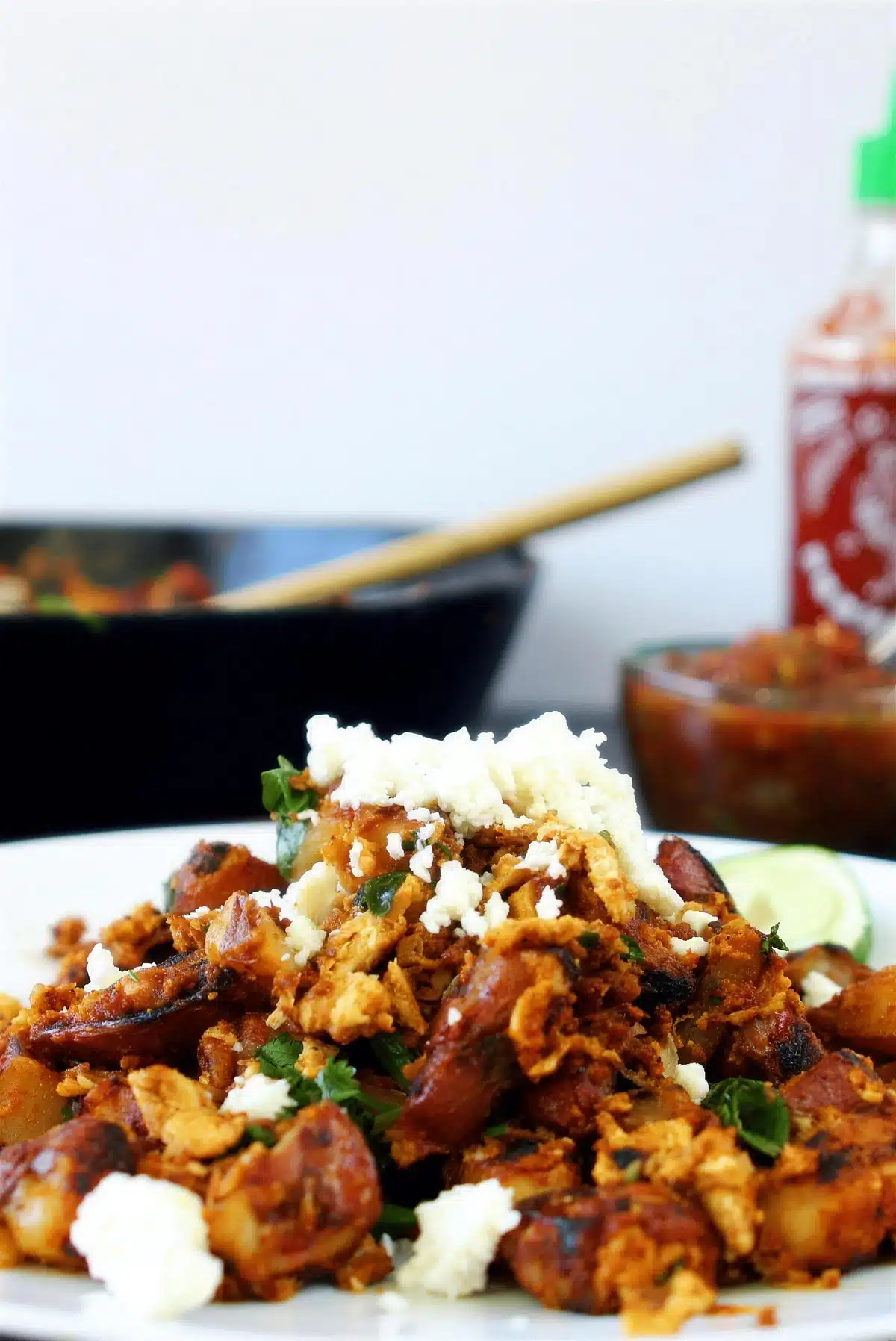
Five details that decide whether a chorizo hash crunches, all of which cost nothing and all of which people skip.
Cut them to 3/4-inch cubes. Bigger cubes need a longer boil and go to mush before the centers are done. The original version of this recipe said “large cubes” and boiled them for four minutes, which leaves the middles raw.
Boil them until a knife meets slight resistance, six to eight minutes from the moment the water returns to a simmer. They should be nearly cooked, not falling apart.
Dry them properly. Drain and spread them on a clean towel for five minutes. Surface water turns to steam in the pan and steam is the enemy of a crust.
Get the fat properly hot before they go in. A shimmer, not a smoke. Potatoes added to warm fat absorb it and go greasy.
Leave them alone. Ten to twelve minutes total, stirred perhaps four times. Every stir resets the crust that was forming.
Ingredient Notes
Ten ingredients and only one of them is worth a special trip. Exact amounts are in the recipe card below.
- Fresh Mexican chorizo: 8 ounces, soft and raw, sold in a casing you squeeze it out of. This is not the hard cured Spanish sausage, and the two are not interchangeable here.
- Red potatoes: about a pound and a half. Waxy potatoes hold their shape through a boil and a fry; a russet falls apart at the first stir.
- Paprika: three quarters of a teaspoon, which backs up the color and the mild chile flavor already in the sausage.
- Serrano: half of one, seeds and ribs removed. Fresh heat, added late so it stays bright rather than cooking into the background.
- Eggs: four, beaten. Stirred through in the last minute rather than fried and laid on top.
- Queso fresco: crumbled at the table. It is mild and salty and does not melt, which is exactly what a rich skillet needs. Feta is the closest substitute, though it is sharper.
- Lime and salsa: both go on at the table. A chorizo hash is fatty and needs the acid.
- Scallions and cilantro: stirred in off the heat so they stay green.
One 12-inch skillet, ideally cast iron, and a saucepan for the boil are all a chorizo hash needs.
How To Make Chorizo Hash
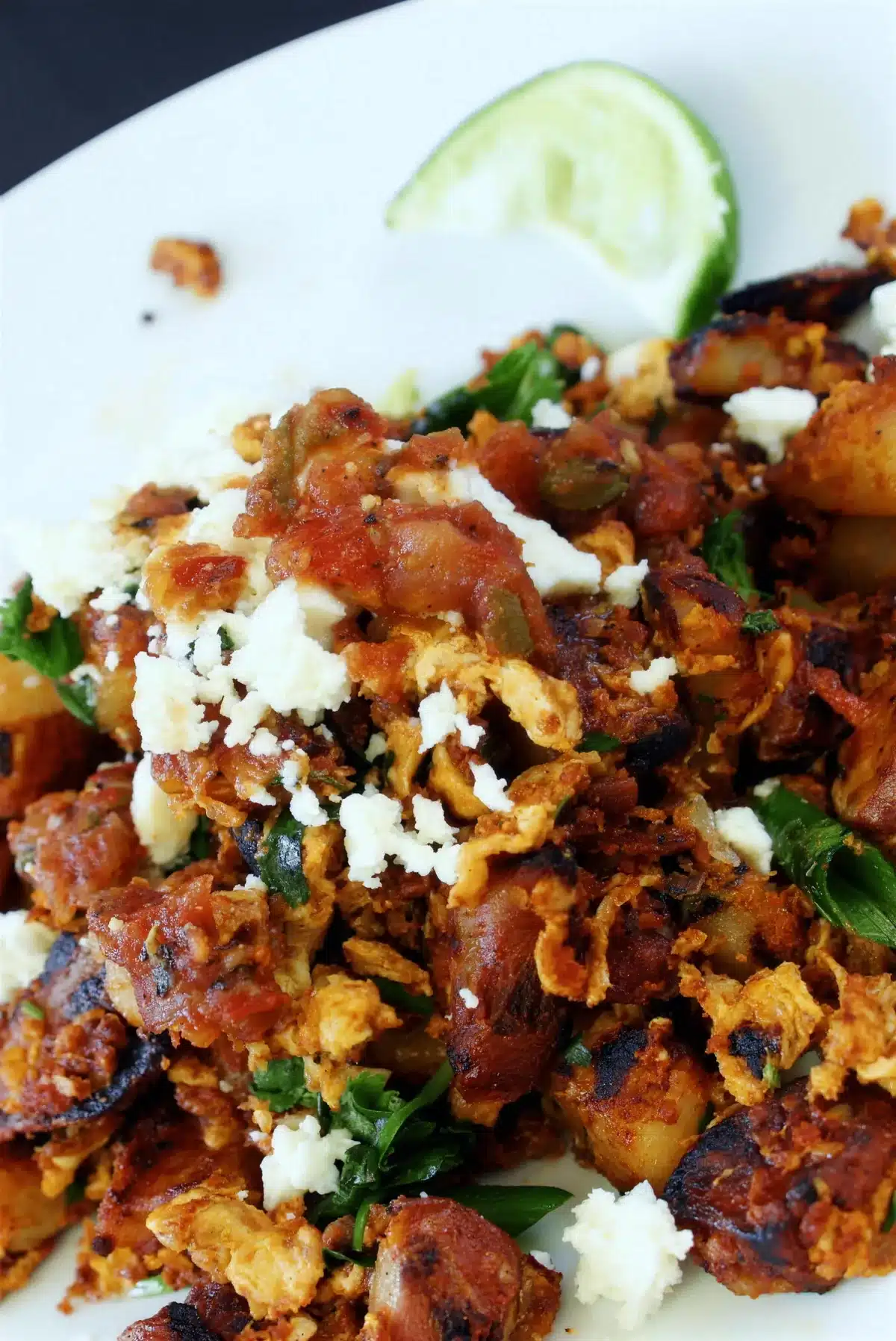
The order matters more than the timings, because each stage leaves something behind for the next one.
- First, boil the cubed potatoes in well salted water 6 to 8 minutes, until a knife goes in with slight resistance. Drain and spread them on a towel to dry.
- Next, cook the chorizo in a cold 12-inch skillet over medium-low heat, breaking it up, until it is cooked through and crisp at the edges, about 10 minutes. Lift it out with a slotted spoon and leave the rendered fat in the pan.
- Then raise the heat to medium-high, add the potatoes to the hot fat in one layer and brown them 10 to 12 minutes, stirring only three or four times. Season with salt, paprika and pepper.
- After that, drop the heat to medium-low, stir in the garlic and serrano for a minute, then return the chorizo to the pan and toss it through.
- Finally, pour in the beaten eggs and stir for about a minute until just set, take the pan off the heat and fold in the scallions and cilantro. Serve from the skillet with queso fresco, lime and salsa.
Mexican Chorizo vs Spanish Chorizo
They share a name and almost nothing else, and using the wrong one is the most common way this dish goes sideways.
Mexican chorizo is raw. Ground pork seasoned with vinegar and dried chiles, sold soft in a casing, and it must be cooked. It renders freely and crumbles into the potatoes. It is what this chorizo hash is built on. Being fresh pork sausage it wants to be cooked through, which the National Pork Board’s guidance on cooking pork puts at 160F for ground cuts.
Spanish chorizo is cured. Firm, sliceable, smoked with pimenton, and already safe to eat. Sliced into a pan it renders a little paprika oil and stays chewy rather than crumbling.
If Spanish is all you can find, dice about six ounces small, render it gently and expect a smokier, drier, chewier result. It works, but it is a different dish and it will not give you enough fat to brown the potatoes.
Soy chorizo is a genuinely good substitute for the Mexican kind, though it renders no fat at all, so add two tablespoons of oil for the potatoes.
Where the Eggs Go in a Chorizo Hash
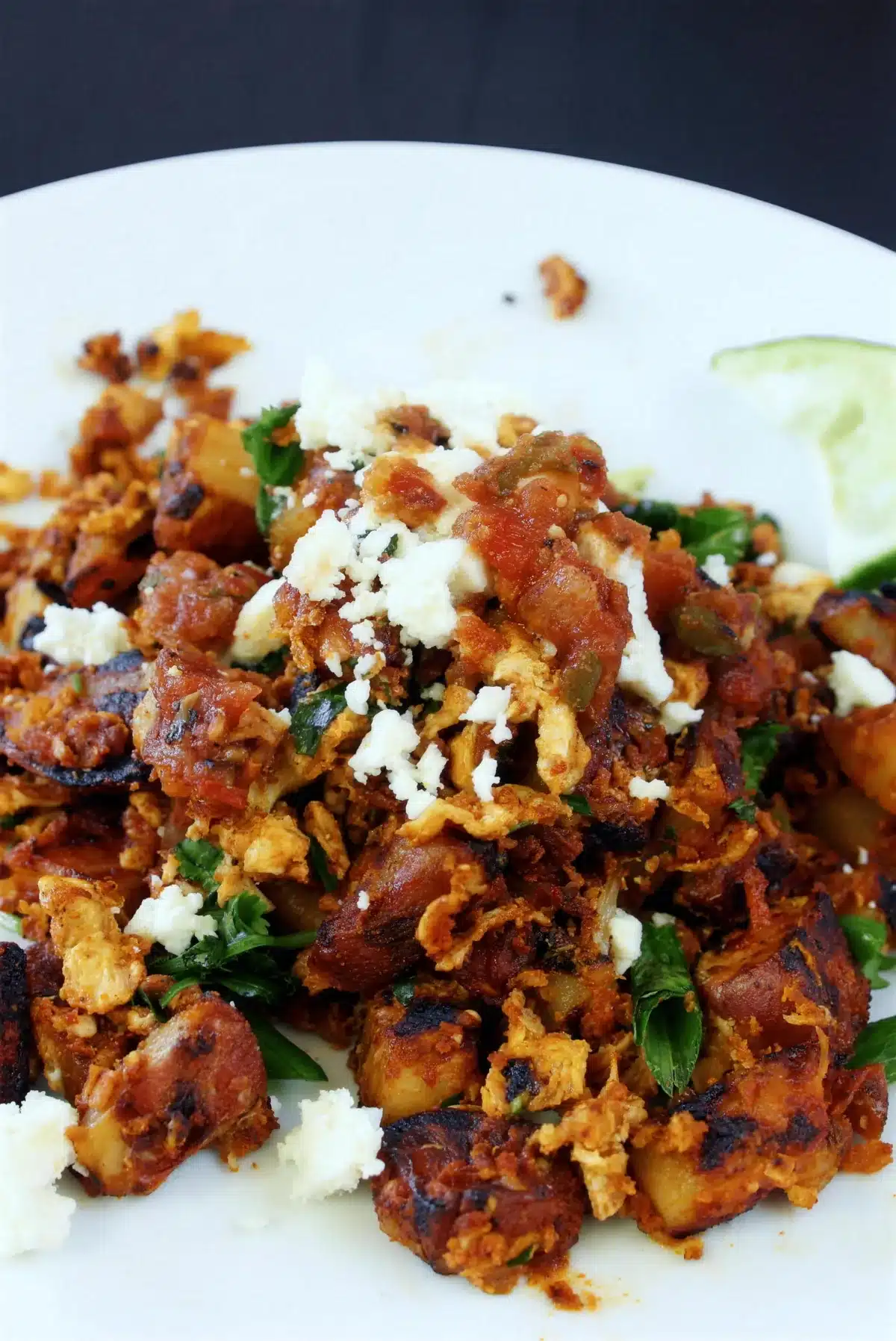
There are three ways to put eggs into a chorizo hash and they give three different breakfasts.
Beaten and stirred through, which is the version here. The egg coats everything and binds the hash together, so every forkful carries some. It also means no plating, since it comes out of the skillet as one thing.
Cracked into wells and covered. Make four hollows, break an egg into each, cover the pan and cook five minutes for set whites and running yolks. It looks better and it is harder to serve.
Fried separately and laid on top. The safest option if you are cooking for people with different preferences, and the only one that keeps the potatoes at their crispest, since no liquid egg touches them.
Whichever you choose, the eggs go in last, over low heat, and they finish faster than you expect. Scrambled into a hot chorizo hash they need about sixty seconds, and residual heat will carry them further after the pan leaves the burner.
Make It Ahead
A chorizo hash is a weekend dish that can be turned into a weekday one with a little planning.
Parboil the potatoes the night before. Boil, drain, dry and refrigerate them uncovered on a tray. Chilled overnight they actually brown better, because more surface moisture has evaporated.
Render the chorizo ahead too. Cook it, cool it and keep the fat with it in a sealed container for up to three days. It reheats in seconds.
Chop the aromatics the night before and keep the garlic, serrano, scallions and cilantro in separate containers.
What is left is fifteen minutes. Brown the potatoes, warm the chorizo through, add the eggs.
What you cannot do ahead is cook the eggs. Reheated scrambled egg goes rubbery and weeps, so if you are making this in stages, stop before the eggs and add them fresh.
Storing Chorizo Hash
- Refrigerated, cooked: chorizo hash keeps 3 days in a sealed container. The eggs suffer more than anything else.
- Reheat in a dry skillet over medium heat for 5 minutes rather than in the microwave, which steams the potatoes soft.
- Frozen: 2 months if you freeze it before the eggs go in. Thaw overnight and finish in the pan.
- Parboiled potatoes alone: 2 days refrigerated on an uncovered tray.
- Never store it with the toppings on. Queso fresco and cilantro should meet the hash on the plate, not in the container.
Variations and Substitutions
The potatoes and the rendered fat are structural. Everything else is negotiable.
- Sweet potatoes instead of red, which suits the chile heat, though they need a shorter boil and burn faster.
- Add a poblano or a bell pepper, diced and cooked with the potatoes for the last five minutes.
- Black beans stirred in with the chorizo, which stretches it to six servings.
- Serve it in tortillas as a filling, much like my breakfast burritos.
- Hotter: leave the serrano seeds in, or add a chipotle in adobo, minced.
- Top it with fresh salsa rather than jarred. My peach salsa is unexpectedly good against the paprika.
What to Serve with Chorizo Hash
Chorizo hash is rich, salty and filling, so keep the rest of the table sharp and light.
- Warm corn tortillas, for scooping and for turning the leftovers into tacos.
- Sliced avocado with lime and salt, which is the traditional partner and the correct one.
- A bowl of chicken tortilla soup if you are feeding people properly rather than lightly.
- Quick pickled red onions, made an hour earlier, straight out of the jar.
- For a bigger brunch spread, my baked empanadas can be made the day before and reheated alongside.
Here is what readers ask most often.
Chorizo Hash FAQ
Frequently Asked Questions
Why are my hash potatoes soggy instead of crisp?
Almost always one of three things. The pan was too small, so the potatoes steamed in their own moisture instead of frying. The potatoes went in wet, straight from the colander, rather than dried on a towel. Or they were stirred too often, which never lets a crust form. A 12-inch skillet, five minutes on a towel and no more than four stirs fixes all three.
Can I use Spanish chorizo instead of Mexican?
You can, and it makes a different dish. Spanish chorizo is cured and firm, so it stays in chewy slices rather than crumbling, and it renders far less fat, which means adding two or three tablespoons of oil to brown the potatoes. The flavor turns smoky rather than bright and vinegary. Use about six ounces, diced small, and render it gently.
Do I have to parboil the potatoes?
Not strictly, but the alternative is worse. Raw potatoes need about 25 minutes in the skillet with a lid on for part of it, and they tend to brown unevenly and break up. The boil takes seven minutes and guarantees a cooked middle, which means the skillet only has to build the crust.
More Questions About Chorizo and Potatoes
Good to Know
Should I drain the chorizo fat?
No. That fat is where the paprika, chile and vinegar have gone, and it is what the potatoes are supposed to brown in. If your sausage renders unusually heavily and there is more than about three tablespoons in the pan, spoon a little off, but never all of it. A very lean chorizo may need a tablespoon of oil added instead.
What kind of potato works best?
Waxy ones. Red potatoes, new potatoes or Yukon Golds all hold their shape through a boil and a fry. Russets have too much starch and not enough structure, so they crumble at the first stir and go grainy. Leave the skins on for texture and color.
Can I make it for a crowd?
Up to a point. Doubling it in one pan does not work, because the potatoes will steam. Either cook two skillets side by side, or brown the potatoes in two batches and combine everything for the final minute with the eggs. Keep the first batch warm in a low oven while the second browns.
Brown the potatoes in the chorizo fat, then put the chorizo back where it belongs, and a chorizo hash stops being a pile of breakfast and becomes the reason people got out of bed. For the same flavors wrapped up and portable, try my breakfast burritos.
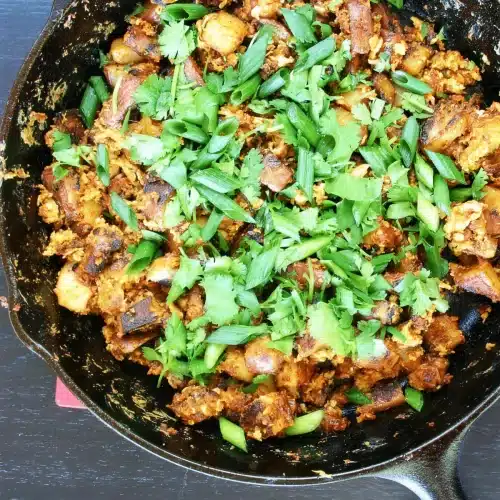
Mexican Chorizo Hash with Crispy Potatoes and Eggs
Save this recipe
Enter your email and I’ll send this recipe straight to your inbox.
Ingredients
The Hash
- 1 1/2 pounds red potatoes about 4 large, cut into 3/4-inch cubes, skins on
- 1 tablespoon kosher salt for the boiling water
- 8 ounces fresh Mexican chorizo raw, squeezed out of its casing
- 1 tablespoon vegetable oil only if the chorizo renders less than 3 tablespoons of fat
- 1 teaspoon kosher salt for the potatoes
- 3/4 teaspoon paprika
- 2 cloves garlic minced
- 1/2 teaspoon black pepper freshly ground
- 1/2 medium serrano pepper seeds and ribs removed, minced
- 4 large eggs beaten with a pinch of salt
- 2 medium scallions chopped
- 1/4 cup cilantro chopped, loosely packed
To Serve
- 2 ounces queso fresco crumbled
- 1 lime cut into wedges
- 1/2 cup salsa or hot sauce
Equipment
- Cast Iron Pan
- Medium Pot
Instructions
Parboil the Potatoes
- Bring a saucepan of water to a boil, add the tablespoon of salt and the cubed potatoes, and cook 6 to 8 minutes from the moment the water returns to a simmer, until a knife slides in with slight resistance. Drain them and spread them on a clean towel to dry for five minutes.
Render the Chorizo
- Put the chorizo into a cold 12-inch skillet and cook over medium-low heat, breaking it up with a spoon, until it is cooked through to 160F and crisp at the edges, about 10 minutes. Lift it out with a slotted spoon onto a plate and leave every drop of the rendered fat in the pan.
Brown the Potatoes
- Raise the heat to medium-high. There should be about 3 tablespoons of fat in the pan; add the vegetable oil only if there is noticeably less. When it shimmers, add the potatoes in as close to a single layer as you can manage.
- Brown them 10 to 12 minutes, stirring only three or four times so a crust has a chance to form between stirs. Season with the teaspoon of salt, the paprika and the black pepper.
Finish with the Eggs
- Drop the heat to medium-low, stir in the garlic and serrano and cook one minute, then return the chorizo to the pan with any fat on the plate and toss it through the potatoes.
- Pour in the beaten eggs and stir for about a minute, until they are just set and still glossy. Take the pan off the heat, fold in the scallions and cilantro, and serve from the skillet with the queso fresco, lime wedges and salsa on the table.