
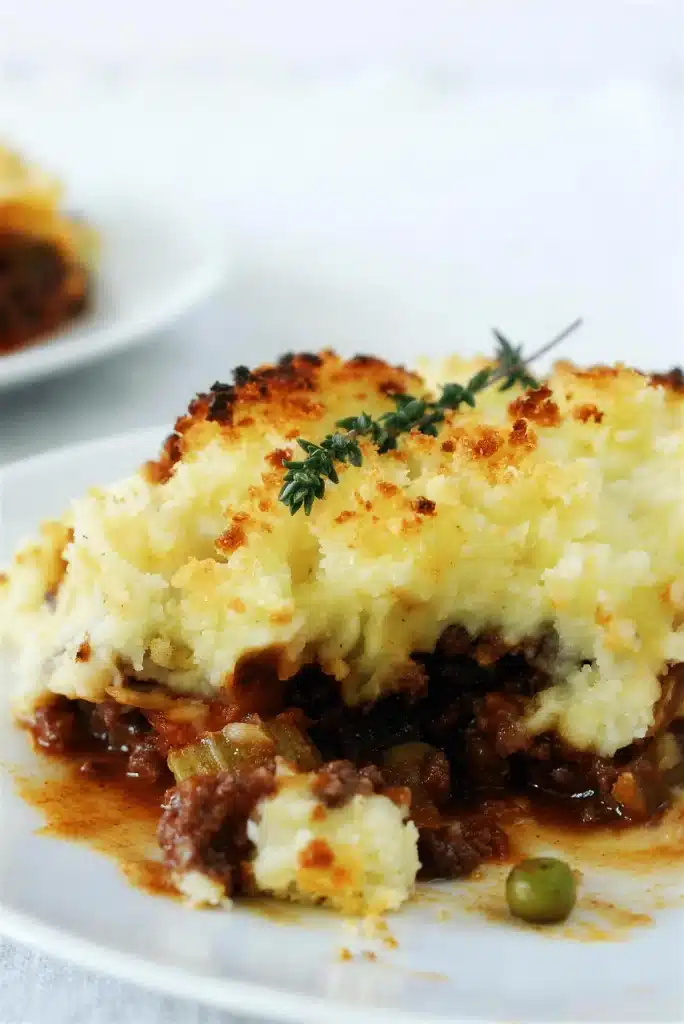
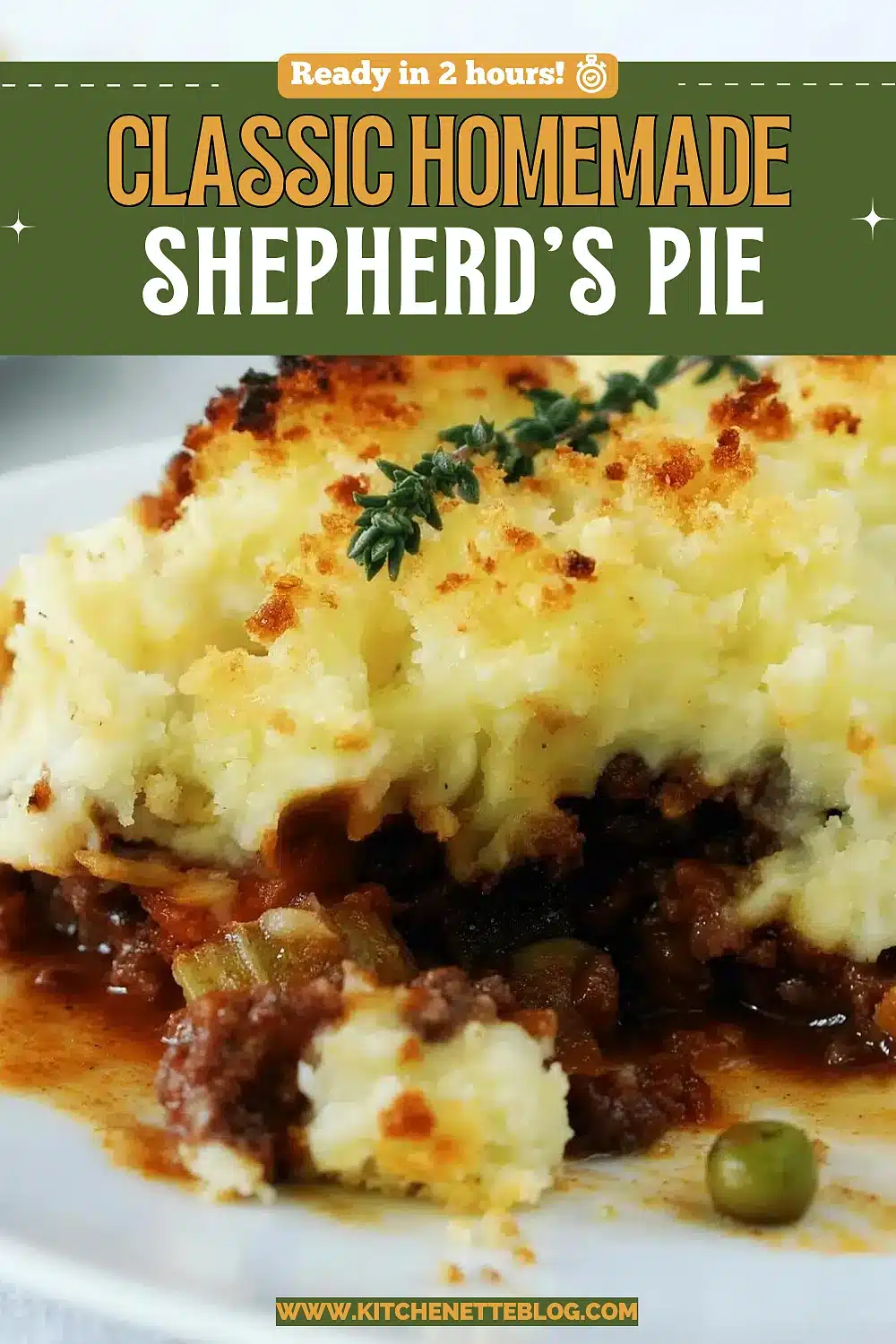
Deeply savory under a mashed potato lid that goes crisp and golden in the oven, shepherds pie is the dinner I make on the first genuinely cold evening of the year, and then keep making until spring.
The version below is the shepherds pie I have cooked for fifteen years. It starts with browned meat, a base of leek, onion, carrot and celery, tomato paste cooked out until it darkens, and a full-bodied red wine reduced down with beef stock and Worcestershire. On top goes a riced Yukon Gold mash, and over that a scatter of parmesan and panko that bakes into an actual crust rather than the pale, damp surface most versions end up with.
- One dish of shepherds pie feeds ten, which is why it is a standing request
- Everything except the baking can be done a full day ahead
- Freezes better than almost any other casserole, baked or unbaked
- The parmesan and panko top gives you crunch, not just soft potato
- Nothing exotic on the list, and most of it is already in the fridge
- Works with lamb or beef, so the same method covers both classic pies

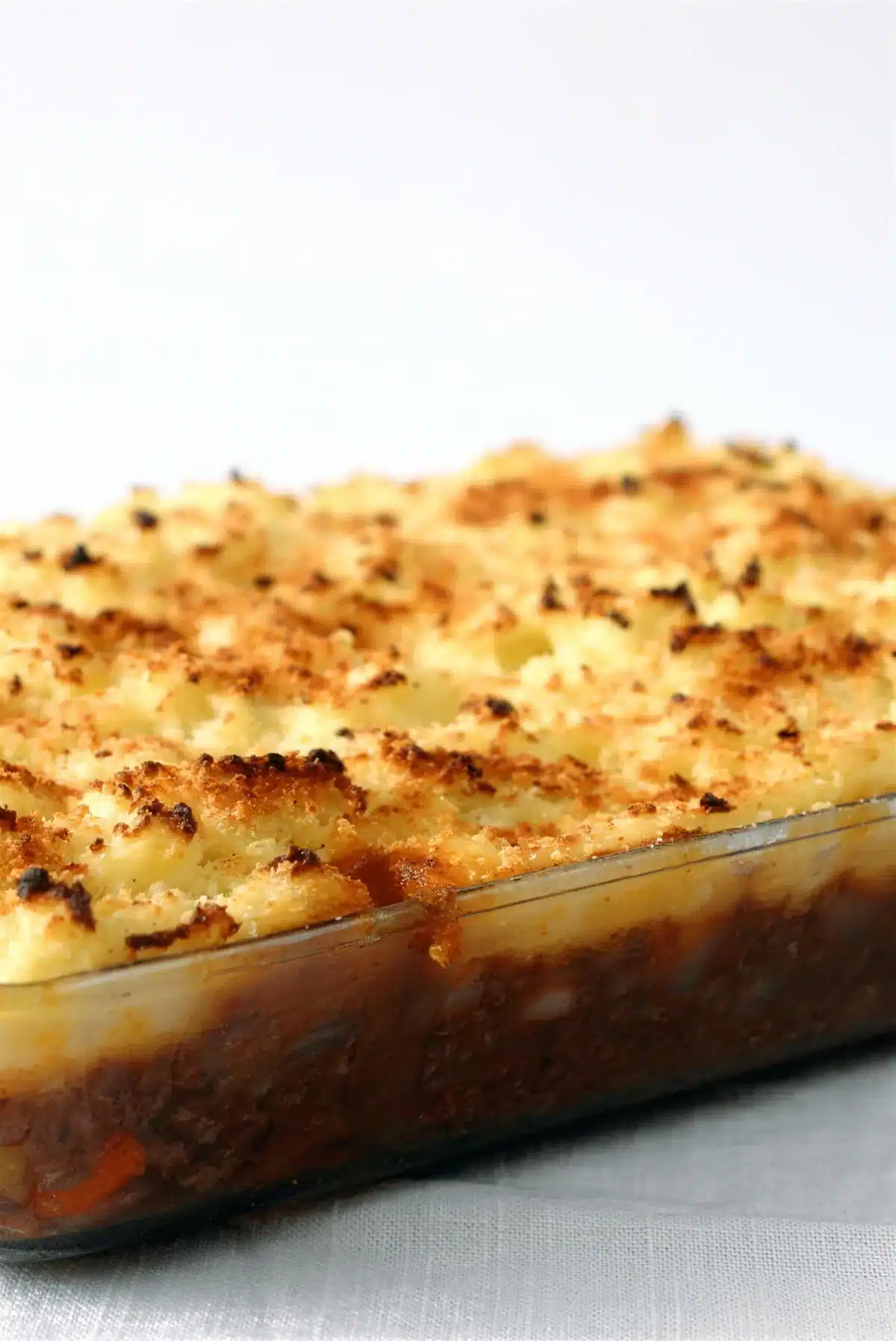
Shepherds pie involves a lot of chopping and a fair amount of waiting, so it is a weekend project rather than a Tuesday one. Almost none of it is difficult, though. If you can brown meat and mash potatoes, you can make this, and the parts that go wrong are all avoidable once you know where they are.
Shepherds Pie vs Cottage Pie
Here is the distinction nearly every recipe glosses over. Traditionally, shepherds pie is made with lamb and cottage pie is made with beef. Shepherds keep sheep, so the name is a straightforward description of what is in the dish, and in Britain and Ireland the two names are still used strictly.
The recipe on this page is written for two pounds of ground lamb or ground beef, and both are genuinely good. Made with lamb it is a shepherds pie in the proper sense. Made with beef it is, strictly speaking, a cottage pie wearing the more famous name.
Why does American usage differ? Cottage pie came first, appearing in print in the 1790s, when potatoes were new and cheap enough for rural households. The lamb version arrived roughly a century later. When both crossed the Atlantic the catchier name won and the meat stopped mattering, which is why a diner will hand you a beef pie and call it shepherds pie without blinking.
One more piece of pedantry, then I will stop. Written properly the dish takes an apostrophe: shepherd’s pie, the pie belonging to the shepherd. You will see it spelled both ways everywhere, including on menus, so nobody is going to correct you.
Save this recipe
Enter your email and I’ll send this recipe straight to your inbox.
Ingredient Notes
Three separate lists go into a shepherds pie, and none of them is complicated. Exact amounts are in the recipe card below.
- Ground lamb or ground beef: Two pounds, ideally around 85 percent lean. Anything leaner gives you a dry filling, and anything fattier floods the pan.
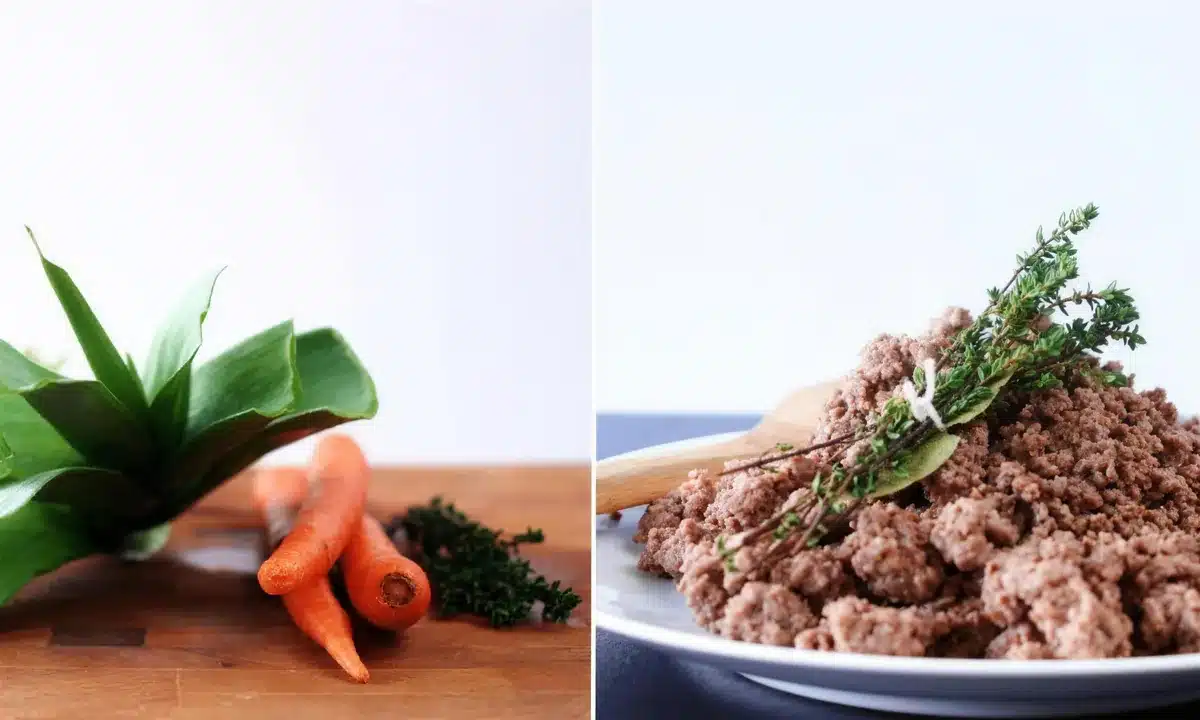
- Leek, onion, carrot and celery: The leek is the one people skip and the one I would keep. It brings a sweetness that plain onion does not.
- Tomato paste: Six ounces, which sounds like a lot. Cooked out for two full minutes it loses its raw edge and becomes the backbone of the gravy.
- Red wine: One cup of something full-bodied, Malbec or a Cotes du Rhone. It reduces by half and leaves depth behind rather than any recognizable wine flavor.
- Beef stock and Worcestershire: Together these do the savory heavy lifting. Worcestershire is anchovy based, so it adds salt and a background funk you cannot get from stock alone.
- Frozen peas: Straight from the bag, stirred in off the heat. Cooking them turns them gray.
- Yukon Gold potatoes, milk and butter: Four pounds of potatoes, a stick and a half of butter, two cups of warmed whole milk. Nutmeg is not optional in my kitchen.
- Parmesan and panko: A quarter cup of each over the top. This is the detail that separates a good pie from a great one.
You need one large pan, a big pot for the potatoes, a ricer or masher, and a 9×13-inch baking dish.
The Best Potatoes for the Mash
The topping on a shepherds pie fails more often than the filling does, and it usually fails at the shop. Potatoes are not interchangeable, and the difference comes down to starch.
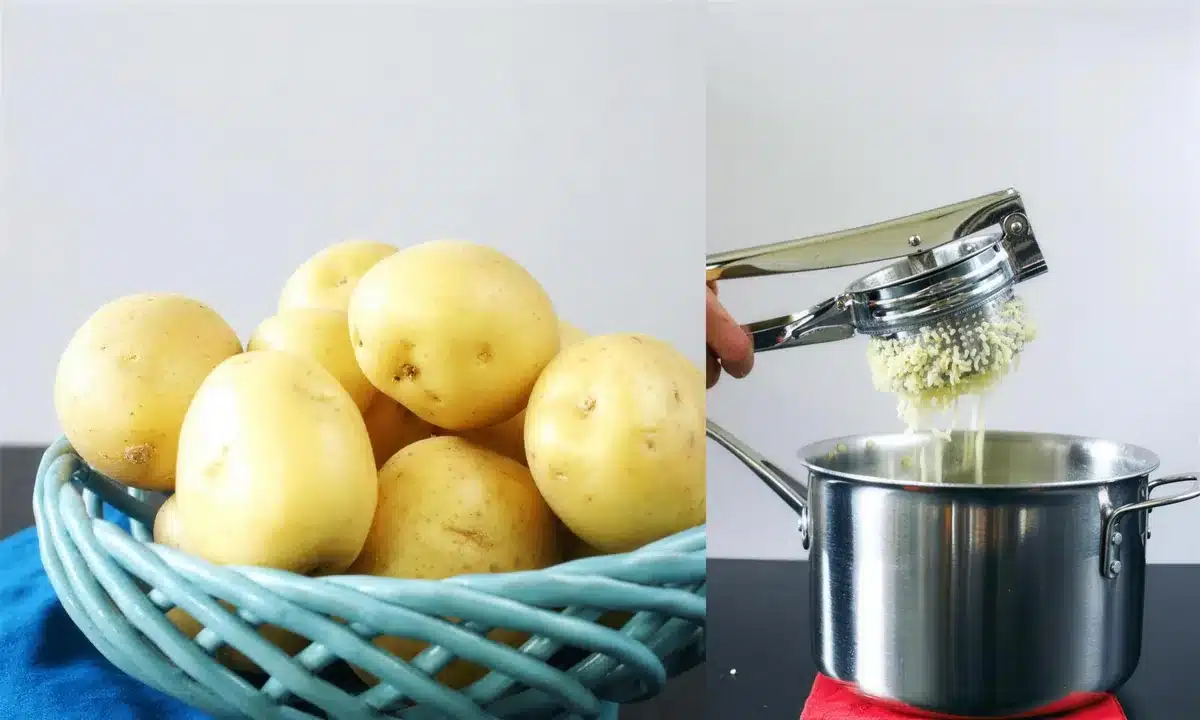
Starchy varieties such as russets fall apart as they cook and whip up light and dry. Waxy potatoes hold their shape, which is what you want in a salad and precisely what you do not want here. According to Potatoes USA, russets are the ones to reach for when you want a light and fluffy mash, while yellow varieties give you a denser, naturally buttery texture.
Yukon Golds sit between the two, and that is exactly why I use them. They are dry enough to take butter and milk without collapsing, and dense enough to hold their shape when you spread them across a hot filling. Russets work as well if that is what you have, but they drink more milk and need a lighter hand.
The other half of the job is the mashing itself. A ricer or a food mill gives you a smooth, dry mash in seconds. A hand masher is fine. A food processor or a stick blender will rupture the starch granules and turn four pounds of good potatoes into wallpaper paste, and there is no way back from that. For more on the technique, my creamy mashed potatoes covers it in detail.
How To Make Shepherds Pie
Build a shepherds pie from the potatoes up, because they take the longest and they need to be warm when they go on.
- First, cover the peeled potatoes with cold salted water, bring to a boil and simmer 20 to 30 minutes until a knife slides through easily. Warm the milk while they cook.
- Next, rice or mash them back into the dry pot with the butter, salt, pepper, nutmeg and most of the milk. Hold back the last of the milk until you see how thirsty they are.
- Then brown the meat hard in a large pan over medium-high heat, breaking it into chunks. Lift it out with a slotted spoon and pour off the fat.
- After that, soften the leek, onion, carrot and celery in butter and oil for 8 to 10 minutes, add the garlic for a minute, then the tomato paste for two minutes more.
- Pour in the wine, scrape the pan and let it reduce by half. Return the meat with the stock, Worcestershire, thyme and bay.
- Simmer 12 to 15 minutes, until a spoon dragged across the pan leaves a track that fills in slowly. Fish out the herbs and stir in the peas.
- Finally, spread the filling in a 9×13-inch dish, spoon the mash over it, fluff the surface with a fork, scatter the parmesan and panko and bake at 400 degrees F for 25 to 30 minutes.
Getting the Topping Right
Two problems account for almost every disappointing shepherds pie, and both are about texture rather than flavor.
A runny filling is the first. If the gravy still moves like soup when you take the pan off the heat, the mash will sink into it and you will serve something closer to a stew with dumplings. Give it another five minutes of hard simmering instead.
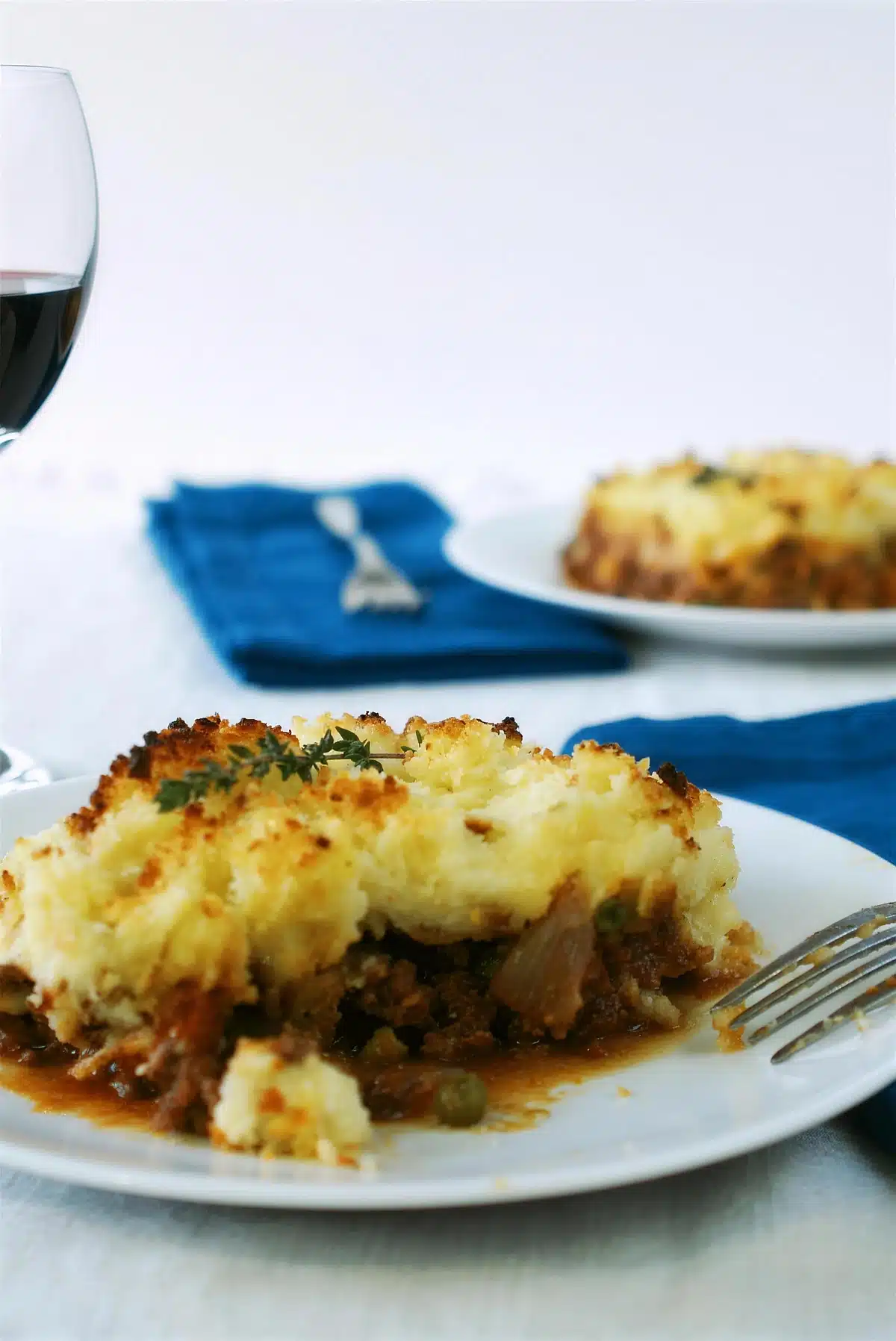
A wet mash is the second. Potatoes loaded with milk cannot hold a peak, so they slump flat and steam rather than brown. Keep the mash stiffer than you would want it on a plate. Ridges dragged across the top with a fork catch the heat and go dark, which is where a lot of the pleasure of this dish lives. The parmesan and panko simply guarantee it.
How To Tell When Shepherds Pie Is Done
Everything in the dish is already cooked by the time it goes in the oven, so baking is about the top browning and the filling coming back up to temperature.
Look for two things at the 25 minute mark. The peaks and ridges of the mash should be properly golden, not merely dry, and the gravy should be bubbling up around the edges of the dish rather than sitting still. A shepherds pie that is hot in the middle always shows it at the rim first.
If the top is still pale after 30 minutes, slide the dish under the broiler for two or three minutes and do not walk away. Panko goes from golden to black quickly, and the difference is about ninety seconds.
Then let it stand for 10 to 15 minutes before you cut into it. The gravy thickens noticeably as it cools and the slice holds together instead of sliding across the plate. Serving it straight from the oven is the single most common reason a good shepherds pie ends up looking like a mess in the bowl.
Make It Ahead
Shepherds pie is the make-ahead casserole I trust most, and there are two sensible ways to split the work.
Assemble it completely, cool it, cover it and refrigerate for up to two days. Take the dish out of the fridge an hour before it goes in the oven, then add 10 to 15 minutes to the baking time. Going straight from a cold fridge into a hot oven is also how glass dishes crack.
Alternatively, make the components separately. The filling keeps for three days refrigerated and actually improves overnight, since the tomato and wine settle into each other. Mashed potatoes hold for two days as well, though they firm up hard when chilled, so warm them gently with a splash of milk before spreading.
Either way, hold the parmesan and panko back until the moment the dish goes in the oven. Left sitting on damp potato overnight they turn to paste and you lose the crust entirely.
Storing and Freezing
Leftover shepherds pie is arguably better than the first serving, because the gravy has had time to set.
- Fridge: covered, up to 4 days. Reheat individual portions in the microwave, or the whole dish covered at 350 degrees F for about 25 minutes.
- Freezing unbaked: assemble in a freezer-safe dish, cool completely, wrap tightly and freeze for up to 3 months. Bake from frozen, covered, at 375 degrees F for about 75 minutes, then uncovered for 20 more to brown the top.
- Freezing baked: cool completely, then freeze whole or in portions for up to 3 months. Thaw overnight in the fridge and reheat covered at 350 degrees F.
- Portioning: freeze single servings in foil dishes if you can. A whole 9×13-inch pie takes a very long time to come back to temperature in the middle.
Never refreeze a pie you have already thawed, and let anything frozen come up to a properly steaming heat right through before serving.
Variations and Substitutions
The structure of a shepherds pie is meat, gravy, vegetables and a starchy lid, so almost every part of it will take a swap.
- Lamb: swap the beef one for one and add a teaspoon of chopped rosemary. This is the traditional version, and the gravy takes on a richer, slightly gamey depth.
- Vegetarian: brown lentils with mushrooms and a little soy sauce in place of the meat. Use vegetable stock and a spoonful of miso for the savory weight the beef would have brought.
- Turkey or chicken: ground poultry works, but it browns poorly. Cook it hard and lean on the Worcestershire.
- Sweet potato top: half sweet potato and half Yukon Gold keeps the sweetness in check. All sweet potato is very sweet against a savory gravy.
- Lower carb: a topping of mashed rutabaga or cauliflower browns well, though it holds less shape.
- Gluten-free: the filling already is, provided your Worcestershire is. Skip the panko or replace it with crushed gluten-free crackers.
- Cheesy: a cup of sharp cheddar folded into the mash before spreading is not traditional in the slightest and is extremely good.
- Slow cooker: cook the filling on low for six hours, then transfer it to a dish, top and bake as written. The topping needs dry oven heat to brown.
What to Serve with Shepherds Pie
Shepherds pie puts meat, potato and vegetables on the plate already, so the sides want to be sharp or green rather than heavy.
- Buttered peas or green beans, which is the traditional accompaniment and takes five minutes.
- A plain green salad with a mustardy vinaigrette to cut the richness.
- Quick-braised cabbage or wilted kale with garlic.
- Bread for the gravy at the bottom of the dish. Honey beer bread needs no rising time and suits it well.
- Pickled red onion or a spoonful of sharp chutney on the side of the plate.
- The rest of the bottle you cooked with, or a pint of stout.
Here is what readers ask most often about shepherds pie.
Shepherds Pie FAQ
Frequently Asked Questions
What is traditional shepherd’s pie?
Traditionally it is ground lamb in a thick gravy under a mashed potato crust, and the name refers to the shepherd who keeps the sheep. The beef version has its own name, cottage pie, which is actually the older of the two. American usage has largely collapsed the distinction, so a beef pie is very often sold under the lamb name.
What is the secret to a good shepherd’s pie?
Reduce the filling further than feels necessary and keep the mash stiffer than you would want it on a plate. Nearly every disappointing version is soupy underneath and pale on top, and both faults come from too much liquid. The parmesan and panko scattered over the potato is the other trick, since it guarantees a crust rather than hoping for one.
What are some common mistakes when making shepherd’s pie?
Not browning the meat properly, skipping the two minutes of cooking the tomato paste, spreading the potato before the filling has thickened, and cutting into it the moment it leaves the oven. Overworking the mash in a food processor belongs on the list too, since it turns the topping gluey and nothing recovers it.
More Questions About Shepherds Pie
Frequently Asked Questions
What’s in Gordon Ramsay’s shepherd’s pie?
His uses ground lamb with onion, carrot, garlic, thyme and rosemary, tomato paste, Worcestershire and a splash of wine, finished with a mash enriched by egg yolk and parmesan. The structure is much the same as this shepherds pie. Where they differ is the egg yolk, which sets the topping firmer, and the panko and leeks here.
Why is my shepherds pie watery?
The filling went into the dish before it had reduced enough. Simmer until dragging a spoon across the pan leaves a track that fills in slowly rather than instantly. Frozen vegetables added while still icy also release a surprising amount of water, so add peas off the heat and straight from the freezer.
Can I use instant mashed potatoes?
You can, and plenty of people do. Make them thicker than the package suggests so they hold their ridges, and add butter and a beaten egg yolk for body. The flavor is flatter than a real mash.
Do I have to peel the potatoes?
No. Skins left on give a rougher topping that browns well, which some people prefer. Peel them for a smooth, pale finish, or use a ricer, which pushes the flesh through and leaves the skin behind anyway.
Can I make it in a cast iron skillet?
Yes, and it is a good way to serve it. Build the filling in a 12-inch skillet, top it in the same pan and bake it there. Cast iron holds heat hard, so check at 20 minutes and rest a full 15 before serving.
Make it once and you will understand why it turns up on so many weeknight rotations. For another one-dish bake built on ground beef and a golden top, try my sloppy joe cornbread casserole.
Shepherd's Pie
Save this recipe
Enter your email and I’ll send this recipe straight to your inbox.
Ingredients
For the Filling
- 2 pounds ground lamb or ground beef about 85 percent lean
- kosher salt to taste
- freshly ground black pepper to taste
- 1 tablespoon butter
- 1 tablespoon olive oil
- 1 leek washed well, sliced into half moons
- 1 large yellow onion chopped
- 3 medium carrots chopped
- 2 celery stalks chopped
- 2 cloves garlic minced
- 6 oz tomato paste
- 1 cup red wine full-bodied, such as Malbec
- 1 1/2 cups beef stock
- 2 tablespoons Worcestershire sauce
- 6 sprigs fresh thyme tied with the bay leaf
- 1 bay leaf
- 1 cup frozen peas straight from the freezer
For the Mashed Potato Topping
- 4 pounds Yukon Gold potatoes peeled and quartered
- 2 cups whole milk warmed
- 1 1/2 sticks unsalted butter room temperature or melted
- 1 tablespoon kosher salt plus extra for the boiling water
- freshly ground black pepper to taste
- freshly grated nutmeg a good pinch
For the Crumb Top
- 1/4 cup grated parmesan cheese
- 1/4 cup panko breadcrumbs
Equipment
- 9x13 inch casserole dish
- Large skillet
- Potato ricer
Instructions
Make the Mashed Potatoes
- First, cut large potatoes into quarters and smaller ones in half. Cover them with cold, well salted water, bring to a boil, then reduce to a simmer and cook for 20 to 30 minutes, until a knife slides through without resistance. Warm the milk in a small pot while they cook.
- Next, drain the potatoes and press them through a ricer back into the dry pot they cooked in, or mash them by hand. Add the butter, salt, pepper, nutmeg and most of the warm milk, holding a little back. Stop when the mash is stiff enough to hold a peak, which is drier than you would want it on a plate. Never use a food processor, which turns the starch gluey.
Build the Filling
- Then heat the oven to 400 degrees F. Brown the meat hard in a large pan over medium-high heat, breaking it into chunks as it colors, and season with salt and pepper. Lift it out with a slotted spoon and pour off the fat left behind.
- After that, lower the heat to medium and add the butter, olive oil, leek, onion, carrots and celery with a pinch of salt. Cook for 8 to 10 minutes, until softened, then add the garlic for a minute. Stir in the tomato paste and cook it for a full 2 minutes, until it darkens and smells sweet rather than raw.
- Pour in the wine and scrape up everything stuck to the pan. Simmer until it has reduced by about half, then return the meat with the beef stock, Worcestershire and the tied bundle of thyme and bay. Simmer for 12 to 15 minutes, until a spoon dragged across the pan leaves a track that fills in slowly. Taste for seasoning, pull out the herbs and stir in the frozen peas off the heat.
Top and Bake
- Spread the filling in a 9x13-inch baking dish. Drop the mashed potato on in separate spoonfuls all over the surface, then join them up with the back of a spoon rather than pushing one pile outward, which drags gravy up into the potato.
- Finally, fluff ridges across the top with a fork, scatter over the parmesan and panko, and bake for 25 to 30 minutes, until the ridges are golden and the gravy is bubbling at the edges of the dish. Slide it under the broiler for 2 to 3 minutes if the top is still pale, watching it constantly. Rest for 10 to 15 minutes before serving so the gravy sets.