7Up Biscuits are the fastest good biscuit in American home baking. Four ingredients go into a bowl, the dough gets patted out rather than kneaded, and a tray of 7Up biscuits is out of the oven in about twenty-five minutes. They come out tall, craggy on top and so soft in the middle that they pull apart in your hands.
- Four ingredients, one bowl, and no rolling pin or pastry cutter
- Twenty-five minutes from cupboard to table, which beats any canned tube
- The soda does the lifting, so there is no yeast and no rise to wait for
- Butter melted in the pan gives every biscuit a fried, golden bottom
- The dough freezes cut, so you can bake two on a Tuesday and nine on a Sunday
The soda is doing two things at once, and neither of them is what people expect. It is not the sugar and it is not the flavor. Lemon-lime soda is mildly acidic and heavily carbonated, and both of those work on the baking mix in ways plain milk cannot. That is the whole trick, and once you understand it you stop worrying about which brand of soda is in the fridge.


What Makes 7Up Biscuits So Light
A traditional buttermilk biscuit gets its lift from cold butter cut into flour. Steam pockets form where the butter melts, and the layers separate. It works beautifully, and it takes twenty minutes of careful work with a pastry blender.
7Up biscuits get there a different way. The baking mix already contains fat and leavening in the right proportion, the sour cream brings acid and richness, and the soda brings both dissolved carbon dioxide and a second hit of acid. The bubbles expand in the oven, the acid reacts with the baking soda in the mix, and the dough rises fast and high without any layering work at all.
What you end up with is not identical to a laminated biscuit. It is softer, more open and closer to a scone in the hand, and it does not shatter into flakes. What it gives you instead is speed, and a texture that most people at a dinner table prefer anyway.
Save this recipe
Enter your email and I’ll send this recipe straight to your inbox.
Ingredient Notes
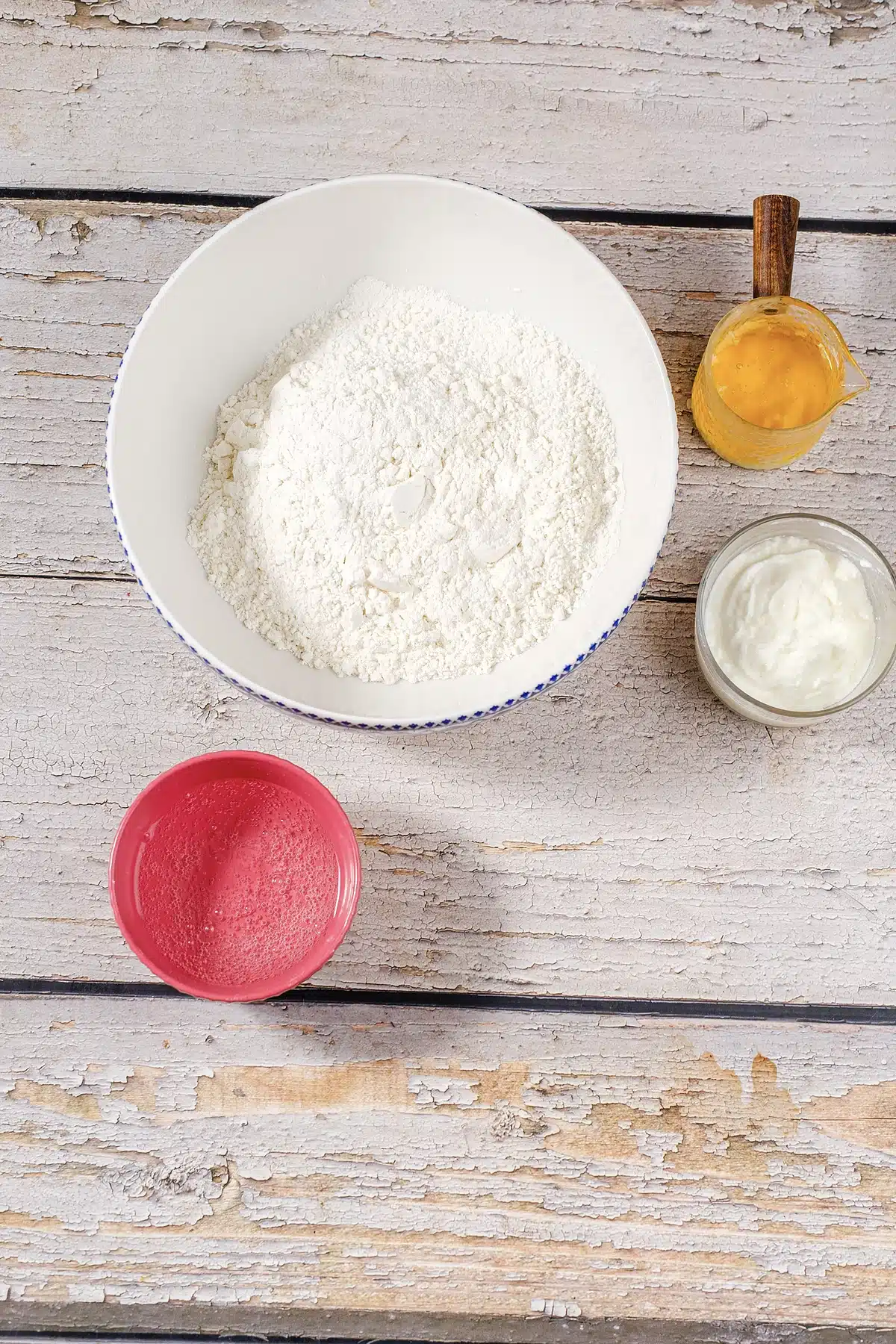
- Baking mix. Two cups of Bisquick or any store-brand equivalent. It is flour, shortening, baking powder and salt already blended, and the ratio is what makes the four-ingredient version work. If you want to know why a soft wheat flour behaves the way it does in a quick bread, the Wheat Foods Council has a plain-language primer on flour and baking.
- Sour cream. Half a cup, full fat. This is the ingredient people try to economize on, and in 7Up biscuits it is the one that matters most. Light sour cream has more water and less fat, and the biscuits come out flatter and drier. Full-fat Greek yogurt is a fair substitute.
- Lemon-lime soda. Half a cup, and it must be freshly opened. Flat soda has lost the carbonation that does half the lifting, so a bottle that has been in the door of the fridge for a week will not work. Sprite and ginger ale both behave the same way.
- Butter. A quarter cup, melted in the baking dish while the oven heats. It is not in the dough at all. It sits under and around the 7Up biscuits, and it fries the bottoms as they bake, which is where the golden crust comes from.
- Flour for the counter. Not really a fifth ingredient, but you need a generous dusting. This dough is genuinely sticky, closer to thick mashed potato than to bread dough, and a bare counter makes it impossible to handle.
Why the Soda Works
Carbonated water is water with carbon dioxide dissolved in it under pressure. Open the bottle and the gas starts coming out of solution, which is the fizz you can hear. Fold that liquid into a dough and some of those bubbles stay trapped, then expand in the heat of the oven and push the crumb open.
That is the mechanical half. The chemical half is acidity. Carbon dioxide in water forms carbonic acid, and lemon-lime sodas add citric acid on top of it. Baking mix contains baking soda, and soda plus acid produces more carbon dioxide, right where you want it.
Two practical consequences follow. Open the can at the moment you need it rather than while the oven preheats, and get the tray into the oven within a few minutes of mixing. 7Up biscuits made from a bowl that sat on the counter for twenty minutes are noticeably shorter than ones that went straight in.
How To Make 7Up Biscuits
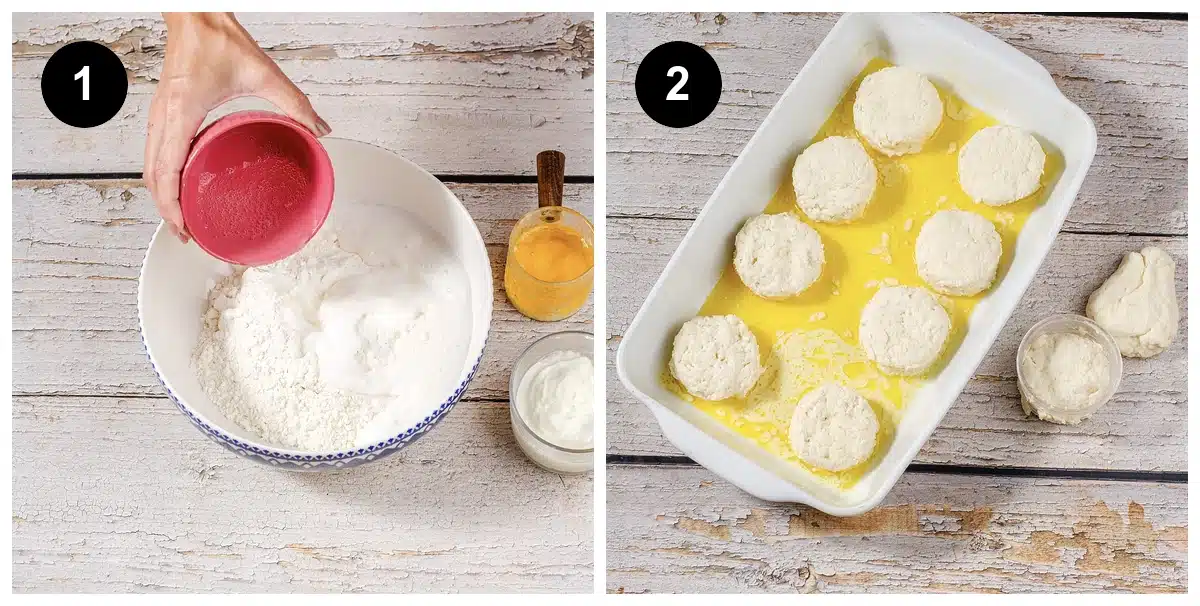
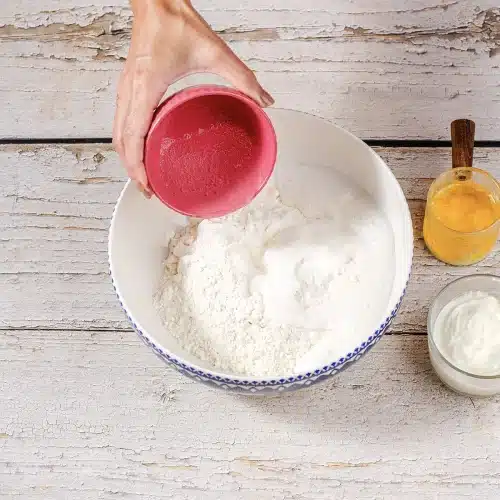
First, melt the butter. Put the quarter cup of butter into a nine-inch square baking dish and slide it into the oven as it heats to 425 degrees. Watch it, because butter goes from melted to browned to burnt in about ninety seconds at that temperature. Pull the dish out the moment it has liquefied.
Next, mix the dough. Stir the baking mix, sour cream and freshly opened soda together with a spoon until it just comes together. A few dry lumps are fine and expected. This is where people overwork it, and overworked dough gives you tough, flat 7Up biscuits every time.
Then pat and cut. Turn the sticky dough out onto a well-floured counter and press it, with floured hands, into a slab about an inch thick. Do not knead it and do not roll it. Cut nine rounds with a floured cutter, gathering and re-pressing the scraps once.
Into the Butter and Into the Oven
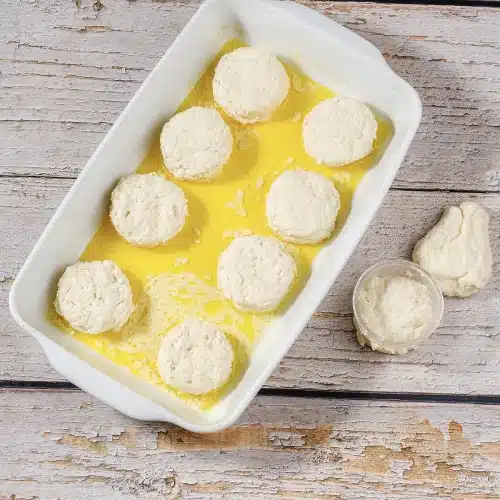
After that, arrange them in the pan. Set the rounds into the melted butter so they sit close together but are not squashed against each other. The butter should pool around and slightly under each one; that is what fries the bottoms.
Finally, bake. Ten to twelve minutes at 425 degrees, until the tops are puffed and patched with gold. Serve them within a few minutes of leaving the oven, because 7Up biscuits are at their absolute best hot.
How To Cut Biscuits Without Sealing the Edges
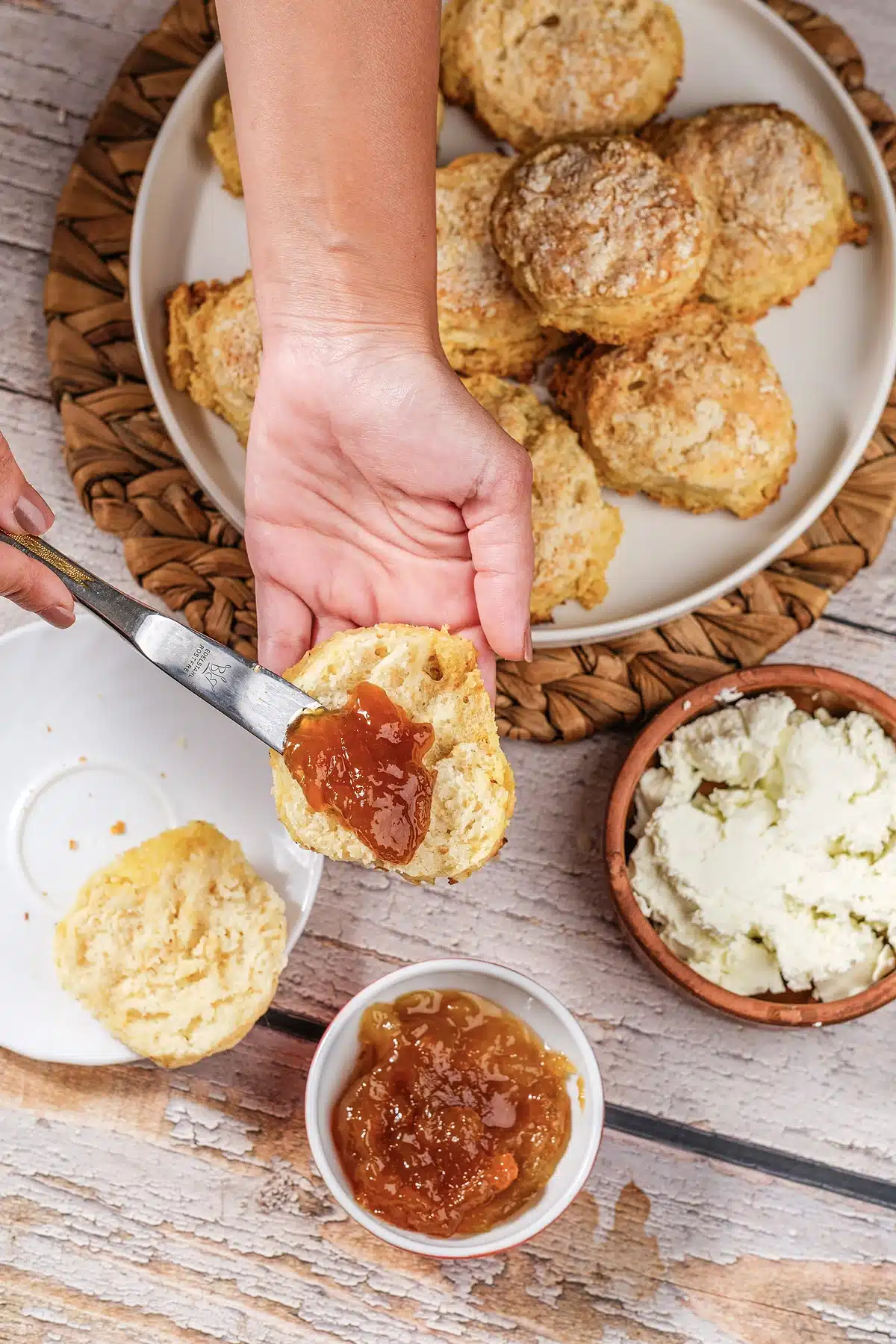
The cutter matters more than people think. A sharp-edged metal ring gives a clean vertical cut, and 7Up biscuits rise noticeably taller from one. A drinking glass has a rounded rim that pushes the dough sideways as it goes in, which compresses the edge and holds it down in the oven.
If a cutter is all you have, use it dry and dipped in flour, and accept a slightly shorter biscuit. Squares are the better workaround. Press the slab into a rectangle and cut it into nine squares with a floured knife, one clean stroke each. No scraps, no re-pressing, and every edge is free to rise.
One more thing about scraps. Gather them once and press them together gently by hand; the second-generation biscuits are always a little denser because the dough has been worked twice. Gathering them a second time gives you something closer to a hockey puck.
Height is the last thing to judge. A well-made batch nearly doubles, so a slab cut at one inch should give you biscuits close to two inches tall. If yours are sitting at an inch and a quarter, look at the soda first, the sour cream second and your hands third.
Make It Ahead
These do not sit well as raw dough in the fridge, because the carbonation and the leavening both start working the moment they are wet. An hour is about the limit before you notice the loss of height.
The freezer is the real answer. Cut the rounds, arrange them on a parchment-lined tray, freeze until solid and bag them for up to two months. Bake them from frozen in the buttered dish, adding four or five minutes to the time. Nothing is lost, and it means a tray of hot 7Up biscuits is fifteen minutes away on any weeknight.
Storing 7Up Biscuits
Baked 7Up biscuits keep in an airtight container at room temperature for two days, or five days in the fridge. They go stale faster than a yeast bread does, so the counter is only worth it for the first day.
Reheating brings them almost all the way back. Wrap them in foil and give them eight minutes at 350 degrees, or split one and toast the cut faces in a dry pan with a little butter, which is arguably better than the original.
Baked 7Up biscuits also freeze for up to three months. Cool them completely, freeze them on a tray, then bag them. Reheat from frozen wrapped in foil for about fifteen minutes at 350 degrees. Do not microwave them from frozen; the crumb goes gummy and never recovers.
One habit worth building: bake them on the middle rack and turn the dish once, halfway through. Home ovens run hotter at the back, and a tray of 7Up biscuits that sits still for twelve minutes will come out browner on one side than the other. A single half turn at the six minute mark evens it out completely.
Variations and Substitutions
Cheddar and chive. Fold half a cup of grated sharp cheddar and two tablespoons of snipped chives into the dry mix before the wet goes in.
Honey butter tops. Stir a tablespoon of honey into two tablespoons of melted butter and brush it over the biscuits as they leave the oven.
Sprite or ginger ale. Both work identically. Ginger ale is slightly sweeter and leaves a faint warm note that is very good with a savory dinner.
Homemade baking mix. Two cups of all-purpose flour, one tablespoon of baking powder, a teaspoon of salt and a third of a cup of cold shortening, cut in until crumbly. Use it exactly as you would the boxed version.
Diet soda. It works, since the lift comes from carbonation and acid rather than sugar. The biscuits brown a little less, so give them an extra minute.
What to Serve with 7Up Biscuits

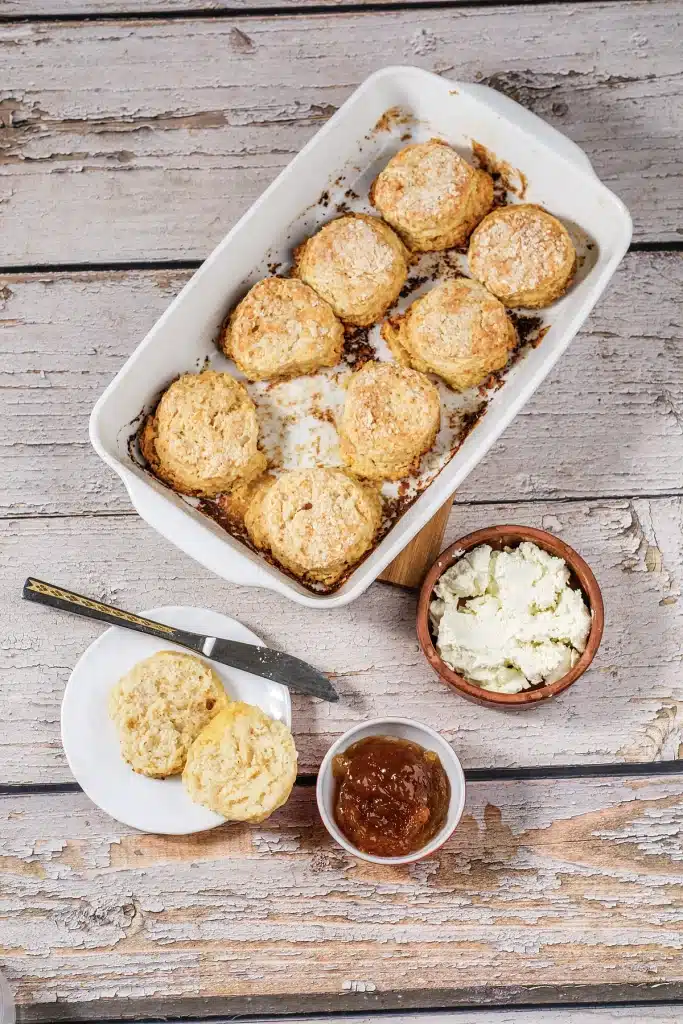
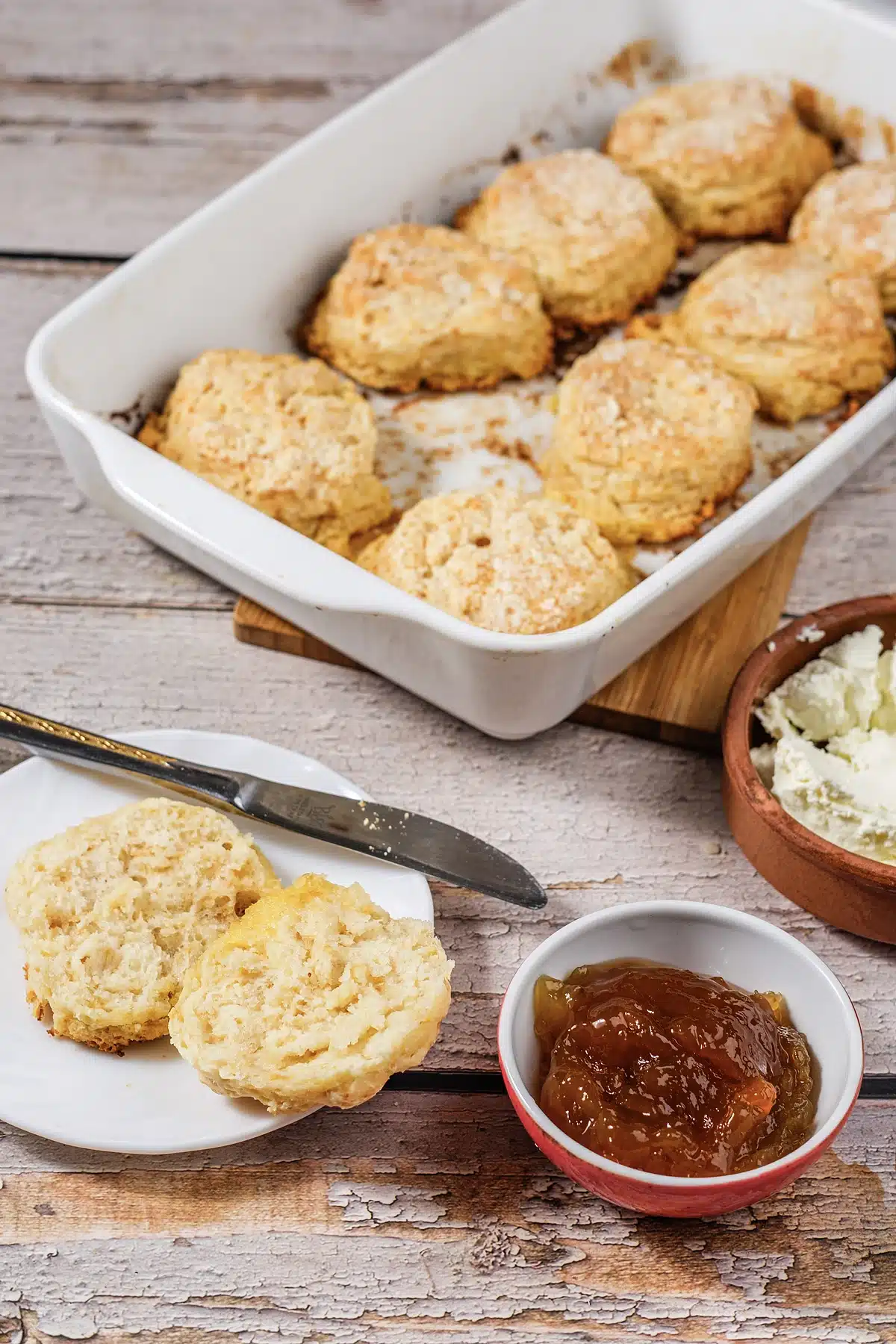
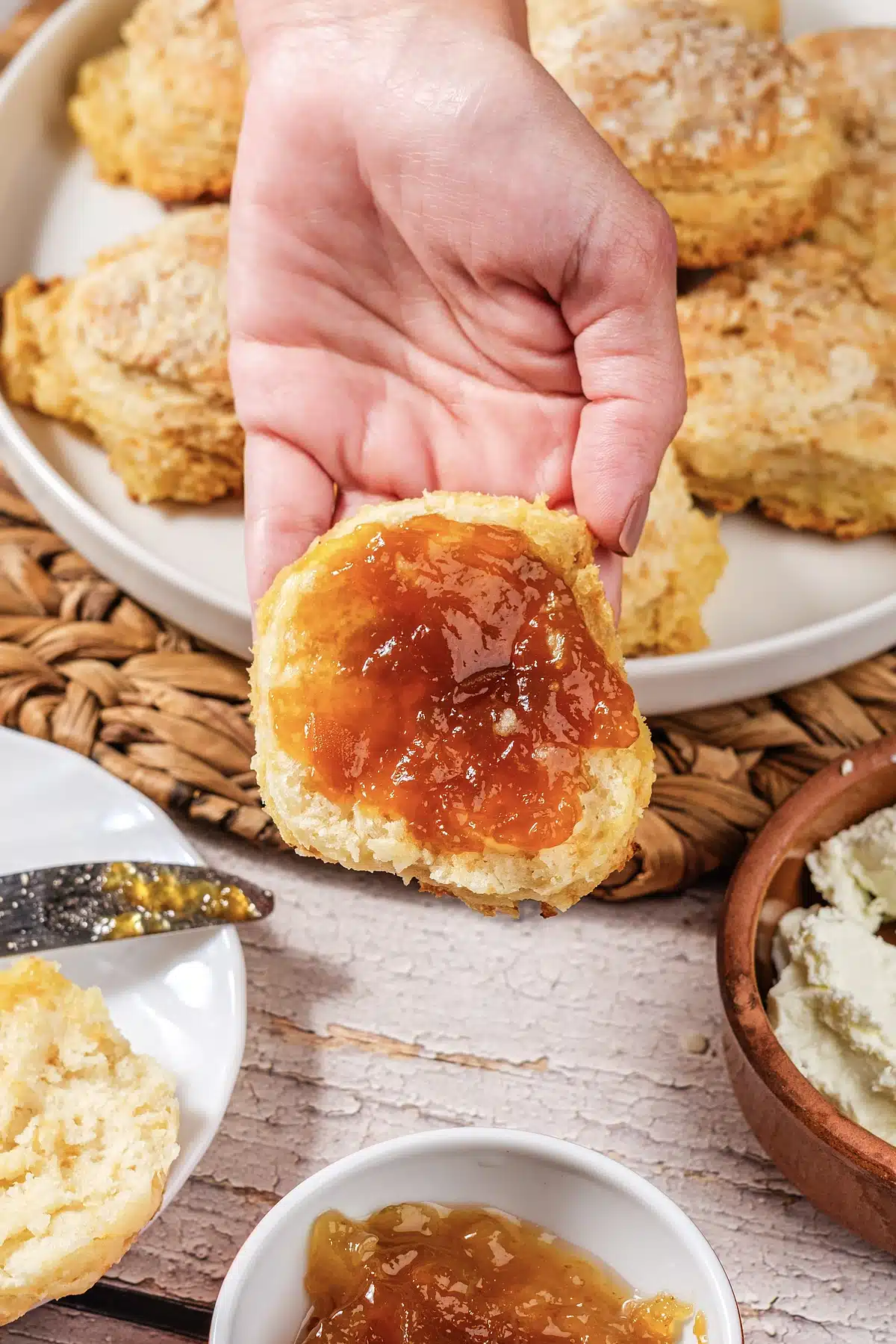
Butter and jam first, because that is how most 7Up biscuits get eaten and it is what the photographs on this page show. Clotted cream or a soft fresh cheese works too, which pushes them across the line toward a scone and nobody minds.
At dinner they are a soup bread. A bowl of ham and lentil soup or a pot of kielbasa potato soup with a tray of these is a complete meal, and the soft crumb soaks up broth without collapsing.
They also stand up to a roast dinner and a plate of gravy, and they make a very good breakfast sandwich split with egg and sausage. Alongside honey garlic chicken they are exactly the thing for mopping the sticky sauce off the tray.
Leftovers have one more job worth knowing about. Split a day-old biscuit, butter both halves and press them cut side down in a hot skillet for two minutes. The crumb toasts, the edges crisp, and it becomes the base for sausage gravy or a fried egg. That is genuinely the best thing to do with the last two on the tray.
7Up Biscuits FAQ
Frequently Asked Questions
What does the soda actually do in these biscuits?
Two things. The dissolved carbon dioxide expands in the oven and opens the crumb, and the acidity reacts with the baking soda in the mix to produce more lift. The sugar and flavor contribute almost nothing.
Can I use Sprite instead of 7Up?
Yes, and ginger ale as well. Any clear carbonated lemon-lime soda behaves the same way, as long as the bottle is freshly opened.
Can I make 7Up biscuits with Bisquick and sour cream?
That is exactly the recipe. Two cups of baking mix, half a cup of full-fat sour cream, half a cup of soda and a quarter cup of butter melted in the pan.
Why did my 7Up biscuits come out flat?
Usually flat soda, light sour cream, or dough that was kneaded rather than patted. Any one of the three costs you height, and all three together give you a cracker.
More Questions About Biscuit Baking
Good to Know
Do I have to use a nine-inch square dish?
No, but the pan should be small enough that the biscuits nearly touch. Spread them across a big sheet pan and the butter runs away from them and burns.
Can I halve the recipe?
Yes. Use a loaf pan or a small round dish so the butter still pools, and keep the same oven temperature and timing.
The dough is far too sticky. Did I do something wrong?
Almost certainly not. This dough is meant to be sticky. Flour the counter and your hands generously instead of adding flour to the bowl, which is what makes them tough.
If a tray of something warm out of the oven in under half an hour is the goal, a batch of TikTok cinnamon rolls works on the same principle for the sweet end of the table.

7Up Biscuits
Save this recipe
Enter your email and I’ll send this recipe straight to your inbox.
Ingredients
For the Biscuits
- 1/4 cup butter salted or unsalted, melted in the baking dish
- 2 cups baking mix such as Bisquick
- 1/2 cup sour cream full fat
- 1/2 cup lemon-lime soda such as 7Up, freshly opened; Sprite or ginger ale also work
For Shaping
- all-purpose flour a generous dusting, for the counter and your hands
Equipment
- Mixing bowl
- 9-inch square baking dish
- Oven
- Biscuit cutter or glass
Instructions
Melt the Butter
- Heat the oven and the dish: Put the butter into a 9-inch square baking dish and set it in the oven as it heats to 425°F (220°C). Watch it closely and take the dish out the moment the butter has liquefied, before it browns.
Mix and Cut the Dough
- Stir it together: Combine the baking mix, sour cream and freshly opened soda in a large bowl and stir with a spoon just until it comes together. A few dry lumps are fine. The dough will be very sticky, closer to thick mashed potato than to bread dough.

- Pat it out: Turn the dough onto a well-floured counter and press it into a slab about an inch thick with floured hands. Do not knead it and do not roll it.
- Cut nine rounds: Cut with a floured metal cutter, pressing straight down and lifting straight up without twisting. Gather and re-press the scraps once to use all the dough, or cut squares with a floured knife to avoid scraps entirely.
Bake and Serve
- Into the butter: Set the rounds into the melted butter so they sit close together but are not squashed. The butter should pool around and slightly under each one.
- Bake: Bake for 10 to 12 minutes, turning the dish once halfway through, until the tops are puffed and patched with gold. Serve warm.