
Benihana fried rice is the part of the meal people actually remember, and it is not the shrimp or the onion volcano. It is the plain-looking bowl the chef scrapes together at the end, glossy with butter, flecked with egg and carrot, savory in a way that is hard to place until you make it at home once.
The secret is not a rare ingredient or a five-hundred-degree grill. It is garlic butter, beaten ahead of time and folded in at the end so it melts over hot grains instead of scorching in the pan. Add rice cooked the day before, a skillet you are not afraid to get properly hot, and twenty-five minutes gets you the bowl you have been paying restaurant prices for. Benihana fried rice is a weeknight dish once you know that.
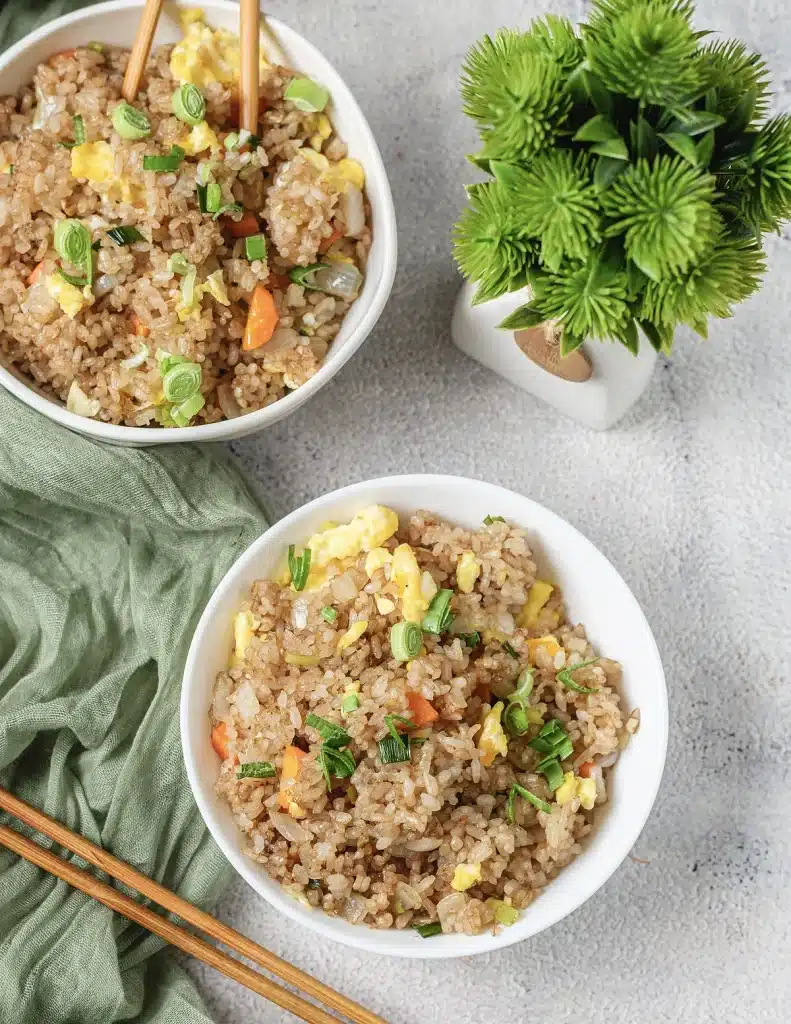
- Garlic butter is the whole difference, and it takes two minutes to make
- Twenty-five minutes from cold rice to the table
- Uses leftover rice, so it costs almost nothing
- No hibachi grill, no wok, no special equipment
- Doubles cleanly for a crowd if you cook it in two batches

- What Makes Benihana Fried Rice Different
- Ingredient Notes
- Why Day-Old Rice Is Not Optional
- The Garlic Butter Is the Whole Trick
- How To Make Benihana Fried Rice
- How To Tell When Benihana Fried Rice Is Done
- Make It Ahead
- Storing Benihana Fried Rice
- Variations and Substitutions
- What to Serve with Benihana Fried Rice
- Benihana Fried Rice FAQ
What Makes Benihana Fried Rice Different
Most takeout fried rice leans on soy sauce and oil. Benihana fried rice leans on butter, and that single swap changes everything about how it tastes and how it looks. Butter browns the outside of each grain instead of just coating it, so you get a faint nuttiness underneath the salt that oil alone cannot produce.
The second difference is restraint. There is no pineapple, no frozen peas and carrots, and no parade of vegetables competing for attention. Carrot, onion and scallion, cut small and cooked hard, plus egg. That is the whole list, and it is why the rice tastes like rice rather than like a salad someone fried.
The third difference is heat. A hibachi flat top runs far hotter than a home burner, which is why restaurant grains pick up those toasted edges. You cannot match the temperature, but you can get close by using a heavy skillet, preheating it properly, and resisting the urge to stir constantly.
Save this recipe
Enter your email and I’ll send this recipe straight to your inbox.
Ingredient Notes
The ingredient list for Benihana fried rice is short enough to memorize, which is exactly why each item has to be right.
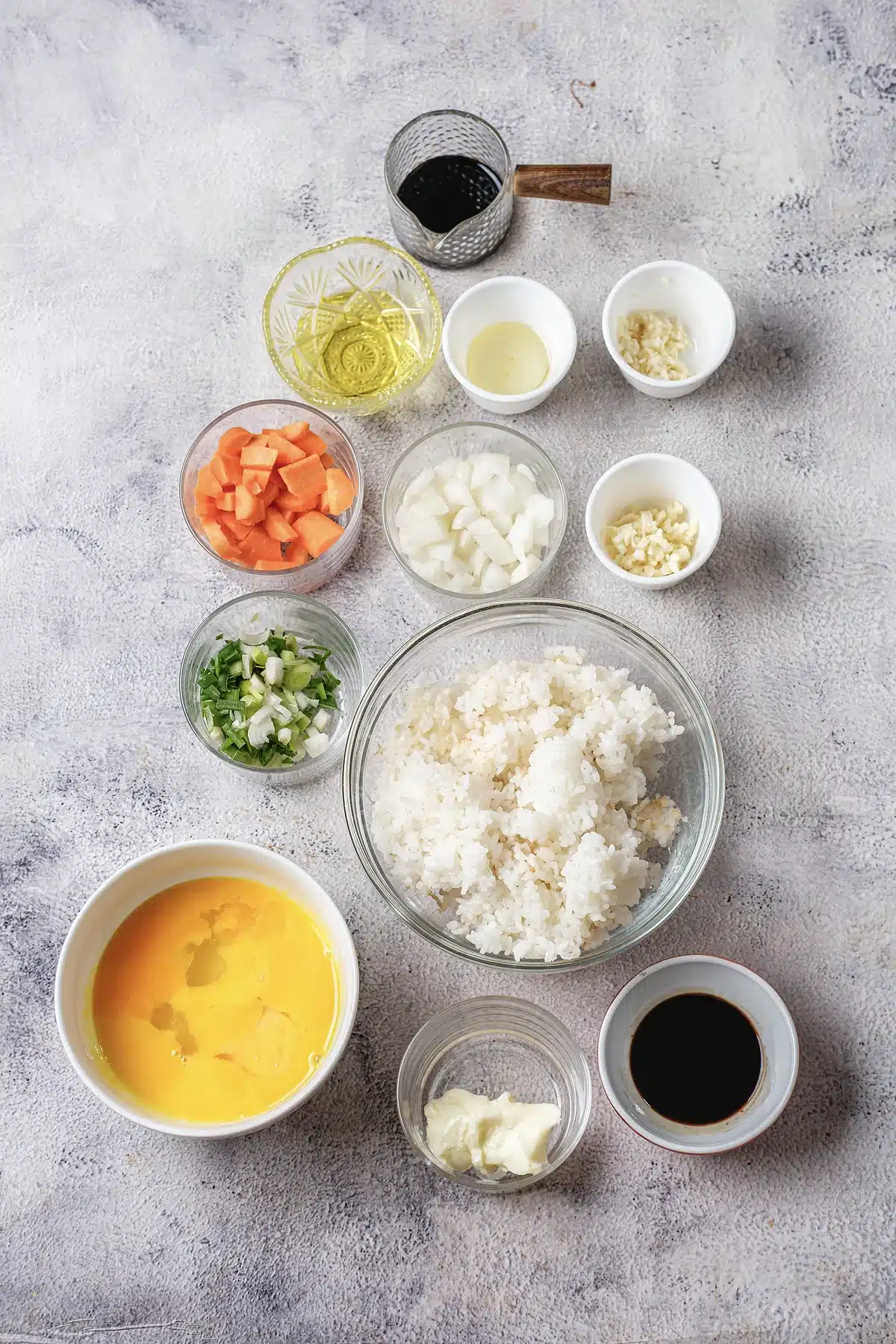
- Unsalted butter. Four tablespoons, softened, not melted. Softened butter beats smoothly with garlic; melted butter separates and the garlic sinks.
- Garlic. Three cloves, minced fine and divided. Half goes into the butter raw, half goes into the pan, so you get both mellow and sharp.
- Soy sauce. Two teaspoons in the butter, two tablespoons at the end. Splitting it means the flavor is inside the butter as well as on the rice.
- Cold cooked rice. Three cups, jasmine or plain white, refrigerated overnight. This is the one substitution that will not work, and there is more on it below.
- Eggs. Two, beaten and scrambled separately, then returned at the end. Cooking them in with the rice turns them rubbery and gray.
- Carrot. One medium, diced to about the size of a corn kernel. Bigger pieces stay crunchy and never soften in the short cooking time.
- Onion. Half a small yellow onion, diced the same size as the carrot. Uniform pieces cook at the same rate, which matters more than it sounds.
- Scallions. Three, sliced thin, with extra held back for the top. The ones cooked in go sweet; the raw ones on top keep their bite.
- Neutral oil. A tablespoon and a half of canola or vegetable oil. Butter alone burns at the heat you need, so the oil does the frying and the butter does the flavoring.
- Toasted sesame oil. One teaspoon, stirred in off the heat. It is a finishing oil, and cooking it flattens the aroma you added it for.
Why Day-Old Rice Is Not Optional
This is the rule that decides whether your Benihana fried rice works. Freshly cooked rice holds a surprising amount of surface moisture. Drop it into a hot pan and it steams rather than fries, the grains stick to each other, and you end up with something closer to a savory porridge than to the loose, separate grains you were aiming for.
A night in the refrigerator changes the starch itself. Cooked starch recrystallizes as it cools, a process called retrogradation, and the grains firm up and shed water. That firmer grain can take real heat without collapsing, which is exactly what you need.
Spread the rice on a sheet pan before it goes in the fridge so it cools quickly and evenly, and cover it once it is cold. Illinois Extension recommends getting cooked food into the refrigerator within two hours and using it within three to four days, which is the window this recipe lives in anyway.
If you genuinely have no leftover rice, cook a batch with slightly less water than usual, spread it out, and give it at least two hours uncovered in the fridge. It is not as good as overnight, and it is far better than warm rice straight from the pot.
The Garlic Butter Is the Whole Trick
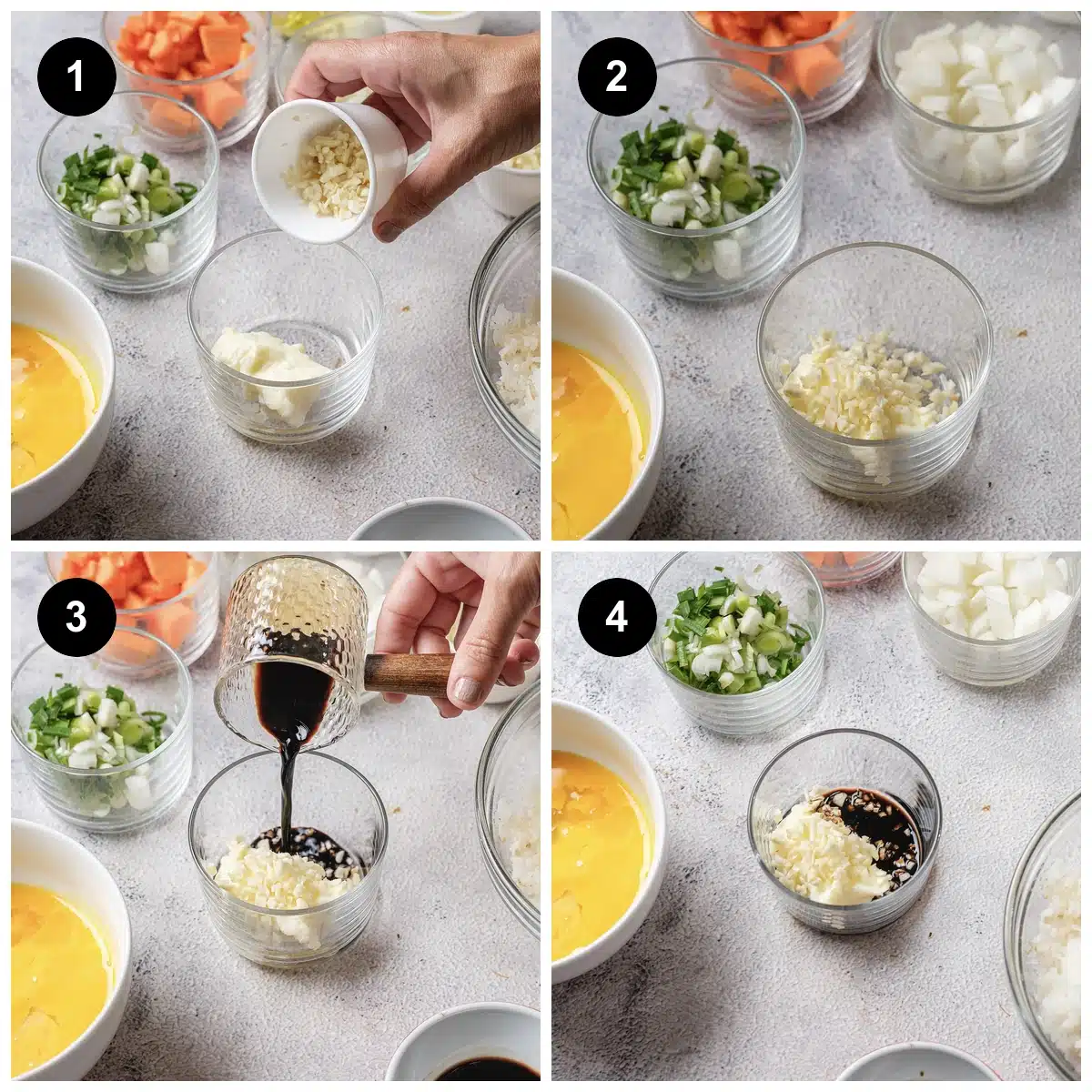
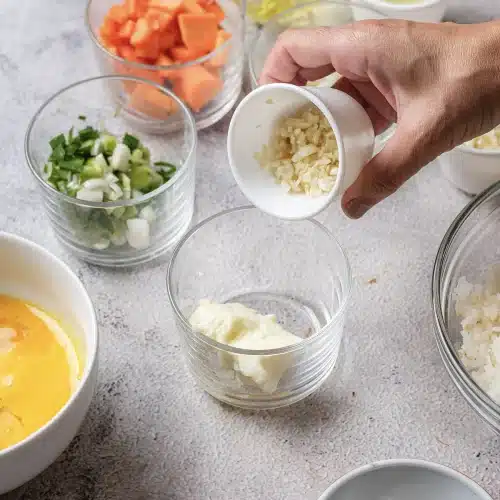
Beat softened butter with half the minced garlic and two teaspoons of soy sauce until it looks like a pale, glossy paste. That is it. It takes two minutes, it keeps in the refrigerator for a week, and it is the single thing that makes home-cooked Benihana fried rice taste like the restaurant.
Timing matters more than quantity. The butter goes in near the end, once the rice is already hot, so it melts and coats rather than browning and burning. Garlic added to a screaming hot pan turns bitter in about fifteen seconds; garlic suspended in butter and stirred through warm rice stays sweet.
Make a double batch while you are at it. It is excellent on steak, on corn, on toast, and stirred into plain steamed rice on a night when you do not feel like cooking at all.
How To Make Benihana Fried Rice
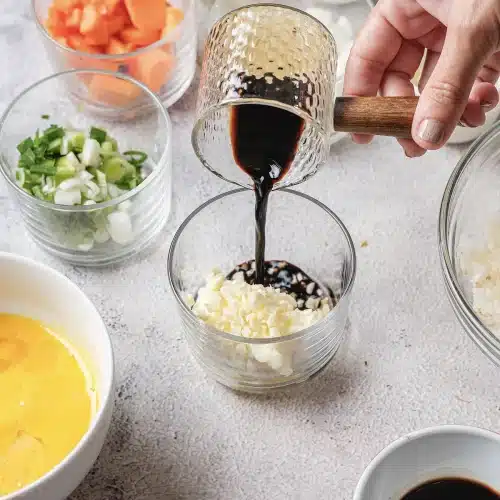
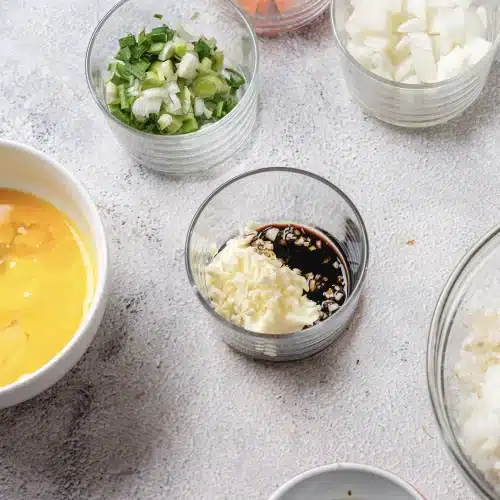
Have everything cut and within reach before the pan gets hot, because Benihana fried rice moves fast once it starts. First, make the garlic butter. Beat the softened butter with half the garlic until creamy, stir in two teaspoons of soy sauce, then cover it and put it back in the fridge while you prep everything else.
Next, scramble the eggs. Heat half a tablespoon of oil in a large skillet over medium heat, add the beaten eggs, and stir until they are just set and still glossy. Slide them onto a plate. They will finish cooking later, so pulling them early is deliberate.
Then cook the vegetables. Turn the heat to high, add the rest of the oil, and add the carrot and onion. Stir them until the edges catch color, about five to seven minutes. Add the scallions and the remaining garlic and give it thirty seconds, no longer.
After that, fry the rice. Break up any clumps with your fingers before it goes in, then add it and press it into the pan. Let it sit for thirty seconds at a time between stirs, for two to three minutes total, so some grains toast against the metal.
Finally, butter and finish. Add half the garlic butter and toss until everything is shiny, then return the eggs with the remaining soy sauce and the sesame oil. Taste it. Add more garlic butter if you want it richer, then serve straight from the pan with extra scallions.
How To Tell When Benihana Fried Rice Is Done
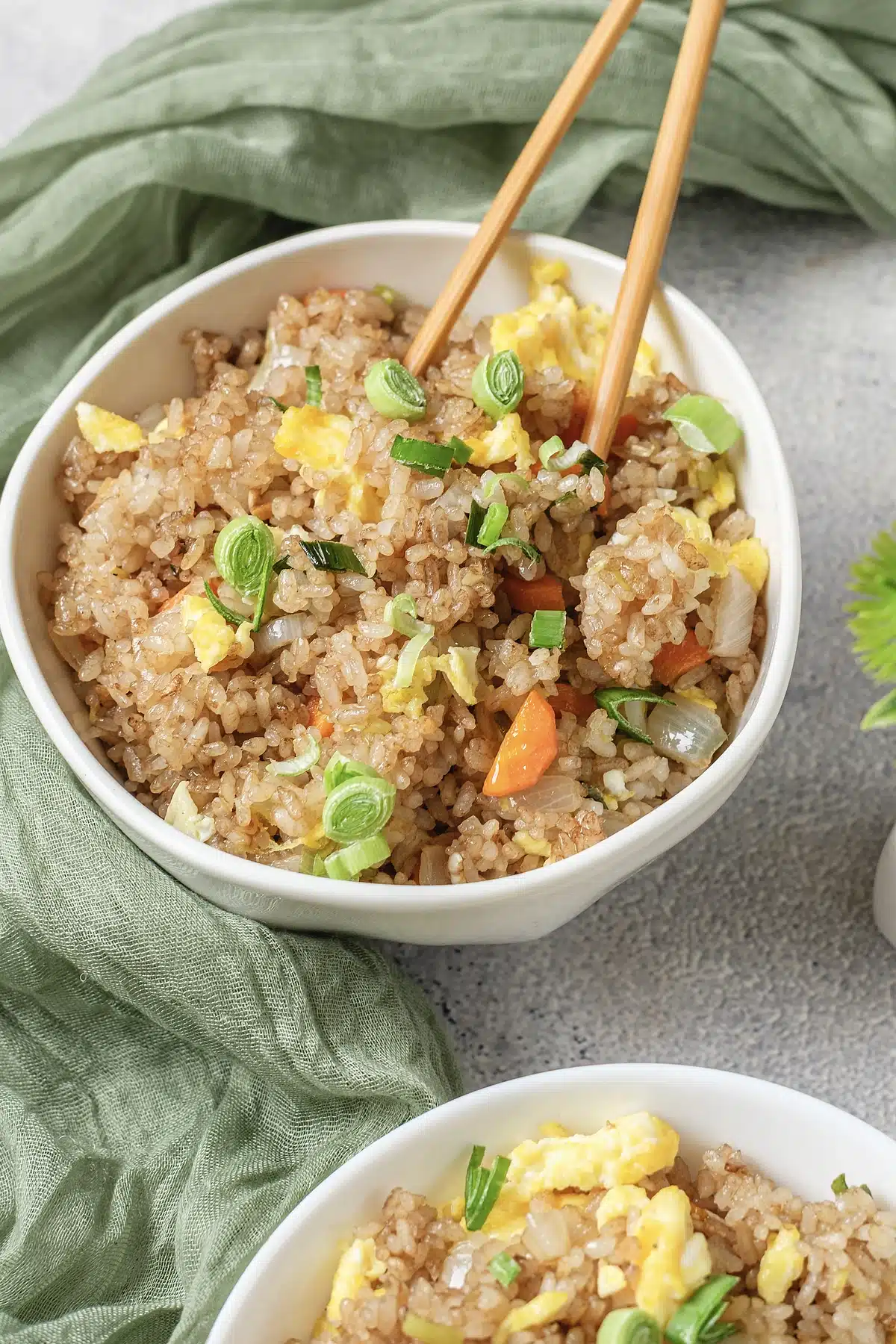
Look at how the grains move. Finished Benihana fried rice falls off the spoon in loose pieces rather than sliding off in a sheet. If it still clumps, it needs another minute of heat and a little less stirring.
Then look at the color. You want a light, even tan across the pan with scattered darker grains, not a uniform brown. Uniform brown means too much soy sauce; pale and pearly means the pan was never hot enough.
The last check is the smell. When the butter and garlic hit hot rice you get a distinct toasted aroma within about twenty seconds. That is the point to take it off the heat, because everything after it is just drying the rice out.
Make It Ahead
The rice itself has to be made ahead, which is convenient, because it means most of the work happens the day before without feeling like work. Cook it, cool it, refrigerate it, and you are already two-thirds of the way there.
The garlic butter also keeps beautifully. Make it up to a week early and store it wrapped in the fridge, or roll it into a log in parchment and freeze it for three months. Slice off what you need straight from frozen.
You can dice the carrot, onion and scallions the night before too, and keep them in a covered container. That leaves about eight minutes of actual cooking on the day, which is why this ends up in the weeknight rotation rather than the weekend one.
Storing Benihana Fried Rice
Leftover Benihana fried rice reheats better than most stir-fried dishes, which is a good reason to make the full batch. Cool leftovers quickly and refrigerate them in a shallow airtight container for up to four days. Shallow matters: a deep container cools from the outside in and leaves the middle warm for far too long.
Reheat in a skillet rather than a microwave. Add a teaspoon of oil and a splash of water, cover for a minute to steam the grains loose, then uncover and let the bottom crisp again. Microwaved fried rice goes soft and tastes flat.
Freezing works better than people expect. Spread the cooled rice in a single layer in a freezer bag, press the air out, and freeze it flat for up to three months. Reheat it straight from frozen in a hot pan, and do not thaw it first, or it will turn to paste.
Variations and Substitutions
Chicken. Dice a breast small, season it, and cook it first in the same pan. Set it aside with the eggs and return both at the end.
Shrimp. Cook them thirty seconds a side over high heat and pull them the moment they curl. Shrimp that ride along for the whole stir-fry come out like erasers.
Steak. Leftover steak, sliced thin against the grain and warmed through in the last minute, is the closest thing to the hibachi combination plate.
Extra vegetables. The base recipe is already meat-free. Add diced zucchini or mushrooms along with the carrot, and let the mushrooms brown properly before anything else joins them.
Vegan. Plant-based butter works in the garlic butter, and a quarter cup of crumbled firm tofu, browned hard, stands in for the egg.
Gluten-free. Swap the soy sauce for tamari, measure for measure. Nothing else in the recipe carries gluten.
Brown rice. It works, though it never gets as light. Use it cold like white rice, expect a chewier grain, and add an extra tablespoon of butter to compensate for the drier texture.
What to Serve with Benihana Fried Rice
At the restaurant, Benihana fried rice arrives beside something grilled, so anything from the same family works at home. Hibachi vegetables are the obvious partner and take the same pan and the same eight minutes.
For a full takeout spread, add a noodle dish and let people build their own plates. Lo mein noodles or a shrimp chow mein both hold up next to a butter-heavy bowl without fighting it.
A sharp, cold side balances the richness. Cucumber salad with rice vinegar, a simple miso soup, or edamame with flaky salt all do the job, and none of them need the stove you are already using.
Benihana Fried Rice FAQ
Frequently Asked Questions
What does Benihana put in their fried rice?
Benihana fried rice is built from rice, egg, carrot, onion, scallion, soy sauce and a great deal of butter, usually mixed with garlic. Chefs also carry a seasoned salt shaker and a squeeze bottle of oil, though the butter is what people are tasting when they say it is different.
Why does it taste so good at the restaurant?
Two reasons. The flat top runs hotter than any home burner, which toasts the grains, and the amount of butter used in Benihana fried rice is higher than most people would put in at home. The garlic butter in this recipe closes most of that gap.
What kind of rice should I use?
Long-grain white rice, jasmine for preference, is what Benihana fried rice wants. It cooks up separate rather than sticky, and it firms nicely overnight. Short-grain sushi rice is too starchy and clumps in the pan.
Can I use fresh rice if I spread it out to cool?
You can, and it is a clear step down. An hour spread on a sheet pan in the refrigerator removes some surface moisture, but it does not firm the grain the way a full night does.
More Questions About Hibachi Rice at Home
Good to Know
Do I need a wok?
No. A wok never gets hot enough on a domestic burner to justify itself. A heavy twelve-inch skillet or a cast iron pan holds heat better and gives you more flat contact area, which is what browns the grains.
What is the yellow sauce served with it?
That is the ginger or mustard dipping sauce, and it is a separate thing from the rice. It is usually mayonnaise-based with ginger, garlic and a little sugar, and it is served for the grilled meat rather than the rice.
Can I double the recipe?
Yes, in two batches. Doubling into one pan drops the temperature so far that the rice steams instead of frying, and you lose the toasted edges that make it worth doing.
Once the garlic butter is in your fridge it starts showing up everywhere, which is roughly how coconut rice on the stovetop became the other side dish in permanent rotation here.
Copycat Benihana Fried Rice
Save this recipe
Enter your email and I’ll send this recipe straight to your inbox.
Ingredients
Garlic Butter
- 4 tbsp (56 g) unsalted butter softened
- 3 cloves garlic minced (divided)
- 2 tsp soy sauce
Fried Rice
- 1 1/2 tbsp (22.5 ml) neutral oil such as vegetable or canola, divided
- 2 large eggs beaten
- 1 medium carrot finely diced
- 1/2 (0.5) small onion finely diced
- 3 scallions sliced, plus extra for garnish
- 3 cups (600 g) cold, day-old cooked rice preferably jasmine or white rice
- 2 tbsp (30 ml) soy sauce plus more to taste
- 1 tsp (5 ml) toasted sesame oil
- Salt and pepper to taste
Equipment
- Large skillet or wok
- Mixing bowl
- Spatula
Instructions
Make the Garlic Butter
- Beat the butter and garlic: In a small bowl, beat the softened butter with half the minced garlic until it is creamy and evenly mixed.

- Season it: Stir in 2 teaspoons of soy sauce until the butter looks like a smooth, pale paste.
- Chill it: Cover the garlic butter and refrigerate it while you prep everything else. It firms up and is easier to add in pieces later.
Cook the Eggs and Vegetables
- Scramble the eggs: Heat 1/2 tablespoon oil in a large skillet over medium heat. Add the beaten eggs and stir until they are just set and still glossy, then slide them onto a plate. They finish cooking with the rice later, so do not take them further.
- Cook the vegetables: Raise the heat to high and add the remaining tablespoon of oil, the carrot and the onion. Stir until softened and starting to color at the edges, 5 to 7 minutes. Stir in the scallions and the remaining garlic and cook for 30 seconds, until fragrant.
Fry the Rice and Finish
- Fry the rice: Break up any clumps of cold rice with your fingers. Tip it into the skillet, press it flat, and let it sit for 30 seconds at a time between tosses for 2 to 3 minutes, so some grains toast against the pan.
- Butter it: Add half the garlic butter and toss until it melts and everything looks glossy. Taste, add more garlic butter if you want it richer, and season with salt and pepper.
- Finish and serve: Return the scrambled eggs with 2 tablespoons soy sauce and the toasted sesame oil. Toss gently to combine and heat through, then serve at once with extra scallions on top.