Butterscotch chocolate chip cookies are a brown butter cookie dough loaded with butterscotch chips and mini chocolate chips, baked until the edges turn golden and the centers stay soft. The brown butter is what sets them apart from a standard chocolate chip cookie: it tastes toasted and nutty, and it makes the butterscotch chips taste like something you made rather than something you bought.
The dough takes about twenty minutes, and then it chills for an hour, which is the part most people want to skip. Do not. Chilled dough spreads less, bakes up chewier and tastes noticeably deeper, and it keeps in the fridge for three days, so the cookies can be baked a tray at a time whenever you want them warm.
- Brown butter gives butterscotch chocolate chip cookies a toasted, caramel depth no plain butter dough can match
- Crisp golden edges and soft, chewy centers in the same cookie
- Two kinds of chips in every bite, plus flaky salt on top
- No mixer needed, just a bowl and a whisk
- The dough chills for up to 3 days or freezes in scoops, so fresh cookies are always twenty minutes away
- Makes 12 big cookies or 24 regular ones from the same dough

- What Makes These Butterscotch Chocolate Chip Cookies Different
- Ingredient Notes
- Brown Butter: The Step Worth Doing
- How To Make Butterscotch Chocolate Chip Cookies
- How To Tell When Butterscotch Chocolate Chip Cookies Are Done
- Make It Ahead
- Storing Butterscotch Chocolate Chip Cookies
- Variations and Substitutions
- What to Serve with Butterscotch Chocolate Chip Cookies
- Butterscotch Chocolate Chip Cookies FAQ
What Makes These Butterscotch Chocolate Chip Cookies Different
Most butterscotch chocolate chip cookies are a regular chocolate chip dough with a bag of butterscotch chips stirred in. That works, but butterscotch chips on their own can taste flat and a little artificial. Browning the butter first fixes that. The milk solids in the butter toast in the pan and turn nutty, and that flavor threads through the whole dough, so the butterscotch tastes like the caramelized brown sugar and butter it is supposed to be.
Two other choices matter. An extra pair of egg yolks adds richness and chew without making the cookies cakey, and a tablespoon of cornstarch keeps the centers soft after they cool. The mix of light brown sugar and white sugar leans brown, which is where the chew and the butterscotch flavor come from.
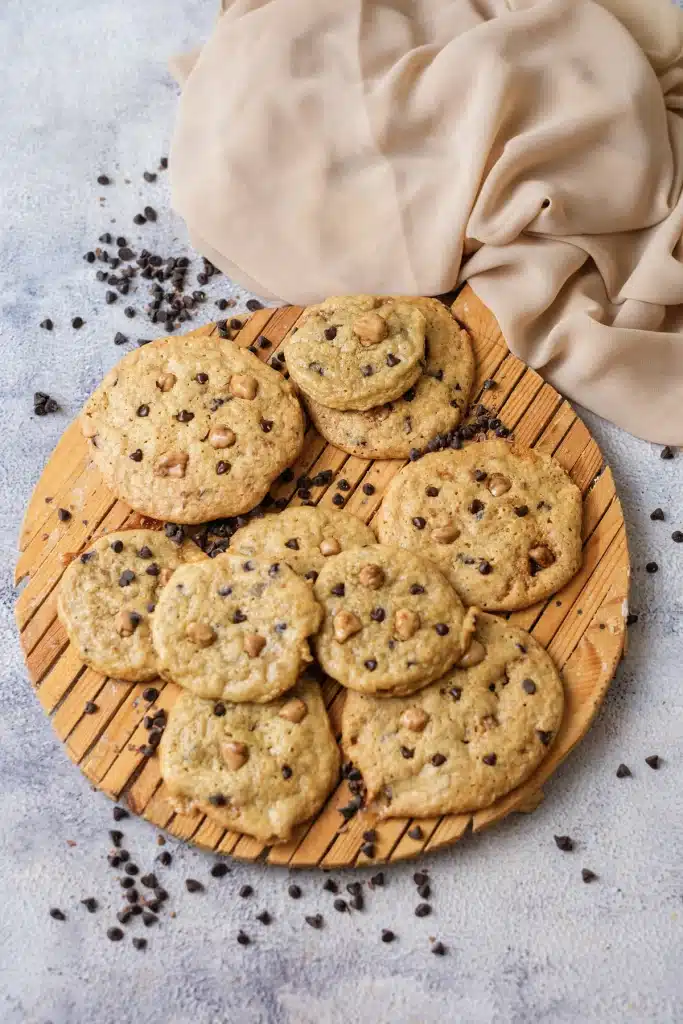
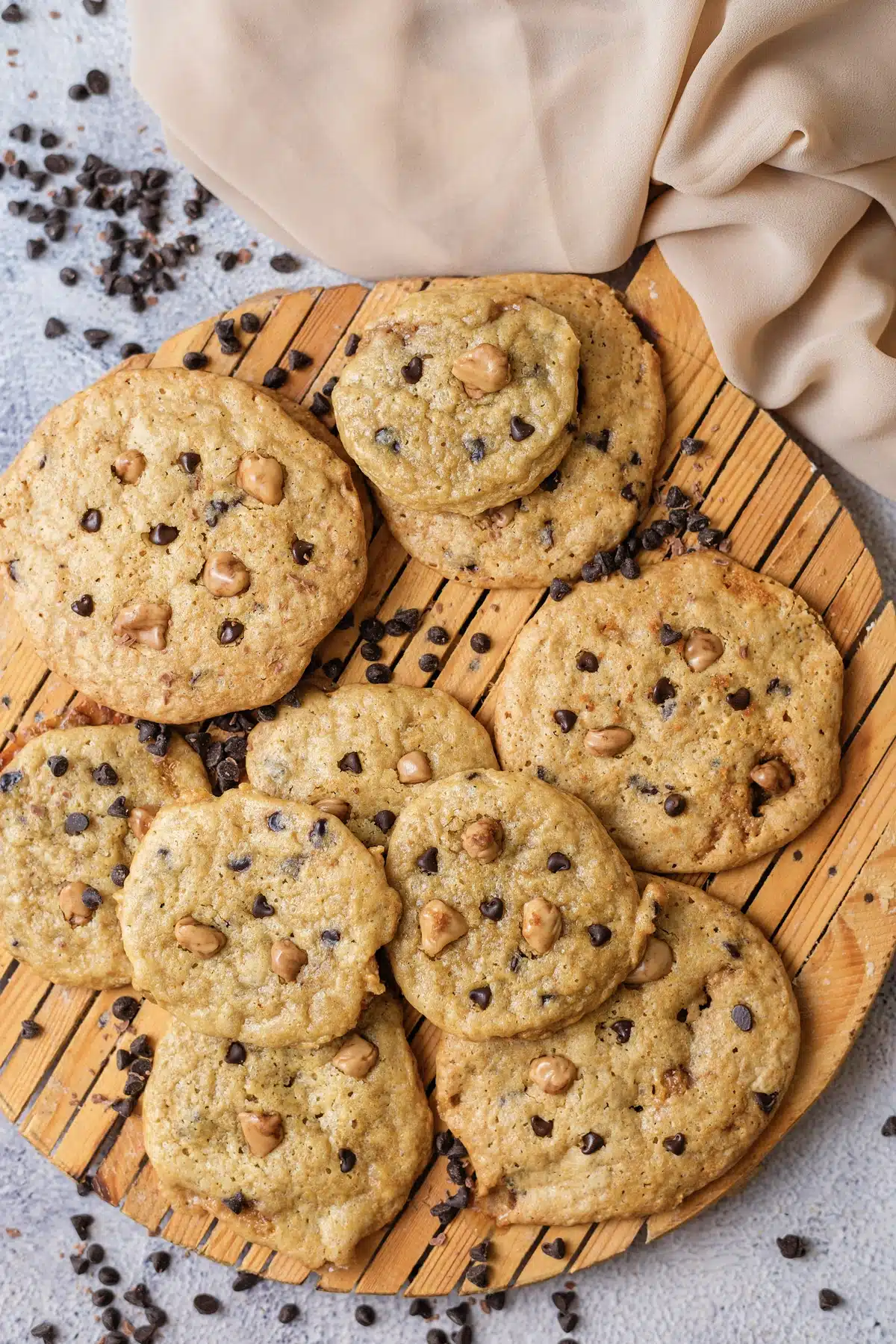
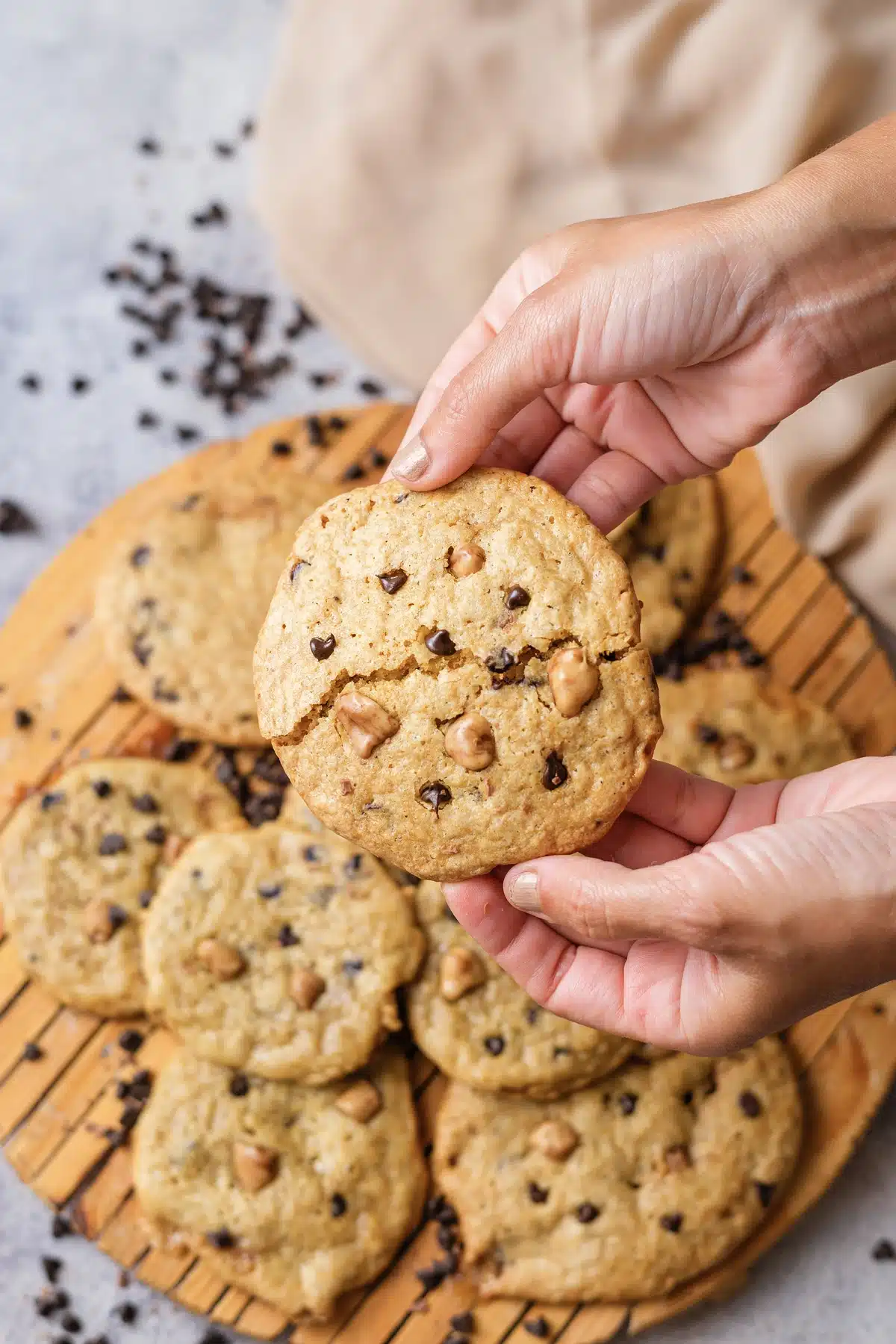
The cookies in the photos were scooped a little smaller than the full quarter cup and made with mini chocolate chips, which spread through the dough more evenly than standard chips. Either size of chip works, and both sizes of cookie are in the recipe card.
Save this recipe
Enter your email and I’ll send this recipe straight to your inbox.
Ingredient Notes
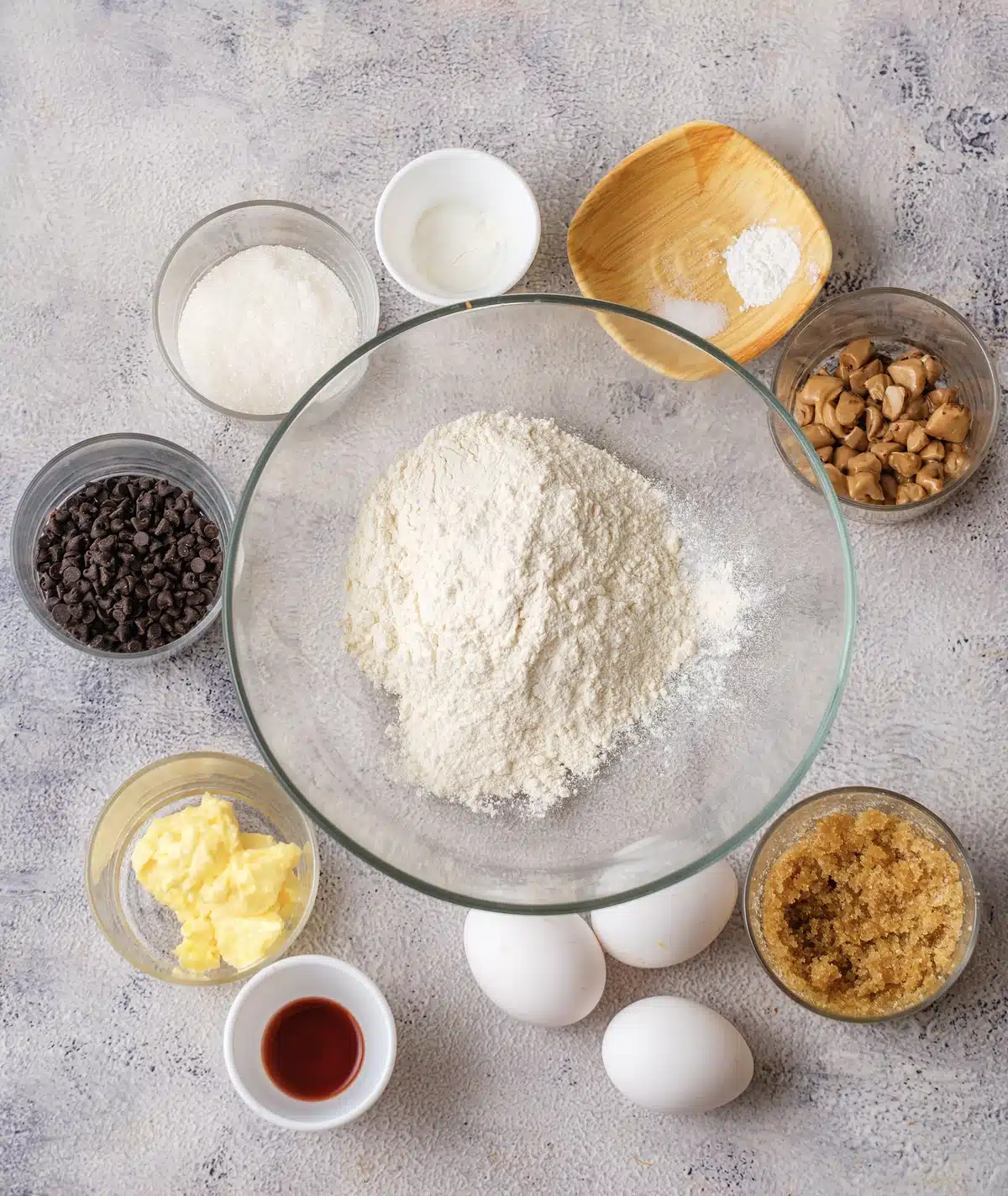
- Unsalted butter. One cup, browned on the stove before anything else. Salted butter works if you cut the kosher salt in half.
- Light brown sugar and granulated sugar. One cup of packed brown sugar to a half cup of white. Dark brown sugar makes the cookies darker and a touch more molasses-heavy, which is not a bad thing.
- Egg and egg yolks. One whole egg plus two extra yolks. The yolks are what make the centers rich and chewy rather than cakey.
- Vanilla extract. Two teaspoons. Brown butter and vanilla together are most of the butterscotch flavor.
- All-purpose flour. Two and a quarter cups, spooned into the cup and leveled. Scooping straight from the bag packs in extra flour and makes dry, domed cookies.
- Cornstarch. One tablespoon. It softens the crumb and helps the cookies stay tender for days.
- Baking soda and kosher salt. One teaspoon each. The soda gives the spread and the golden edges; the salt keeps all that sugar in check.
- Butterscotch chips. One cup. Buy a brand you would eat from the bag, because they carry the name of the cookie.
- Chocolate chips. Three quarters of a cup of semi-sweet. Mini chips, as pictured, spread through every bite; standard chips give bigger pockets of chocolate.
- Flaky sea salt. For the tops, straight out of the oven. It is optional, but it is the difference between a good cookie and one people ask about.
Brown Butter: The Step Worth Doing
Browning butter takes about six minutes and needs nothing more than a light-colored pan, so you can see the color change. Melt the butter over medium heat, and it will foam, then sputter as the water cooks off, then quiet down. Watch the bottom of the pan once the sputtering stops. Golden flecks form, the smell turns nutty, and that is the moment to pour it into the mixing bowl, flecks and all. Another thirty seconds and those flecks go from brown to black.
The butter loses a little water as it browns, which is one reason these butterscotch chocolate chip cookies have such a concentrated flavor. It also means the browned butter is very hot. Let it sit for five minutes before the sugars go in, or they will start to melt and the dough turns greasy.
If you have never browned butter before, the butterscotch cookies on this site use the same technique in a simpler dough, and the two recipes make a good pair.
How To Make Butterscotch Chocolate Chip Cookies
The dough comes together in one bowl with a whisk and a spatula, and there is no creaming step, so a stand mixer stays in the cupboard.
First, brown the butter in a skillet over medium heat as described above, then pour it into a large mixing bowl, scraping in every brown bit, and let it cool for five minutes.
Next, add both sugars and the vanilla to the warm butter and whisk hard for about two minutes, until the mixture looks glossy and the sugar has started to dissolve. Whisk in the whole egg and the two yolks, and keep whisking until it turns thick, shiny and smooth, like a loose caramel.
Then whisk the flour, cornstarch, baking soda and salt together in a separate bowl and add them to the wet mixture. Stir with a spatula until the dough is about halfway combined, add the butterscotch chips and chocolate chips, and fold until no dry streaks remain. Stop there; overmixing makes tough cookies.
After that, cover the bowl and chill the dough for at least an hour, and up to three days. Cold dough is firmer, spreads less in the oven, and tastes deeper, because the flour has time to hydrate and the brown butter flavor settles in.
Shaping and Baking
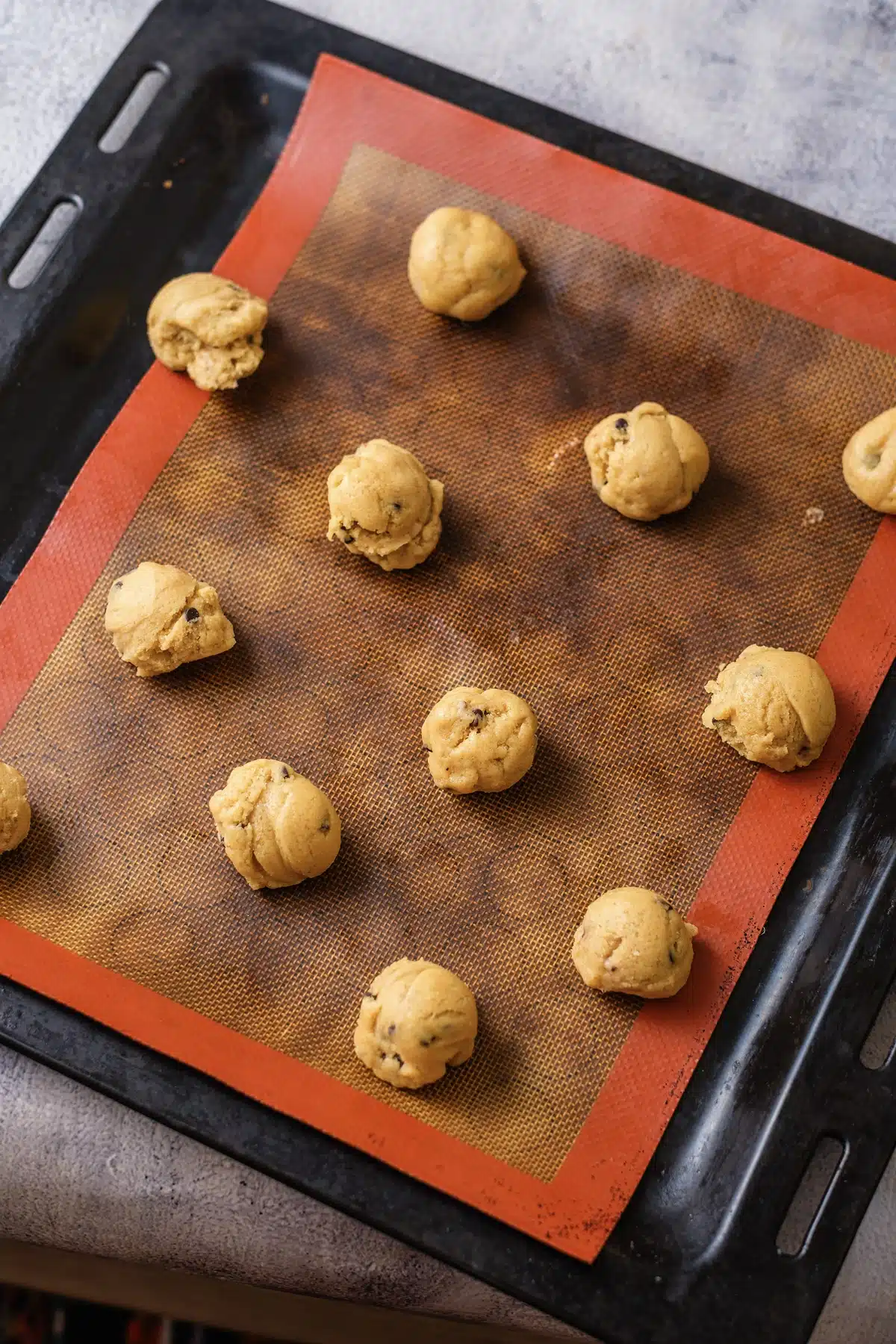
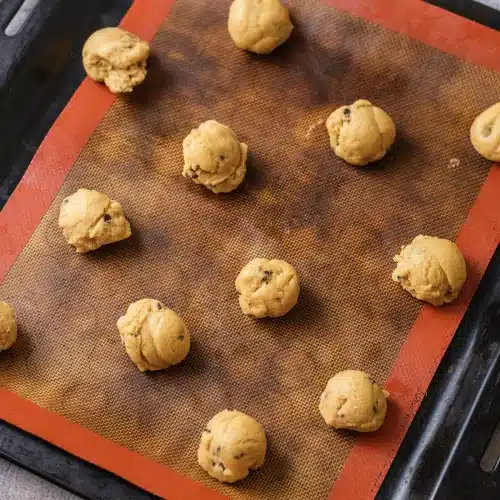
Finally, heat the oven to 325°F and line two baking sheets with parchment or silicone mats. Scoop the dough into quarter-cup mounds for twelve big cookies, or two-tablespoon mounds for twenty-four smaller ones, and space them three inches apart, because they spread. Bake the big cookies for ten to thirteen minutes and the small ones for nine to eleven, until the edges are golden and the centers still look a shade underdone. Sprinkle with flaky salt as soon as they come out, rest them on the sheet for five minutes, then move them to a rack.
How To Tell When Butterscotch Chocolate Chip Cookies Are Done
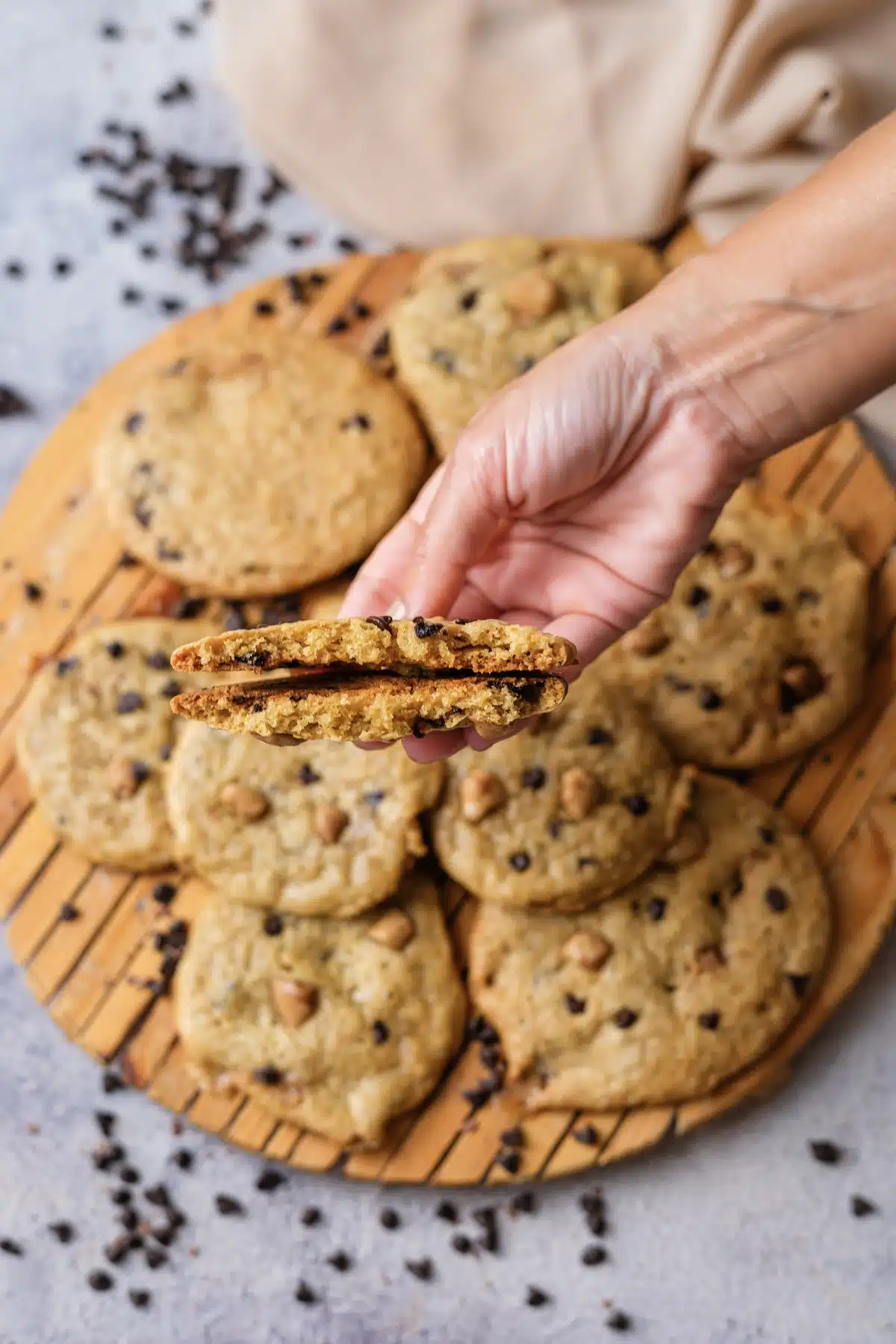
The edges are the tell. When they are set and golden brown about a half inch in from the rim, and the middle looks puffed, pale and slightly wet, the cookies are done. They keep cooking on the hot sheet for the five minutes they rest there, which finishes the centers without drying them out. A cookie that looks fully baked in the oven will be dry by the time it cools.
If the cookies have spread into thin, lacy discs, the dough was too warm or the butter was not cooled enough before the sugars went in. If they stayed in tall domes and never spread, there was too much flour, almost always from scooping the cup straight into the bag.
Snap one open once it has cooled a little. Done butterscotch chocolate chip cookies have a crisp rim, a chewy band, and a soft, slightly gooey center with melted chocolate running through it, exactly like the one in the photo above.
Make It Ahead
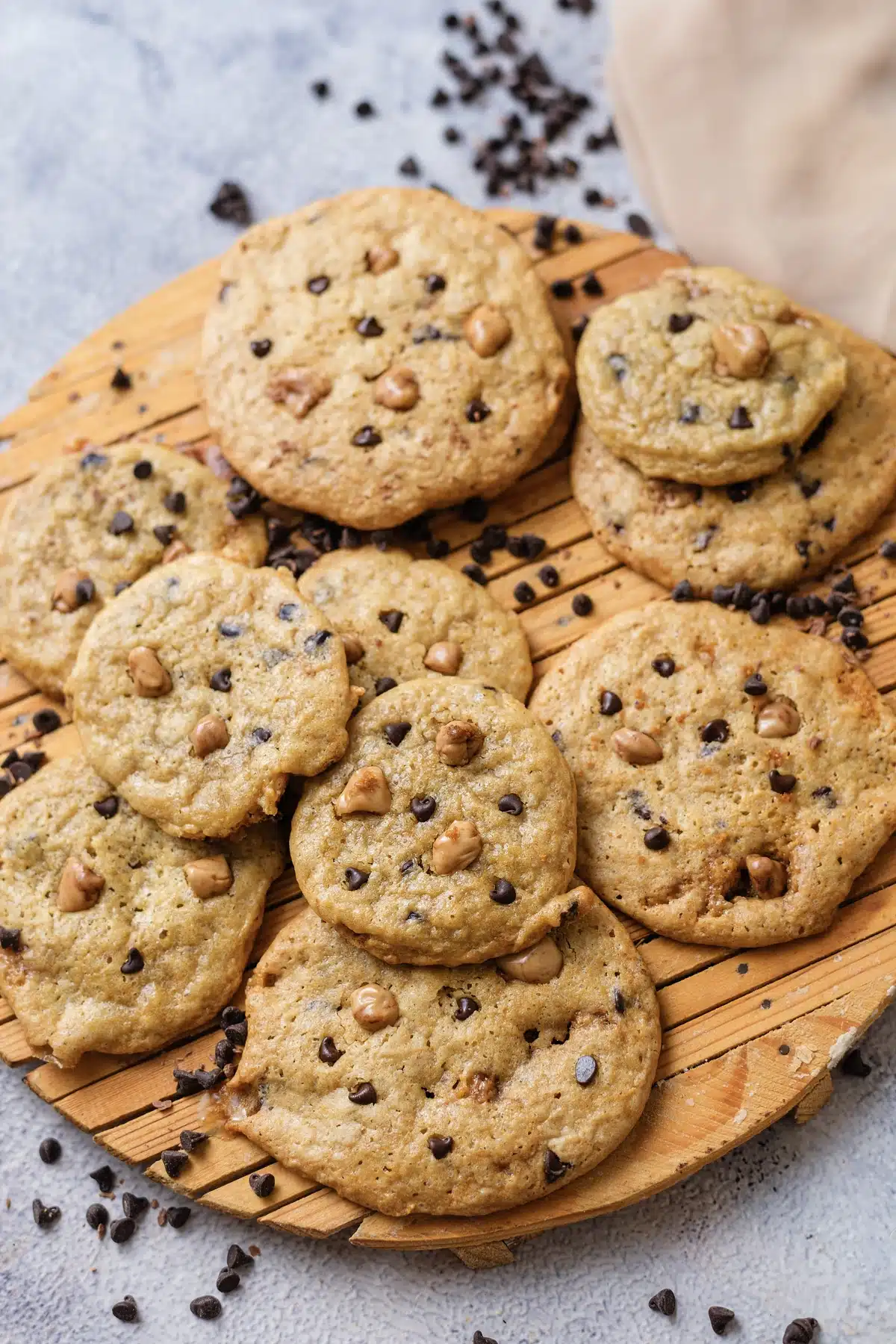
This dough is built for making ahead. Once mixed, it keeps covered in the refrigerator for up to three days, and the flavor improves over the first twenty-four hours. Bake a few cookies at a time straight from the cold dough; they may need one more minute.
If you are baking for a crowd, the whole batch can be scooped, chilled on the trays, and baked in two rounds while the first cookies cool. Scooped dough also chills faster than a bowl of it, so this is the route to take when the hour feels too long.
For longer storage, scoop the dough into balls, freeze them on a tray until solid, then bag them. Frozen dough balls bake from frozen at the same temperature with two to three extra minutes, so a warm cookie is never more than fifteen minutes away.
Storing Butterscotch Chocolate Chip Cookies
Cool the cookies completely, then keep them in an airtight container at room temperature for up to four days. A slice of sandwich bread in the container keeps them soft; the cookies pull moisture from the bread instead of drying out.
Avoid the fridge for baked cookies. Cold air dries them out and dulls the brown butter flavor, and they go stale faster than they would on the counter.
Baked cookies also freeze well. Layer them between sheets of parchment in a freezer container for up to three months, and thaw at room temperature for twenty minutes, or warm them for ten seconds in the microwave for that just-baked softness.
Variations and Substitutions
All butterscotch. Skip the chocolate and use one and three quarter cups of butterscotch chips for a cookie that is all caramel and brown butter.
Toffee bits. Swap half the butterscotch chips for toffee bits. They melt into crisp caramel pockets, the way they do in these salted toffee cookies.
Nuts. A half cup of toasted pecans or walnuts, chopped, is the classic addition to butterscotch and goes in with the chips.
Oats. Replace a half cup of the flour with old-fashioned oats for a chewier, heartier cookie.
Chocolate swaps. Milk chocolate makes a sweeter cookie; dark chocolate chunks balance the butterscotch better. White chocolate and butterscotch together are very sweet, so add a pinch more salt.
Salted butter. Fine to use; reduce the kosher salt to a half teaspoon and still finish with flaky salt on top.
What to Serve with Butterscotch Chocolate Chip Cookies
These are a gift cookie as much as a snack cookie. A dozen of the big ones stacked in a tin with parchment between the layers travel well, keep for days, and look far more deliberate than they are.
Cold milk is the obvious answer, and it is the right one. Coffee works too, especially something dark that stands up to the brown butter. For a dessert plate, sandwich a scoop of vanilla ice cream between two small cookies and freeze them for twenty minutes.
On a cookie tray, these sit well beside something with a different texture and flavor: Almond Joy cookies for coconut and chocolate, or soft chocolate chip pudding cookies for the people who like their cookies pillowy rather than chewy.
Butterscotch Chocolate Chip Cookies FAQ
Frequently Asked Questions
Do I have to brown the butter?
No, but it is the reason these cookies taste the way they do. If you skip it, melt the butter and let it cool for five minutes before whisking in the sugars, and expect a milder, more standard chocolate chip cookie.
Why did my butterscotch chocolate chip cookies spread so much?
Warm dough or hot butter. The brown butter must cool for at least five minutes before the sugars go in, and the dough must chill for an hour. Baking on a warm sheet from the previous batch also causes spreading.
Can I skip the chilling time?
You can, but the cookies will be thinner and less chewy. Even thirty minutes in the fridge makes a difference. An hour is better, and overnight is best.
Do butterscotch chips melt like chocolate chips?
Not quite. They soften and hold their shape in the oven rather than turning to liquid, which is why the cookies keep visible pockets of butterscotch after baking. Look for a brand whose ingredients start with sugar and palm oil rather than hydrogenated oil; they taste cleaner.
More Questions About These Cookies
Good to Know
Can I use a stand mixer?
Yes, on low speed, though the dough does not need it. If you use one, mix the flour in only until it disappears, because a mixer overworks cookie dough quickly.
How do I measure the flour correctly?
Fluff the flour, spoon it into the measuring cup and level it with a knife. The Wheat Foods Council explains why: scooping compacts the flour and can add several tablespoons to a cup, which is enough to turn a chewy cookie into a dry one.
Can I make these gluten-free?
A measure-for-measure gluten-free flour blend that contains xanthan gum works well. Chill the dough for the full hour, because gluten-free dough is softer.
Make the dough on a quiet evening, chill it, and bake a tray of butterscotch chocolate chip cookies whenever the house needs one. If brown butter has won you over, the butterscotch cookies are the next batch to try.
Butterscotch Chocolate Chip Cookies
Save this recipe
Enter your email and I’ll send this recipe straight to your inbox.
Ingredients
Dry Ingredients
- 2 1/4 cups all-purpose flour spooned and leveled
- 1 tbsp cornstarch
- 1 tsp baking soda
- 1 tsp kosher salt
Wet Ingredients
- 1 cup unsalted butter browned, see step 1
- 1 cup light brown sugar packed
- 2 tsp vanilla extract
- 1/2 cup granulated sugar
- 1 large egg
- 2 large egg yolks
Mix-Ins
- 1 cup butterscotch chips
- 3/4 cup semi-sweet chocolate chips mini chips as pictured, or standard
- flaky sea salt for the tops
Equipment
- Skillet
- Mixing bowls
- Spatula
- Whisk
- Baking sheet
- Parchment paper
- Wire rack
Instructions
Brown the Butter
- Brown the butter. Melt the butter in a light-colored skillet over medium heat. Let it foam and sputter, stirring now and then, for 4 to 6 minutes, until golden flecks form on the bottom and it smells nutty. Pour it into a large mixing bowl at once, scraping in every brown bit, and cool for 5 minutes.
- Whisk in the sugars and vanilla. Add the brown sugar, granulated sugar and vanilla to the warm butter and whisk hard for about 2 minutes, until glossy and combined.
Make the Dough
- Add the eggs. Whisk in the whole egg and both yolks and keep whisking until the mixture is thick, shiny and smooth.
- Mix the dry ingredients. In a separate bowl, whisk together the flour, cornstarch, baking soda and kosher salt.
- Combine and add the chips. Add the flour mixture to the wet ingredients and stir with a spatula until about halfway combined. Add the butterscotch chips and chocolate chips and fold until no dry flour remains. Do not overmix.
- Chill. Cover the bowl and refrigerate the dough for at least 1 hour, or up to 3 days. Chilling keeps the cookies chewy and stops them spreading too far.
Shape and Bake
- Scoop. Heat the oven to 325°F (165°C) and line two baking sheets with parchment or silicone mats. Scoop the dough into 1/4-cup mounds for 12 large cookies, or 2-tablespoon mounds for 24 smaller ones, spacing them 3 inches apart.

- Bake. Bake one sheet at a time in the center of the oven: 10 to 13 minutes for large cookies, 9 to 11 for small. The edges should be golden and the centers should still look slightly underdone.
- Salt and cool. Sprinkle the tops with flaky sea salt while hot. Let the cookies rest on the sheet for 5 minutes, then move them to a wire rack.