Cinnamon roll coffee cake is what you make when you want the middle of a cinnamon roll without spending a morning on yeast. One bowl of batter, a thick brown sugar swirl dragged through it with a knife, and a vanilla glaze poured over while the pan is still warm. It is in the oven fifteen minutes after you start.
- This cinnamon roll coffee cake needs no yeast, no rising time and no rolling, so it goes from bowl to oven in about fifteen minutes
- One nine-by-thirteen pan feeds twelve people, which makes it a good brunch recipe
- Everything in it is a pantry staple you almost certainly already have
- The glaze goes on warm and soaks partway in, so nobody gets a dry corner piece
- It keeps for two days on the counter and freezes in slices for three months
The reason a cinnamon roll coffee cake works at all is that the swirl is a paste rather than a dry filling. Melted butter, brown sugar, cinnamon and a little flour beaten together make a mixture heavy enough to sit on top of the batter instead of sinking through it, and thin enough to marble when you drag a knife across the pan. Get that consistency right and the finished squares have a proper ribbon running through them, which is the whole point.

- What Makes It Taste Like a Cinnamon Roll
- Ingredient Notes
- How To Make Cinnamon Roll Coffee Cake
- How To Tell When Cinnamon Roll Coffee Cake Is Done
- Why the Swirl Sinks, and How to Stop It
- Make It Ahead
- Storing Cinnamon Roll Coffee Cake
- Variations and Substitutions
- What to Serve with Cinnamon Roll Coffee Cake
- Cinnamon Roll Coffee Cake FAQ
What Makes It Taste Like a Cinnamon Roll
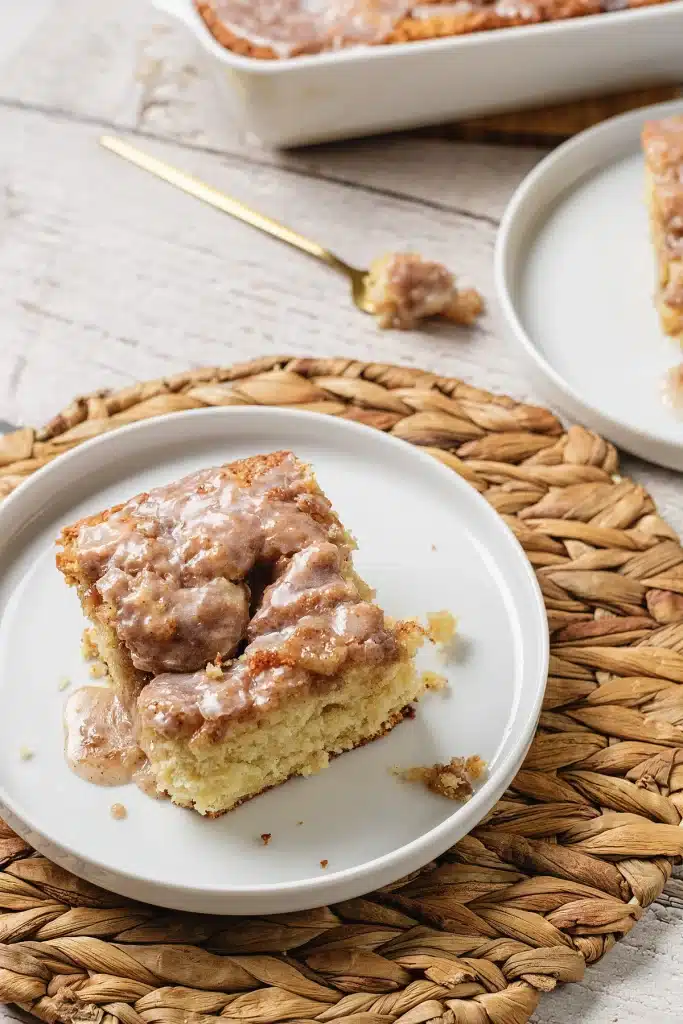
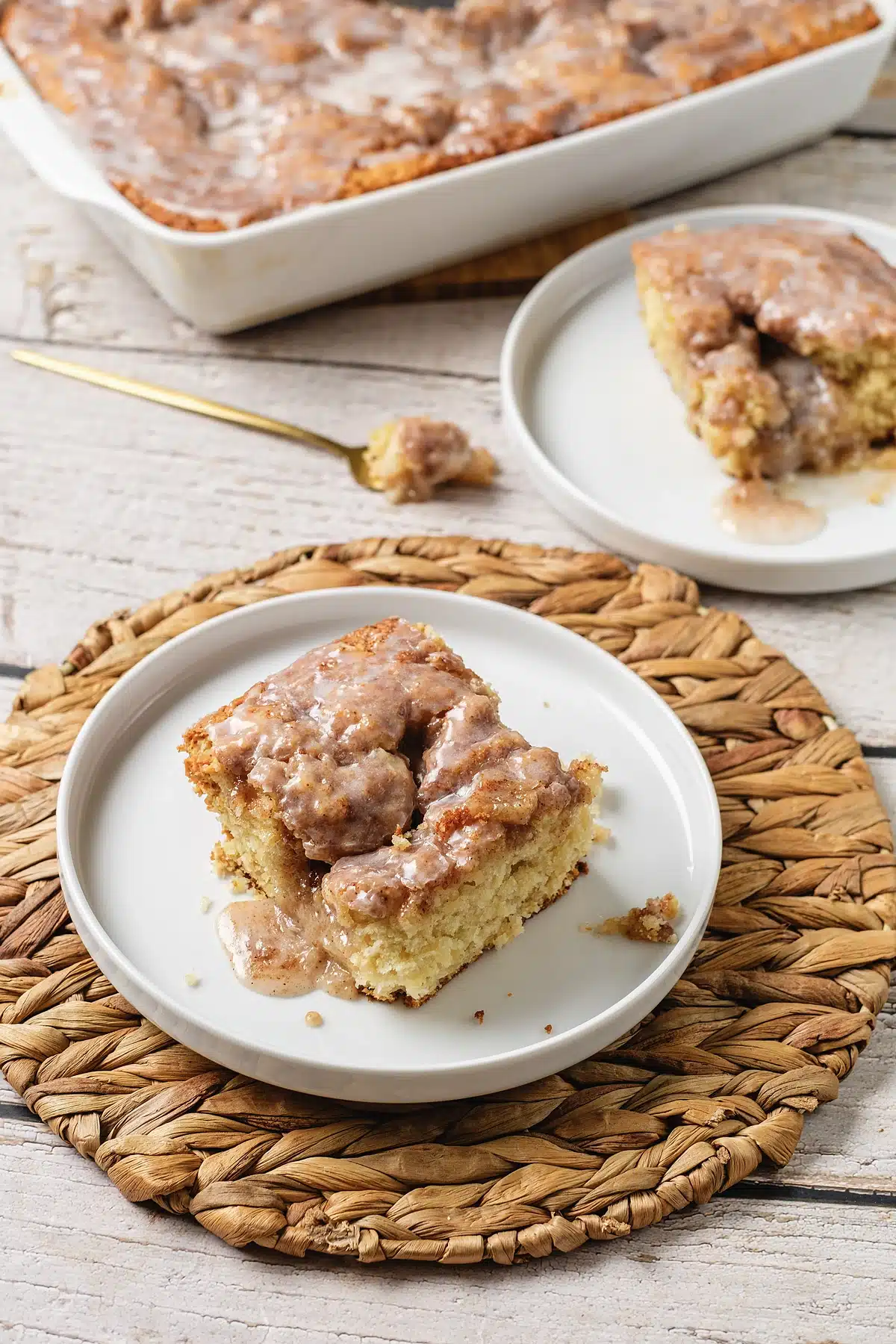
A plain coffee cake has a dry streusel scattered over the top, and a cinnamon roll coffee cake does not. This one has a wet swirl beaten through the middle, and that difference is what puts it closer to the roll it is named after. The butter and brown sugar melt together in the oven into something that stays soft and slightly gooey rather than crisp, which is exactly what the center of a good cinnamon roll does.
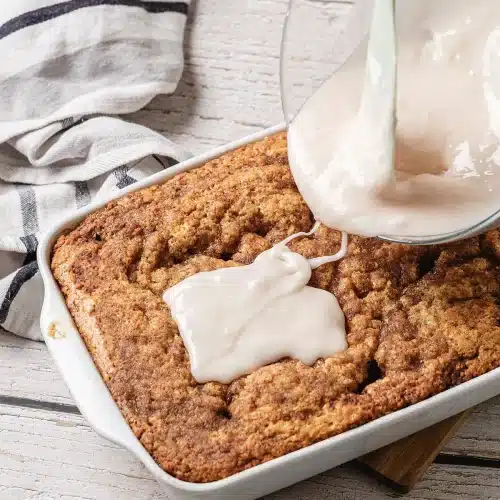
The second half of the cinnamon roll coffee cake illusion is the glaze. A cinnamon roll is not finished until the icing goes on, and it has to go on while the pan is warm so it thins out and settles into every crack rather than sitting on top as a white lid. Wait until the cake is cold and you get a stiff shell that snaps off the first slice.
The one thing a cinnamon roll coffee cake does not copy is the pull-apart texture. There is no gluten development here and no proofing, so the crumb is a tender cake crumb rather than a bready one. That is a fair trade for skipping three hours.
Save this recipe
Enter your email and I’ll send this recipe straight to your inbox.
Ingredient Notes
Nothing in a cinnamon roll coffee cake is unusual, and only the butter temperatures actually matter.
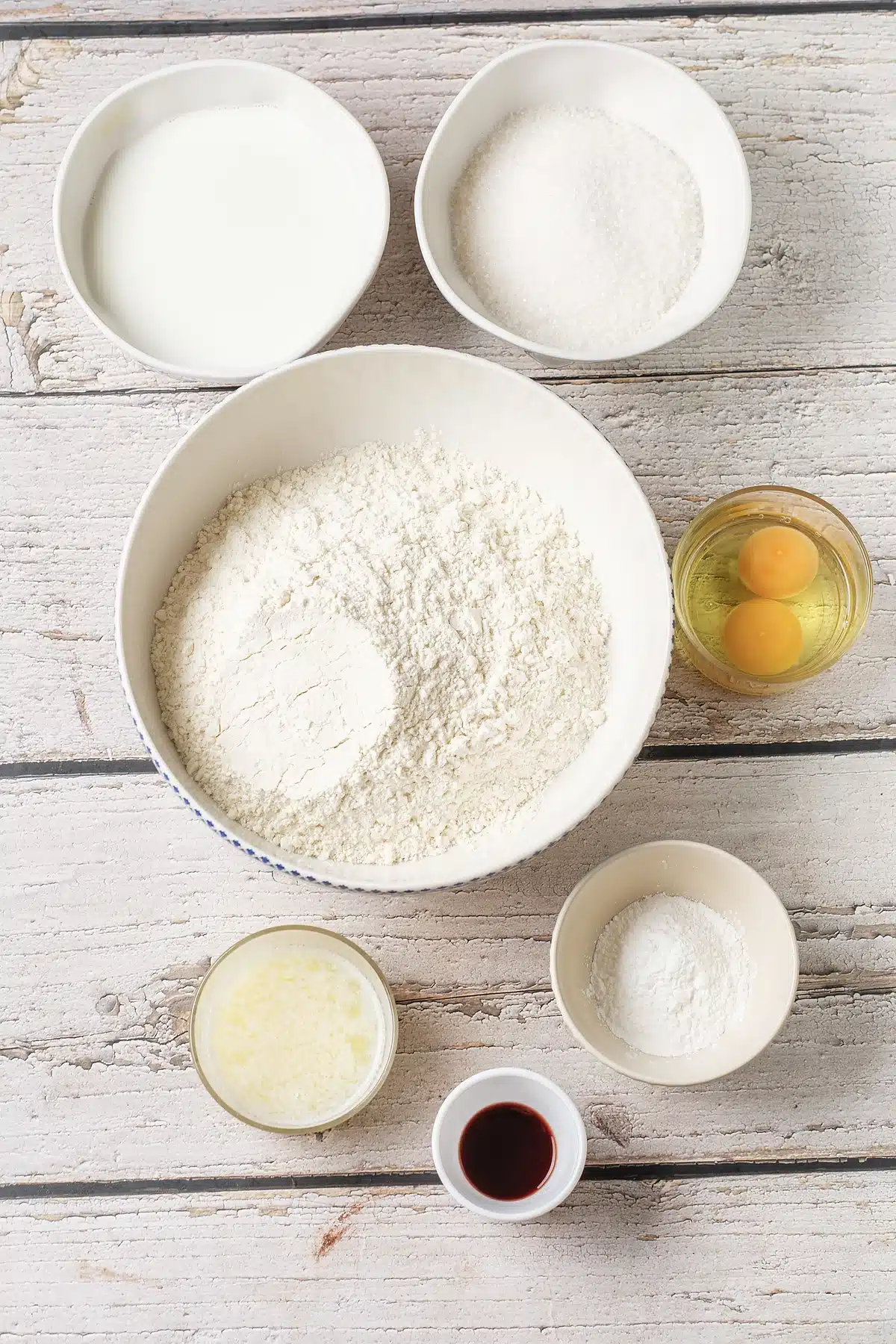
- Unsalted butter, softened. One cup for the batter, left out for an hour first. Softened means it dents under a finger and holds the mark. Melted butter will not hold air when you cream it and gives you a dense, greasy cake.
- Granulated sugar. One cup, creamed with the butter for a full two to three minutes. That step is doing structural work rather than sweetening, because the sugar crystals cut air pockets into the fat and those pockets become the crumb.
- Eggs. Two large, at room temperature, added one at a time. Cold eggs seize the creamed butter and the batter curdles, which costs you height.
- All-purpose flour. Two and a half cups, spooned into the cup and leveled rather than scooped. Scooping packs in as much as an extra quarter cup and dries the whole cake out. The Wheat Foods Council has a good plain guide to how flour types behave in baking if you want to understand why the swap to bread flour goes wrong here.
- Baking powder. Two and a half teaspoons, which is a lot and is meant to be. There is no acid in the batter to activate baking soda, and this is a heavy batter that needs the lift.
- Whole milk. One cup, at room temperature, added in three parts alternating with the flour.
The Swirl and the Glaze
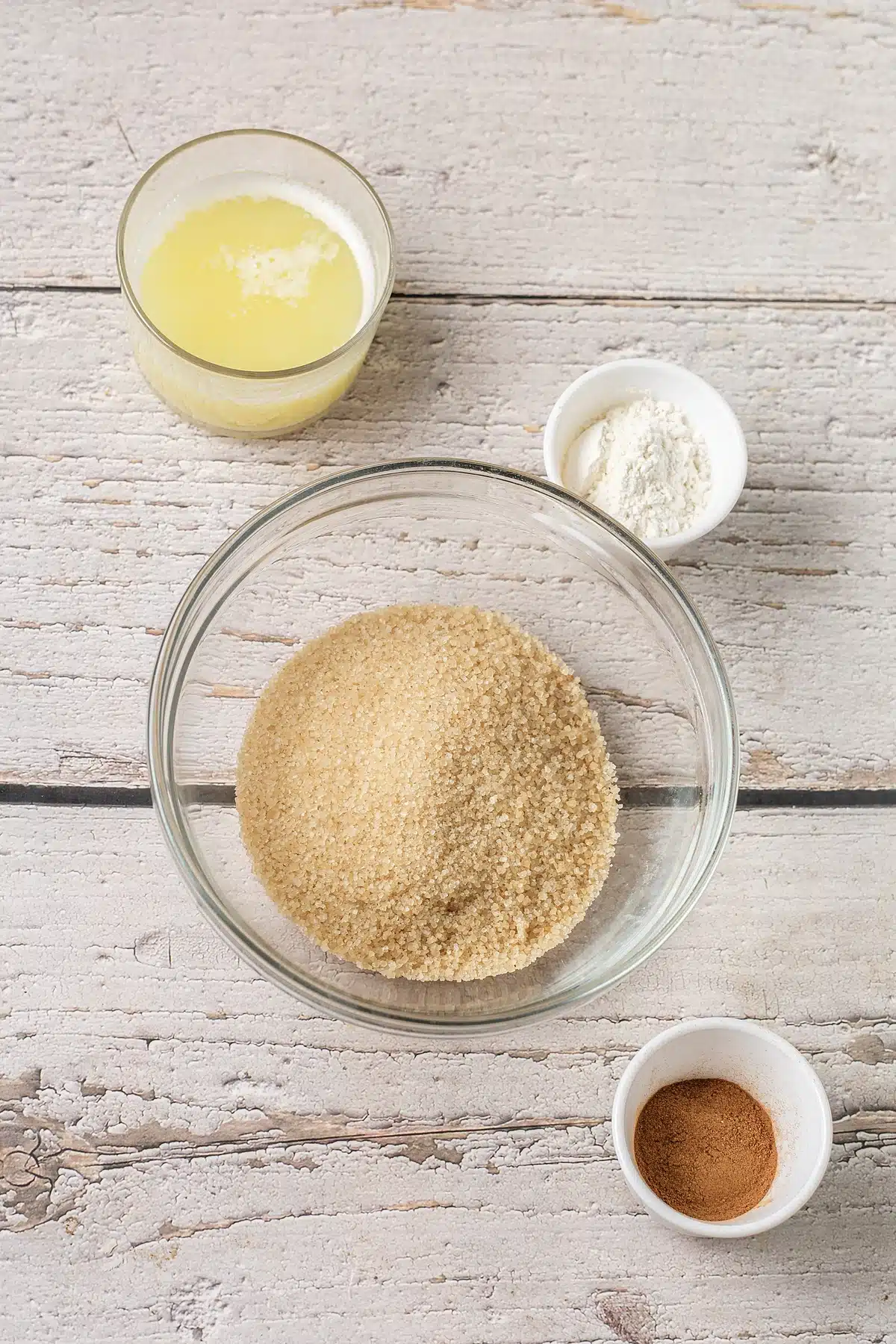
- Melted butter. Half a cup for the swirl, and this one is melted rather than softened. The original recipe this style comes from calls for a full cup, and half is better. A full cup makes a swirl heavy enough to sink straight to the bottom of the pan.
- Brown sugar. One cup, packed. Light or dark both work and dark gives a deeper, more molasses-heavy ribbon.
- Flour in the swirl. Two tablespoons. This is the ingredient people skip and it is the one holding the swirl up. Without it the mixture is liquid and slides through the batter.
- Ground cinnamon. A tablespoon and a half. That sounds like a great deal for one pan and it is correct, because the batter around it is plain.
- Powdered sugar and milk. One cup and one to two tablespoons, whisked to the thickness of pancake syrup. Add the milk half a tablespoon at a time, because a glaze goes from stiff to watery in about two seconds.
How To Make Cinnamon Roll Coffee Cake
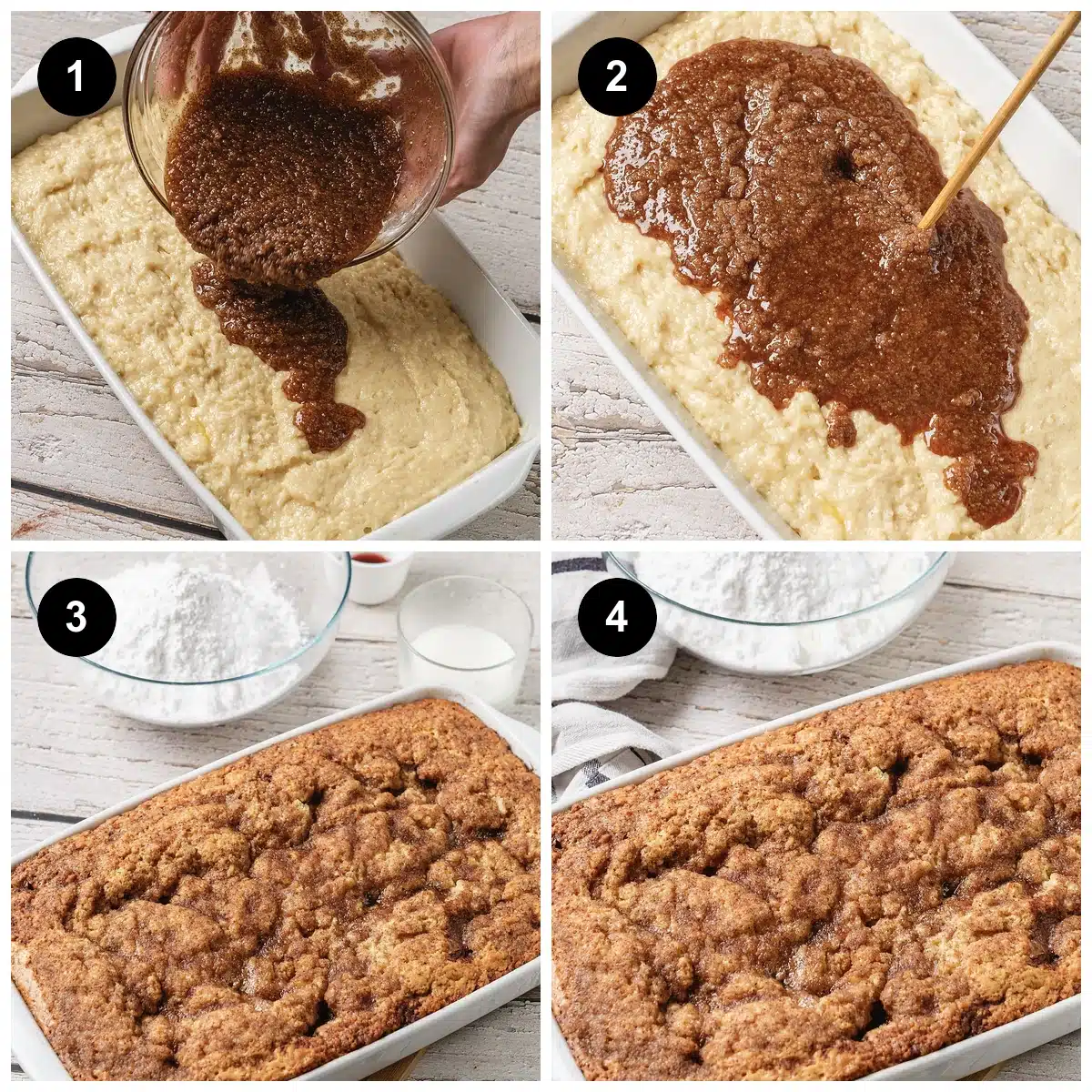
A cinnamon roll coffee cake is built in five stages and none of them need any special equipment. First, get the pan and the oven ready. Heat the oven to 350 degrees and line a nine-by-thirteen pan with parchment, leaving an overhang on the long sides so you can lift the whole slab out later. Greasing alone works, and the parchment is what lets you cut clean squares.
Next, cream the butter and sugar. Beat the softened butter with the granulated sugar for two to three minutes, until it is visibly paler and looks fluffy rather than grainy. Add the eggs one at a time, beating well after each, then the vanilla.
Then bring the batter together. Whisk the flour, baking powder and salt in a separate bowl and add them to the butter mixture in three parts, alternating with the milk, beginning and ending with the flour. Stop the moment it is smooth. This batter is thick, closer to a frosting than a pourable cake batter, and that is right.
Swirling and Baking
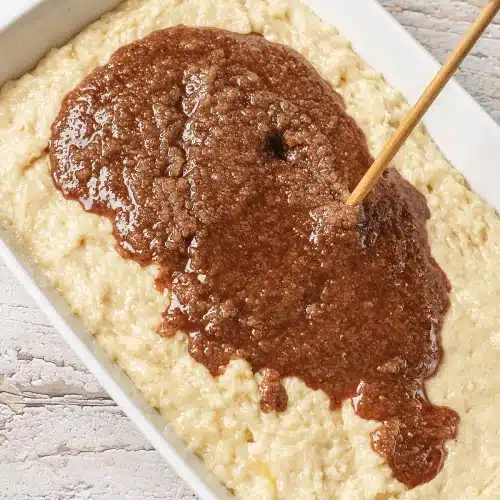
After that, add the swirl. Spread the batter into the pan and level it. Stir the melted butter, brown sugar, flour and cinnamon into a smooth paste, drop it over the batter in spoonfuls rather than pouring it in one place, then drag a butter knife through in long S shapes. Four or five passes is plenty. Keep going and the ribbon disappears into the batter completely.
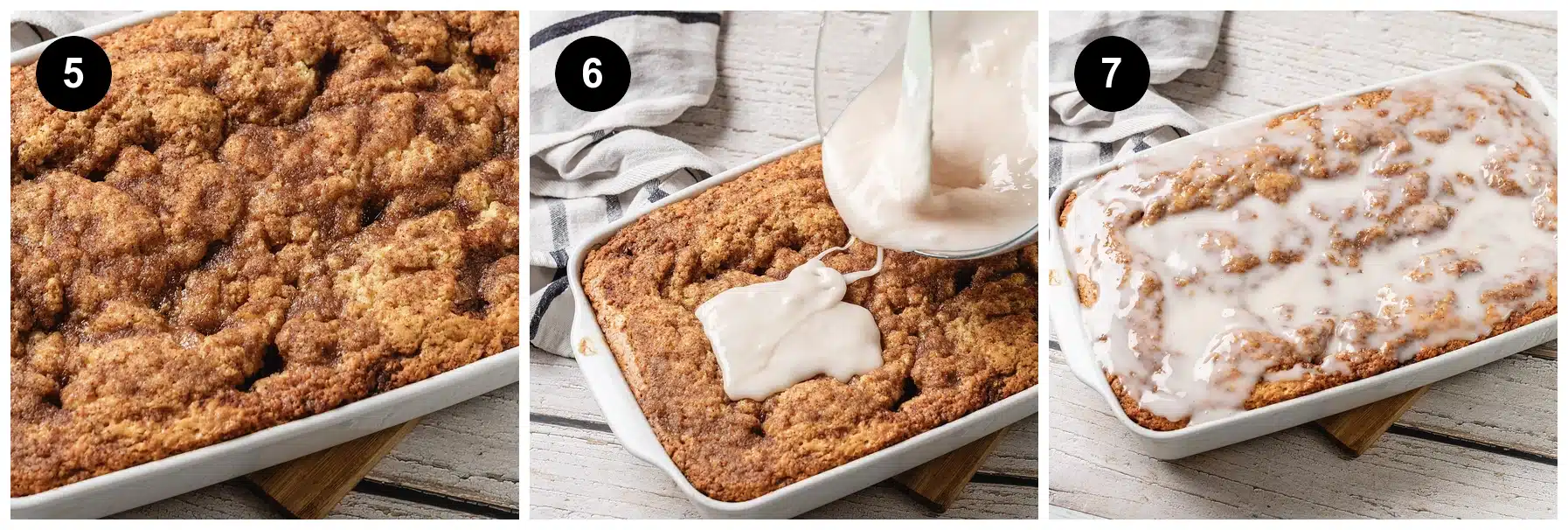
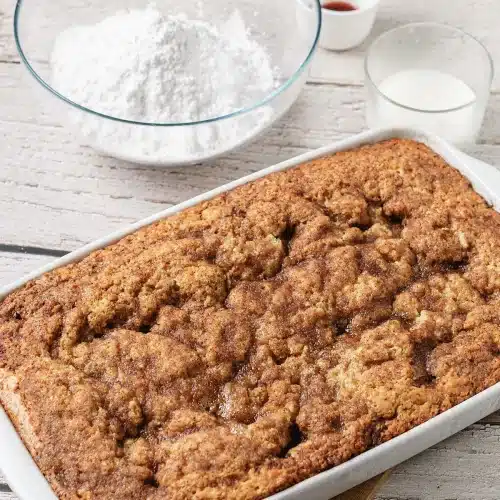
Finally, bake and glaze. Give it thirty to thirty-five minutes at 350 degrees, until a toothpick in the center comes out with moist crumbs and no wet batter. Let it sit for about fifteen minutes, whisk the powdered sugar with the milk until it pours like syrup, and drizzle it over the warm cake.
How To Tell When Cinnamon Roll Coffee Cake Is Done
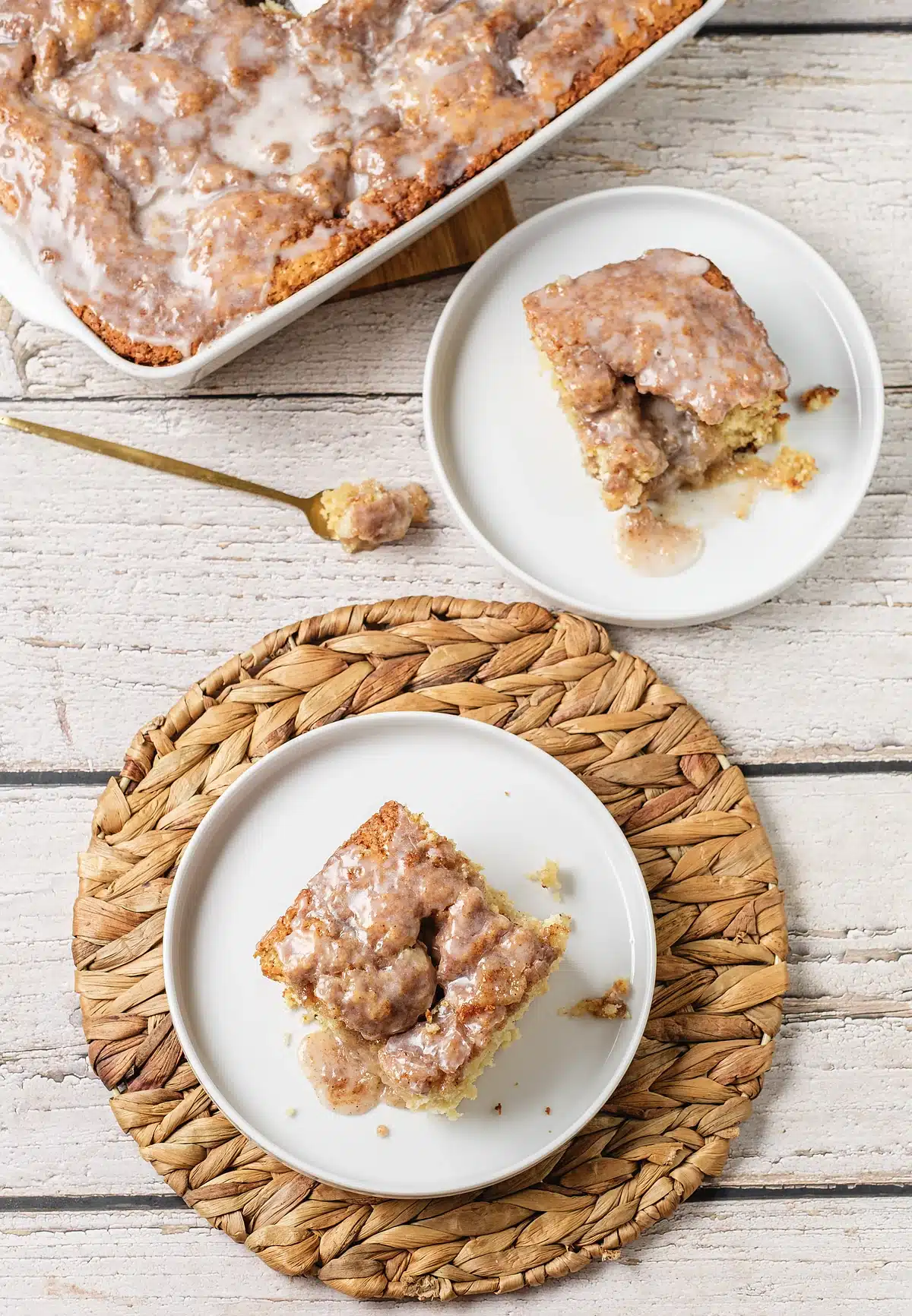
Test a cinnamon roll coffee cake in the cake, not in the swirl. A toothpick pushed into a dark ribbon will come out wet no matter how long the pan has been in there, because that mixture never fully sets. Aim for a pale patch between the streaks, and look for moist crumbs clinging to the pick rather than raw batter.
The edges are the other tell. They should have pulled very slightly away from the sides of the pan and gone a shade darker than the middle. A cinnamon roll coffee cake that is still level with the sides all the way around needs another five minutes.
Err on the early side rather than the late one. This is a butter-heavy batter and it carries on cooking for a few minutes after it leaves the oven, so a pan that looked perfect at thirty-five minutes can be dry by the time it cools.
Why the Swirl Sinks, and How to Stop It
Almost every complaint about a cinnamon roll coffee cake is the same one: the cinnamon layer ended up at the bottom of the pan. There are three causes and all of them are fixable.
The first is too much butter in the swirl. A full cup makes a mixture that is essentially a sauce, and a sauce will find its way down through cake batter every time. Half a cup gives you a paste that holds its position.
The second is a batter that is too loose. This one should be thick enough that you have to spread it rather than pour it. If yours is pourable, you have probably under-measured the flour, and an extra two tablespoons will fix it.
The third is swirling too deep. Keep the knife in the top half of the batter. Dragging it along the bottom of the pan carries the swirl down with it and there is no getting it back up.
Make It Ahead
A whole cinnamon roll coffee cake can be baked a day early and glazed the next morning, which is the version I use for anything involving guests. Cool it completely, cover it in the pan and leave it at room temperature overnight, then warm it for ten minutes at 300 degrees before the glaze goes on so the icing still melts in.
You can also mix the dry ingredients and the swirl paste the night before and refrigerate the swirl in a covered bowl. Let it come back to room temperature for twenty minutes before you use it, because a cold paste tears the batter rather than sitting on it.
Storing Cinnamon Roll Coffee Cake
Covered at room temperature a cinnamon roll coffee cake is good for two days, and the glaze is the reason for the limit rather than the cake. After two days the icing starts to weep and the top goes tacky. In the refrigerator it holds for five days, although the crumb tightens up and wants twenty seconds in the microwave.
For the freezer, cut it into squares first and freeze them on a tray before bagging them, so they do not fuse into one block. Wrapped well, they keep for three months. A frozen square thaws on the counter in about an hour, or in thirty seconds in the microwave if you are in a hurry.
If you know in advance that you are freezing it, leave the glaze off. Icing goes grainy and separates in the freezer, and whisking up a fresh cup of it takes a minute on the day you actually want to eat the cake.
Variations and Substitutions
A cinnamon roll coffee cake takes additions well, as long as the swirl stays the same thickness.
Cream cheese glaze. Beat four ounces of softened cream cheese into the powdered sugar with a splash more milk. It is closer to a bakery cinnamon roll and it is the version most people prefer.
Nuts. Half a cup of chopped pecans or walnuts stirred into the swirl paste, or scattered over the top before it bakes for more crunch.
Apple. One peeled, finely diced apple folded into the batter. It adds moisture, so give the pan an extra five minutes.
Dairy-free. Oat milk in place of the whole milk and a good block-style vegan butter in both the batter and the swirl. The crumb is very slightly denser and nobody notices.
Smaller pan. Half the recipe in a nine-inch square pan, baked for about twenty-eight minutes. Useful when twelve squares is more cake than the house needs.
What to Serve with Cinnamon Roll Coffee Cake
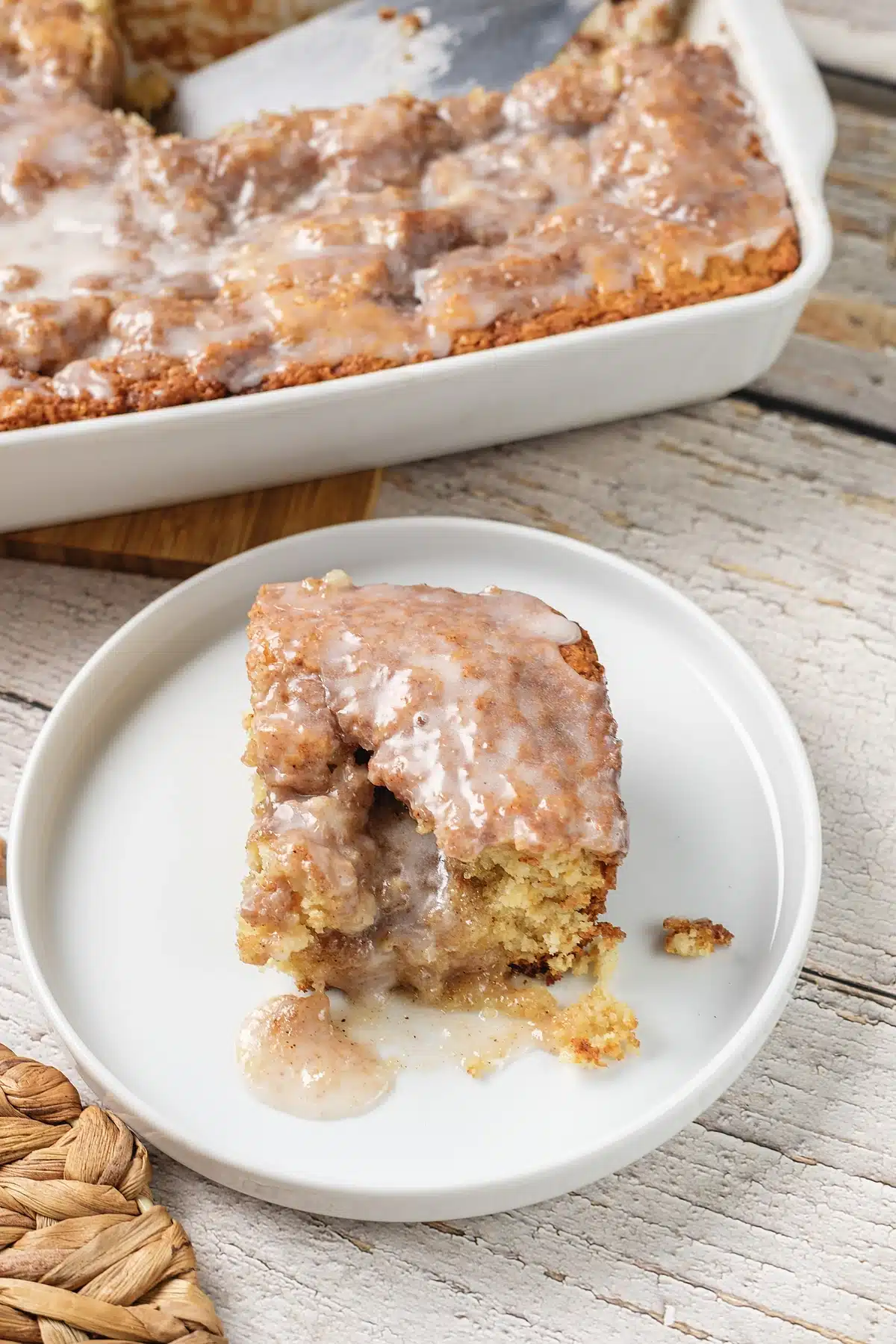
A cinnamon roll coffee cake wants coffee beside it, obviously, and something dark enough to stand up to the sugar. A plain drip coffee or an unsweetened cold brew both work better than anything milky. Strong black tea does the same job.
On a brunch table it wants something savory beside it rather than more sweetness. Scrambled eggs, a frittata or a plate of good bacon all balance it, and a bowl of berries cuts through the glaze better than any other fruit.
If you are building a spread and want a second baked thing, banana bread covers the people who do not want icing, and monkey bread from the slow cooker frees the oven entirely. For the same flavors in a smaller format, cinnamon roll cookies travel far better than a pan of cake does.
Cinnamon Roll Coffee Cake FAQ
Frequently Asked Questions
Why did my swirl sink to the bottom?
Too much melted butter in the swirl, a batter that was too loose, or a knife dragged too deep. Half a cup of butter, a batter thick enough to spread rather than pour, and four shallow passes with the knife will fix all three.
Can I use a boxed cake mix?
You can, and the swirl and glaze are what people actually taste. Prepare the mix as directed, spread it in a nine-by-thirteen pan, and use the swirl and glaze quantities here unchanged.
Is cinnamon roll coffee cake meant to have coffee in it?
No. A cinnamon roll coffee cake is a cake to eat with coffee rather than a cake made from it, and there is no coffee in the batter. That name has been confusing people for about a century.
My glaze is too thin. What now?
Whisk in more powdered sugar a tablespoon at a time. It thickens quickly, and a thin glaze that has soaked into a warm cake still tastes right even if it does not look like a ribbon.
More Questions About Coffee Cakes
Good to Know
Can I bake it in a bundt pan?
Yes, with the batter and swirl layered in thirds rather than marbled, and about fifty minutes at 350 degrees. Grease the pan very thoroughly, because the sugar in the swirl sticks hard.
Why is my cake dense?
A dense cinnamon roll coffee cake is usually under-creamed butter or over-mixed batter. Beat the butter and sugar until it is genuinely pale, then stop mixing as soon as the flour disappears.
Can I halve the sugar?
In the batter, yes, and you will lose some tenderness along with the sweetness. In the swirl, no. The brown sugar is doing the structural work that keeps the ribbon soft.
Bake a cinnamon roll coffee cake once on a Saturday and it becomes the thing people ask for, which is a reasonable outcome for fifteen minutes of work. If you want a lighter finish to the same brunch table, a lemon sponge with a mint syrup is the obvious counterweight.
Cinnamon Roll Coffee Cake
Save this recipe
Enter your email and I’ll send this recipe straight to your inbox.
Ingredients
Cake Batter
- 1 cup unsalted butter softened to room temperature
- 1 cup granulated sugar
- 2 large eggs room temperature
- 2 tsp vanilla extract
- 2 1/2 cups all-purpose flour spooned and leveled
- 2 1/2 tsp baking powder
- 1/2 tsp salt
- 1 cup whole milk room temperature
Cinnamon Swirl
- 1/2 cup unsalted butter melted
- 2 tbsp all-purpose flour this is what holds the swirl up
- 1 cup brown sugar packed
- 1 1/2 tbsp ground cinnamon
Vanilla Glaze
- 1 cup powdered sugar
- 1-2 tbsp milk added half a tablespoon at a time
Equipment
- 9x13-inch Baking Pan
- Mixer (stand or hand)
- Mixing bowls
- Whisk
- Spatula
Instructions
Make the Batter
- Preheat the oven to 350°F (175°C). Line a 9x13-inch pan with parchment paper, leaving an overhang on the long sides so you can lift the cake out later.
- Cream the softened butter and granulated sugar with a mixer for 2 to 3 minutes, until the mixture is visibly paler and fluffy rather than grainy.
- Add the eggs one at a time, beating well after each, then beat in the vanilla extract.
- Whisk the flour, baking powder and salt together in a separate bowl. Add them to the butter mixture in three parts, alternating with the milk and beginning and ending with the flour. Mix just until smooth and no further. The batter will be thick.
Add the Cinnamon Swirl
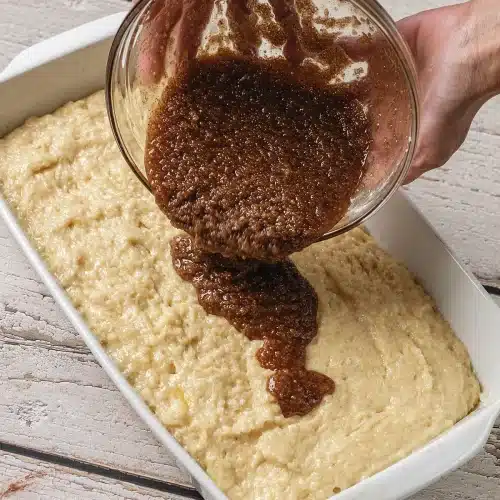
- Spread the batter evenly in the prepared pan and level the top. Stir the melted butter, flour, brown sugar and cinnamon together in a bowl until the mixture is smooth and thick.
- Drop the cinnamon mixture over the batter in spoonfuls, spacing them out rather than pouring it all in one place.

- Drag a butter knife or a skewer through the pan in long S shapes to marble the swirl into the top half of the batter. Four or five passes is plenty. Distinct dark streaks should still be visible on the surface.
Bake
- Bake for 30 to 35 minutes, until a toothpick pushed into a pale patch between the streaks comes out with moist crumbs and no wet batter. The edges should have pulled slightly away from the sides of the pan.
Glaze and Serve
- Let the cake cool for about 15 minutes. Whisk the powdered sugar with enough milk to reach the thickness of pancake syrup, adding the milk half a tablespoon at a time.
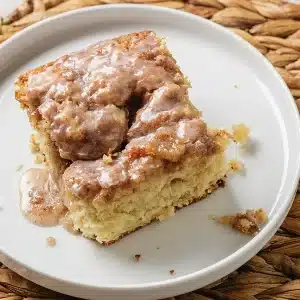
- Drizzle the glaze over the still-warm cake so it thins out and settles into the cracks. Let it set for a few minutes, then lift the slab out by the parchment and cut it into 12 squares.