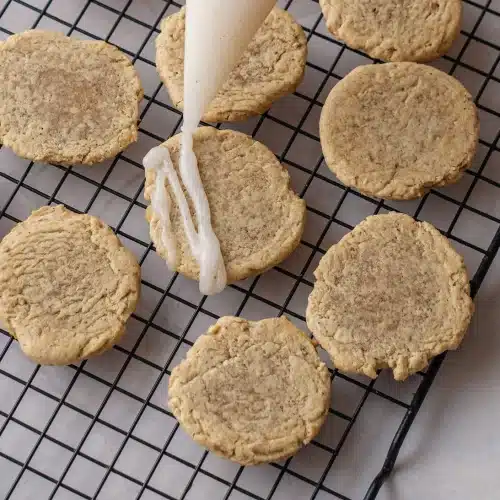
Apple cider cookies are soft, chewy, brown sugar and cinnamon cookies with a cup of apple cider boiled down to a syrup and beaten into the dough, then finished with a thin cider glaze. The reduction is the whole trick. Cider straight from the jug is mostly water and tastes of very little once it is baked; simmered down to a quarter cup it turns into something close to apple caramel, and the cookies taste of apple rather than of cinnamon alone.

- Real apple flavor from a cup of cider reduced to a syrup, not just cinnamon and hope
- Soft, chewy centers and lightly crisp edges from brown sugar and a short chill
- Two dozen from one bowl and pantry ingredients
- A four-ingredient cider glaze, spread thin or piped in a drizzle as pictured
- The dough freezes in balls and bakes from frozen for cookies on demand
- They keep soft for four days in a tin, which makes them a good fall gift
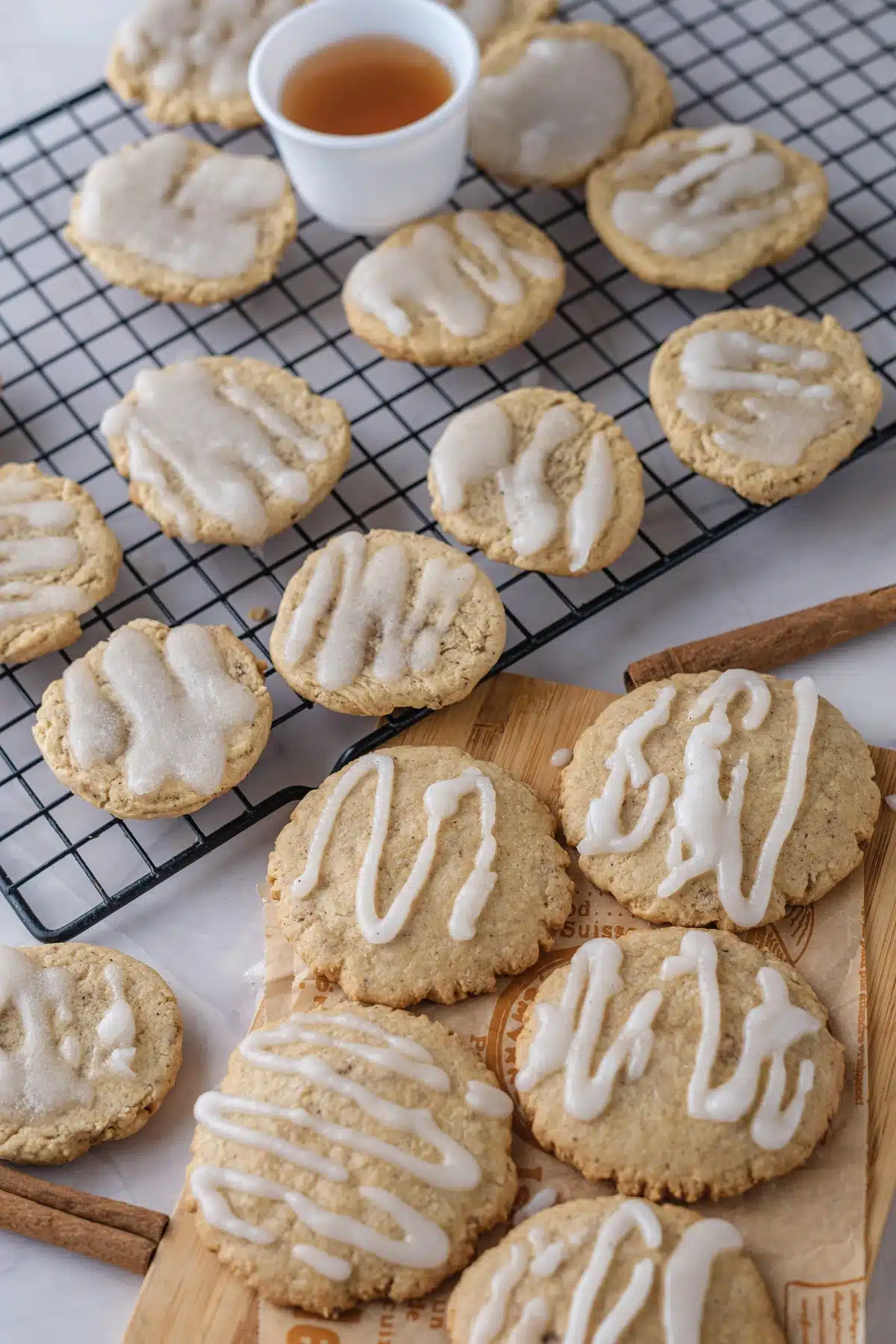
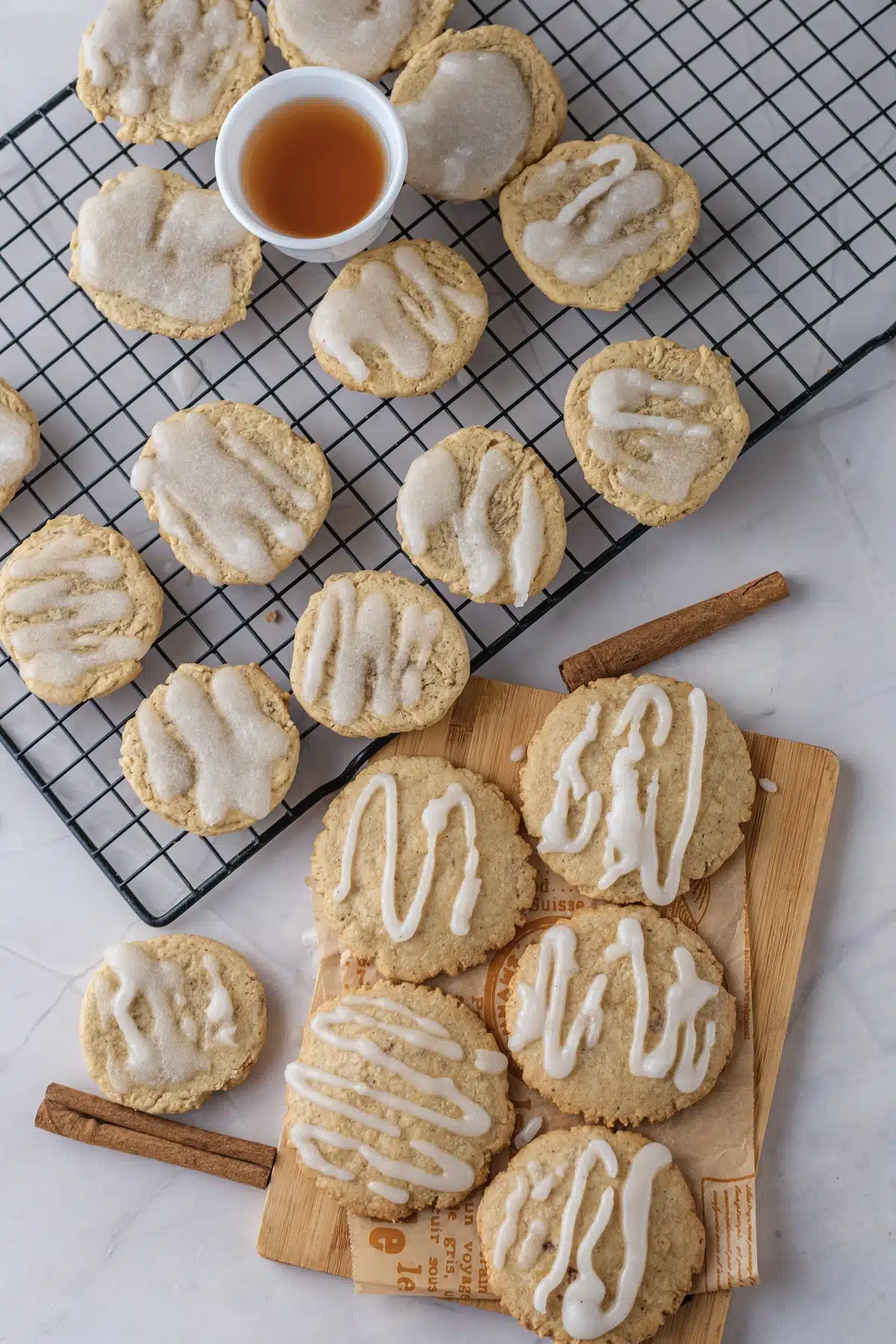
Two dozen come from one bowl, with thirty minutes of chilling so they bake thick and chewy instead of spreading thin. The cookies in the photographs are glazed two ways, a thin coat over some and a piped zigzag over the rest, from the same four-ingredient glaze. Both finishes are in the recipe card.


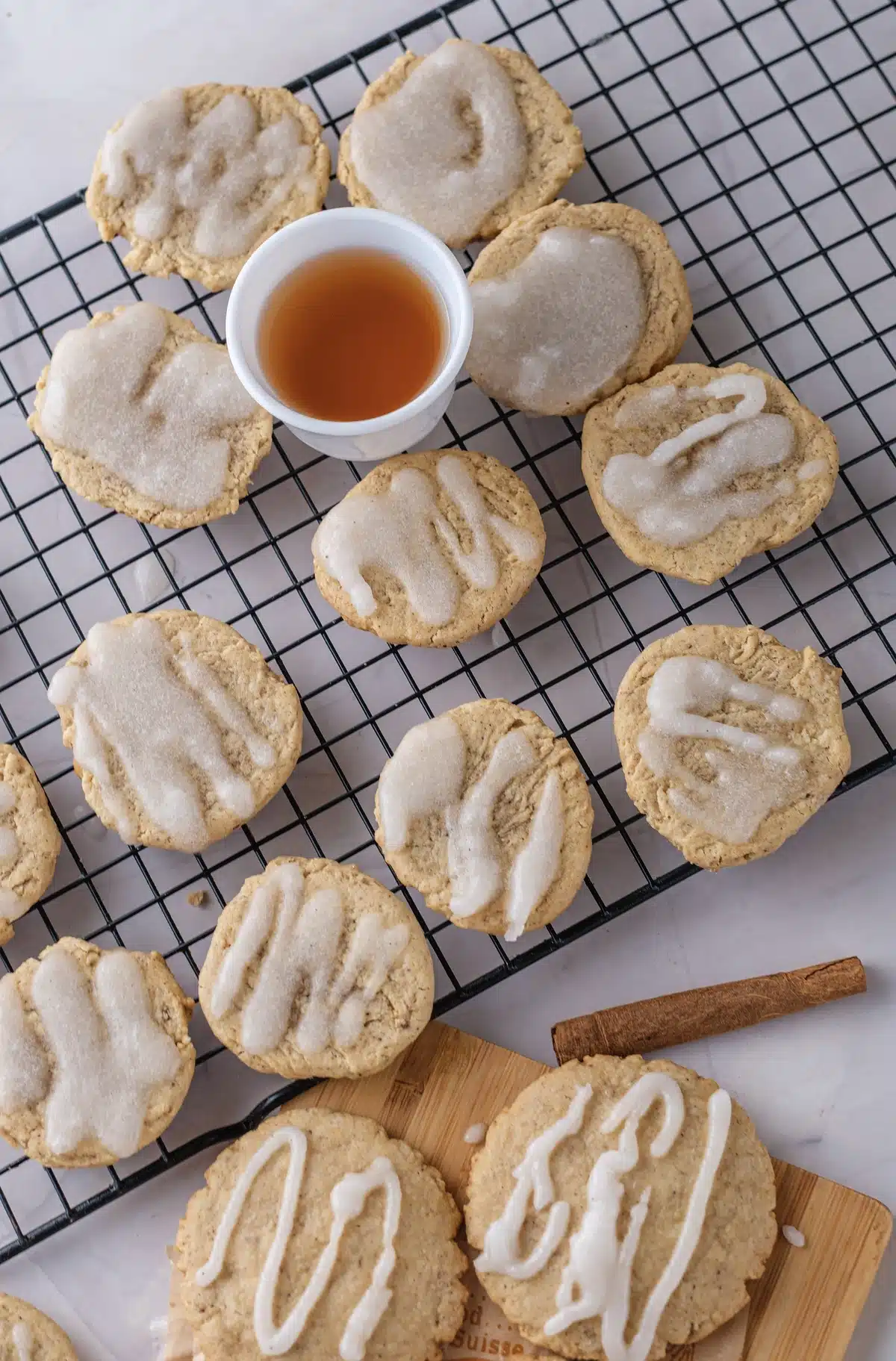
Pictured: the cookies glazed two ways from the same cider glaze, spread in a thin coat over some and piped in a zigzag over the others, with a cup of the cider and a cinnamon stick alongside. Both finishes are described under Variations, and the recipe card covers each.
What Makes Apple Cider Cookies Taste Like Apple
Most apple cider cookies taste like snickerdoodles. The spices are there, the brown sugar is there, and the apple is a rumor. That happens because cider is roughly ninety percent water. Add a quarter cup of it to a dough and you have added a quarter cup of water with a faint apple note that the oven bakes away.
Reducing the cider fixes it. Simmer a full cup in a small saucepan until it has cooked down to a quarter cup, about ten minutes, and it becomes thick, dark and intensely apple, closer to a syrup than a drink. That quarter cup goes into the dough with the egg, and a couple of tablespoons of the plain cider go into the glaze. The cookies come out tasting of apple first, cinnamon second, which is the right way around.
The other thing the reduction does is keep the dough from getting wet. A quarter cup of syrup carries far less water than a quarter cup of cider, so the cookies stay chewy rather than cakey, and they hold their shape in the oven.
Save this recipe
Enter your email and I’ll send this recipe straight to your inbox.
Ingredient Notes
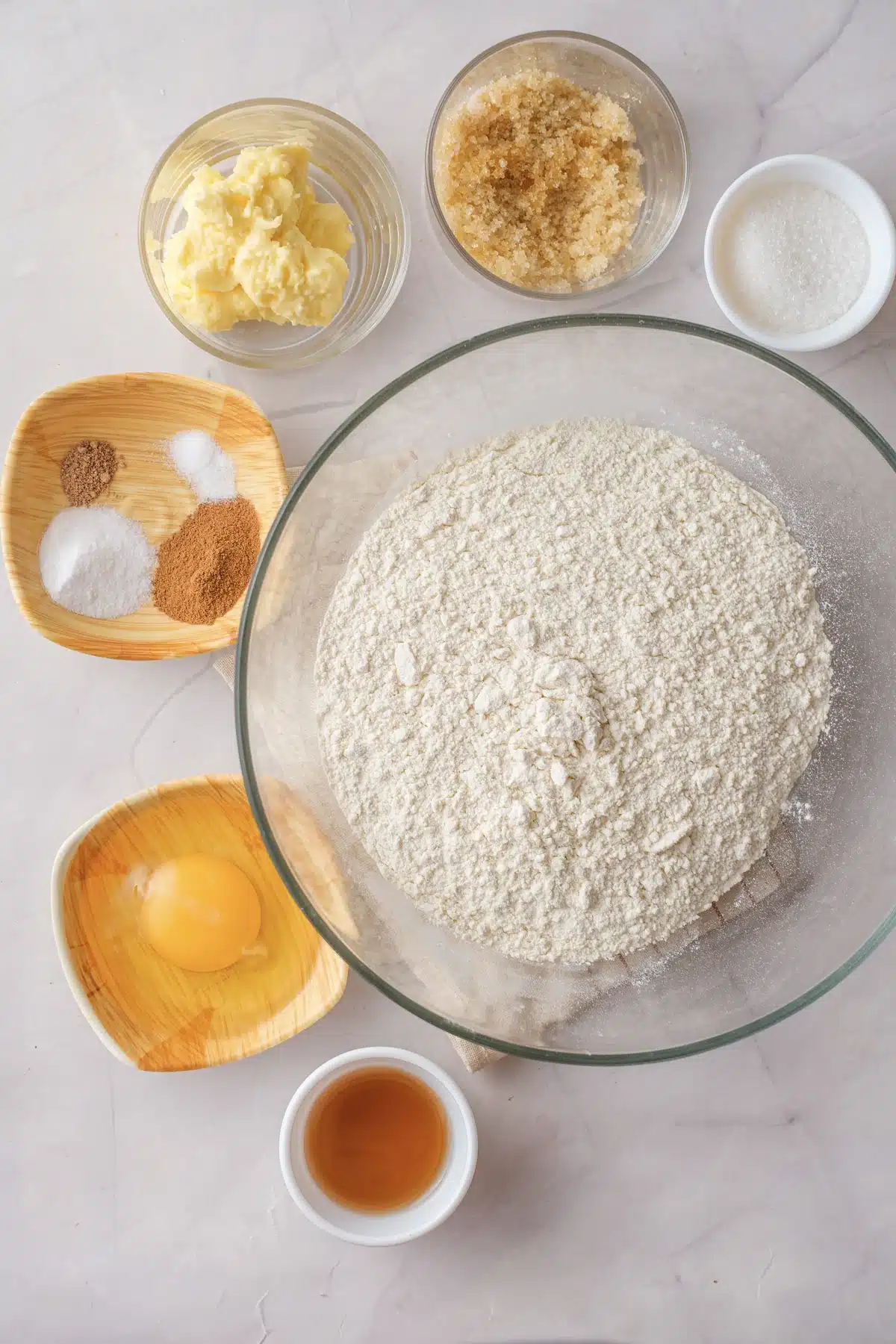
- Apple cider. One cup for reducing, plus two to three tablespoons for the glaze. Use fresh, unfiltered cider from the refrigerated section, not apple juice, which is filtered and sweeter and reduces to something closer to plain sugar syrup.
- Unsalted butter. Half a cup, at room temperature so it creams with the sugars. Too soft and the cookies spread; take it out of the refrigerator an hour ahead, no longer.
- Light brown sugar. Two thirds of a cup, packed. Brown sugar is what makes the centers chewy, and its molasses note suits the apple.
- Granulated sugar. A quarter cup, for a little crispness at the edges.
- Egg. One large, at room temperature.
- All-purpose flour. Two cups, spooned into the measuring cup and leveled rather than scooped, which packs in an extra quarter cup and makes dry cookies. The Wheat Foods Council describes all-purpose as a blend of hard and soft wheat suited to everything from bread to cookies, and it is the right choice here; bread flour makes them tough.
- Baking soda. Three quarters of a teaspoon. It reacts with the acid in the cider and the brown sugar and gives the cookies their spread and their soft crumb.
- Cinnamon and nutmeg. One teaspoon of cinnamon and a quarter teaspoon of nutmeg. Enough to taste like fall, not enough to bury the apple.
- Kosher salt. Half a teaspoon in the dough and a pinch in the glaze.
- Powdered sugar. One cup for the glaze, with a quarter teaspoon of cinnamon.
Reducing the Cider
The reduction for apple cider cookies is simple. Pour one cup of cider into a small saucepan and bring it to a simmer over medium heat. Let it bubble, uncovered, stirring now and then, until it has reduced to a quarter cup. This takes eight to twelve minutes depending on the pan. Measure it if you are unsure; a quarter cup is four tablespoons, and a little under is better than a little over.
Let it cool completely before it goes into the dough, or it will melt the creamed butter. Pour it into a small bowl and put it in the refrigerator while you cream the butter and sugars; ten minutes is enough. It can also be reduced a day or two ahead and kept covered in the refrigerator.
Watch the last two minutes closely. Reduced cider goes from syrup to burnt sugar quickly once most of the water is gone, and a scorched reduction tastes bitter in the finished cookie.
How To Make Apple Cider Cookies
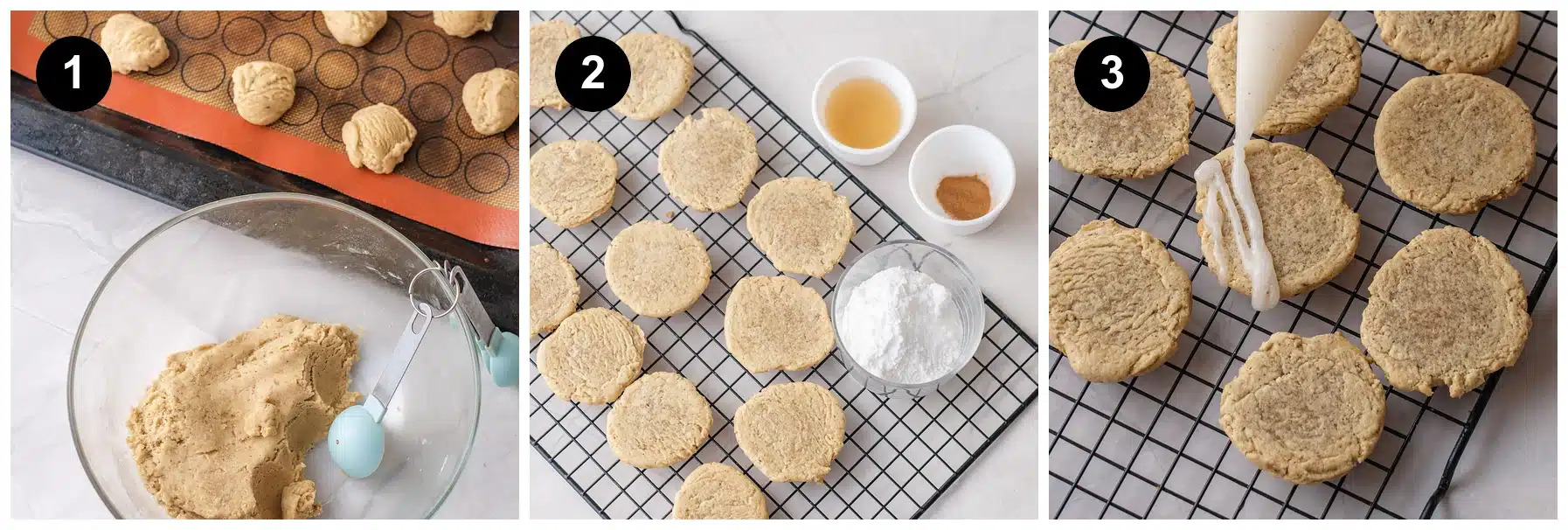
Make the reduction first and let it cool. Then the dough for these apple cider cookies comes together in about ten minutes, chills for thirty, and bakes in two batches.
First, beat the butter with the brown sugar and granulated sugar in a large bowl until it is light and fluffy, two to three minutes with a hand mixer. Scrape the bowl down halfway through.
Next, beat in the egg and the cooled cider reduction until the mixture is smooth. It may look slightly curdled for a moment; keep beating and it comes back together.
Then whisk the flour, baking soda, cinnamon, nutmeg and salt together in a separate bowl, and add it to the butter mixture in two or three additions, mixing on low just until no dry streaks remain. Overmixing at this point makes the cookies tough.
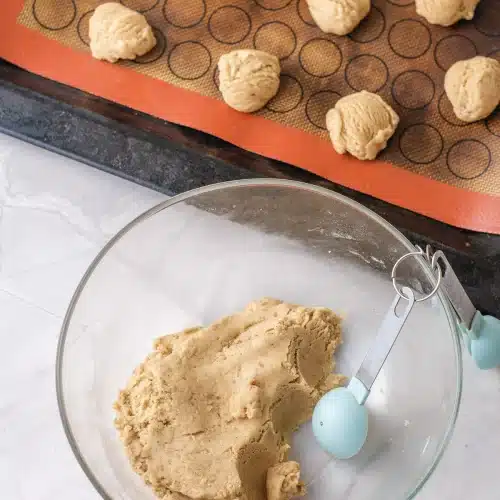
After that, cover the bowl and chill the dough for thirty minutes, or up to an hour. Meanwhile, heat the oven to 350°F and line two baking sheets with parchment or silicone mats.
Baking and Glazing
Scoop the chilled dough into balls of about a tablespoon and a half and space them two inches apart on the sheets. Bake for ten to twelve minutes, rotating the pans halfway, until the edges are set and lightly golden and the centers still look a touch underdone. Cool on the sheet for five minutes, then move the cookies to a wire rack to cool completely.
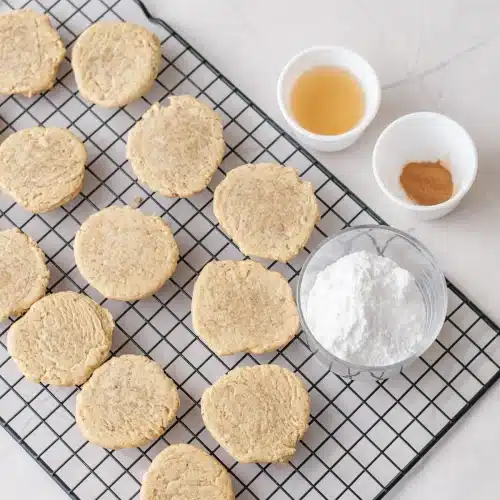
Finally, whisk the powdered sugar, cinnamon and a pinch of salt with two tablespoons of cider, adding a third if it needs loosening, until it runs off the whisk in a slow ribbon. Spread it thinly over the cooled cookies with the back of a spoon, or spoon it into a small bag, snip the corner and pipe a zigzag across each one. Let the glaze set for twenty minutes before stacking.
How To Tell When Apple Cider Cookies Are Done
Look at the edges, not the tops. A done cookie has edges that are set and just turning golden, while the center still looks slightly puffed and matte. If the whole cookie is evenly golden, it has gone a minute or two too far and will be crisp rather than chewy once it cools.
Touch the edge of one with a fingertip. It should feel firm; the middle should still give slightly. The cookies flatten a little as they cool on the sheet, and the crackled surface you see in the photographs forms during those first minutes out of the oven.
Apple cider cookies stay pale compared with a chocolate chip cookie, because the dough is light in color and the brown sugar is only two thirds of a cup. Do not wait for them to brown deeply; that is the road to a hard cookie.
Make It Ahead
The cider reduction keeps in the refrigerator for a week, so it can be done whenever you have ten spare minutes at the stove. The dough keeps, covered, for two days in the refrigerator; let it sit at room temperature for fifteen minutes before scooping if it has gone hard.
Scooped dough balls for apple cider cookies freeze on a sheet and then go into a bag for three months. Bake them from frozen at 350°F, adding two to three minutes to the time. This is the best way to have warm apple cider cookies on a weeknight without making a whole batch.
Storing Apple Cider Cookies
Once the glaze has set, store apple cider cookies in an airtight container at room temperature for up to four days. Layer them with parchment so the glaze does not stick. They stay soft; if anything, the apple flavor is stronger on day two.
Baked cookies freeze well for up to three months, glazed or not. Freeze them in a single layer first, then stack with parchment between the layers. Thaw at room temperature for half an hour. Refrigerating baked cookies is not necessary and dries them out.
Variations and Substitutions
The Glaze (Pictured Two Ways)
The photographs show the same cider glaze applied two ways. For the thin coat, make the glaze slightly looser with a third tablespoon of cider and spread it over each cookie with the back of a spoon; it sets almost clear and gives a faint shine. For the zigzag, keep it thicker, spoon it into a small zip-top bag, snip a tiny corner and pipe back and forth across each cookie. A batch can be done half and half, as pictured, and the drizzled ones stack more easily.
For a stronger apple note in the glaze, use a tablespoon of the cider reduction in place of one tablespoon of plain cider. For a caramel finish, a spoonful of homemade caramel warmed until pourable can be drizzled over instead.
Other Ways to Change It
Cinnamon sugar coating. Roll the dough balls in a mix of two tablespoons of sugar and half a teaspoon of cinnamon before baking, and skip the glaze. This is the snickerdoodle version.
Browned butter. Brown the butter, chill it until solid but soft, and cream it as usual. It adds a nutty, toffee note that goes well with apple.
Dried apple or pecans. Half a cup of chopped dried apple or toasted pecans folded in with the last of the flour.
Warmer spice. A pinch of cardamom or ground ginger with the cinnamon. Keep the total spice at a teaspoon and a half or the apple disappears.
Gluten-free. A one-to-one gluten-free flour blend in place of the all-purpose. Chill the dough for a full hour, because these blends spread more.
What to Serve with Apple Cider Cookies
A mug of warm cider is the obvious partner for apple cider cookies, and a spiced cider cocktail is the grown-up version for an evening. Coffee and black tea both work, and a glass of cold milk is never wrong with a soft cookie.
On a fall cookie plate they sit well next to butterscotch cookies and salted toffee cookies, which cover the caramel side while the apple cider cookies bring the fruit. For a bigger dessert, sandwich two around a scoop of vanilla ice cream.
Apple Cider Cookies FAQ
Frequently Asked Questions
Do I have to reduce the apple cider?
Yes, if you want the cookies to taste of apple. Unreduced cider is mostly water and its flavor bakes away. Ten minutes at a simmer turns a cup into a quarter cup of syrup that carries real apple flavor into the dough.
Can I use apple juice instead of cider?
You can, but the result is sweeter and flatter. Juice is filtered and often sweetened, so its reduction tastes of sugar more than apple. Fresh, cloudy cider from the refrigerated section gives a much better cookie.
Why did my apple cider cookies spread flat?
The butter was too soft, the dough was not chilled, or the reduction was still warm when it went in. Chill the dough for at least thirty minutes and make sure the reduction is completely cool.
Why are my cookies dry and cakey?
Too much flour, usually from scooping the cup into the bag, or too long in the oven. Spoon and level the flour, and pull the cookies while the centers still look slightly underdone.
More Questions About Cookies
Good to Know
Can I skip the glaze?
Yes. The cookies are lightly sweet and well spiced on their own. A roll in cinnamon sugar before baking is a good alternative if you want a finish without the drizzle.
Can I double the recipe?
Yes. Reduce two cups of cider to half a cup, which takes closer to twenty minutes, and bake in batches. The dough keeps in the refrigerator for two days, so it does not all need to be baked at once.
How is the glaze applied in the photos?
Two ways from one bowl of glaze: spread thinly over some cookies with a spoon, and piped in a zigzag over the rest from a small bag with the corner snipped. Both set in about twenty minutes.
Reduce the cider once and you will not go back to the unreduced kind. Keep a bag of frozen dough balls through the fall and apple cider cookies are ten minutes away on any evening, and for the same warm-spice mood in bread form, pumpkin beer bread is the next thing to bake.

Apple Cider Cookies with Cider Glaze
Save this recipe
Enter your email and I’ll send this recipe straight to your inbox.
Ingredients
Cookies
- 1 cup apple cider fresh, for reducing to 1/4 cup
- 1/2 cup unsalted butter at room temperature
- 1 large egg at room temperature
- 2/3 cup light brown sugar packed
- 1/4 cup granulated sugar
- 3/4 tsp baking soda
- 1 tsp ground cinnamon
- 2 cups all-purpose flour spooned and leveled
- 1/4 tsp ground nutmeg
- 1/2 tsp kosher salt
Cider Glaze
- 1 cup powdered sugar
- 1/4 tsp ground cinnamon
- 2 tbsp apple cider plus a third if needed
- 1 pinch kosher salt
Equipment
- Saucepan
- Mixing bowls
- Electric mixer
- Whisk
- Baking Sheets
- Parchment paper
- Cooling rack
Instructions
Reduce the Cider and Make the Dough
- Reduce the cider. Simmer 1 cup of apple cider in a small saucepan over medium heat, uncovered, until reduced to 1/4 cup, 8 to 12 minutes. Cool completely.
- Cream the butter and sugars. Beat the butter, brown sugar and granulated sugar in a large bowl until light and fluffy, 2 to 3 minutes.
- Add the egg and cider. Beat in the egg and the cooled cider reduction until smooth.
- Add the dry ingredients. Whisk the flour, baking soda, cinnamon, nutmeg and salt in a separate bowl, then mix into the butter mixture in 2 or 3 additions on low speed, just until no dry streaks remain.
- Chill. Cover and refrigerate the dough for 30 minutes, or up to 1 hour. Heat the oven to 350°F (175°C) and line two baking sheets.
Scoop and Bake
- Scoop. Scoop the chilled dough into balls of about 1 1/2 tablespoons and space them 2 inches apart on the lined sheets.

- Bake and cool. Bake for 10 to 12 minutes, rotating the pans halfway, until the edges are set and lightly golden and the centers still look slightly soft. Cool on the sheet for 5 minutes, then move to a wire rack to cool completely.
Glaze
- Glaze the cookies. Whisk the powdered sugar, cinnamon, salt and 2 tablespoons of cider until it runs off the whisk in a slow ribbon, adding a little more cider if needed. Spread thinly over the cooled cookies with the back of a spoon, or pipe a zigzag from a small bag with the corner snipped, as pictured. Let set 20 minutes.