
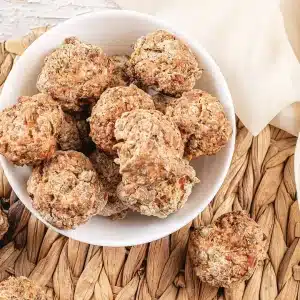
Pancake sausage balls are what happens when someone looks at a plate of sausage and pancakes with syrup and decides the whole thing should be portable. Three ingredients, one bowl, twenty minutes in the oven, and breakfast becomes finger food.
They sound like a novelty and they are not. The pancake mix brings the flour, leavening and a little sugar all in one scoop, the raw sausage brings the fat and the seasoning, and the cheddar melts through and holds everything together. What comes out is crisp at the edges, tender in the middle, and salty enough that a dip in maple syrup lands exactly right rather than tasting like dessert.
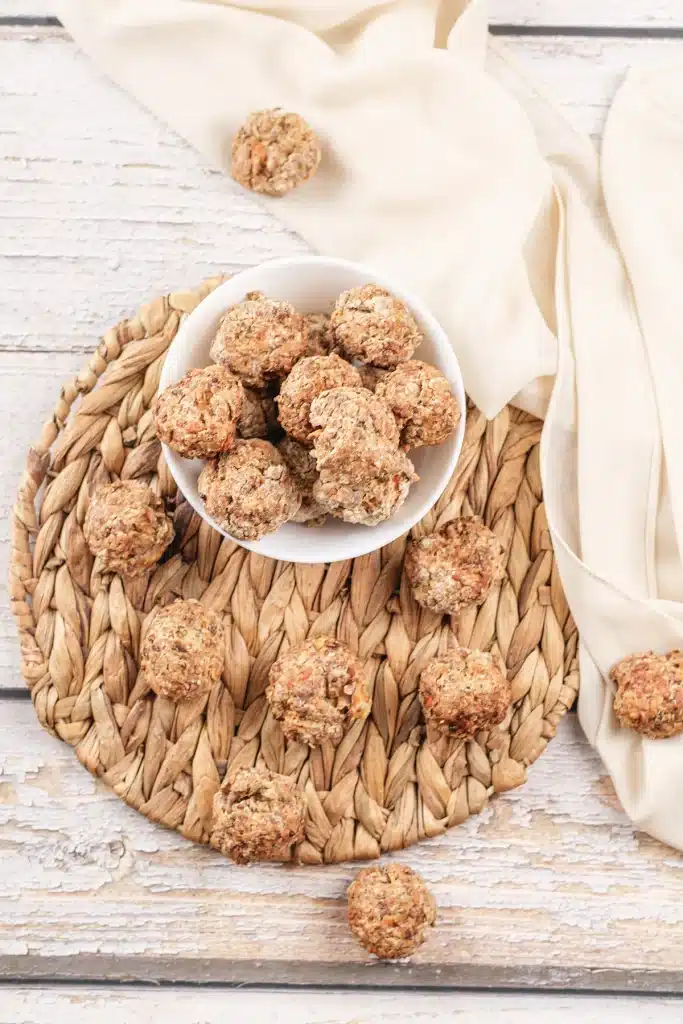
- Four ingredients, one bowl, and no pan to scrub afterward
- Sweet and savory in the same bite, which is the whole appeal of breakfast anyway
- Mix the night before, bake in the morning, serve straight from the sheet pan
- Freeze beautifully raw or cooked, so a double batch is never wasted
- Kids eat them without negotiation, and they travel to a potluck without falling apart

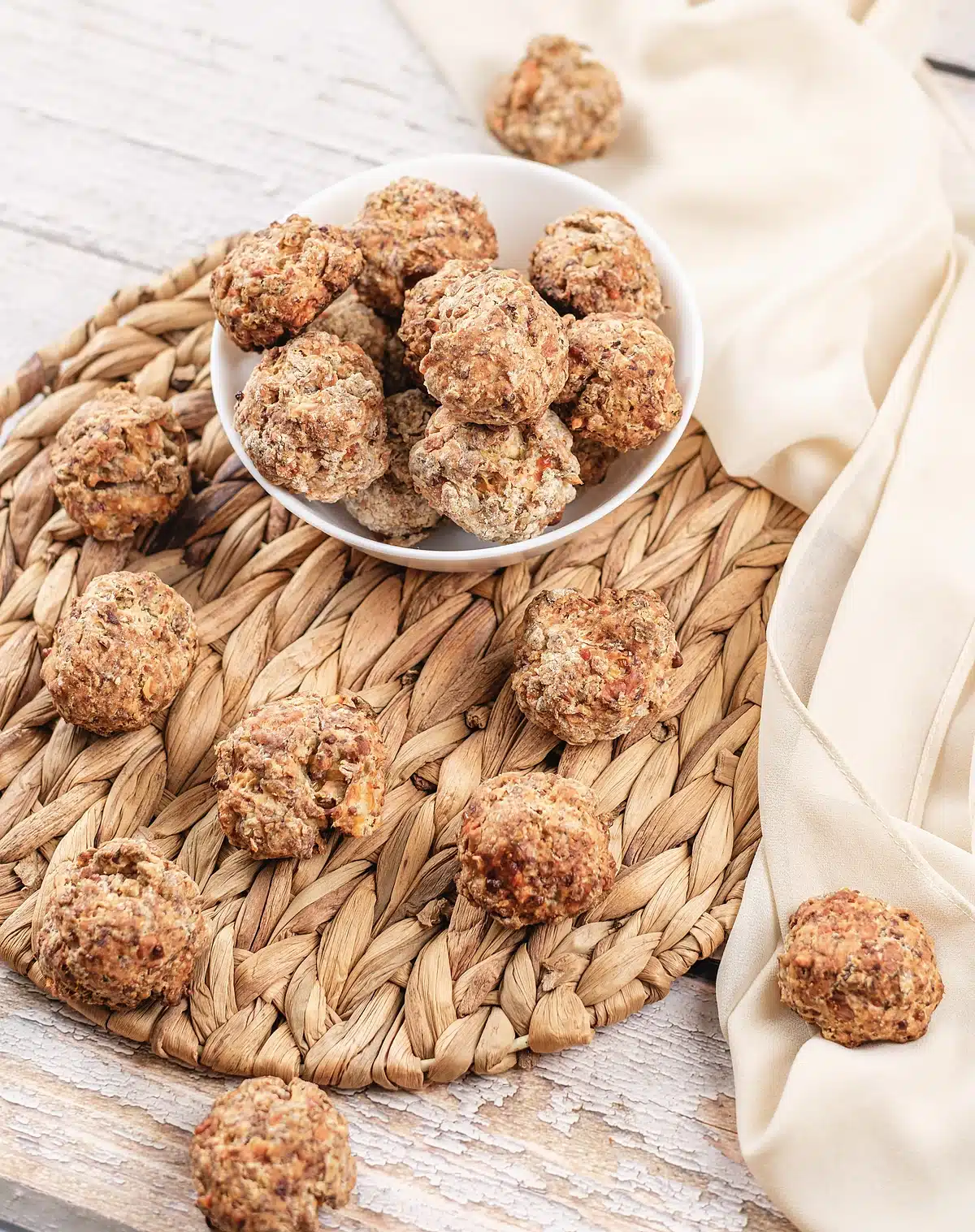
- What Makes Pancake Sausage Balls Work
- Ingredient Notes
- Pancake Mix vs Bisquick
- How To Make Pancake Sausage Balls
- How To Tell When They Are Done
- Making Pancake Sausage Balls for a Crowd
- Make It Ahead
- Storing Pancake Sausage Balls
- Variations and Substitutions
- What to Serve with Pancake Sausage Balls
- Pancake Sausage Balls FAQ
What Makes Pancake Sausage Balls Work
The classic sausage ball is Bisquick, sausage and cheddar. Swapping in pancake mix changes two things, and both are improvements for a breakfast table.
Pancake mix carries more sugar than a baking mix does, so the outside caramelizes rather than just browning. That is the flavor that makes these read as breakfast instead of as an appetizer. It also usually carries a little more leavening, which gives a lighter interior than the dense classic version.
The second change is moisture. Baking mix is drier, and sausage balls made with it are famously crumbly. A half cup of milk in the pancake mix version keeps the dough workable and the finished bite tender, so pancake sausage balls hold together in a hand rather than shedding across a plate.
The cheese does structural work too. Freshly shredded cheddar melts into strands that bind the dough as it bakes. Pre-shredded cheese is coated in potato starch or cellulose to stop it clumping in the bag, and that coating makes it melt sluggishly and leave the mixture drier than it should be.
Save this recipe
Enter your email and I’ll send this recipe straight to your inbox.
Ingredient Notes
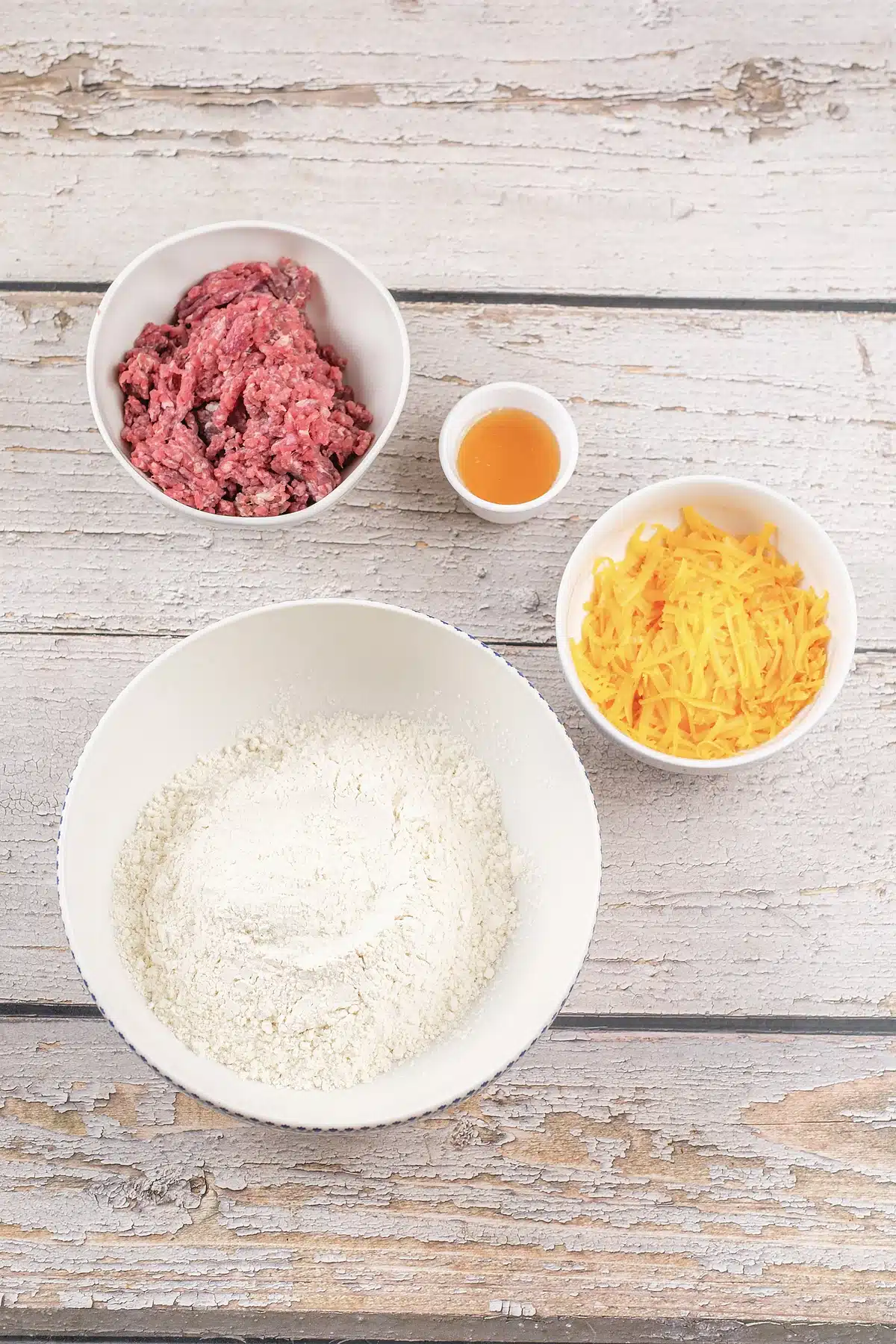
- Pancake mix. Two and a half cups of a complete, just-add-water mix. The complete kind already contains dried egg and milk powder, which is what lets this recipe work with so few other ingredients. A mix that asks you to add eggs and oil will bake up drier, so add an egg if that is all you have.
- Breakfast sausage. One pound, raw, out of the casing. It goes in uncooked and renders as it bakes, which is what seasons the dough from the inside. Browning it first is the most common mistake and it gives you dry, grainy bites.
- Sharp cheddar. Eight ounces, grated from a block. Sharp beats mild by a wide margin here, because the pancake mix is sweet and needs something with an edge. Pepper jack is the best alternative if you want heat.
- Whole milk. Half a cup. This is the difference between a dough you can roll and a pile of crumbs. Buttermilk works and adds a pleasant tang, and a plant milk is fine as long as it is unsweetened.
- Maple syrup. For dipping, and worth using the real thing. Warmed slightly in a small bowl, it is what turns pancake sausage balls from a snack into a proper breakfast.
- Fresh chives or parsley. Optional, chopped, scattered over the top after baking. Purely cosmetic, and a plate of plain brown spheres genuinely benefits from it.
Pancake Mix vs Bisquick
Both work, and the difference is real enough to be worth choosing on purpose.
Bisquick and other baking mixes are built for biscuits, so they are heavier on fat and lighter on sugar. Sausage balls made with them are denser, more savory and closer to a cheese biscuit. They are excellent, and they are what most people mean when they say sausage balls.
Pancake mix is sweeter and lighter. The bake browns faster because of that sugar, so keep an eye on them a couple of minutes before you think you need to. There is a texture difference as well. Pancake mix produces a slightly open crumb that breaks cleanly when you bite it, while a baking mix gives something closer to a dense biscuit that pulls apart. If you only have a baking mix on the shelf, add a tablespoon of sugar and you are most of the way to the pancake version. For the traditional route, our Bisquick sausage balls cover it properly.
How To Make Pancake Sausage Balls
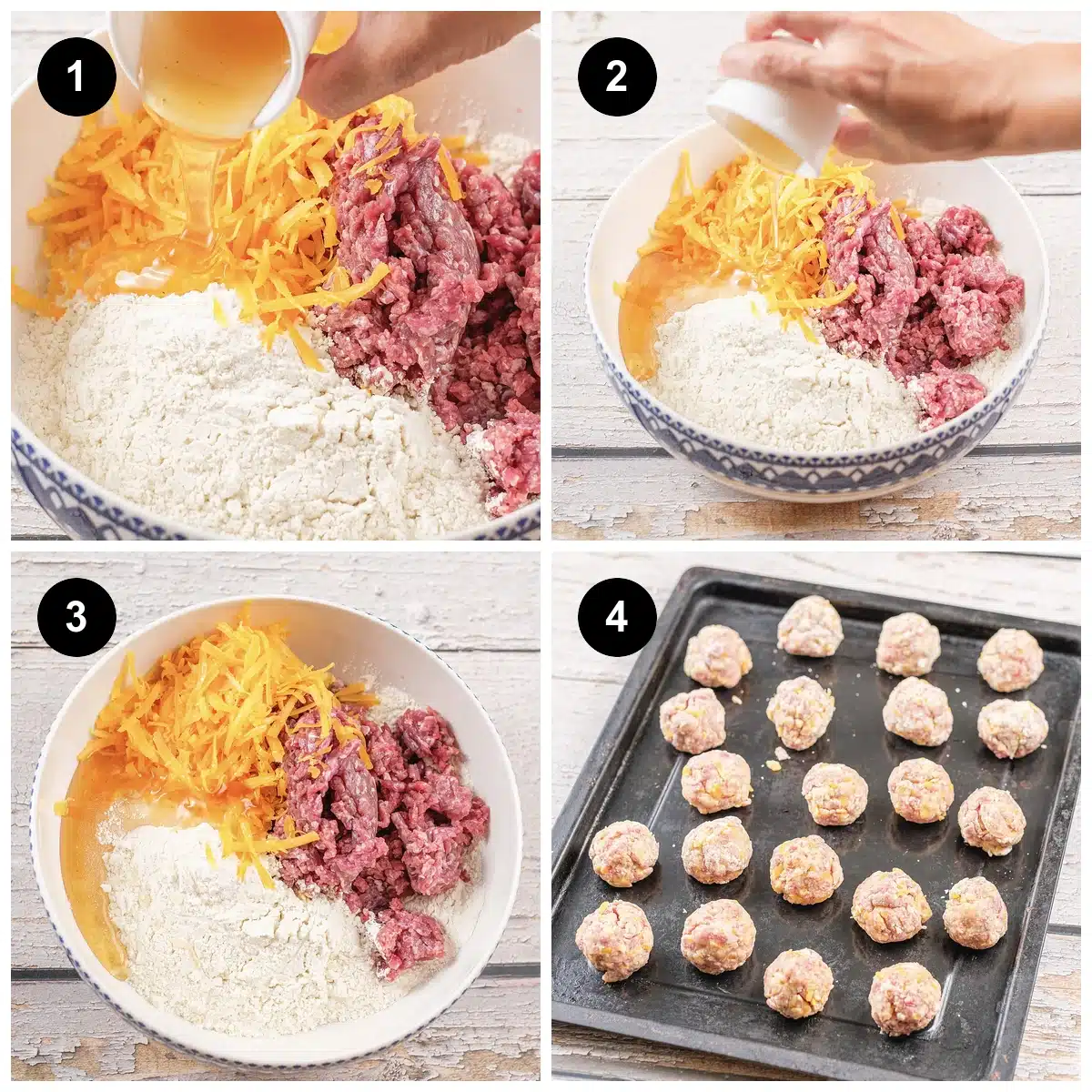
First, heat the oven and line the pan. Set it to 350 degrees and put parchment on a rimmed baking sheet. Parchment matters more than usual here, because the cheese that escapes will weld itself to bare metal.
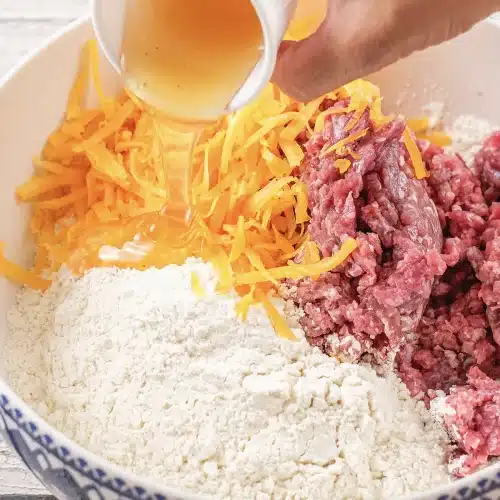
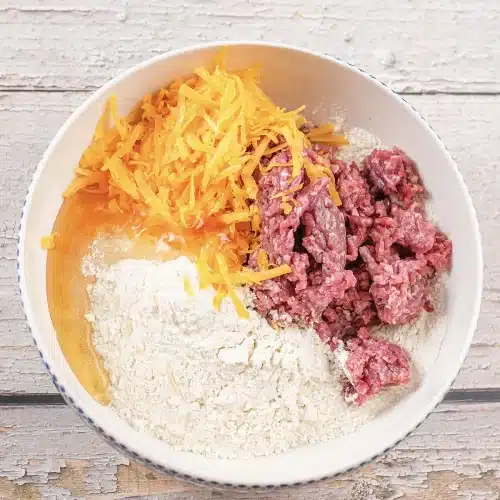
Next, put everything in one bowl. Pancake mix, shredded cheddar, raw sausage and milk go in together. There is no creaming step and no order to respect, which is most of why pancake sausage balls are a weekday recipe rather than a weekend project.
Then mix it properly. A stand mixer with the paddle on low takes about a minute. By hand it takes three or four, and gloves make it far less unpleasant. The mixture is ready when you cannot see streaks of dry mix and the cheese is evenly distributed rather than clumped on one side.
Rolling and Baking
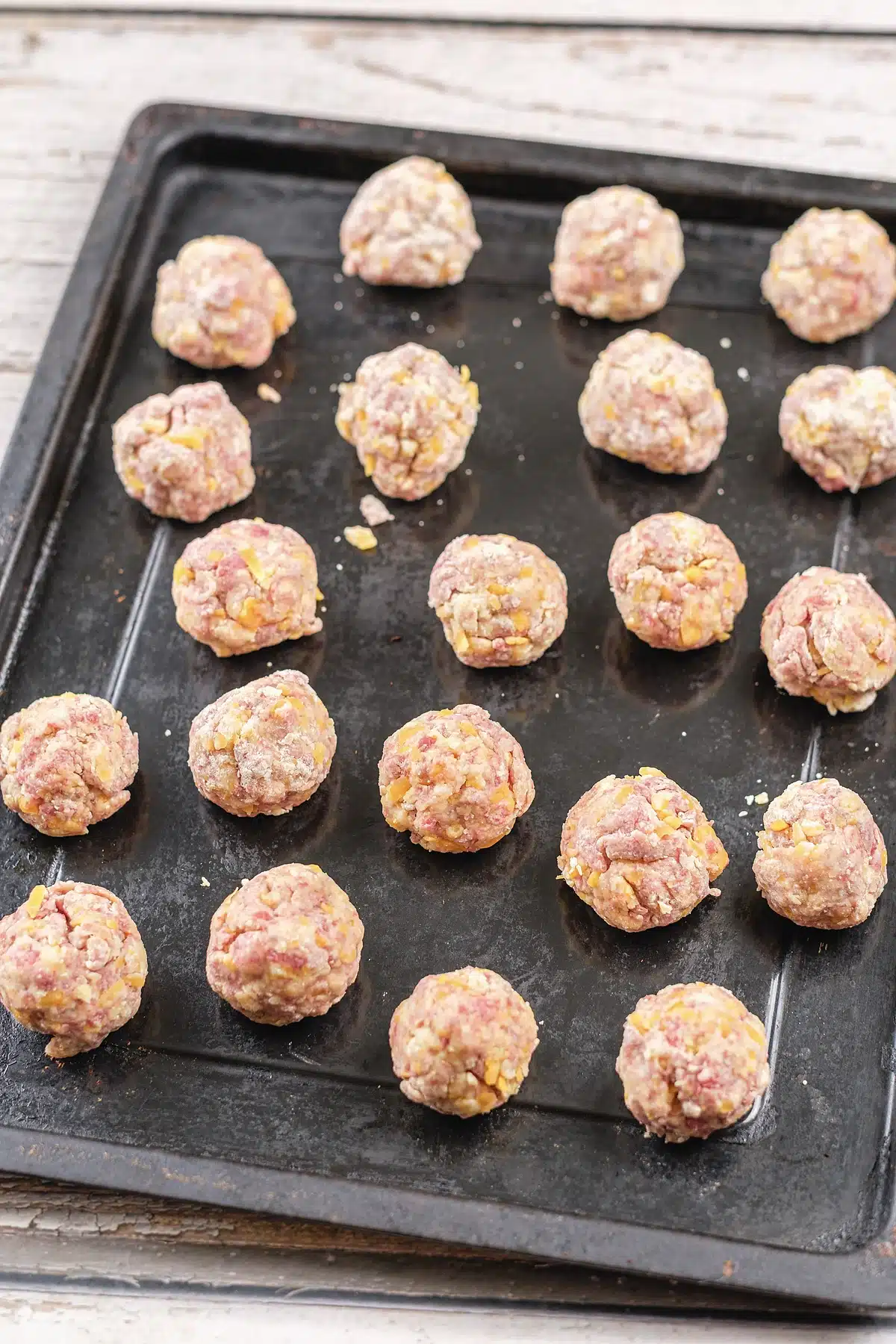
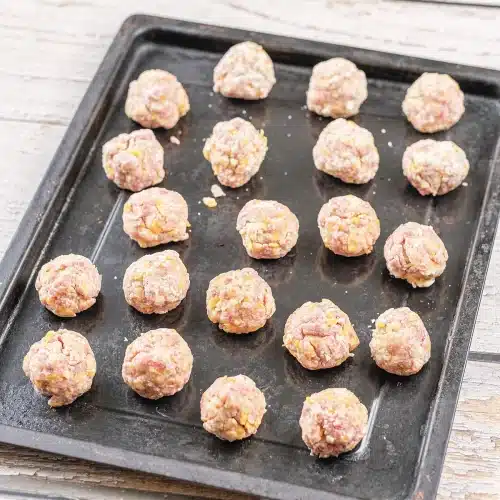
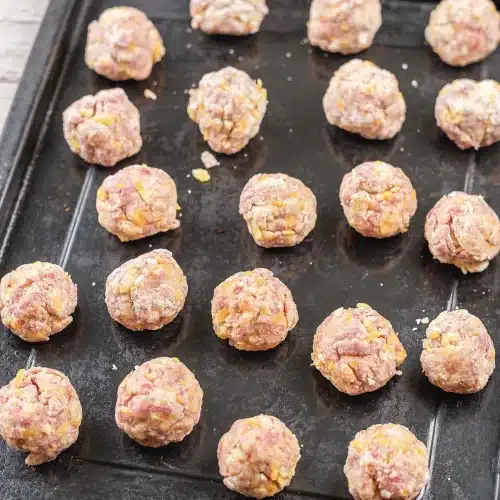
After that, roll and space them. Aim for golf-ball size, which gives you about 24, and set them roughly an inch apart. A cookie scoop makes this fast and keeps them uniform, and uniform balls finish cooking at the same moment, which is the whole point.
Finally, bake for 20 to 23 minutes. They are ready when the outsides are golden, the cheese is bubbling at the seams, and a thermometer in the middle of the largest one reads 160 degrees. Let them sit for five minutes before serving so the fat reabsorbs and they firm up.
Scatter the chopped herbs over the top, put a bowl of warm maple syrup in the middle of the plate, and get out of the way. If you are serving them later in the morning, leave them on the pan rather than piling them into a bowl, because stacked pancake sausage balls trap steam and the crisp bottoms go soft within about ten minutes.
How To Tell When They Are Done
Use a thermometer. Pork sausage needs to reach 160 degrees in the center, and the National Pork Board’s cooking temperature guidance is the reference worth trusting rather than a color check. Ground pork does not have a reliable visual doneness cue.
Beyond the temperature, look for two things. The outsides should be evenly golden brown, not pale and not dark. The bottoms should have a crisp, slightly flattened face where they sat on the parchment. If they look pale after 23 minutes, your oven is running cool; give them three more and check again. If the outsides are dark but the middle reads under 160, the balls were rolled too large, so drop the oven to 325 degrees and let them finish more gently.
Making Pancake Sausage Balls for a Crowd
The recipe doubles and triples without any adjustment to the ratios, which is not always true of a dough held together by cheese. What does change is the mixing. Three pounds of sausage worked by hand is genuinely hard on your forearms, so use a stand mixer with the paddle, and mix in two batches rather than overloading the bowl.
Baking is the other constraint. Pancake sausage balls need air around them to brown on all sides, so crowding two dozen onto one small sheet gives you pale, steamed bottoms. Use two rimmed pans on the middle and upper racks, and swap their positions halfway through the bake.
For serving, they hold their temperature well in a covered dish for about half an hour, and a slow cooker set to warm keeps a batch going through a long brunch. Add a splash of water to the crock and leave the lid slightly ajar, or the steam softens the crust you worked for.
Make It Ahead
This is where pancake sausage balls earn their reputation. Mix the dough, roll the balls, arrange them on the lined sheet pan, cover the whole tray with plastic wrap and refrigerate overnight. In the morning, pull off the wrap and bake, adding about three minutes because they are going in cold.
For longer lead time, freeze the raw balls on the tray until firm, then transfer them to a bag. They keep for three months and bake straight from frozen at 350 degrees for about 30 minutes. That means a holiday breakfast becomes a matter of turning the oven on.
Storing Pancake Sausage Balls
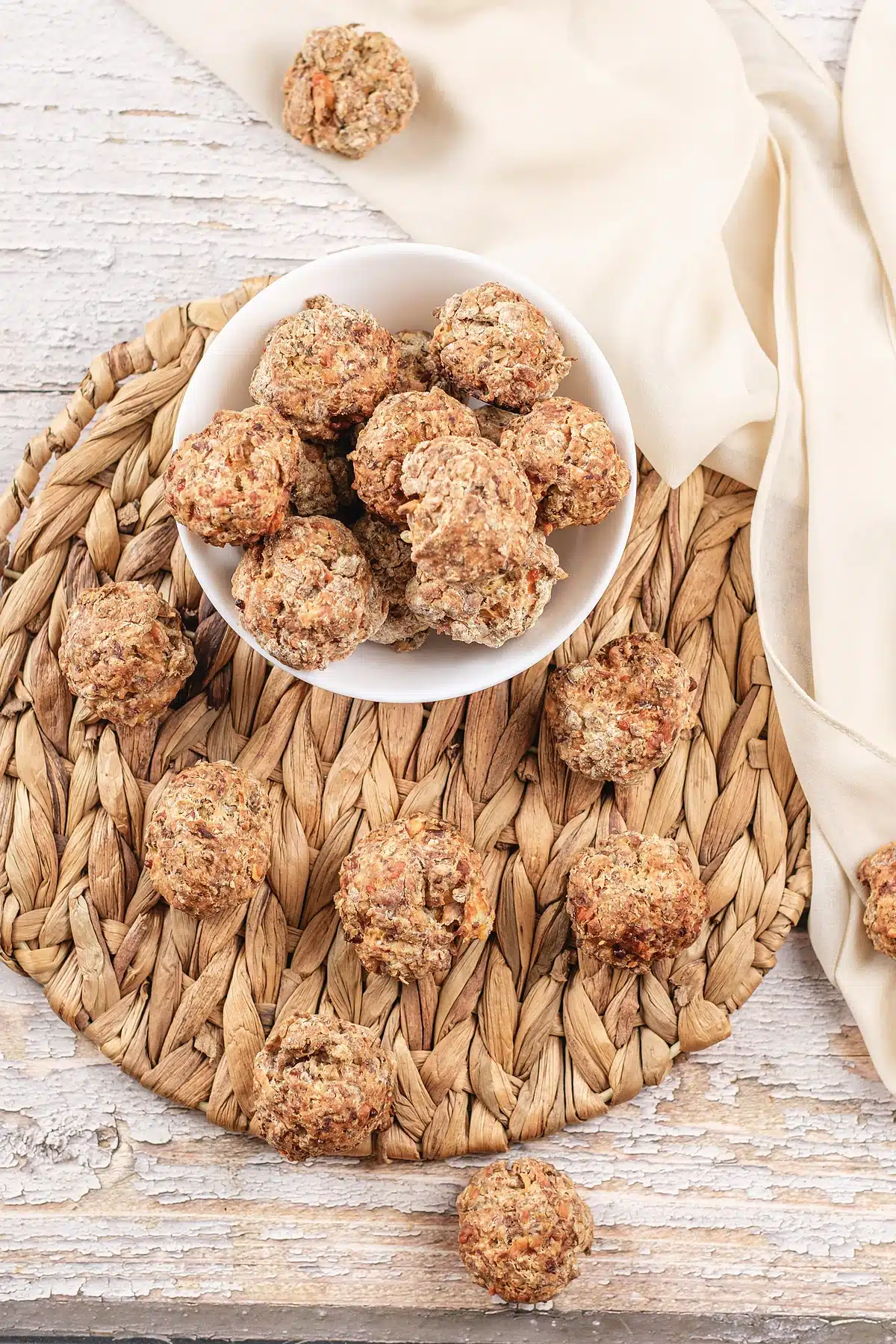
Cooked and cooled, they keep in an airtight container in the refrigerator for four days. Reheat them in a 350 degree oven for about eight minutes, or in an air fryer at 350 for four minutes, which brings the crisp edge back better than a microwave does.
They also freeze cooked. Cool them completely first, because trapped steam turns to ice crystals and then to sogginess. Freeze in a single layer, bag them, and reheat from frozen for about 15 minutes in the oven.
Cold pancake sausage balls straight from the fridge are better than they have any right to be, which is worth knowing if you are packing lunches. The texture firms up and the cheddar comes forward, and they survive a few hours in a lunch box without going greasy the way a warm one would.
Variations and Substitutions
Spicy. Hot breakfast sausage and pepper jack, with a diced jalapeno folded in. Serve with hot pepper jelly instead of syrup.
Maple baked in. Two tablespoons of maple syrup in the dough itself. The bake browns faster, so pull them a minute or two early.
Turkey sausage. Leaner, so add an extra two tablespoons of milk and a tablespoon of oil to make up the difference. Otherwise they dry out.
Blueberry. Half a cup of dried blueberries with the cheddar left in. It sounds strange, and it is the closest thing to actual sausage and pancakes in one bite.
Gluten-free. A gluten-free pancake mix works with no other change. Check the sausage label as well, since some brands use wheat as a binder.
What to Serve with Pancake Sausage Balls
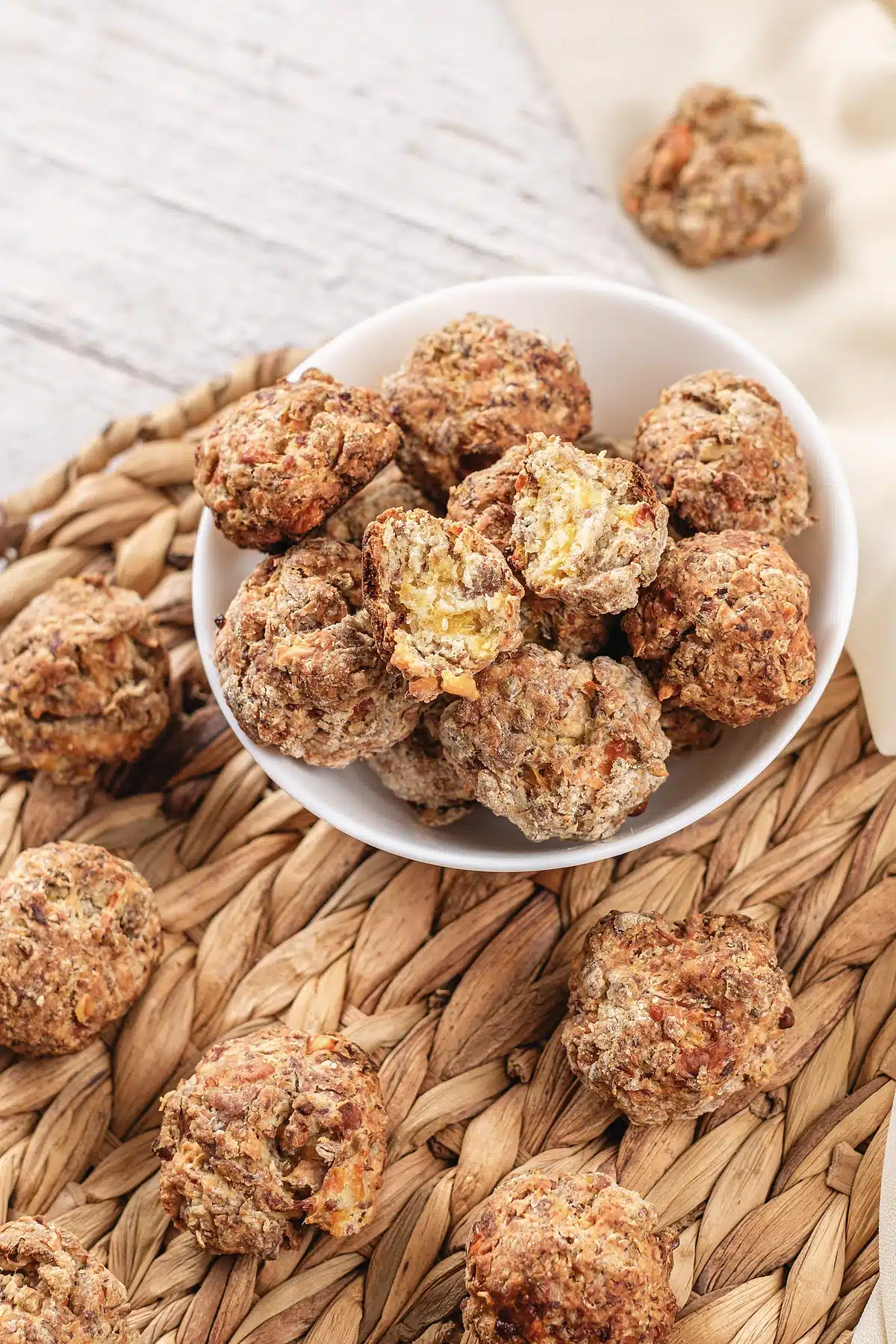
Dips first, because that is how these get eaten. Warm maple syrup is the default. Hot pepper jelly, honey mustard, sausage gravy and plain yellow mustard all work, and putting out two or three bowls turns a plate of them into an event.
For a full brunch spread, they sit well beside eggs and fruit. A tray of pancake sausage balls next to a cheesy potato breakfast casserole covers the protein and the starch without anyone needing a fork.
If you are feeding a crowd of kids, a plate of banana pancake bites alongside gives the sweet counterpart and uses the same oven at the same temperature. For a grown-up table, black coffee and a sharp fruit salad are all the balance these need.
Pancake Sausage Balls FAQ
Frequently Asked Questions
Can I use pancake mix in sausage balls?
Yes, and a complete just-add-water mix is the best choice. It already contains dried egg and milk powder, so you need nothing beyond sausage, cheese and a little milk.
What is the secret to good pancake sausage balls?
Raw sausage, freshly grated cheese and enough milk to make a workable dough. Those three choices fix the dryness and crumbling that most versions suffer from.
Can I use pancake mix instead of Bisquick?
You can, and the result is sweeter and lighter. Going the other way, add a tablespoon of sugar to a baking mix to get closer to the pancake version.
Do I cook the sausage before mixing?
No. It goes in raw and cooks through in the oven. Pre-cooked sausage has already lost its fat, and the finished bites turn out dry.
More Questions About Breakfast Bites
Good to Know
Why is my mixture too dry to roll?
Pre-shredded cheese, or a mix that is not the complete type. Add milk a tablespoon at a time until the dough holds together when you squeeze a handful.
Can I make these in an air fryer?
Yes. Cook at 350 degrees for 12 to 14 minutes in a single layer, shaking the basket once. Check the center temperature the same way you would in the oven.
How many does one batch make?
About 24 at golf-ball size, which serves eight people as part of a brunch or four people who have discovered them for the first time. Rolling them smaller gives you closer to 36 and cuts the bake to about 16 minutes.
If handheld breakfast is the goal, the same logic runs through banana pancake bites, which trade the sausage for fruit and bake in the same 20 minutes.
Pancake Sausage Balls
Save this recipe
Enter your email and I’ll send this recipe straight to your inbox.
Ingredients
The Base
- 2 1/2 cups complete pancake mix the just-add-water type
- 1 pound breakfast sausage raw, casings removed, mild or hot
- 8 oz sharp cheddar cheese grated from a block
- 1/2 cup whole milk or buttermilk
To Finish and Serve
- 2 tablespoons fresh chives or parsley chopped, optional
- maple syrup warmed, for dipping
- hot pepper jelly for dipping, optional
Equipment
- Baking sheet
- Parchment Paper or Non-Stick Spray
- Mixing bowl
- Cookie Scoop (optional)
Instructions
Mix the Dough
- Heat the oven to 350°F (175°C) and line a rimmed baking sheet with parchment paper.
- Put the pancake mix, grated cheddar, raw sausage and milk into one large bowl.

- Mix on low with a paddle for about 1 minute, or work it by hand for 3 to 4 minutes, until no dry mix is visible and the cheese is evenly spread through.
Roll and Bake
- Scoop or roll the mixture into golf-ball size rounds, about 24 in total.
- Arrange them on the prepared sheet, spaced about an inch apart so the sides brown.
- Bake for 20 to 23 minutes, until golden and bubbling at the seams and a thermometer in the center of the largest ball reads 160°F. Rest 5 minutes, scatter with herbs and serve with warm maple syrup.
Notes
Do not brown the sausage first. It goes in raw and renders during the bake, and pre-cooked sausage gives dry, grainy results.
Grate the cheddar from a block. Pre-shredded cheese is coated in starch and melts poorly.
Check for 160°F in the center of the largest ball rather than judging by color.
Make-ahead: roll the balls onto the lined pan, cover and refrigerate overnight, then bake with about 3 extra minutes.
Freezing: freeze raw balls until firm, bag for up to 3 months, and bake from frozen for about 30 minutes.
Nutrition values are an estimate.