
Homemade glazed donuts of the Krispy Kreme sort are the yeast-raised kind, not the cakey sort you stir together and bake in a pan. That one distinction decides everything else about the recipe. The dough is soft, faintly tacky and enriched with milk, egg and butter, and it fries in about ninety seconds a side into a ring so light it gives way under your thumb before you have even taken a bite.
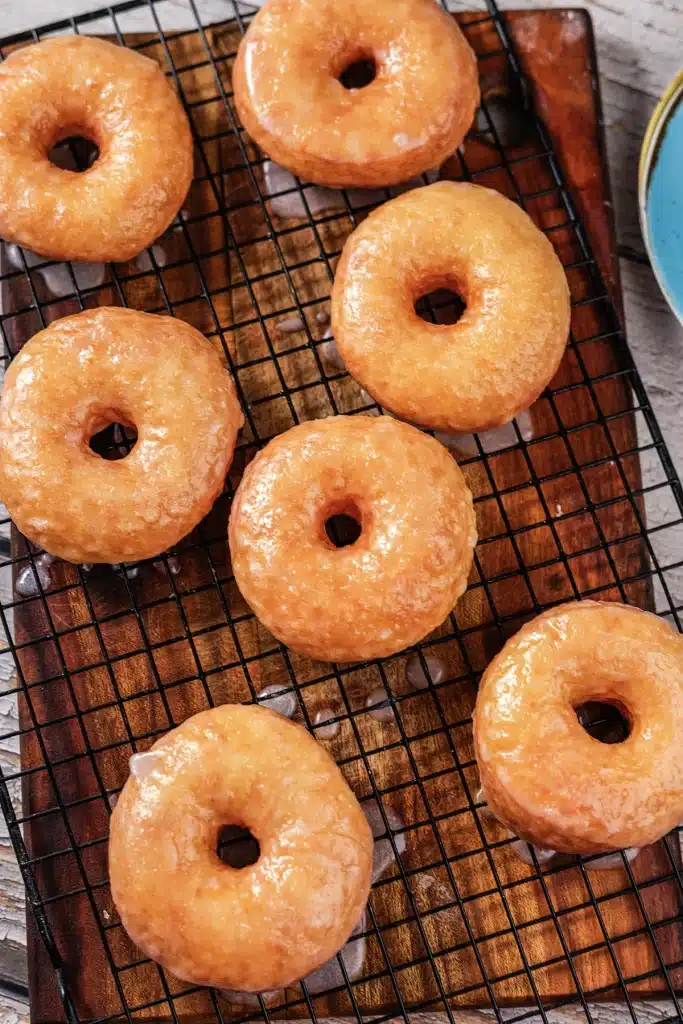
- The same pillowy, yeast-raised crumb as the drive-through original
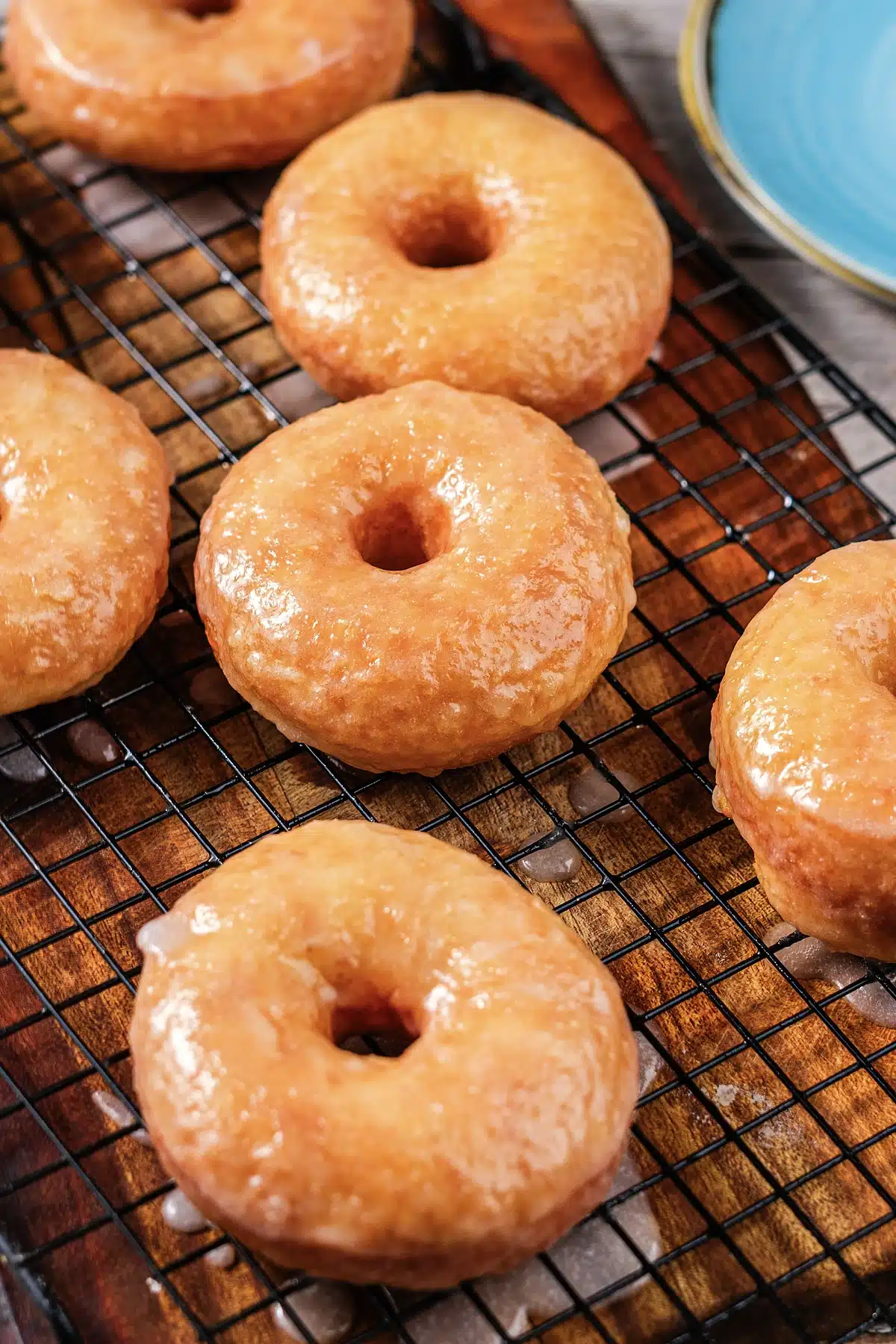
- A thin glaze that sets into a lacquer instead of a sugary shell
- Pantry ingredients only, with no shortening or dough conditioner
- The dough can rest in the fridge overnight and fry in the morning
- Sixteen homemade glazed donuts plus a tray of holes from one batch
The glaze carries just as much of the load. It has to be thin enough to run off in a sheet rather than sit on top, and it has to go on while the rings are still hot, so it sets into a fine lacquer instead of a chalky white crust. Get those two things right and what comes out of your kitchen is startlingly close to the ones sliding under the Krispy Kreme hot light on the conveyor.

- What Makes a Krispy Kreme Donut Different
- Ingredient Notes
- Why Homemade Glazed Donuts Need Yeast, Not Baking Powder
- How To Make Homemade Glazed Donuts
- Frying Temperature Is the Whole Job
- How To Tell When Homemade Glazed Donuts Are Done
- Make It Ahead
- Storing Homemade Glazed Donuts
- Variations and Substitutions
- What to Serve with Homemade Glazed Donuts
- Homemade Glazed Donuts FAQ
What Makes a Krispy Kreme Donut Different
Most home donut recipes are chemically leavened. You whisk flour with baking powder, add buttermilk, and either bake or fry a thick batter. The result is fine, and it is essentially a cake baked in a ring shape. It has a tight crumb and it eats heavy.
The chain’s version is a yeast dough, and yeast is what produces those big irregular air pockets you can see when you tear one open. The dough rises twice, once in the bowl and again after cutting, so by the time it hits the oil it is already full of gas. Hot fat expands that gas instantly, which is why a good ring puffs to nearly double its thickness in the first thirty seconds.
Homemade glazed donuts live or die on one more detail that most versions skip, and it is the reason a fresh one tastes like nothing else: the glaze goes on while the donut is hot enough to melt it slightly on contact. A cooled ring dipped in the same glaze wears a thick opaque coat. A hot one wears a translucent film you can see the dough through.
Save this recipe
Enter your email and I’ll send this recipe straight to your inbox.
Ingredient Notes
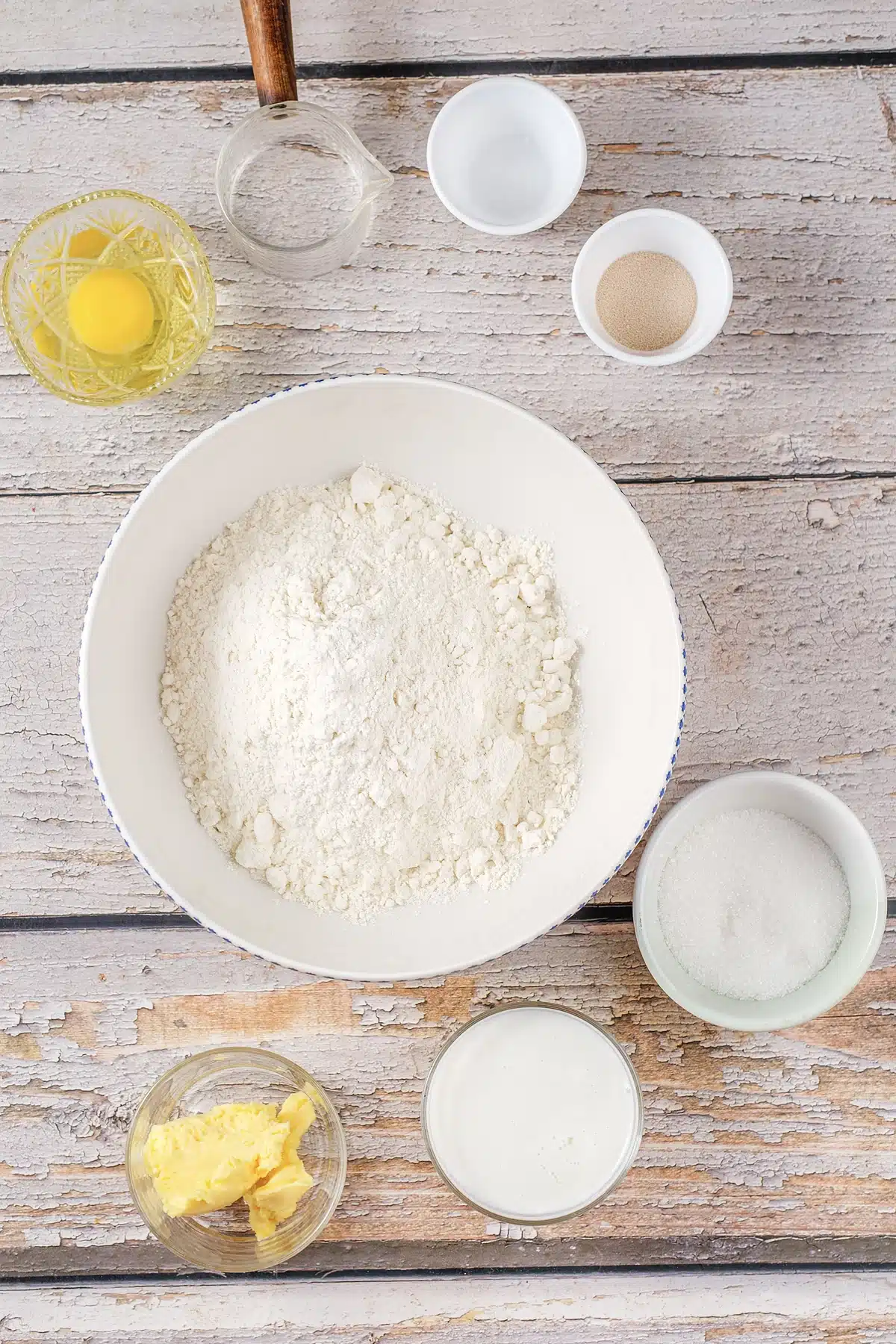
- Instant yeast. Two and a quarter teaspoons, which is one standard packet. Instant yeast can go straight into the flour, but blooming it in warm water first tells you within five minutes whether it is alive, and that is worth knowing before you commit four cups of flour to it.
- Whole milk. Three quarters of a cup, warmed to about body temperature. The fat and the milk sugars both matter here. Skim milk gives you a paler, drier ring, and water gives you something closer to a bread roll.
- Eggs. Two large, at room temperature. Cold eggs pull the temperature of the dough down and stretch the first rise by half an hour or more.
- Unsalted butter. A quarter cup, softened. The chain uses shortening, which is why their rings hold a slightly firmer shape. Butter tastes better and browns more, and the difference in structure is small enough that nobody has ever complained.
- All-purpose flour. Three and a half to four cups, added gradually. Start at the low end. This dough should stay soft and a little sticky, and every extra tablespoon of flour buys you a tougher donut. Bread flour works if you want more chew, though it moves the texture away from the original, as the Wheat Foods Council explains in its rundown of types of wheat flour and the protein levels behind them.
- Neutral frying oil. Canola, vegetable or peanut, and enough of it to give you two inches of depth. Shallow oil drops in temperature the moment the dough goes in.
For the Glaze
- Confectioners’ sugar. Two cups for the glaze, sifted if it has any lumps. Granulated sugar will not dissolve in a cold liquid and you will feel every grain.
- Vanilla and milk. Half a teaspoon of vanilla and three to four tablespoons of milk. The milk is the dial: less for an opaque coat, more for the thin translucent one you actually want.
Why Homemade Glazed Donuts Need Yeast, Not Baking Powder
Baking powder releases carbon dioxide in a rush, once when it gets wet and again when it gets hot. That is perfect for a muffin, where the batter sets fast and traps the bubbles as they form. In a fried dough it works against you, because the outside seals within seconds and the gas has nowhere left to go.
Yeast works slowly and produces gas over hours, stretching the gluten while it goes. By the time the ring reaches the oil the structure is already open, so frying only has to set it. That is the difference between a light ring and a dense one, and it is why homemade glazed donuts take two and a half hours rather than twenty minutes.
Yeast also builds flavor that leavening powder cannot. Fermentation leaves behind alcohols and acids that read as faintly tangy under all that sugar, which is exactly what keeps a very sweet food from tasting flat.
How To Make Homemade Glazed Donuts
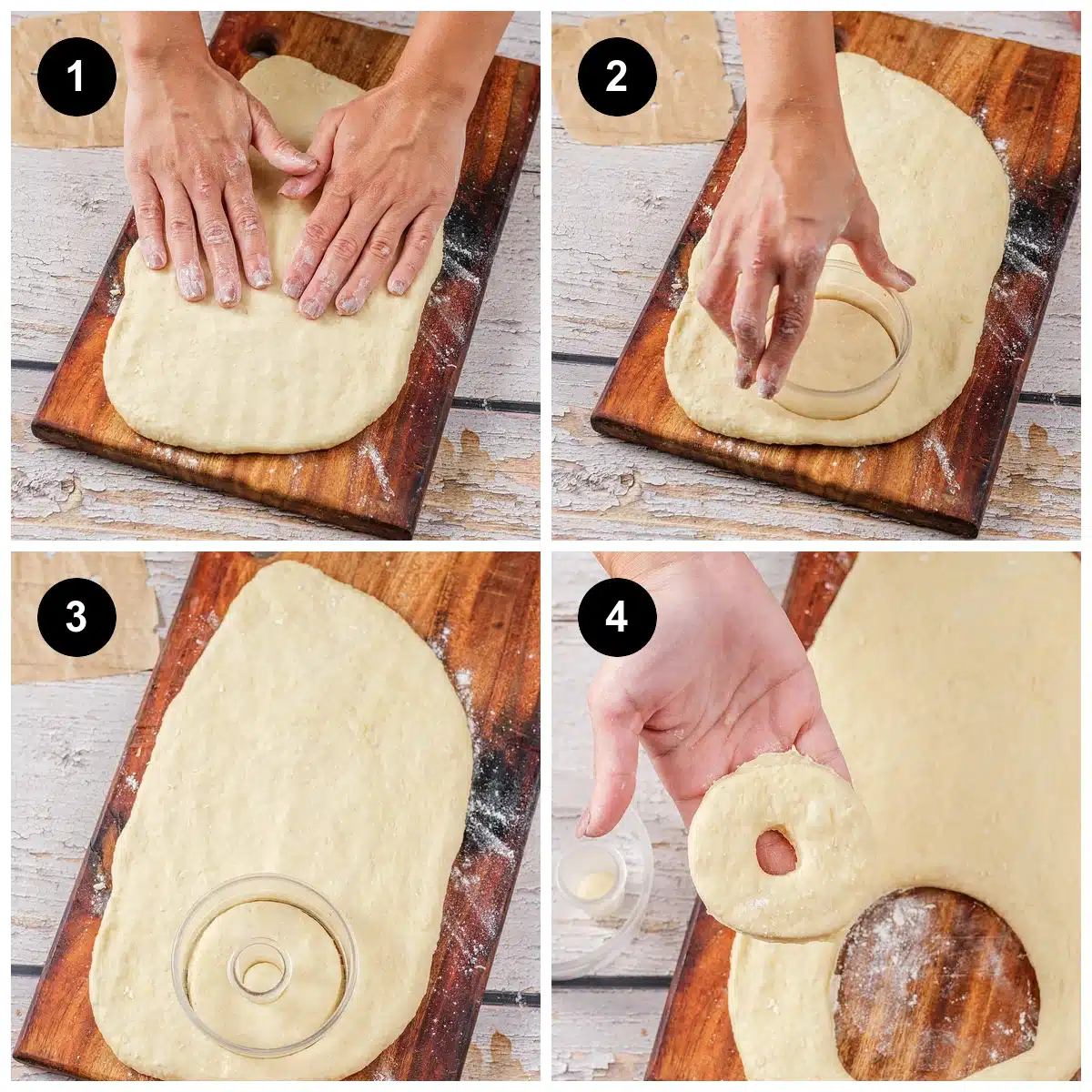
First, wake the yeast. Stir the instant yeast into a third of a cup of warm water and leave it five minutes, until the surface goes foamy. If nothing happens, the yeast is dead and the batch is finished before it starts.
Next, mix and knead. Add the warm milk, sugar, salt, eggs, softened butter and two cups of flour, and beat until smooth. Switch to a dough hook and work in the rest of the flour a little at a time, kneading five to seven minutes. Stop while the dough still tacks slightly to your finger.
Then let it rise. Turn the dough into an oiled bowl, flip it once to coat, cover it loosely and leave it somewhere warm for one to two hours, until it has doubled and holds a dent when you press it.
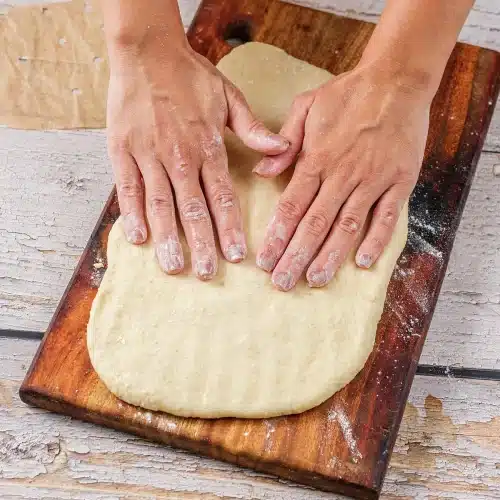
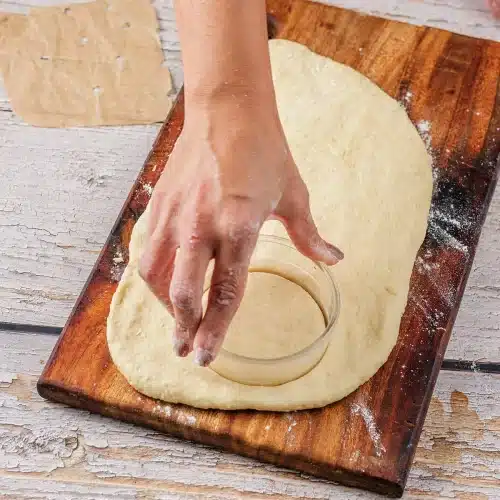
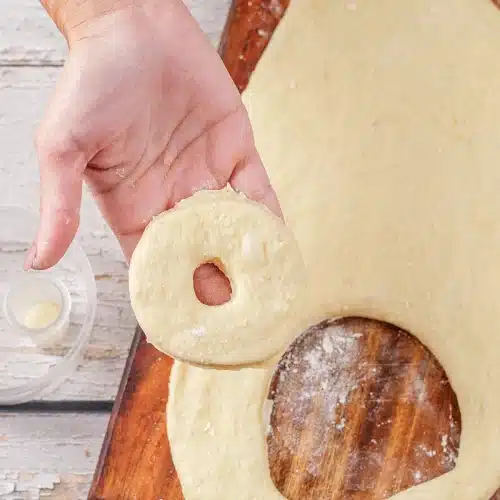
After that, roll and cut. Roll the dough out on a well-floured counter to a 1/2-inch thickness, cut rings with a three-inch cutter and a smaller one for the centers, and set them on parchment-lined trays. Re-roll the scraps once. Cover and leave them fifteen minutes, just until they look puffed rather than doubled.
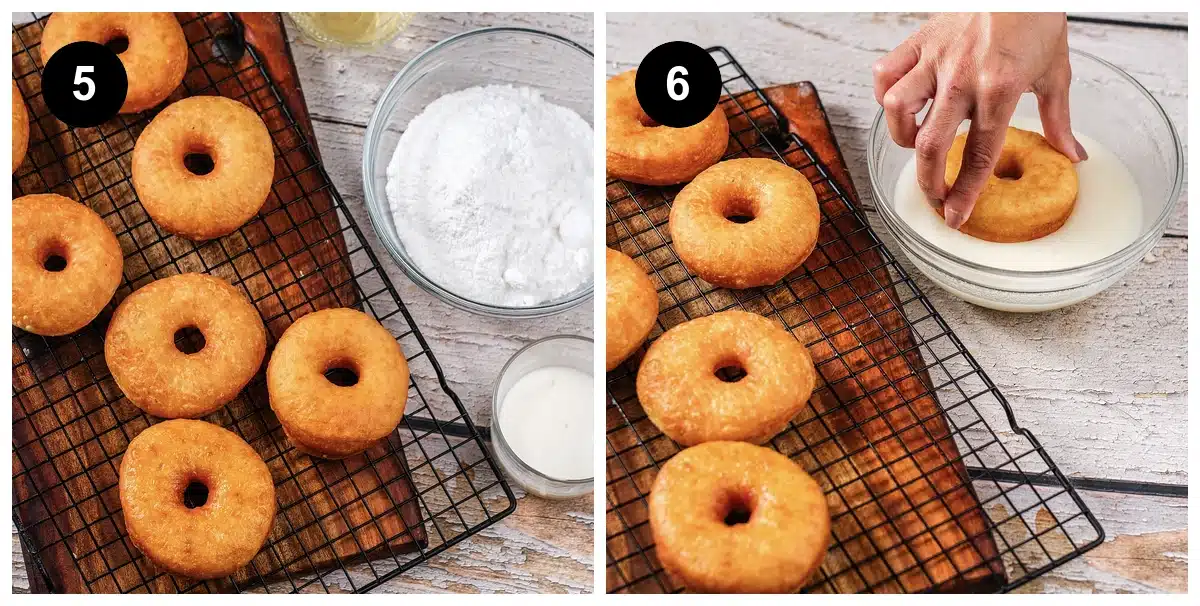
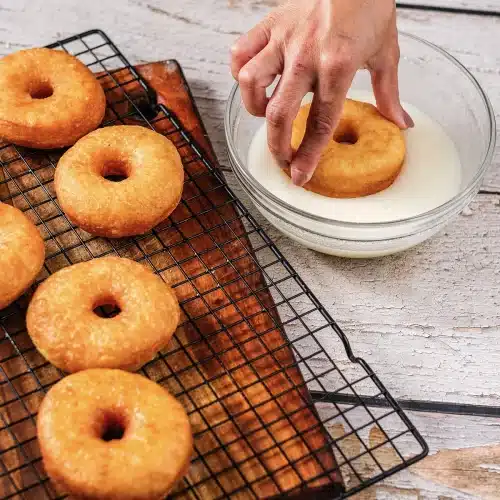
Finally, fry and glaze. Bring the oil to 360 degrees, slide in three or four rings at a time, and give them sixty to ninety seconds a side. Drain them briefly on a rack, whisk the confectioners’ sugar with the vanilla and milk, and dip the top of each one while it is still too hot to hold comfortably.
Frying Temperature Is the Whole Job
Almost everything that goes wrong with homemade glazed donuts goes wrong because of the oil temperature. Clip a thermometer to the pot and treat 360 degrees as the number you are defending, not a starting point you set once and forget.
Below about 340 the dough sits in the fat instead of sealing against it, and it drinks oil the whole time. You get a heavy, greasy ring with a pale band around the middle. Above 385 the outside browns before the inside has finished cooking, and you find a doughy seam when you tear one open.
Three rings at a time is the right load in a standard Dutch oven. Each one you add pulls the temperature down by ten to fifteen degrees, so crowding the pot has the same effect as turning the burner down. Let the oil climb back before the next batch goes in.
How To Tell When Homemade Glazed Donuts Are Done
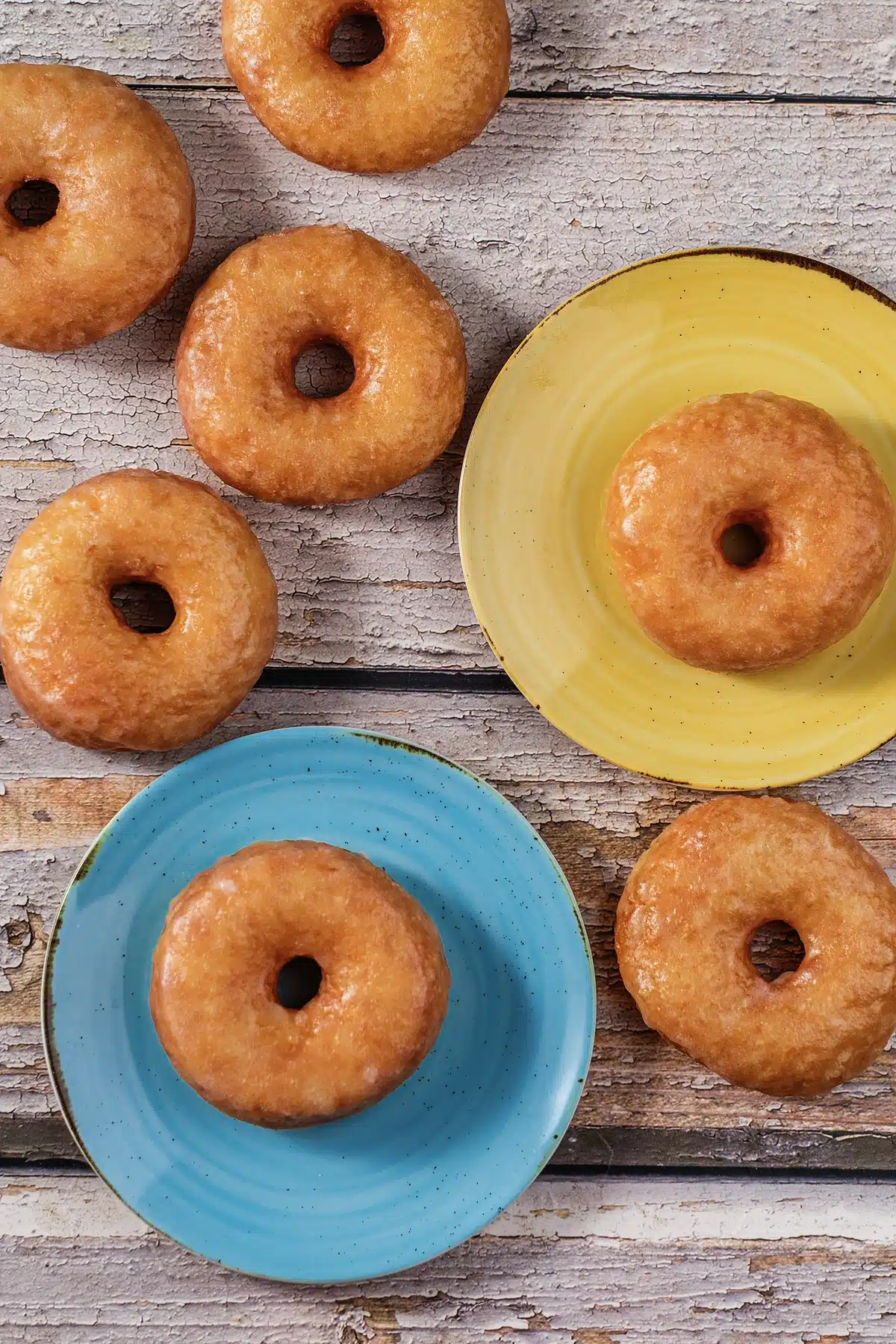
Color is the first signal. You want an even mid-golden brown on both faces with a pale ring around the equator, which is the band that sat at the oil line while the dough puffed. That pale stripe is the mark of a properly proofed ring, so do not fry it away.
The second signal is weight. A finished donut feels almost empty in the tongs. If it still has any heft to it, the center is underdone and another twenty seconds a side will fix it. Sacrifice the first one to a knife if you are unsure; the crumb should be uniformly open with no wet line through the middle.
Make It Ahead
Homemade glazed donuts run about two and a half hours from bowl to glaze, and the dough is where nearly all of that sits, so that is the part to move to the day before. Mix and knead it, then cover the bowl tightly and refrigerate it overnight in place of the first rise. Cold fermentation is slower and the flavor comes out slightly deeper for it.
In the morning, let the bowl sit on the counter for forty-five minutes to take the chill off before you roll. Cut rings can also wait: arrange them on trays, cover them and refrigerate up to four hours, then bring them back to room temperature for twenty minutes before frying.
What you cannot do ahead is the glaze on a finished donut. It stays glossy for a couple of hours and then dulls and cracks, so glaze what you plan to eat and leave the rest bare until you want them.
Storing Homemade Glazed Donuts
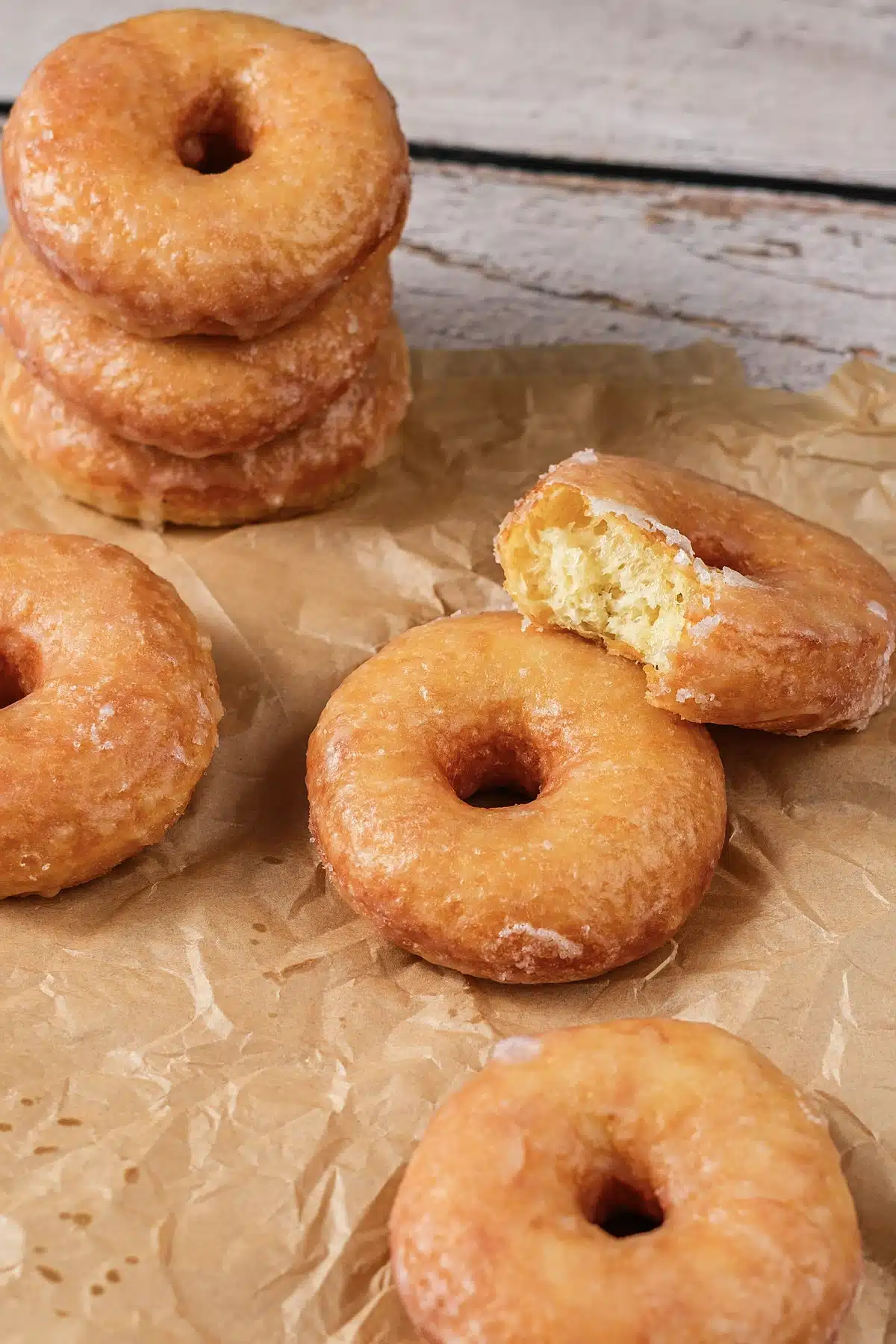
Copycat Krispy Kreme donuts are at their best within about four hours of frying, and there is no honest way around that. In an airtight container at room temperature it stays good for a day and acceptable for two, though the glaze goes tacky and the crumb tightens.
Freezing works better than the refrigerator, which stales them faster than the counter does. Freeze unglazed rings on a tray until firm, bag them, and keep them up to two months. Reheat straight from frozen at 300 degrees for six to eight minutes, then glaze while warm and nobody will guess.
A quick revival for day-old donuts: ten seconds in the microwave softens the crumb again and loosens the glaze. It is not the same as fresh, but it is a great deal better than eating one cold.
Variations and Substitutions
Chocolate glaze. Replace half a cup of the confectioners’ sugar with cocoa powder and add an extra tablespoon of milk. Dip the same way, while hot.
Cinnamon sugar. Skip the glaze entirely and toss the hot rings in cinnamon sugar instead. This is the version to make if you want them to keep a second day, because there is no glaze to go tacky.
Filled instead of ringed. Cut plain rounds with no center hole, proof and fry them the same way, then pipe in jam or pastry cream once they are cool. You get twelve instead of sixteen.
Maple glaze. Swap the vanilla for a teaspoon of maple extract and use two tablespoons of real maple syrup as part of the liquid.
Baked, if you must. Proof the rings on a lined sheet and bake at 375 degrees for eight to ten minutes. They are lighter and drier and they are not the same food, but they are a reasonable weeknight compromise.
Overnight cold rise. Covered in the fridge, the dough develops a more complex flavor and handles more easily when cold, which makes cutting neat rings much simpler.
What to Serve with Homemade Glazed Donuts
Black coffee, and it is not a close contest. The bitterness resets your palate between bites and keeps a plate of homemade glazed donuts from becoming too much. Cold milk does the same job for anyone under about twelve.
If you are building a proper breakfast spread around them, put something sharp on the table alongside. Sliced oranges, grapefruit or a bowl of berries cut through the sugar in a way that more pastry cannot. A pot of strong tea works as well as coffee does.
For a brunch that has to feed a crowd, these sit well next to cinnamon French toast bites, which come out of the oven rather than a pot of hot oil and free up your stovetop entirely.
Homemade Glazed Donuts FAQ
Frequently Asked Questions
Why did my donuts come out greasy?
The oil was too cool. Below roughly 340 degrees the dough absorbs fat instead of sealing against it. Use a thermometer, fry no more than three or four rings at a time, and let the oil recover between batches.
Can I make homemade glazed donuts without a stand mixer?
Yes. Mix the dough with a wooden spoon and knead it by hand for about ten minutes. It is a soft, sticky dough, so oil your hands rather than adding more flour to the counter.
Why is my glaze thick and white instead of clear?
Either the glaze needs more milk or the homemade glazed donuts had cooled before you dipped them. A hot ring melts the surface of the glaze on contact and it sets as a thin translucent film.
How long does the second rise need?
Fifteen minutes at most, and you are looking for puffed rather than doubled. Over-proofed rings collapse in the oil and fry up wrinkled.
More Questions About Frying Donuts at Home
Good to Know
What do I do with the centers?
Fry them for about forty seconds total, turning once, and glaze them the same way. They cook faster than the rings, so keep them in their own batch.
Can I reuse the frying oil?
Once or twice for sweet dough. Cool it completely, strain it through a coffee filter and store it in a sealed jar away from light. Discard it as soon as it smells sharp or turns dark.
Is active dry yeast an acceptable swap?
It is. Use the same quantity, but give it a full ten minutes in the warm water before you mix, and expect the first rise to run about twenty minutes longer.
If frying a whole batch feels like more than today calls for, glazed chocolate donut holes use a fraction of the oil, and baked pumpkin spice donut holes skip the pot altogether.
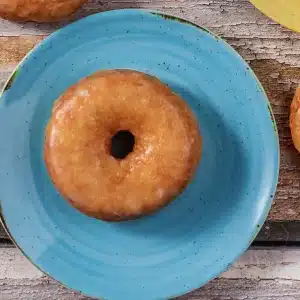
Homemade Glazed Donuts
Save this recipe
Enter your email and I’ll send this recipe straight to your inbox.
Ingredients
Dough
- 1/3 cup (80 ml) warm water about 110°F
- 2 1/4 tsp (7 g) instant yeast
- 3/4 cup (180 ml) whole milk warmed
- 1/4 cup (50 g) granulated sugar
- 1 tsp (6 g) salt
- 2 large eggs room temperature
- 1/4 cup (57 g) unsalted butter softened
- 3 1/2 to 4 cups (440-500 g) all-purpose flour plus more as needed
Frying
- neutral oil such as canola or vegetable, for frying
Glaze
- 2 cups (240 g) confectioners’ sugar
- 1/2 tsp (2.5 ml) vanilla extract
- 3 to 4 tbsp (45-60 ml) milk as needed for glaze consistency
Equipment
- Stand Mixer with paddle and dough hook
- Mixing bowls
- Rolling Pin
- Doughnut Cutter or Cookie & Shot Glass
- Baking Sheet and Parchment Paper
- Wire rack
- Slotted spoon
- Heavy Pot or Dutch Oven
- Thermometer
- Whisk
Instructions
Make the Dough
- Wake the yeast: Stir the instant yeast into the warm water and leave it for 5 minutes, until the surface goes foamy. If nothing happens, the yeast is dead and the batch is finished before it starts.
- Mix: Warm the milk to about body temperature. Add it to the yeast along with the sugar, salt, eggs, softened butter and 2 cups of the flour, and beat with the paddle attachment until smooth.
- Knead: Switch to the dough hook and work in the remaining flour a tablespoon or two at a time, kneading on medium for 5 to 7 minutes. Stop while the dough is still soft and tacks very slightly to your finger.
- First rise: Turn the dough into a lightly oiled bowl, flip it once to coat, cover it loosely and leave it somewhere warm for 1 to 2 hours, until it has doubled and holds a dent when pressed.
Roll, Cut and Proof
- Roll: Turn the dough onto a well-floured counter and roll or pat it out to a 1/2-inch thickness. Keep the counter floured; this dough is soft and will stick if you let it.

- Cut: Cut rings with a 3-inch cutter and a smaller one for the centers, pressing straight down rather than twisting. Re-roll the scraps once.
- Second rise: Lift the rings onto parchment-lined trays, leaving space between them. Cover loosely and leave 15 minutes, just until they look puffed rather than doubled.
Fry
- Heat the oil: Pour 2 inches of neutral oil into a heavy pot and bring it to 360 degrees, with a thermometer clipped to the side. Treat that number as the one you are defending.
- Fry in small batches: Slide in 3 or 4 rings at a time and fry 60 to 90 seconds a side, until both faces are mid-golden with a pale band around the equator. The centers need about 40 seconds total. Drain on a rack and let the oil come back to temperature between batches.
Glaze and Serve
- Whisk the glaze: Whisk the confectioners' sugar with the vanilla and 3 tablespoons of milk until smooth, then add the last tablespoon a little at a time. You want it thin enough to run off a spoon in a sheet.
- Dip while hot: Dip the top of each donut while it is still too hot to hold comfortably, let the excess run off, and set it back on the rack. Serve within a couple of hours, while the glaze is still glossy.

Notes
Storage: keep glazed donuts in an airtight container at room temperature for up to 2 days. Freeze unglazed rings up to 2 months, reheat from frozen at 300 degrees for 6 to 8 minutes, then glaze while warm.
Substitutions: active dry yeast works in the same quantity, but give it 10 minutes in the warm water and add about 20 minutes to the first rise. Bread flour makes a chewier ring than all-purpose does.
Doneness: both faces should be mid-golden with a pale band around the equator, and a finished ring feels almost weightless in the tongs.
Nutrition values are an estimate.