
Million dollar spaghetti is what happens when somebody looks at a pan of baked spaghetti and decides it needs a layer of cream cheese hidden in the middle. It sounds like too much. It is exactly right, and it is the reason this casserole gets requested more often than the lasagna it is imitating.
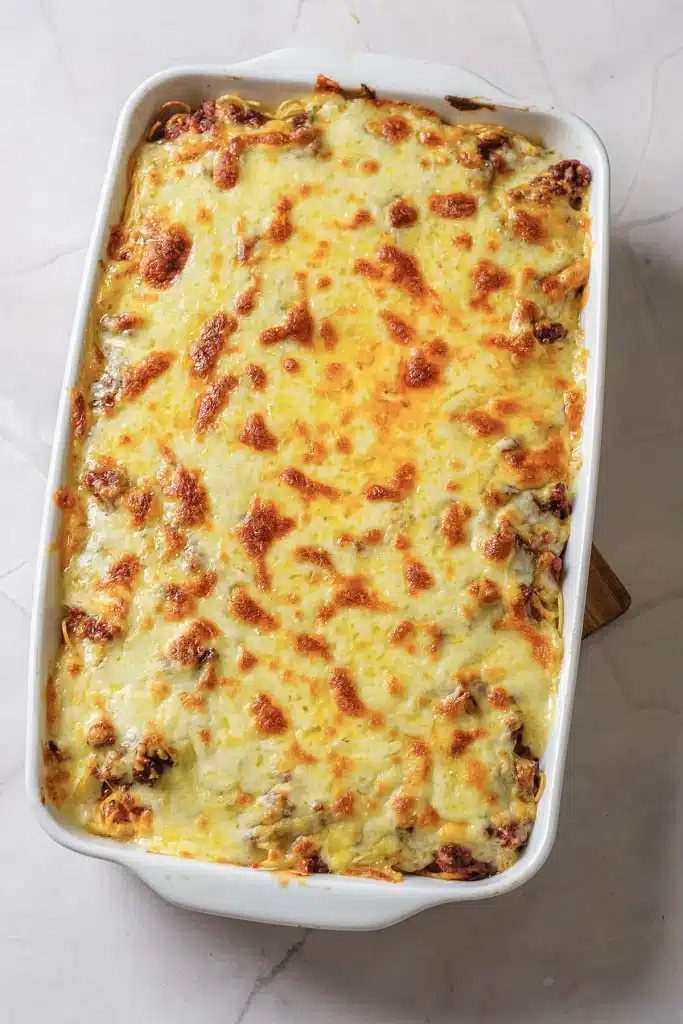
- All the comfort of lasagna with none of the layering
- A hidden cream cheese layer that makes it taste far more expensive than it is
- Assembles a day ahead and bakes straight from the fridge
- Freezes for three months either baked or unbaked
- Feeds eight from one pound of ground beef
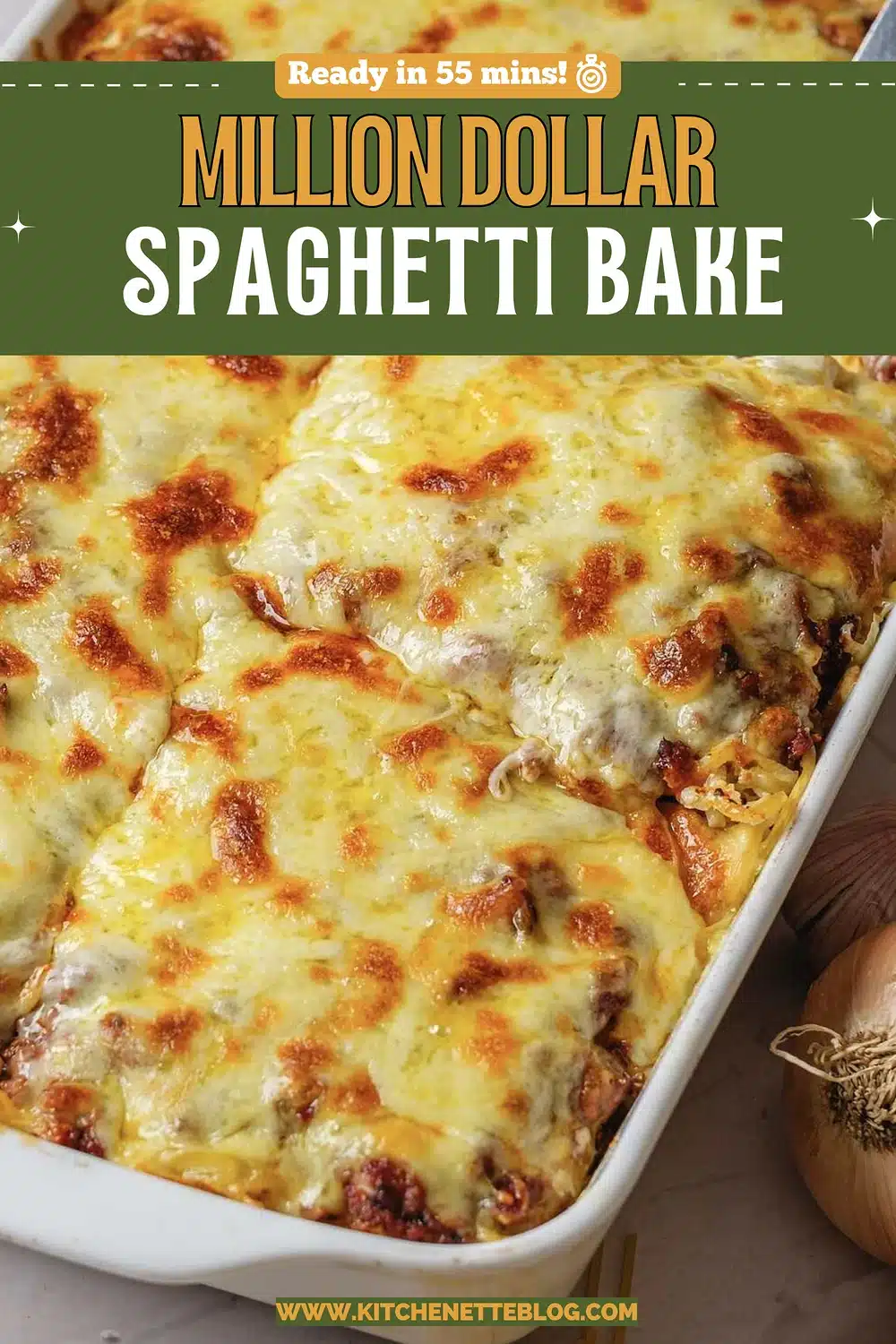
Million dollar spaghetti is built in three layers: cooked spaghetti on the bottom, a whipped cream cheese and ricotta mixture over the noodles, and a beefy tomato sauce on top with a thick blanket of shredded cheese. Fifty-five minutes, one baking dish, and it feeds eight people who will all go back for a second square.

- What Is Million Dollar Spaghetti?
- Where the Name Comes From
- Ingredient Notes
- The Cream Cheese Layer Is the Whole Point
- How To Make Million Dollar Spaghetti
- How To Tell When Million Dollar Spaghetti Is Done
- Make It Ahead
- Storing Million Dollar Spaghetti
- Variations and Substitutions
- What to Serve with This Spaghetti Casserole
- Million Dollar Spaghetti FAQ
What Is Million Dollar Spaghetti?
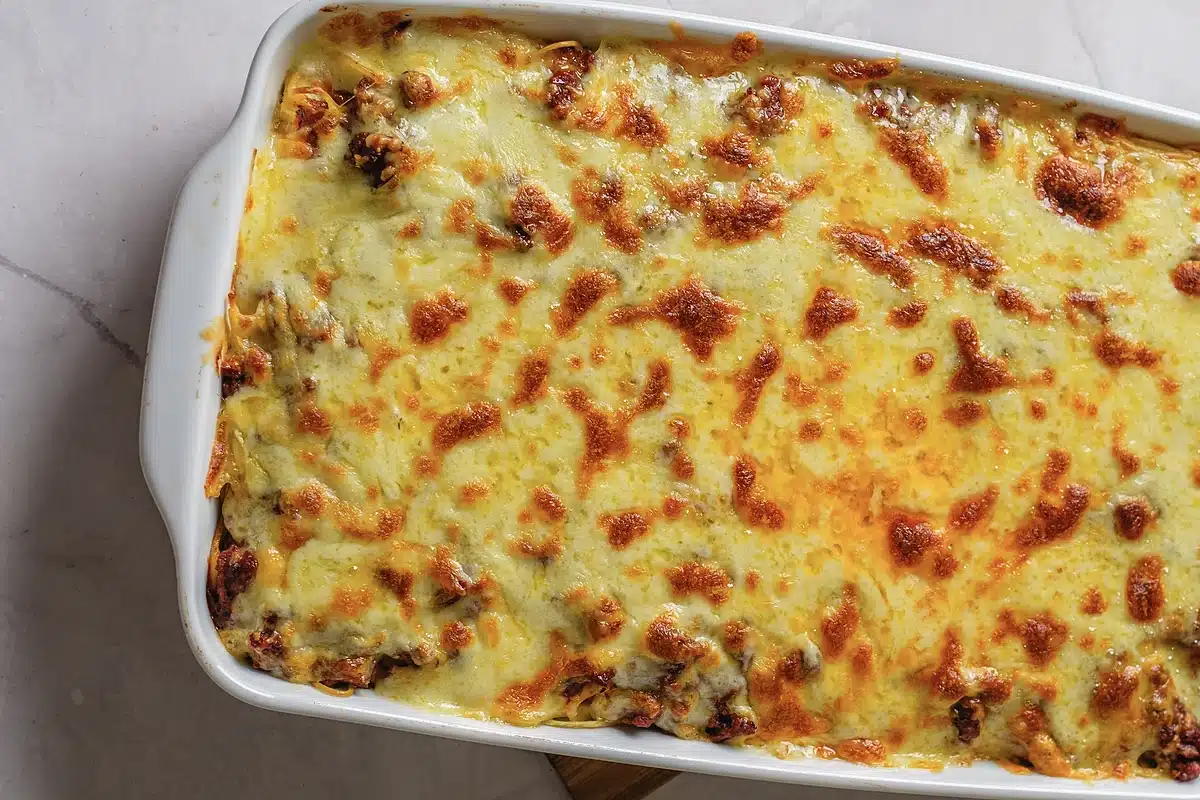
Million dollar spaghetti is a baked pasta casserole built in three distinct layers rather than stirred together. Spaghetti goes down first, a soft cheese mixture goes over it, meat sauce covers that, and shredded cheese finishes the top. It bakes covered, then uncovered, and cuts into squares like lasagna does.
The difference between million dollar spaghetti and ordinary baked spaghetti is entirely the middle layer. Cream cheese, ricotta and sour cream beaten together give you a soft, slightly tangy stripe running through every portion. It behaves like the ricotta layer in a lasagna, except that it needs no assembly and no boiling of wide noodles that stick to each other.
What makes million dollar spaghetti work structurally is that the cheese layer sets as it bakes. A pan of spaghetti with sauce mixed through falls apart on the serving spoon. This one holds a clean edge, because there is something firm between the noodles and the sauce holding the whole square together.
Save this recipe
Enter your email and I’ll send this recipe straight to your inbox.
Where the Name Comes From
Nobody ever stuck a price tag on million dollar spaghetti. The phrase is old American recipe-card language for a dish that tastes richer than its ingredients, the same way million dollar pie and million dollar dip got their names. Cream cheese is the common thread in all three.
The version most people know spread through community cookbooks and then through social media, where the cut-open shot of that white stripe did the work no headline could. It looks expensive on a plate and it costs about as much as a box of pasta and a pound of ground beef.
Cream cheese, ricotta and sour cream all bring different things to the layer: fat for richness, curd for body, acidity for balance. U.S. Dairy has a useful summary of what dairy contributes nutritionally, and in cooking terms the three together do something none of them manages alone.
Whatever the origin, the name has stuck because it does the one thing a recipe title has to do: it tells you what you are getting. Nobody has ever read million dollar spaghetti on a menu and expected a light dinner.
Ingredient Notes
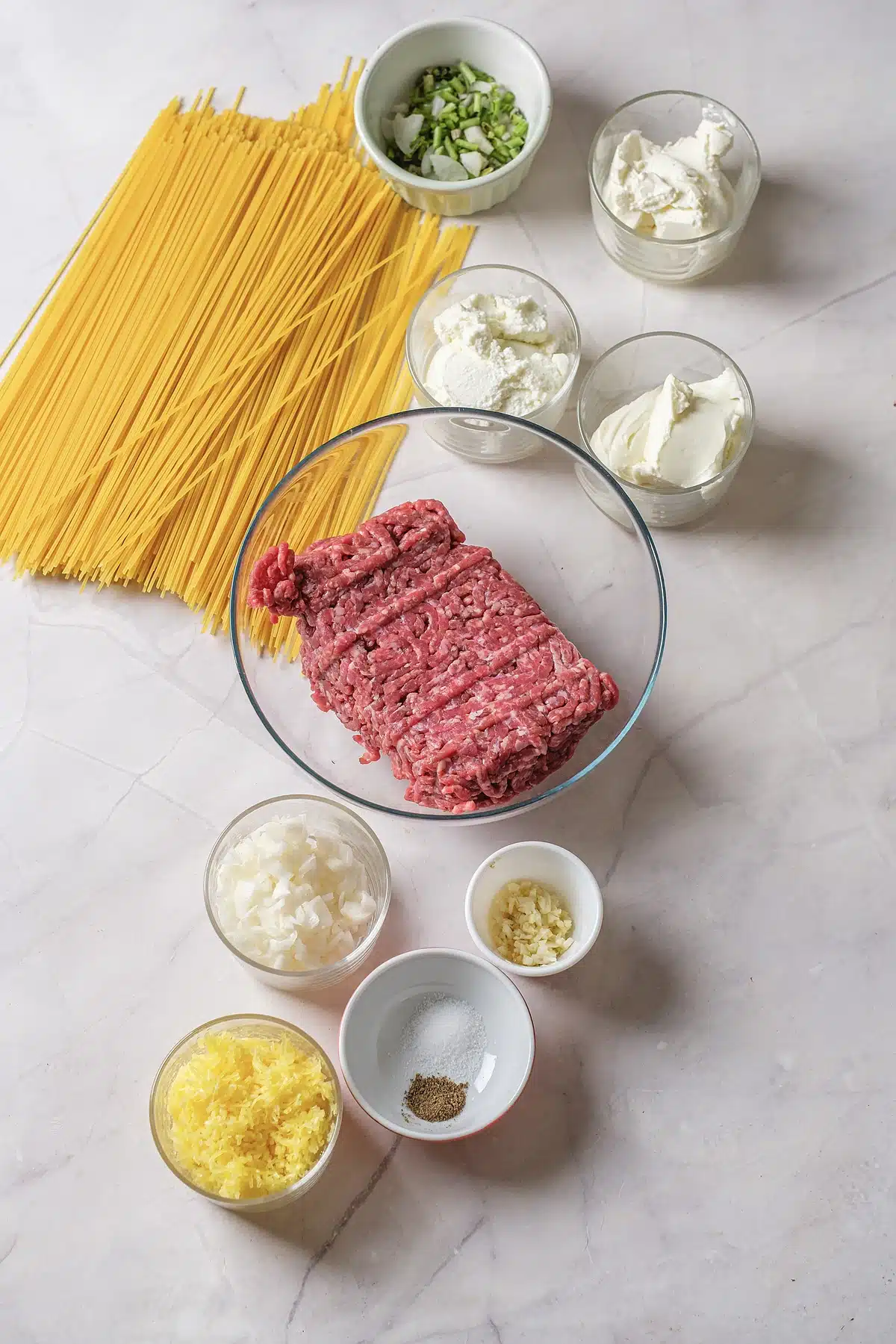
- Spaghetti. Twelve ounces, cooked to just al dente and no further. It bakes for another half hour, so anything cooked to package softness turns to mush in the dish. Pull it a full minute early.
- Ground beef. One pound, eighty-five percent lean. Drain the fat after browning or it pools on top of the cheese layer and makes the finished square greasy.
- Cream cheese. Four ounces, softened to room temperature. Cold cream cheese will not beat smooth and you get white lumps through the layer instead of a clean stripe. Take it out an hour ahead.
- Ricotta. One cup. Whole milk if you can, and cottage cheese is the traditional substitute if that is what is in the fridge.
- Sour cream. Half a cup. It is what stops the layer from tasting like plain cheese, and the acidity cuts the richness of everything else in the dish.
- Green onions. Four, sliced thin, most of them folded into the cheese layer and the rest saved for the top. They are not a garnish here; they season the layer from inside.
- Spaghetti sauce. Twenty-four ounces of a jar you actually like. The sauce is a third of what you taste, so a thin, sweet one shows.
- Shredded cheese. Two cups of a cheddar and Monterey Jack blend. Cheddar for color and flavor, Jack for the melt. Shred it from a block if you have five spare minutes.
The Cream Cheese Layer Is the Whole Point
Everything else in million dollar spaghetti is ordinary baked pasta. The middle stripe is what earns the name, and it is also the only part that can go wrong, so it is worth spending a minute on.
Beat the cream cheese on its own first until it is completely smooth, then add the ricotta and sour cream. Doing it the other way round means the cream cheese never fully breaks up, because the liquid from the other two coats the lumps and protects them. Two extra minutes with the mixer at the start saves the texture.
Spread the layer to the very edges of the dish, right up against the sides. Any gap lets the meat sauce run down and mix with the noodles underneath, and you lose the clean stripe that makes the cut square look the way it does in the photo.
One more thing about the layer: it wants to be seasoned. Cream cheese, ricotta and sour cream are all mild on their own, so a half teaspoon of salt and a generous grind of black pepper beaten in makes the difference between a stripe that tastes like something and one that reads as filler. The green onions do the same job from the other direction.
How To Make Million Dollar Spaghetti
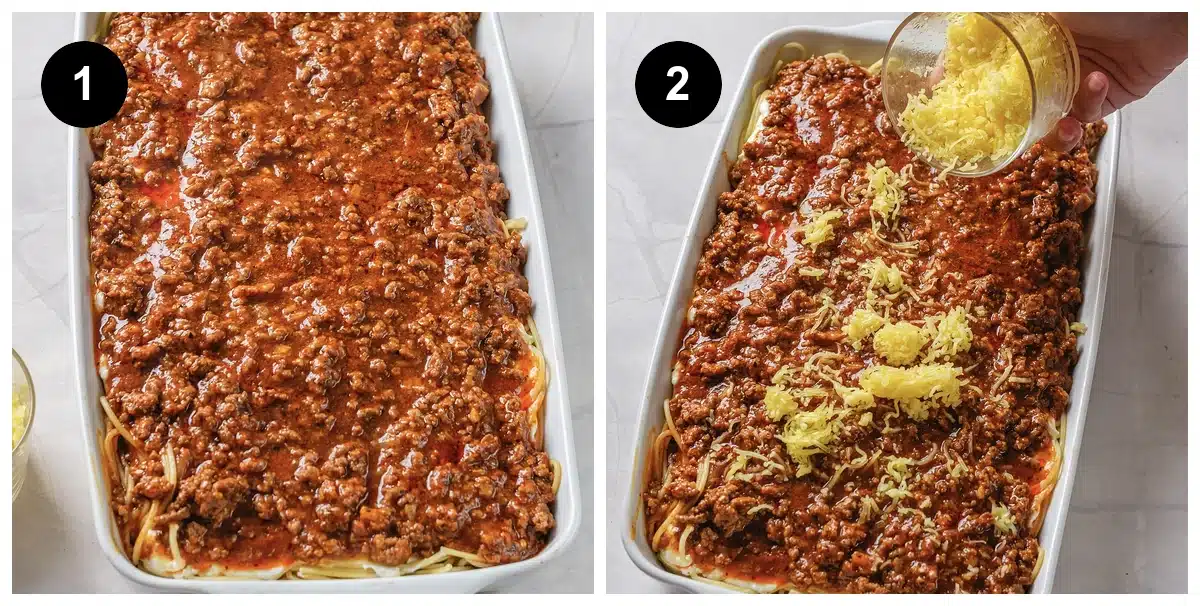
First, boil the spaghetti. Salt the water properly and cook the pasta until it is just al dente, then drain it and toss it with a spoonful of oil so it does not weld into a block while you make everything else.
Next, build the meat sauce. Brown the ground beef with the diced onion in a large skillet over medium heat, add the garlic for the last thirty seconds, then drain the fat. Pour in the jarred sauce, season with salt and pepper, and let it simmer for twenty minutes while you deal with the cheese.
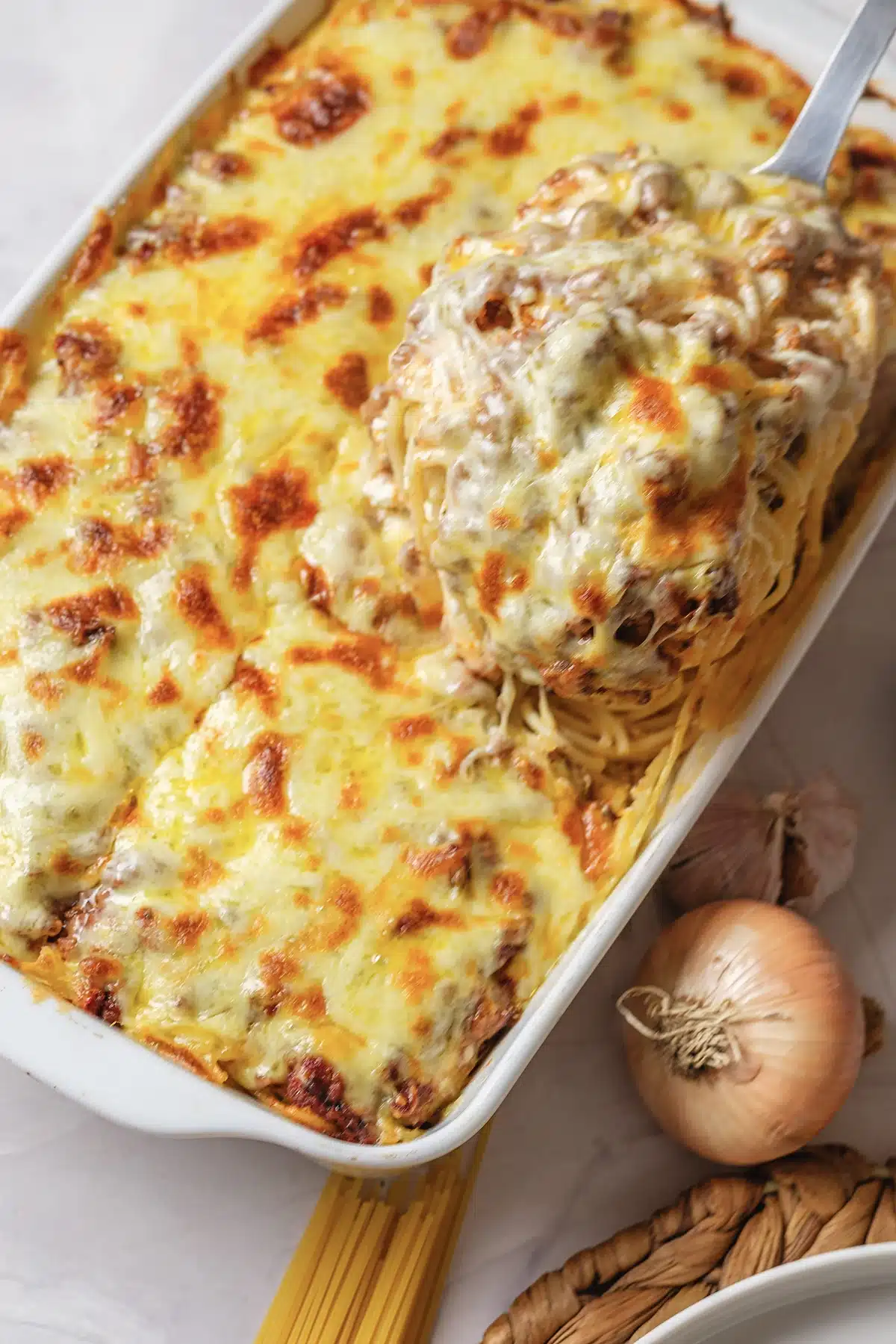
Then, beat the cheese layer. Cream cheese first, on its own, until smooth. Ricotta and sour cream next, beaten in until the mixture looks like thick frosting. Fold in three of the four sliced green onions with a spatula.
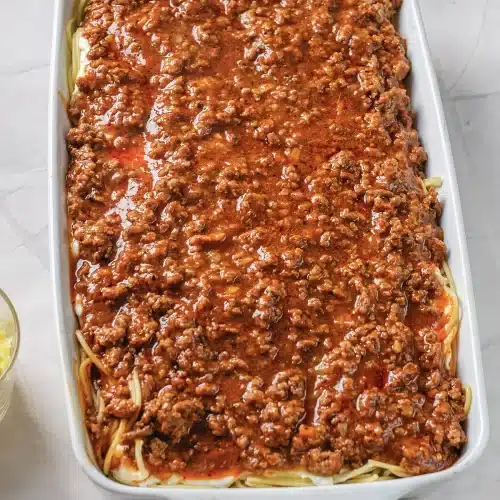
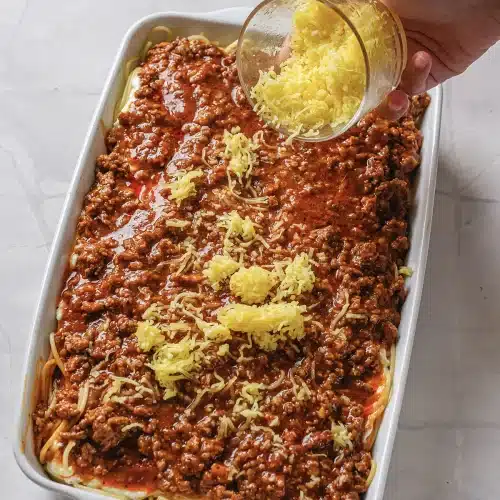
After that, layer the dish. Grease a nine-by-thirteen dish, spread the drained spaghetti across the bottom, smooth the cheese mixture over the noodles edge to edge, spoon the meat sauce over that, and scatter the shredded cheese across the whole surface.
Finally, bake it. Covered with foil at 350 degrees for twenty-five minutes, then uncovered for another five to ten until the top is golden and bubbling. Rest it for ten minutes before you cut it, or the layers slump on the plate.
How To Tell When Million Dollar Spaghetti Is Done
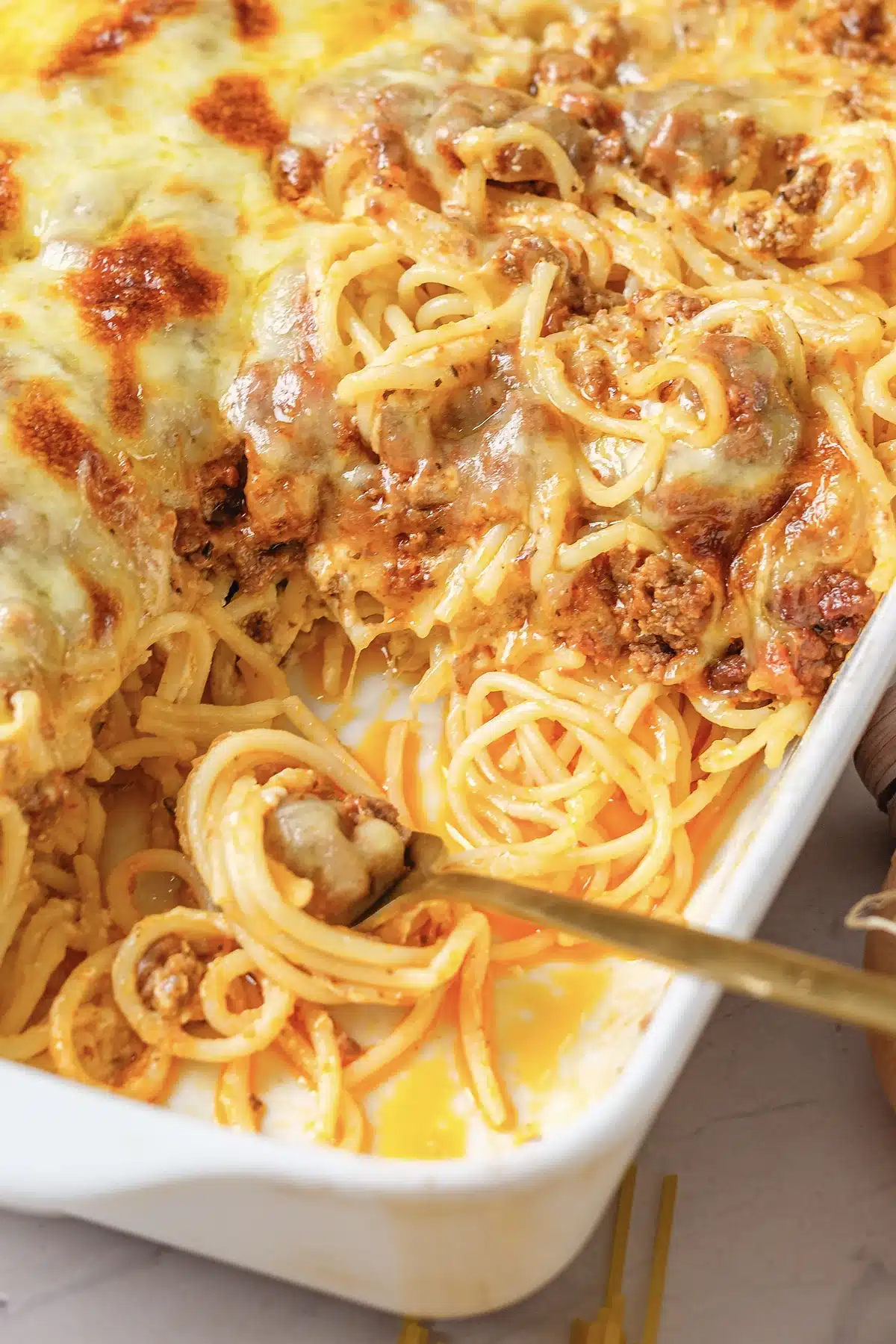
Million dollar spaghetti tells you it is ready at the edges rather than in the middle. The sauce should be bubbling actively where it meets the side of the dish, and the cheese on top should have gone from smooth and pale to blistered with brown patches. A flat, matte surface means it needs another five minutes uncovered.
A knife slid into the center should come out hot to the back of your hand. That is the practical test for a casserole assembled from cold components, and it matters most when the dish went into the oven straight from the fridge.
Make It Ahead
Million dollar spaghetti is a genuine make-ahead dish. Assemble the whole thing, cover it and keep it in the fridge for up to twenty-four hours before baking. Add ten to fifteen minutes to the covered bake time, because a cold ceramic dish takes that long simply to catch up with the oven.
You can also split the work across two evenings without assembling anything. The meat sauce keeps three days in the fridge and improves overnight, and the cheese layer can be beaten and covered a day ahead. Boil the pasta on the night, since that is the one part that does not wait well.
If you are cooking for a new parent or a neighbor, assemble it in a foil pan, do not bake it, and tape the baking instructions to the lid. It is one of the few casseroles that survives that trip completely intact.
Storing Million Dollar Spaghetti
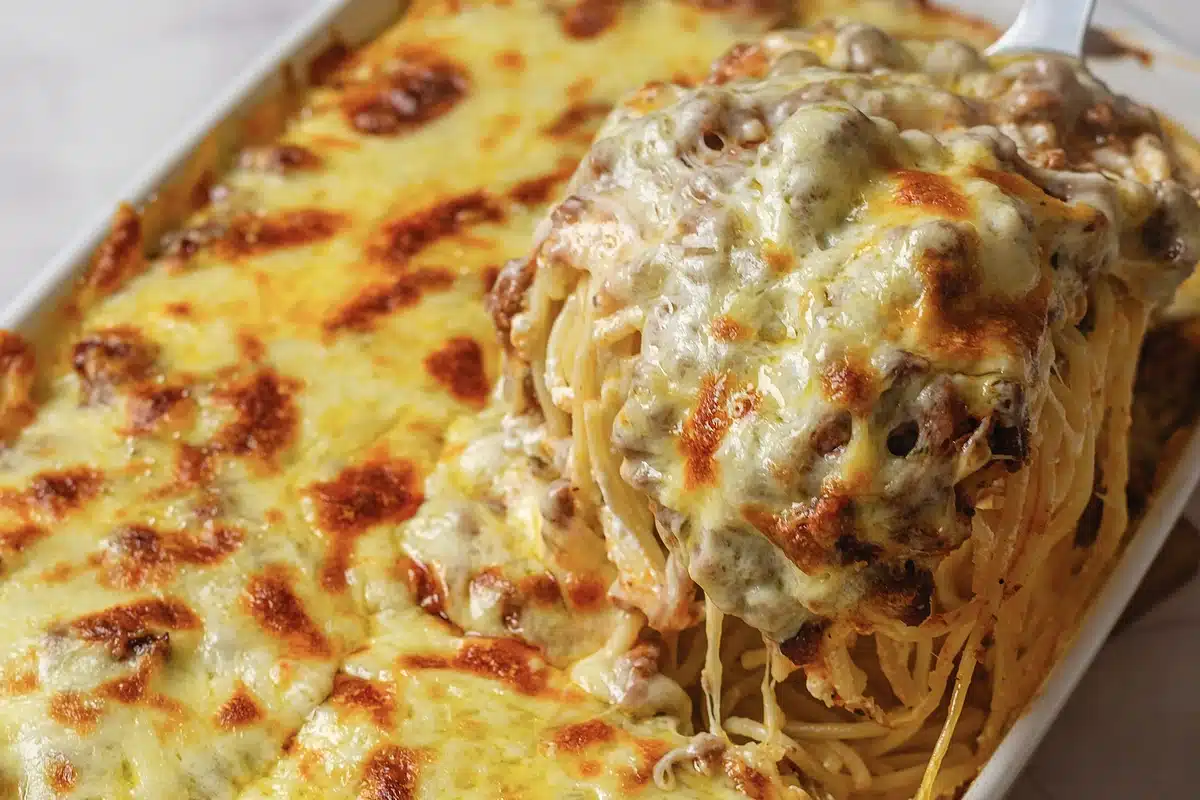
Leftover million dollar spaghetti keeps four days in the fridge in an airtight container, and it cuts more neatly cold than it ever does hot. Reheat individual squares covered at 325 degrees for about twenty minutes, or in the microwave at half power so the cheese layer warms through instead of splitting.
Freezing works both ways. An unbaked dish, tightly wrapped in plastic and then foil, keeps three months and bakes from thawed exactly as written. A baked dish freezes just as well in portions, which is the more useful option for one or two people.
Thaw overnight in the fridge rather than on the counter. A dish this dense does not thaw evenly at room temperature, and you end up with hot edges and a cold middle no matter how long you leave it in the oven.
Variations and Substitutions
Italian sausage. Swap half the ground beef for sweet Italian sausage. It brings fennel and a little heat, and it makes the sauce taste like it simmered far longer than twenty minutes.
Cottage cheese. A direct swap for the ricotta and the older version of this dish. Blend it smooth first if you dislike the curds.
Meatless. Brown a pound of sliced mushrooms hard in place of the beef, then proceed as written. Mushrooms give you the savory depth the meat was providing rather than just filling the space.
Spicy. A teaspoon of red pepper flakes in the sauce, or pepper Jack in place of the Monterey Jack on top.
More vegetables. A diced green bell pepper with the onion, or two cups of chopped spinach squeezed dry and folded into the cheese layer.
Different pasta. Penne, rigatoni or ziti all work and hold their shape better than spaghetti does. Use the same weight and the same timings.
What to Serve with This Spaghetti Casserole
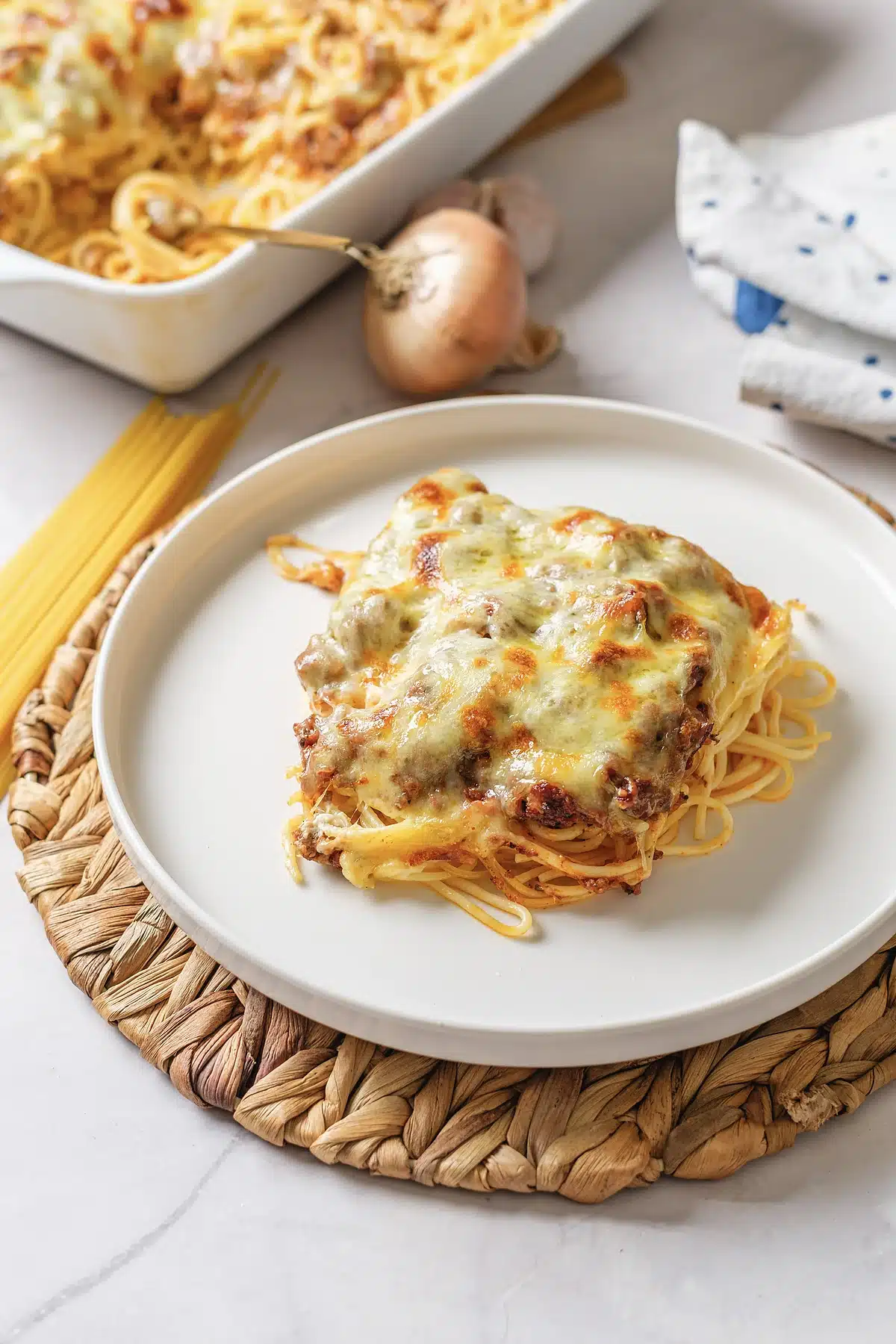
Serve million dollar spaghetti with garlic bread and a green salad dressed with a sharp vinaigrette, to cut through everything else on the plate. This is a rich dish, and a plate of it without something acidic alongside gets heavy by the third or fourth bite.
Roasted broccoli or green beans with lemon and a little parmesan work better than a creamy vegetable side would. The rule is that nothing else on the table should also be soft and cheesy, or the whole meal turns into one texture.
Portion size is worth a thought as well. A nine-by-thirteen dish cut into eight is generous, and cut into ten it still feeds people properly alongside bread and a salad. This is a dish where nobody has ever complained about a smaller square.
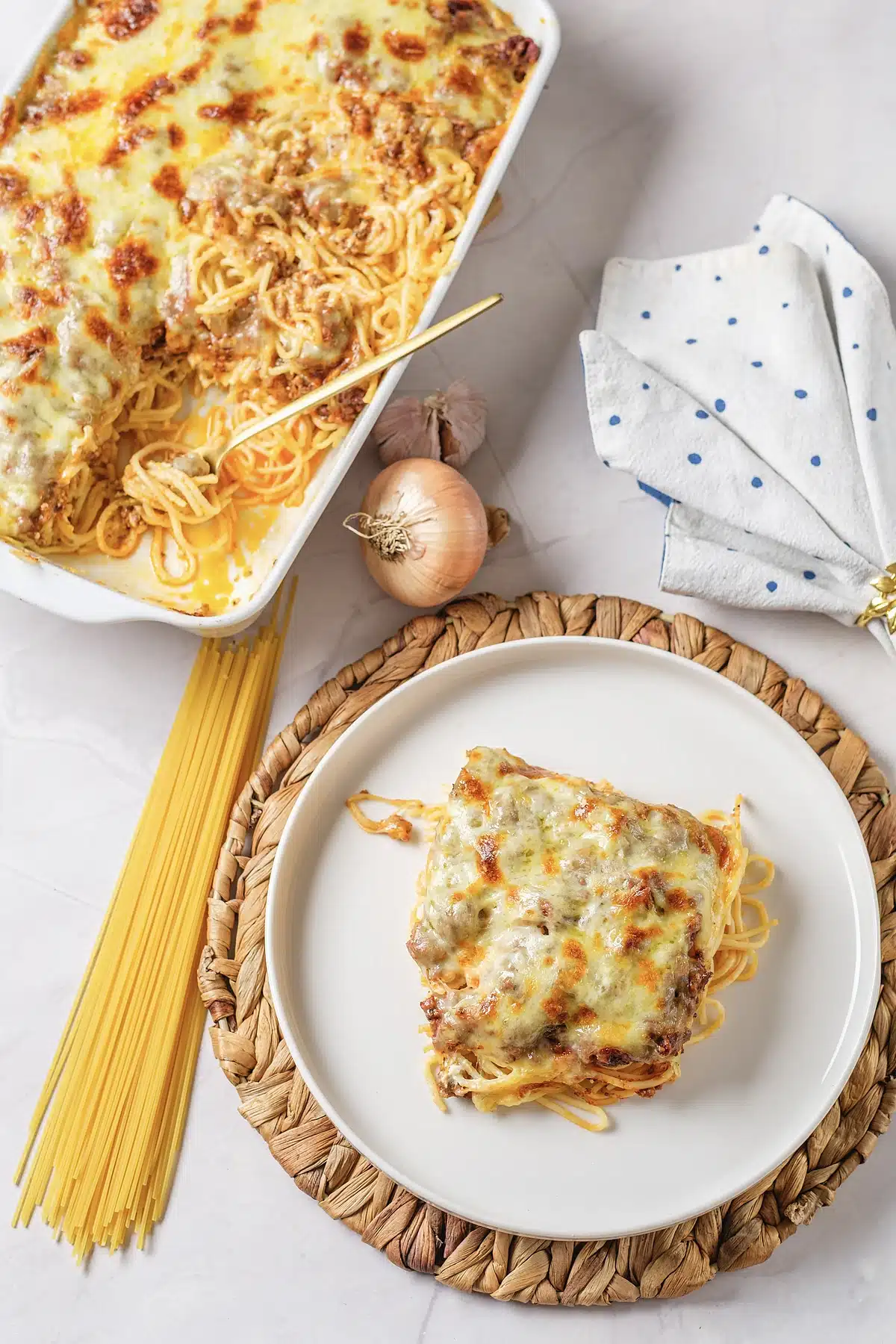
If you are cooking for a crowd and want a second tray, a pan of baked manicotti gives you a different shape from the same flavors, and million dollar meatloaf uses the same cream cheese trick on a completely different dish.
Million Dollar Spaghetti FAQ
Frequently Asked Questions
Why is it called million dollar spaghetti?
Million dollar spaghetti is old recipe-card language for a dish that tastes far richer than its ingredients cost, the same naming convention behind million dollar pie and million dollar dip. Cream cheese is the common ingredient in all of them.
Can I use cottage cheese instead of ricotta?
Yes, and the original versions of this dish did exactly that. Blend it briefly first if you would rather not have visible curds in the layer, otherwise swap it straight across.
Why did my million dollar spaghetti layers run together?
Usually a cheese layer that was too loose or was not spread all the way to the edges. Beat the cream cheese smooth before the other two go in, and push the mixture right up against the sides of the dish.
Do I have to cover it with foil?
Yes, for the first twenty-five minutes. Uncovered from the start, the cheese browns long before the middle is hot and the top ends up dry.
More Questions About Baked Pasta Casseroles
Good to Know
What size dish should I use?
A nine-by-thirteen dish gives you eight generous squares with clean layers. A smaller pan works, though the layers get deep and the middle needs another ten minutes.
Can I double it?
Two separate dishes rather than one deep one. Depth is what causes an uneven bake in a casserole, so two shallow trays side by side finish at the same time as one.
Should the pasta be fully cooked first?
No. Pull it a minute before al dente, because it keeps cooking in the sauce for another half hour in the oven.
If a one-dish dinner that reheats well is what you want on repeat, oven baked Monterey spaghetti takes the same noodles somewhere creamier, and an easy Johnny Marzetti casserole is the Midwestern cousin of this whole idea.
Million Dollar Spaghetti Casserole
Save this recipe
Enter your email and I’ll send this recipe straight to your inbox.
Ingredients
Pasta
- 12 ounces spaghetti cooked to just al dente
Beef and Tomato Sauce
- 1 pound ground beef 85% lean
- 1 medium yellow onion diced
- 3 cloves garlic minced
- 24 ounces spaghetti sauce jarred or homemade
- salt and black pepper to taste
Cream Cheese Layer
- 4 ounces cream cheese softened to room temperature
- 1 cup ricotta cheese or cottage cheese
- 1/2 cup sour cream
- 4 green onions thinly sliced, divided
Topping
- 2 cups shredded cheddar and Monterey Jack blend or any melty blend
- 1 tablespoon chopped fresh parsley optional, for serving
Equipment
- Large pot
- Large skillet
- Mixing bowls
- 11x7 inch baking dish
- Foil
Instructions
Boil the Spaghetti
- Cook the spaghetti in well-salted water until it is just al dente, a full minute short of the package time. Drain it and toss with a spoonful of oil so it does not stick together.
Build the Meat Sauce
- In a large skillet over medium heat, cook the ground beef with the diced onion until browned. Add the garlic for the last 30 seconds, then drain off the excess fat.
- Pour in the spaghetti sauce, season with salt and pepper, and simmer for 20 minutes so the flavors come together. Taste and adjust the seasoning.
Whip the Cream Cheese Layer
- Beat the softened cream cheese on its own until it is completely smooth, then beat in the ricotta and sour cream until the mixture looks like thick frosting. Season with salt and pepper and fold in three quarters of the sliced green onions.
Layer the Dish
- Grease a 9x13-inch baking dish. Spread the drained spaghetti across the bottom, then smooth the cream cheese mixture over the noodles right up to the edges. Spoon the meat sauce evenly over the top.

- Scatter the shredded cheese blend across the whole surface.
Bake and Rest
- Cover with foil and bake at 350°F (175°C) for 25 minutes. Remove the foil and bake for another 5 to 10 minutes, until the top is golden and the sauce is bubbling at the edges.
- Rest the dish for 10 minutes so the cheese layer sets, scatter the reserved green onions and the parsley over the top, and cut into squares.