
Baked manicotti has a reputation for being fiddly, and almost all of that reputation comes from one instruction nobody should be following: boil the shells first. Boiled manicotti tubes are slippery, they tear the moment you push a spoon into them, and half of them split in the pan anyway.
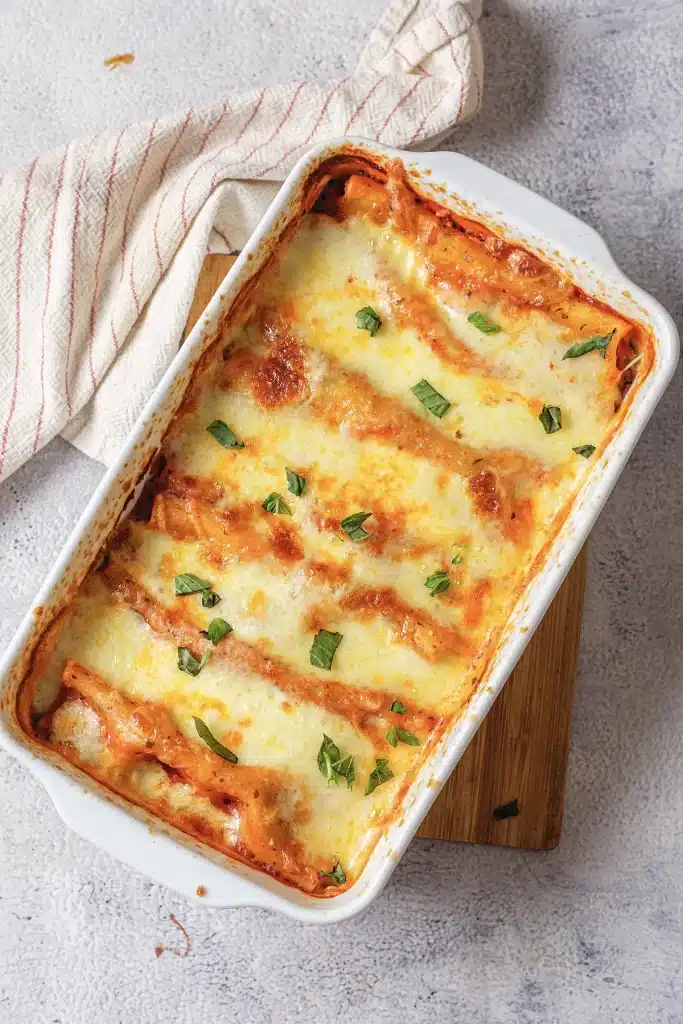
Skip the boiling. Good baked manicotti starts with dry pasta: pipe the cheese filling straight into the shells, thin the marinara with half a cup of water, and let the oven do the cooking. The pasta absorbs exactly what it needs from the sauce over fifty minutes under foil, and it comes out tender with none of the wrestling.
- No boiling, so no torn shells and no scalded fingers
- Twenty-five minutes of assembly, then the oven takes over
- Assembles a full day ahead and bakes straight from the fridge
- Freezes unbaked for two months, which makes it a real freezer meal
- Spinach and ricotta filling that tastes like a restaurant kitchen made it

What Is Manicotti?
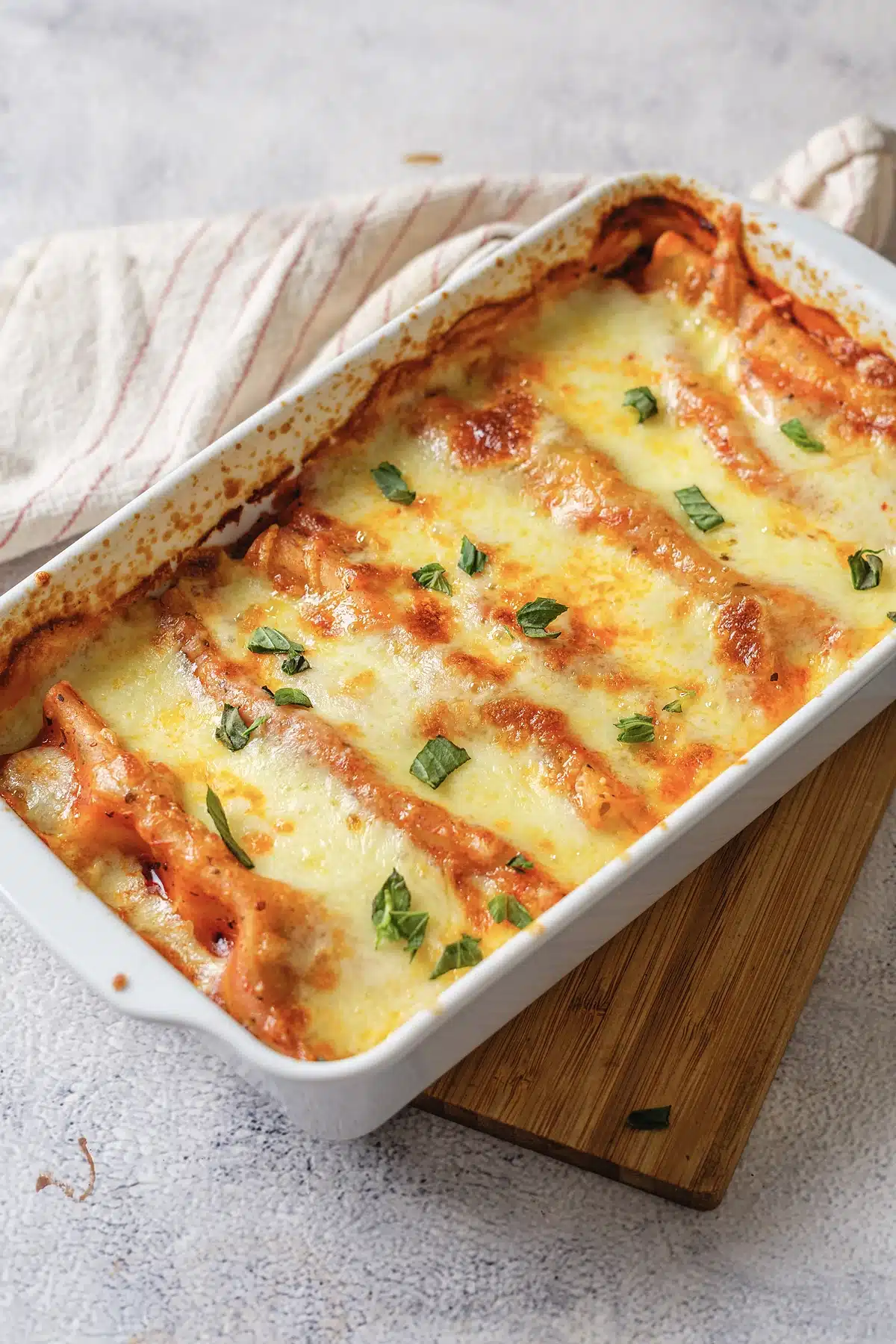
Manicotti are large pasta tubes, roughly four inches long and wide enough to take a piped filling, and baked manicotti is simply what happens once they are stuffed and put in the oven. The name means little sleeves in Italian, which is exactly what they look like sitting in the box. They are stuffed with a soft cheese mixture, covered in tomato sauce, topped with more cheese and baked until the top blisters.
Baked manicotti is Italian American rather than Italian. It grew out of the crespelle and cannelloni traditions that immigrants brought over, then adapted to what American supermarkets actually sold, which was dry ridged tubes in a cardboard box. That adaptation is why the no-boil method works so well: dry pasta was the point from the beginning.
What makes baked manicotti worth the oven time is the ratio of filling to pasta. A tube holds far more cheese than a lasagna layer does, so every bite is mostly ricotta rather than mostly noodle. It eats richer than lasagna from the same ingredients.
Save this recipe
Enter your email and I’ll send this recipe straight to your inbox.
Manicotti vs Cannelloni
People use the two words interchangeably, and they are not quite the same thing. Cannelloni in Italy are usually flat sheets of fresh pasta rolled around a filling, often meat rather than cheese, and finished with bechamel as much as with tomato. They are made, not bought.
Manicotti are the American supermarket version: pre-formed dry tubes, ridged on the outside, sold in a box next to the lasagna sheets. The ridges are functional and hold sauce the way rigatoni does. The filling is nearly always cheese, and the sauce is nearly always tomato.
If a recipe tells you to boil sheets and roll them, you are making cannelloni. If it tells you to pipe into tubes, you are making baked manicotti. Either way the oven step is identical, so the two are interchangeable at the table even if they are not in the box.
Ingredient Notes
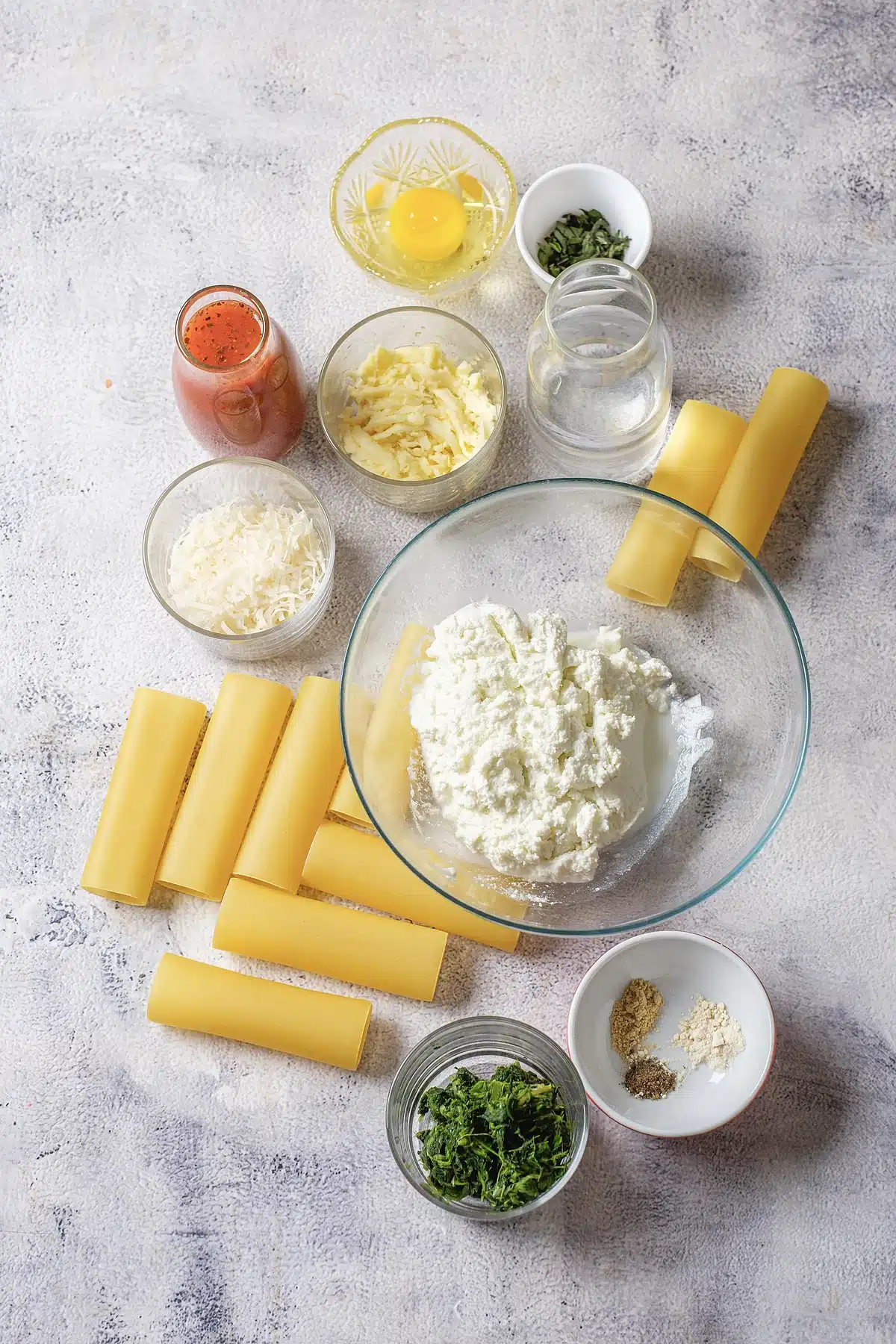
- Manicotti shells. Twelve dry tubes, straight from the box. Buy fourteen if the shop has them, because one or two usually crack while you are piping and it is good to have spares.
- Whole milk ricotta. Two cups. Part-skim makes a grainy, watery filling. If yours looks loose in the tub, drain it in a sieve for half an hour before you mix it.
- Mozzarella. Two cups shredded, divided. Half goes into the filling for stretch, half goes on top for the browned crust. Shred it yourself if you can, since bagged cheese carries anti-caking starch that dulls the melt.
- Parmesan. One cup grated, also divided. It is the savory backbone; without it the filling tastes flat no matter how much salt you add.
- Eggs. Two large. They set the filling so it slices cleanly instead of running out of the tube on the first fork.
- Frozen chopped spinach. Ten ounces, thawed and squeezed genuinely dry. Wring it in a clean tea towel until no more water comes out, then wring it again. Wet spinach is the single most common reason a tray of this turns soupy.
- Marinara sauce. Three cups, plus half a cup of water stirred in. The water is not optional in the no-boil method; it is the liquid the dry pasta drinks while it cooks.
- Nutmeg. One pinch. It is traditional with ricotta and spinach, and it does something the salt cannot. Nobody will identify it and everybody will notice if it is missing.
Why Baked Manicotti Works Without Boiling the Shells
Baked manicotti works without a stockpot for a simple reason. Dry pasta cooks when it has heat, time and enough liquid to hydrate the starch. A pot of boiling water supplies all three quickly. A covered baking dish supplies the same three slowly, and the extra half cup of water in the sauce is what makes the difference between tender tubes and chalky ones.
Manicotti are made from durum wheat semolina, which is coarser and higher in protein than ordinary bread flour, and that is why the tubes hold their shape through a long bake instead of collapsing. The Wheat Foods Council explains the difference between the types of wheat flour and why semolina behaves the way it does in pasta.
The foil matters as much as the water. Uncovered, the liquid evaporates before the pasta can absorb it and you get hard ends sticking up out of the sauce. Covered for the first fifty minutes, the dish steams itself, and only then do you take the foil off to brown the cheese.
How To Make Baked Manicotti
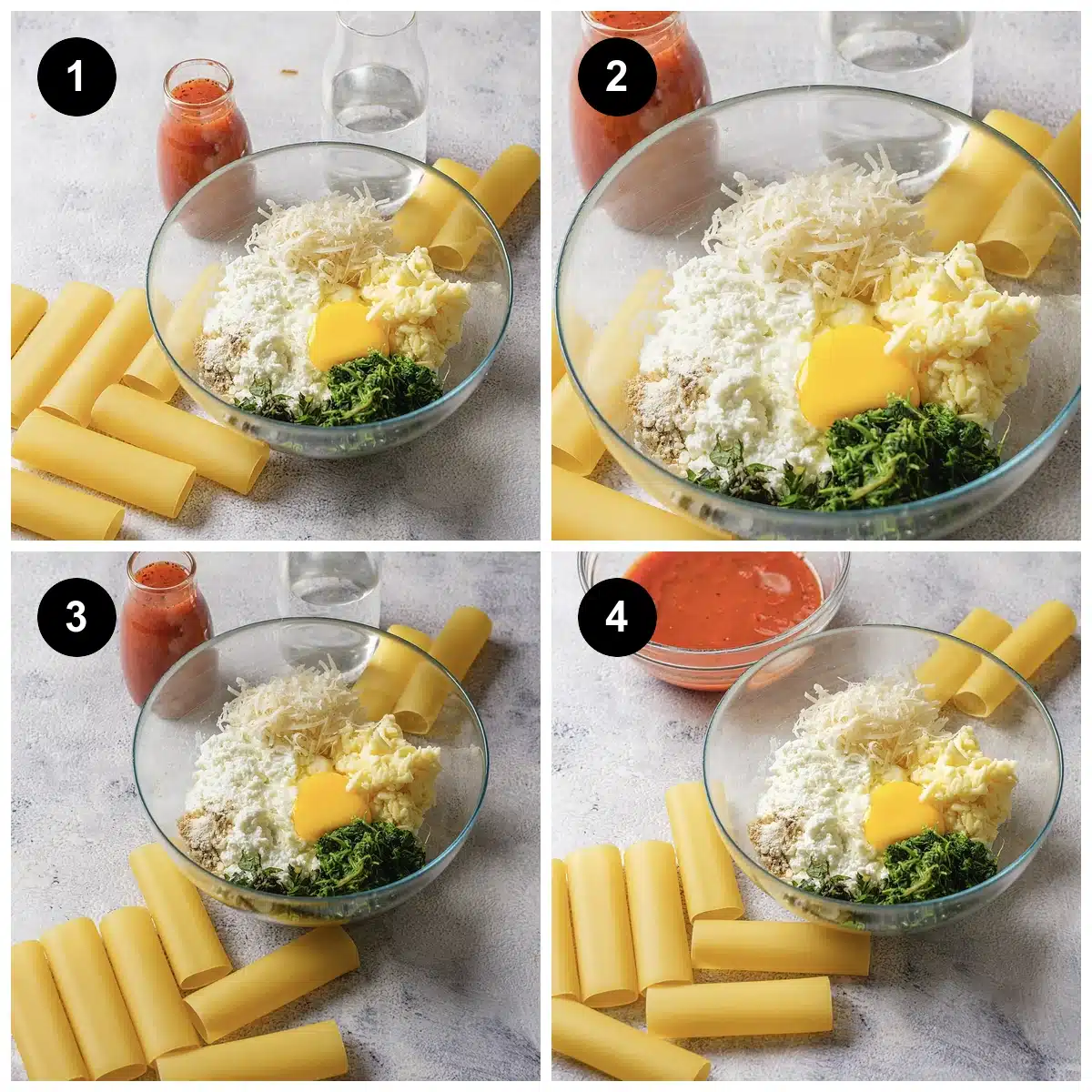
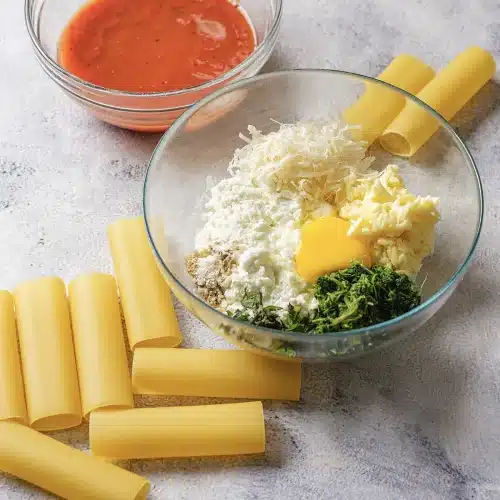
First, mix the filling for the baked manicotti. Stir the ricotta, half the mozzarella, half the parmesan, the eggs, the squeezed-dry spinach, salt, nutmeg and black pepper together in a large bowl until the color is even. Taste it. Filling that tastes bland in the bowl will taste bland in the tube.
Next, sauce the dish. Whisk the marinara and the water together, then spread half of it across the bottom of a nine-by-thirteen dish. A dry base scorches and welds the shells to the pan, so cover the whole floor of the dish.
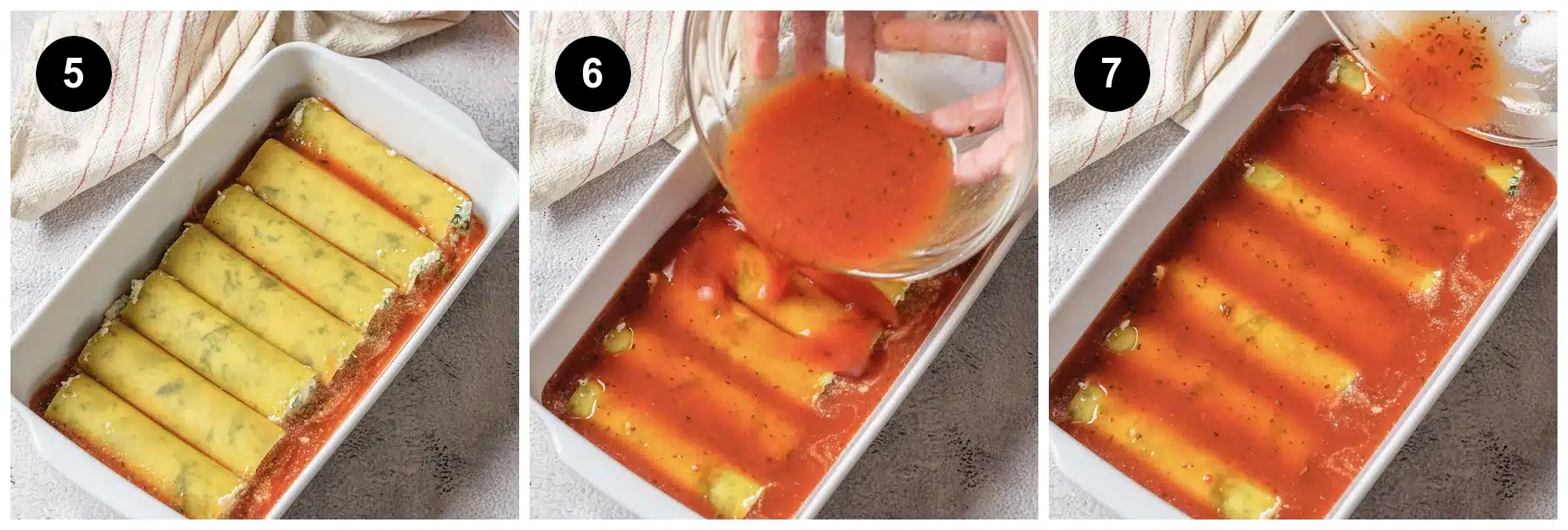
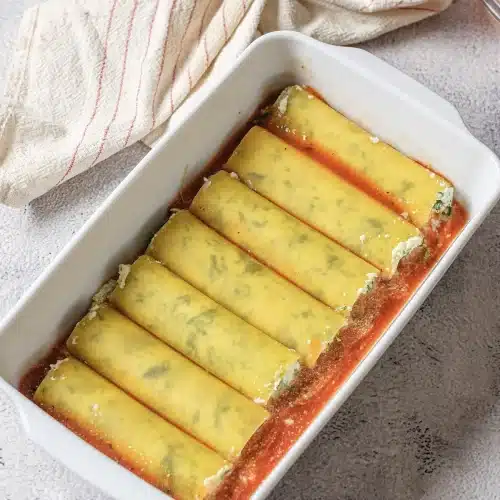
Then, fill the shells. Spoon the mixture into a piping bag or a zip-top bag with one corner cut off, and pipe into each dry tube from one end and then the other. Meeting in the middle is easier than trying to push filling the whole length in one go.
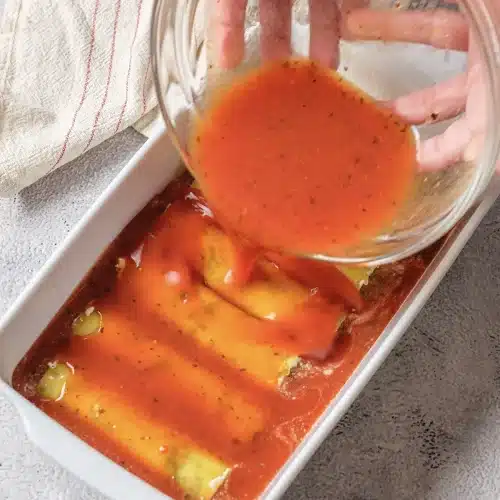
After that, layer and cover. Lay the filled tubes in a single layer over the sauce, pour the rest of the marinara mixture evenly over the top, and make sure no pasta is left exposed. Cover the dish tightly with foil and bake at 350 degrees for fifty minutes.
Finally, brown the top. Take the foil off, scatter the remaining mozzarella and parmesan over the surface, and give it another ten to fifteen minutes uncovered until the cheese is golden and bubbling at the edges. Rest it for ten minutes before you cut into it.
How To Tell When It Is Done
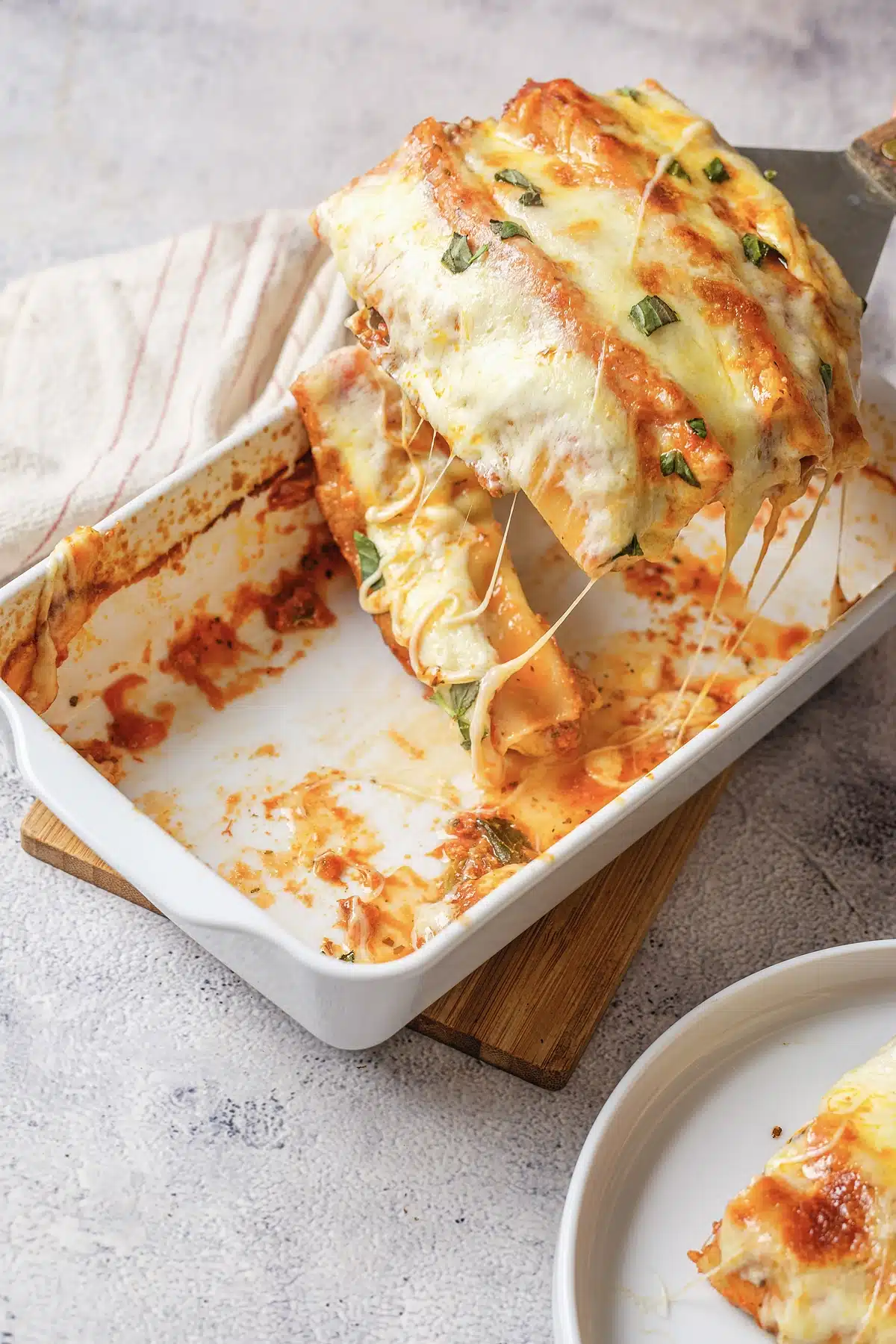
Baked manicotti is done when a thin knife slides into the center of a tube without stopping. It should meet no resistance at all, the way it would going into a cooked potato. Any firmness in the middle means the pasta has not finished hydrating, so put the foil back on and give it another ten minutes.
The visual signs are just as reliable. The sauce should be bubbling around the edges rather than sitting still, and the cheese on top should be blistered and browning in patches rather than uniformly pale. A tray that looks flat and matte needs more time uncovered.
Make It Ahead
Baked manicotti is one of the best make-ahead dishes in the oven repertoire, because the shells actively benefit from sitting. Assemble the whole tray, cover it, and refrigerate it for up to twenty-four hours. The dry pasta softens overnight in the sauce and bakes more evenly than it does from fresh.
Add ten minutes to the covered bake if the dish goes into the oven straight from the fridge. Cold glass and a cold ceramic dish both need that time to catch up, and a cold center is the only thing that can go wrong here.
For the freezer, assemble the tray but do not bake it. Wrap it in plastic and then foil, and freeze it for up to two months. Thaw it overnight in the fridge and bake as written, or bake from frozen at 375 degrees for ninety minutes covered and fifteen minutes uncovered.
Storing Baked Manicotti
Leftover baked manicotti keeps four days in the fridge in a covered container. Press a piece of plastic wrap against the cut edges as well as over the top, because exposed pasta dries out and goes leathery well before the cheese does.
Reheat individual portions in a covered dish at 325 degrees with a spoonful of extra marinara added, which replaces the moisture the pasta lost overnight. The microwave works for a single serving in a hurry, though the cheese goes rubbery in a way the oven avoids.
Already baked manicotti freezes less happily than an unbaked tray does. The pasta has already taken on all the liquid it can hold, so thawing leaves it soft. Freeze it unbaked whenever you have the choice.
Variations and Substitutions
Meat filling. Brown half a pound of Italian sausage, drain it well, and fold it into the ricotta with the spinach. It fills eight shells rather than twelve, so pipe generously.
Cottage cheese. A standard swap for ricotta and noticeably lighter. Drain it first and blend it briefly if you dislike the curds.
No spinach. Leave it out entirely and add a tablespoon of chopped fresh basil and one of parsley instead. The filling turns whiter and sweeter, which is the classic three-cheese version.
Bechamel on top. Spoon a cup of white sauce over the marinara before the final cheese goes on. It is how cannelloni is finished in the north of Italy and it makes the dish considerably richer.
Homemade sauce. Simmer a can of crushed tomatoes with garlic, olive oil and a torn basil sprig for twenty minutes. Thin it with the same half cup of water and use it exactly as written.
Roasted red pepper. Half a cup, chopped fine and squeezed dry, folded into the filling. It is sweeter than spinach and the color is beautiful against the sauce.
What to Serve with Baked Manicotti
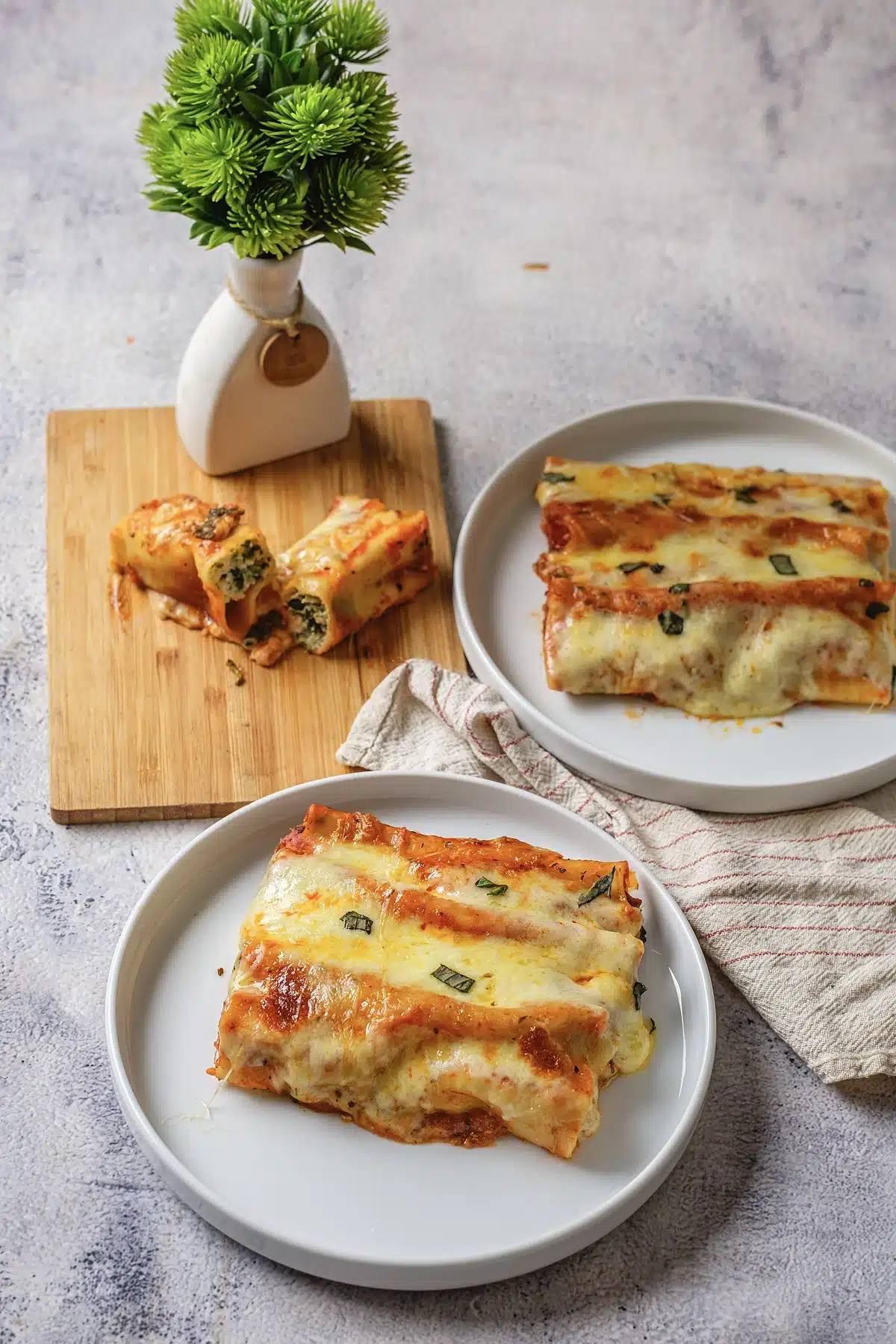
Serve baked manicotti with something green and sharp, because the tray is rich and the plate needs contrast. A simple salad of romaine, red onion and a lemon vinaigrette does more for the meal than any warm side dish would.
Garlic bread is the obvious partner for baked manicotti, and it earns its place because of the sauce left on the plate. Roasted broccoli or green beans with lemon work if you want a vegetable that stands up to the cheese rather than hiding under it.
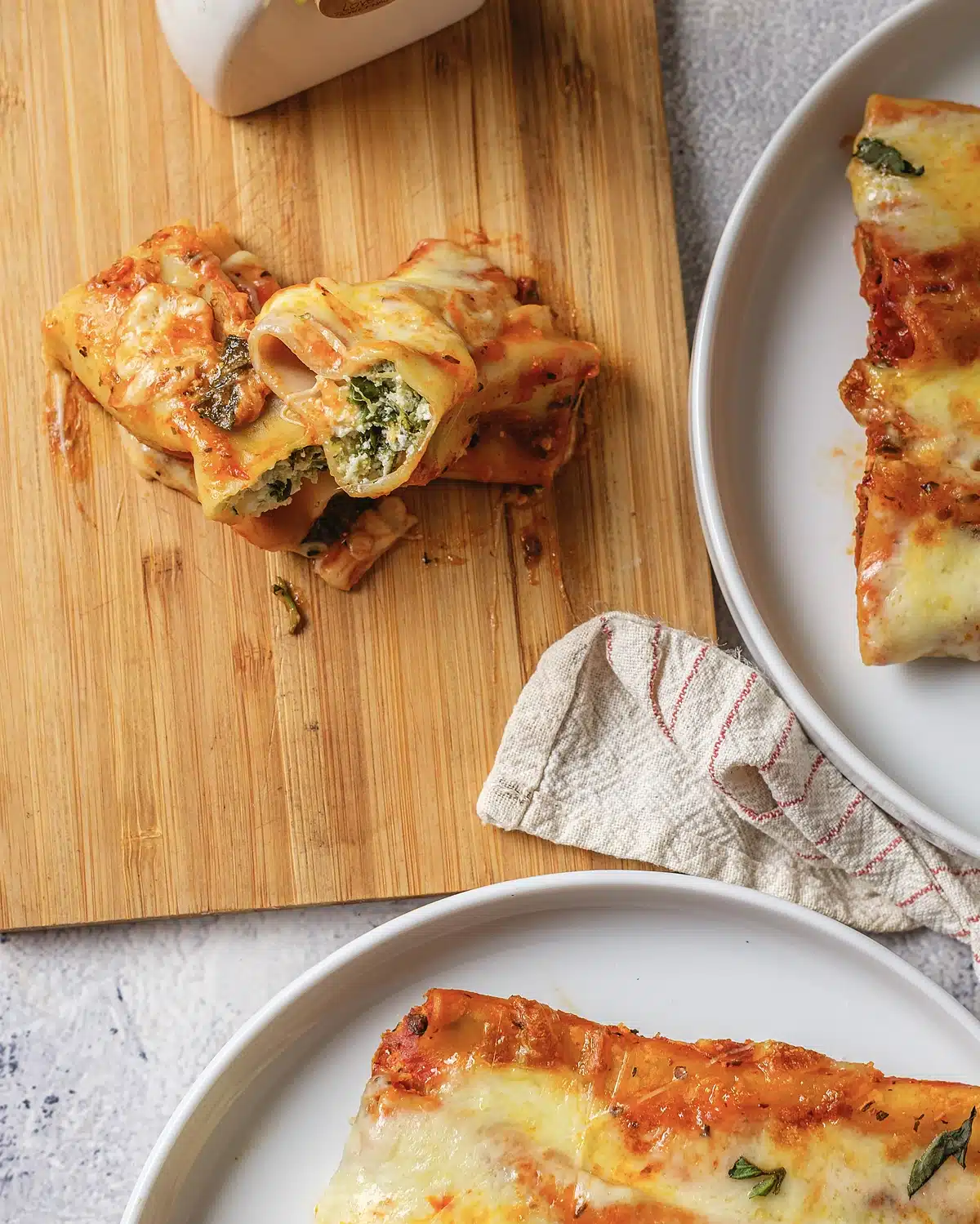
For a bigger Italian American table, put it next to something with a different texture. Fried lasagna gives you crunch against all that softness, and a pan of million dollar spaghetti covers anyone who came for a meat sauce.
Baked Manicotti FAQ
Frequently Asked Questions
Do I really not have to boil the shells?
Correct. Baked manicotti cooks the shells for you, as long as you add the half cup of water to the sauce and keep the dish covered for the first fifty minutes. The tubes hydrate from the sauce. Boiled shells tear while you fill them, which is the main reason to skip the step.
What is the easiest way to fill the tubes?
A large zip-top bag with one corner snipped off. Pipe from each end toward the middle rather than trying to run the filling the whole length. A small spoon handle helps push the last of it in.
Why is my baked manicotti watery?
Almost always the spinach. Thawed frozen spinach holds a startling amount of water and it all ends up in the dish. Squeeze it in a tea towel until it stops dripping, then squeeze it again. Loose ricotta is the second cause.
Can I use jarred sauce?
Yes, and most people should. Three cups of a good marinara thinned with half a cup of water is exactly right. Look for one with a short ingredient list and no added sugar.
More Questions About Baked Pasta
Good to Know
How many shells does one box hold?
A standard eight-ounce box holds fourteen tubes. This recipe uses twelve, which leaves two spare for the ones that inevitably crack.
Can I double it for a crowd?
Yes. Two nine-by-thirteen trays baked side by side work better than one deep pan, because a deep pan steams unevenly and the middle stays cool. Add ten minutes to the covered time.
Should I cover it for the whole bake?
No. Covered for fifty minutes cooks the pasta, and the last ten to fifteen minutes uncovered is what browns the cheese. Leave it covered throughout and the top stays pale and soft.
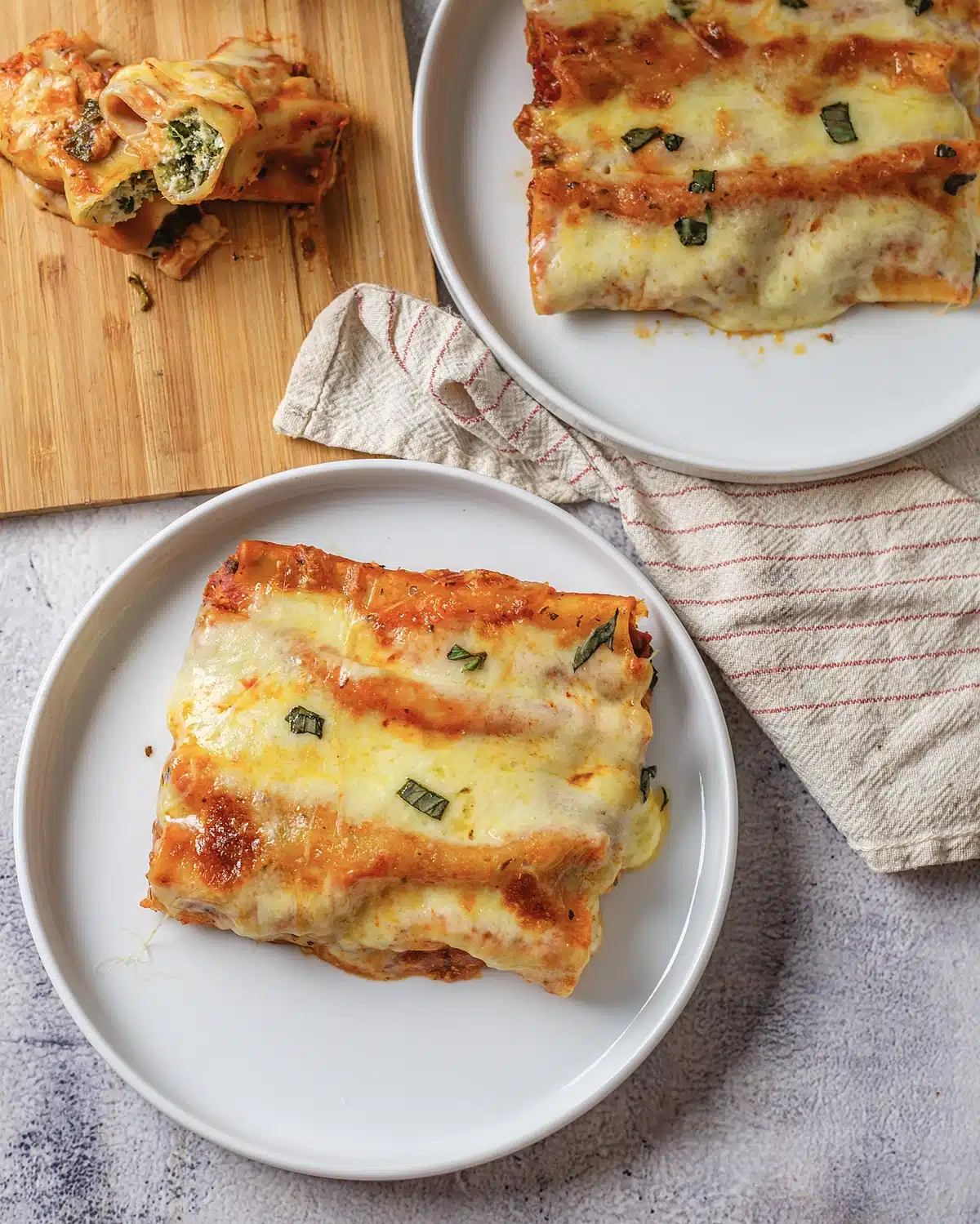
If a tray of pasta that feeds a family and reheats well is what you are after, a chicken tetrazzini casserole works on the same principle, and a bowl of spaghetti arrabbiata is what to make on the night you want the same flavors in twenty minutes.
Baked Manicotti with Spinach and Three Cheeses
Save this recipe
Enter your email and I’ll send this recipe straight to your inbox.
Ingredients
Spinach Ricotta Filling
- 2 cups whole milk ricotta cheese drained if watery
- 2 cups shredded mozzarella cheese divided
- 1 cup grated parmesan cheese divided
- 2 large eggs
- 10 ounces frozen chopped spinach thawed and squeezed very dry
- 1 teaspoon kosher salt
- 1 pinch ground nutmeg
- 1/2 teaspoon black pepper
Shells and Sauce
- 12 manicotti shells uncooked, straight from the box
- 3 cups marinara sauce jarred or homemade
- 1/2 cup water the pasta drinks this while it bakes
- 1 tablespoon chopped fresh parsley for serving
Equipment
- 9x13 inch Baking Dish
- Mixing bowls
- Aluminum foil
- Piping Bag or Zip-top Bag
Instructions
Mix the Cheese Filling
- Heat the oven to 350°F (175°C) and coat a 9x13-inch baking dish with cooking spray.
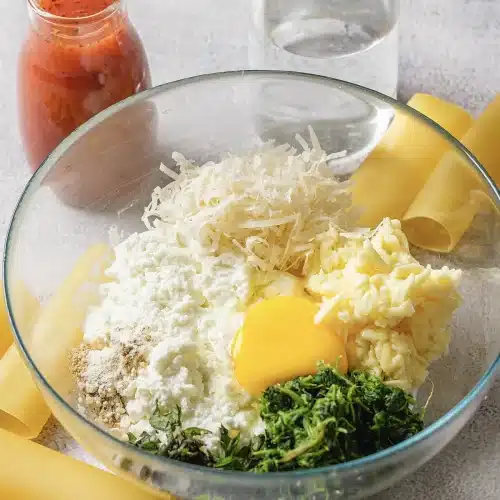
- In a large bowl, stir together the ricotta, 1 cup of the mozzarella, 1/2 cup of the parmesan, the eggs, the squeezed-dry spinach, salt, nutmeg and black pepper until the color is even. Taste and adjust the salt.

Sauce the Dish
- Whisk the marinara and the water together in a bowl. The extra liquid is what cooks the dry shells, so do not leave it out. Spread half of the mixture across the bottom of the dish.
Fill and Layer the Shells
- Transfer the filling to a piping bag or a large zip-top bag with one corner snipped off. Pipe it into each dry shell from one end and then the other, meeting in the middle, filling them fully but gently.
- Lay the filled shells in a single layer over the sauce in the dish.
- Pour the remaining marinara mixture evenly over the top, making sure no pasta is left uncovered.
Bake and Rest
- Cover the dish tightly with foil, sprayed side down, and bake for 50 minutes.
- Remove the foil, scatter the remaining 1 cup mozzarella and 1/2 cup parmesan over the surface, and bake uncovered for 10 to 15 minutes, until the cheese is golden and bubbling at the edges.
- Rest the dish for 10 minutes so the filling sets, scatter the parsley over the top and serve.