
Crisp on the outside, barely set in the middle and finished with a ruby colored sauce, this pan seared salmon with pomegranate reduction is a restaurant plate you can put together on a Tuesday.
Pan seared salmon has a reputation for being restaurant-only food, and it is not deserved. The fish itself takes under ten minutes. Everything that makes it look special happens in a separate saucepan while the salmon sits out losing its chill, so by the time the pan is hot the sauce is already done and waiting.

- Under ten minutes in the pan, and the sauce is made ahead
- A hard sear gives you the browned crust restaurants get
- Pomegranate and orange cut the richness of an oily fish
- The reduction keeps for a week, so the second night is even faster
- One pan and one small saucepan is the entire washing up
- Reliably moist, because you pull it early and let carryover finish it



Choosing the Right Salmon
Good pan seared salmon starts at the fish counter, not at the stove. This is the decision that matters most.
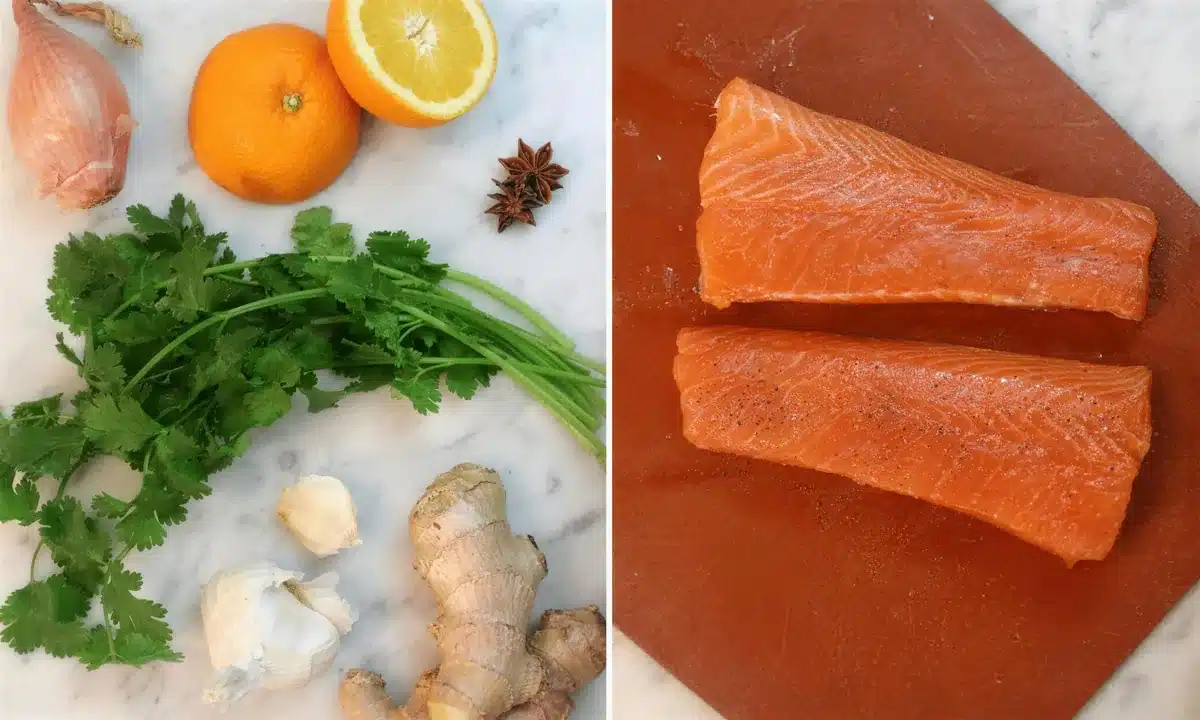
Thickness beats everything. Ask for center cut fillets around one and a quarter inches thick. Thin tail pieces cook through before the outside has browned, so you end up choosing between a pale fillet and a dry one. An even thickness across the piece is worth more than any other quality.
Skin on or skin off. Leave the skin on if you can. It protects the flesh from the direct heat of the pan, it holds the fillet together when you turn it, and crisped properly it is the best part. If you would rather not eat it, cook with it on and lift it away afterwards, when it peels off in one piece.
Farmed or wild. Farmed salmon is fattier, more forgiving and a better place to start, because the extra fat buys you a minute of margin before it dries out. Wild salmon, particularly sockeye, is leaner and firmer with a deeper flavor, and it wants to come off the heat noticeably earlier. Neither is the right answer; just know which one is in your pan.
Fresh or frozen. Frozen at sea and thawed slowly in the fridge overnight is often better than the “fresh” fillet that has been sitting on ice for three days. What you are avoiding is a wet fillet, not a frozen one.
Save this recipe
Enter your email and I’ll send this recipe straight to your inbox.
Ingredient Notes
The sauce carries the character in this pan seared salmon, and it is built from things that keep. Exact amounts are in the recipe card below.
- Salmon fillets: Four at about six ounces each. See above; thickness and evenness matter more than grade.
- Unsweetened pomegranate juice: A full cup, and it must be unsweetened. Sweetened juice reduces into something closer to syrup and the balance never recovers.
- Orange juice: Freshly squeezed if you can. It rounds off the sharp edge of the pomegranate.
- Red wine: A quarter cup, reduced right down at the start. Anything you would drink is fine.
- Star anise: Two pods. This is the ingredient people cannot place, and it is what makes the sauce taste considered. Take them out with the strainer.
- Shallot, garlic and ginger: The aromatic base. Ginger keeps the sauce from reading as a dessert.
- Butter and honey: Whisked in at the end for gloss and a little sweetness.
- Cornstarch: One teaspoon slaked in water. Pomegranate juice will not thicken enough on its own without reducing past the point where it turns bitter.
You will want a heavy pan you trust, a fine sieve for the sauce, and a thermometer. A nonstick or a well seasoned cast iron pan both work; stainless steel works too, but it is the least forgiving of the three.
How To Make Pan Seared Salmon
Every step of pan seared salmon is quick, so read it through once before you start. Take the fish out of the fridge and pat it properly dry before you do anything else. Wet fish steams, and steamed fish never browns.
- First, make the sauce. Soften the shallot in oil, add the garlic and ginger for a minute, then pour in the wine and let it reduce by half.
- Next, add the orange juice, pomegranate juice and star anise. Simmer until reduced by about half.
- Then whisk in the butter and honey, followed by the slaked cornstarch. Keep whisking for two minutes as it thickens, season, and strain it through a sieve.
- After that, pat the salmon dry again, brush lightly with oil and season both sides generously with salt and pepper.
- Set a large pan over medium high heat and let it get properly hot before the fish goes anywhere near it.
- Lay the fillets in skin side down, away from you, and do not move them for three to five minutes.
- Turn once and give the second side another two to three minutes, until the thickest part reads 125 degrees F.
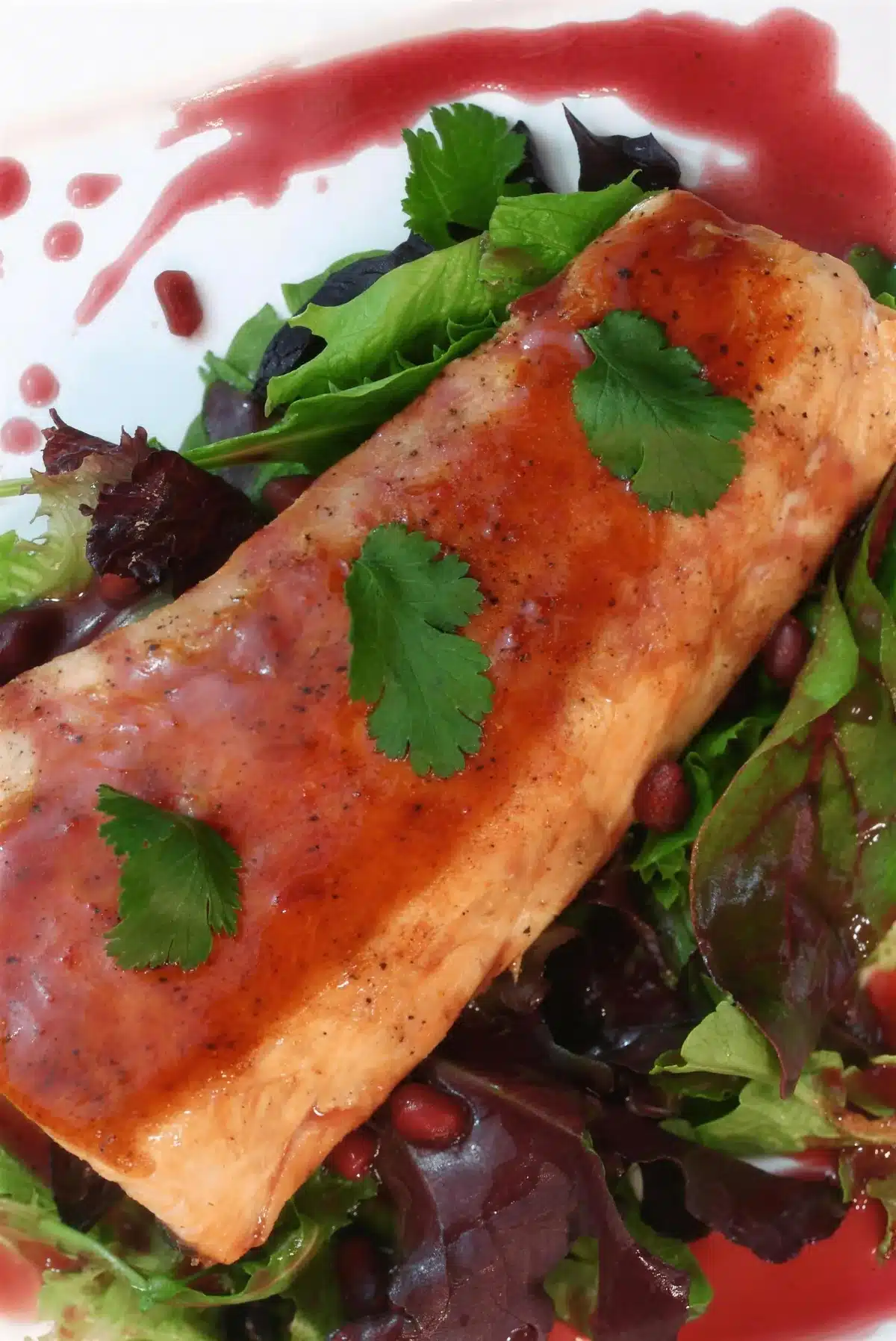
- Finally, rest the fish for five minutes, then plate it and spoon the reduction over. Scatter with pomegranate seeds and cilantro.
This serves 4. Because the sauce is finished before the fish starts, nothing is waiting on anything else at the end.
How To Get Crispy Skin on Pan Seared Salmon
Crisp skin on pan seared salmon is not a technique so much as the removal of three obstacles.
Dry the skin. Press it with paper towel until it stops leaving damp marks. If you have half an hour, leave the fillets uncovered on a rack in the fridge; the surface dries and the skin crisps noticeably better.
Get the pan hot first. A shimmer on the oil is the signal. Fish laid into a warm pan bonds to the metal as the proteins set slowly, which is why it tears when you try to turn it.
Press for the first ten seconds. Skin contracts the moment it hits heat and lifts the middle of the fillet away from the pan. A fish slice held gently on top for a few seconds keeps the whole surface in contact, and that is the difference between crisp edges and a crisp sheet.
Leave it alone after that. Every time the fillet is moved the crust that has begun to form is broken.
How To Tell When Pan Seared Salmon Is Done
The FDA puts the safe internal temperature for fish at 145 degrees F, or flesh that is opaque and separates easily with a fork. That is the food safety floor and it is the right target if you are cooking for anyone who should not be eating undercooked fish.
Cooked to the temperature many kitchens actually use, this pan seared salmon comes off the heat at about 125 degrees F and carries up while it rests, leaving the center translucent and silky. Choose deliberately between the two, and if there is any doubt, cook to 145.
Two other signals are worth knowing. The white stuff that beads on the surface is albumin, a protein squeezed out as the muscle tightens. A little is normal; a lot means the heat was too high or the fish went too far. And the fillet turns from translucent to opaque from the outside in, so watching the side of the piece tells you how far the heat has travelled without cutting into it.
The Pomegranate Reduction
The sauce that goes over this pan seared salmon is a straight reduction, which means the only real skill is knowing when to stop.
Reduce until it coats the back of a spoon and a line drawn through it holds for a second. Under-reduce and it runs off the fish into a pink puddle. Over-reduce and the tannins in pomegranate turn genuinely bitter, and no amount of honey will pull it back.
The cornstarch is there for exactly this reason. It lets you stop reducing while the flavor is still bright and thicken the last of the way mechanically. Skip it and you will be tempted to keep the pan on too long.
Strain it. The shallot, ginger and star anise have given up everything they have, and the texture of the finished sauce is half its appeal.
Storage Options
Leftover pan seared salmon and leftover sauce keep very differently, so treat them separately.
- The reduction: up to 1 week refrigerated in a sealed jar, and it freezes for 3 months. Warm it gently and whisk to bring it back together.
- Cooked salmon: up to 2 days in the fridge. Beyond that the texture goes chalky, whatever the food safety window says.
- Reheating: covered, at 275 degrees F, until just warm. High heat on already cooked fish is what produces the dry, strong smelling leftovers people associate with reheated salmon.
- Honestly, do not reheat it at all if you can avoid it. Cold salmon flaked over greens the next day is genuinely better than any reheated version.
- Freezing cooked fillets is possible but not worth it. Freeze the sauce instead and cook the fish fresh.
Variations and Substitutions
The reduction is a template, so treat the list below as a starting point.
- Use cherry or cranberry juice in place of pomegranate for a similar color and a different edge.
- Swap the star anise for a cinnamon stick and a strip of orange peel in colder months.
- Duck breast, pork tenderloin and chicken thighs all take this sauce well.
- Add a split chilli to the saucepan if you want some heat behind the sweetness.
- For a dairy free version, finish with a spoonful of olive oil instead of the butter. You lose some gloss and none of the flavor.
- Oven method: sear the fillets for three minutes skin side down, then transfer the pan to a 400 degree F oven for five minutes. Useful when you are cooking six or eight pieces.
What to Serve with Pan Seared Salmon
Pan seared salmon in this sauce is sweet and sharp, so the sides should be plain and a little bitter.
- Something starchy and neutral to catch the reduction, like oven roasted potatoes or plain couscous.
- Bitter greens. Chard, kale or radicchio all stand up to the sweetness.
- A crunchy raw element, such as roasted fennel and white bean crostini on the side.
- Roasted beets, which echo the color and the earthiness of the sauce.
- A dry Riesling, or a light red served cool.
If you like this way of cooking fish, pan seared cod with rainbow chard uses the same hot pan and a completely different finish.
Pan Seared Salmon FAQ
Frequently Asked Questions
Should I pan sear salmon in oil or butter?
Oil, and then butter later if you want it. Butter alone burns well before the pan is hot enough to sear, and the browned milk solids taste acrid rather than nutty. Use a neutral oil for the sear, and if you want the flavor, add a knob of butter in the last minute once the heat has come down.
How do I stop salmon sticking to the pan?
Three things, in order of importance. Dry the fish, heat the pan properly before the fish goes in, and then leave it alone. A fillet that sticks is telling you the crust has not formed yet. It releases on its own once it has.
Skin side down first or last?
Skin side down first, and for most of the cooking time. The skin is a heat shield, so the flesh cooks gently through it while the outside crisps. The second side needs only a couple of minutes to finish.
More Questions About Cooking Salmon
Good to Know
What spices work with seared salmon?
Salt and pepper are genuinely enough when the sauce is doing this much work. If you want more, keep it warm rather than herbal: coriander seed, fennel seed, a little smoked paprika. Save dill and lemon for a plainer preparation, because they fight with the pomegranate.
Can I make the sauce ahead?
Yes, and it is the reason this works on a weeknight. Make the reduction up to a week ahead and keep it refrigerated. It thickens when cold, so warm it gently and whisk before serving. Do not reduce it a second time.
Why did my salmon turn out dry?
Almost certainly temperature rather than time. Salmon goes from silky to chalky across a very narrow band, and it keeps cooking after it leaves the pan. Pull it earlier than feels right and let the residual heat finish it while it rests.
Is the white stuff on my salmon normal?
Yes. It is albumin, a water soluble protein that the muscle pushes out as it contracts. A small amount appears on every cooked fillet. A great deal of it means the heat was too aggressive, so lower it a little next time.
For another fast dinner where a sauce does the heavy lifting, try my miso blood orange scallops.

Pan Seared Salmon with Pomegranate Reduction
Save this recipe
Enter your email and I’ll send this recipe straight to your inbox.
Ingredients
Pomegranate Reduction Sauce
- 1 tbsp (15 ml) vegetable oil
- 1 shallot minced
- 1 clove garlic sliced thin
- 1 tsp fresh ginger grated
- 1/4 cup (60 ml) red wine
- 1/4 cup (60 ml) orange juice preferably fresh squeezed
- 1 cup (240 ml) unsweetened pomegranate juice
- 2 star anise pods
- 2 tbsp (28 g) butter
- 1 tbsp (21 g) honey
- 1 tsp (3 g) cornstarch
- 1 tbsp (15 ml) water for mixing with cornstarch
Salmon
- 4 fillets (680 g) salmon each about 6 ounces
- vegetable oil for brushing salmon
- salt and pepper to taste
Garnish
- pomegranate seeds for garnish
- cilantro for garnish
Equipment
- Saucepan
- Large skillet
- Sieve
- Whisk
Instructions
Pomegranate Reduction
- First, warm a saucepan over medium heat and add 1 tablespoon of the oil. Add the shallot and cook until softened and just starting to brown, then add the garlic and ginger and cook for one minute. Pour in the red wine and reduce it by half.
- Next, add the orange juice, pomegranate juice and star anise. Bring to a boil, then simmer over medium heat until reduced by about half.
- Then whisk in the butter and honey, followed by the cornstarch slaked in water. Keep whisking for about 2 minutes as it thickens, until it coats the back of a spoon. Season with salt and pepper, strain through a fine sieve and set aside.
Sear the Salmon
- After that, pat the salmon completely dry, brush lightly with oil and season both sides generously with salt and pepper. A wet fillet steams instead of browning.
- Set a large pan over medium high heat and let it get properly hot. Lay the fillets in skin side down, away from you, and do not move them for 3 to 5 minutes. The fish releases itself once the crust has formed.
- Turn once and cook the second side for 2 to 3 minutes, until the thickest part reads 125 degrees F for a silky centre, or 145 degrees F for the FDA safe minimum.
- Finally, rest the fillets for 5 minutes. Plate them, spoon the reduction over and garnish with pomegranate seeds and cilantro.