Pasta fagioli is the soup Italian cooks made when there was almost nothing in the house: a handful of small pasta, a jar of beans, whatever vegetables were softening in the bottom of the basket, and enough tomato to bind it all together. Pasta fagioli is peasant food in the most literal sense, and it is still one of the best things you can put in a bowl on a cold Tuesday.
This version leans toward the Italian American side of the family. There is ground beef in it, two kinds of beans instead of one, and a tomato broth thick enough to coat the ditalini. Thirty-five minutes start to finish, one pot, and it feeds six people for the price of a takeaway pizza.

- One pot and thirty-five minutes from cold stove to full bowls
- Pantry ingredients: canned beans, canned tomatoes, dried herbs, small pasta
- Feeds six generously and costs a fraction of what it tastes like
- Better on day two, so the leftovers are the best part
- Easy to make meatless without losing the body of the broth

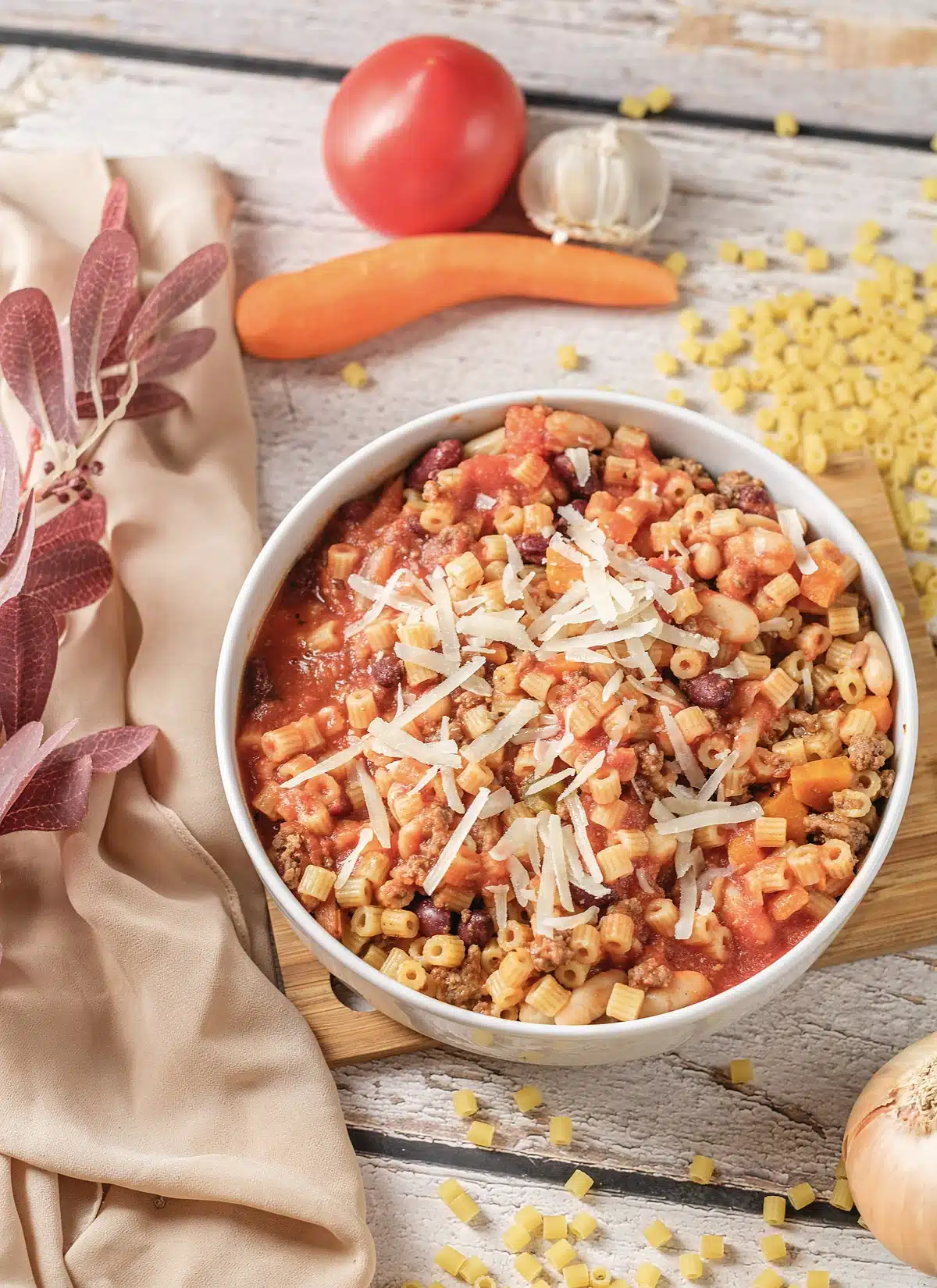
What Is Pasta Fagioli?
The name means pasta and beans, which is exactly what it is. Every Italian region has its own version of pasta fagioli, and almost none of them agree with each other. Veneto makes it thick and often pureed. Down in Naples it is looser, with tomato and a lot of black pepper. Italian American kitchens picked up ground beef and celery somewhere along the way, which is the version most people in the United States have actually eaten.
What holds every pasta fagioli together is the ratio. Beans and pasta both need to be there in real quantity, and the liquid is a sauce more than a broth. If you can float a spoon on it, you have made it right. If it looks like a thin vegetable soup that happens to have beans in it, you have added too much stock.
You will also see it written pasta e fagioli, or spoken as pasta fazool, which is how the Neapolitan pronunciation came through Ellis Island. They are the same dish. Nobody in an Italian home has ever corrected anybody over it, whatever the internet says.
The soup is genuinely cheap to make, and that is not an accident. Beans were the protein people could afford, and a cup of dried pasta stretched a pot to feed a family. The Bean Institute has a good breakdown of what makes beans nutritionally useful, and it explains why a bowl of this leaves you full for hours rather than an hour.
Save this recipe
Enter your email and I’ll send this recipe straight to your inbox.
Ingredient Notes
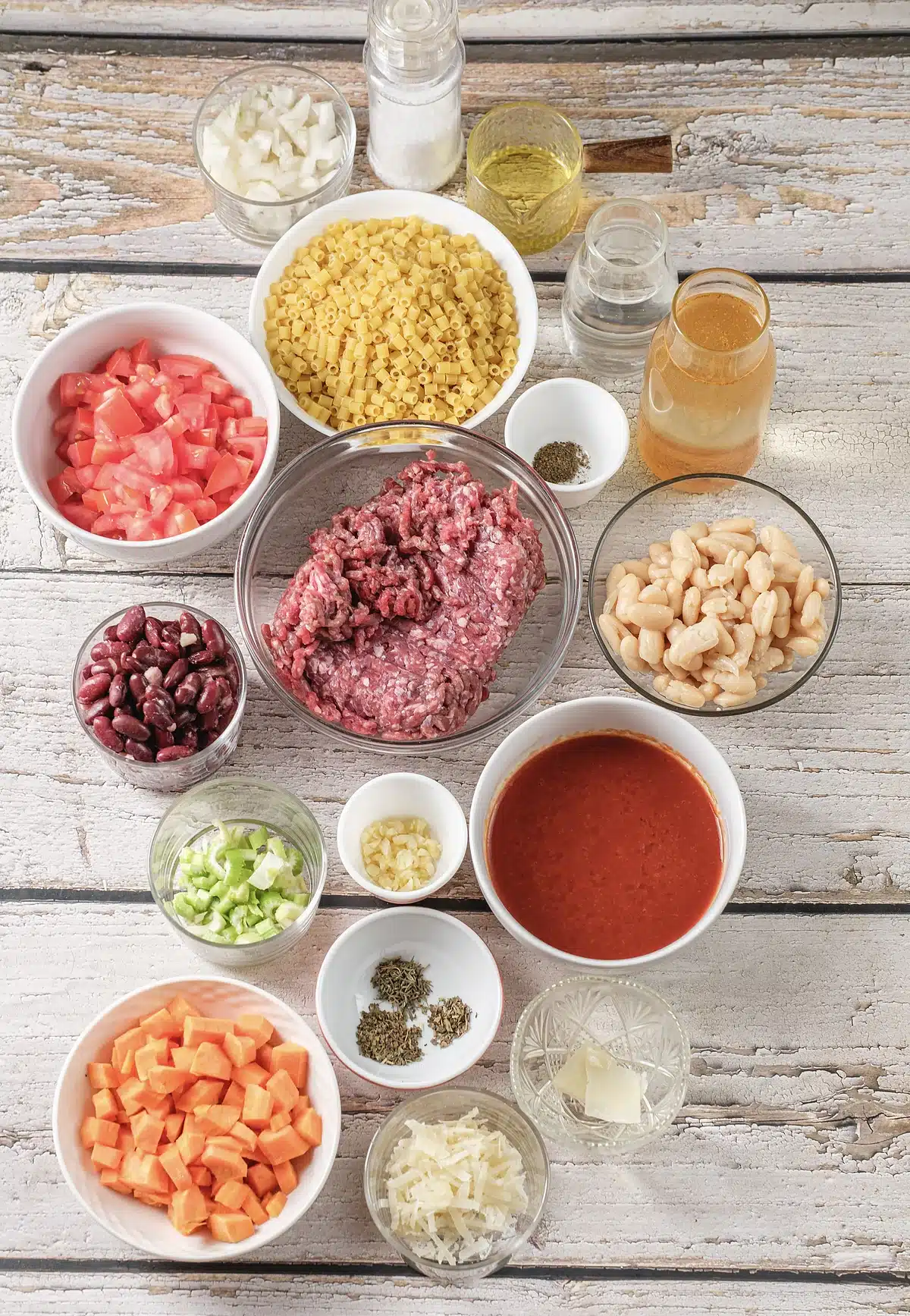
- Ground beef. One pound, and eighty-five percent lean is the sweet spot. Leaner than that and the broth loses the richness that makes this feel like dinner. Drain the fat after browning, but do not rinse the pan.
- Onion, carrot and celery. The Italian soffritto, and the reason the soup tastes like it simmered all afternoon. Dice them roughly the size of the beans so every spoonful gets a bit of each.
- Garlic. Three cloves, minced, added after the vegetables rather than with them. Garlic burns in half the time an onion takes to soften, and burnt garlic turns the whole pot bitter.
- Canned diced tomatoes and tomato sauce. Both, not one or the other. The diced tomatoes give you texture and bright acidity, and the sauce gives the broth its body.
- Beef broth. Four cups. Vegetable broth works, though beef broth is what gives pasta fagioli its familiar depth.
- Cannellini and red kidney beans. One can of each. Cannellini go creamy and thicken the broth, and kidney beans stay firm. Rinse both, or the canning liquid tastes faintly metallic.
- Ditalini. One cup of the little tubes. Small shells or elbows work too. The pasta has to be small enough to fit on a spoon with a bean and a piece of carrot.
- Dried herbs. Basil, oregano and parsley, dried rather than fresh, because they go in early and need to bloom in the fat.
- Parmesan. Grated over each bowl, not stirred into the pot, so it melts into strands on contact with the hot soup.
Pasta Fagioli vs Minestrone
Pasta fagioli and minestrone get confused constantly, and the difference is real. Minestrone is a vegetable soup that happens to contain some pasta and some beans. The vegetables are the point, the list is long and seasonal, and the broth is thin enough to drink.
Pasta fagioli is a bean and pasta dish that happens to be wet. There are usually three vegetables, no more, and they exist to season the base rather than to be eaten in their own right. The liquid is thick, the starch from the beans and the pasta does most of the thickening, and a portion is a meal instead of a first course.
The practical consequence is timing. You can simmer minestrone for an hour and it only improves. Simmer this one that long after the pasta goes in and you will have a very good bean stew with no pasta left in it, because the tubes will have dissolved into the broth.
How To Make Pasta Fagioli
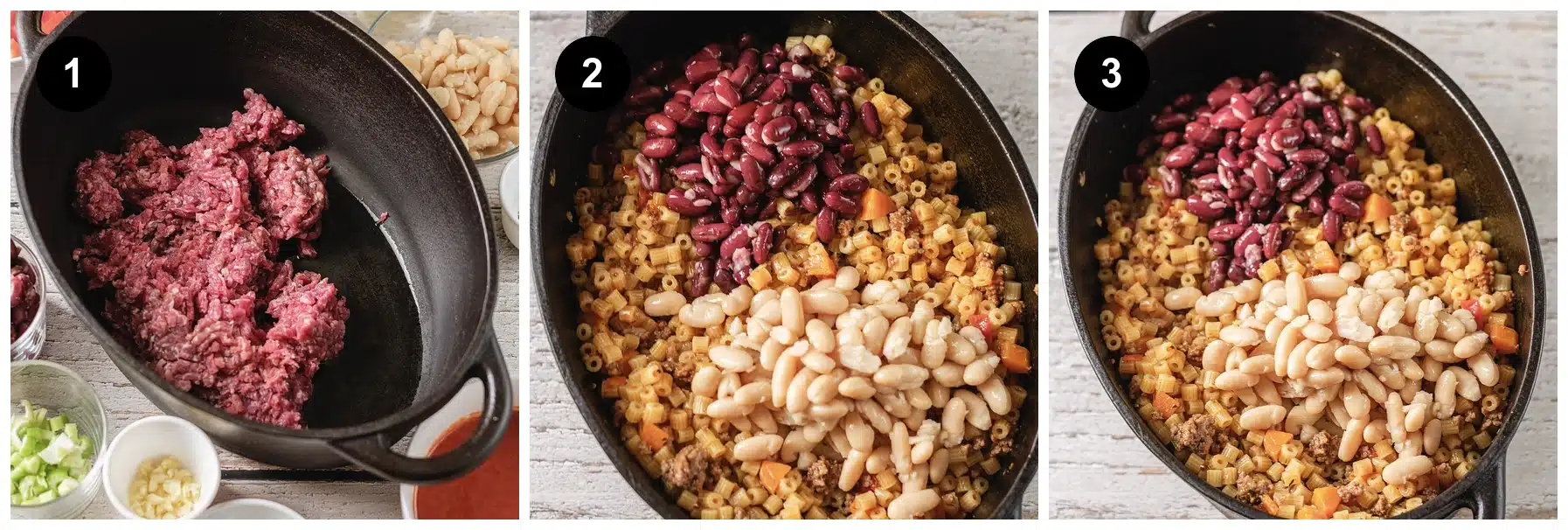
First, brown the beef. Heat the olive oil in a large Dutch oven over medium heat, add the ground beef, and break it up with a wooden spoon. Let it sit undisturbed for a minute at a time so it browns rather than steams. Tip off the excess fat.
Next, soften the vegetables. Add the diced onion, carrot and celery straight into the pot with the beef. Seven to eight minutes over medium heat, until the onion is translucent and the carrot has lost its raw crunch. Stir in the garlic and give it thirty seconds, no longer.
Then, build the broth. Pour in the beef broth, the diced tomatoes with all their juice, the tomato sauce, the herbs, salt, pepper and a pinch of red pepper flakes. Bring it to a gentle simmer and leave it uncovered for twenty minutes, because that is how the broth reduces and concentrates.
After that, cook the pasta separately. Boil the ditalini in well-salted water until it is just al dente, then drain it.
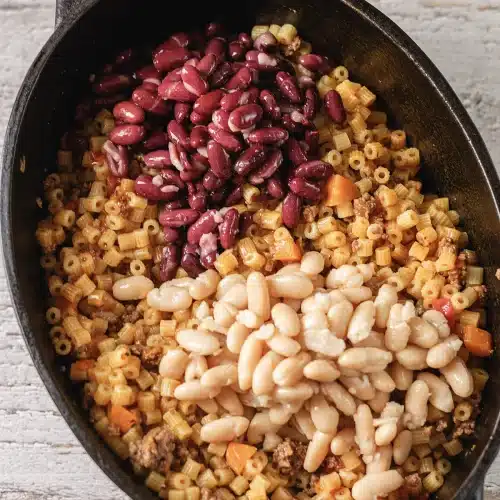
Finally, bring the pasta fagioli together. Stir the drained pasta and both cans of rinsed beans into the pot and simmer for three minutes, long enough to heat everything through. Taste, adjust the salt, and ladle it out with parmesan over the top.
How To Tell When the Soup Is Ready
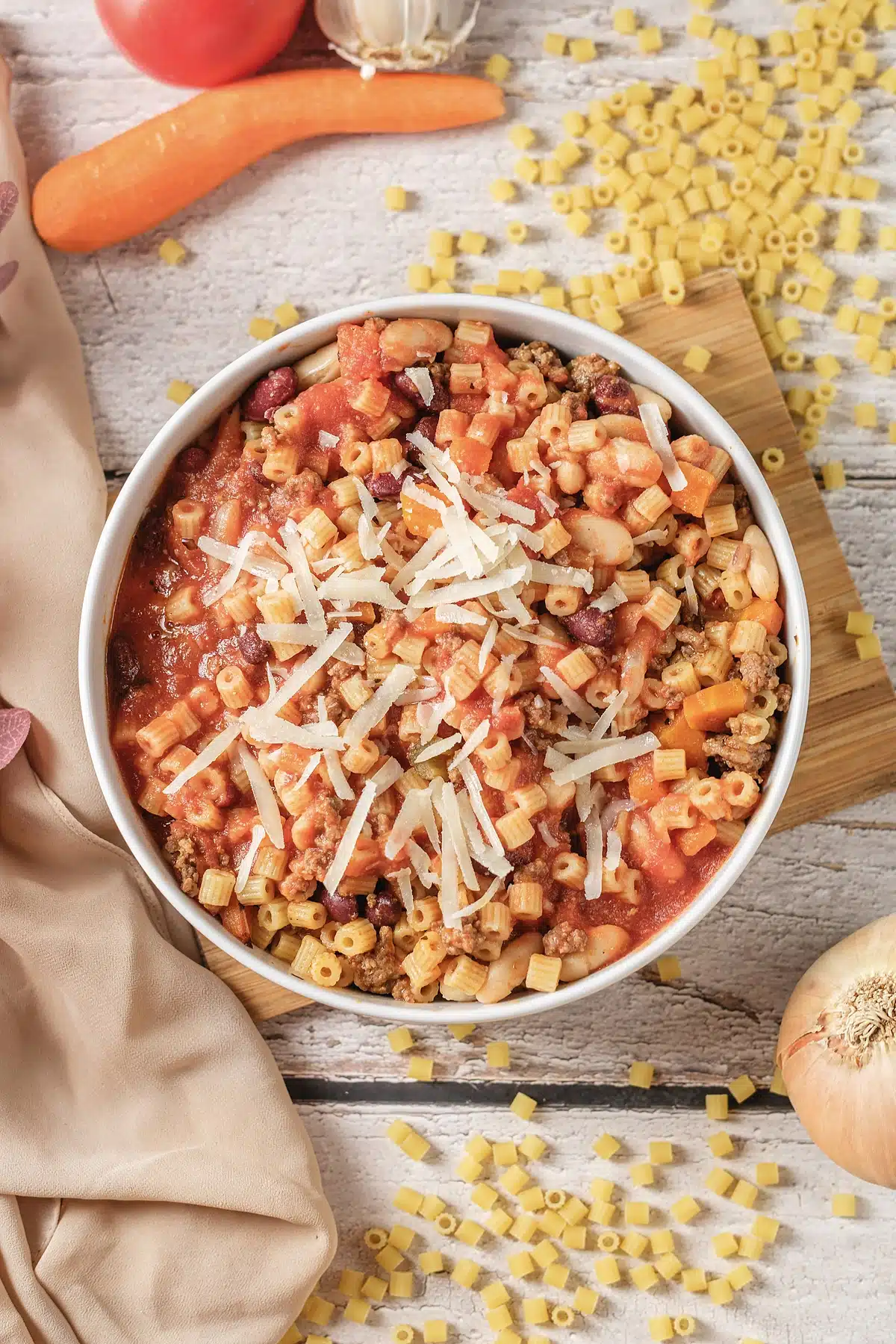
Pasta fagioli tells you when it is ready if you drag a spoon across the surface. The broth should close behind it slowly rather than instantly, which tells you the starch has done its work and the liquid has reduced enough. A carrot cube should give completely under gentle pressure with no chalky center.
Taste a spoonful of the broth on its own, without a bean or a piece of pasta in it. If it tastes flat, it needs salt rather than more herbs, and it will need more salt than you expect because the beans and the pasta are both unseasoned. If it tastes sharp, a pinch of sugar rounds off the canned tomato.
Make It Ahead
Pasta fagioli was built for making ahead, with one rule. Cook the base through the twenty-minute simmer, cool it, and refrigerate it without the pasta. It keeps four days that way and the flavor deepens noticeably overnight.
Boil fresh ditalini the day you serve it, and stir it into the reheated base. It takes ten minutes and it is the difference between a soup that tastes freshly made and one that tastes reheated. Beans can go in with the base, since they hold their shape perfectly well.
If you are cooking for a weeknight, the whole soffritto step can be done on a Sunday. Soften the onion, carrot and celery, cool them, and keep them in the fridge in a sealed container for up to three days.
Storing Pasta Fagioli
Leftover pasta fagioli keeps in the fridge for four days in an airtight container. It thickens considerably, because the pasta keeps drinking the broth even when it is cold. Loosen each portion with a splash of broth or water as you reheat it, and do it over low heat rather than in the microwave if you want the beans to stay whole.
Freezing works well, again with the pasta left out. Freeze the base in portions for up to three months and thaw overnight in the fridge. Frozen and thawed pasta goes mushy and gray, and there is no fixing it, so boil a fresh cup when you reheat the batch.
The parmesan is a serving garnish, not a storage ingredient. Cheese stirred into a pot that then sits in the fridge separates into rubbery threads on reheating, so keep the block and grate it fresh each time.
Variations and Substitutions
Meatless. Leave out the beef, use vegetable broth, and add a third can of beans. Start with two tablespoons of olive oil rather than one so the soffritto still has fat to cook in, and finish with a parmesan rind dropped into the simmer.
Italian sausage. Swap the ground beef for sweet or hot Italian sausage squeezed out of its casings. It brings fennel and mild chile heat with it and needs no extra seasoning at all.
Pancetta. Two ounces diced and rendered before the beef goes in is the most traditional route, and it is worth doing if you have it.
Greens. A few handfuls of spinach, kale or chopped escarole stirred in during the last two minutes. Escarole is the classic Neapolitan choice and it holds its texture better than spinach does.
Thicker. Mash half a cup of the cannellini beans against the side of the pot before you add the rest. The starch releases straight into the broth and thickens it without any flour.
Rosemary and a bay leaf. Both are traditional in northern versions. Add them with the broth and pull the bay leaf out before serving.
Slow cooker. Brown the beef and vegetables on the stove first, then transfer everything except the pasta and beans to a slow cooker for four hours on low. Stir the beans and cooked pasta in at the end.
What to Serve with This Italian Soup
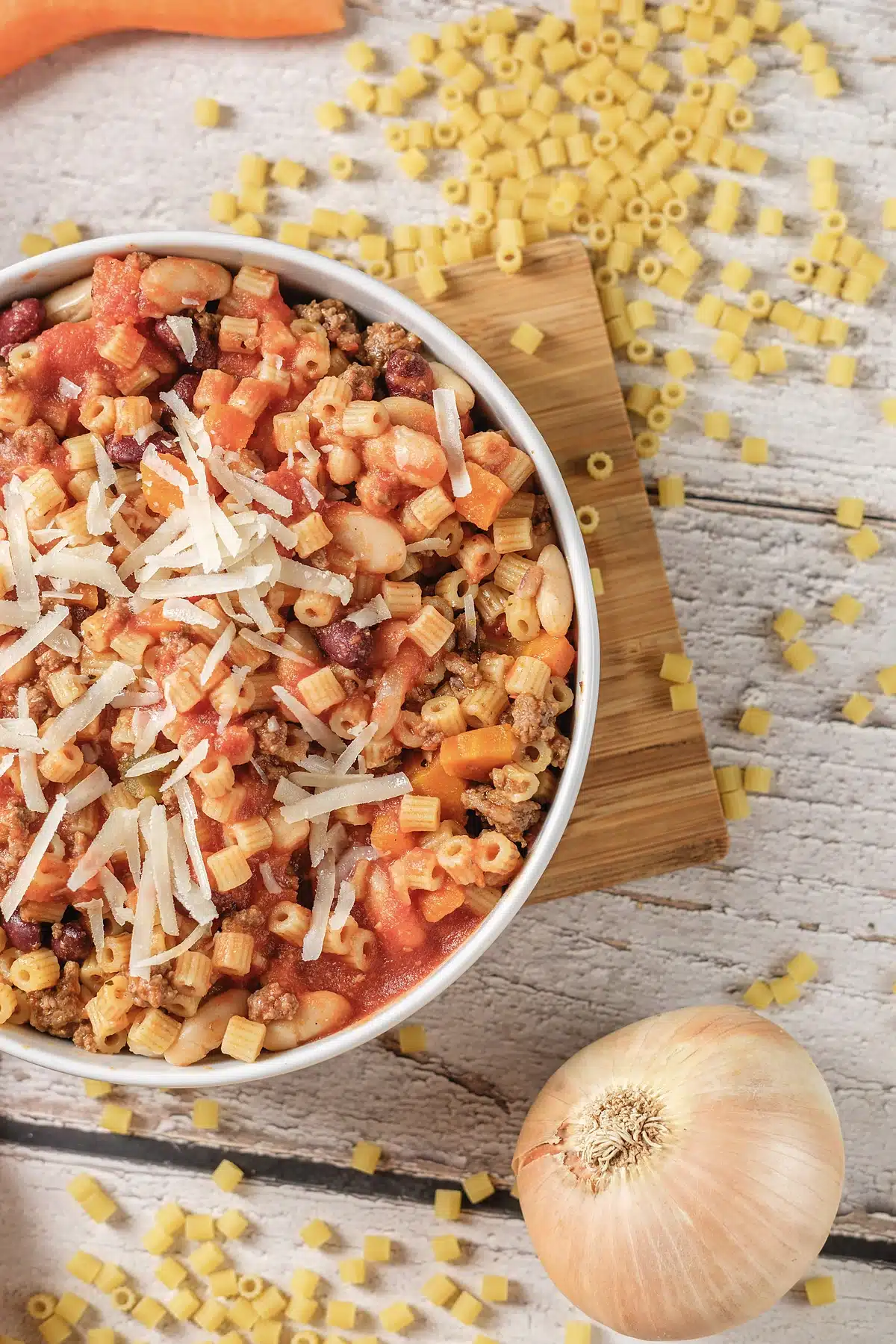
Bread with pasta fagioli is not optional. Serve a crusty loaf torn rather than sliced, or garlic bread if the table skews younger. Half the pleasure of this soup is the last few spoonfuls of thick broth mopped up with the crust.
Beyond that, keep it simple. A sharp green salad with a lemon dressing cuts the richness, and a plate of olives and pickled peppers on the table gives people something acidic to reach for between bowls. Anything heavier competes with the soup instead of supporting it.
If you are feeding a crowd and want a second dish, something baked and cheesy sits well next to it. An Italian sausage soup makes a good comparison if you want to see how a lighter broth behaves, and a plate of Pasta Da Vinci covers the people at the table who wanted a cream sauce.
Pasta Fagioli FAQ
Frequently Asked Questions
Is pasta fagioli the same as pasta fazool?
Yes. Fazool is how the Neapolitan dialect word for beans sounds in English, and it is what Italian American families called the dish for generations. The recipe is identical; only the spelling on the menu changes.
Can I cook the pasta directly in the soup?
You can, and you will need to add about two extra cups of liquid because the pasta drinks it. The trade is that the leftovers set into a solid mass overnight. Cook it separately if you plan on having any left.
Why is my pasta fagioli so thin?
Almost always too much broth, or a lid left on during the simmer. Take the lid off and let it reduce for another ten minutes, or mash half a cup of the cannellini beans into the pot to release their starch.
Do I have to use two kinds of beans?
No, a single variety works perfectly well. The mix is there for contrast, since cannellini go creamy and kidney beans stay firm, and either one on its own still makes a very good pot.
More Questions About Italian Soups
Good to Know
Can I use dried beans instead of canned?
Yes. Soak a cup and a half overnight, simmer them until tender before you start, and add them at the same point in the recipe. Save the cooking liquid, which is excellent, and use a cup of it in place of some of the broth.
Is this soup freezer-friendly?
The base freezes beautifully for three months. Pasta does not, so leave it out and boil a fresh cup when you thaw the batch.
What size pot do I need?
A five-quart or six-quart Dutch oven. Anything smaller and you will be fighting the soup over the sides once the beans and pasta go in.
If you like the idea of a soup that costs almost nothing and eats like a full dinner, an easy pastina soup runs on the same logic with even fewer ingredients, and a Crockpot Olive Garden chicken pasta takes the same restaurant flavors in a creamier direction.
Pasta Fagioli Soup
Save this recipe
Enter your email and I’ll send this recipe straight to your inbox.
Ingredients
Soup Base
- 2 tablespoons olive oil
- 1 pound ground beef 85% lean
- 1 large yellow onion diced small
- 2 medium carrots diced small
- 2 ribs celery diced small
- 3 cloves garlic minced
Broth and Tomatoes
- 4 cups beef broth or vegetable broth
- 15 ounces canned diced tomatoes with their juice
- 1 cup tomato sauce
Herbs and Seasoning
- 1 teaspoon dried basil
- 1/2 teaspoon dried oregano
- 1 tablespoon dried parsley
- 1 pinch red pepper flakes or more to taste
- 1 teaspoon salt plus more to taste
- 1/2 teaspoon black pepper
Pasta, Beans and Cheese
- 1 cup ditalini pasta or other small pasta
- 15 ounces canned cannellini beans drained and rinsed
- 15 ounces canned red kidney beans drained and rinsed
- 1/2 cup grated parmesan for serving
Equipment
- Large pot or Dutch oven
- Saucepan
Instructions
Brown the Beef and Soffritto
- Heat the olive oil in a large Dutch oven over medium heat. Add the ground beef and break it up with a wooden spoon. Cook for 6 to 8 minutes, letting it sit undisturbed between stirs so it browns rather than steams, then tip off the excess fat.

- Add the diced onion, carrots and celery to the pot with the beef. Cook for 7 to 8 minutes, until the onion is translucent and the carrot has lost its raw crunch. Stir in the garlic and cook for 30 seconds, just until fragrant.

Simmer the Tomato Broth
- Pour in the beef broth, the diced tomatoes with their juice and the tomato sauce. Add the basil, oregano, parsley, red pepper flakes, salt and black pepper, and stir to combine.
- Bring to a gentle simmer and cook uncovered for 20 minutes, stirring now and then. Leaving the lid off is what lets the broth reduce and thicken.
Boil the Pasta Separately
- Meanwhile, bring a saucepan of well-salted water to a boil. Add the ditalini and cook until it is just al dente, then drain it well. Cooking the pasta apart from the soup keeps the leftovers from setting solid.
Finish and Serve
- Stir the drained pasta, the cannellini beans and the red kidney beans into the pot. Simmer for 3 minutes, long enough to heat everything through and let the flavors meet.
- Taste and adjust the salt and pepper. Ladle into bowls, grate parmesan over each one and serve with crusty bread.