
A pear upside down cake asks more of the fruit than a pineapple one does. Pineapple arrives already sour and already sliced. Pears are soft, sweet and full of water, and if you treat them the way most recipes treat canned rings you get a wet gray layer sitting on a collapsed sponge.
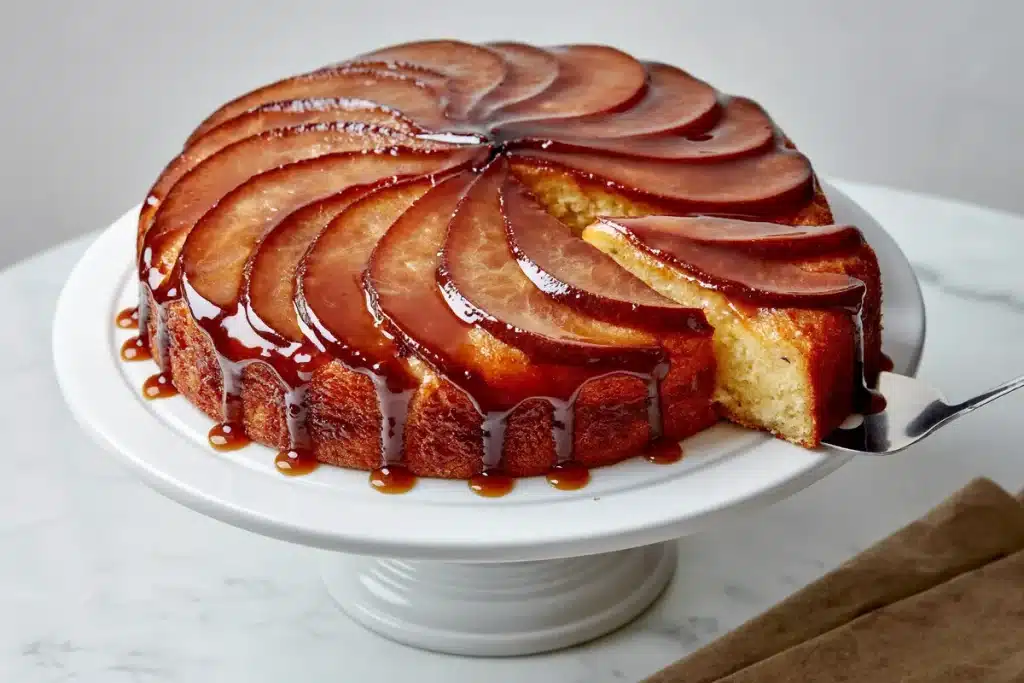
- Browned butter in the batter, which reads as toffee against the caramel instead of just as fat
- Fine cornmeal for a slight grain, so the crumb holds up under wet fruit rather than turning to pudding
- A dark amber caramel that is bitter enough to keep the whole thing from being cloying
- One bowl for the dry ingredients, one for the wet, and no whipped egg whites to fold or deflate
- It is better on day two, so it is a genuinely good cake to make the night before
- Firm pears, which means you can make it in February with whatever the shop has
Three things fix that: pears chosen firm rather than ripe, a caramel cooked genuinely dark so it can stand up to their sweetness, and a batter built on browned butter and cornmeal with enough structure to carry a pound of fruit without sinking under it.

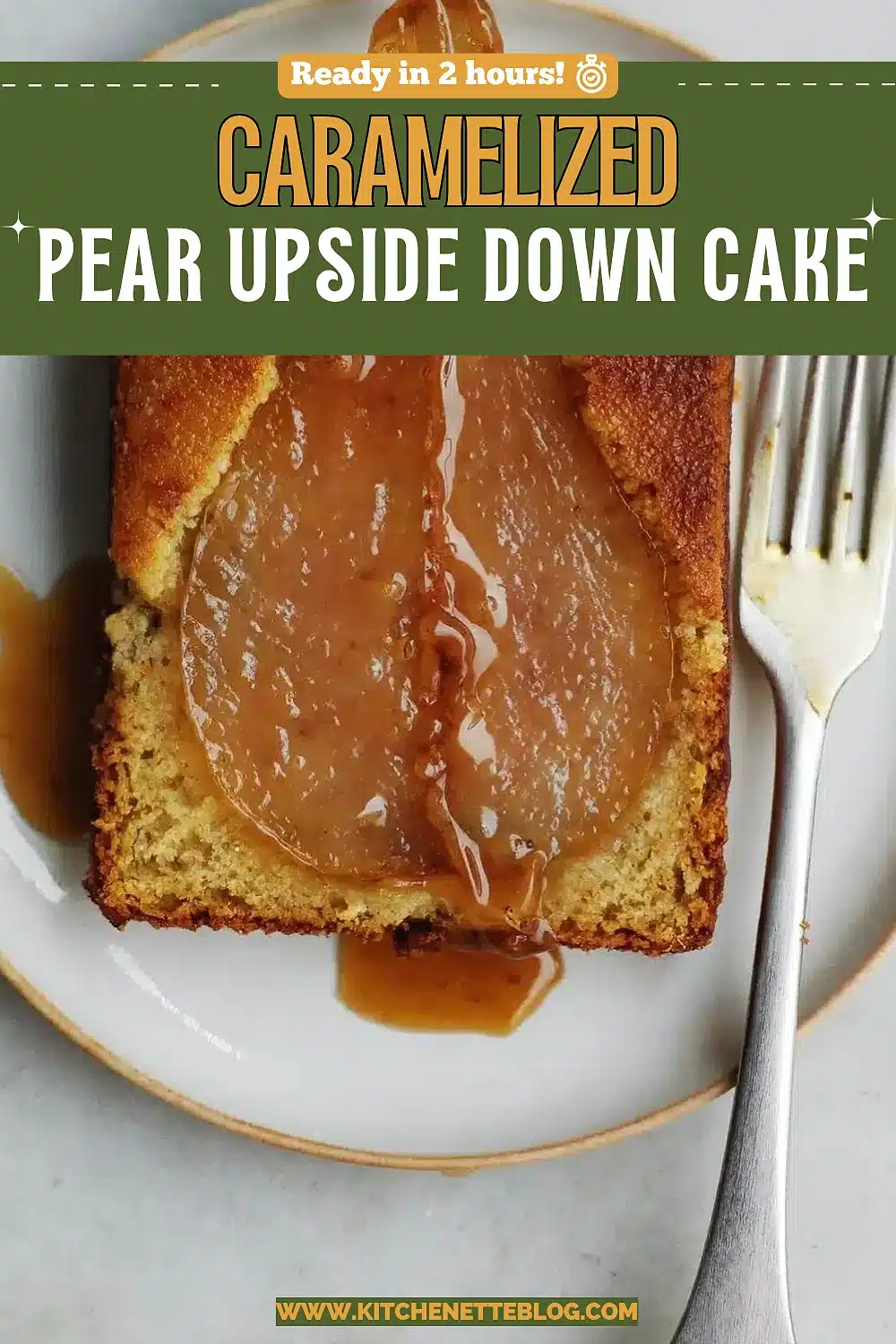
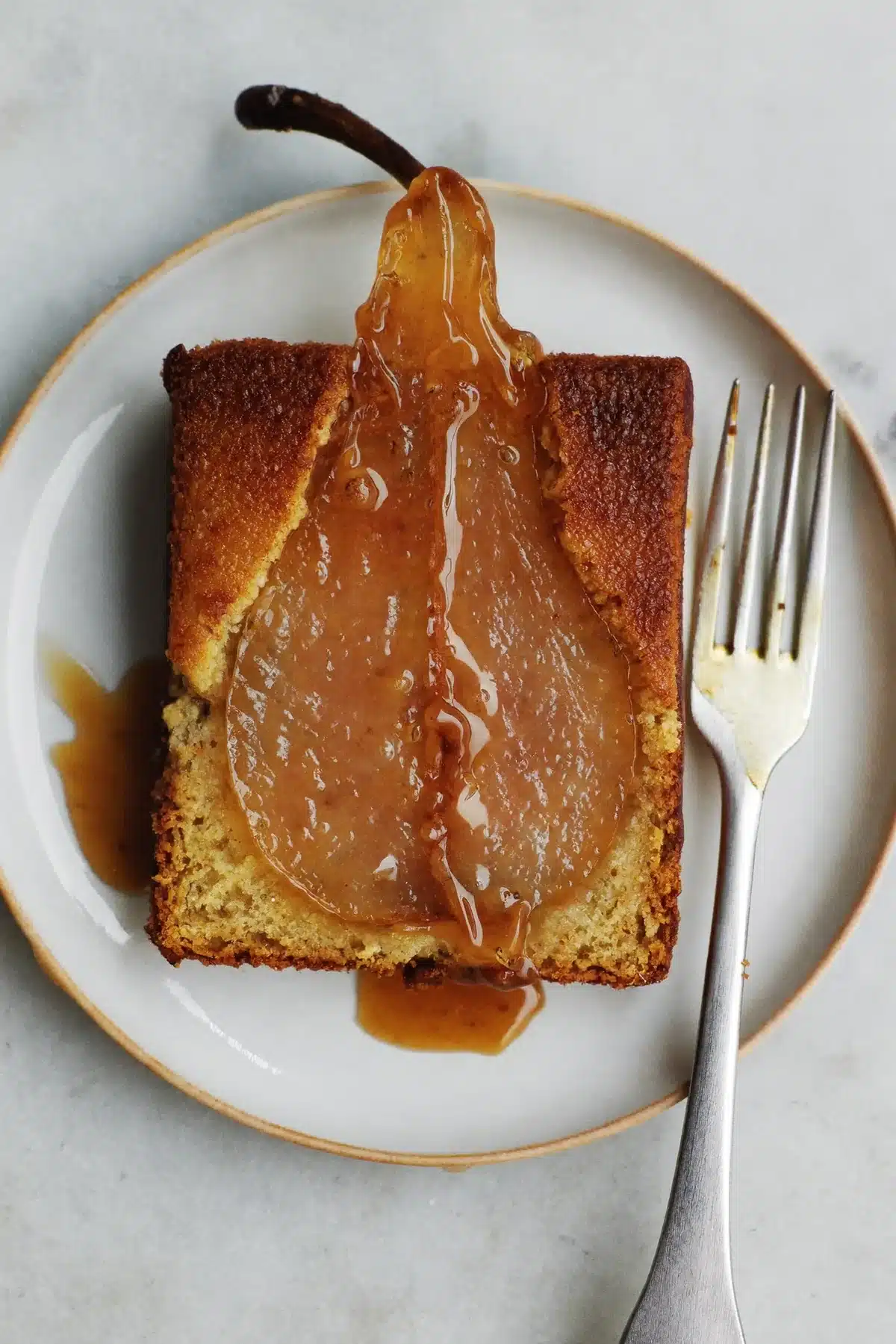
Almost everything that goes wrong with a pear upside down cake goes wrong before it reaches the oven.
- What Sets This Pear Upside Down Cake Apart
- Choosing and Slicing the Pears
- Ingredient Notes
- How To Make Pear Upside Down Cake
- Getting the Caramel Right
- How To Tell When Pear Upside Down Cake Is Done
- Turning It Out Without Losing the Top
- Make It Ahead
- Storing Pear Upside Down Cake
- Variations and Substitutions
- What to Serve with Pear Upside Down Cake
- Pear Upside Down Cake FAQ
What Sets This Pear Upside Down Cake Apart
Most versions are a plain vanilla butter cake with fruit underneath. That is fine and it is also why most of them taste like a plain butter cake with fruit underneath.
The butter is browned first. Cooking it until the milk solids toast gives you nutty, slightly savory notes that meet the caramel halfway. It costs seven minutes and it is the single biggest flavor difference here.
There is cornmeal in the crumb. A third of a cup, fine grind, which is not enough to read as cornbread but is enough to give the cake a faint sandy texture and, more usefully, a bit of backbone. Pears release a lot of liquid as they bake and a pure flour crumb goes soggy where it meets them.
The caramel goes darker than most recipes allow. Deep amber, not golden. Pears are already sweet, so a pale caramel just adds more sugar to a sweet thing. A dark one adds bitterness, which is what makes the top layer taste of something.
More batter than the classic magazine version. A common failing in older pear upside down cake recipes is far too little batter for the pan, which then bakes for an hour and comes out dry at the edges and dense in the middle. This uses a cup and a half of flour in a 9-inch pan and bakes in about fifty minutes.
Whole eggs, not separated. Whipped whites make a light sponge that then compresses under the weight of the fruit. A denser, better-built crumb serves this cake better than an airy one.
Save this recipe
Enter your email and I’ll send this recipe straight to your inbox.
Choosing and Slicing the Pears
For a pear upside down cake this is the decision that matters most, and the one people get wrong.
Use firm fruit, not ripe fruit. A pear you would happily eat over the sink will disintegrate in a hot pan of caramel. You want one that still resists a thumb at the shoulder. It softens plenty during fifty minutes at 350F.
Bosc is the best choice. It is dense, dry by pear standards, and it holds its slices. The USA Pears variety guide from the Pear Bureau Northwest calls it a baker’s best friend for exactly this reason, and it is also where the check-the-neck ripeness test comes from. Anjou is a good second. Bartlett turns to sauce and Comice is worse.
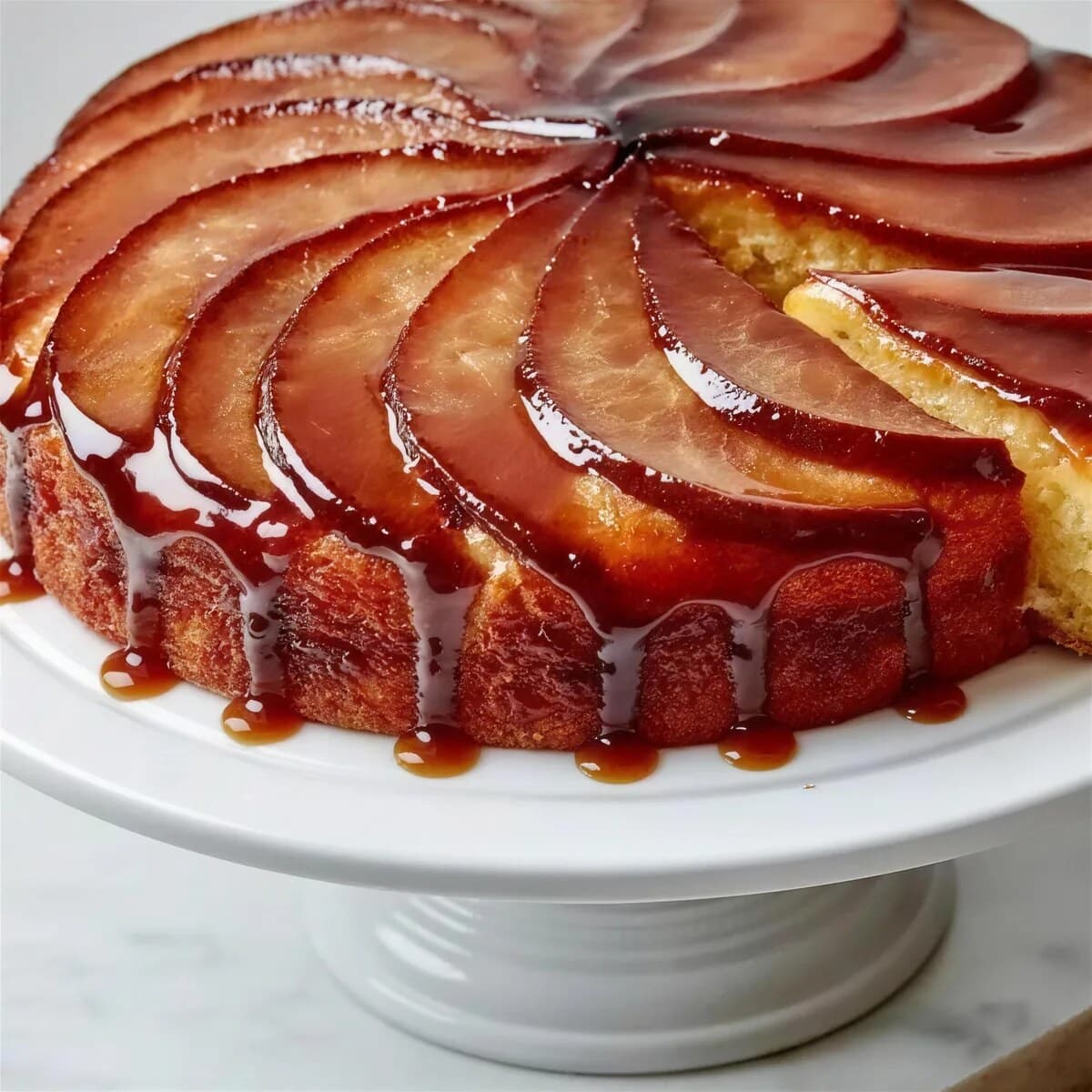
Slice a quarter of an inch thick, lengthwise. Thinner slices vanish into the caramel and give you a stained top rather than a fruit layer. Halve each pear, core it with a melon baller or a teaspoon, lay the half flat side down and cut across it.
Fan them cut side down. The flat face goes against the caramel, which is the face you will see when the cake comes out. Overlap in a circle from the outside in and fill the middle with the offcuts.
Three medium pears, about a pound and a quarter. Two is not enough to cover a 9-inch pan properly once the slices have shrunk.
Ingredient Notes
A pear upside down cake runs to ten items, none of them unusual. Exact quantities are in the recipe card below.
- Unsalted butter: ten tablespoons for the cake and two more for the caramel. The cake portion gets browned, so use a light-colored pan and watch it, since it goes from nutty to burnt in under a minute.
- Fine yellow cornmeal: a third of a cup. Fine grind, not the coarse polenta that older versions call for, which stays gritty in a cake this size.
- All-purpose flour: a cup and a half, spooned into the cup and leveled. Packed flour is the commonest cause of a dry pear upside down cake.
- Buttermilk: two thirds of a cup, at room temperature. The acid keeps the crumb tender against all that browned butter. Whole milk with a teaspoon of lemon juice works.
- Two sugars: granulated for the caramel and for the batter, plus a little light brown sugar in the batter for molasses depth.
- Pears: three medium and firm. See above.
- Baking powder: two teaspoons, and check the date on the tin. There is no baking soda here because there is nothing acidic enough to need it except the buttermilk.
How To Make Pear Upside Down Cake
Have the pears peeled and the pan lined before the sugar goes on the heat, because caramel does not wait. The order below is what makes a pear upside down cake come out of the pan in one piece.
- First, butter a 9-inch round cake pan, line the base with parchment and butter that too. Heat the oven to 350F and set the pan on a rimmed baking sheet, because caramel will find a way out.
- Next, cook the sugar and water to a deep amber without stirring, whisk in the butter and salt off the heat, and pour it straight into the pan, tilting to coat the base.
- Then fan the pear slices over the caramel, cut side down, overlapping from the rim inward.
- After that, brown the remaining butter, whisk it with both sugars, then the eggs and vanilla, and fold in the dry ingredients in three additions alternating with the buttermilk in two.
- Finally, spread the batter over the fruit, bake 45 to 50 minutes, cool in the pan for exactly twelve minutes and invert onto a serving plate.
Getting the Caramel Right
Eight minutes of attention, and the only part of a pear upside down cake that can actually fail.
Use the wet method. Sugar and three tablespoons of water, stirred only until the sugar is wet, then left alone completely. Stirring a boiling sugar syrup is what drives crystallization.
Do not stir. Swirl. Once it is boiling, pick the pan up and swirl it if the color is uneven. A brush dipped in water, run round the inside of the pan, washes down stray crystals.
Deep amber is the target. The color of strong tea, around 350F. Pale gold is just sugar. Past that it goes acrid, and there is no saving it.
It will spit when the butter goes in. Take the pan off the heat first, add the butter and salt, and whisk. It will foam alarmingly and settle.
Pour it in and move fast. Caramel sets hard in a cool pan within a minute. Tilt to coat while it is still liquid and do not worry if the coverage is uneven, because the pear juice dissolves it back into a sauce in the oven.
How To Tell When Pear Upside Down Cake Is Done
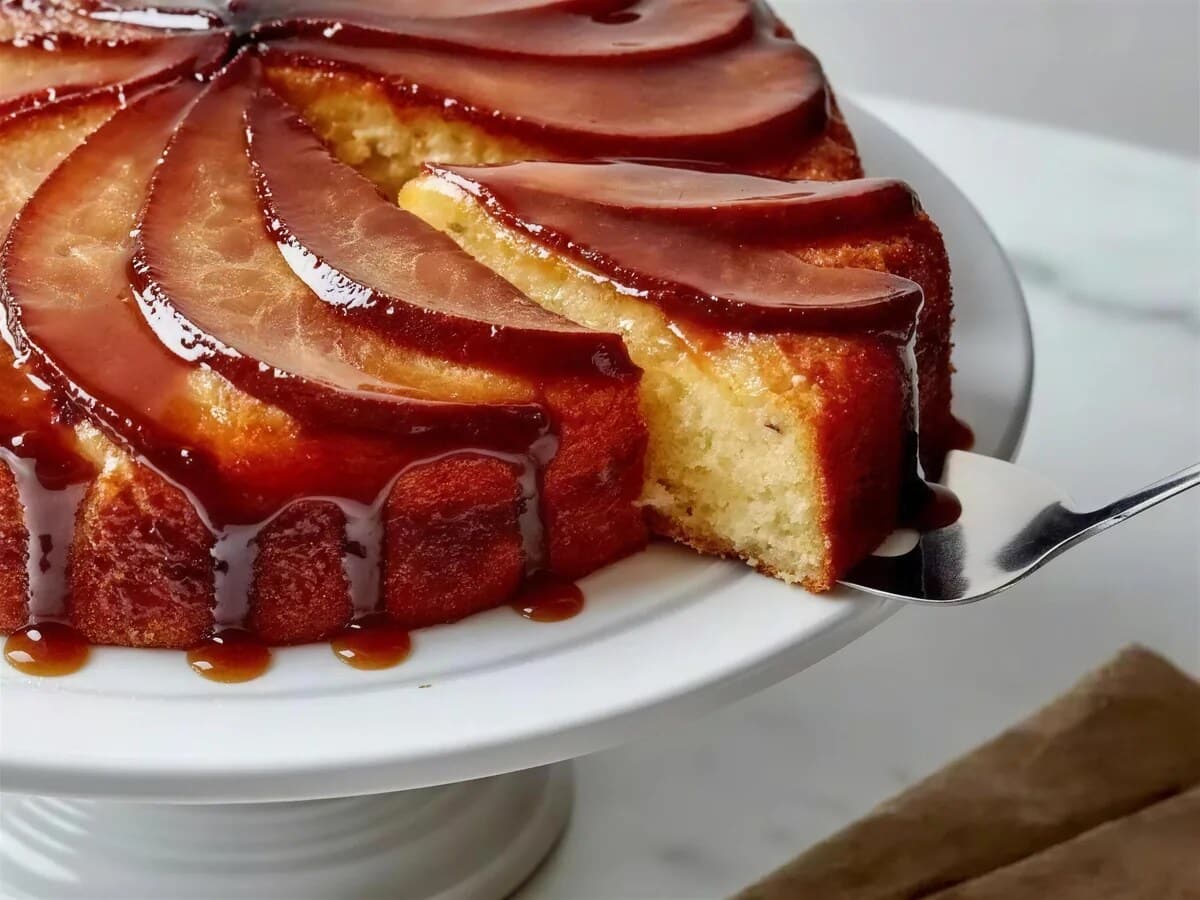
Underbaking a pear upside down cake is far more common than overbaking it, because the wet fruit layer keeps the middle cool.
The top should be deep gold, not pale, and the edges should have pulled very slightly from the sides of the pan.
A skewer in the center comes out with a few moist crumbs, not with batter and not bone dry. Test the middle, since the ring an inch in from the rim sets long before the center does.
An instant-read thermometer says 205F to 210F. This is the reliable test and it is worth doing once even if you never do it again.
The cake should spring back when pressed lightly in the middle, then hold the print of a finger for a second before recovering.
Forty-five to fifty minutes at 350F in a metal 9-inch pan. Glass runs slower and can need an extra five minutes. If the top is browning too fast at forty minutes, lay a sheet of foil over it loosely.
Turning It Out Without Losing the Top
Every pear upside down cake has a window for this and it is narrower than most recipes suggest.
Twelve minutes, not thirty. Cool it too long and the caramel sets and glues the fruit to the pan. Turn it out too soon and the crumb is still fragile and tears.
Run a thin knife round the edge first, pressing against the pan rather than the cake, all the way to the base.
Choose the plate before you commit. Set the serving plate face down on the pan, hold both together with a cloth, and turn the whole thing over in one confident movement. Hesitating is what causes accidents.
Lift the pan slowly and straight up. Peel the parchment off from one corner. If a pear slice has stayed behind, lift it off with a palette knife and set it back in place. Nobody will know.
Anything still stuck comes free if you set the empty pan back over the cake for two minutes; the residual heat softens the caramel again.
Make It Ahead
Pear upside down cake is a good thing to make in advance, which is unusual for something with fruit in it.
The whole cake keeps two days at room temperature under a dome and genuinely improves overnight, as the caramel works down into the crumb.
Brown the butter days ahead if you like. It keeps a week refrigerated. Bring it back to a soft, just-liquid state before using it.
Do not slice the pears in advance. They brown within twenty minutes even under lemon juice, and browned pears show through a pale caramel.
Assemble and bake the same day. Batter sitting on raw fruit leaks and the baking powder starts working immediately.
To serve warm from a make-ahead cake, put the whole thing back in a 300F oven for ten minutes. It comes back almost exactly to how it was.
Storing Pear Upside Down Cake
- Room temperature, covered: pear upside down cake holds 2 days and is at its best on the second.
- Refrigerated: 5 days, though the crumb firms up. Let slices come back to room temperature or warm them briefly.
- Frozen, whole or in slices: 2 months, double-wrapped. Thaw in the wrapping so the condensation lands on the plastic rather than the caramel.
- Never refrigerate it uncovered. The caramel top pulls moisture from the air and goes tacky.
- Reheat at 300F for 10 minutes rather than in a microwave, which turns the fruit layer watery.
Variations and Substitutions
In a pear upside down cake the caramel and the pan size are fixed. Everything else has room in it.
- Apples instead of pears: use a firm variety, slice a little thinner, and expect a longer bake by about five minutes.
- Cardamom or ginger: half a teaspoon of ground cardamom in the dry ingredients is the best single addition to this cake.
- Cornmeal out: replace it with the same volume of flour for a plainer, softer crumb.
- Brown butter out: softened butter creamed with the sugars gives a lighter cake and takes ten minutes less.
- A spoon of bourbon or dark rum whisked into the caramel with the butter, which suits the browned butter particularly well.
- Gluten-free: a cup-for-cup blend works here because the cornmeal is already doing some of the textural work.
What to Serve with Pear Upside Down Cake
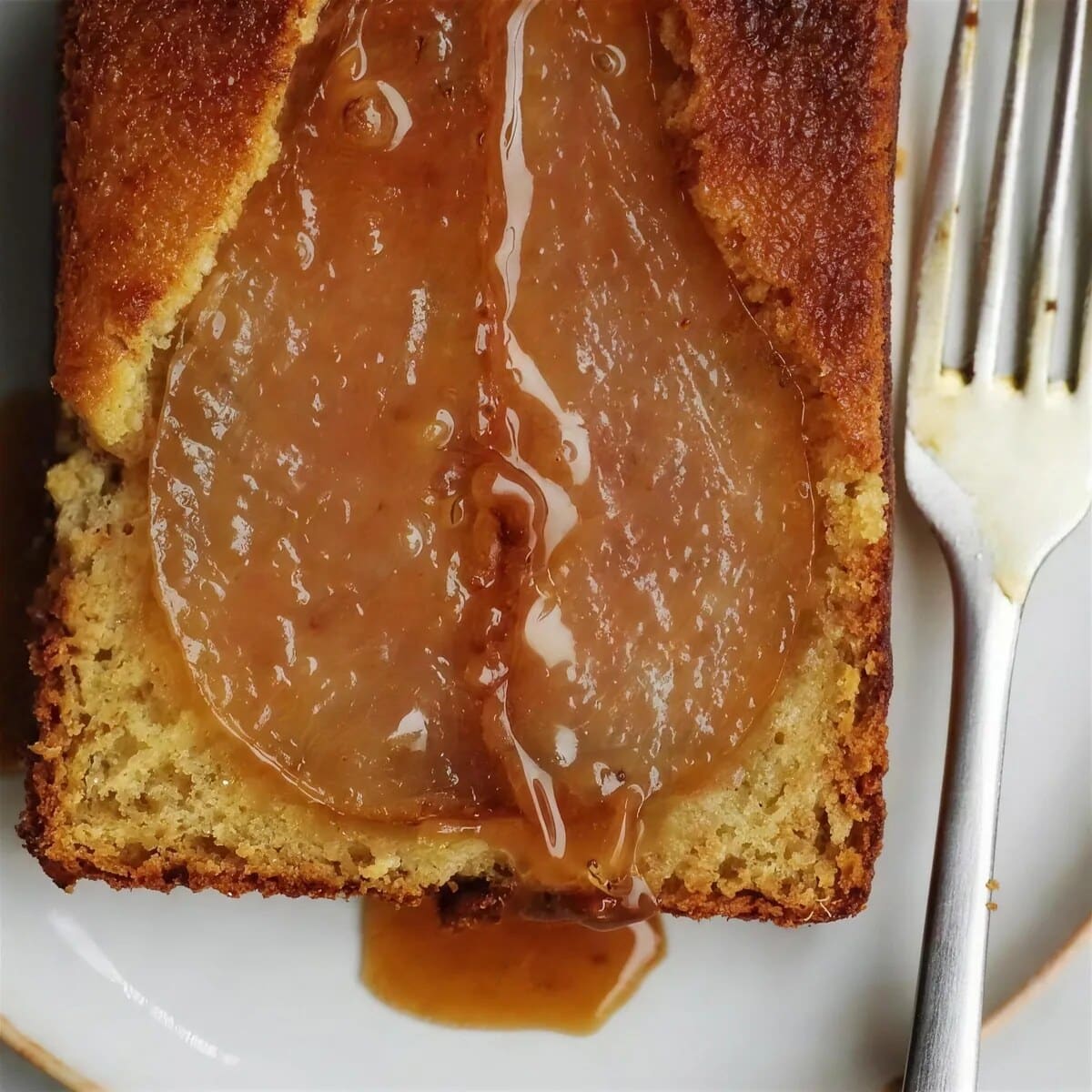
Pear upside down cake is sweet and sticky, so the best partners are plain and cold.
- Lightly whipped unsweetened cream, which is the correct answer nine times out of ten.
- Creme fraiche or thick plain yogurt if you want acidity against the caramel.
- Vanilla ice cream, served warm so the contrast is the point.
- Strong black coffee, which does more for this cake than any dessert wine.
- A slice of persimmon bread pudding alongside it if you are feeding a crowd from the same fruit bowl.
For the rest of the autumn baking, there is my apple pie egg rolls for something to fry rather than bake, bakery-style cinnamon streusel muffins for the morning after, and a loaf of chocolate coconut banana bread when the fruit bowl gets away from you.
Here is what readers ask most often.
Pear Upside Down Cake FAQ
Frequently Asked Questions
Which pears are best for pear upside down cake?
Bosc first, Anjou second. Both are dense enough to hold their slices through fifty minutes in a hot pan of caramel. Buy them firm rather than ripe, since a pear soft enough to eat raw will collapse into sauce. Bartlett and Comice are too soft and too wet, and canned pear halves are wetter still, though they can be made to work if you drain them on paper towels for half an hour first.
Why did my cake stick to the pan?
Almost always because it cooled too long before being turned out. Caramel sets hard as it drops below about 150F and it takes the fruit with it. Twelve minutes in the pan is the window. If it has already set, put the pan back over the cake for two minutes and the residual heat will loosen it, or set the base of the pan in an inch of hot water for thirty seconds.
Can I use a different pan?
A 9-inch round is what the quantities are built for. An 8-inch pan works with an extra eight to ten minutes and a deeper cake. A 10-inch pan gives you something thin and dry, so cut the bake to about thirty-five minutes if that is all you have. Avoid springform pans entirely, because caramel leaks out of the seam.
More Questions About Caramel and Pears
Good to Know
My caramel crystallized. Can I save it?
Yes, if it happens early. Add a couple of tablespoons of water, put it back on low heat and stir until every crystal has dissolved, then bring it back to the boil and leave it alone this time. If it has already colored and then seized, start again, since the sugar will not redissolve evenly and you will get a gritty layer.
Do I have to brown the butter?
No, and the cake is still good without it. Creamed softened butter gives a lighter, more conventional crumb and saves about ten minutes. What you lose is the toffee note that makes this version taste different from every other pear upside down cake, so try it browned at least once.
Can I make it in a skillet?
Yes, and a 9-inch or 10-inch cast iron skillet is arguably better, because you can make the caramel and bake in the same pan. Cook the caramel directly in the skillet, take it off the heat, arrange the fruit and pour the batter over. Watch the timing, since cast iron holds heat and the base browns faster.
Why is the middle wet?
Underbaking, or too much fruit. Three medium pears is the right amount for a 9-inch pan; a fourth adds enough liquid to keep the center from setting. Bake to 205F to 210F in the middle rather than to a time, and remember that the fruit layer keeps the center cooler than the edges throughout.
A pear upside down cake made this way is worth the extra seven minutes the browned butter costs, and it is better on the second day than the first. For another dessert built on winter fruit, try my persimmon bread pudding.

Pear Upside Down Cake with Caramel and Cornmeal
Save this recipe
Enter your email and I’ll send this recipe straight to your inbox.
Ingredients
Caramel and Pears
- 3/4 cup granulated sugar for the caramel
- 3 tablespoons water just enough to wet the sugar
- 2 tablespoons unsalted butter whisked into the caramel off the heat
- 1/4 teaspoon fine sea salt
- 3 medium firm pears about 1 1/4 pounds, Bosc or Anjou, peeled
- 1 teaspoon lemon juice to toss the slices
The Cornmeal Cake
- 10 tablespoons unsalted butter browned and cooled to just warm
- 1 1/2 cups all-purpose flour spooned into the cup and leveled
- 1/3 cup fine yellow cornmeal fine grind, not coarse polenta
- 2 teaspoons baking powder
- 1/2 teaspoon fine sea salt
- 3/4 cup granulated sugar for the batter
- 1/4 cup light brown sugar packed
- 2 large eggs room temperature, whole
- 2 teaspoons vanilla extract
- 2/3 cup buttermilk room temperature
Equipment
- 9-inch round cake pan
- Rimmed baking sheet
- Instant-read thermometer
Instructions
Caramel and Fruit
- Heat the oven to 350F. Butter a 9-inch round cake pan, line the base with a parchment round and butter that too. Set the pan on a rimmed baking sheet, because caramel and pear juice will bubble over the rim.
- Stir the 3/4 cup granulated sugar and the water together until the sugar is wet, bring to a boil and do not stir again. Cook 7 to 9 minutes to a deep amber, swirling the pan if the color is uneven and washing down the sides with a wet brush. Off the heat, whisk in the 2 tablespoons butter and the 1/4 teaspoon salt, then pour into the pan and tilt to coat the base.
- Peel, halve and core the pears, lay each half flat and cut lengthwise into 1/4-inch slices. Toss with the lemon juice and fan them over the caramel cut side down, overlapping from the rim inward, filling the middle with the offcuts.
Brown the Butter and Mix
- Melt the 10 tablespoons butter in a light-colored pan over medium heat and keep going until it foams, quiets, and the milk solids at the bottom turn hazelnut brown, 5 to 7 minutes. Scrape everything into a large bowl, solids included, and let it cool until it is warm rather than hot.
- Whisk the flour, cornmeal, baking powder and 1/2 teaspoon salt together in a second bowl. Whisk both sugars into the browned butter, then the eggs one at a time, then the vanilla, until the mixture is glossy.
- Fold in the dry ingredients in three additions alternating with the buttermilk in two, beginning and ending with the dry. Stop as soon as the last streak of flour disappears. The batter is thick and that is correct.
Bake and Turn Out
- Spoon the batter over the fruit in dollops and spread it gently to the edges so the slices are not dragged out of place, then smooth the top.
- Bake 45 to 50 minutes, rotating the pan at 30 minutes, until the top is deep gold, the edges have pulled slightly from the sides and a skewer in the center comes out with a few moist crumbs. An instant-read thermometer in the middle reads 205F to 210F.
- Cool in the pan for exactly 12 minutes, run a thin knife around the edge, set a serving plate face down over the pan and invert the two together in one movement. Lift the pan straight up, peel off the parchment and put back any slice that stayed behind.