
Twenty minutes of chopping, ten minutes at the stove, and one pan to wash: this spicy pork stir fry is built for the nights when takeout is winning the argument.
It is a pantry stir fry rather than a regional one. The sauce leans on soy, hoisin and a spoonful of tahini, the heat comes from chili oil and a fresh serrano, and the vegetables are whatever holds up to high heat. Nothing in it requires a trip to a specialist grocer, and the whole thing goes over rice.
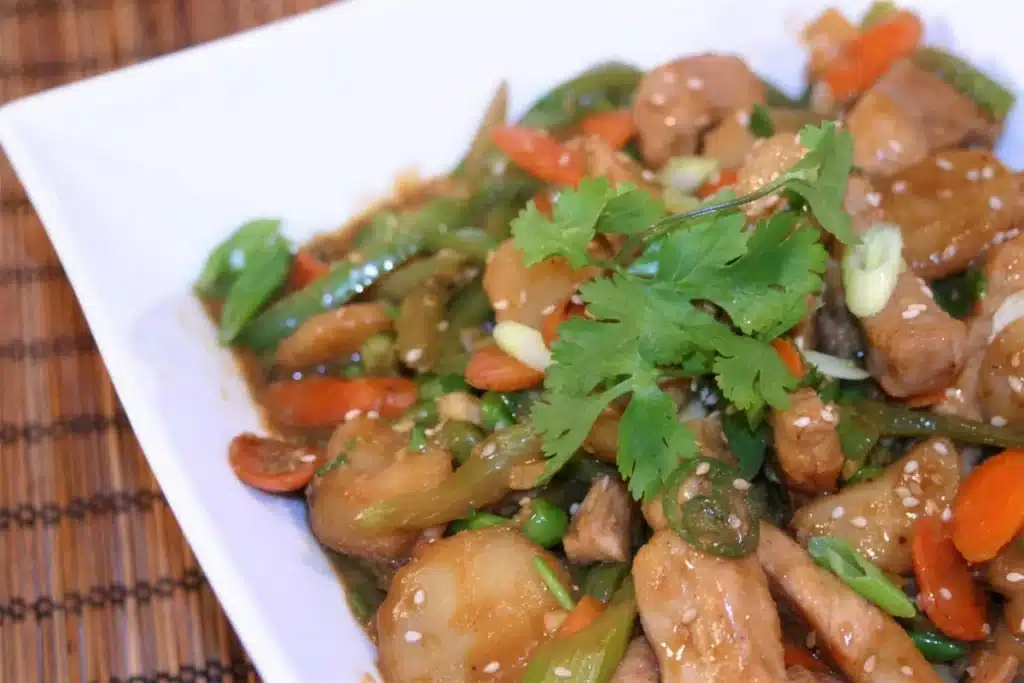
- Ten minutes of actual cooking once the chopping is done
- Pork chops or cutlets, which cost far less than tenderloin
- One pan, and the sauce thickens in it without a separate step
- Heat you control, from a gentle warmth to genuinely hot
- Every vegetable in it is negotiable, so it clears out a crisper drawer
- Feeds four over rice, and the leftovers reheat properly

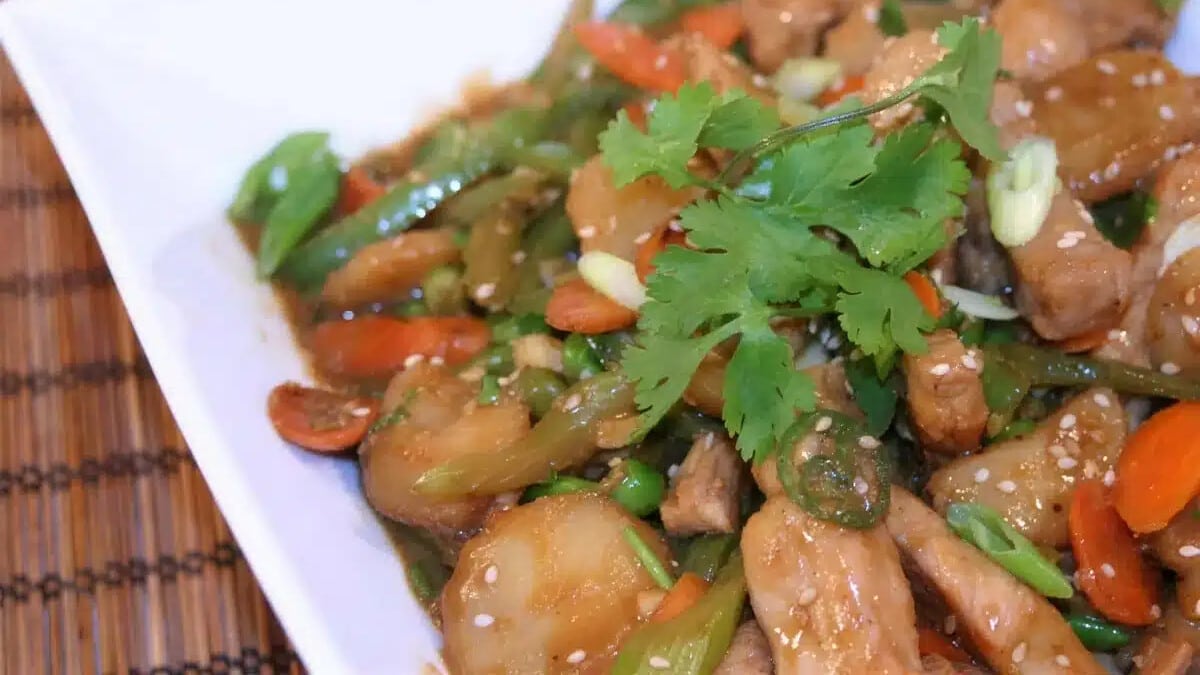
The single most useful habit with any stir fry is to finish all the prep before the pan goes on the heat. Once it is hot, this spicy pork stir fry gives you no time at all to slice a scallion, and a wok that sits waiting while you chop is a wok that has cooled down.
- What Kind of Spicy Pork Stir Fry This Is
- The Best Cut of Pork for Stir Frying
- Ingredient Notes
- The Sauce, and Why There Is Tahini In It
- How To Make Spicy Pork Stir Fry
- How To Adjust the Heat
- Make It Ahead
- Storing Spicy Pork Stir Fry
- Variations and Substitutions
- What to Serve with Spicy Pork Stir Fry
- Spicy Pork Stir Fry FAQ
What Kind of Spicy Pork Stir Fry This Is
Search for this dish and most of what comes back is Korean. That is worth knowing before you start, because the expectations are different.
Jeyuk bokkeum, the Korean version, is thin-sliced pork shoulder marinated in gochujang and gochugaru with garlic, ginger and sugar, then cooked hot and fast with onion. It is deep red, sweet and fiercely hot, and it needs two Korean pantry items you may not own.
Szechuan style pork uses doubanjiang, the fermented broad bean chili paste, plus Szechuan peppercorns for the numbing tingle that pairs with the burn.
This spicy pork stir fry is neither. It is the American Chinese style you would recognize from a takeout carton: a savory brown sauce, plenty of vegetables, a moderate chili heat, and a glossy finish from cornstarch. If you want the Korean version, the variations section below shows how to get there with two swaps.
Save this recipe
Enter your email and I’ll send this recipe straight to your inbox.
The Best Cut of Pork for Stir Frying
Spicy pork stir fry works with almost any lean cut, but pork chops or cutlets sliced thin against the grain are the value pick, and boneless is easier. Three quarters of a pound feeds four here because the vegetables carry so much of the volume.
Tenderloin is leaner and more tender still, and the National Pork Board’s guide to sauteing and stir frying pork recommends it for exactly this method, along with two points worth repeating: cut the meat into small pieces or thin strips so the outside does not overcook, and bring it to room temperature first so it does not drop the pan temperature when it lands.
Shoulder is the other good option and the one Korean recipes use. It has more fat, so it stays juicy under high heat and forgives an extra minute in the pan, though it needs slicing thinner.
Freeze the pork for twenty minutes before slicing. A firm piece of meat cuts into clean thin strips; a soft one squashes and tears. Slice across the grain at a slight angle for the widest, most tender pieces.
Ingredient Notes
Everything here keeps, so once you have bought the sauce ingredients you can make this spicy pork stir fry whenever there is pork in the fridge. Exact quantities are in the recipe card below.
- Pork chops or cutlets: Three quarters of a pound, sliced into thin strips and marinated briefly in soy sauce while you chop.
- Chili oil: A tablespoon, used as the cooking fat rather than as a garnish. Any neutral oil works if you would rather control the heat elsewhere.
- Carrots, celery and green bell pepper: The hard vegetables, all sliced thinly on an angle so they cook quickly and catch the sauce.
- Frozen peas and canned water chestnuts: Both go in near the end. The water chestnuts are there entirely for crunch and they stay crisp no matter what.
- Ginger, garlic and serrano: Added late and cooked for under a minute, because all three burn and turn bitter fast.
- Soy sauce or tamari: Split two ways, two tablespoons to marinate and a quarter cup in the sauce. Tamari keeps it gluten-free.
- Hoisin sauce: Three tablespoons. Sweet, thick and faintly five-spiced, it is what makes the sauce taste like takeout.
- Scallions, cilantro and sesame seeds: All off the heat, at the very end.
You want a wok or the widest, heaviest skillet you own, plus a bowl to hold the pork after it is browned.
The Sauce, and Why There Is Tahini In It
The sauce for this spicy pork stir fry is mixed in a bowl before anything is cooked, then poured in at the end and boiled for a minute. That is the standard structure, and the ingredient that surprises people is the tahini.
Chinese sesame paste is made from toasted sesame seeds and is a common thickener and body-builder in northern Chinese and Szechuan sauces. Tahini is the same seed, untoasted, and it stands in perfectly well. It gives the sauce a savory weight that soy and hoisin alone do not have, and it stops the finish tasting thin.
The cornstarch is the other structural piece. One teaspoon whisked into cold liquid, brought to a boil for a full minute, gives you a sauce that coats rather than pools. Cornstarch has to boil to thicken, so do not pull the pan too early, and do not add it to a hot liquid or it seizes into lumps.
Sesame oil goes in at the end for aroma. It is a finishing oil, not a cooking one, and its flavor cooks off within seconds of hitting a hot pan.
How To Make Spicy Pork Stir Fry
Chop everything, line it up next to the stove, and only then turn on the heat. Spicy pork stir fry is ten minutes of cooking and twenty of preparation, in that order.
- First, slice the pork thin and toss it with 2 tablespoons of the soy sauce. Leave it to sit while you prepare everything else.
- Next, whisk the remaining quarter cup of soy sauce with the hoisin, tahini, cornstarch, sesame oil and half a cup of water until completely smooth.
- Then heat the wok over high heat until it is genuinely hot. Swirl in the chili oil, add the pork, and cook for about 3 minutes, stirring, until it is no longer pink and lightly browned. Lift it out with a slotted spoon.
- After that, add another spoonful of oil if the pan looks dry, then the carrots, celery and bell pepper. Season with salt and pepper and cook for 2 to 3 minutes, until nearly tender.
- Add the peas and water chestnuts, then the garlic and ginger, and cook for 30 seconds to 1 minute until fragrant. Add the sliced serrano and give it another 30 seconds.
- Return the pork, pour in the sauce, stir, and bring it to a boil. Lower the heat and let it cook for a full minute so the cornstarch does its work.
- Finally, take the pan off the heat and stir through the scallions, cilantro and sesame seeds. Serve over rice immediately.
Getting the Pan Hot Enough
A home burner cannot match a restaurant wok range, so the way to compensate is to preheat the empty pan for longer than feels sensible and to cook in a single layer.
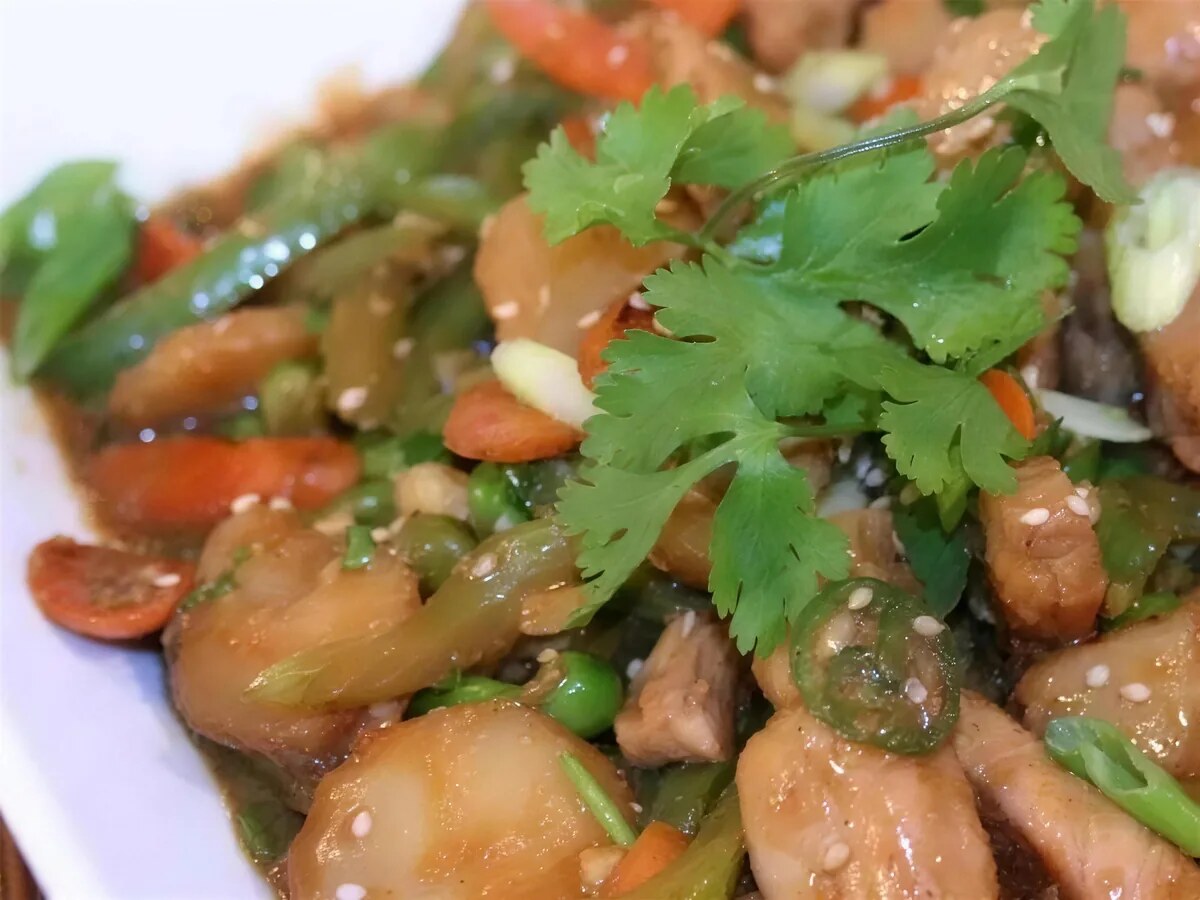
Heat the dry pan for a good two minutes before any oil goes in, until a drop of water thrown at it skitters and vanishes rather than sitting and hissing. Add the oil then, not before, and let it shimmer for a few seconds. Everything after that happens in the order the ingredients are listed, which is the order they take to cook, so a spicy pork stir fry never needs you to think while the pan is hot. This serves 4.
How To Adjust the Heat
There are three separate sources of heat in this spicy pork stir fry, which is useful, because it means you can dial the dish up or down without touching the rest of the recipe.
Chili oil gives a low, even background warmth and infuses the whole pan. Swap it for plain oil and the dish becomes mild.
Fresh serrano is the sharp, bright heat, and it lands in the front of your mouth. Seeding it removes most of the burn while keeping the grassy flavor, since the capsaicin sits mainly in the white pith. Leaving it whole and removing it before serving gives you perfume with almost no heat.
Chili crisp or red pepper flakes at the table lets everyone set their own level, which is the sane approach when you are feeding a mixed crowd.
For a genuinely hot version, add a second serrano and a tablespoon of chili crisp to the sauce.
Make It Ahead
Almost all the work in a spicy pork stir fry is knife work, and knife work moves to another day easily.
Slice the pork and hold it in its soy marinade, covered, for up to twenty-four hours. It seasons more deeply the longer it sits, and the texture does not suffer because soy is not acidic enough to cure it.
Cut the carrots, celery and pepper up to two days ahead and keep them in one container. Grate the ginger, mince the garlic and slice the chile the same day you cook, since all three fade fast once cut.
Whisk the sauce up to three days ahead and refrigerate it in a jar. Shake it again before pouring, because the cornstarch settles into a layer at the bottom.
Cook the rice ahead as well. Day-old refrigerated rice is better here than fresh, which is a small mercy.
Storing Spicy Pork Stir Fry
Spicy pork stir fry reheats better than most, largely because the sauce protects the meat.
- Fridge: up to 4 days in an airtight container. Keep the rice separate so it does not absorb all the sauce.
- Reheating: a hot skillet for two minutes with a splash of water beats a microwave. The vegetables soften either way, but the pork stays tender if you keep it brief.
- Freezer: up to 2 months. The bell pepper and celery lose their crunch entirely, so freeze it only if you plan to eat it as a saucy rice bowl.
- Second life: leftover spicy pork stir fry is excellent folded through fried rice the next day, or rolled cold into lettuce cups.
Variations and Substitutions
The method behind a spicy pork stir fry matters more than the specific list, so treat the vegetables as a template.
- Korean style: swap the hoisin and tahini for two tablespoons of gochujang and a teaspoon of gochugaru, add a tablespoon of brown sugar, and use sliced onion in place of the celery.
- Other proteins: chicken thigh, beef sirloin, firm tofu or shrimp all work. Shrimp needs about ninety seconds.
- Other vegetables: broccoli, snow peas, mushrooms, baby corn, cabbage or green beans. Hard vegetables first, soft ones last.
- No tahini: peanut butter is the closest substitute, or leave it out and add an extra teaspoon of hoisin.
- Gluten-free: tamari in place of soy sauce, and check the hoisin, which usually contains wheat.
- Noodles instead of rice: toss the finished pan through cooked egg noodles, closer to a lo mein than a stir fry over rice.
- Extra sauce: one and a half times everything in the sauce bowl if you like it wet enough to soak the rice.
What to Serve with Spicy Pork Stir Fry
Rice is the default alongside spicy pork stir fry, and the rest is about contrast.
- Plain steamed jasmine rice, or coconut rice if you want something to soften the heat.
- Something cold and sharp on the side, such as an Asian cucumber salad.
- A simple broth or miso soup, which is how this would be served in a set meal.
- Steamed greens with oyster sauce, done in the same pan afterward.
- A cold lager or an off-dry Riesling, both of which handle chili heat far better than red wine.
Here is what readers ask most often about this spicy pork stir fry.
Spicy Pork Stir Fry FAQ
Frequently Asked Questions
What cut of pork is best?
Boneless pork chops or cutlets, sliced thin against the grain, are the value option and what this recipe is written for. Tenderloin is more tender and leaner, and shoulder has more fat so it stays juicy and forgives an extra minute in the pan. Whichever you use, freeze it for twenty minutes first so it slices cleanly.
Why is my pork tough?
Two usual causes. Either the pork was sliced with the grain instead of across it, which leaves long muscle fibers intact, or it was left in the pan to cook through in the sauce. Brown it hard for three minutes, take it out, and return it only in the last minute.
Can I make it less spicy?
Yes, and easily. Nothing about a spicy pork stir fry has to be hot at all. Use plain oil instead of chili oil, and either seed the serrano or leave it out. Then put chili crisp or red pepper flakes on the table so anyone who wants heat can add it themselves. None of the other flavors depend on the chili.
More Questions About Stir Frying
Good to Know
Do I need a wok?
No. A wok makes a better spicy pork stir fry because its shape concentrates heat and gives you room to toss, but the widest and heaviest skillet in your kitchen does the job. What matters far more is preheating it properly and not crowding it, since a crowded pan steams the food instead of searing it.
Why is my sauce thin?
The cornstarch has not boiled. It only thickens at a rolling boil and it needs a full minute there. If the sauce still runs, whisk another half teaspoon of cornstarch into a tablespoon of cold water and stir that in, then bring it back to a boil.
Can I use frozen vegetables?
Yes, though add them straight from frozen at the end rather than thawing them first. Thawed vegetables release a lot of water into the pan and drop its temperature, which is how a stir fry turns into a braise. Frozen peas in particular need no more than a minute.
What is the tahini doing in a stir fry?
Standing in for Chinese sesame paste, which is made from toasted sesame seeds and is a normal ingredient in northern Chinese and Szechuan sauces. It adds savory body and a nutty depth that soy and hoisin cannot supply on their own. Peanut butter is the nearest substitute.
Once this spicy pork stir fry is in your rotation the pattern transfers to almost anything. For the same method with a sweeter, less fiery sauce, try my Mongolian beef stir fry.
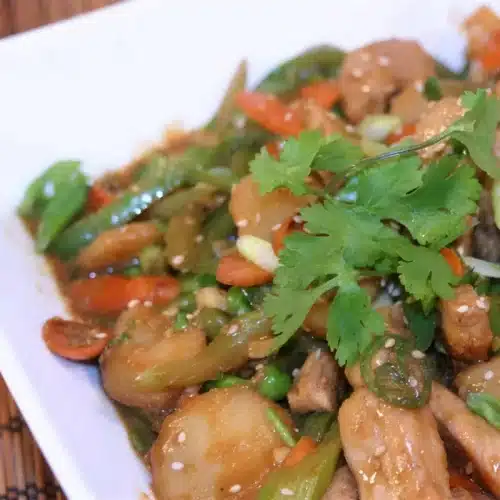
Spicy Pork Stir-Fry
Save this recipe
Enter your email and I’ll send this recipe straight to your inbox.
Ingredients
For the Pork
- 3/4 pound pork chops or cutlets boneless, sliced thin across the grain
- 2 tablespoons soy sauce or tamari for the marinade
- 1 tablespoon chili oil or peanut or other neutral oil
For the Sauce
- 1/4 cup soy sauce or tamari
- 3 tablespoons hoisin sauce
- 1 tablespoon tahini standing in for Chinese sesame paste
- 1 teaspoon cornstarch
- 1 teaspoon toasted sesame oil
- 1/2 cup water cold
For the Stir Fry
- 3 medium carrots thinly sliced on an angle
- 2 stalks celery thinly sliced on an angle
- 1 medium green bell pepper thinly sliced
- 3/4 cup frozen peas straight from frozen
- 1 8 oz can water chestnuts drained and sliced
- 2 tablespoons fresh ginger peeled and grated, about a 2-inch piece
- 2 cloves garlic minced
- 1 serrano chile thinly sliced, seeded for less heat
To Finish
- 2 scallions thinly sliced on an angle
- 1/4 cup cilantro chopped
- 1 teaspoon sesame seeds
- cooked rice for serving
Instructions
Prep and Mix the Sauce
- First, slice the pork thin across the grain and toss it with the 2 tablespoons of soy sauce. Leave it to sit while you prepare everything else. Freezing the pork for 20 minutes beforehand makes it far easier to slice cleanly.
- Next, whisk the remaining 1/4 cup soy sauce with the hoisin, tahini, cornstarch, sesame oil and cold water until completely smooth, and set the bowl next to the stove. Chop all the vegetables and line them up in the order they are used, because once the pan is hot there is no time to prepare anything.
Stir Fry
- Then heat a wok or the heaviest wide skillet you own over high heat for a good two minutes, until a drop of water skitters across it. Swirl in the chili oil, add the pork in a single layer, and cook for about 3 minutes, stirring, until no longer pink and lightly browned. Lift it out onto a plate with a slotted spoon.
- After that, add another spoonful of oil if the pan looks dry, then the carrots, celery and bell pepper. Season with salt and pepper and cook for 2 to 3 minutes, until nearly tender.
- Add the peas and water chestnuts, then the garlic and ginger, and cook for 30 seconds to 1 minute until fragrant. Add the sliced serrano and cook for another 30 seconds.
Sauce and Serve
- Return the pork and any juices to the pan, pour in the sauce, stir, and bring it to a boil. Lower the heat and cook for a full minute so the cornstarch thickens properly.
- Finally, take the pan off the heat and stir through the scallions, cilantro and sesame seeds. Serve over rice straight away.