
Every summer there is a stretch of weather that makes standing over live coals sound like a punishment rather than a pleasure, and that is exactly when BBQ spare ribs start sounding good. They are cooked entirely indoors: a rub of whole spices toasted and ground, twelve hours in the refrigerator, then a long covered bake with a bottle of beer in the bottom of the pan.
What comes out is not a compromise. Smoked paprika and ground chipotle in the rub do the work smoke would do, a chipotle in adobo goes into the sauce for the same reason, and the low covered oven gets the connective tissue to let go the way a slow fire does. Nobody who eats these asks where the grill is.
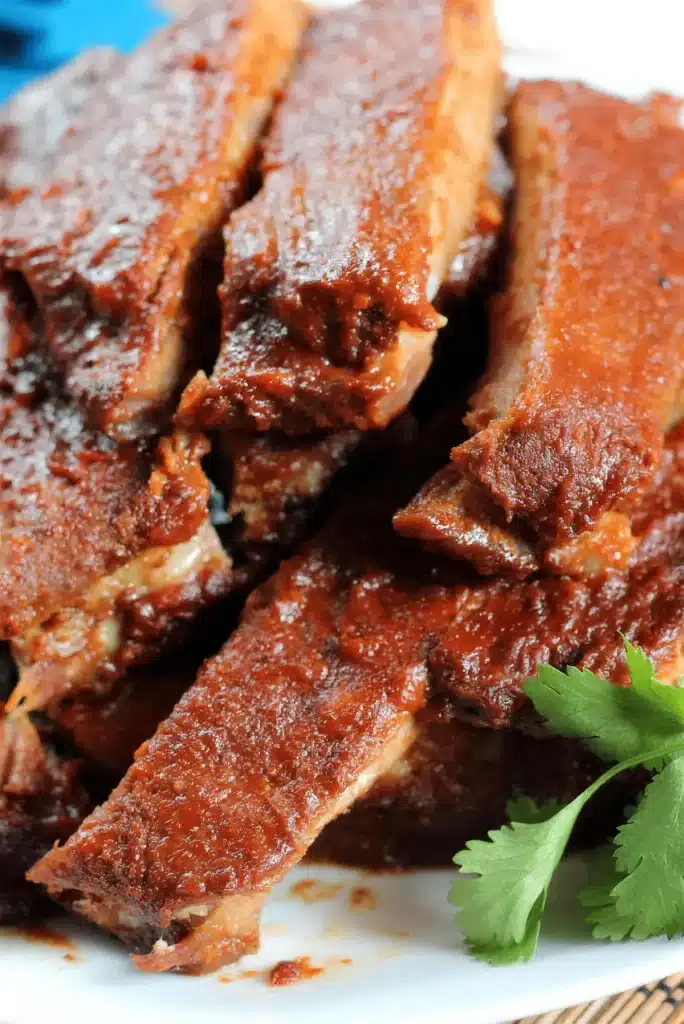
- No grill, no smoker and no special equipment beyond a sheet pan and foil
- The rub is toasted whole spices, ground fresh, which tastes nothing like a jar
- Almost all of the time is unattended, either in the refrigerator or in the oven
- The sauce is a twenty minute stovetop job that makes more than you need
- Both the rub and the sauce keep for weeks, so the next batch is faster
- It scales down to one rack without changing a single timing

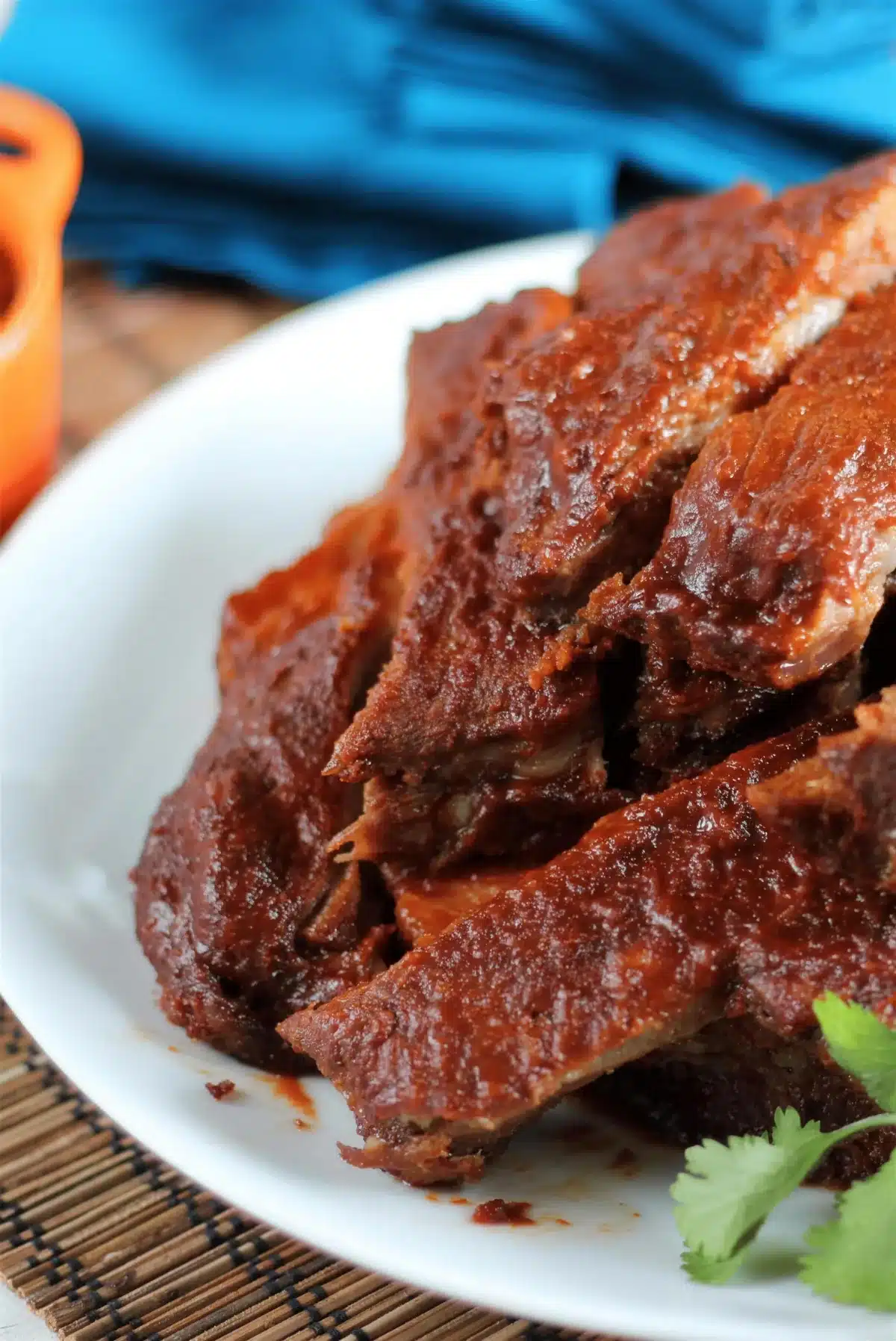
The method is simple but the order of operations is where people go wrong, so it is worth walking through what each stage is actually for.
- What Spare Ribs Are, and How They Differ from Baby Backs
- Ingredient Notes
- The Dry Rub, Toasted Whole and Ground Fresh
- How To Make BBQ Spare Ribs in the Oven
- How To Tell When BBQ Spare Ribs Are Done
- Make It Ahead
- Storing BBQ Spare Ribs
- Variations and Substitutions
- What to Serve with BBQ Spare Ribs
- BBQ Spare Ribs FAQ
What Spare Ribs Are, and How They Differ from Baby Backs
Spare ribs and baby backs are not interchangeable, and buying the wrong one is the most common reason a rack of BBQ spare ribs fails on the timing. According to the National Pork Board’s guide to the different types of pork ribs, spareribs come from the belly of the hog and are larger and meatier than the alternatives, while back ribs come from the loin and are called baby backs simply because they are smaller.
That difference matters here. A rack of spare ribs runs about three pounds against roughly two for baby backs, carries more fat between the bones, and has a flap of meat and cartilage at one end that baby backs do not have. More fat and more connective tissue means it takes longer to become tender, and it also means it forgives you if you overshoot.
St. Louis style is spare ribs, trimmed. The same page describes it as a squared cut of spare ribs, with the rib tips removed so the rack lies flat. If your market sells St. Louis style, buy it and take twenty minutes off the covered bake. If it sells whole spares, you get more meat for the money and can trim the tips off yourself with a heavy knife.
Baby backs will work in this recipe. Start checking them at the ninety minute mark and expect to finish about forty minutes earlier than the timings below.
Save this recipe
Enter your email and I’ll send this recipe straight to your inbox.
Ingredient Notes
Nothing here is hard to find, but three things in a rack of BBQ spare ribs are worth being particular about. Exact amounts are in the recipe card below.
- Spare ribs: two racks, about three pounds each, which feeds six generously. Ask for the membrane to be removed if the counter will do it, and see the section below if it will not.
- Whole spices: coriander, fennel, cumin, black peppercorns and a small cinnamon stick. Toasting and grinding these yourself is the single biggest flavor difference between these BBQ spare ribs and a rack rubbed with something out of a jar.
- Smoked paprika: Spanish pimenton, sweet rather than hot. This is doing the job of a smoker and there is no substitute that works as well. Regular paprika will leave the rack tasting flat.
- Ground chipotle: a teaspoon in the rub, on top of the whole chipotle in the sauce. Smoked jalapeno, so it reinforces the same note rather than adding a different one.
- Kosher salt: two tablespoons of Diamond Crystal across two racks. If you use Morton, which is denser, use one tablespoon plus a teaspoon instead.
- Beer: a bottle per pan, poured around the meat rather than over it. A plain lager is right. Anything hoppy turns bitter over three hours in a closed pan.
- Molasses: two tablespoons in the sauce, unsulphured. It is what makes the glaze go dark and glossy rather than staying tomato red.
The Dry Rub, Toasted Whole and Ground Fresh
The rub is where BBQ spare ribs are won or lost, and ground spices lose their volatile oils within months of milling. Whole ones keep them until you break the seed open, which is why the rub is built the way it is: everything that comes as a seed goes into a dry pan first.
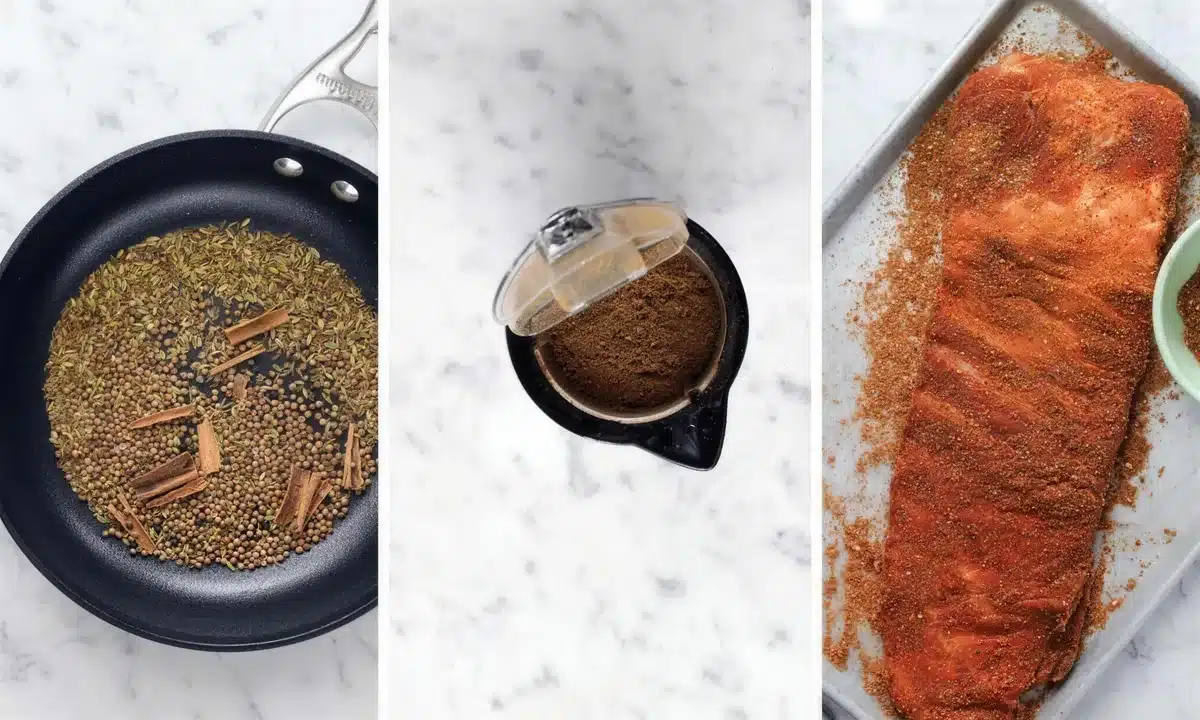
Set a small skillet over medium heat with the coriander, fennel, cumin, peppercorns and the broken up cinnamon stick. Shake the pan every twenty seconds or so. In two to three minutes the seeds will darken a shade and the kitchen will smell like a spice market, and that is the moment to tip them onto a cold plate. Left in the hot pan they keep cooking and turn acrid.
Grinding the Rub, and What to Do with the Leftovers
Grind them properly. A dedicated coffee grinder is ideal, a mortar takes about four minutes of honest work, and a rolling pin against a folded kitchen towel is a fine last resort. You are aiming for the texture of coarse sand, not powder, since a little grit is what forms the crust.
Only then do the pre-ground things go in: brown sugar, salt, smoked paprika, ground chipotle, dry mustard and cayenne. Sugar and salt scorch instantly in a hot pan, which is why they never see the heat.
Where this started: the toast-and-grind rub, and the long refrigerator cure that follows it, came originally from Anne Burrell’s dry-rubbed ribs. It has moved a good way since: whole fennel and peppercorns in the rub, smoked paprika and chipotle doing the work of a fire, and a tomato and molasses sauce instead of her vinegar one.
This makes more rub than two racks strictly need. What is left keeps six months in a sealed jar in a dark cupboard and is very good on pork shoulder or chicken thighs.
How To Make BBQ Spare Ribs in the Oven
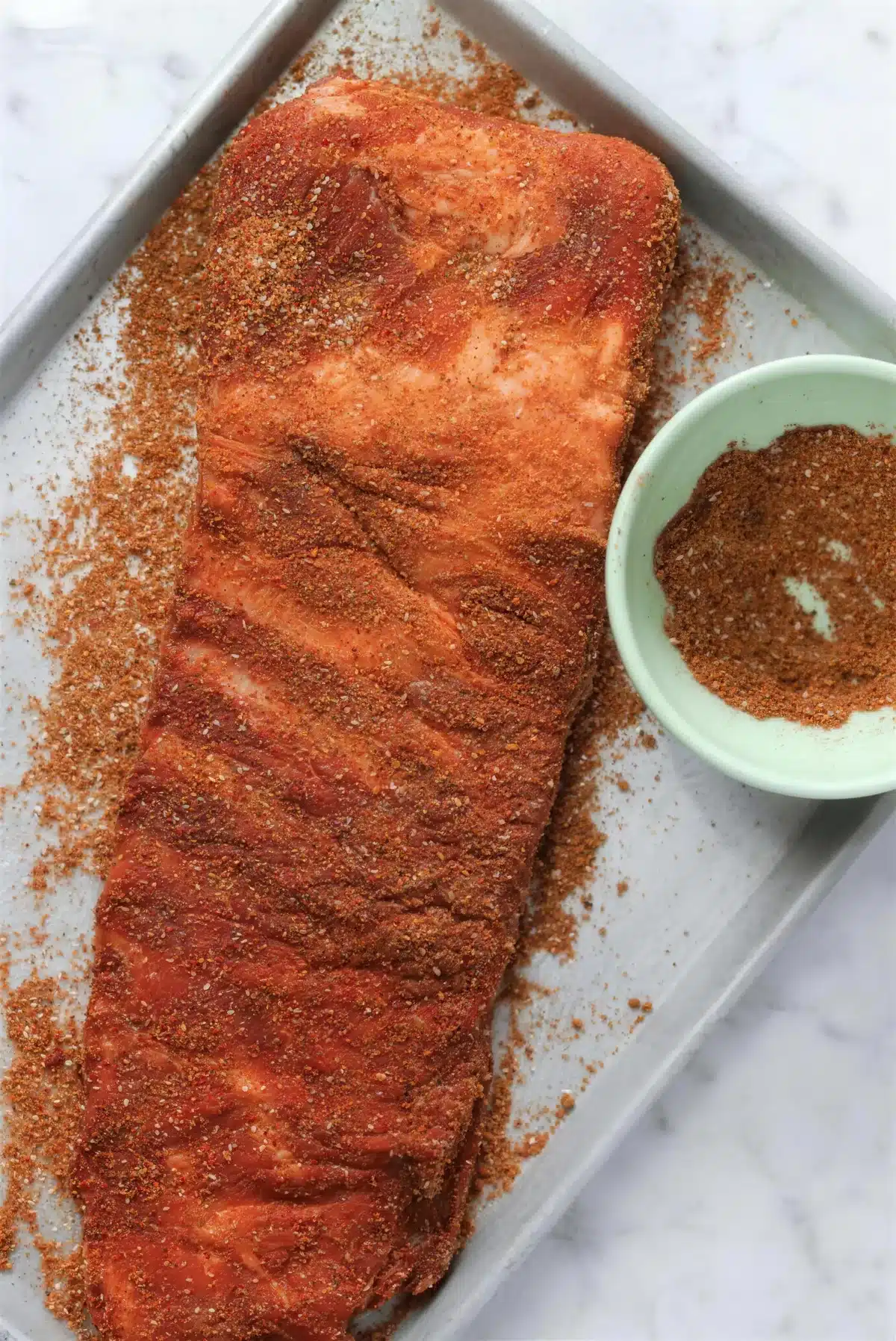
The whole method for these BBQ spare ribs is five moves, and only two of them need you in the room.
- First, pull the membrane off the bone side of each rack. Slide a butter knife under it at one end, lift a corner, grip it with a paper towel and pull steadily. It comes away in one sheet.
- Next, toast and grind the whole spices, stir in the sugar, salt and ground spices, and coat both racks all over. Wrap them and refrigerate 12 to 24 hours. Twenty four is noticeably better.
- Then set the oven to 300F, put the racks on sheet pans, pour a bottle of beer around each and seal the pan tightly with foil that does not touch the meat. Bake 75 minutes, turn the racks over, re-cover and bake 75 minutes more.
- After that, make the sauce while the pans are in the oven: sweat the onion and garlic, add everything else, simmer 20 minutes and strain it.
- Finally, take the foil off, brush one side with sauce, bake 15 minutes, turn and sauce the other side, and bake 15 minutes more until the glaze is tacky. Rest ten minutes before cutting.
How To Tell When BBQ Spare Ribs Are Done
Ribs are the one pork cut where a thermometer reading is not the answer, and the National Pork Board says so directly: its page on pork cooking temperature sets 145F for fresh cuts but notes that doneness for large cuts cooked slowly at low temperatures is designated as tender instead. Your BBQ spare ribs will pass 145F inside the first hour and will still be tough.
The bend test is the reliable one. Lift a rack from one end with tongs, a third of the way along. It should droop into a deep arch and the surface between the bones should crack open. If it stays stiff it needs another twenty minutes covered.
The probe test confirms it. A thermometer probe or a toothpick pushed into the meat between two bones should go in with almost no resistance, like room temperature butter. On a thermometer that usually falls between 195F and 203F, which is where collagen has finished turning to gelatin.
The bone test is the last resort, because by the time a bone twists cleanly free you have gone slightly past the point where the meat still holds together on the plate. Aim to stop just before that.
Racks vary by more than half an hour, so treat the timings as a schedule rather than a promise and start testing at the two-hour mark.
Make It Ahead
BBQ spare ribs are a genuinely good dish to break across two days, and the results are no worse for it.
The rub can be made months in advance. It is the part that takes real attention, so doubling it while the pan is already hot is free.
The sauce keeps two weeks refrigerated in a sealed jar and is better after a day, once the vinegar has stopped being the loudest thing in it.
The ribs themselves can go all the way through the covered bake, then be cooled and refrigerated, still in their foil, for up to two days. On the day, bring them out for half an hour, then glaze and finish in a 300F oven for 20 to 25 minutes a side rather than 15. That is how to serve these to eight people without spending the afternoon in the kitchen.
What you should not do is apply the rub and leave it more than about 36 hours. Past that the salt starts to cure the surface and the texture turns faintly hammy.
Storing BBQ Spare Ribs
Refrigerated: cooked BBQ spare ribs keep four days, wrapped tightly or in a sealed container. Cut them into pieces first so they fit; a whole rack in a fridge is a nuisance nobody needs.
Frozen: three months. Freeze BBQ spare ribs already glazed, wrapped in foil and then bagged, and thaw overnight in the refrigerator. The glaze protects the surface from freezer burn better than bare meat manages.
Reheating: the oven, not the microwave. Wrap in foil with a tablespoon of water or leftover sauce and put them in a 275F oven for 20 to 25 minutes, then open the foil and give them five minutes more to tighten the glaze back up. Microwaved ribs go rubbery in a way there is no coming back from.
Leftover meat pulled off the bone is excellent in a sandwich with pickles and a spoonful of the reserved sauce, and it behaves much like my slow cooker Texas pulled pork at that point.
Variations and Substitutions
- One rack: for a half batch of BBQ spare ribs, halve the sauce, use one bottle of beer, and keep every timing exactly as written. The rub amount stays the same and you simply have more left over.
- Finish on the grill: if you do have coals, skip the last half hour in the oven and glaze over medium heat for six to eight minutes a side instead.
- No beer: a cup of apple cider or plain water with a splash of cider vinegar does the same job of keeping the pan humid.
- Hotter: two chipotles in the sauce and double the cayenne in the rub. That is a real jump, not a nudge.
- Sweeter and stickier: add two tablespoons of honey to the sauce in the last five minutes, off the boil, for the lacquered look you get on restaurant racks.
- Country style ribs: these are cut from the shoulder end and are much thicker. Same rub, same sauce, but bake covered for two and a half hours.
What to Serve with BBQ Spare Ribs
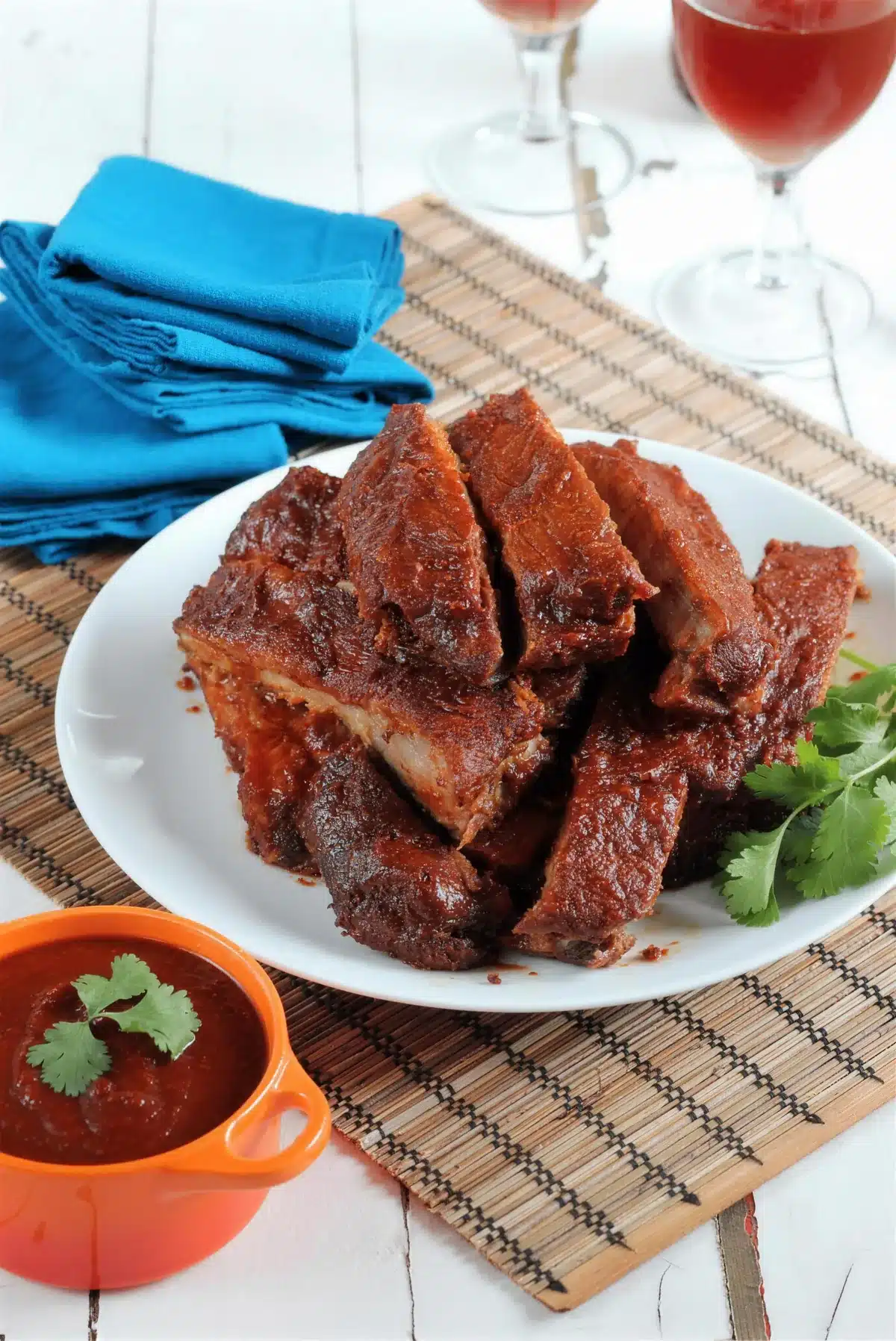
Rich, sweet and smoky wants sharp and cold next to it, so build the rest of the plate against the BBQ spare ribs rather than alongside them. A plate of BBQ spare ribs with three more sweet things on it is heavy going.
- A vinegar slaw with no mayonnaise in it, dressed an hour ahead so it slumps slightly.
- Cornbread, plain, for mopping the pan juices that collect under the rack.
- Quick pickled red onions, which cost ten minutes and cut through the molasses better than anything else on the table.
- Something green and assertive, like a bowl of my spicy pork stir-fry vegetables cooked without the meat.
If you are feeding a crowd and want a second smoky thing that is not more pork, my loaded BBQ chicken pizza uses the same sauce and disappears just as fast.
Here is what readers ask most often.
BBQ Spare Ribs FAQ
Frequently Asked Questions
Do I really have to take the membrane off?
Yes, and it takes about a minute per rack. It is the one piece of knife work BBQ spare ribs genuinely require. The membrane on the bone side is a sheet of connective tissue that never softens, so it stays leathery under an otherwise tender rack and it stops the rub reaching the meat from below. Slide a butter knife under it at the narrow end, lift a corner, then grip that corner with a paper towel and pull. If it tears, start again a few bones along.
Can I use a lower oven and go longer?
You can. 275F for about three and a half hours covered gives a slightly more even result and is more forgiving if you get distracted. Going below 250F is not worth it in a home oven, because the pan takes so long to come up to temperature that the meat spends too long in the range where it dries rather than braises.
Why is my rack tough after three hours?
BBQ spare ribs come out tough for one of two reasons, and the first is a foil seal that leaked. The covered stage is a braise, and it needs the steam trapped in the pan. Press the foil down hard onto the rim on all four sides, and use two overlapping sheets if your pan is wide. The other common cause is a rack that was still fridge cold when it went in, which costs about twenty minutes.
More Questions About the Rub and the Sauce
Good to Know
Can I use pre-ground spices instead of toasting whole ones?
You can, and BBQ spare ribs made that way still work. Use two teaspoons of ground coriander, one and a half of ground cumin, one of ground fennel, half a teaspoon of ground black pepper and a quarter teaspoon of ground cinnamon in place of the whole seeds. It will taste good and noticeably less alive. If you only change one thing about a supermarket rib rub, make it this.
Do I have to strain the barbecue sauce?
No, but the photographs on this post show a smooth glossy glaze, and that is what straining gives you. Pushed through a sieve, the onion and garlic have already given up their flavor and the sauce clings to the rack in an even coat. Left chunky it tastes the same and looks rustic, and it will catch and darken in patches under the last half hour of heat.
Is the beer doing anything besides steam?
Mostly steam, and that is the point. It keeps the pan humid so the surface of the meat does not set before the collagen inside has broken down. A little of the malt does end up in the pan juices, which is worth spooning over the cut ribs. Cider or water with a splash of vinegar works nearly as well.
More Questions About Timing and Temperature
Good to Know
How far ahead can I put the rub on?
Twelve hours is the minimum for BBQ spare ribs to be worth the trouble, twenty four is the sweet spot, and thirty six is the outside limit. The salt needs time to draw moisture out, dissolve into it and carry the seasoning back in. Past a day and a half the surface starts to cure and takes on a faintly hammy character that fights the smoked paprika.
What internal temperature should ribs reach?
145F is the safe minimum for fresh pork cuts, but BBQ spare ribs are not done at 145F, they are merely safe. The texture you want arrives between 195F and 203F, once the collagen has turned to gelatin. That is why the bend test and the probe test matter more here than a number, and why the National Pork Board describes doneness for slow-cooked large cuts as tender rather than as a temperature.
Can I finish these under the broiler to save time?
Only carefully, and it is the one shortcut on BBQ spare ribs that regularly goes wrong. A broiler will set the glaze in about three minutes a side, but the sauce carries brown sugar and molasses and goes from glossy to burnt in seconds. Keep the rack on the middle shelf rather than the top, leave the door ajar, and do not walk away. The oven method is slower and gives a better crust.
Baked this way, BBQ spare ribs are much less work than they look: two active stretches of about twenty minutes each, with a refrigerator and an oven doing everything in between. If you want the same slow-cooked pork with none of the oven time at all, try my Cuban mojo pork.

BBQ Spare Ribs with a Smoky Dry Rub
Save this recipe
Enter your email and I’ll send this recipe straight to your inbox.
Ingredients
The Toasted Spice Rub
- 1 small cinnamon stick about an inch, broken into pieces
- 2 tablespoons coriander seeds
- 2 teaspoons fennel seeds
- 1 teaspoon black peppercorns
- 2 teaspoons cumin seeds
- 1/4 cup packed light brown sugar
- 2 tablespoons kosher salt Diamond Crystal; use 1 tablespoon plus 1 teaspoon of Morton
- 1 tablespoon smoked paprika sweet Spanish pimenton
- 2 teaspoons dry mustard powder
- 1 teaspoon ground chipotle powder
- 1/2 teaspoon cayenne pepper
For the Ribs
- 2 racks pork spare ribs about 3 pounds each, membrane removed
- 2 bottles plain lager 12 ounces each, one per pan
The Chipotle BBQ Sauce
- 1 tablespoon vegetable oil
- 1/2 cup minced yellow onion from about half a small onion
- 4 cloves garlic minced
- 1 can tomato sauce 15 ounces
- 1/4 cup packed dark brown sugar
- 3 tablespoons apple cider vinegar
- 2 tablespoons unsulphured molasses
- 1 chipotle in adobo chopped, plus 1 teaspoon of the adobo
- 1 teaspoon kosher salt
- 1/2 teaspoon freshly ground black pepper
Equipment
- Sheet Pan
- Foil
- Small Pan
- Spice Grinder or Mortar and Pestle
- Medium Pot
- Sieve
Instructions
Make the Rub
- Toast the coriander, fennel, cumin, peppercorns and the broken cinnamon stick in a small dry skillet over medium heat, shaking often, until they darken a shade and smell fragrant, 2 to 3 minutes. Tip them straight onto a cold plate so they stop cooking.
- Grind the cooled spices to the texture of coarse sand, then stir in the brown sugar, kosher salt, smoked paprika, dry mustard, ground chipotle and cayenne.
Cure the Ribs
- Slide a butter knife under the membrane on the bone side of each rack to lift a corner, grip that corner with a paper towel and pull the membrane away in one sheet.
- Coat both racks all over with the rub, pressing it on. Wrap them and refrigerate 12 to 24 hours; a full day is noticeably better, and past 36 hours the surface starts to cure.
Bake Low and Covered
- Heat the oven to 300F. Set each rack on a rimmed sheet pan, pour a bottle of lager around the meat rather than over it, and seal the pan tightly with foil that does not touch the ribs.
- Bake for 75 minutes, then turn the racks over, re-cover tightly and bake for 75 minutes more.
Make the Sauce
- Warm the oil in a medium saucepan over medium heat and sweat the onion and garlic with a pinch of salt until translucent, about 5 minutes.
- Pour in the tomato sauce, brown sugar, vinegar, molasses, chopped chipotle and its adobo, salt and pepper. Bring to a boil, lower the heat and simmer for 20 minutes, until it coats a spoon. Push it through a sieve for a smooth glaze, then set a cup aside for the table.
Glaze, Test and Rest
- Uncover the pans and brush the meaty side of each rack with sauce. Bake for 15 minutes, turn the racks, brush the other side and bake for 15 minutes more, until the glaze is tacky rather than wet.
- Check for doneness. Lifted a third of the way along with tongs, a rack should droop into a deep arch and crack open at the surface, and a probe should slide between the bones with almost no resistance, which is around 195F to 203F. Give it another 20 minutes covered if it is still stiff.
- Rest the racks for 10 minutes, then cut between the bones and serve with the reserved sauce.