
A classic campfire s’more is a chocolate square that never quite melts and a marshmallow that does all the work. Peanut butter smores fix the first half of that problem by swapping the square for a halved peanut butter cup, which melts at a lower temperature and carries salt with it.
The jelly half is the part people get wrong. Spreading jam on a graham cracker turns it to paper in about ninety seconds. A strawberry marshmallow puts the fruit inside the hot part of the sandwich instead, where it belongs, and the cracker stays crisp all the way to the last bite.
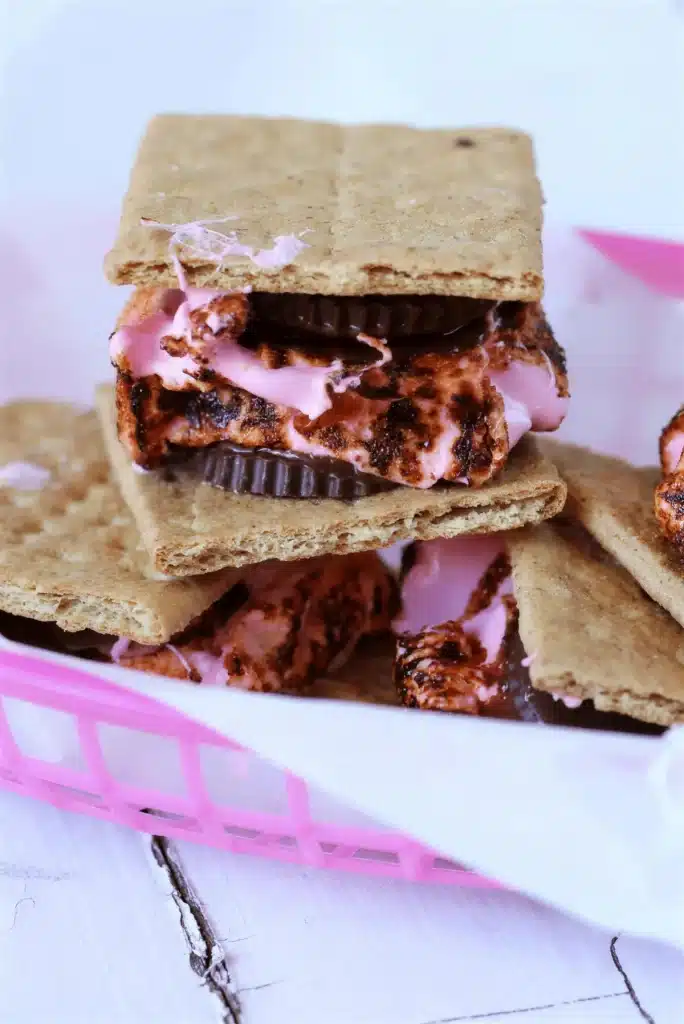
- The chocolate actually melts, because a peanut butter cup gives way at a much lower temperature than a molded bar
- Peanut butter smores taste salty as well as sweet, which is what stops the third one being too much
- Nothing is baked and nothing is measured precisely, so children can build their own
- A strawberry marshmallow keeps the fruit off the cracker, so the graham stays crisp
- Everything can sit assembled on a tray for an hour before anyone lights anything
- Five minutes from cold ingredients to eating, with a torch instead of a fire

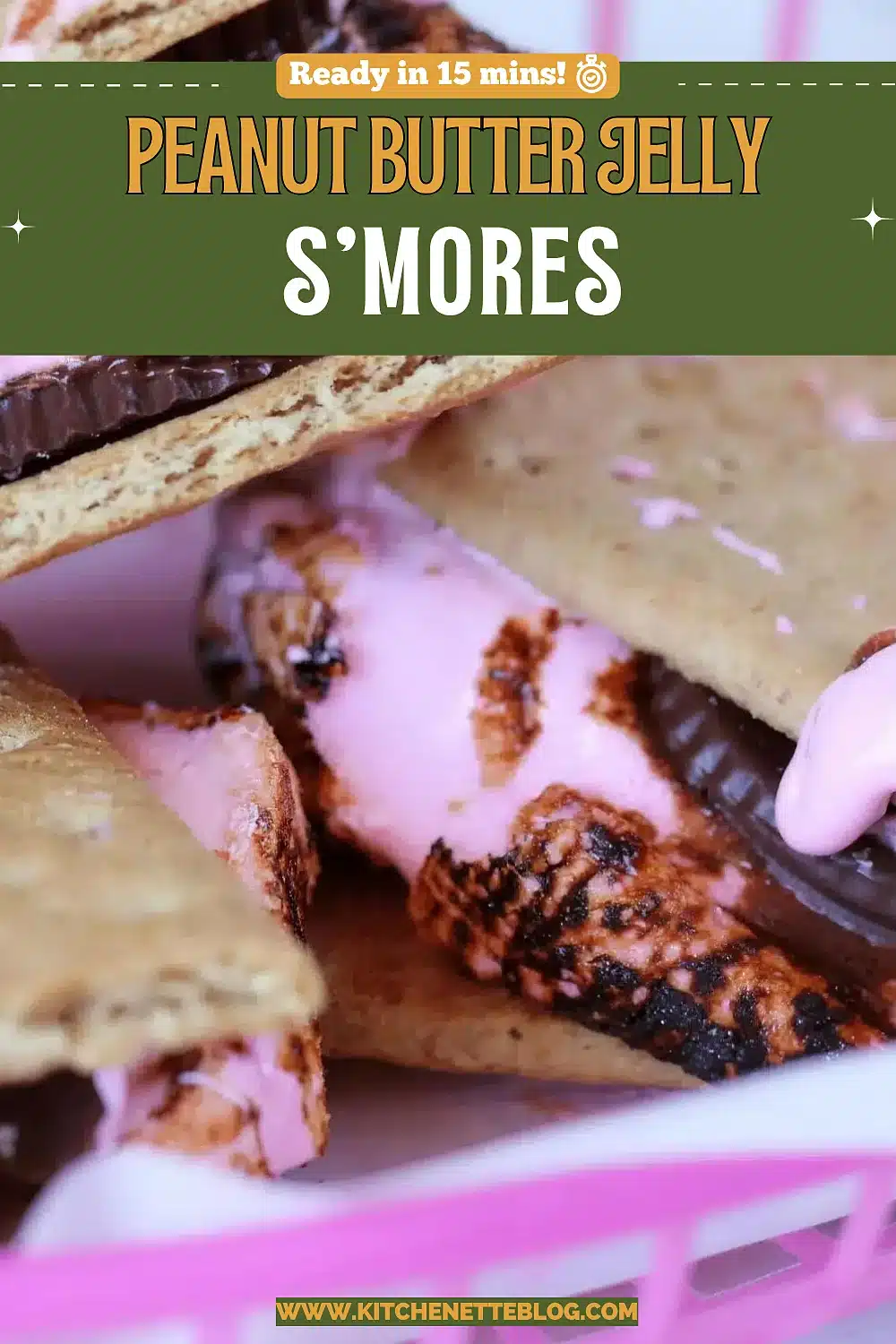
Two small decisions separate a good version from a soggy one, and both happen before the fire is lit.
- What Makes Peanut Butter Smores Different
- Ingredient Notes
- Finding or Faking the Strawberry Marshmallow
- How To Make Peanut Butter Smores
- Toasting a Marshmallow Without Turning It To Charcoal
- Make It Ahead
- Storing Peanut Butter Smores
- Variations and Substitutions
- What to Serve with Peanut Butter Smores
- Peanut Butter Smores FAQ
What Makes Peanut Butter Smores Different
The standard build is a bar of milk chocolate against a hot marshmallow. Ordinary s’mores lose here in a way peanut butter smores do not. It is a fair bet that most of the chocolate is still solid when you take the first bite, because a molded bar is thick, cold from the cooler, and pressed against a surface that is losing heat fast.
A peanut butter cup is thinner and softer. Halve one horizontally and you get two discs of chocolate about an eighth of an inch thick with a layer of peanut filling behind them. That geometry is the whole trick. The chocolate has less mass to warm through and the filling underneath softens rather than melts, so it holds together while going soft.
The filling brings salt. A plain s’more is sugar against sugar against sugar. Peanut butter smores put roasted, salted fat into the middle, and salt against burnt sugar is the reason these read as a grown-up dessert instead of a children’s one.
Two halves, not one. Put a half below the marshmallow and a half above it. The bottom one melts from contact and the top one melts from steam, and you get chocolate on both faces instead of a single stripe.
What it is not. This is not a bar recipe and not a baked dip. It is the campfire assembly, done properly, with better parts.
Save this recipe
Enter your email and I’ll send this recipe straight to your inbox.
Ingredient Notes
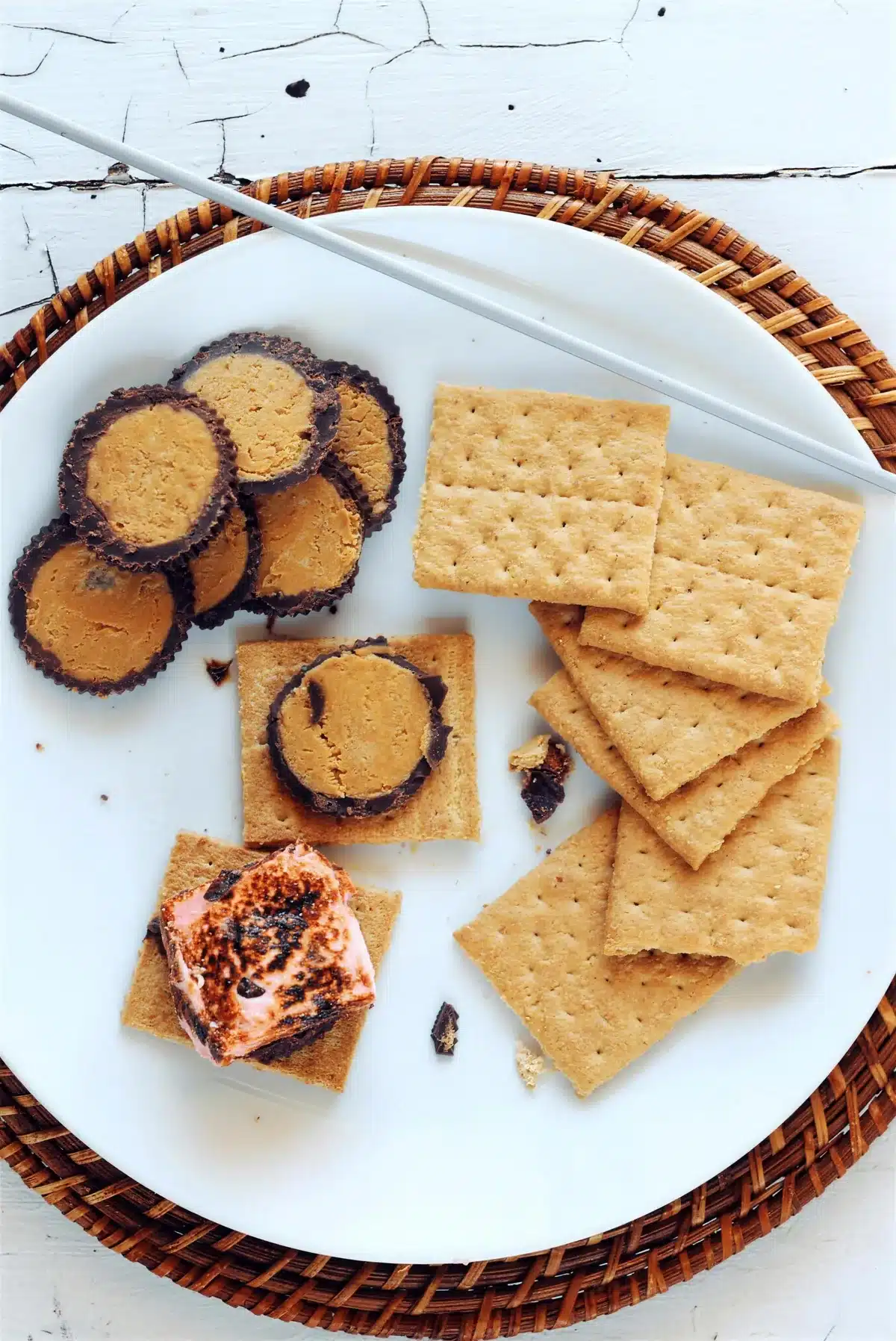
Five things, and only two of them need any thought. Exact quantities are in the recipe card below.
- Peanut butter cups: six standard cups, chilled for ten minutes and then halved horizontally with a serrated knife. Cold cups cut cleanly; room temperature ones smear. Miniature cups are the wrong shape, since they are mostly chocolate and almost no filling.
- Strawberry marshmallows: six of them, and this is the ingredient worth hunting for. Specialty shops and better supermarkets carry them, and homemade ones are a weekend project rather than a difficult one. If you cannot find any, see the section below on faking it.
- Graham crackers: six full sheets, snapped in half along the perforation to give twelve squares. Buy a fresh box. A stale graham is not a texture problem, it is a structural one, and it shatters under pressure instead of cracking.
- Strawberry jam: only needed if you are using plain marshmallows, and only a teaspoon each. Use a set jam rather than a loose preserve or the whole thing slides apart.
- Flaky salt: optional, a pinch over the peanut filling before you close the sandwich. Peanut butter smores are already salted from inside the cup, so this is a finishing touch and not a correction.
Skewers, a serrated knife and a heat source are the only equipment.
Finding or Faking the Strawberry Marshmallow
The jelly in these peanut butter smores has to survive being sat next to something at 300F, which rules out most of the obvious approaches.
Jam on the cracker fails. Graham crackers are dry and porous and they pull moisture out of jam immediately. Assemble six of them and by the time the last marshmallow is toasted the first cracker has gone limp.
Jam on the marshmallow works, just about. Spread a teaspoon on the flat top of a plain marshmallow after toasting, then cap it. The jam is against something hot and sticky rather than against something dry, so the cracker survives. It is messier and the flavor sits in one spot rather than through the whole bite.
Strawberry marshmallows are the real answer. The fruit is dispersed through the sugar, so every part of the melt tastes of it. They also toast slightly faster than plain ones because the added fruit puree raises the moisture content.
Freeze-dried strawberry powder is the cheat. Crush a few freeze-dried strawberries to dust and roll a plain marshmallow in it before toasting. The powder catches on the surface, chars along with the sugar, and gets you most of the way there with no extra moisture at all.
Skip the fruit entirely and you have a very good peanut butter s’more that is not a PB and J. That is a legitimate choice, not a failure.
How To Make Peanut Butter Smores
Peanut butter smores need one piece of preparation and no cooking. Chill the cups first, and everything after that takes about five minutes.
- First, snap six graham sheets into twelve squares and lay them out in pairs. Halve the chilled peanut butter cups horizontally with a serrated knife, using a gentle sawing motion rather than pressure.
- Next, set one cup half on each bottom square with the peanut filling facing up. If you are working with plain marshmallows, this is when the jam goes onto the marshmallow rather than onto the cracker.
- Then toast the marshmallows over a flame, turning slowly, until the surface is evenly bronzed and blistered and the inside has gone to liquid. Two to three minutes at the edge of a fire, or about forty seconds under a torch.
- After that, slide a marshmallow off the skewer onto the cup half, lay the second cup half on top of it, and close the sandwich with the remaining graham square. Press straight down, gently.
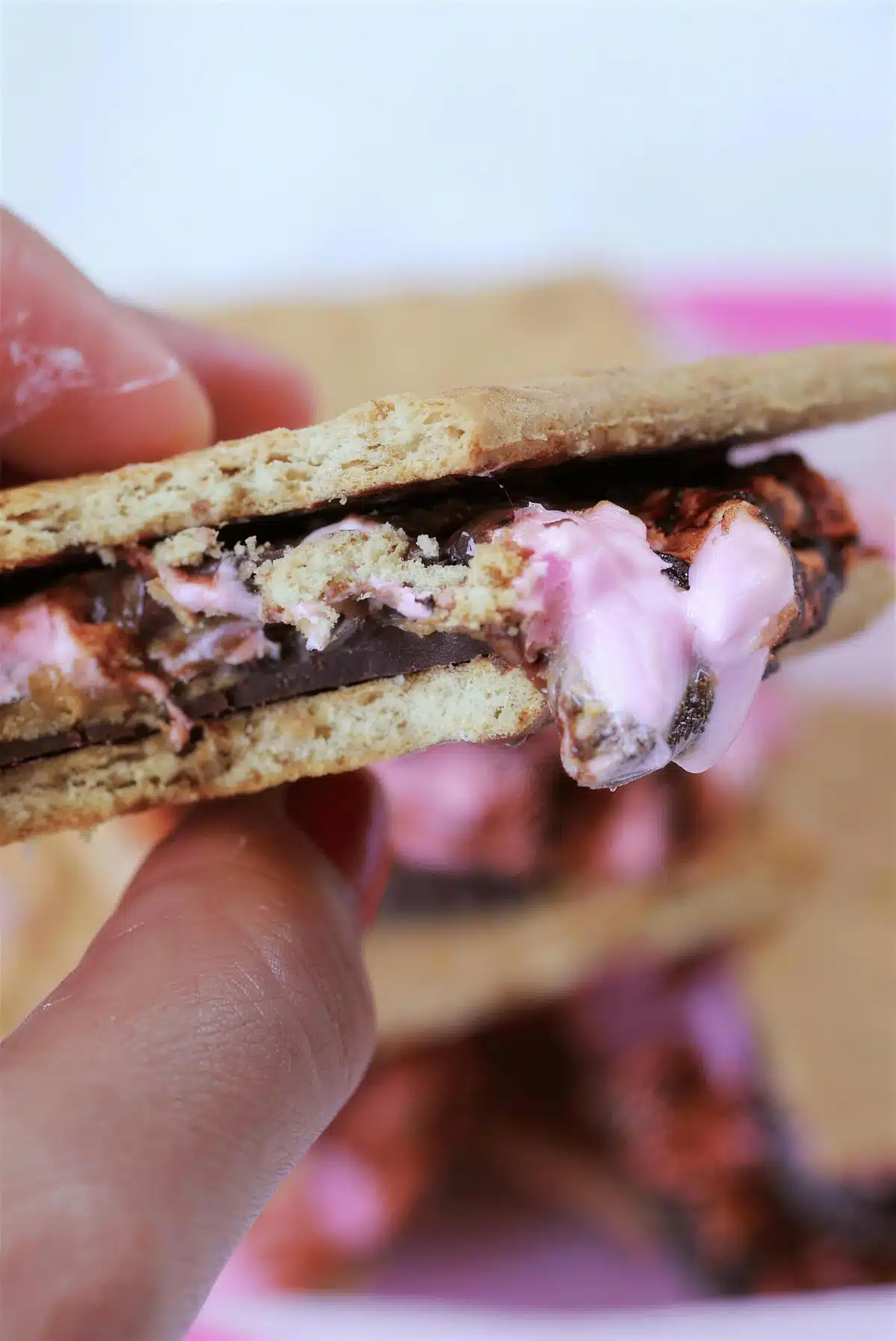
- Finally, let each one stand for a full minute before eating. That minute is when the residual heat gets through both chocolate discs, and skipping it is the single commonest reason peanut butter smores disappoint.
Toasting a Marshmallow Without Turning It To Charcoal
This is the only skill involved and most people are impatient with it.
Stay out of the flames. Direct flame sets the sugar alight and gives you a black shell around a cold center. Work over embers, or about six inches to the side of a flame, where the heat is radiant rather than direct.
Turn continuously and slowly. A steady rotation browns the whole surface at once. Stopping for even a couple of seconds puts one face ahead of the rest and that face is what catches.
You are waiting for the inside, not the outside. The color changes long before the center liquefies. When the marshmallow starts to sag on the skewer and looks like it might slide off, it is ready.
A torch is faster and more controllable. Keep it moving, hold the tip a few inches back, and expect the whole job to take under a minute. This is also the only method that works indoors in February.
A gas burner works in a pinch. Lowest flame, marshmallow held to the side rather than above, and a plate underneath, because one will fall.
Burnt is a preference, not a mistake. A properly blackened marshmallow tastes bitter in a way that suits peanut butter smores particularly well, since the bitterness lands against the salt. Char one on purpose before you decide.
Make It Ahead
Nothing about peanut butter smores can be assembled and held hot, but almost everything else can be done early.
Halve the cups up to a day ahead and keep them on a parchment-lined tray in the refrigerator. This is the fiddly step and doing it in advance is what turns the whole thing into a five-minute job.
Split the crackers and lay out the bottoms on a sheet pan an hour before, cup halves already in place. Cover loosely. They are dry ingredients sitting on dry ingredients and nothing happens to them.
Homemade strawberry marshmallows keep about a week in an airtight box at room temperature, dusted with cornstarch and confectioners’ sugar so they do not weld together.
What cannot wait is the toasting and the assembly. A finished peanut butter s’more has a working life of about three minutes before the marshmallow sets again and the graham starts to give.
For a party, put the tray of prepared bottoms next to the fire with a bowl of marshmallows and let people build their own. It moves faster than any assembly line you could run yourself.
Storing Peanut Butter Smores
- Assembled and untoasted: peanut butter smores hold overnight covered at cool room temperature, though the crackers soften slightly.
- Finished and toasted: they do not keep at all. Eat them within a few minutes or accept a chewy, set marshmallow.
- Halved peanut butter cups: 1 week refrigerated in a sealed box, separated by parchment.
- Marshmallows: 1 week airtight at room temperature. Never refrigerate them, since they go hard and grainy.
- Do not refrigerate a finished one. Cold makes the chocolate seize and the marshmallow rubbery, and reheating gets neither of them back.
Variations and Substitutions
The structure of peanut butter smores is fixed. Everything inside it is negotiable.
- Dark chocolate cups: a sharper edge against the strawberry, and the best single change you can make if you find these too sweet.
- Other jams: raspberry with dark chocolate, apricot with milk, or a thick blackcurrant if you want something genuinely tart.
- Chocolate graham crackers or shortbread instead of plain graham, which changes the snap as much as the flavor.
- Banana slices laid on the bottom cup half, which is a different sandwich and an extremely good one.
- Nut-free: sunflower seed butter cups behave almost identically. Worth knowing that peanut allergy is far more common in perception than in fact, and the National Peanut Board’s allergy myths and facts page is the clearest summary of where the real numbers sit.
- Oven method: open-faced on a sheet pan under a broiler for ninety seconds, watching constantly, then cap. Twelve at once, no skewers.
What to Serve with Peanut Butter Smores
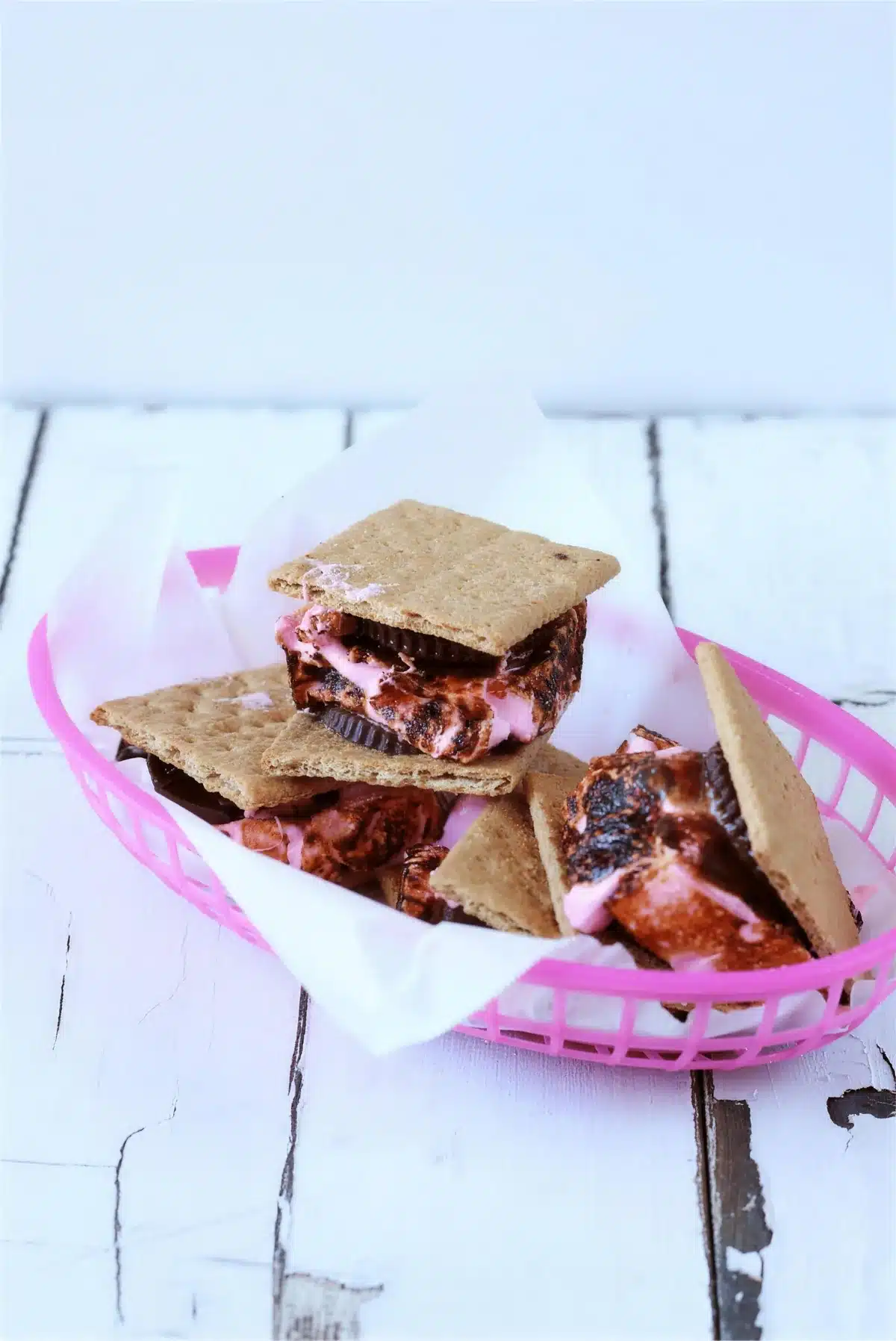
Peanut butter smores are sweet and salty and hot, so the useful partners are cold, plain or sour.
- Very cold milk, which is the correct answer for peanut butter smores and the one nobody writes down.
- Tart lemonade with plenty of ice, for the acid.
- A scoop of plain vanilla, either alongside or pressed straight into the sandwich.
- Strawberries or raspberries, unsweetened, to echo the marshmallow.
- My graham cracker cookies on the same table, using up the rest of the box.
If you want to build the whole spread around peanuts, there is my bourbon caramel peanut butter cups for something to hand round cold, an easy peanut butter fluff dessert to make in advance, and a loaf of chocolate coconut banana bread for the next morning.
Here is what readers ask most often.
Peanut Butter Smores FAQ
Frequently Asked Questions
Can I make peanut butter smores without a fire?
Yes, and most people should. A kitchen torch is the closest match to a campfire and takes about forty seconds a marshmallow. A broiler works for a crowd: lay the bottoms out on a sheet pan, marshmallow on top of the cup half, and give them ninety seconds with the door cracked and your eyes on them the whole time. A gas burner on its lowest setting will do a single marshmallow held to the side of the flame, with a plate underneath for the one that falls.
Where do I find strawberry marshmallows?
Specialty confectioners, better supermarkets and online sweet shops carry them, usually seasonally. Failing that, crush freeze-dried strawberries to a powder and roll plain marshmallows in it before toasting, which adds the flavor without adding water. A teaspoon of set strawberry jam spread onto the marshmallow after toasting is the third option and the messiest.
Why did my chocolate not melt?
Almost always because the s’more was eaten too soon. Peanut butter smores need a full minute standing after assembly for the heat to move out of the marshmallow and through both chocolate discs. The other cause is a cup used straight from a cold cooler, which starts so far below room temperature that the marshmallow cannot catch up.
More Questions About Marshmallows and Fire
Frequently Asked Questions
How many peanut butter cups do I need per s’more?
One whole standard cup, halved horizontally to give two discs, one below the marshmallow and one above it. That works out at six cups for six s’mores. Using a single half per sandwich is the commonest shortcut and it gives you chocolate on one face only, which is noticeably worse.
Can I use miniature peanut butter cups?
Not well. Miniatures have a much higher ratio of chocolate shell to filling, so you lose most of the salt and most of the softness that makes this work. If they are all you have, use three or four per sandwich, arranged flat rather than stacked, and skip the halving.
Do the crackers go soggy?
Not if the fruit stays out of contact with them. That is the entire argument for the strawberry marshmallow. Jam spread directly onto a graham cracker will soften it within a couple of minutes, so if you are using jam, put it on the marshmallow instead and assemble at the last moment.
How do I scale this up for a crowd?
Prepare the bottoms on sheet pans, one cup half per cracker, and let people toast their own. Halve the cups the day before and keep them cold. Twenty s’mores is about the point at which a broiler becomes more sensible than a fire, and at that scale you want two trays going in rotation so nothing sits assembled and waiting.
Peanut butter smores are a five-minute dessert that lives or dies on two small decisions: cold cups cut in half, and a full minute of patience before the first bite. For something to make with the rest of the box of graham crackers, try my graham cracker cookies.
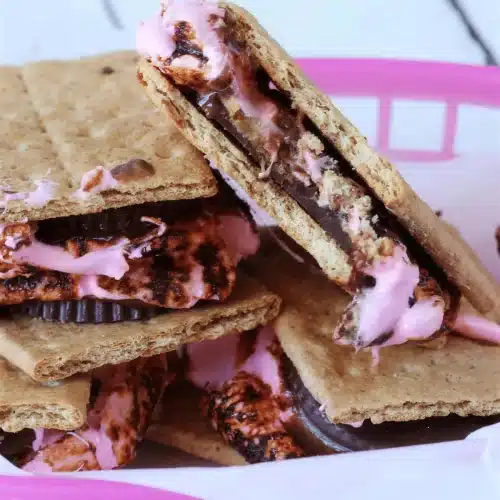
Peanut Butter Smores with Strawberry Marshmallows
Save this recipe
Enter your email and I’ll send this recipe straight to your inbox.
Ingredients
The Stack
- 6 whole graham cracker sheets snapped in half to give 12 squares
- 6 peanut butter cups standard size, chilled and halved horizontally
- 6 large strawberry marshmallows or plain marshmallows, see below
If You Cannot Find Strawberry Marshmallows
- 6 teaspoons strawberry jam a set jam, not a loose preserve
- 1 pinch flaky sea salt optional, over the peanut filling
Equipment
- Serrated knife
- Long skewers or roasting forks
- Kitchen torch, campfire or broiler
Instructions
Build the Bottoms
- Chill the peanut butter cups for 10 minutes, then halve each one horizontally with a serrated knife, sawing gently rather than pressing. You want 12 thin discs of chocolate backed with peanut filling.
- Snap the graham cracker sheets in half to give 12 squares and lay them out in pairs on a tray. Set one cup half on each bottom square with the filling facing up.
- Only if you are using plain marshmallows: have the jam and a teaspoon ready beside the fire. It goes onto the marshmallow after toasting, never onto the cracker.
Toast, Close and Rest
- Toast the marshmallows over embers or to the side of a flame, turning slowly and continuously, until the surface is evenly bronzed and blistered and the middle has gone to liquid. Two to three minutes over a fire, about 40 seconds under a kitchen torch.
- Slide a marshmallow off the skewer onto a cup half, lay the second cup half on top of it, and close the sandwich with the remaining graham square. Press straight down, gently, so the marshmallow spreads to the edges.
- Rest each one for a full minute before eating. That minute is when the held heat travels through both discs of chocolate, and skipping it is why most s'mores arrive with the chocolate still solid.