
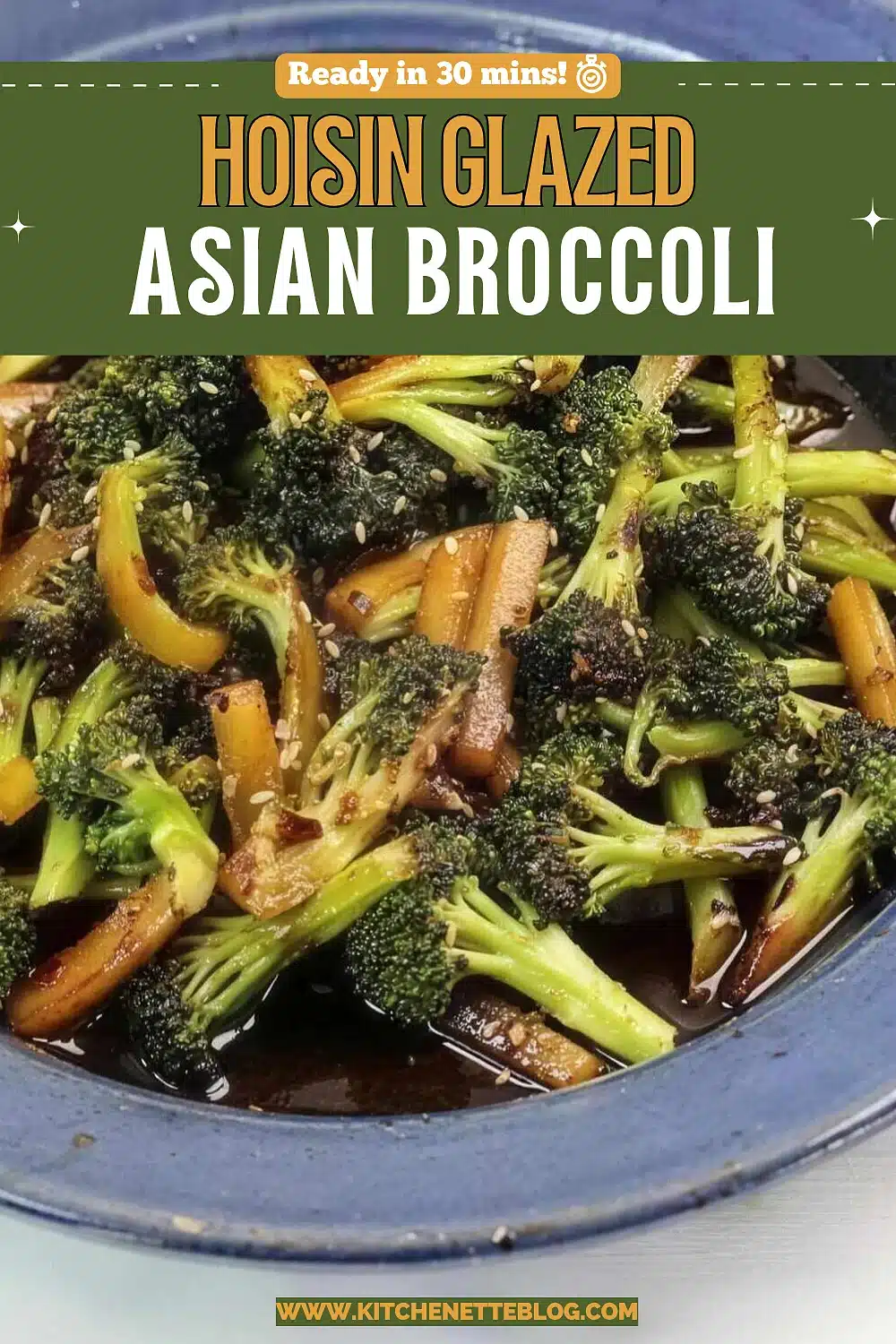
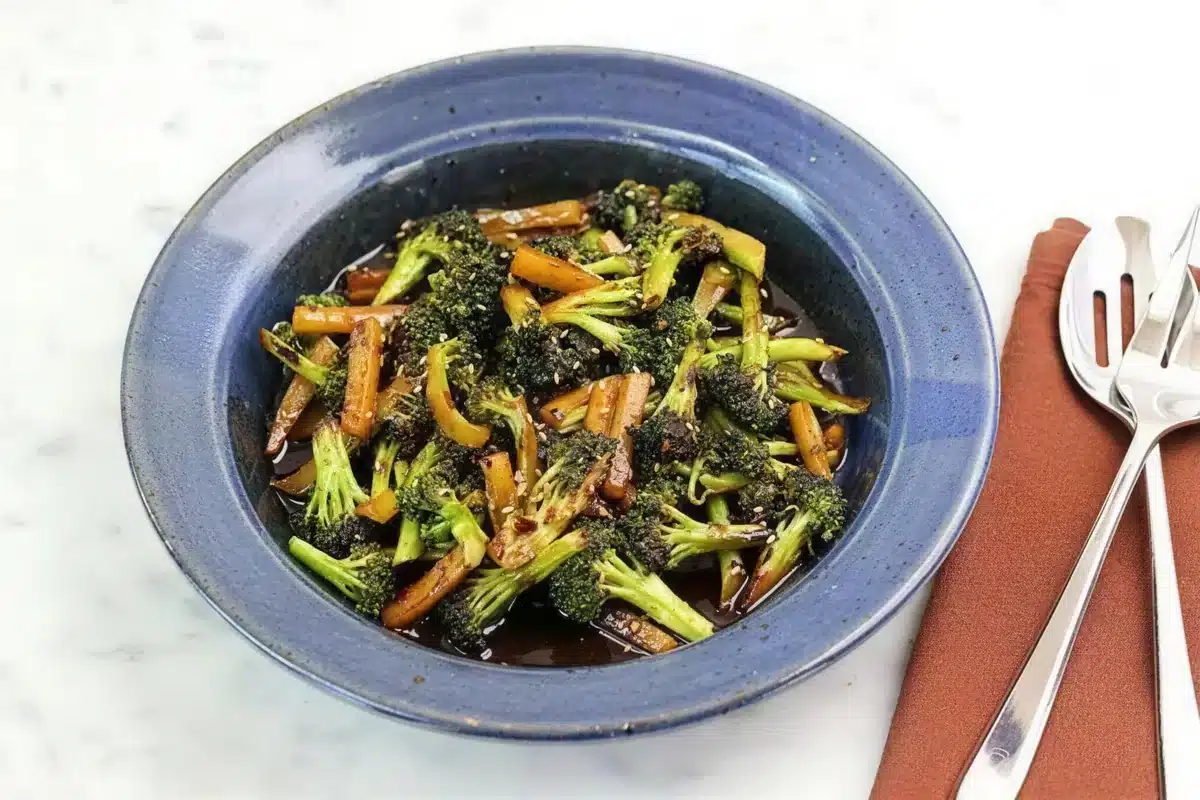
This asian broccoli is one pan, about half an hour, and a glaze of hoisin, soy, brown sugar and chili garlic sauce that goes on at the very end and reduces around the vegetable until every floret is lacquered. It is a side dish that people go back to before the main course is finished.
The part that surprises people is what is in the bowl alongside the florets. Those dark amber matchsticks are not carrots. They are the broccoli stems, peeled and cut to the same length as the florets, and they caramelize harder than the tops do because they are denser and sweeter. Half of every head normally goes in the bin. Here it is arguably the best part.
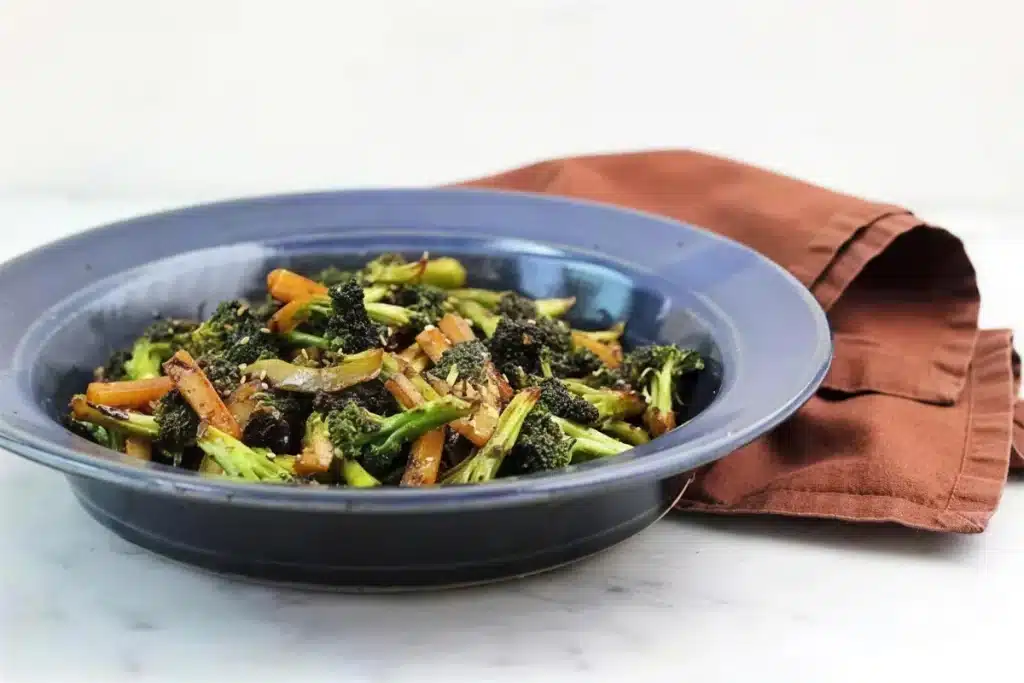
- One skillet, about thirty minutes, and no steaming or blanching beforehand
- The glaze is six pantry ingredients whisked together in a bowl while the pan heats
- Peeled stems go in with the florets, so a 2 pound head yields a 2 pound side dish
- Browning happens before any liquid arrives, which is why the florets get real color
- Sweet, salty, sour and hot in one sauce, and the chili garlic level is yours to set
- Good hot, good at room temperature, and genuinely good cold out of the refrigerator

Before the recipe, a word about the name, because it means two entirely different things depending on who is saying it.
What “Asian Broccoli” Actually Means
Ask for asian broccoli in a supermarket and you may be pointed at gai lan, the leafy stemmed brassica also sold as Chinese broccoli, which looks nothing like the tight green heads in the photographs on this page. It has long flat leaves, thin stalks and small scattered buds, and it is usually blanched and dressed with oyster sauce rather than browned in a skillet.
This asian broccoli is the other thing the phrase means, and it is the far more common one: ordinary supermarket broccoli cooked in a sweet and salty glaze built from Chinese pantry staples. If you have eaten broccoli in a takeout container, this is that texture and that flavor, made properly and without the beef.
You can use gai lan here if you find it, with two changes. Cut the stalks into 2-inch lengths, keep the leaves separate, and add the leaves in the last minute since they wilt almost instantly. The glaze suits it well because oyster sauce and hoisin are close cousins.
Broccolini is the third thing people mean, and it is a cross between broccoli and gai lan. It works beautifully in this glaze, needs no peeling and cooks about three minutes faster.
Save this recipe
Enter your email and I’ll send this recipe straight to your inbox.
Ingredient Notes
Everything in the glaze keeps for months in a refrigerator door, which is what makes asian broccoli a weeknight dish rather than a project. Exact amounts are in the recipe card below.
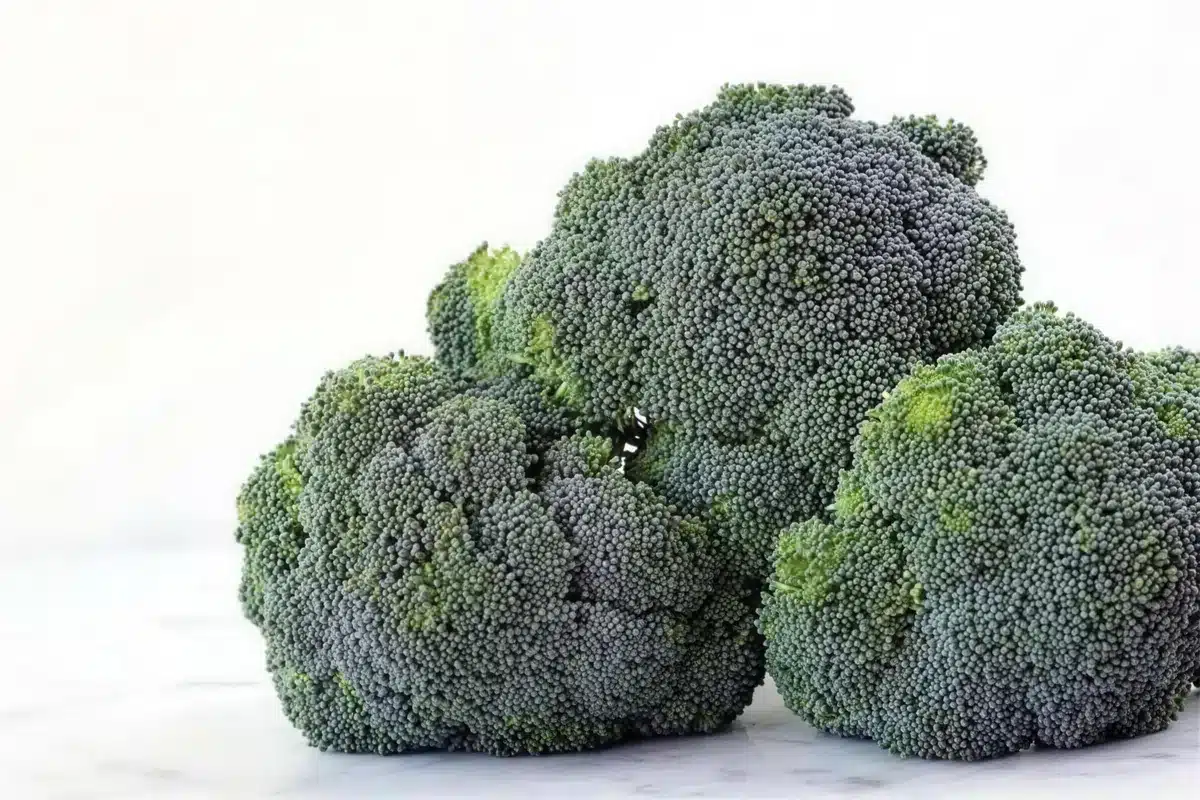
- Broccoli crowns: two pounds, which is two large heads or three small ones. Buy crowns with tight, dark, blue green buds. Yellowing means the buds are opening and the flavor has already gone sulfurous.
- Hoisin sauce: three tablespoons, and it is doing most of the work. It is a fermented soybean sauce sweetened and spiced, thick enough to cling, and there is no real substitute for it here.
- Brown sugar: three tablespoons, packed. Between the sugar and the hoisin this is a frankly sweet glaze, which is the point of the style. Cut it to two if you want something more savory.
- Chili garlic sauce: one tablespoon of the coarse red kind with visible seeds. It carries the garlic in this recipe as well as the heat, so do not swap it for plain sriracha without adding a clove.
- Soy sauce and fish sauce: two tablespoons and half a teaspoon. The fish sauce is optional and it is also the reason people cannot work out why the dish tastes deeper than the ingredient list suggests.
- Rice wine vinegar: one tablespoon, and do not leave it out. Without an acid the glaze is flat sweet, and one tablespoon is what makes it taste finished.
- Cornstarch: one teaspoon, whisked in cold. This is a deliberately loose glaze that pools a little in the bowl rather than coating like a syrup. Use two teaspoons if you want it to cling harder.
- Toasted sesame oil and seeds: both go on at the end. Sesame oil is aromatic rather than a cooking fat and its smell disappears if it boils.
What You Need in the Kitchen
A 12-inch skillet or a wok, a vegetable peeler and a mixing bowl. The pan size is the one thing that matters. Two pounds of broccoli in a 10-inch pan sits in a heap and steams in its own moisture, and no amount of heat will brown it. In a smaller pan, cook it in two batches and combine them before the glaze goes in.
Do Not Throw the Stems Away
A head of broccoli destined for asian broccoli is roughly half florets and half stem by weight, and in most kitchens the stem half goes straight into the bin. Illinois Extension’s home gardening guide to broccoli describes the edible part as the compact clusters of unopened flower buds and the attached portion of stem, and tells growers to cut the head with five to six inches of stalk still on it. The stalk was never waste.
What makes it unpleasant raw is the outer layer, which is fibrous and slightly bitter. Take that off with a vegetable peeler, going around the stem once or twice until you reach the pale, wet, almost translucent core, and what remains is sweeter than the florets and has a texture close to kohlrabi.
Cut the peeled core into matchsticks the same length as the florets so that everything cooks in the same time. In the pan they behave differently from the tops: with no crevices to trap steam they sit flat on the metal and take on color fast, which is why they end up darker than everything else. In the bowl they read as the caramelized bits people pick out first.
Chop the bottom inch or two off and discard it. That end is woody all the way through and peeling will not save it.
How To Make Asian Broccoli
Asian broccoli takes about fifteen minutes of real work, and almost all of it is knife work before the pan ever gets hot.
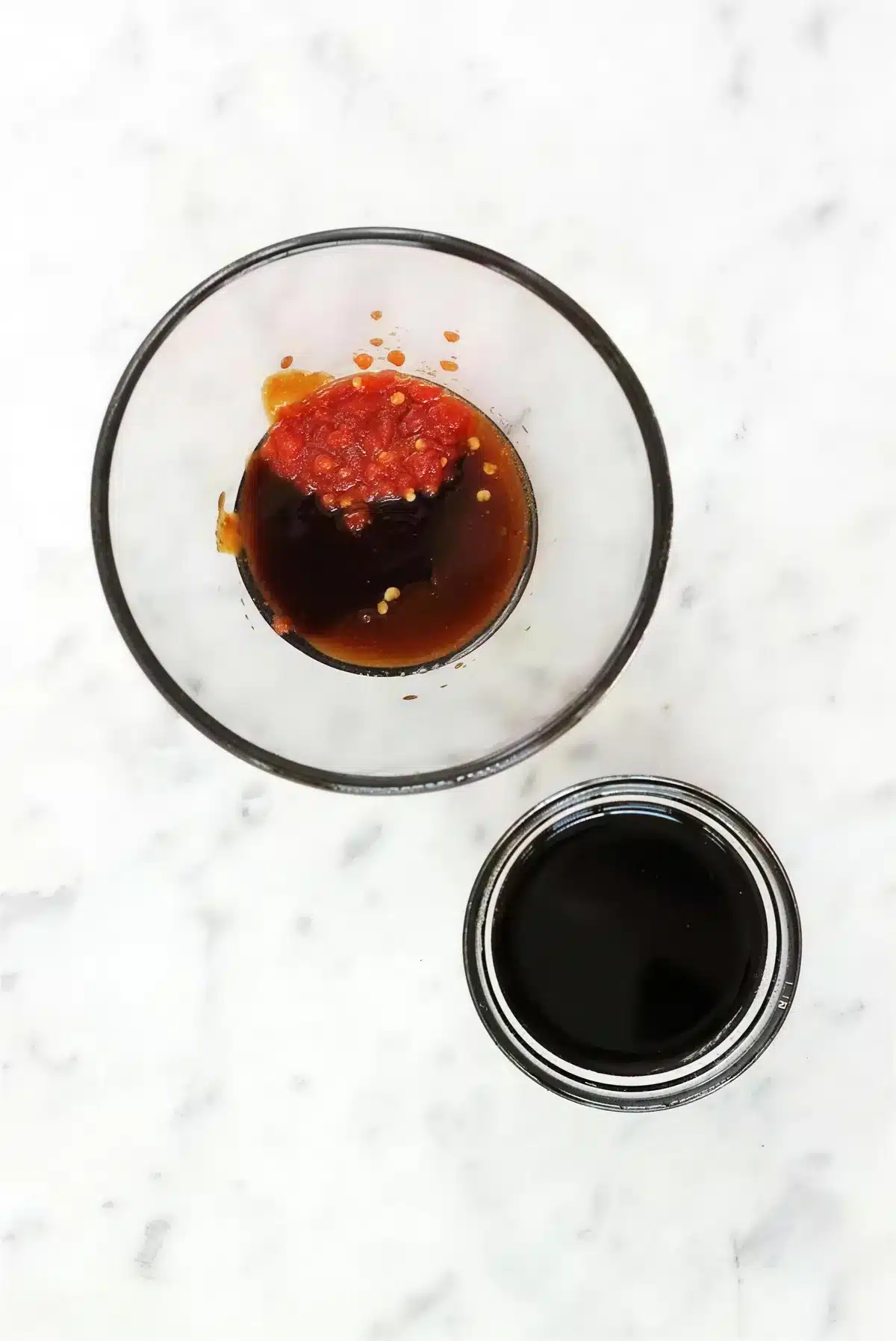
First, cut the woody bottom off the stems and throw it away. Separate the florets into medium pieces, peel what is left of the stems, and cut the peeled cores into matchsticks the length of the florets. Dry everything well if it has been washed.
Next, whisk the water, hoisin, cornstarch, soy sauce, fish sauce, brown sugar, chili garlic sauce and vinegar together in a bowl until no lumps remain. Set it beside the stove, because once the pan is hot there is no time to make it.
Then, heat a 12-inch skillet over medium high heat for two minutes, add the vegetable oil, and tip in the broccoli. Spread it into as close to a single layer as you can and leave it alone for 3 to 4 minutes so it browns rather than steams.
After that, toss and keep cooking another 3 to 4 minutes until the florets are well browned in patches and a matchstick gives slightly when you press it with a fork.
Finally, turn the heat down to medium, whisk the glaze again and pour it in. It will bubble hard at once. Stir constantly for 2 to 3 minutes until it thickens and coats everything, then take the pan off the heat, add the sesame oil and scatter over the sesame seeds. This serves 6 as a side dish.
Getting Real Color on the Florets
The difference between good asian broccoli and a limp, olive drab side dish comes down to three habits.
Dry broccoli, hot pan. Water on the surface has to boil away before browning can start, and while that happens the buds are being steamed. If you washed the heads, spin or towel them properly.
Do not stir for the first four minutes. This is the hardest instruction to follow and the one that decides the outcome. Contact time with hot metal is what browns food. Constant tossing means nothing ever sits still long enough.
Leave the pan alone about space. Broccoli releases a lot of water, and in a crowded pan that water has nowhere to go and condenses back onto the vegetable. Two batches in a 10-inch skillet beats one batch every time.
How To Tell When It Is Done
Asian broccoli has a narrow window, and it is easier to judge by feel than by clock.
Before the glaze goes in, the broccoli should be almost cooked, not fully. Push a fork into one of the thicker stem matchsticks: it should go in with a little resistance, the way a potato does two minutes before it is ready. The two or three minutes of simmering in the sauce finishes it.
The florets should be browned in patches, not uniformly, and still bright green underneath. Uniform color means it went too far. Once the buds turn olive, the texture is already soft and there is no way back.
The glaze is done when it goes from watery to glossy and a spoon dragged across the pan leaves a trail that fills in slowly. That takes 2 to 3 minutes at a lively simmer and it happens quite suddenly.
Make It Ahead
Asian broccoli is a fast dish, but two thirds of it can be done in advance.
The glaze keeps in a jar in the refrigerator for a week. Whisk it again before use, since the cornstarch settles into a solid layer at the bottom within an hour.
The broccoli can be trimmed, peeled and cut a full day ahead. Keep it in a bag with a dry paper towel inside to absorb the moisture it gives off, and it will still brown properly the next day.
What does not work is cooking asian broccoli ahead and reheating it hot. The florets keep softening and the glaze thins as they release water. If you need it early, cook it, spread it on a tray to stop the carryover cooking, and serve it at room temperature. It is genuinely good that way.
Storing Asian Broccoli
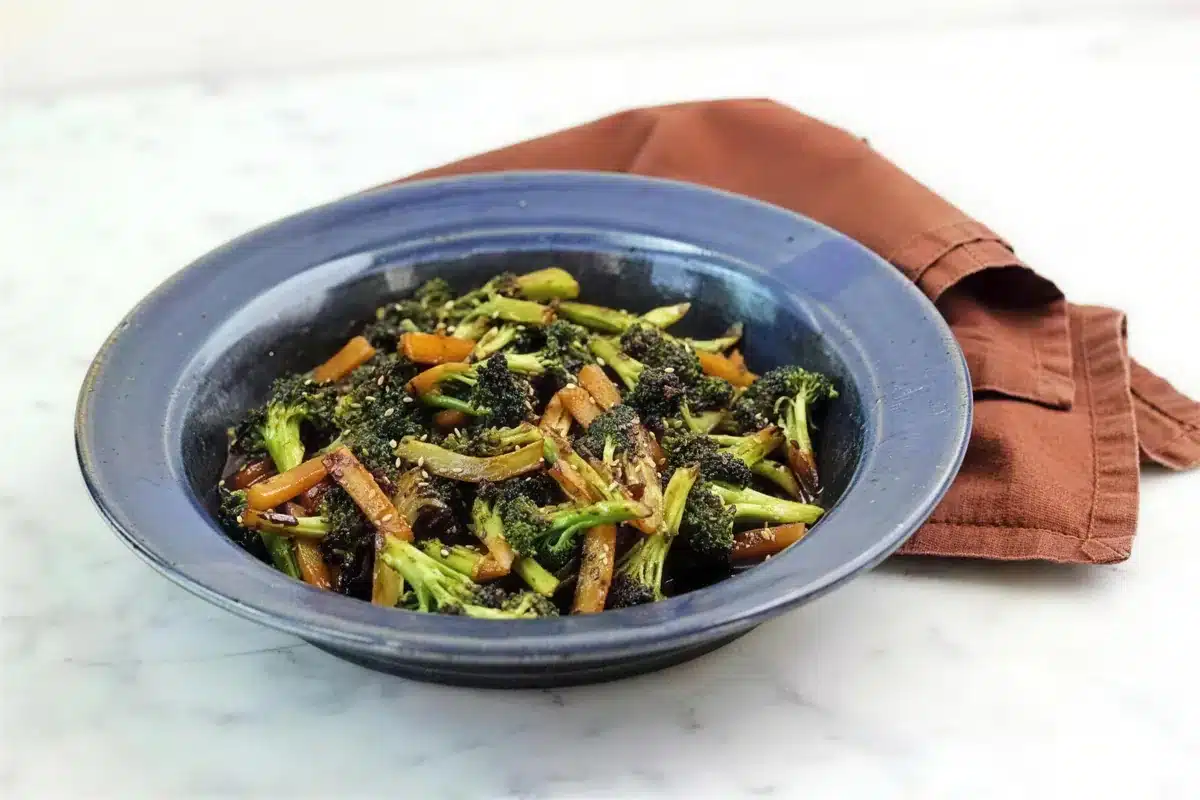
Refrigerator: asian broccoli keeps up to 4 days in an airtight container. The texture softens and the glaze loosens, and honestly it is at its best cold on the second day, straight from the container, chopped into a bowl of rice.
Reheating: a hot dry skillet for 2 minutes beats a microwave by a wide margin, because it drives off the water that came out overnight instead of adding more heat to it. A splash of water and a lid works if the glaze has gone sticky.
Freezing: do not freeze asian broccoli. Broccoli that has been frozen and thawed collapses into something soft and gray, and the cornstarch in the glaze breaks and goes watery.
If you are packing lunches, this holds better than nearly any other cooked green vegetable and does not need to be hot to be worth eating.
Variations and Substitutions
- Add garlic and ginger: two cloves and a tablespoon of grated ginger, in the pan for thirty seconds just before the glaze. Any earlier and they burn.
- Make it a meal: brown a pound of ground pork or sliced chicken thigh first, lift it out, cook the broccoli in the fat, and return the meat with the glaze.
- Vegan and vegetarian: leave the fish sauce out and check the hoisin, which is usually vegan but not always. A teaspoon of white miso replaces some of the depth.
- Other vegetables: the glaze that makes asian broccoli work also suits green beans, cauliflower, broccolini and thick asparagus. Dense ones want two extra minutes of browning before the sauce.
- Gluten free: tamari for the soy sauce, and read the hoisin label, since most brands contain wheat.
- More heat: two tablespoons of chili garlic sauce, or one tablespoon plus a teaspoon of chili crisp scattered over at the table.
What to Serve with Asian Broccoli
Asian broccoli is sweet and salty and quite assertive, so it wants something plain beside it. Steamed jasmine rice is the obvious partner and the right one.
Against a protein, asian broccoli sits naturally with oven baked sesame chicken or a plate of beef and broccoli, though putting the two broccoli dishes on one table is a decision you have to make for yourself. With noodles it works alongside shrimp chow mein, where the glaze gets picked up by the noodles.
For a lighter plate, serve it with plain rice and a fried egg. And if you want the same vegetable with none of the sugar, air fryer broccoli is the other direction entirely.
Asian Broccoli FAQ
Frequently Asked Questions
Can I use frozen broccoli?
You can, but expect a softer result and no browning. Frozen florets carry a lot of ice and release it into the pan, so cook them from frozen in a very hot dry skillet until the water has gone, then add the oil and carry on. There are no stems to speak of in a frozen bag, so you lose that half of the dish.
Is this the same as broccoli with garlic sauce from a takeout menu?
Close, but not identical. Restaurant garlic sauce is savory and thickened with more cornstarch, with a lot of garlic and very little sugar. This is sweeter and leans on hoisin. Adding two cloves of garlic and cutting the brown sugar to one tablespoon gets you most of the way there.
Why is my glaze watery?
Either it did not come back to a proper bubble after the cold sauce hit the pan, or the cornstarch settled out of the bowl and got left behind. Whisk it again immediately before pouring, and keep the pan at a lively simmer for the full 2 to 3 minutes.
Do I have to peel the stems?
Yes, if you are using them. The outer layer is fibrous and stays tough no matter how long it cooks, and it is bitter enough to be noticeable. Peeling two pounds of stems takes about three minutes.
More Questions About Glazed Broccoli
Frequently Asked Questions
Can I roast it instead of using a skillet?
Yes. Toss the cut broccoli with the oil, roast at 450 degrees F for 18 to 20 minutes, then simmer the glaze separately in a small pan until it thickens and pour it over. You get more even browning and slightly less of the caramelized pan flavor.
What is chili garlic sauce and what can I use instead?
It is a coarse paste of red chiles, garlic, vinegar and salt, usually sold in a jar with a green lid. Sambal oelek plus a minced clove of garlic is the closest swap. Sriracha is sweeter and thinner, so use a little less and add garlic.
How do I stop the sesame seeds burning?
Add them off the heat, after the pan has left the burner. They are already toasted when you buy them and thirty seconds in a hot glaze is enough to turn them bitter.
Is this dish spicy?
Mildly. One tablespoon of chili garlic sauce across two pounds of vegetable gives warmth rather than heat, and the sugar tempers it further. Double it if you want it to register properly.
Make asian broccoli once and peel the stems even though it feels like extra work. That is the version people remember.
Asian Broccoli with Hoisin Glaze
Save this recipe
Enter your email and I’ll send this recipe straight to your inbox.
Ingredients
The Broccoli
- 2 pounds broccoli crowns about 2 large heads, stems attached
- 2 tablespoons vegetable oil or another neutral oil with a high smoke point
The Hoisin Glaze
- 1/4 cup water
- 3 tablespoons hoisin sauce
- 1 teaspoon cornstarch use 2 for a glaze that clings harder
- 2 tablespoons soy sauce tamari to keep it gluten-free
- 1/2 teaspoon fish sauce optional, leave out to keep it vegan
- 3 tablespoons packed brown sugar cut to 2 for a more savory glaze
- 1 tablespoon chili garlic sauce the coarse red kind with visible seeds, plus more to taste
- 1 tablespoon rice wine vinegar
To Finish
- 1/2 teaspoon toasted sesame oil off the heat, not in the pan
- 2 teaspoons toasted sesame seeds
Instructions
Prep the Broccoli
- Chop the woody bottom inch or two off each broccoli stem and throw it away. Cut the florets off and separate them into medium pieces.
- Peel the remaining stems with a vegetable peeler, going around once or twice until you reach the pale translucent core, then cut them into matchsticks roughly the length of the florets. Dry everything well if the broccoli has been washed, because wet broccoli will not brown.
Mix the Glaze
- Whisk the water, hoisin, cornstarch, soy sauce, fish sauce, brown sugar, chili garlic sauce and rice wine vinegar together in a small bowl until no lumps of cornstarch remain. Set it beside the stove.
Brown the Broccoli
- Heat a 12-inch skillet over medium high heat for 2 minutes, add the vegetable oil, and tip in the florets and stems. Spread them into as close to a single layer as you can and leave them completely alone for 3 to 4 minutes so they brown instead of steaming. Work in two batches if your pan is smaller.
- Toss, then keep cooking another 3 to 4 minutes until the florets are well browned in patches and a fork pushed into a thick stem matchstick meets a little resistance. The broccoli should be almost cooked, not fully.
Add the Glaze
- Lower the heat to medium, whisk the glaze again and pour it in. Stir constantly for 2 to 3 minutes until it turns from watery to glossy and coats everything. Take the pan off the heat, stir in the sesame oil and scatter the sesame seeds over the top.