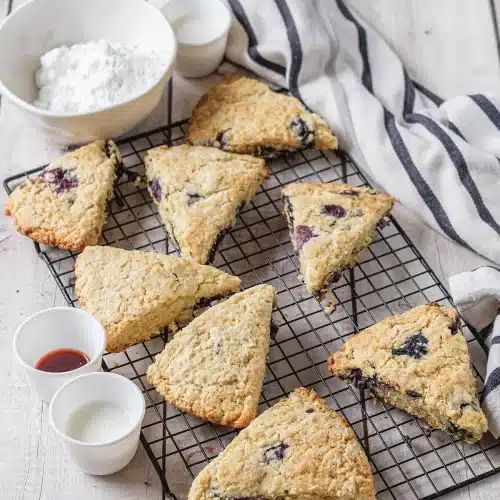
Blueberry scones from a coffeehouse counter cost more than a pound of butter and they are usually a day old by the time you buy one. The homemade version takes twenty minutes of actual work, comes out of the oven with the edges still crisp, and holds far more fruit than any bakery would risk.
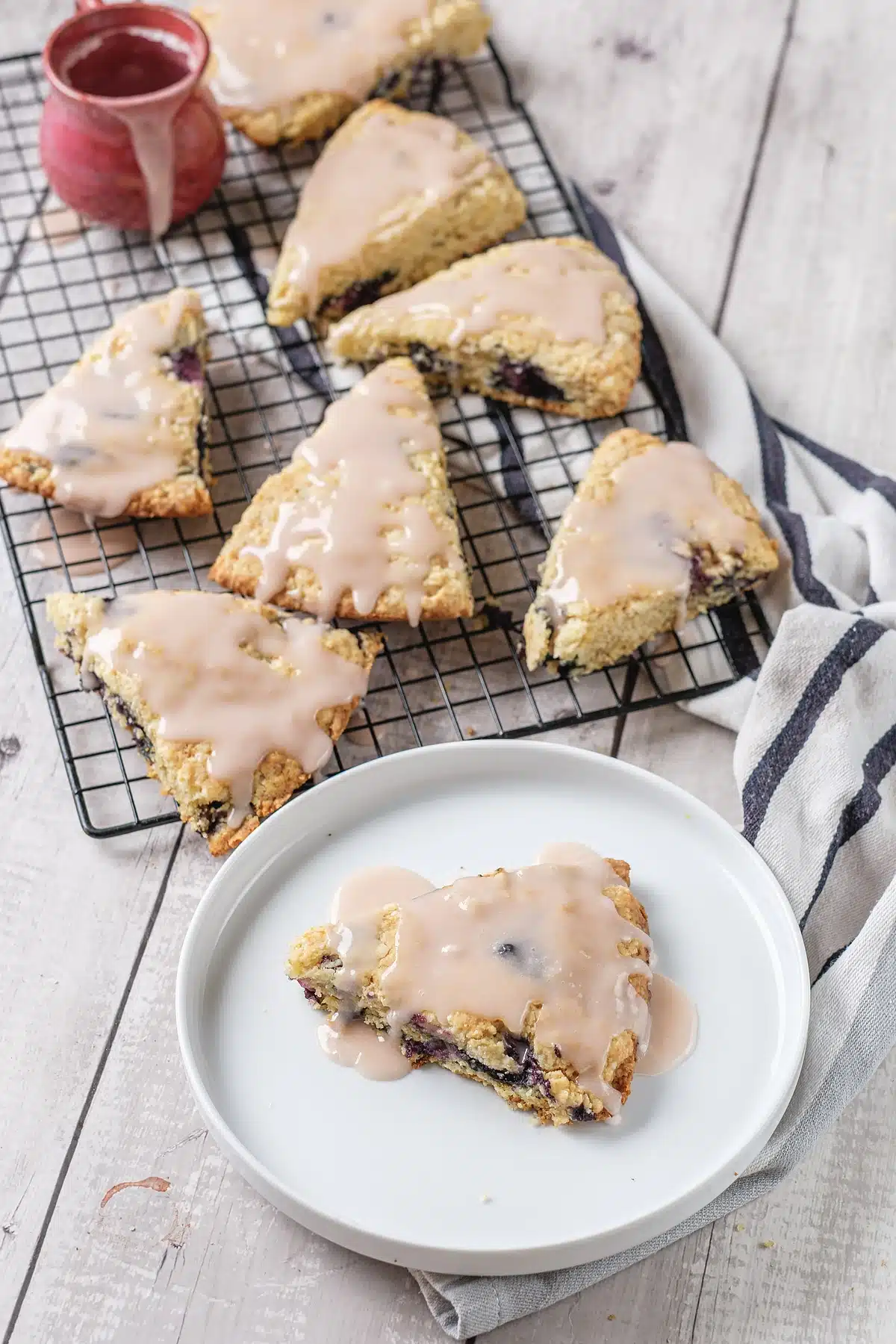
These blueberry scones are built in the Starbucks style: a sturdy, slightly sweet triangle with a tight crumb rather than a flaky one, lemon zest through the dough, and a pale vanilla glaze poured over the top once it has cooled. The one non-negotiable step is the cold butter, and there is a section below on exactly why.
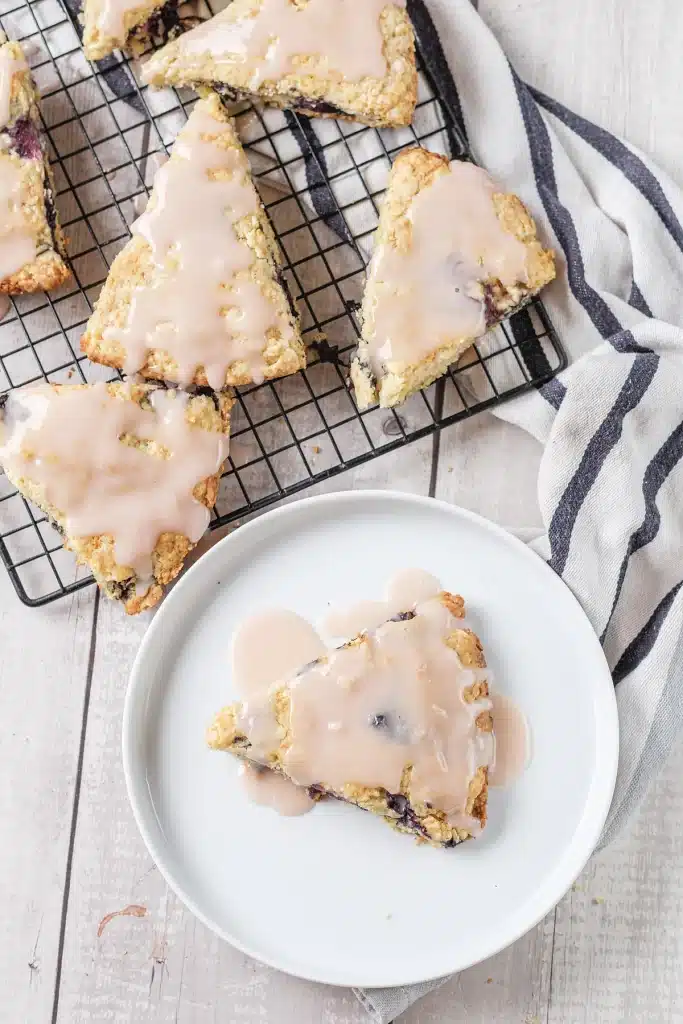
- One bowl, twenty minutes of work, eight generous wedges
- Frozen grated butter, which is the trick that makes them rise tall
- A full cup of berries, roughly twice what a bakery uses
- Freeze the raw wedges and bake them straight from frozen any morning
- A vanilla glaze that sets firm enough to stack them


- What Makes Starbucks Blueberry Scones Different
- Ingredient Notes
- Cold Butter Is the Whole Technique
- Fresh or Frozen Blueberries
- How To Make Blueberry Scones
- How To Tell When They Are Baked
- Make It Ahead
- Storing Blueberry Scones
- Variations and Substitutions
- What to Serve with Blueberry Scones
- Blueberry Scones FAQ
What Makes Starbucks Blueberry Scones Different
A British scone is small, plain and meant to be split and buttered. The American coffeehouse version is a different animal: bigger, sweeter, cut into wedges rather than rounds, and finished with a glaze. Starbucks blueberry scones sit firmly in that second camp, and the recipe below is built to match them.
The texture of bakery blueberry scones is the giveaway. A bakery-style scone has a tight, cakey crumb that holds together in one hand while you walk, not the shattering layers of a laminated pastry. That comes from a higher sugar content, cream instead of milk, and a dough that is handled just enough to come together and no more.
The other difference is the fruit load. Coffeehouse blueberry scones are conservative with the berries because fruit makes a dough harder to shape and more likely to leak in the oven. At home you can push it to a full cup, and the difference on the plate is obvious.
One more thing the coffeehouse gets right and most home recipes miss: size. A Starbucks wedge is large, roughly a quarter of the width of a small round, and that scale is part of why the inside stays soft while the outside crisps. Cutting eight wedges from a nine-inch round gets you there almost exactly.
Save this recipe
Enter your email and I’ll send this recipe straight to your inbox.
Ingredient Notes
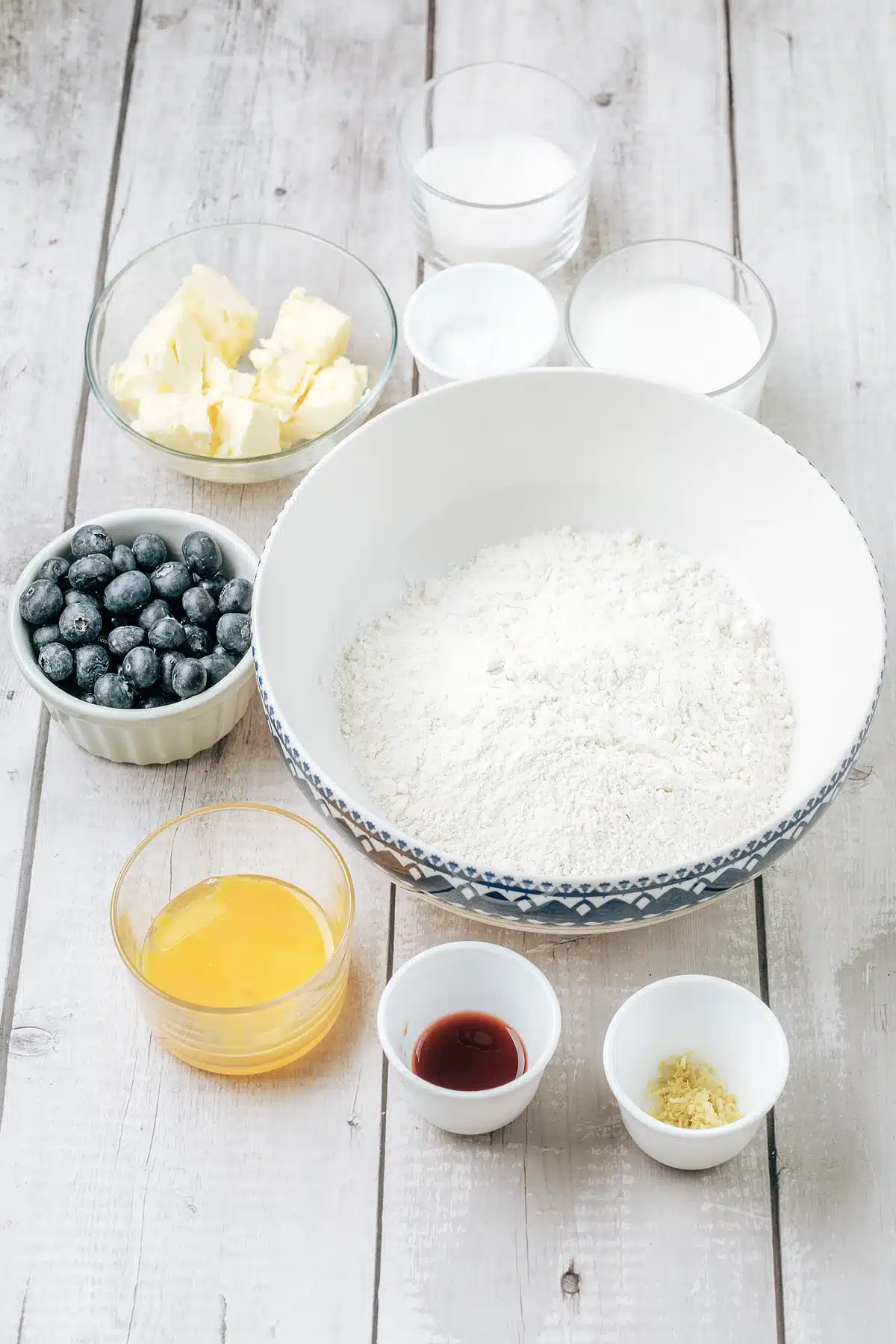
- All-purpose flour. Two cups, spooned into the measure and leveled rather than scooped. Scooping packs in as much as a quarter cup extra, which is the fastest way to a dry, heavy wedge.
- Cold unsalted butter. Half a cup, grated on a box grater and put back in the freezer. Grating gives you thousands of small pieces in seconds, and it is far more even than cutting it in with a pastry blender.
- Heavy cream. Half a cup in the dough and a little more for brushing the tops. Cream carries more fat and less water than milk, which is what keeps the crumb tender instead of tough.
- Granulated sugar. Half a cup. That is generous for a scone and deliberately so, because the coffeehouse version is sweeter than a traditional one.
- Baking powder. Two and a half teaspoons, which reads as a lot until you remember there is no yeast and no time for anything to rise slowly. Check the date on the tin; flat scones are almost always old baking powder.
- Lemon zest. One lemon. It is the quiet ingredient that stops the whole thing tasting flat and sugary, and it makes the fruit read brighter than it actually is.
- Fresh berries. One cup. Frozen works if you keep them frozen and do not thaw them, though fresh gives you far less streaking through the dough.
- Vanilla extract. A teaspoon and a half in the dough and half a teaspoon in the glaze. Use real extract; in something this plain, imitation vanilla has nowhere to hide.
Cold Butter Is the Whole Technique
Every rule in this blueberry scones recipe exists to keep the butter solid until the wedges hit the oven. Cold butter melts in the heat, releases steam, and the steam pushes the dough apart into layers. Butter that has already softened into the flour just fries the dough from inside and gives you a flat, greasy scone.
Grate it frozen. A box grater turns a stick into shreds in under a minute, and shreds distribute far more evenly than the pea-sized lumps a pastry cutter leaves behind. Put the pile straight back in the freezer while you measure everything else, and work quickly once it comes out.
The second cold step is the one most people skip. Once the wedges are cut and brushed with cream, freeze the whole pan for fifteen to twenty minutes before it goes in the oven. Blueberry scones baked from a chilled dough rise noticeably taller and hold their shape rather than spreading sideways.
Fresh or Frozen Blueberries
Fresh fruit is easier and gives blueberry scones a cleaner-looking crumb. The berries stay whole in the dough, and only the ones you crush while folding will bleed. If good fruit is in season, use it.
Frozen fruit works perfectly well with one rule: do not thaw it. Toss the berries in straight from the freezer and fold them in fast, because a thawed berry is a bag of purple juice that will marble the entire dough. A tablespoon of the measured flour tossed with the frozen fruit helps as well.
Either way the fruit does real work beyond flavor. Blueberries are one of the more nutritionally interesting things you can put in a breakfast pastry, and the U.S. Highbush Blueberry Council keeps a readable summary of what blueberries actually contribute if you want the detail.
How To Make Blueberry Scones
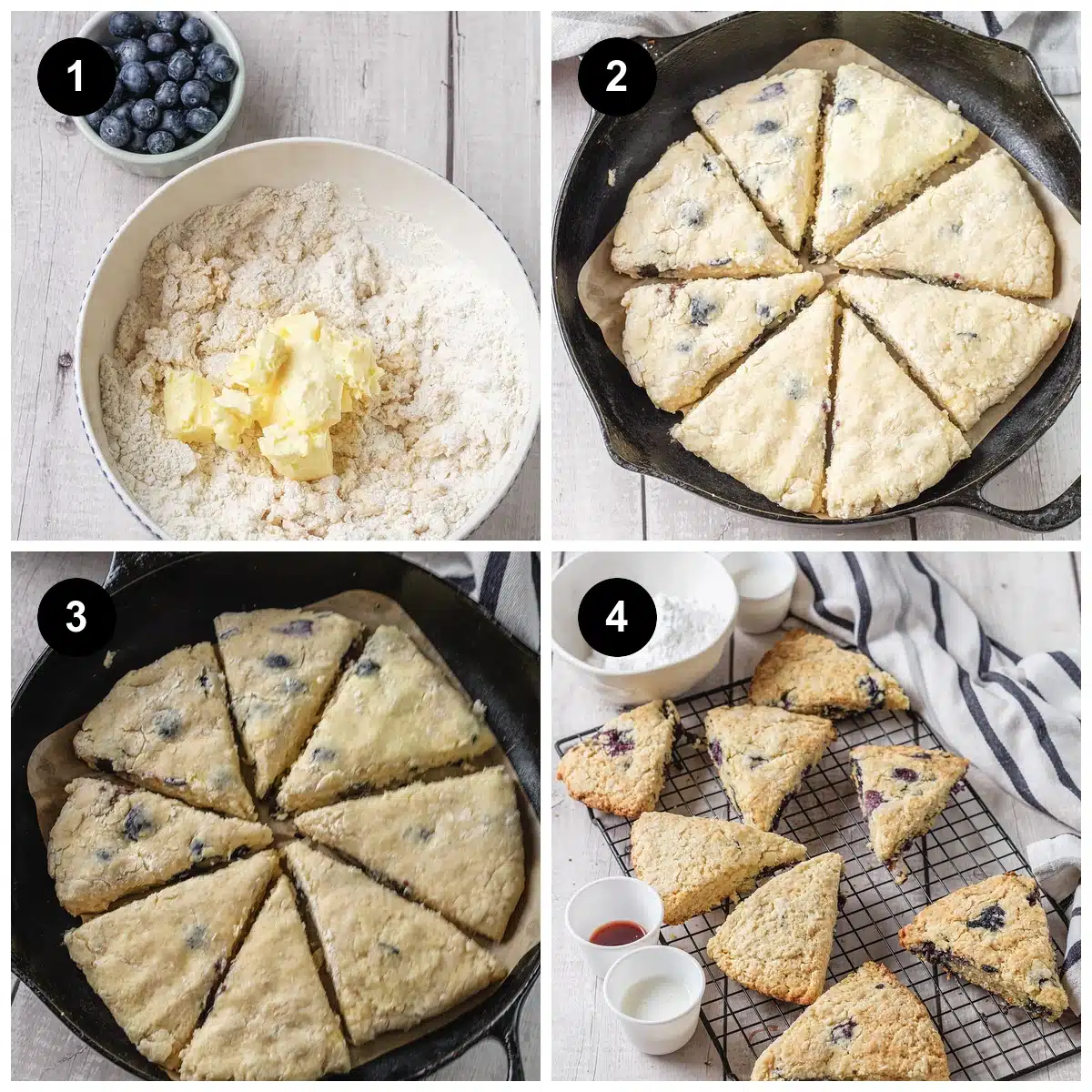
First, freeze the butter. Grate the cold stick on a box grater, pile the shreds on a plate, and put it in the freezer while you get everything else ready. Heat the oven to 400 degrees at the same time.
Next, mix the dry ingredients. Whisk the flour, sugar, baking powder, salt and lemon zest together in a large bowl. Rub the zest into the sugar with your fingers first if you want the lemon to come through more strongly.
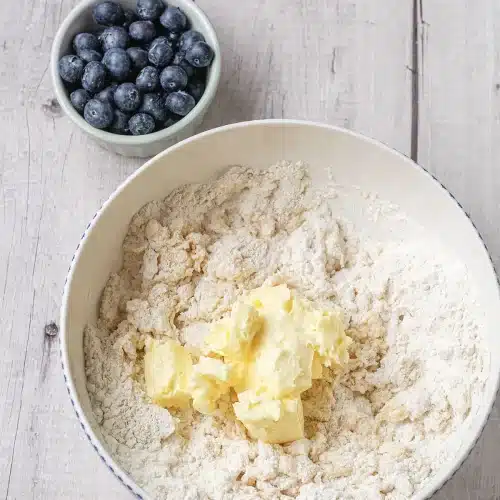
Then, cut in the butter. Tip the frozen shreds into the bowl, toss them through the flour, and work them in with a pastry cutter or your fingertips until the mixture looks like coarse, pebbly sand. Some pieces should still be visible.
After that, bring the dough together. Whisk the egg, cream and vanilla in a small bowl, pour it into the dry ingredients, and stir with a spatula only until a shaggy dough forms. Fold in the berries with as few strokes as you can manage.
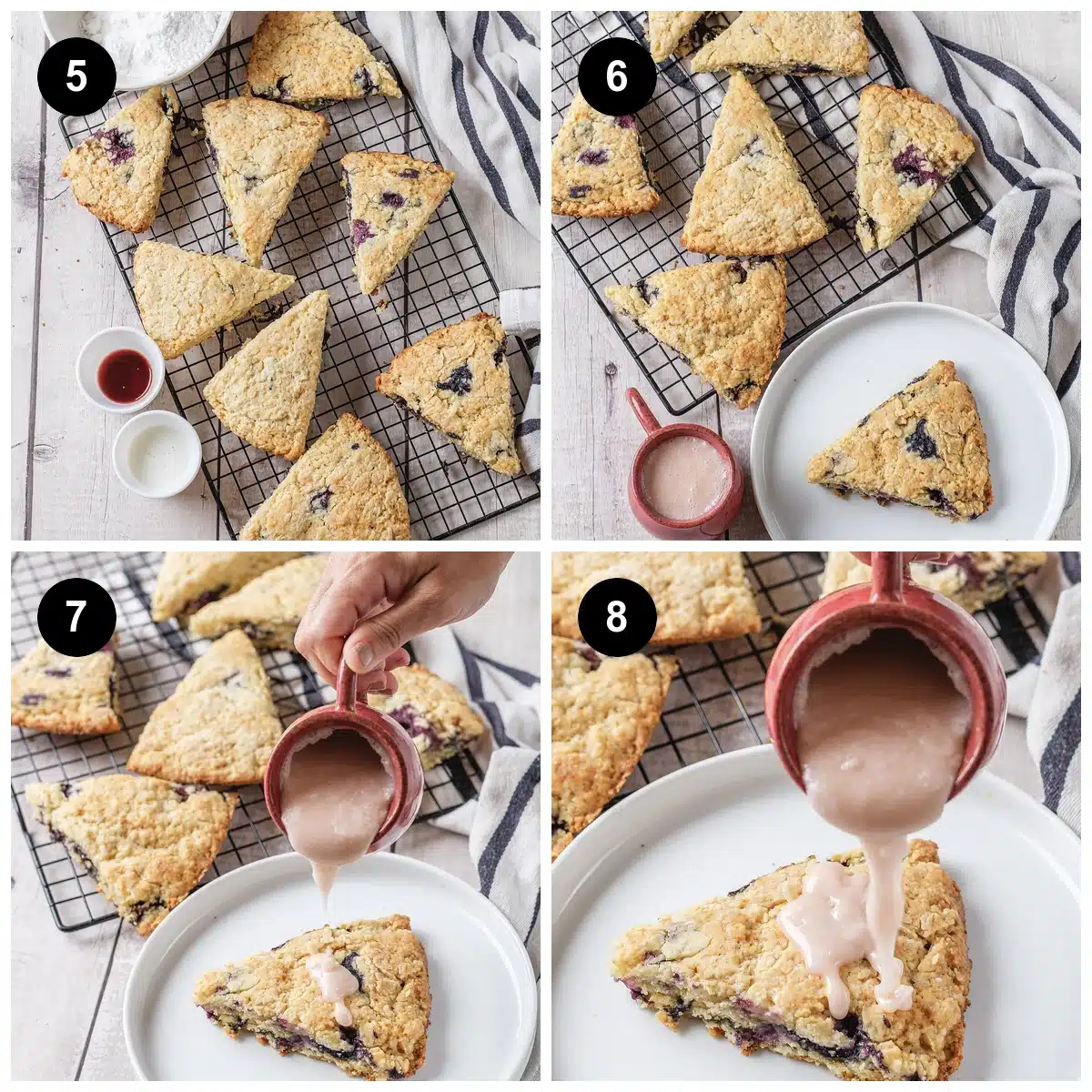
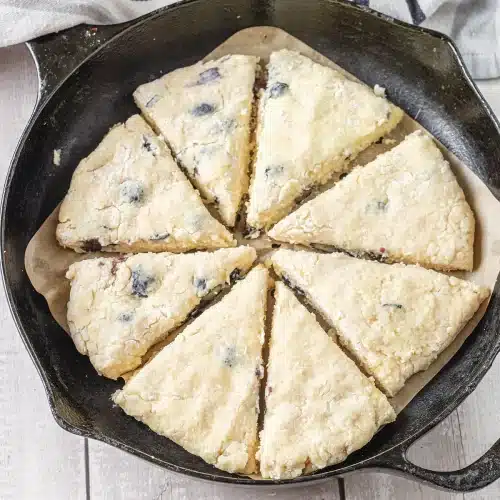
Finally, shape, chill and bake. Pat the dough into a nine-inch round about an inch thick, cut it into eight wedges, brush the tops with cream, and freeze the pan for fifteen to twenty minutes. Bake for eighteen to twenty-two minutes until the tops are golden, cool for five minutes, then glaze.
How To Tell When They Are Baked

Blueberry scones are ready when the tops are golden rather than pale, and the edges where the wedges were cut should look dry and slightly crisp rather than damp. A scone that still looks wet along the cut face needs another two or three minutes even if the top has color.
Lift one at the edge and look underneath. The base should be evenly browned, which is the part a pale oven or a dark sheet pan most often gets wrong. If the bottoms are still blond after twenty-two minutes, move the pan down a shelf for the last few minutes next time.
Make It Ahead
Blueberry scones are better made ahead than baked ahead, which is unusual and very useful. Cut the wedges, freeze them solid on a tray, then bag them. They keep two months and bake straight from frozen with three or four extra minutes.
That means fresh blueberry scones on a weekday morning for the price of turning the oven on. It also means the chilling step happens for free, so the frozen ones often rise better than a batch baked the same day.
If you would rather work a day ahead than a month, mix the dough, shape and cut it, cover the pan and refrigerate overnight. Brush with cream and bake in the morning exactly as written.
Storing Blueberry Scones
Baked blueberry scones keep two days at room temperature in an airtight container, and that is genuinely the limit. Day three is dry no matter how well you wrapped them, which is the argument for freezing the raw dough instead.
Do not refrigerate them. A fridge stales baked goods faster than a counter does, because the starch recrystallizes quickest at cold temperatures rather than at freezing ones. A sealed container on the counter is the better choice by a wide margin.
Baked and glazed scones freeze for one month if you must. Wrap them individually and let them come back to room temperature on the counter rather than in the microwave, which turns the glaze to syrup and the crumb to sponge.
One habit worth keeping: label the bag with the bake temperature and time before it goes in the freezer. Raw wedges all look alike after a month, and nobody remembers whether the last batch went in at 400 degrees or 375.
Variations and Substitutions
Lemon glaze. Swap the milk in the glaze for lemon juice. It sets slightly firmer and it doubles down on the zest already in the dough.
Orange and cardamom. Orange zest in place of lemon and a quarter teaspoon of ground cardamom in the dry ingredients. It reads more like a bakery in Copenhagen than one in Seattle.
Different fruit. Raspberries, blackberries and chopped strawberries all work at the same one cup measure. Wetter fruit like strawberry benefits from being tossed in a spoonful of flour first.
Dairy-free. Cold coconut oil in place of the butter and full-fat coconut milk in place of the cream. The crumb is a little softer and the flavor is very good.
Mini scones. Pat the dough into two smaller rounds and cut six wedges from each. Bake twelve to fourteen minutes. They are better for a brunch table than the full-size ones.
Turbinado top. A heavy scatter of coarse sugar over the cream wash before baking, and no glaze at all. Crunchier, less sweet, and quicker.
What to Serve with Blueberry Scones
Serve blueberry scones with coffee, which is the entire point of the coffeehouse version, and make it a strong one. The glaze is sweet and the scone is rich, so a flat white or a plain black filter both do more for it than anything milky and sugary would.
For a proper breakfast, blueberry scones sit well beside something acidic. A bowl of Greek yogurt with more berries, or half a grapefruit, keeps the plate from being sweetness end to end. Clotted cream and jam is the British answer and it is not wrong either.
If you are laying out a brunch table, put them next to something with a different texture. A cinnamon roll coffee cake gives you soft against crisp, and a tray of peach streusel muffins covers the people who came for something crumbly.
Blueberry Scones FAQ
Frequently Asked Questions
Why did my blueberry scones spread flat?
Warm butter, almost always. If the dough feels soft or greasy at any point, stop and put the whole pan in the freezer for fifteen minutes. Old baking powder is the second cause, so check the date on the tin.
Can I use frozen blueberries?
Yes, as long as you fold them in frozen and work quickly. Thawed berries release juice that marbles the dough purple and makes it too wet to shape.
Do I have to chill the dough before baking?
It is the single step that most improves the result. Fifteen to twenty minutes in the freezer resolidifies the butter, and the wedges rise taller and hold sharper edges because of it.
Can I make these without an egg?
Yes. Replace it with two extra tablespoons of heavy cream. The crumb is slightly more tender and slightly less sturdy, which some people prefer.
More Questions About Scones
Good to Know
Why are my blueberry scones tough?
Overworked dough. Stir only until the flour disappears and stop, even if the dough still looks shaggy. Every extra stroke builds gluten, and gluten is what turns a scone chewy.
Can I make the glaze thicker?
Add powdered sugar a tablespoon at a time. For a glaze that sets firm enough to stack the scones, aim for the consistency of thick honey rather than of cream.
Should I use a scone cutter instead of wedges?
Wedges are the coffeehouse shape and they waste no dough. A round cutter works if you prefer it, though you will re-roll the scraps, and re-rolled dough is always tougher than the first cut.
If baking with fruit is the habit you are building, a blueberry cobbler uses the same fruit with almost no technique at all, and a batch of snickerdoodle muffins is the thing to make when the berries have run out.

Copycat Starbucks Blueberry Scones
Save this recipe
Enter your email and I’ll send this recipe straight to your inbox.
Ingredients
Scone Dough
- 2 cups all-purpose flour spooned and leveled
- 1/2 cup granulated sugar
- 2 1/2 teaspoons baking powder check it is fresh
- 1/2 teaspoon fine salt
- 1 lemon zested
- 1/2 cup cold unsalted butter grated and returned to the freezer
- 1 large egg
- 1/2 cup heavy cream plus more for brushing
- 1 1/2 teaspoons vanilla extract
- 1 cup fresh blueberries or frozen, kept frozen
Vanilla Glaze
- 3/4 cup powdered sugar sifted
- 1 tablespoon milk plus more as needed
- 1/2 teaspoon vanilla extract
Equipment
- Box grater
- Large mixing bowl
- Small mixing bowl
- Baking sheet
- Parchment Paper or Silicone Mat
- Whisk
- Pastry brush
Instructions
Freeze the Butter and Heat the Oven
- Grate the cold butter on a box grater, pile the shreds on a plate and put them in the freezer while you prepare everything else.
- Heat the oven to 400°F (200°C). Butter a 10-inch cast iron skillet, or line a baking sheet with parchment paper.
Mix the Dough
- In a large bowl, whisk together the flour, granulated sugar, baking powder, salt and lemon zest.
- Tip the frozen grated butter into the bowl and toss it through the flour. Work it in with a pastry cutter or your fingertips until the mixture looks like coarse, pebbly sand with some pieces still visible.

- Whisk the egg, heavy cream and vanilla together in a small bowl. Pour it into the dry ingredients and stir with a spatula only until a shaggy dough forms, then fold in the blueberries with as few strokes as possible.
Shape and Chill
- Pat the dough into a 9-inch round about an inch thick, either straight into the buttered skillet or on the lined sheet, and cut it into 8 wedges.
- Brush the tops with a little cream and freeze the pan for 15 to 20 minutes while the oven finishes heating. This is what makes them rise tall instead of spreading.
Bake and Glaze
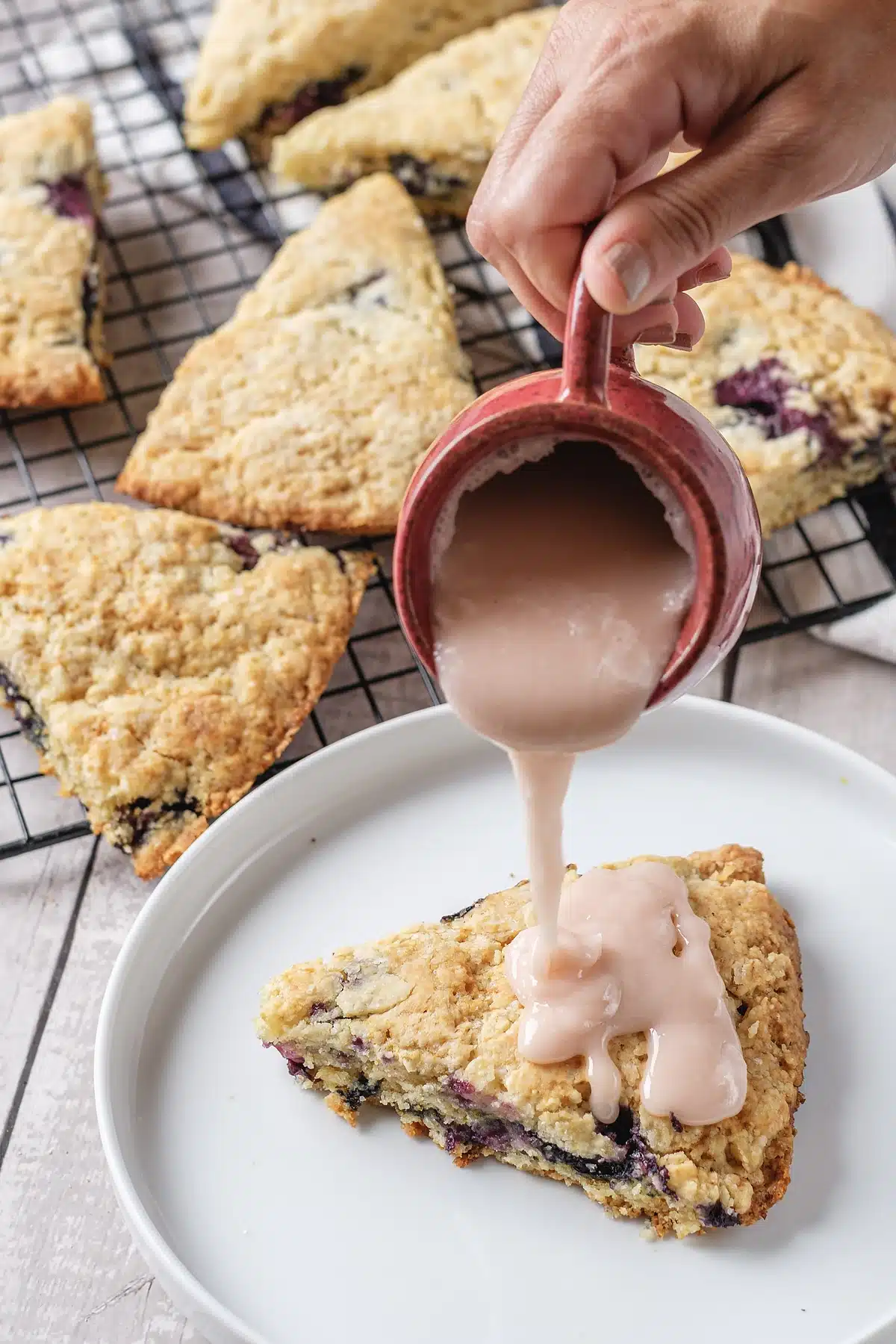
- Bake for 18 to 22 minutes, until the tops are golden and the cut edges look dry and lightly crisp. Cool in the pan for 5 minutes, then move the wedges to a wire rack.
- Whisk the powdered sugar, milk and vanilla together until smooth and pourable, adding a few more drops of milk if it is too thick.
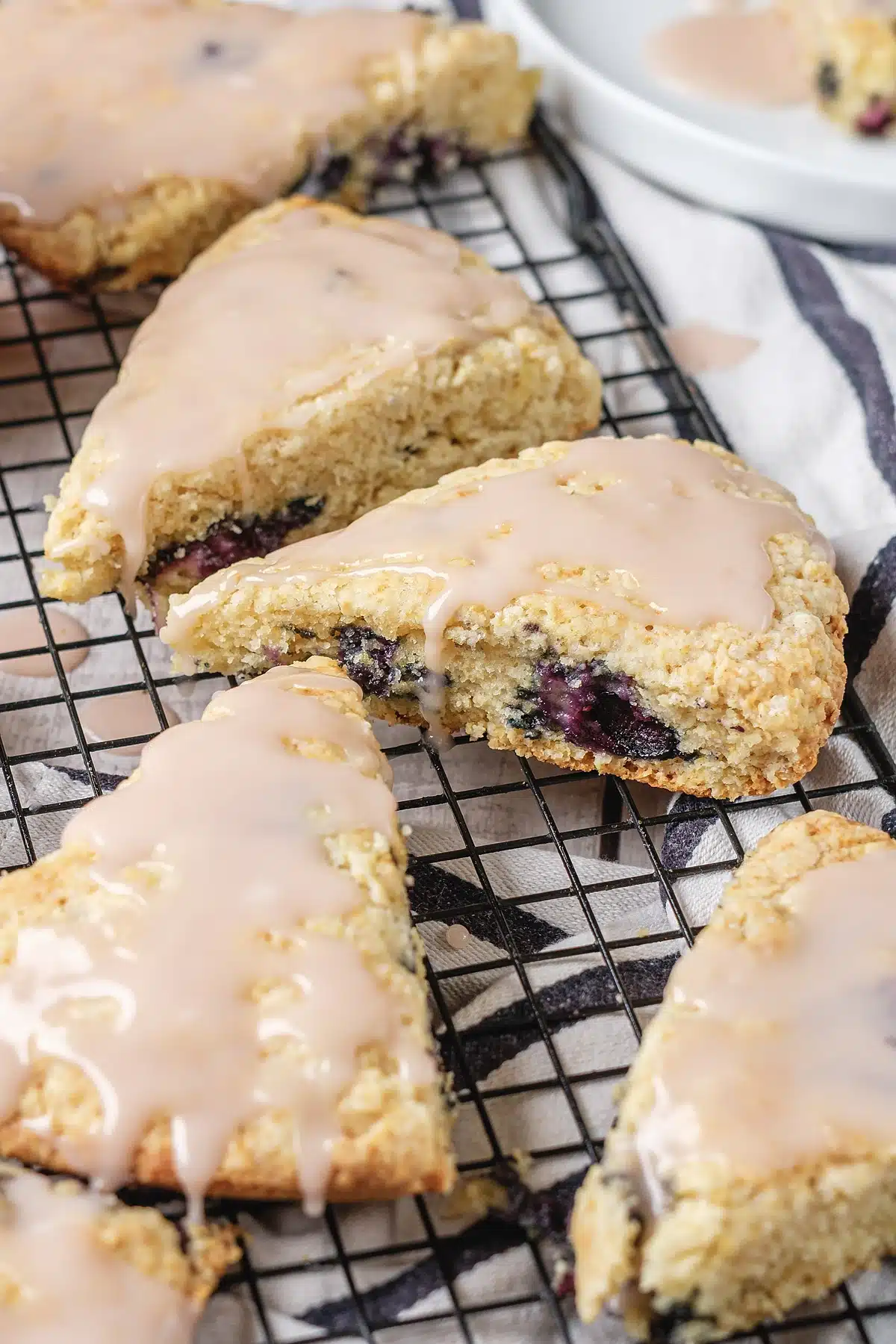
- Drizzle the glaze over the slightly cooled scones and leave it a few minutes to set before serving.