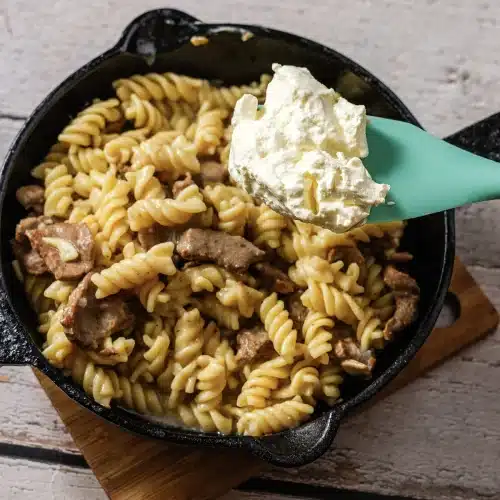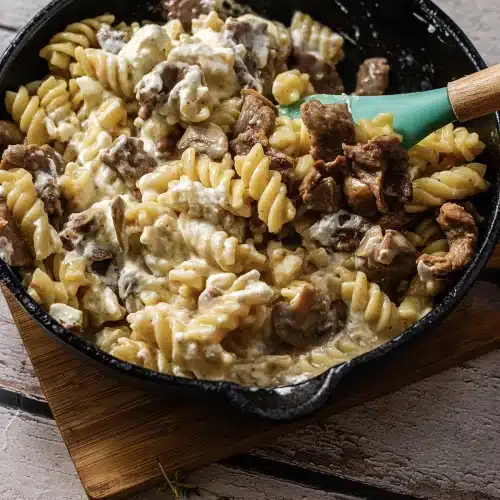
Beef Stroganoff has a reputation for being fussy, and it is not deserved. This beef stroganoff is one skillet from start to finish: sear the beef, build a mushroom sauce in the same fat, cook the pasta directly in that sauce, and finish off the heat with sour cream. Forty minutes, one pan, no colander.
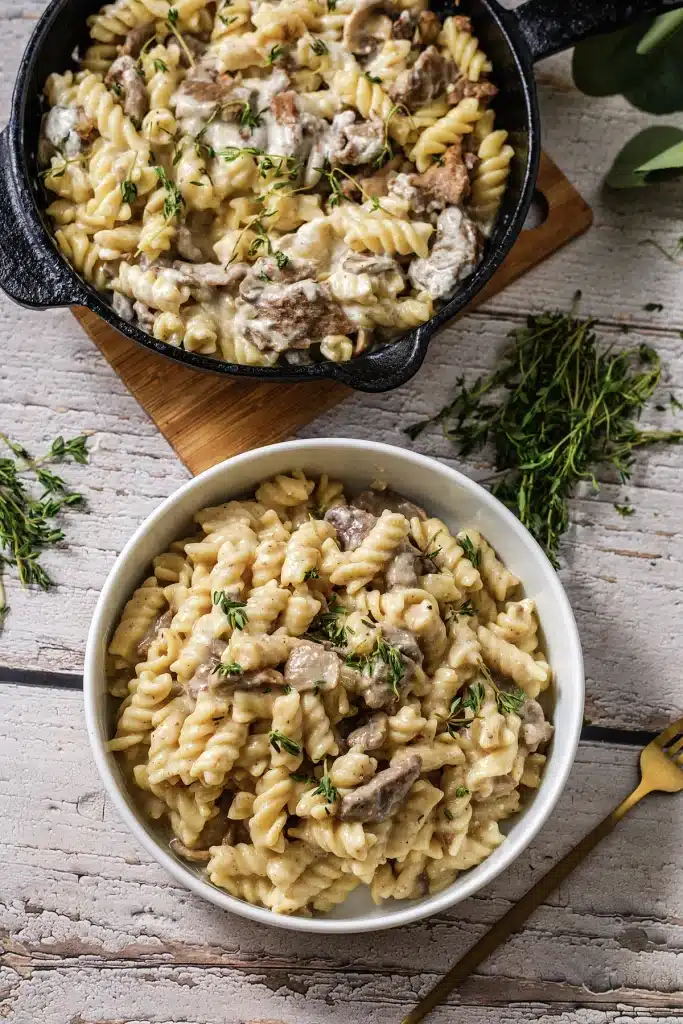
- One skillet, forty minutes, and the pasta cooks in the sauce
- Seared sirloin stays tender because it goes back in at the very end
- The starch from the pasta thickens the sauce, so there is no roux to make
- Sour cream off the heat means it never splits or goes grainy
- Everything in it keeps, so it is a genuine store-cupboard weeknight dinner
Cooking the pasta in the sauce is the change that makes it work. Boiled separately and drained, pasta arrives at the pan washed clean and the sauce slides off it. Cooked in the broth, it releases its starch into the liquid, and that starch is what turns a thin pan sauce into something that clings to every twist. It also means the pasta itself tastes of beef and mushroom rather than of salted water, which no beef stroganoff served over separately boiled noodles ever manages.

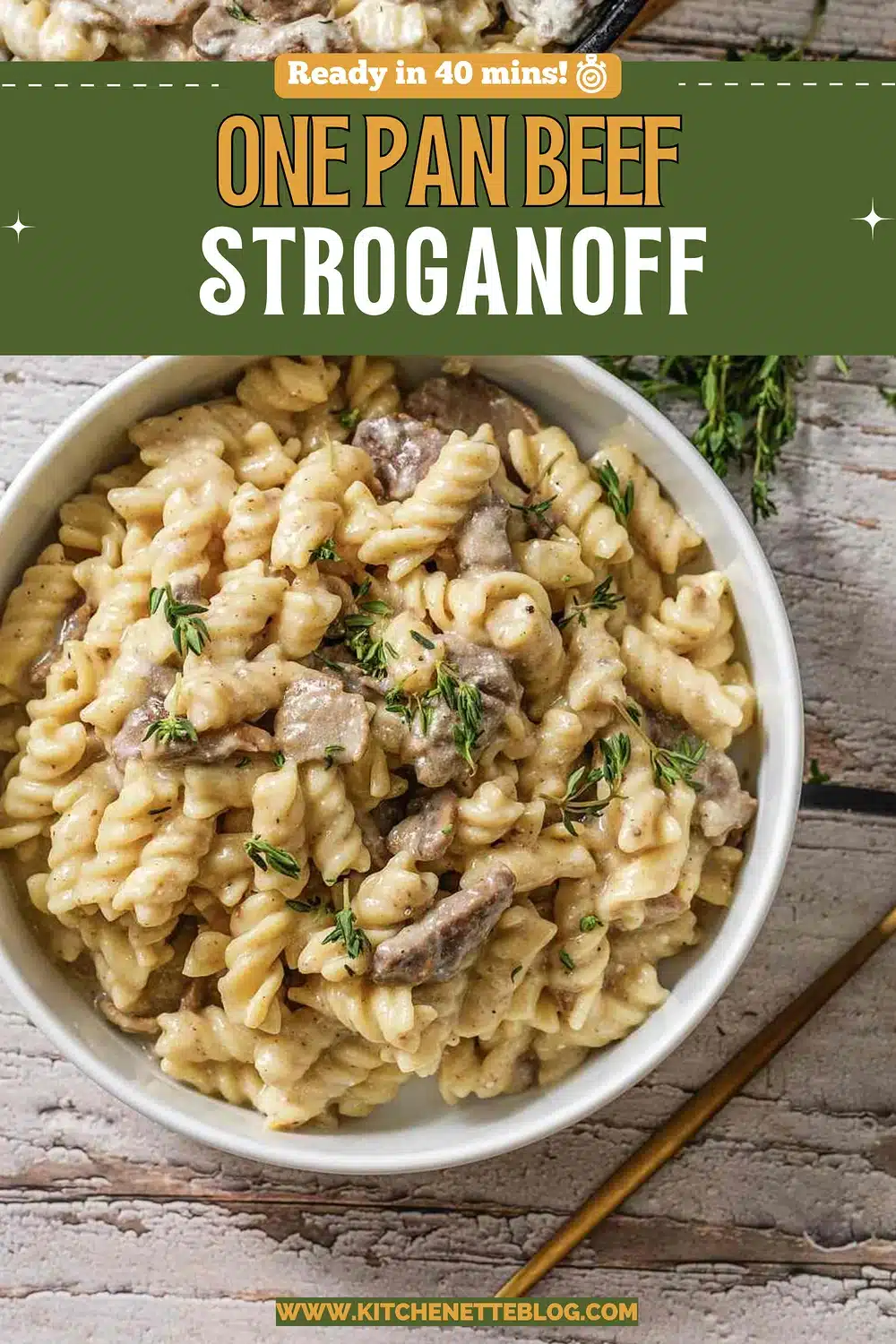
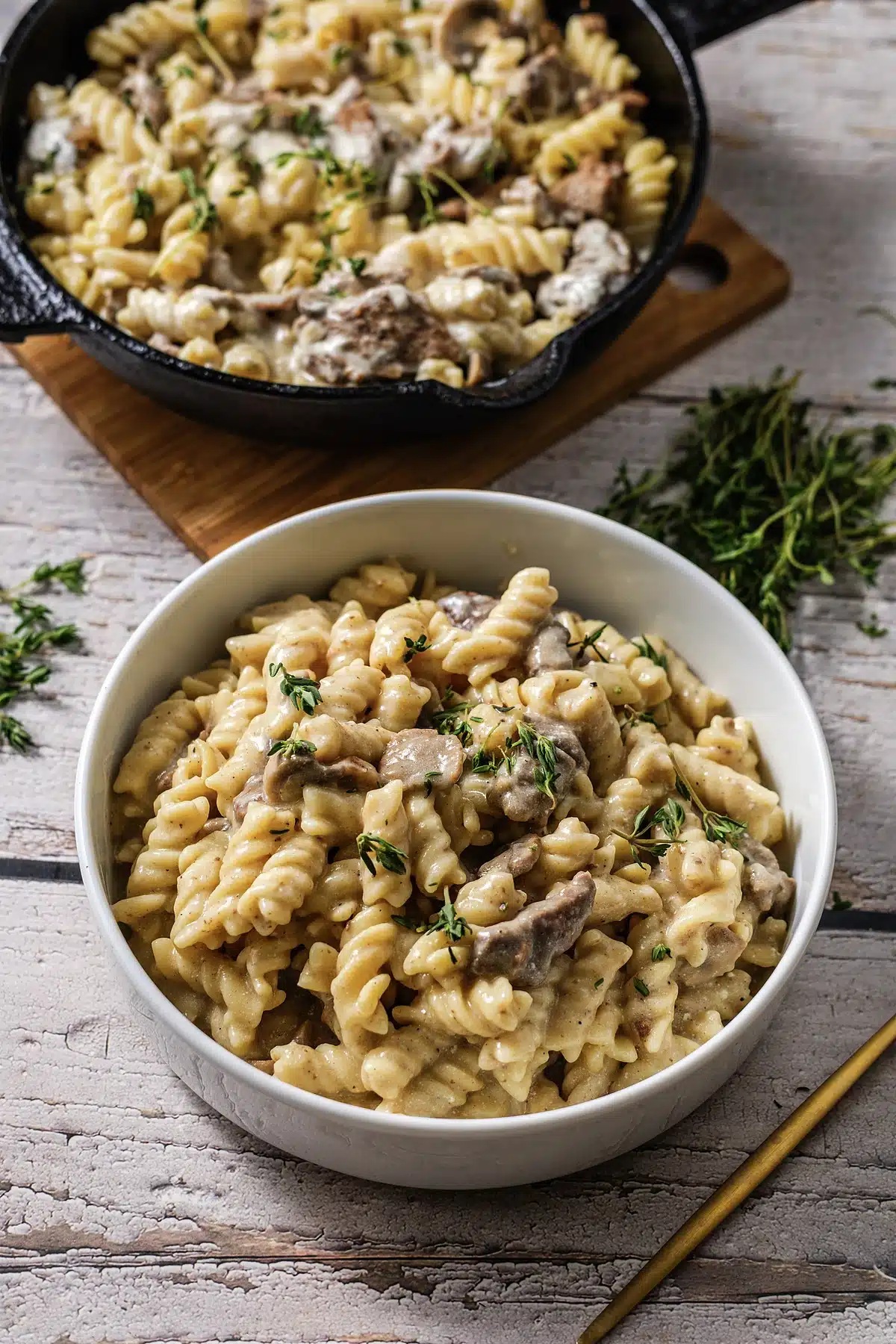
What Makes This Beef Stroganoff Different
The classic beef stroganoff method has you sear beef, set it aside, build a sauce, thicken it, and serve the whole thing over noodles you boiled in a second pot. That is two pans, a colander and a sauce that sits on top of the pasta rather than in it.
Here the skillet does everything. After the mushrooms have browned and the flour has cooked out, the broth goes in and the dry pasta goes in after it, and the two finish together in about twelve minutes. The liquid reduces as the pasta absorbs it, and the released starch does the thickening that a roux would normally handle.
The other change is when the beef comes back. In most recipes it simmers in the sauce, which turns quick-seared sirloin gray and tough. In this one it goes back in for the last minute, off a hard boil, just long enough to warm through and pick up sauce.
Save this recipe
Enter your email and I’ll send this recipe straight to your inbox.
Ingredient Notes
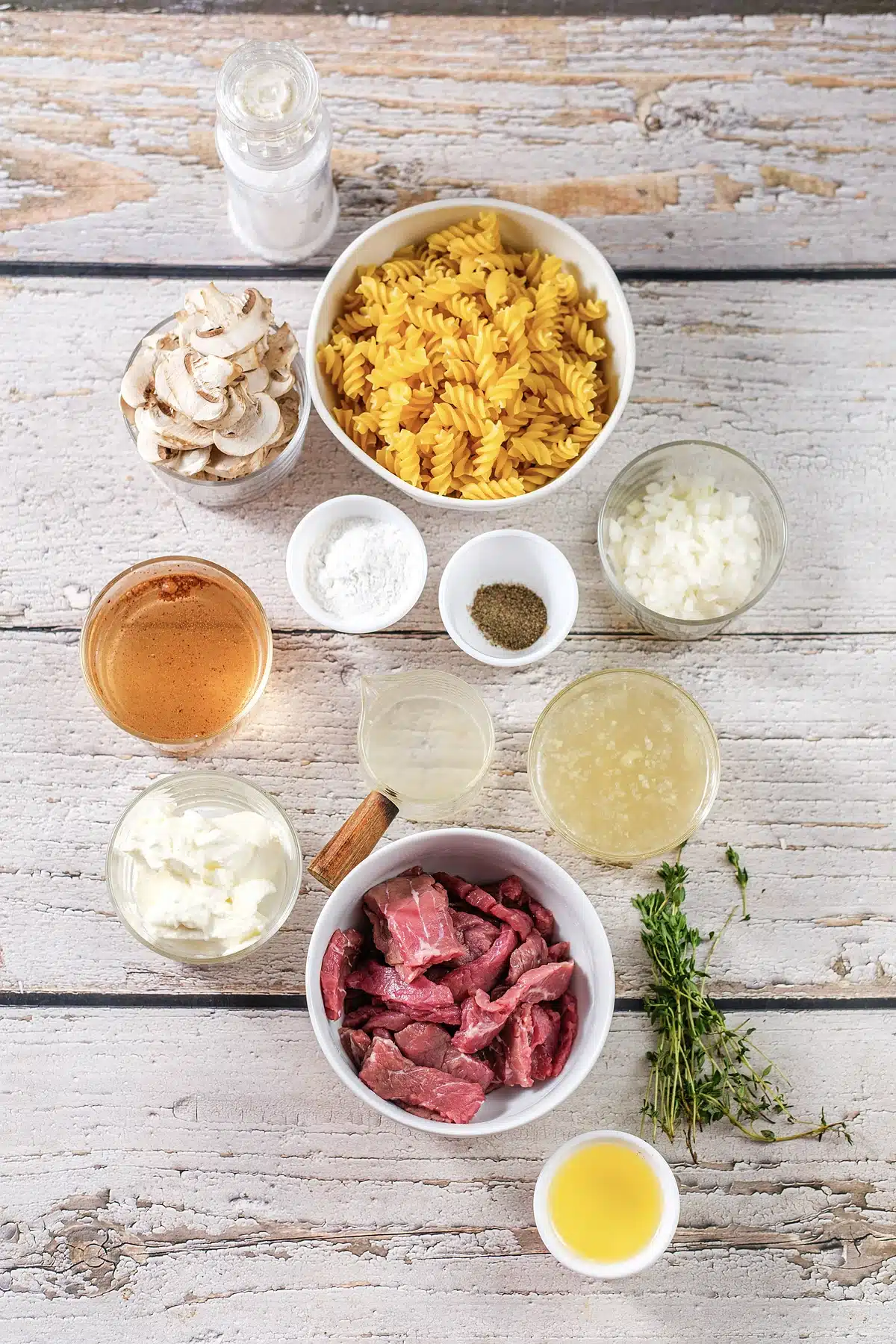
- Sirloin steak. One pound, sliced thin against the grain. Sirloin has enough marbling to stay tender under a fast sear and it is far cheaper than tenderloin. Slice it while it is very cold, or half-frozen, which makes thin slices much easier to cut.
- Mushrooms. Eight ounces of cremini, sliced. Cremini bring more flavor than white button mushrooms for the same money. Give them room in the pan and leave them alone until they have browned, because crowded mushrooms release water and stew.
- Short twisted pasta. Twelve ounces of gemelli, fusilli or rotini. Twists hold the sauce in a way that flat egg noodles cannot, and they hold their shape when cooked in a reduced liquid. All of them are made from durum wheat, which the Wheat Foods Council describes as the hardest of the six wheat classes and the reason good pasta stays firm.
- Beef broth. Three cups, low sodium. That is more than a traditional recipe needs, because the pasta is going to drink most of it. Low sodium matters here: the liquid reduces by half, and a salty broth becomes an inedible sauce.
- Sour cream. Three quarters of a cup, at room temperature. Cold sour cream hitting a hot pan is the main cause of a grainy, split sauce. Take it out of the fridge when you start cooking.
- Dijon mustard and Worcestershire. A tablespoon of Worcestershire and a teaspoon of Dijon. Neither reads as itself in the finished dish. Together they supply the savory depth that separates a real beef stroganoff from cream on pasta.
The Best Cut of Steak to Use
Sirloin is the sweet spot for beef stroganoff, and it is what the photographs on this page use. It is lean enough to slice cleanly, marbled enough not to dry out in thirty seconds of high heat, and it costs a fraction of what tenderloin does.
Tenderloin is the traditional choice and it is superb, but it is expensive and it is unforgiving; ten seconds too long and you have wasted good meat. Ribeye works and brings more fat, which some people prefer and others find heavy in a cream sauce.
Chuck and other braising cuts are the wrong answer for this method. They need an hour of slow moist heat to break down, and a thirty second sear leaves them chewy. If chuck is what you have, cube it and braise it in the broth for ninety minutes before the pasta goes anywhere near the pan.
How To Make Beef Stroganoff in One Pan
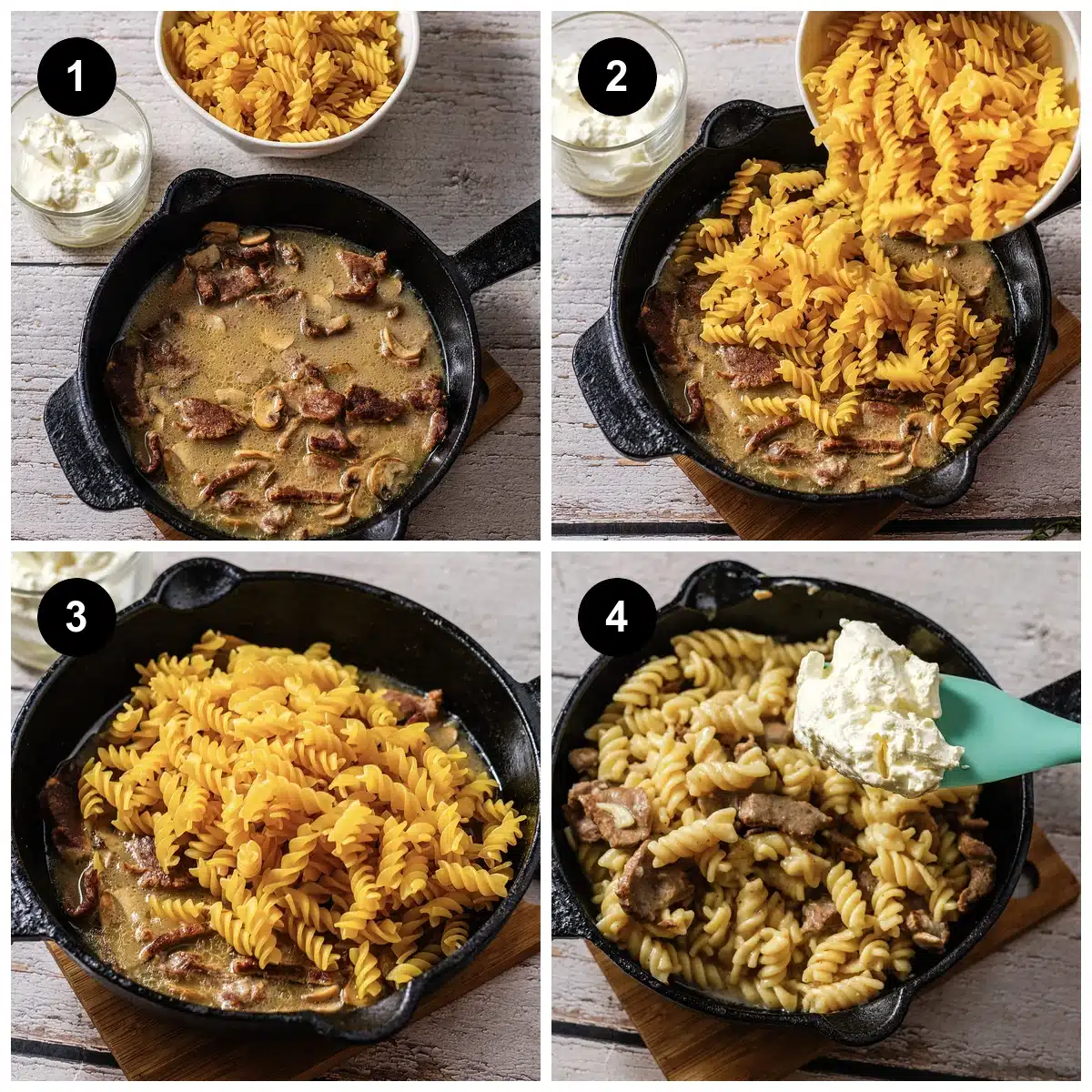
First, sear the beef. Season the sliced sirloin well, get a tablespoon of butter smoking in a large skillet over medium-high heat, and lay the strips down in a single uncrowded layer. Twenty to thirty seconds a side is all it needs, because the beef goes back into the stroganoff at the very end. Work in batches and move each one to a plate as it browns.
Next, build the base. Drop the heat to medium, add the second tablespoon of butter and the sliced onion, and cook until soft and golden. Add the garlic for a minute, then the mushrooms, and leave them undisturbed for a couple of minutes at a time so they brown rather than steam.
Then thicken and deglaze. Scatter the flour over the mushrooms and stir for a minute to cook out the raw taste, then pour in the broth a little at a time, scraping every browned scrap off the bottom of the pan as you go.
Cooking the Pasta in the Sauce
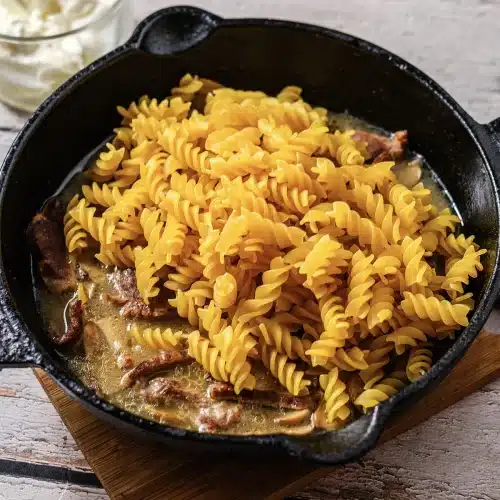
After that, add the pasta. Tip the dry twists straight into the simmering liquid, stir once so nothing sits above the surface, and cook uncovered at a steady simmer for ten to twelve minutes. Stir every couple of minutes. The pasta will drink most of the broth and the sauce will thicken around it.
Finally, finish it off the heat. Pull the pan off the burner, wait thirty seconds, then stir in the Worcestershire, the Dijon and the room-temperature sour cream. Return the seared beef and any juices on the plate, turn everything through once, and scatter fresh thyme over the top.
How To Tell When the Sauce Is Right
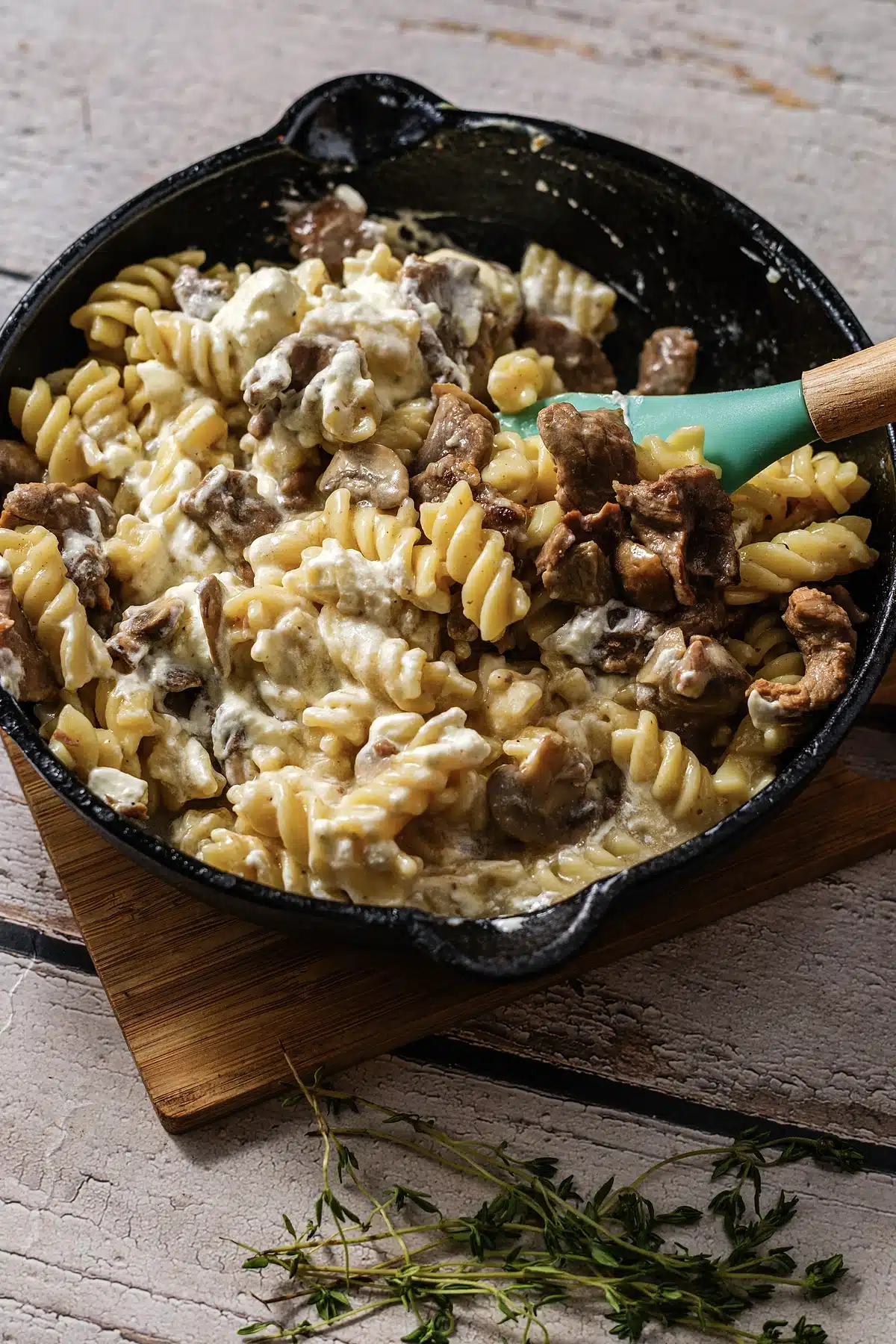
Judge the beef stroganoff before the sour cream goes in. At that point the liquid should be reduced enough to coat the pasta rather than pool under it, and dragging a spoon across the bottom of the pan should leave a track that closes slowly. If there is still visible broth swimming around, give it two more minutes uncovered.
Test a piece of pasta as well. You want it just past the point of resistance, because it will soften slightly more as the pan sits. Undercooked pasta will keep absorbing sauce off the plate and leave you with a dry bowl.
After the sour cream, the sauce should look glossy and pale, and it should be thick enough to hold the twists together when you lift a spoonful. If it has tightened too far, a splash of broth loosens it instantly.
One last check, and it is the one that catches people out. Taste for salt only after the sour cream is in. Sour cream mutes salt noticeably, so a sauce that seemed correctly seasoned at the simmer stage will read flat once it is stirred through. Season at the end, not before.
Make It Ahead
The sauce base freezes and reheats far better than the finished dish. Sear the beef, build the mushroom sauce through the broth stage, and refrigerate that for up to three days or freeze it for three months. On the night, bring it back to a simmer, add the pasta and finish as written.
Prepping the components also cuts the work in half. Slice the beef, the onion and the mushrooms in the morning and keep them covered in the fridge, and the whole dish becomes twenty-five minutes of cooking with no knife work at all. Beef stroganoff made this way is genuinely a weeknight recipe rather than a weekend one.
Storing Beef Stroganoff
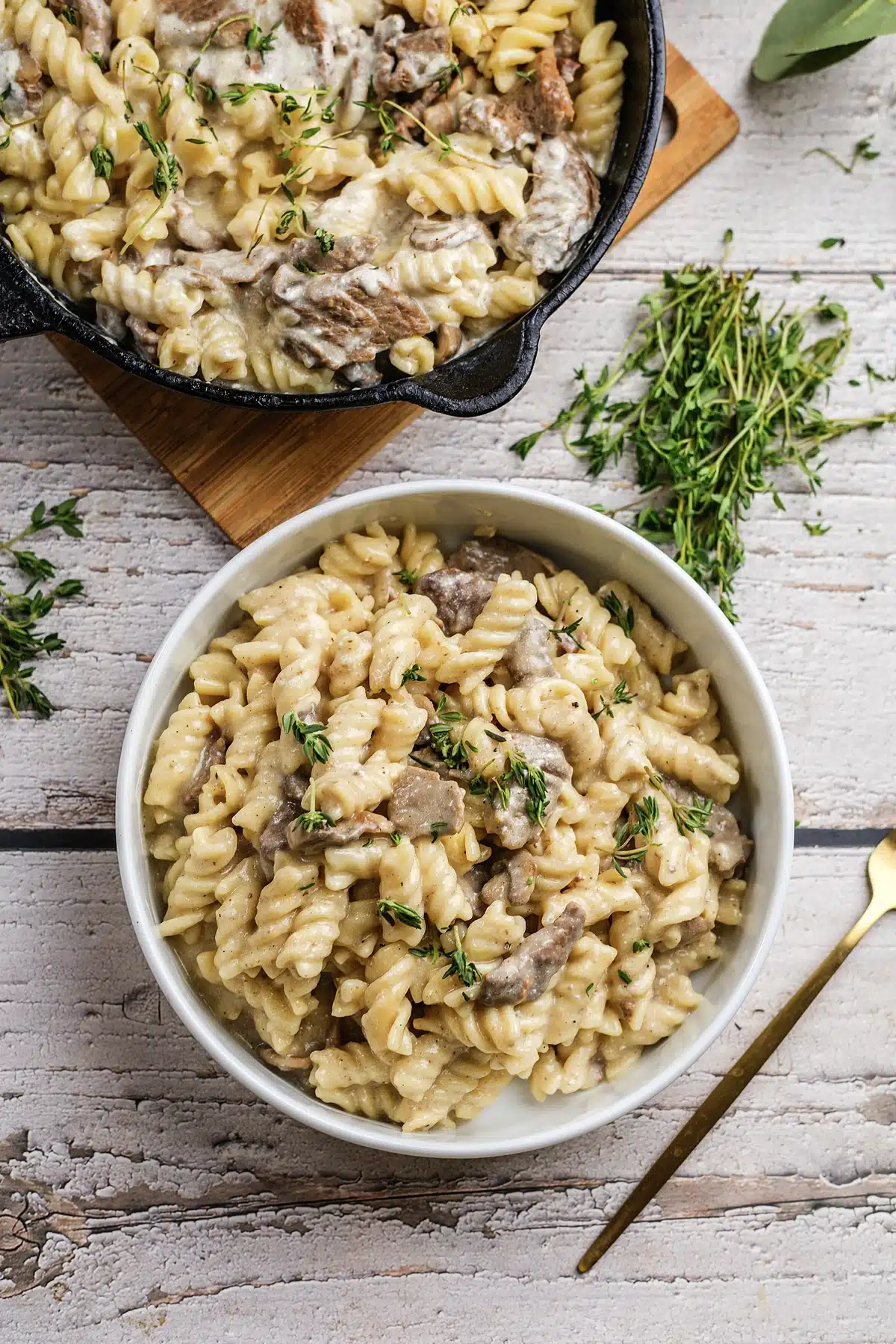
Leftover beef stroganoff keeps in a sealed container in the fridge for three days. The pasta carries on absorbing sauce as it sits, so what looks creamy at dinner looks dry the next day. That is normal, and a few tablespoons of broth or milk stirred in while reheating puts it right.
Reheat gently. Low heat on the stovetop, stirring, or short bursts in the microwave at half power. A hard reheat splits the sour cream and there is no way back once it has separated.
Freezing finished beef stroganoff is possible, but it is not what I would do. Cream sauces separate on thawing and cooked pasta goes soft, so you end up with something a good deal worse than what you started with. Freeze the sauce base instead, and cook fresh pasta into it on the night.
One note on the pan itself. A wide, heavy skillet is worth using here, because the pasta needs surface area to cook evenly in a shallow layer of liquid. A deep saucepan piles the twists on top of each other and the ones at the bottom overcook while the top layer stays raw. Twelve inches across is about right for this quantity.
Variations and Substitutions
Ground beef. Brown a pound of ground chuck in place of the sirloin, drain most of the fat, and leave it in the pan throughout. Faster, cheaper and what a lot of people grew up eating.
Mushroom only. Double the mushrooms, use vegetable broth and add a teaspoon of soy sauce for depth. It is a genuinely good dinner and not an apology for the beef.
Egg noodles. The traditional partner. Cook them separately and fold them through at the end, because they turn to mush if simmered in a reducing liquid.
Paprika. A teaspoon of sweet Hungarian paprika with the flour is the Eastern European version and adds warmth and color to the sauce.
Creme fraiche. Higher in fat than sour cream, so it will not split even if the pan is too hot. The safest option if you have ever curdled one of these.
What to Serve with Beef Stroganoff
Beef stroganoff is a complete meal in a bowl, so what it wants alongside is something sharp and green. A plain salad with a mustard vinaigrette, quick-pickled cucumber, or roasted green beans with lemon all cut through the cream.
Bread is the other essential, because there will be sauce left at the bottom of every bowl. A basket of Olive Garden breadsticks is the obvious choice, and any crusty loaf does the job.
If you want a second skillet dish on the table for a crowd, Italian drunken noodles covers the same one-pan territory from a completely different direction, and truffle mashed potatoes work if you would rather serve the beef stroganoff sauce over potato than pasta.
Beef Stroganoff FAQ
Frequently Asked Questions
What is the secret to a great stroganoff?
Two things. Sear the beef fast and keep it out of the sauce until the last minute, and add the sour cream off the heat. Almost every disappointing stroganoff comes down to overcooked beef or a split sauce.
What are the ingredients in traditional beef stroganoff?
Beef, onion, mushrooms, broth, mustard and sour cream, usually served over noodles. The nineteenth century Russian original had no mushrooms at all; they were added later and stayed.
Can I really cook the pasta in the sauce?
Yes, and it is better for it. Use three cups of broth for twelve ounces of short pasta, simmer uncovered and stir every couple of minutes. The starch it releases is what thickens the sauce.
Why did my beef stroganoff go grainy?
The sour cream boiled, or it went in straight from the fridge. Bring it to room temperature and stir it in with the pan off the heat.
More Questions About Stroganoff
Good to Know
Can I use cream of mushroom soup instead?
You can, and plenty of family recipes do. Swap one cup of the broth for a can of condensed soup and skip the flour. The result is heavier and less fresh, but it is quick.
Greek yogurt instead of sour cream?
It works if it is full fat and at room temperature, and it splits more readily than sour cream does, so the pan must be off the heat. The finished sauce is a little tangier.
How thin should the beef be sliced?
About a quarter inch, cut against the grain. Half-freeze the steak for twenty minutes first and the slices come out even without any effort.
If one skillet and no colander is how you want most weeknights to go, an easy taco pasta skillet runs on exactly the same principle.
Beef Stroganoff
Save this recipe
Enter your email and I’ll send this recipe straight to your inbox.
Ingredients
For the Stroganoff
- 1 lb sirloin steak sliced thin against the grain
- salt and freshly ground black pepper to season the beef and the sauce
- 2 tablespoons unsalted butter divided
- 1 yellow onion halved and thinly sliced
- 2 cloves garlic minced
- 8 oz cremini mushrooms sliced
- 2 tablespoons all-purpose flour
- 3 cups beef broth low sodium
- 12 oz short twisted pasta gemelli, fusilli or rotini
To Finish
- 3/4 cup sour cream at room temperature
- 1 tablespoon Worcestershire sauce
- 1 teaspoon Dijon mustard
- fresh thyme leaves picked, to serve
Equipment
- Large skillet
- wooden spoon
- Sharp knife
Instructions
Sear the Beef
- Season and heat the pan: Season the sliced sirloin generously with salt and pepper. Melt 1 tablespoon of the butter in a large heavy skillet, at least 12 inches across, over medium-high heat until it stops foaming.
- Sear in batches: Lay the strips down in a single uncrowded layer and sear for 20 to 30 seconds a side, just until browned. Work in batches and move each one to a plate. Do not cook it through.
Build the Sauce
- Soften the onion: Drop the heat to medium, add the remaining butter and the sliced onion, and cook for 4 to 5 minutes until soft and golden. Add the garlic and cook one minute more.
- Brown the mushrooms: Add the mushrooms and a pinch of salt. Leave them undisturbed for a couple of minutes at a time so they brown rather than steam, about 6 to 8 minutes in total.
- Flour and deglaze: Scatter the flour over the mushrooms and stir for 1 minute. Pour in the beef broth a little at a time, scraping every browned scrap off the bottom of the pan, and bring it to a simmer.

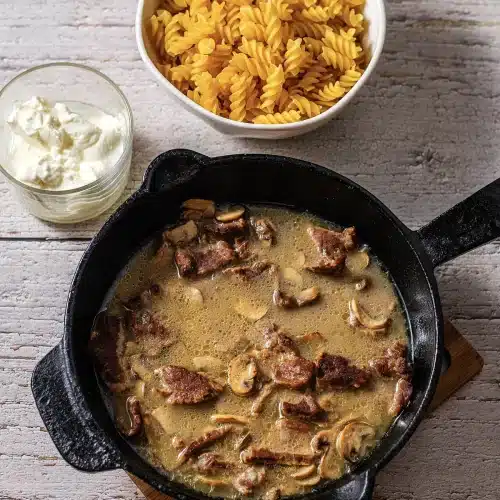
Cook the Pasta in the Pan
- Add the dry pasta: Tip the pasta straight into the simmering liquid and stir once so nothing sits above the surface.
- Simmer uncovered: Cook at a steady simmer for 10 to 12 minutes, stirring every couple of minutes, until the pasta is just past the point of resistance and the sauce coats it rather than pooling underneath.
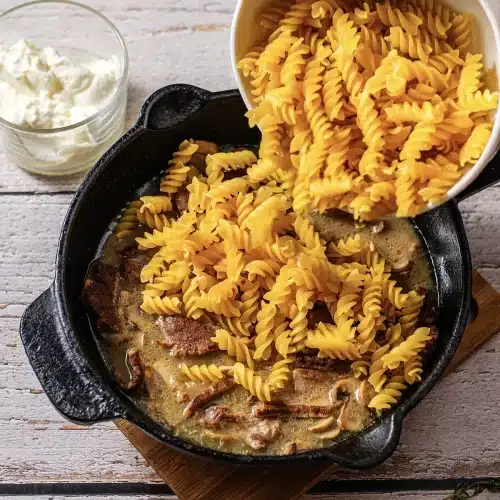
Finish with Sour Cream
- Off the heat: Pull the pan off the burner and wait 30 seconds, then stir in the sour cream, Worcestershire sauce and Dijon mustard until the sauce is smooth and glossy.
- Return the beef and serve: Add the seared beef and any juices from the plate, turn everything through once, and taste for salt now rather than earlier. Scatter fresh thyme over the top and serve.