
Chocolate buttermilk cake is the sheet cake that turns up at potlucks and church suppers and school fundraisers, and it is there for a reason: it is mixed by hand in one bowl, it bakes in a single nine-by-thirteen pan, and it stays moist for days after a butter cake has gone dry. The batter is thin enough to pour and thick enough to hold a crumb, and the frosting is a soft cocoa buttercream that sets just firm enough to cut through.
Two ingredients do the heavy lifting, and neither of them is chocolate. Buttermilk keeps the crumb tender and gives the whole thing a faint tang that stops the sugar from flattening out, and a cup of hot coffee poured into the batter at the end blooms the cocoa and deepens the color. Neither one announces itself in the finished cake, which is exactly the point.
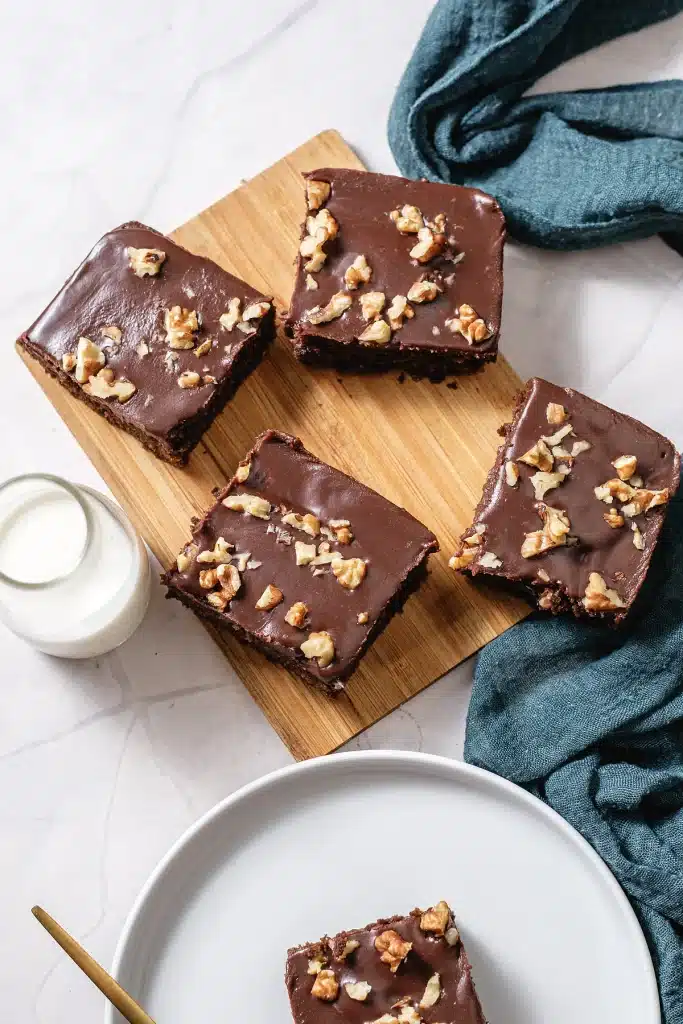
- One bowl, one whisk and one pan, with no creaming stage at all
- Stays moist for two days on the counter and four in the refrigerator
- The hot coffee blooms the cocoa, so it tastes far darker than it looks
- Frosts and slices into twelve even squares for a crowd
- Freezes unfrosted for two months, which makes it a real make-ahead cake

- Why Chocolate Buttermilk Cake Stays Moist
- Ingredient Notes
- What Buttermilk Actually Does
- How To Make Chocolate Buttermilk Cake
- How To Tell When the Cake Is Done
- Make It Ahead
- Storing Chocolate Buttermilk Cake
- Variations and Substitutions
- What to Serve with Chocolate Buttermilk Cake
- Chocolate Buttermilk Cake FAQ
Why Chocolate Buttermilk Cake Stays Moist
Most butter cakes get their structure from creaming, which beats air into fat and then sets that air with flour and egg. It works, and it also means the cake goes stale quickly, because butter firms up as it cools and keeps firming for days.
Chocolate buttermilk cake takes a different route. Half the fat is vegetable oil, which is liquid at room temperature and stays liquid in the crumb, so the cake feels soft on day three in a way a creamed cake never does. The melted butter is there purely for flavor, and skipping it would cost you taste rather than texture.
Buttermilk contributes on two fronts. It is acidic, so it reacts with the baking soda and gives lift without needing a creaming stage, and it also tenderizes: the acid weakens gluten strands as the flour hydrates, which is why a chocolate buttermilk cake has a finer, softer crumb than the same recipe made with plain milk.
Cocoa powder is drying by nature, and that is the last piece. A recipe with three quarters of a cup of cocoa needs a lot of liquid to stay palatable, which is why this one carries a cup of buttermilk and a cup of coffee on top of the eggs and the oil.
Put those four decisions together and you get the reason a chocolate buttermilk cake outlasts the cake it sits next to on a buffet table. Liquid fat, an acidic dairy, a hot liquid poured in late and enough of it to hydrate the cocoa fully: none of them is dramatic on its own, and together they buy you two extra days of good eating.
Save this recipe
Enter your email and I’ll send this recipe straight to your inbox.
Ingredient Notes
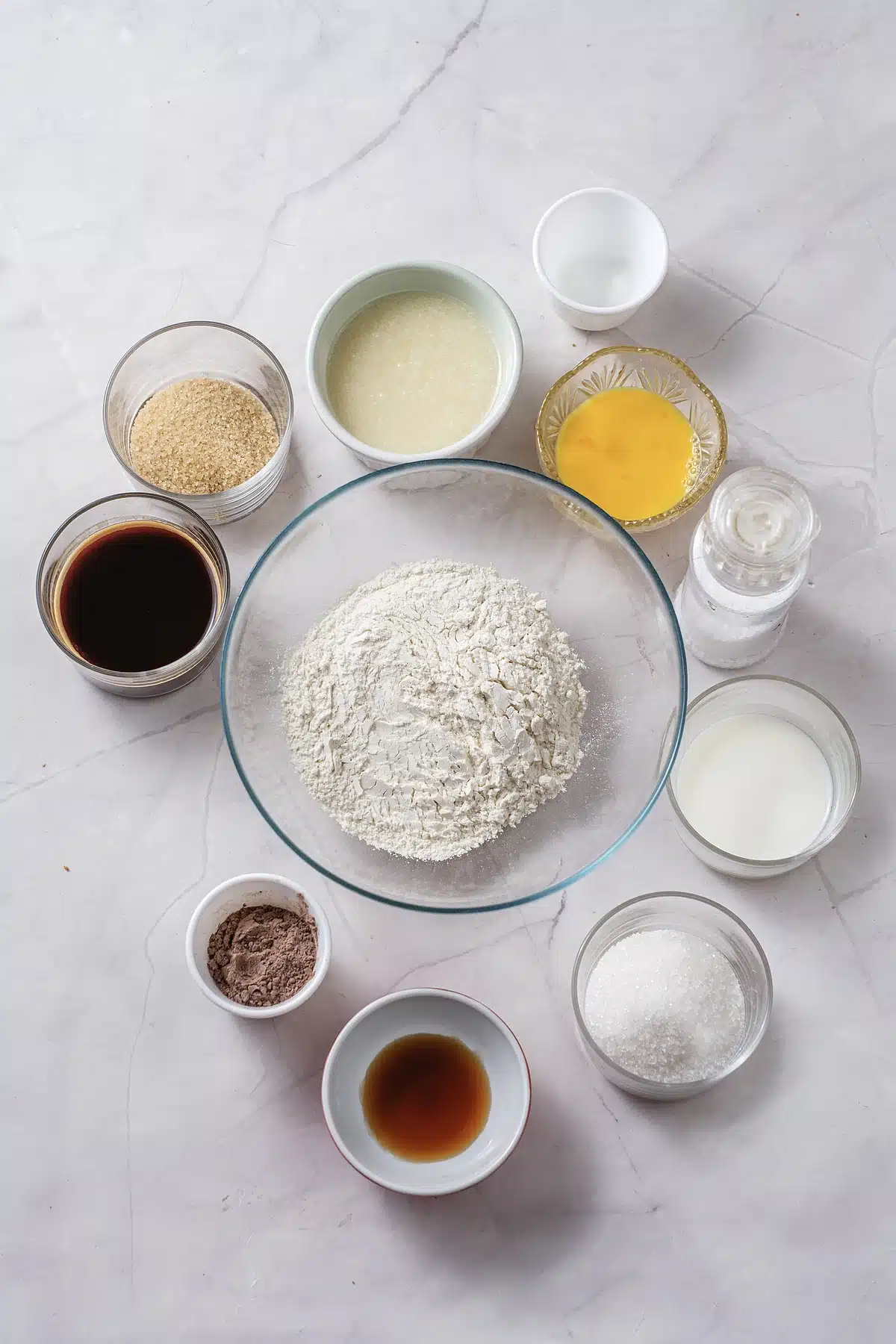
- Unsweetened cocoa powder. Three quarters of a cup, and natural rather than Dutch-process. Natural cocoa is acidic, and the baking soda in this recipe is measured to react with it. Dutch-process cocoa is alkalized, so it will not react, and the cake rises less and tastes flat.
- Buttermilk. One cup in the batter and a third of a cup in the frosting, well shaken before you measure. Real cultured buttermilk is worth buying, though a cup of milk with a tablespoon of lemon juice stirred in and left five minutes is an adequate stand-in.
- Hot coffee. One cup, brewed and still steaming when it goes in. It does not make the cake taste of coffee. Heat dissolves cocoa solids that cold liquid leaves suspended, which is where the darker color and the deeper flavor come from. Hot water works if you would rather.
- Vegetable oil and butter. Half a cup of each. The oil is the moisture, the butter is the flavor, and swapping either one entirely for the other changes the cake noticeably.
- Eggs. Two, at room temperature. Cold eggs seize the melted butter into flecks the moment they meet, which is visible in the finished crumb.
- Granulated sugar. Two cups, which sounds like a great deal until you remember it is spread across twelve generous squares. Reducing it below about a cup and three quarters starts to affect the texture as well as the sweetness, because sugar holds moisture in the crumb.
For the Cocoa Frosting
- Powdered sugar. Three cups, sifted if it has been in the cupboard a while. Lumps in a cocoa frosting are almost impossible to beat out once the buttermilk goes in.
- Softened butter. Three quarters of a cup, soft enough that a fingertip leaves a dent without effort. Butter straight from the refrigerator will not take the cocoa smoothly, and butter that has gone greasy makes a frosting that will not hold a swirl.
- Chopped walnuts. Half a cup, optional, scattered over the frosting while it is still soft. Pecans work equally well and toasting either one first is worth the ten minutes.
Beyond that list, a chocolate buttermilk cake asks for nothing unusual. There is no cake flour, no sour cream, no melted chocolate and no espresso powder unless you want it.
What Buttermilk Actually Does
The chemistry here is simple enough to be worth understanding, because it explains most of the substitution questions people ask. Baking soda is a base, and it only produces gas when it meets an acid. Illinois Extension puts it plainly in its guide to baking soda versus baking powder: a recipe using soda has to include something acidic, and buttermilk is one of the standard choices.
That is why you cannot simply pour plain milk into a chocolate buttermilk cake batter and expect the same result. Without the acid, the soda has nothing to react with, some of it stays behind unreacted, and a metallic taste comes through underneath the chocolate. The baking powder in the recipe covers part of the lift, but not all of it.
Making your own soured milk works because it recreates the acid, not because it recreates buttermilk. Real buttermilk is also thicker and carries more protein, so a homemade substitute produces a very slightly looser batter and a marginally less tender crumb. In a cake this forgiving, almost nobody notices.
How To Make Chocolate Buttermilk Cake
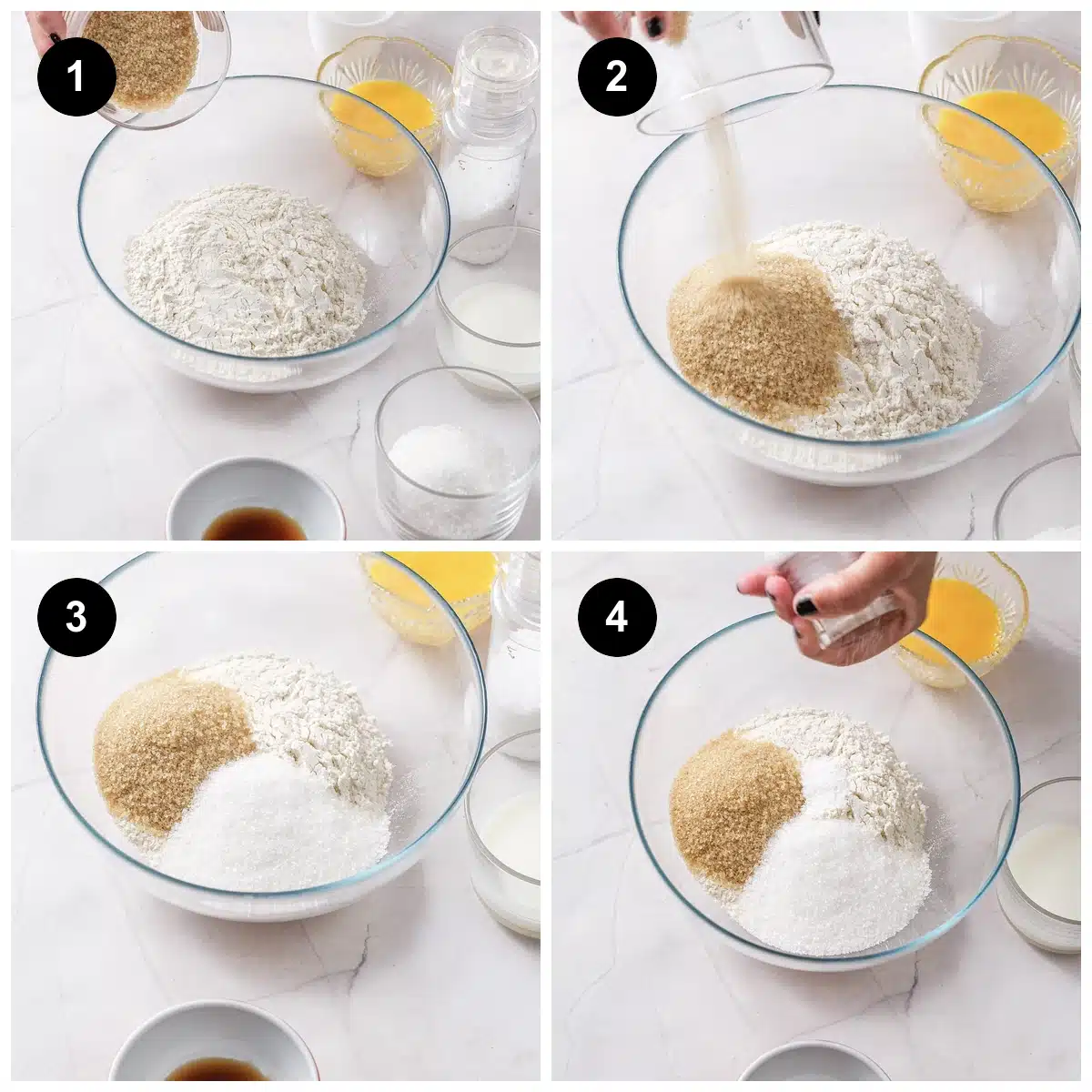
First, get the dry ingredients right. Heat the oven to 350 degrees, grease the pan and line it with parchment, then whisk the flour, sugar, cocoa, baking powder, baking soda and salt together until the color is completely even. Cocoa clumps are stubborn, and a clump that survives this stage survives into the finished cake as a bitter pocket.
Next, make a well in the middle and add the eggs, the oil, the cooled melted butter, the buttermilk and the vanilla. Whisk gently from the center outward until no dry flour remains. The batter will be thick and slightly stiff at this point, which is correct.
Then pour in the hot coffee in a slow stream, whisking as you go. The batter will thin out dramatically and turn glossy, and it will look far too loose to bake into a cake. Trust it. That extra liquid is what the cocoa needs, and a chocolate buttermilk cake batter is supposed to pour rather than spoon.
Bake, Cool and Frost
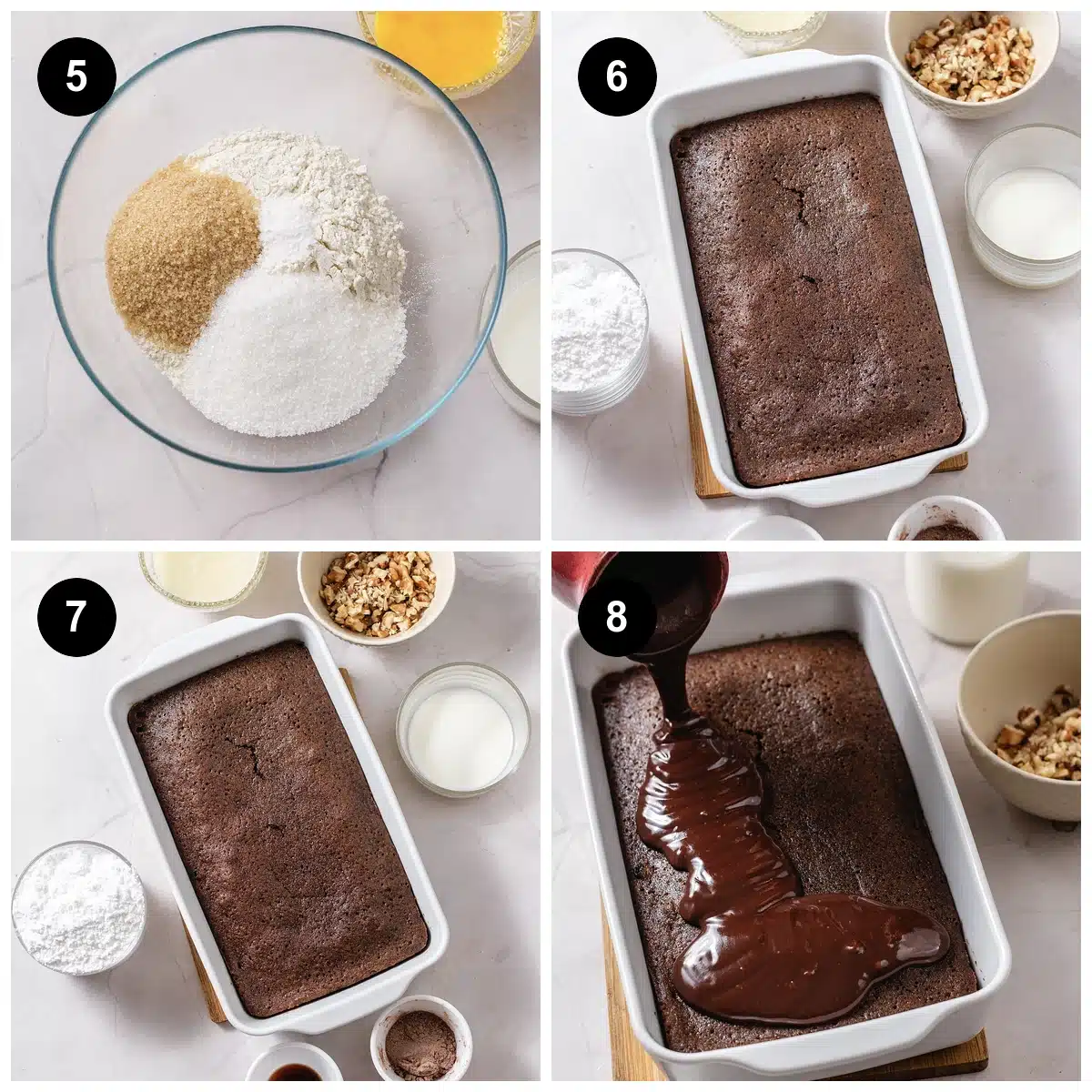
After that, pour the batter into the pan, smooth the surface and bake for thirty to thirty-five minutes. Start checking at thirty; a toothpick pushed into the middle should come out with a few moist crumbs clinging to it rather than wet batter or nothing at all.
Cool the cake completely in the pan before you go near it with frosting. Warm cake melts buttercream, and the frosting slides off the edges and pools at the corners. An hour on a wire rack is usually enough, and the refrigerator will halve that if you are pressed.
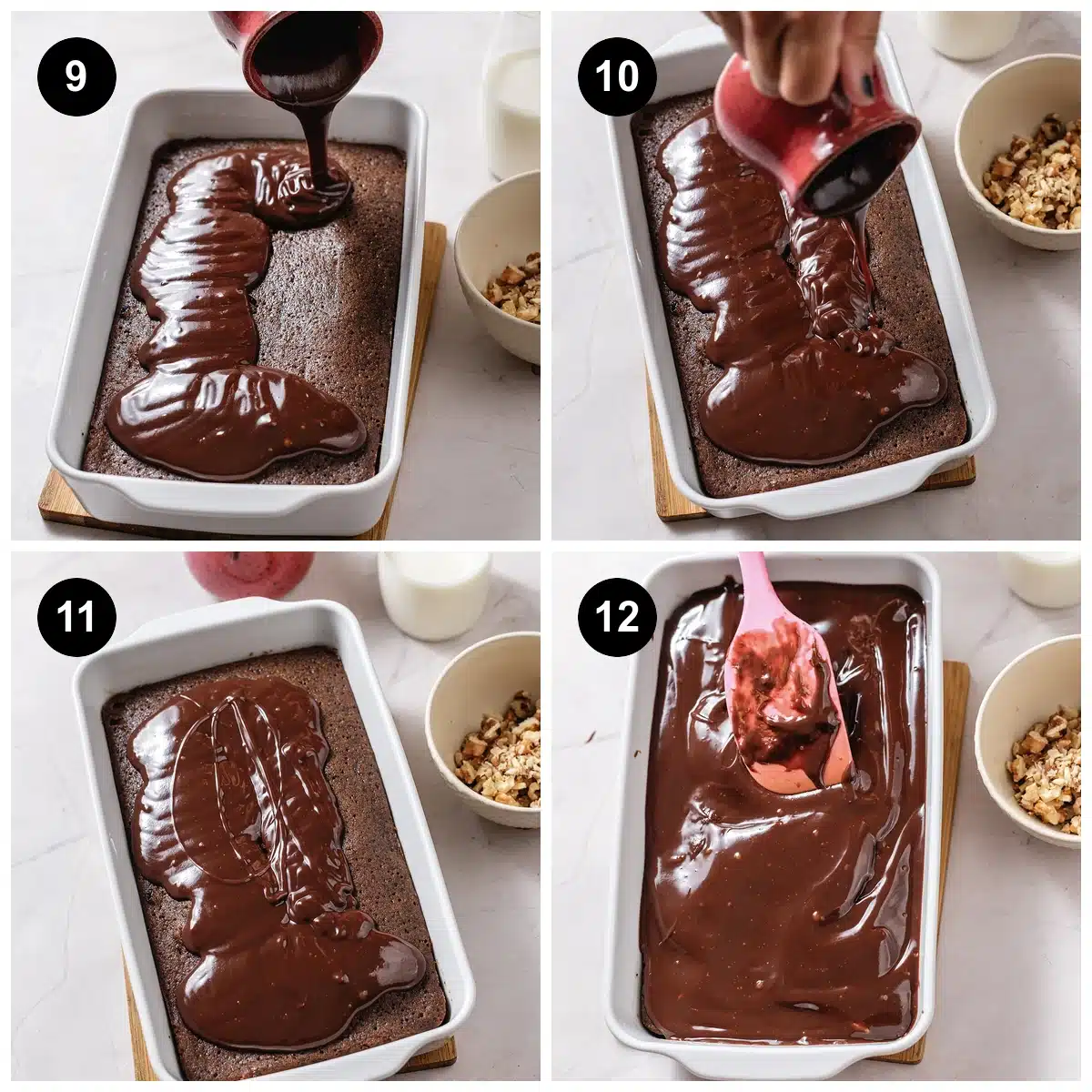
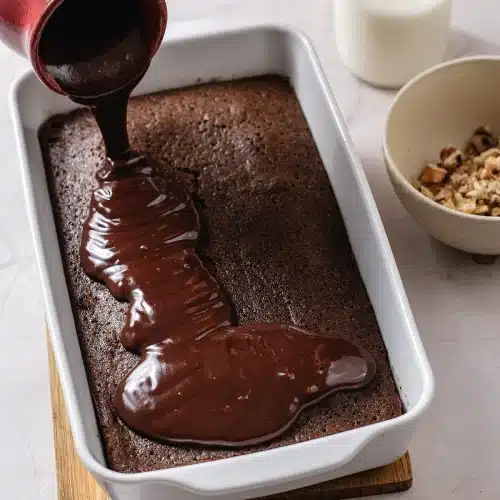
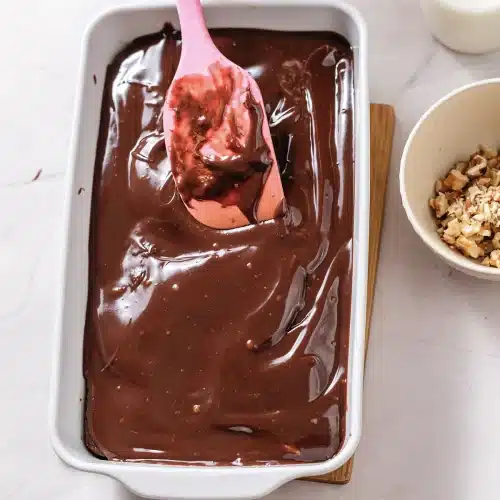
Finally, make the frosting and spread it. Beat the softened butter until creamy, sift in the cocoa, then add the powdered sugar and buttermilk alternately, starting and finishing with the sugar. Pour it over the cooled cake, push it to the edges with an offset spatula, and scatter the walnuts over while it is still tacky.
How To Tell When the Cake Is Done
The toothpick test is the reliable one, provided you read it correctly. A clean toothpick means the cake is already slightly overbaked; you want two or three moist crumbs clinging to the wood, which indicates the center has set but has not dried.
Two secondary signals back it up. The surface should spring back when you press it lightly with a fingertip rather than holding the dent, and the cake should have pulled a hair away from the sides of the pan. Both happen within a minute or two of the toothpick reading correctly.
Timing varies more than you might expect between ovens, so treat thirty-five minutes as an upper limit rather than a target. An overbaked chocolate buttermilk cake is still perfectly edible on the first day and noticeably dry on the second, which is the whole advantage thrown away.
Make It Ahead
Chocolate buttermilk cake is a genuine make-ahead bake, and it improves for it. Bake it a day early, leave it in the pan, cover the whole pan tightly with foil once it is cool, and frost it on the day you serve. That is the version I would recommend for a party, because the crumb is at its best on day two and the frosting is at its best fresh.
You can go further and freeze the unfrosted slab. Wrap it in plastic and then in foil, freeze for up to two months, and thaw it overnight on the counter still wrapped so the condensation forms on the foil rather than on the cake. The same approach works for a Texas sheet cake, which shares this cake’s shape and most of its logic.
Storing Chocolate Buttermilk Cake
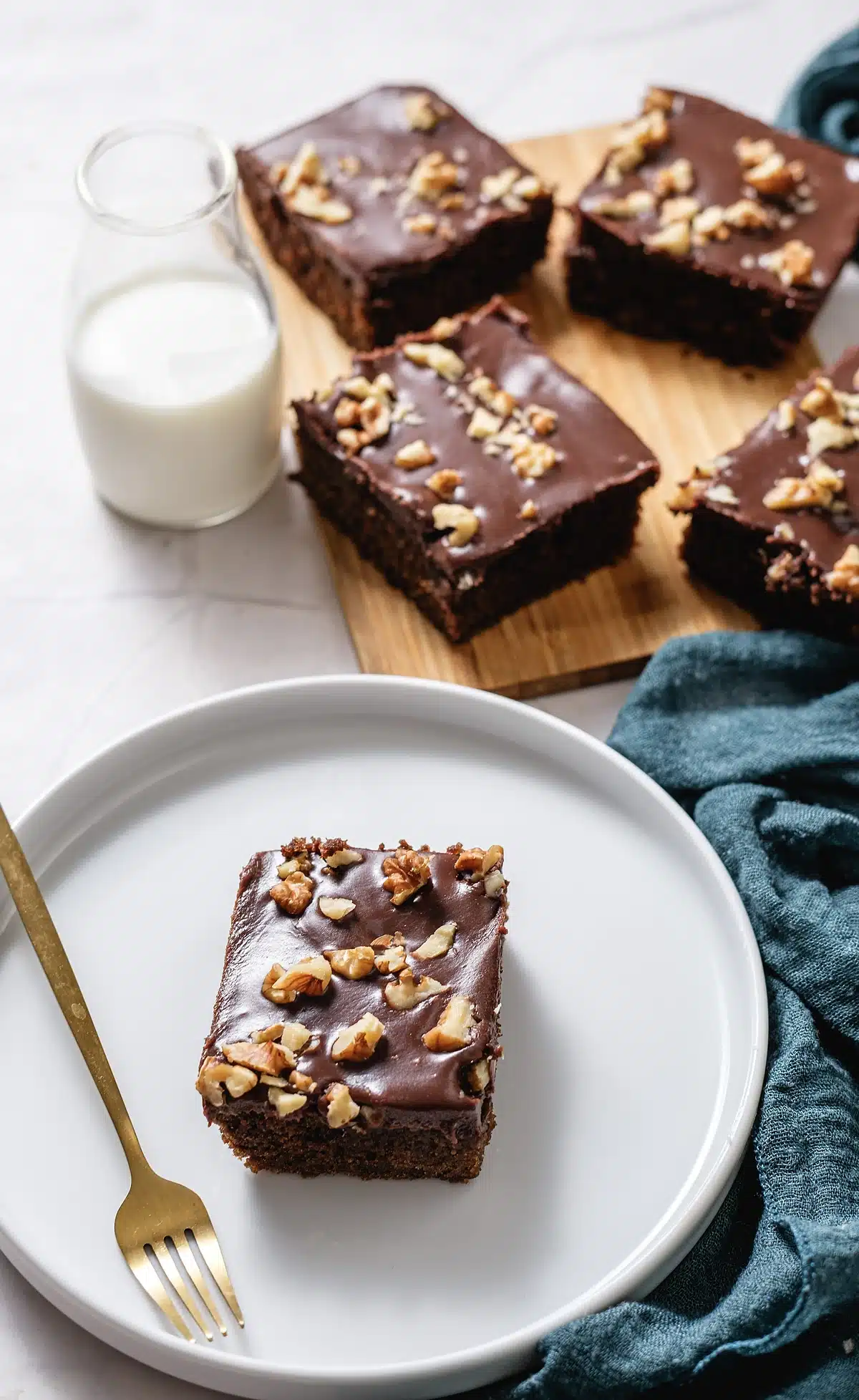
Covered at room temperature, a frosted chocolate buttermilk cake keeps for two days and is genuinely good for both of them. Press plastic wrap against the cut faces rather than only over the top, since an exposed crumb dries within a few hours.
In the refrigerator it holds for four or five days, though cold firms the frosting and mutes the flavor. Take a slice out twenty minutes before you want to eat it and it comes most of the way back.
Frosted slices freeze better than you would expect. Freeze them uncovered on a tray for an hour to set the buttercream, then wrap them individually and bag them for up to two months. Thawing at room temperature for an hour is all they need.
Variations and Substitutions
Hot water instead of coffee. A one-for-one swap. The cake is slightly less deep in flavor and nobody who has not tasted both will notice.
Mini chocolate chips. A cup folded into the finished batter. Toss them in a spoonful of the measured flour first so they stay suspended rather than sinking to the bottom.
Peanut butter frosting. Replace a quarter cup of the butter in the frosting with creamy peanut butter and leave out two tablespoons of the cocoa. It is the single most popular change anyone makes to this cake.
Two round layers. Divide the batter between two greased nine-inch pans and bake for twenty-five to twenty-eight minutes. You will want half again as much frosting to fill and cover them, and a layered chocolate buttermilk cake makes a perfectly respectable birthday cake.
A cup of espresso in the frosting. Dissolve a teaspoon of espresso powder in the frosting buttermilk. It sharpens the cocoa without reading as coffee, the same trick that works in the batter.
Something less expected. If you like a cake batter with an unusual note running through it, maple bacon cupcakes with stout and cayenne take the same one-bowl approach somewhere considerably stranger.
What to Serve with Chocolate Buttermilk Cake
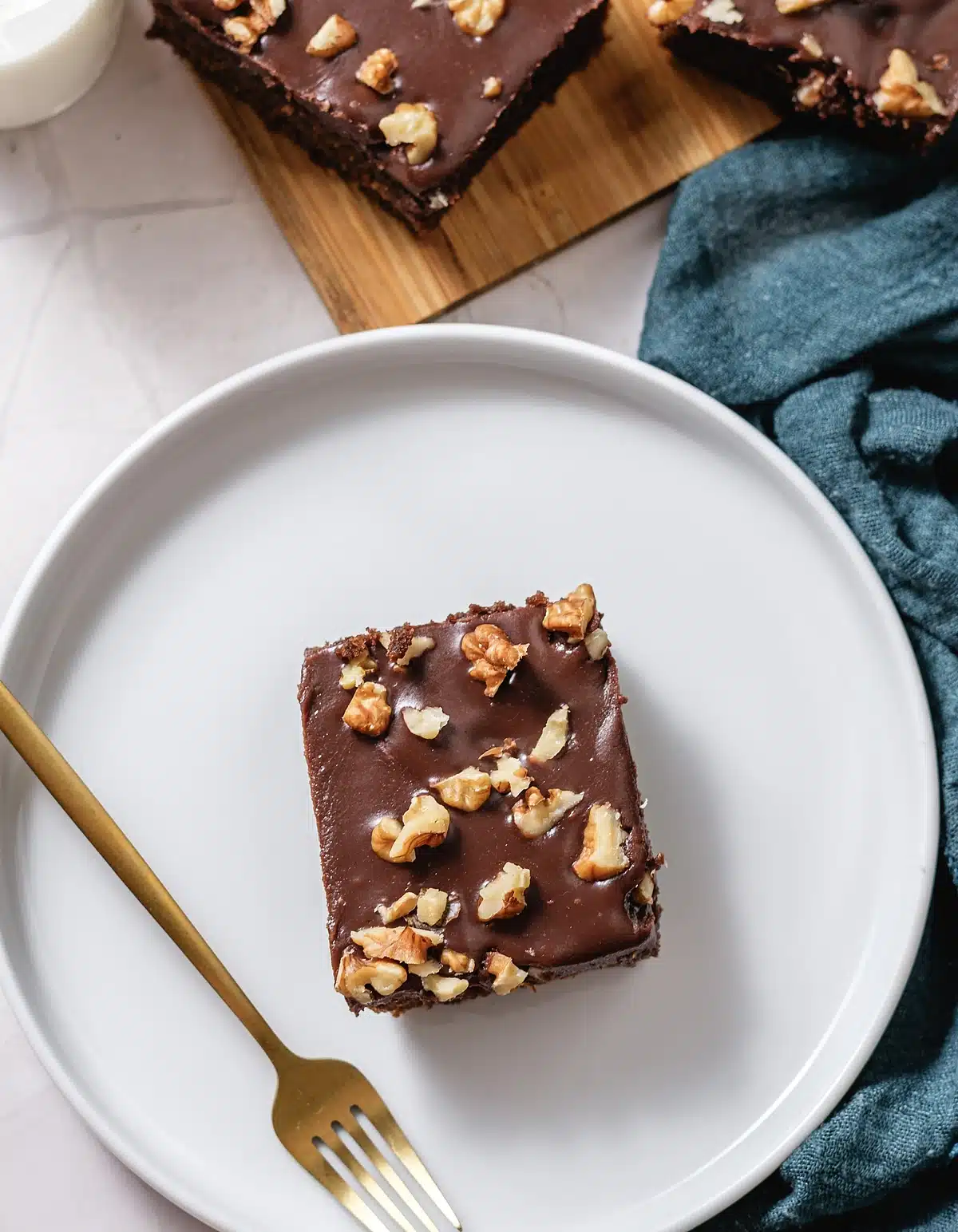
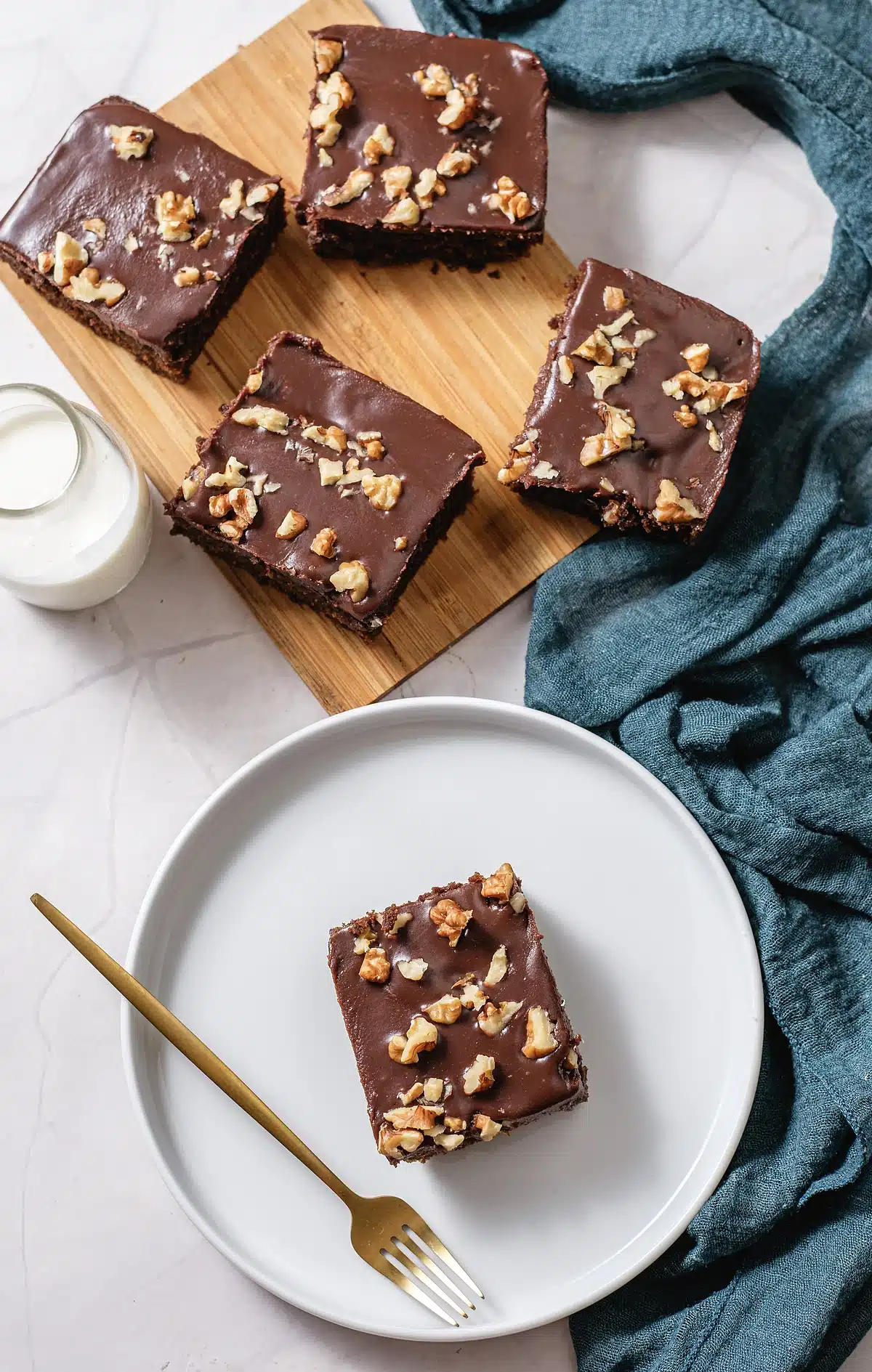
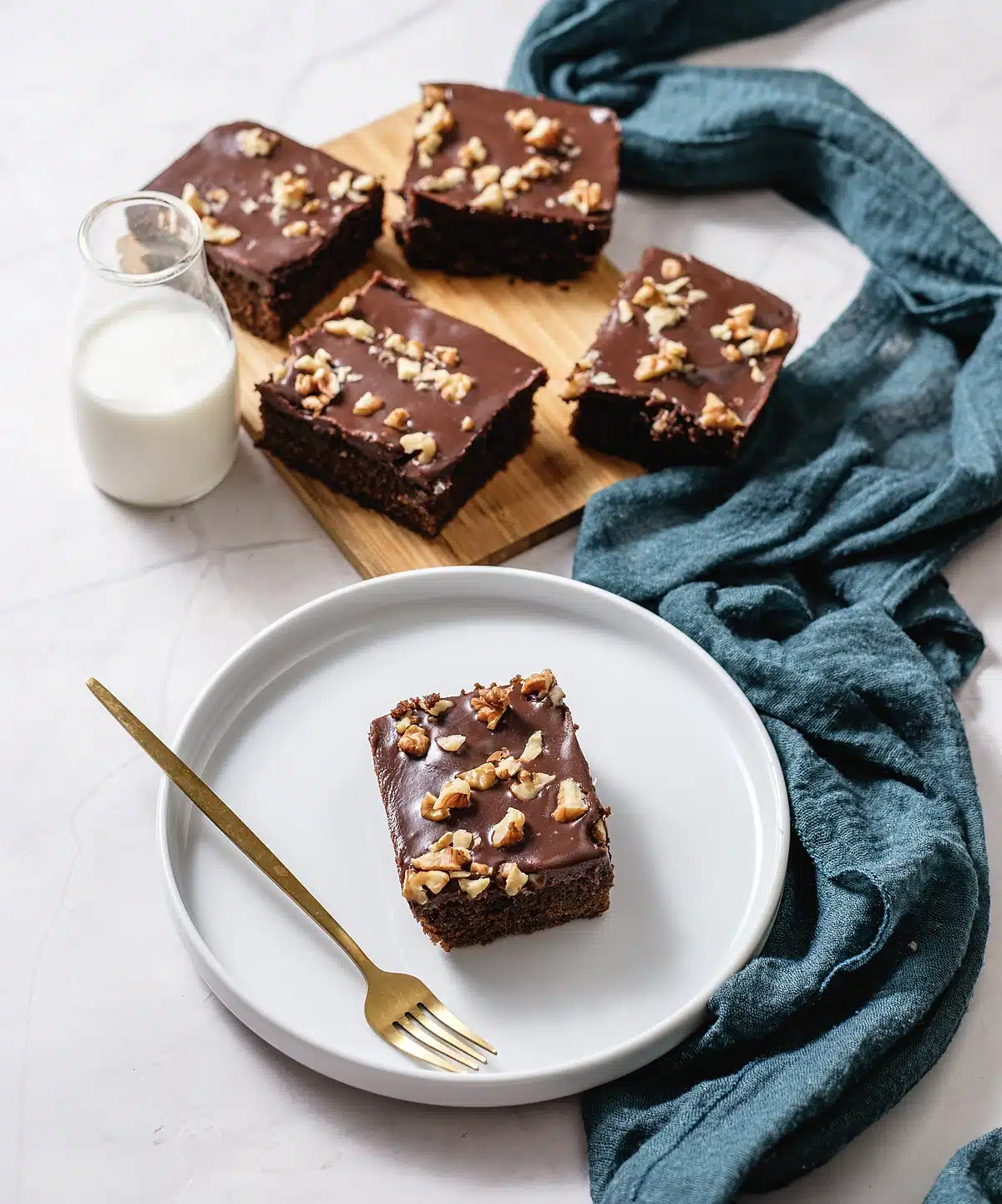
Cold milk, which is the pairing the photographs keep insisting on for good reason. The fat and the chill cut a rich, sweet frosting better than anything else, and a glass alongside a square is how most people first met this cake.
For an adult table, black coffee or a glass of port both work, and a scoop of vanilla ice cream turns a square of chocolate buttermilk cake into a proper plated dessert. Raspberries on the side are the one fruit that genuinely improves it, because the acidity does the job the buttermilk does inside the crumb.
On a dessert table, put something pale next to it. A vanilla buttermilk cake makes the obvious partner, since it is built the same way and gives people a choice without giving you a second technique to learn.
Chocolate Buttermilk Cake FAQ
Frequently Asked Questions
Can I use Dutch-process cocoa?
Not without adjusting. Dutch-process cocoa is alkalized and will not react with the baking soda, so the cake rises less and tastes flat. If it is all you have, leave the baking soda out and increase the baking powder to a tablespoon.
Will the cake taste of coffee?
No. One cup across twelve servings is far below the threshold where anyone identifies it, and its whole job is to make the cocoa taste more like itself. Use hot water if you would rather not risk it.
Why is my chocolate buttermilk cake batter so thin?
Because it should be. Adding a cup of hot liquid at the end takes this batter close to the consistency of heavy cream, and that is what a moist crumb costs. Pour it into the pan and bake it.
Can I make chocolate buttermilk cake without a mixer?
The cake, yes, and a whisk is all it needs. The frosting really does want an electric mixer, since beating three cups of powdered sugar into butter by hand is a long job with a mediocre result.
More Questions About Buttermilk Baking
Good to Know
What can I use instead of buttermilk?
A cup of milk with a tablespoon of lemon juice or white vinegar stirred in, left to stand five minutes. Plain yogurt thinned with milk to a pourable consistency works too, and is closer in thickness to the real thing.
Does buttermilk need to be at room temperature?
It helps. Cold buttermilk cools the melted butter enough to set it into small flecks, which show up in the finished crumb. Twenty minutes on the counter is enough.
Can I halve the recipe?
Yes, into an eight-inch or nine-inch square pan, and start checking at twenty-five minutes. Halving two eggs is the awkward part; beat one whole egg, weigh it, and use half.
If the single pan and the whisk are what appeal to you about this chocolate buttermilk cake, the same approach carries a chocolate chip sheet cake, which swaps the cocoa for a vanilla crumb and keeps everything else about the method intact.
Moist Chocolate Buttermilk Cake
Save this recipe
Enter your email and I’ll send this recipe straight to your inbox.
Ingredients
Cake Batter
- 2 cups all-purpose flour
- 2 cups granulated sugar
- 3/4 cup unsweetened cocoa powder natural, not Dutch-process
- 2 teaspoons baking powder
- 1 teaspoon baking soda
- 1/2 teaspoon salt
- 2 large eggs at room temperature
- 1/2 cup vegetable oil
- 1/2 cup unsalted butter melted and cooled
- 2 teaspoons vanilla extract
- 1 cup buttermilk well shaken
- 1 cup hot coffee or hot water
Cocoa Buttermilk Frosting
- 3 cups powdered sugar sifted, plus more as needed
- 3/4 cup unsalted butter softened
- 1/2 cup unsweetened cocoa powder
- 1 teaspoon vanilla extract
- 1/3 cup buttermilk at room temperature, more as needed
- 1/4 teaspoon fine sea salt
- 1/2 cup chopped walnuts optional, for scattering over the frosting
Equipment
- 9x13-inch Baking Pan
- Large mixing bowl
- Whisk
- Electric mixer or stand mixer (for frosting)
- Offset spatula or butter knife
- Parchment paper (optional)
Instructions
Mix the Batter
- Heat the oven to 350°F (175°C). Grease a 9x13-inch baking pan and line it with parchment paper.
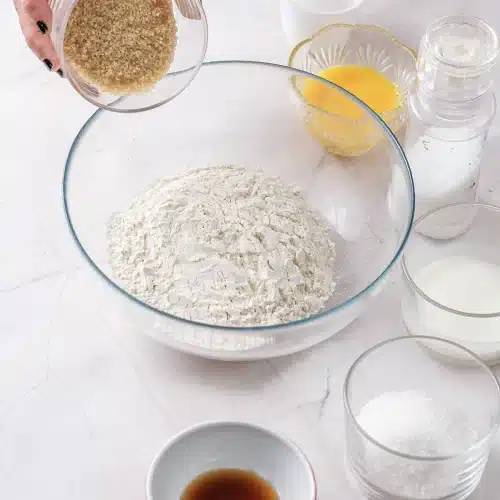
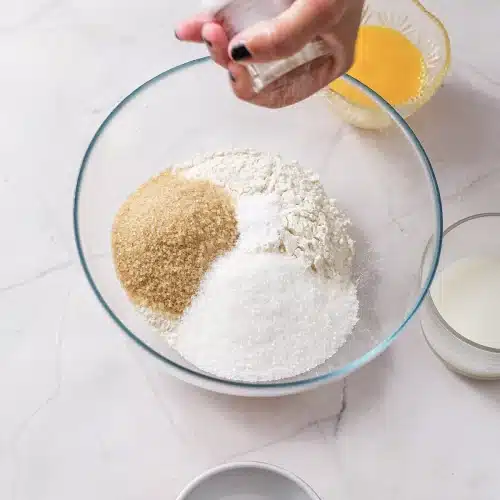
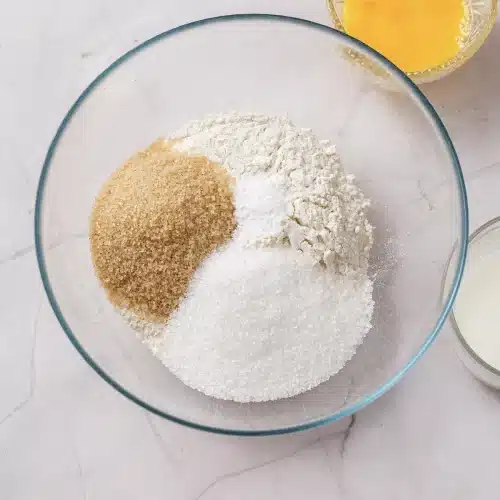
- Measure the flour, granulated sugar and cocoa powder into a large mixing bowl.

- Add the baking powder, baking soda and salt.
- Whisk the dry ingredients together until the color is completely even and no clumps of cocoa remain.
- Make a well in the center and add the eggs, vegetable oil, cooled melted butter, buttermilk and vanilla extract. Whisk gently from the center outward until no dry flour is left. The batter will be thick.
- Pour in the hot coffee in a slow stream while whisking. The batter will thin out and turn glossy, which is correct.
Bake and Cool
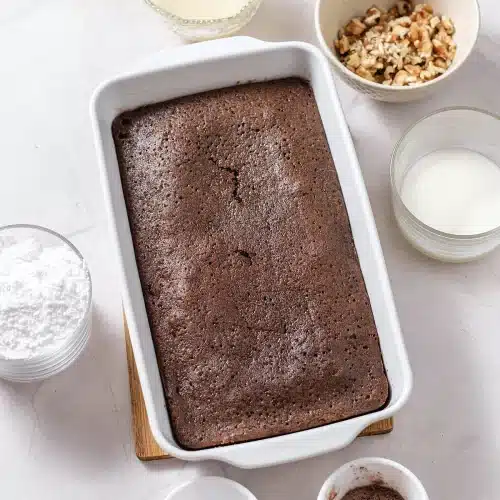
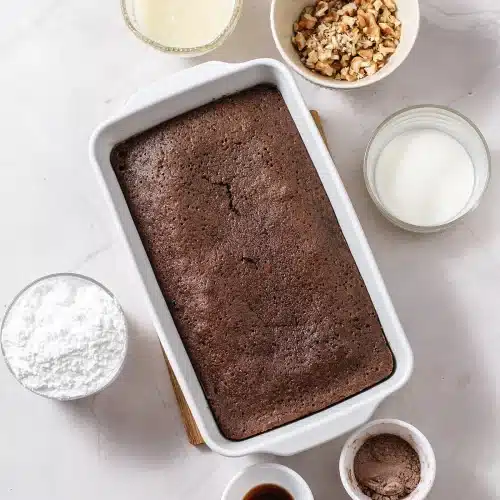
- Pour the batter into the prepared pan, smooth the surface, and bake for 30 to 35 minutes, until a toothpick pushed into the middle comes out with a few moist crumbs clinging to it.
- Let the cake cool completely in the pan on a wire rack before frosting it. Warm cake melts buttercream.
Make the Frosting
- Beat the softened butter until creamy, then sift in the cocoa powder and beat until fluffy and dark.
- Add the powdered sugar and buttermilk alternately, starting and ending with the sugar and beating smooth after each addition. Beat in the vanilla and salt until the frosting is shiny and pourable. Add more sugar or buttermilk to adjust.
Frost and Serve
- Pour the frosting over the cooled cake while it is still freshly beaten and loose.
- Spread it to the edges with an offset spatula and scatter the chopped walnuts over the top while the surface is still tacky.
- Chill the frosted cake for 15 to 20 minutes to set the frosting, then cut into 12 squares and serve.
Notes
* Storage: covered at room temperature for 2 days, or in the refrigerator for 4 to 5 days. Press plastic wrap against the cut faces, not just over the top.
* Freezing: wrap the unfrosted slab in plastic then foil and freeze up to 2 months, thawing overnight still wrapped. Frosted slices freeze well once the buttercream has set firm on a tray. * Cocoa: use natural cocoa powder, not Dutch-process. The baking soda is measured to react with the acid in natural cocoa, and Dutch-process is alkalized.
* Substitutions: hot water swaps in for the hot coffee, and a cup of milk with 1 tablespoon of lemon juice stirred in stands in for the buttermilk.
* Doneness: a toothpick should come out with a few moist crumbs clinging to it, never clean.
* Nutrition values are an estimate.