Texas sheet cake is the cake you make when twenty people are coming and you have forty-five minutes. Butter, water and cocoa go into a saucepan, get poured over the dry ingredients, and the whole batter is mixed in one bowl with a wooden spoon. It bakes in about twenty-five minutes, and the icing goes on while the cake is still hot from the oven.
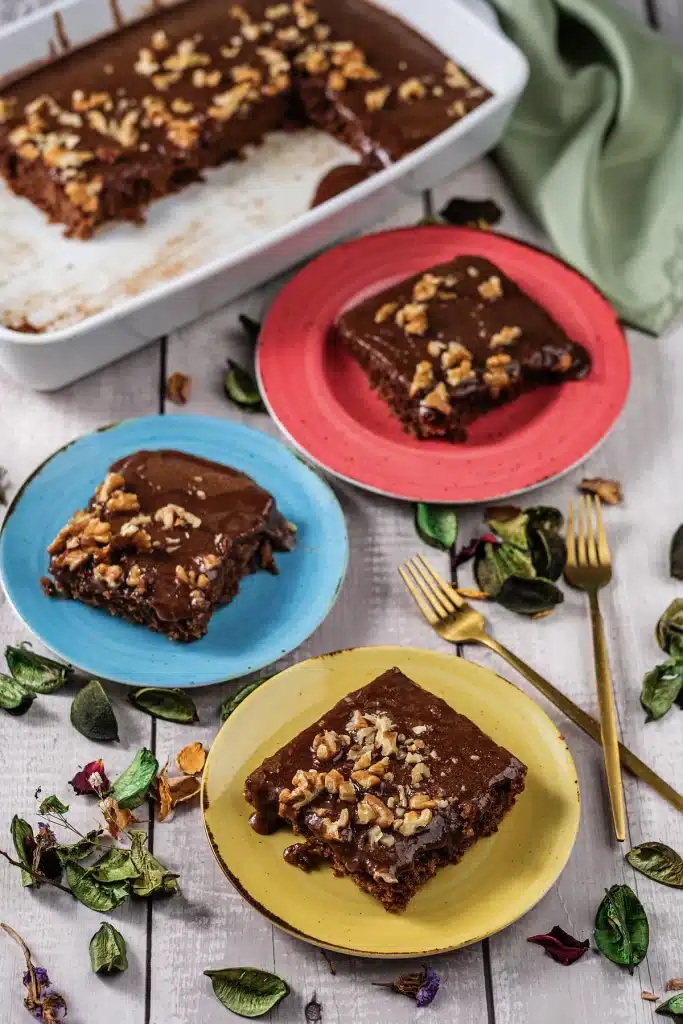
- Texas sheet cake from one bowl and one saucepan, stirred with a wooden spoon
- Ready in forty-five minutes from a cold kitchen to a cut square
- Feeds twenty, which is why it turns up at every potluck in the South
- The icing goes on hot, so it sets into a shell rather than a swirl
- Better on day two, and it keeps for three days on the counter
That last part is the whole recipe in one sentence. Pouring hot fudge icing onto a warm cake lets it soak a little way into the crumb and then set into a thin, glossy shell. Wait for the cake to cool and you get frosting sitting on top of a cake, which is a different and lesser thing.


- What Is a Texas Sheet Cake?
- What Makes It Different From a Regular Sheet Cake
- Ingredient Notes
- The Pan Size Question
- How To Make Texas Sheet Cake
- How To Tell When Texas Sheet Cake Is Done
- Make It Ahead
- Storing Texas Sheet Cake
- Freezing
- Variations and Substitutions
- What to Serve with Texas Sheet Cake
- Texas Sheet Cake FAQ
What Is a Texas Sheet Cake?
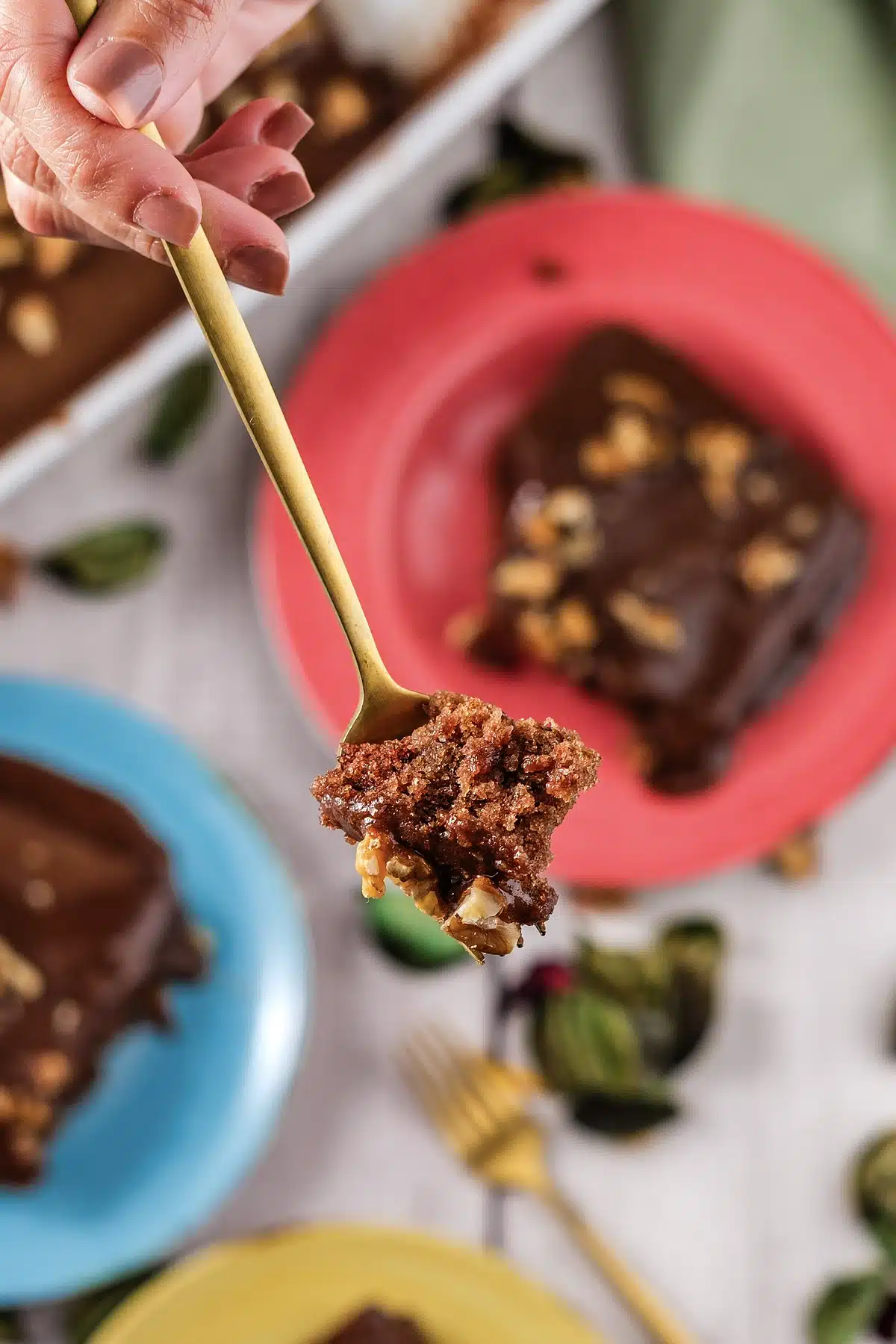
Texas sheet cake is a thin chocolate cake baked in a large rectangular pan, iced while still warm with a cooked fudge icing, and usually finished with chopped pecans or walnuts. The batter is made by the boiled-butter method: butter, water and cocoa are brought to a boil and poured over the flour and sugar, which partly cooks the flour and gives the cake a dense, almost brownie-like crumb.
Nobody is sure why it carries the name. The most repeated explanation is simply that the cake is enormous, and a cake the size of Texas is the kind of joke that sticks. Versions of it were printed in community cookbooks across the South and Midwest from the middle of the last century onward, sometimes as a sheath cake or a sheet cake, and the recipes are close to identical.
What is not in dispute is what it is for. This is a cake for a crowd, a church supper, a bake sale, a funeral, a barn dance. It is not a layer cake and it never pretends to be.
Save this recipe
Enter your email and I’ll send this recipe straight to your inbox.
What Makes It Different From a Regular Sheet Cake
An ordinary sheet cake is a butter or box cake baked flat and covered in buttercream once it has cooled. The crumb is light, the frosting is thick and soft, and the two stay clearly separate.
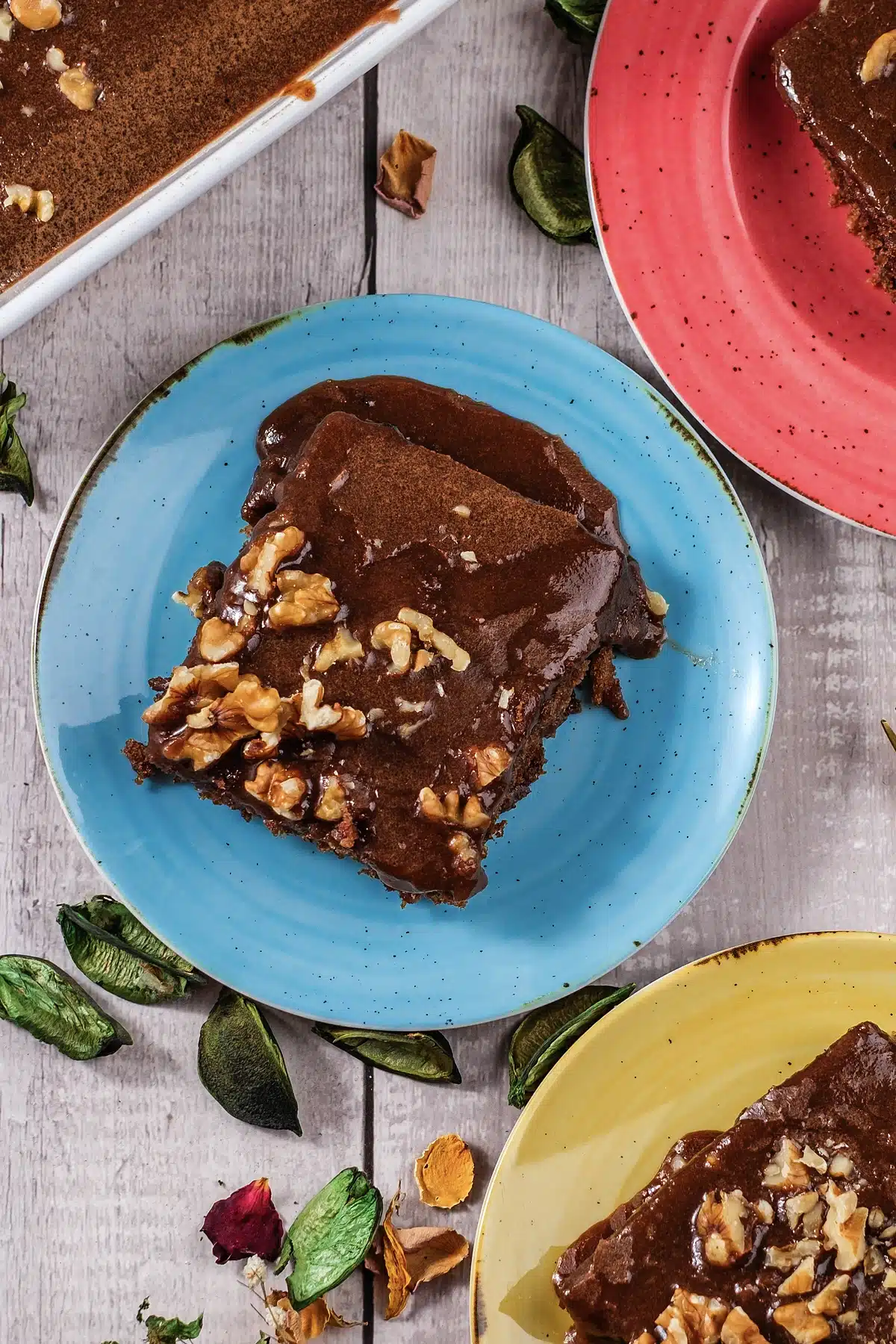
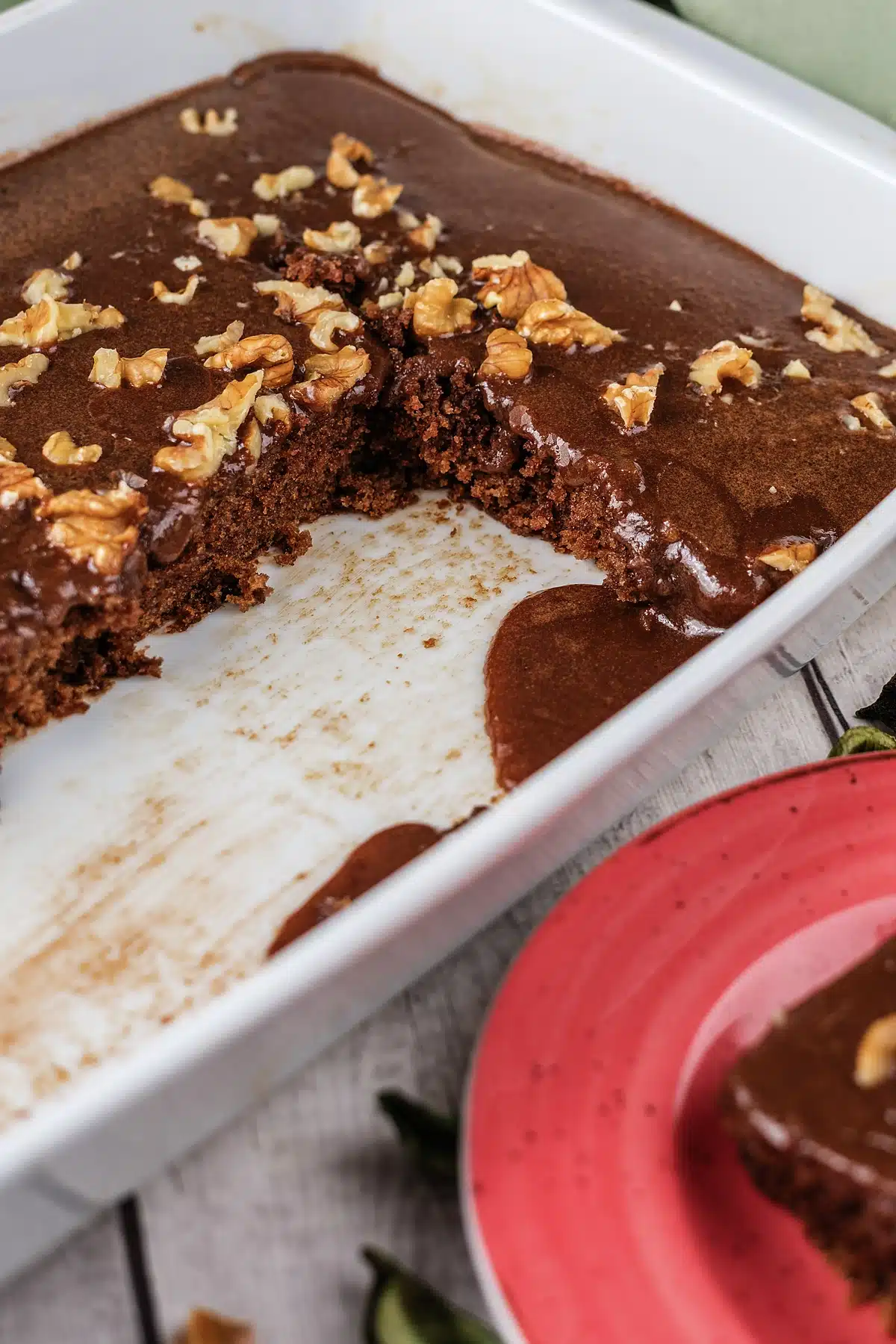
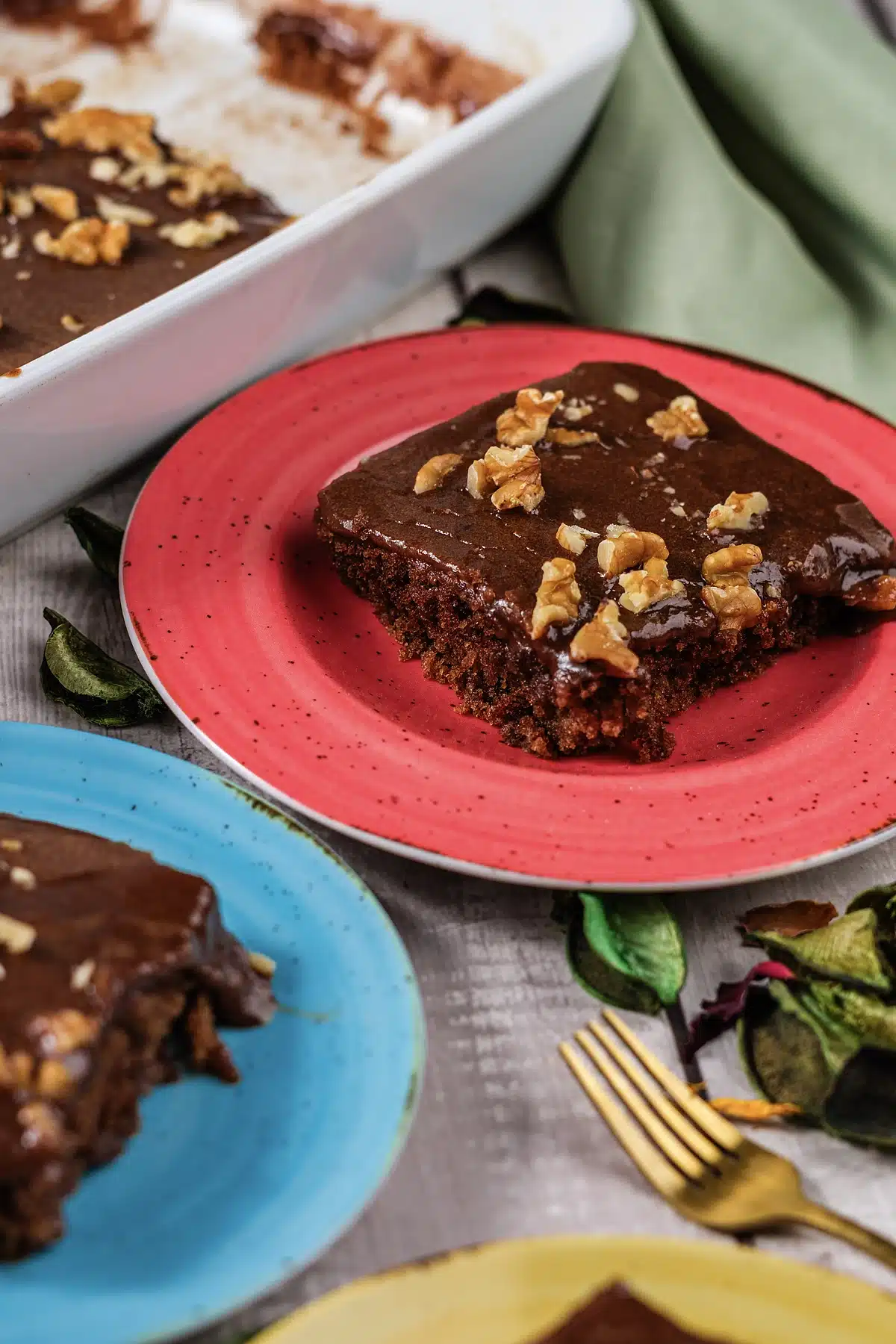
Texas sheet cake works the other way round. The cake is thinner, denser and slightly fudgy, and the icing is a cooked mixture of butter, milk, cocoa and powdered sugar that is poured on hot. It sinks slightly into the surface and hardens as it cools, which is why a cut square has a thin, shiny top rather than a soft cap.
The other difference is timing. A layer cake needs cooling, leveling and frosting. This one goes from the oven to the icing to the table in about ten minutes, and it improves overnight rather than drying out.
Ingredient Notes

- Unsalted butter. Two sticks in the cake and one in the icing. This is a butter-forward recipe and margarine tastes of exactly what it is here, with nowhere to hide.
- Unsweetened cocoa powder. Five tablespoons in the cake, four in the icing. Natural cocoa is what the original recipes assume and it reacts with the baking soda for lift. Dutch-process cocoa gives a darker color and a flatter rise, so use natural if you have it.
- All-purpose flour. Two cups, scooped and leveled. Cake flour makes this too delicate; the cake wants a little structure to hold up to the hot icing.
- Granulated sugar. Two cups, whisked into the flour rather than creamed with the butter. There is no creaming step in this method at all.
- Baking soda. One teaspoon, and no baking powder. The soda is there to react with the natural cocoa and the sour cream.
- Sour cream. Half a cup, full fat. It is the moisture and the tang, and it is what keeps the crumb from tasting merely sweet. Plain full-fat Greek yogurt is a straight swap.
- Eggs. Two large, at room temperature. Cold eggs hitting a hot cocoa mixture will scramble at the edges.
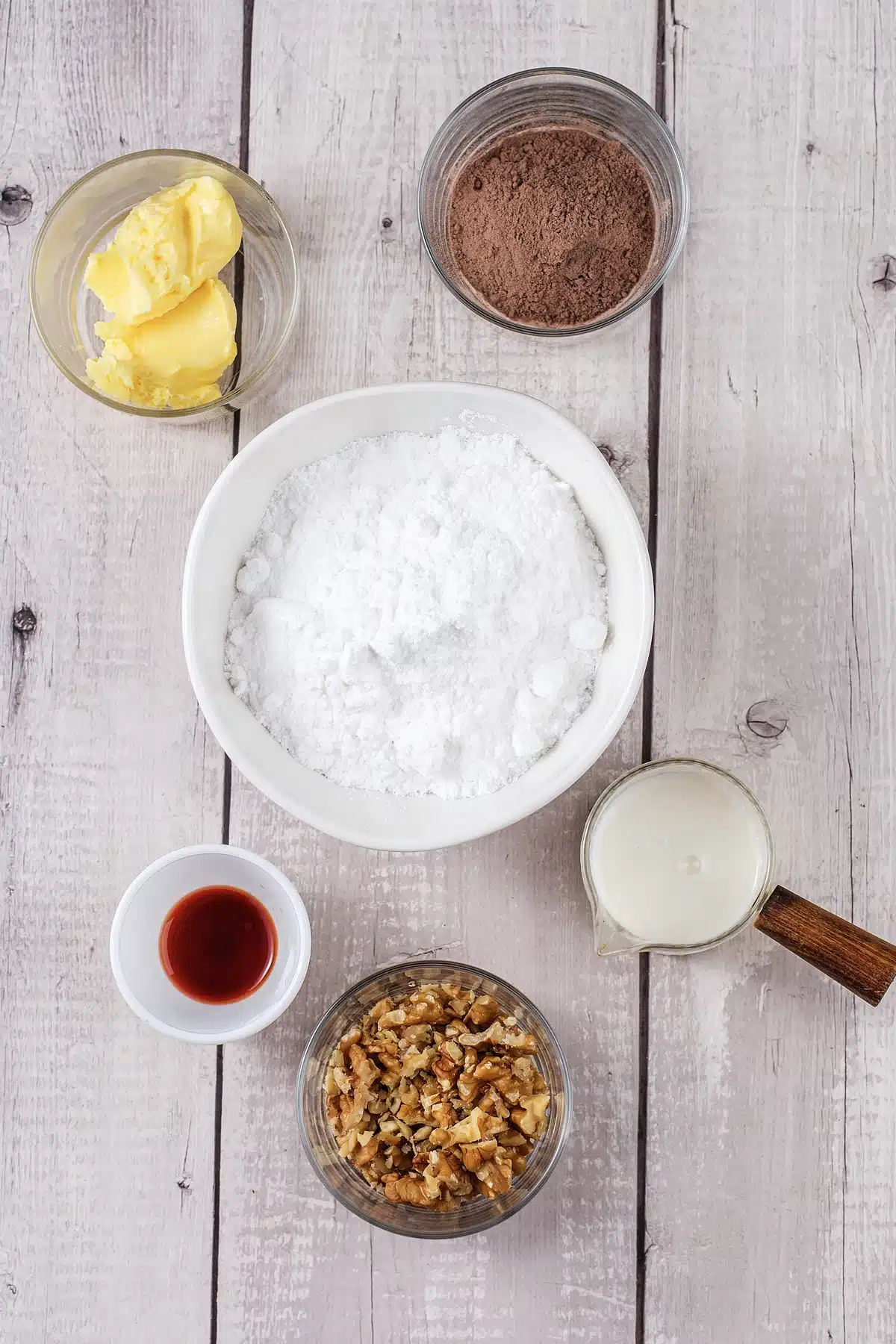
- Powdered sugar. Three and a half cups for the icing, sifted if it has gone lumpy. Granulated will not dissolve in the short time the icing spends on the heat.
- Walnuts. Three-quarters of a cup, chopped and scattered over the wet icing. Pecans are the more traditional choice in Texas and either is correct. Leave them out entirely and nothing breaks.
The Pan Size Question
The traditional pan is a half sheet or a jelly roll pan, roughly 18 by 13 inches or 15 by 10, which gives a cake barely half an inch thick with a very high ratio of icing to crumb. That is the original, and if you own the pan it is worth doing.
These photographs show Texas sheet cake made in a 9-by-13-inch dish, which is what most kitchens actually have. The cake comes out closer to an inch thick, more like a very good brownie, and it needs a few extra minutes in the oven. Twenty-two to twenty-six minutes rather than fifteen to eighteen.
Either way the icing quantity stays the same. On the larger pan it spreads thin and glossy; in the smaller dish it sits a little thicker, which nobody has ever objected to.
Flour choice barely matters here, which is unusual for a cake. All-purpose is milled from a blend of hard and soft wheat, and the Wheat Foods Council’s rundown of the six classes of wheat explains why the soft classes are the ones bakers reach for when they want a tender crumb. In a batter this wet and this heavily iced, the difference disappears, so use what is in the cupboard.
How To Make Texas Sheet Cake
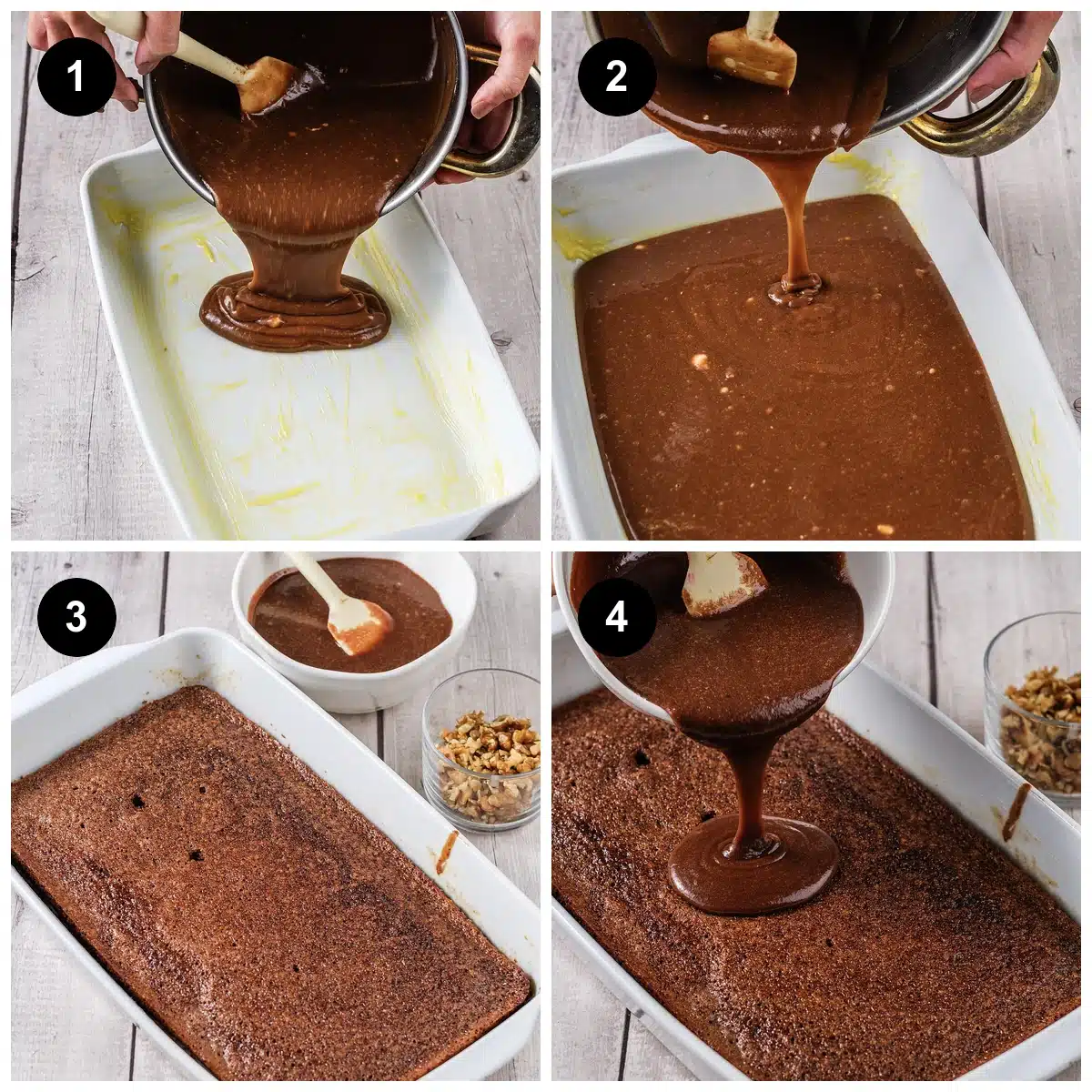
First, heat the oven and prepare the pan. 350 degrees, and butter a 9-by-13-inch baking dish generously, right into the corners. There is no parchment here, because the cake is served from the pan.
Next, boil the cocoa mixture. Melt the two sticks of butter in a saucepan over low heat, stir in the water and the cocoa, and bring it to a gentle boil. Take it off the heat and let it cool for a couple of minutes while you deal with the dry ingredients.
Then whisk the dry ingredients and add the eggs. Flour, sugar, baking soda and salt in a large bowl, whisked together. Stir in the eggs and the sour cream, and do not worry that the mixture looks clumpy and unpromising at this stage. It is supposed to.
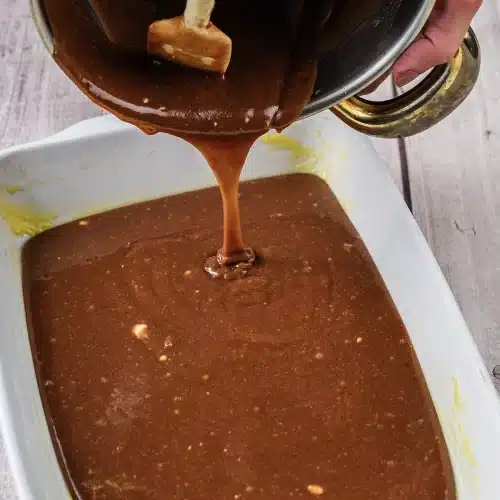
After that, combine and bake. Pour the warm cocoa mixture into the bowl in a steady stream, stirring as you go, until the batter is glossy and smooth. Pour it into the dish, spread it level, and bake for twenty-two to twenty-six minutes.
Finally, make the icing in the last five minutes of baking. Bring the butter, milk and cocoa to a boil in a clean saucepan, take it off the heat, and whisk in the powdered sugar and vanilla until smooth. It should pour, not spread.
Icing a Warm Cake

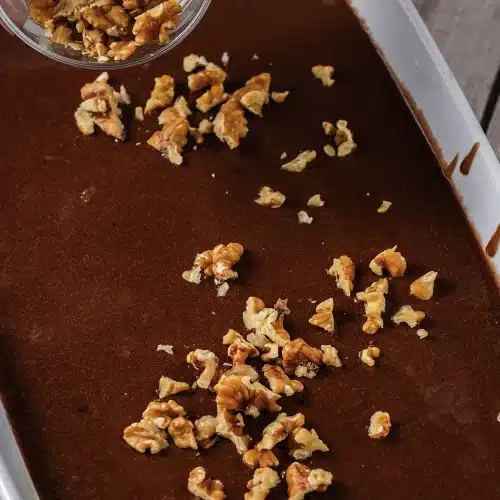
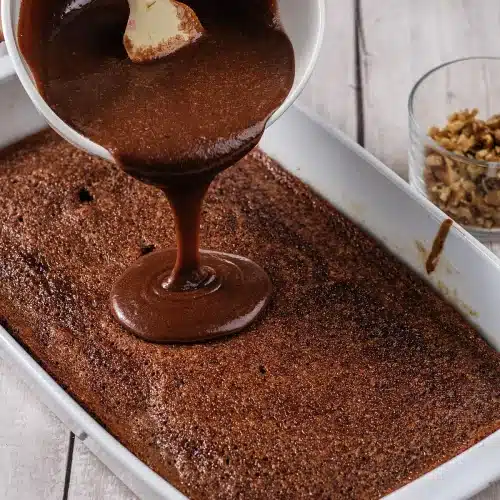
Pour the hot icing over the Texas sheet cake the moment it leaves the oven, then tilt the pan gently to send it into the corners rather than pushing it with a spatula. A spatula drags crumbs up into the surface and ruins the shine. Scatter the walnuts across while the icing is still wet so they set into it, then leave the whole thing alone for at least thirty minutes.
How To Tell When Texas Sheet Cake Is Done
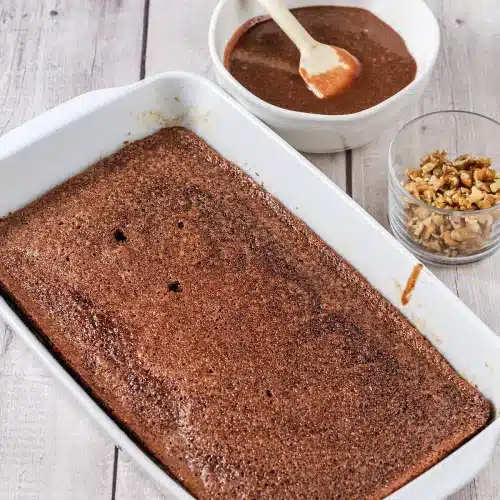
A toothpick pushed into the center of a Texas sheet cake should come out with a few moist crumbs clinging to it, not wet batter and not bone dry. This cake carries very little insurance, and the difference between fudgy and dry is roughly three minutes.
The surface is the other tell. It should look matte and set all over, and the edges should have pulled very slightly away from the sides of the dish. If the middle still looks glossy and wobbles when you nudge the pan, give it three more minutes and test again.
Start checking at twenty-two minutes in a 9-by-13-inch dish, or at fifteen in a jelly roll pan. Ovens vary more than recipes admit.
Make It Ahead
Bake it the day before. Texas sheet cake is genuinely better on day two, once the icing has fully set and the moisture has evened out through the crumb, and it means the day of the event needs nothing but a knife.
Cover it loosely with foil once the icing is firm, not with plastic wrap pressed onto the surface, which will lift the shine off. It sits happily on the counter overnight.
Both components can also be made in stages if you are pushed. The cake will wait an hour or two before icing, though it will be cool by then, and cool cake takes a thicker, more frosting-like layer. That is a fair trade rather than a failure.
Storing Texas Sheet Cake
Covered at room temperature, it keeps for three days and is at its best on the second. Refrigerate it only if your kitchen is very warm, because cold firms the icing into something closer to a shell and dries the crumb.
If it has been in the fridge, let a square sit out for twenty minutes before eating. The texture comes back completely.
Freezing
Texas sheet cake freezes better than most iced cakes. Let the icing set completely, cut the cake into squares, and freeze them on a tray until firm before wrapping them individually. They keep for three months.
Thaw a square at room temperature for about an hour, still wrapped, so any condensation forms on the wrapping rather than on the icing. Freezing the cake whole in its dish also works, though it takes half a day to thaw and you lose the ability to take out one piece at a time.
Variations and Substitutions
Pecans. The traditional nut, and arguably the better one. Toast them for eight minutes first and the difference is noticeable.
Buttermilk. Half a cup of buttermilk in place of the sour cream gives a slightly lighter crumb and a sharper tang.
Espresso powder. A teaspoon whisked into the dry ingredients deepens the cocoa without making the cake taste of coffee.
Cinnamon. Half a teaspoon in the batter is a common Southern addition and it makes the whole thing read as slightly Mexican.
No nuts. Leave them out and finish with flaky salt instead. The icing is sweet enough that a little salt is an improvement rather than a compromise.
White version. Drop the cocoa from both the cake and the icing, add an extra teaspoon of vanilla, and you have the white sheet cake that turns up alongside the chocolate one at every Texas potluck.
What to Serve with Texas Sheet Cake

Serve Texas sheet cake with coffee, and plenty of it. The icing is sweet and the crumb is rich, and a plain black coffee cuts through both better than anything else you could put next to it. Cold milk is the other correct answer, especially for anyone under twelve.
A scoop of vanilla ice cream turns a square into a dessert rather than a snack, and it is worth warming the square for fifteen seconds first so the ice cream starts to melt into the icing.
If you are baking for a table rather than a plate, a chocolate chip sheet cake covers anyone who wanted something less intense, and Texas sheet cake cookies are the same flavors in a form you can put in a lunchbox.
Texas Sheet Cake FAQ
Frequently Asked Questions
What is so special about Texas sheet cake?
Two things: the boiled-butter method, which partly cooks the flour and gives a dense fudgy crumb, and icing the cake while it is still hot so the icing sinks in and sets into a thin shell. No other cake does both, and together they make something closer to a brownie than to a layer cake.
How many will it feed?
Twenty from a 9-by-13-inch dish cut into squares, or twenty-four to thirty from a full jelly roll pan. It is rich, so the squares can be small without anyone feeling shortchanged.
Can I use a 9-by-13-inch pan?
Yes, and that is what the photographs here use. The cake comes out about an inch thick instead of half an inch, so bake it for twenty-two to twenty-six minutes rather than fifteen to eighteen and start testing early.
Why is my icing grainy?
Either the powdered sugar went in while the mixture was still boiling, or it was lumpy to begin with. Take the pan off the heat first, and sift the sugar if the box has been open a while.
More Questions About Sheet Cakes
Good to Know
Can I halve the recipe?
Halve everything into an 8-inch square pan and start checking at eighteen minutes. Use one whole egg rather than trying to split two and pull back a tablespoon of the sour cream.
Do I have to use sour cream?
No. Full-fat Greek yogurt or buttermilk both work, though buttermilk makes a slightly looser batter. What you cannot do is leave it out, because the acid is what activates the baking soda.
Can I make it in a bundt pan?
Not well. The batter is thin and the cake depends on being shallow, so a deep pan gives you a wet center and no surface for the icing to soak into.
Texas sheet cake has outlasted every dessert trend since it was first mimeographed into a church cookbook, which is the strongest recommendation any recipe gets. If you want the same cocoa depth in a taller, more formal shape, a nine-inch chocolate cake or a chocolate buttermilk cake will do it.
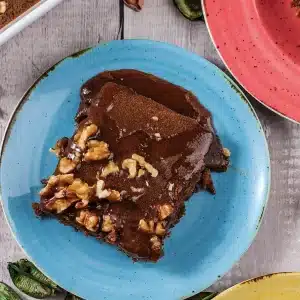
Texas Sheet Cake
Save this recipe
Enter your email and I’ll send this recipe straight to your inbox.
Ingredients
For the Cake
- 1 cup unsalted butter 2 sticks
- 1 cup water
- 5 tbsp unsweetened cocoa powder natural, not Dutch-process
- 2 cups all-purpose flour scooped and leveled
- 2 cups granulated sugar
- 1 tsp baking soda
- 1/2 tsp salt
- 2 large eggs room temperature
- 1/2 cup sour cream full fat, or plain Greek yogurt
For the Fudge Icing
- 1/2 cup unsalted butter 1 stick
- 6 tbsp milk whole milk preferred
- 4 tbsp unsweetened cocoa powder
- 3 1/2 cups powdered sugar sifted if lumpy
- 1 tsp vanilla extract
- 3/4 cup chopped walnuts optional, or pecans
Equipment
- 10x15-inch rimmed jelly roll pan
- Medium saucepan
- Large mixing bowl
- Whisk
Instructions
Make the Batter
- Heat the oven and butter the dish. Set the oven to 350°F (175°C) and butter a 9-by-13-inch baking dish generously, right into the corners. The cake is served from the pan, so there is no parchment.
- Boil the cocoa mixture. Melt the 1 cup of butter in a saucepan over low heat, stir in the water and the 5 tablespoons of cocoa, and bring it to a gentle boil. Take it off the heat and let it cool for a couple of minutes.
- Whisk the dry ingredients. Whisk the flour, granulated sugar, baking soda and salt together in a large bowl, then stir in the eggs and the sour cream. The mixture will look clumpy at this stage, which is correct.
- Combine. Pour the warm cocoa mixture into the bowl in a steady stream, stirring as you go, until the batter is glossy and smooth.
Bake the Cake
- Fill the dish. Pour the batter into the buttered dish.

- Spread it level. Push the batter gently into the corners so it bakes evenly.
- Bake 22 to 26 minutes. A toothpick in the center should come out with a few moist crumbs, not wet batter. The surface should look matte and set and the edges should have pulled slightly from the sides.

Ice While Warm
- Make the icing. With 5 minutes of baking left, bring the 1/2 cup of butter, the milk and the 4 tablespoons of cocoa to a boil in a clean saucepan. Take it off the heat and whisk in the powdered sugar and vanilla until smooth. It should pour rather than spread.
- Pour it over the hot cake. Pour the icing over the cake the moment it comes out of the oven and tilt the pan gently to send it into the corners. Do not push it with a spatula, which drags crumbs into the surface.
Finish and Cool
- Scatter the nuts and cool. Scatter the chopped walnuts over while the icing is still wet so they set into it, then leave the cake alone for at least 30 minutes before cutting.