
Cuban black beans are proof that a pantry dish can taste like it took all afternoon. Two cans, an onion, a green bell pepper and a handful of spices go into one skillet, and thirty-five minutes later you have a pot of frijoles negros with the sort of savory depth that usually requires an overnight soak and a ham hock. Cuban black beans are a weeknight dish pretending to be a Sunday one.
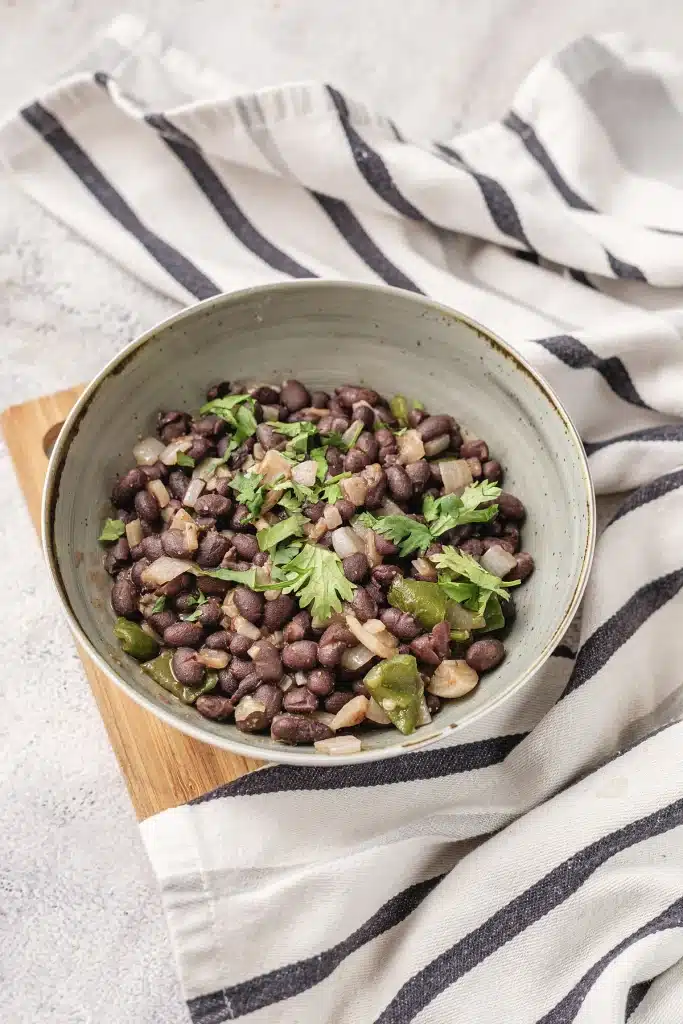
- Thirty-five minutes from two cans to the table
- Naturally vegan and gluten-free with nothing swapped out
- One skillet, and most of the time is unattended simmering
- Better on the second day, which makes it a genuine batch cook
- Cuban black beans work as a side, a main over rice, or a filling for tacos
The step everybody skips when they make Cuban black beans is the one that matters. Onion and green pepper cooked slowly in olive oil until they soften and catch a little color is called sofrito, and it is not a preliminary. It is the flavor base that carries cumin, oregano and garlic into the beans, and a tablespoon of red wine vinegar at the end lifts all of it.


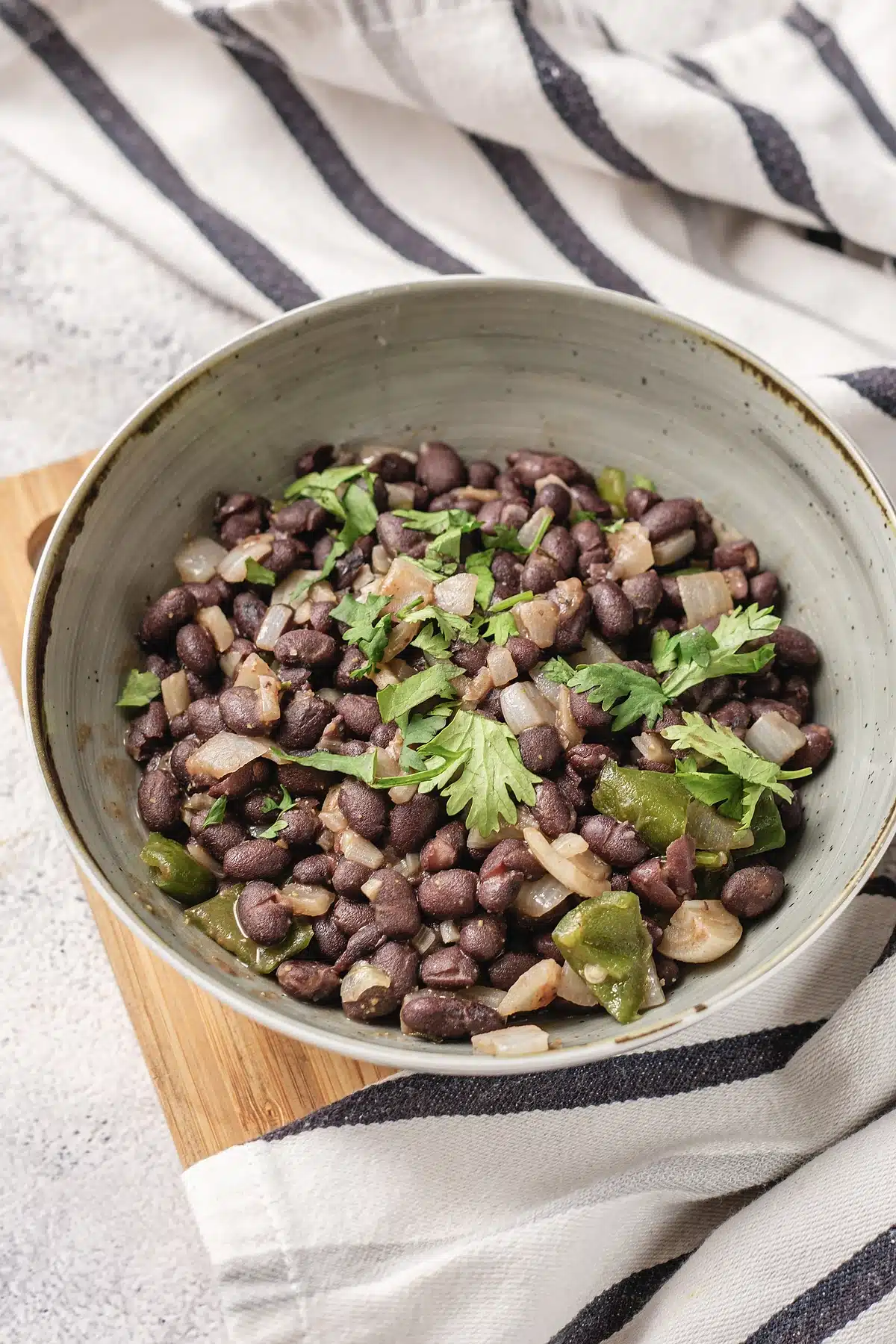
What Are Cuban Black Beans?
Cuban black beans, or frijoles negros, are the daily bread of Cuban home cooking, served beside rice at almost every meal. They are soupier than a Mexican refried bean and far less sweet than a Southern baked bean, and the flavor profile is built on cumin, oregano and a vinegar note rather than on chili heat.
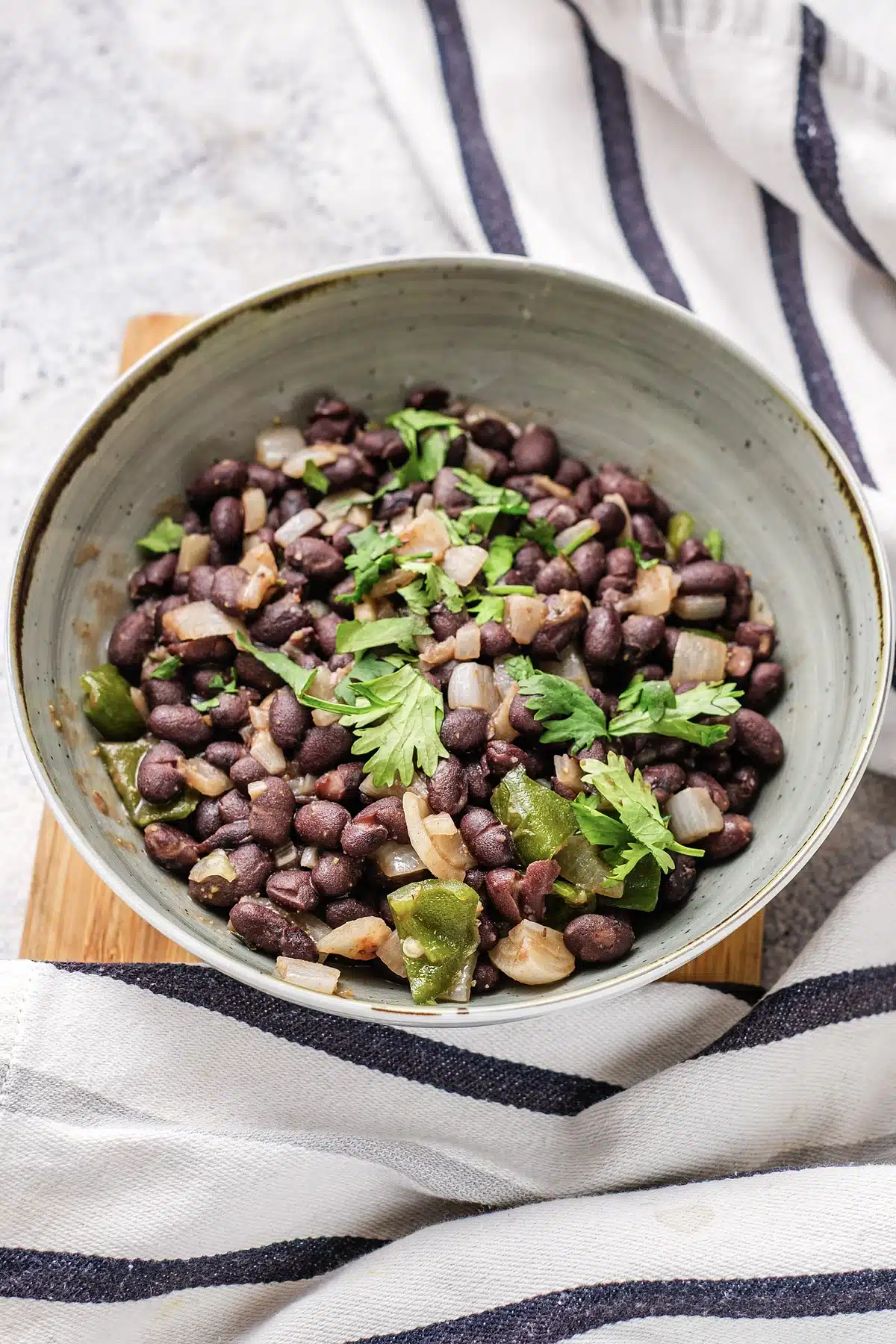
The classic version of Cuban black beans starts with dried beans soaked overnight and simmered for hours with a bay leaf and a whole green pepper. It is wonderful and it is a project. This recipe keeps the seasoning intact and borrows the canning industry’s head start, which gets you most of the way there on a Tuesday.
Serve Cuban black beans over white rice and the dish becomes moros y cristianos, one of the defining plates of the island. Served alongside roast pork and fried plantains, the same beans anchor a full Cuban dinner without asking for any more work.
Save this recipe
Enter your email and I’ll send this recipe straight to your inbox.
Sofrito Is the Whole Recipe
Sofrito in the Cuban sense is simpler than its Puerto Rican or Spanish cousins: onion, green bell pepper and garlic, cooked in olive oil until soft and sweet. No tomato, no blender, no herb paste. It takes seven minutes, and it is the difference between Cuban black beans that taste seasoned and beans that taste merely cooked.
Give the onion and pepper a full five to seven minutes over medium heat before the garlic goes in. You want them collapsing and turning golden at the edges, not merely translucent. Sugar in the vegetables browns during that window and there is no way to add that flavor back later.
Garlic gets one minute in the pan and no more. It burns long before onion softens, and burnt garlic makes an entire pot bitter in a way nothing rescues.
Cut the vegetables small. A quarter-inch dice on the onion and pepper disappears into the sauce over fifteen minutes, while a rough chop stays visibly chunky and reads more like a stew than the smooth, savory base Cuban black beans are supposed to have.
Ingredient Notes
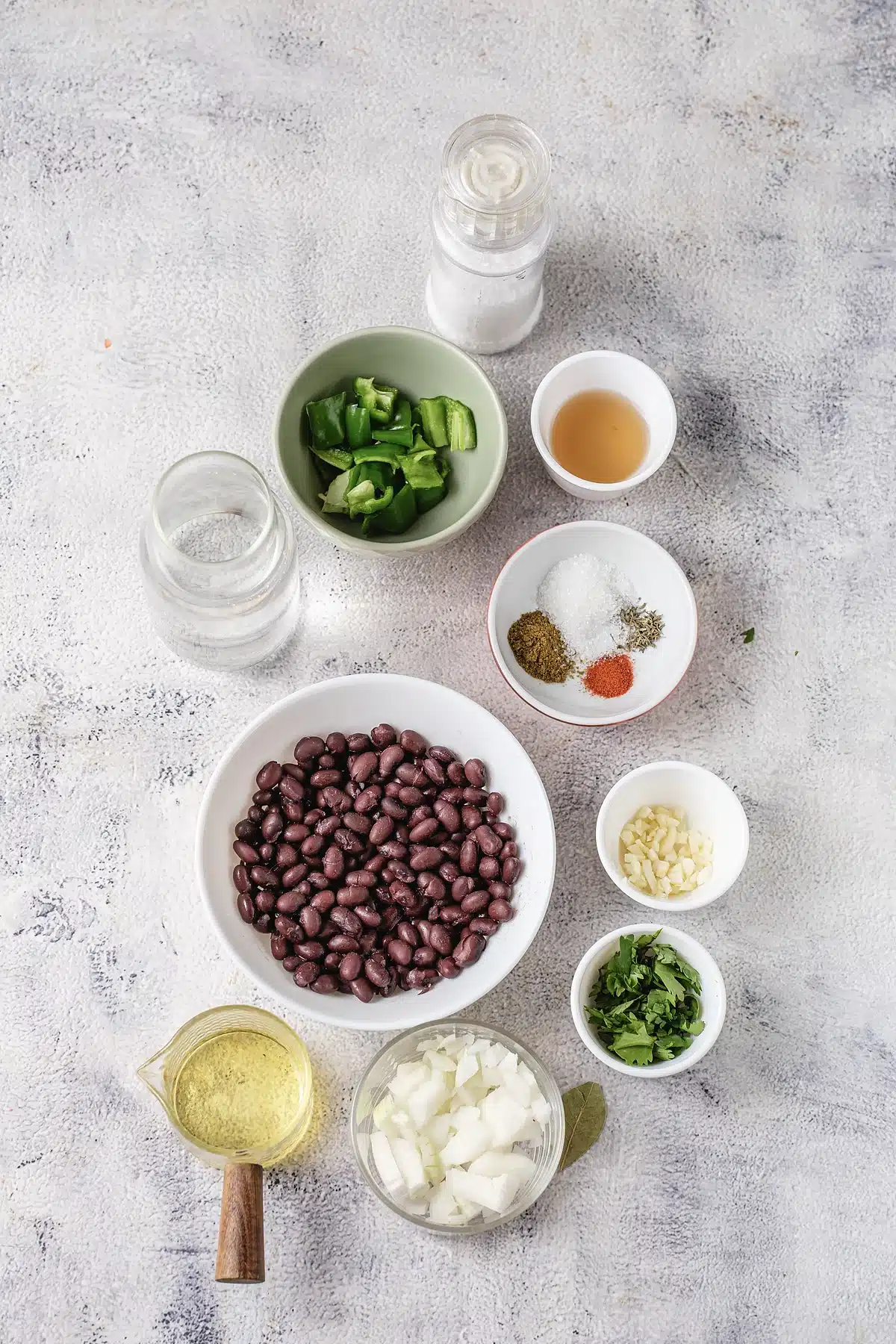
- Canned black beans. Two 15-ounce cans, and do not drain them. They are the shortcut that makes Cuban black beans a thirty-five minute dish. The starchy liquid in the can is what gives the finished pot its body, and rinsing it away leaves you simmering beans in water.
- Green bell pepper. One medium, diced. Green specifically, not red. Its slight bitterness is a structural part of the flavor, and a red pepper makes the whole thing taste sweet and vaguely wrong.
- Yellow or white onion. One medium, finely chopped. Finely matters, because the pieces should melt into the sauce rather than stay as chunks.
- Garlic. Two cloves, minced. Cuban cooking is not shy with garlic, so three or four is perfectly reasonable if you like it forward.
- Ground cumin and dried oregano. A teaspoon each. This pairing is the signature of the dish. Mexican oregano is closer to the Caribbean original than Mediterranean, though either works.
- Bay leaves. Two, and take them out at the end. They add a faint tea-like background that you notice only when it is missing.
- Red wine vinegar. One tablespoon, stirred in near the end. This is the ingredient people leave out and then wonder why their pot tastes flat. Acid at the finish makes everything underneath it taste sharper.
- Olive oil. Two tablespoons for the sofrito. Use a regular olive oil rather than a peppery extra virgin, which turns bitter over sustained heat.
- Fresh cilantro. Chopped, for the top. Optional in the strictest sense and worth it in practice, because the raw brightness lands against a soft, earthy base.
Canned or Dried Beans?
Canned wins on any weeknight, and it loses on flavor by a smaller margin than you would expect. The trick is using the liquid: canned bean liquid, sometimes called aquafaba, carries dissolved starch that thickens the pot the way a long simmer would.
Dried beans give you more control over the finished pot. Soak three-quarters of a pound overnight, simmer them for an hour and a half with a bay leaf and half an onion, and you will end up with a richer broth and beans that hold their shape better. Keep the cooking liquid and use it in place of the water here.
Either route is nutritionally excellent, and the Bean Institute has a clear summary of the fiber and protein numbers behind that claim if you want the specifics.
How To Make Cuban Black Beans
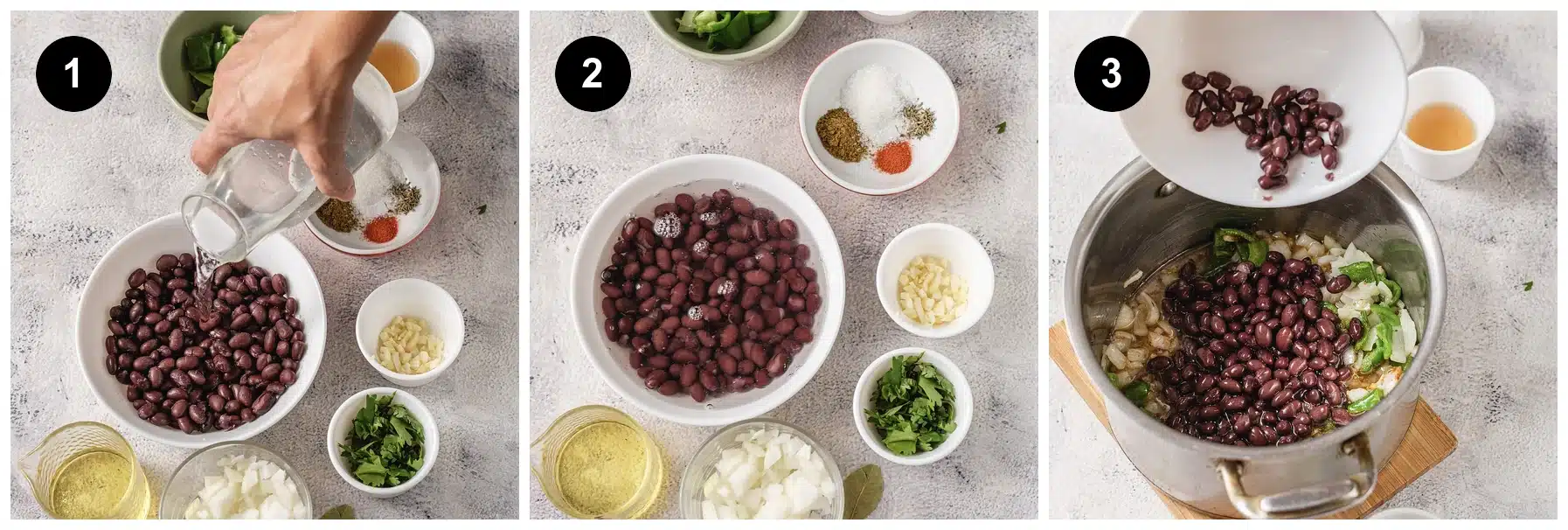
Cuban black beans come together in five moves. First, build the sofrito. Heat two tablespoons of olive oil in a large skillet over medium, add the chopped onion and diced green pepper, and cook them for five to seven minutes until soft and golden in places.
Next, add the garlic. Stir the minced garlic through and give it about a minute, until it smells fragrant and toasty but has not begun to brown.
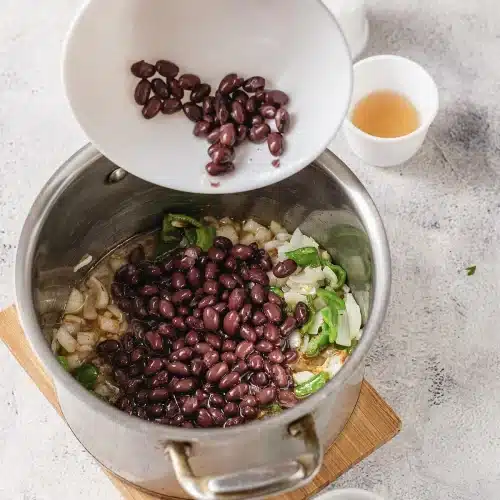
Then add everything else. Tip in both cans of beans with their liquid, half a cup of water, the bay leaves, cumin, oregano and red wine vinegar. Stir it together and bring the pan up to a simmer.
After that, let it go. Lower the heat and simmer gently for fifteen minutes, stirring occasionally so nothing catches on the bottom. If the pan looks dry before the time is up, add a splash more water.
Finally, season and serve. Fish the bay leaves out of the Cuban black beans, then add salt and black pepper to taste. Spoon the beans over warm rice or beside crusty bread, and finish each bowl with plenty of chopped cilantro.
How To Tell When They Are Ready
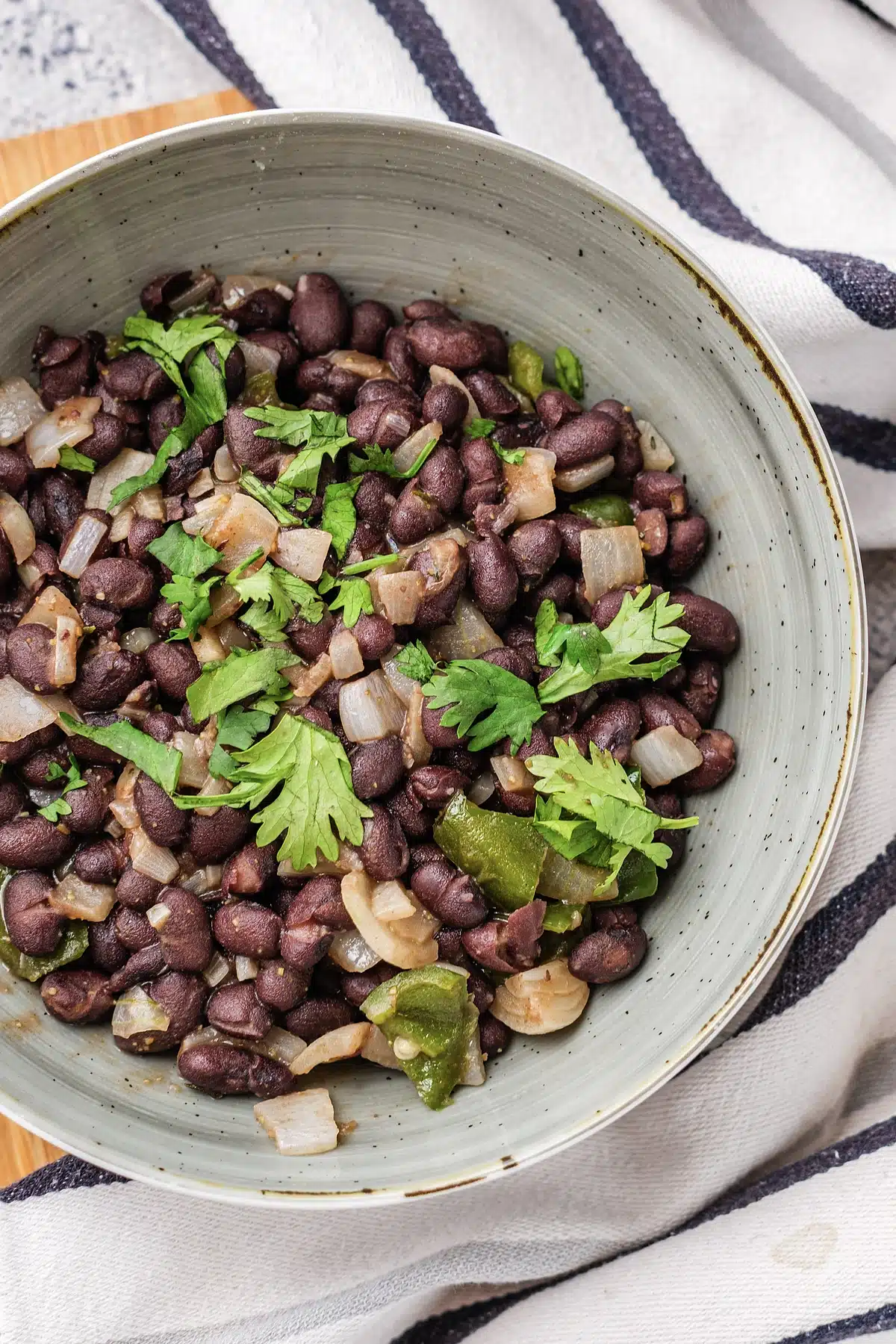
Cuban black beans are done when the pan looks glossy rather than watery. Drag a spoon through the middle of it. The liquid should be glossy and just thick enough to leave a brief trail, and the beans should sit in it rather than float. If a spoonful runs off the spoon like soup it needs a few more minutes uncovered.
Taste for salt last, never first. Canned beans vary enormously in how much they carry, and the vinegar changes how salty the pot reads. One more pinch after the acid goes in is usually all it wants.
The beans themselves should be soft enough to crush against the roof of your mouth but still whole in the pan. Canned beans arrive at that point already, so the fifteen minutes of simmering is about the sauce rather than about the beans, and there is no benefit to pushing it much further.
Make It Ahead
Cuban black beans are one of those dishes that genuinely improve overnight, so cooking ahead is an upgrade rather than a compromise. Make the whole pan, cool it, refrigerate it, and reheat gently with a splash of water to loosen it.
The spices need that resting time. Cumin and oregano are both slow to bloom, and a pot eaten twenty-four hours later tastes noticeably rounder than the same pot eaten straight off the stove.
If you want a head start without cooking, dice the onion and pepper and mince the garlic a day early. Sealed in the fridge they lose nothing, and the active work on the night drops to about five minutes.
Storing Cuban Black Beans
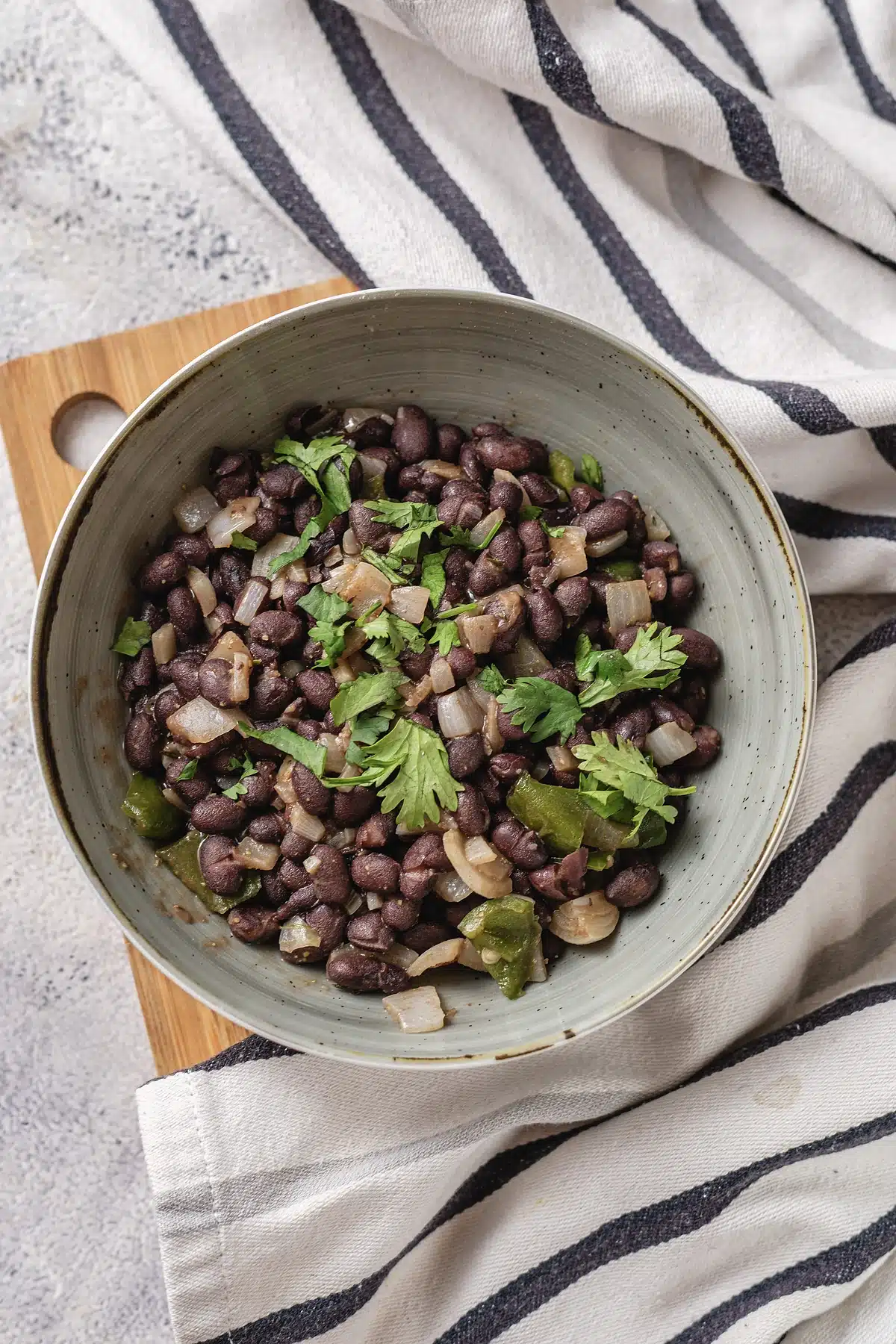
Cool the pan completely before it goes into the fridge, then keep the Cuban black beans in an airtight container for up to five days. They thicken considerably as they chill, so add a tablespoon or two of water when you reheat and stir until the sauce loosens again.
Cuban black beans freeze beautifully, which is not true of most bean dishes with dairy or pasta in them. Portion into flat bags or containers, leave a little headroom for expansion, and freeze for up to two months. Thaw overnight in the fridge or reheat straight from frozen over low heat.
Because there is no meat and no dairy in the pot, reheating is forgiving. A microwave in ninety-second bursts with a stir in between works perfectly well when a saucepan feels like too much effort.
Variations and Substitutions
With heat. A diced jalapeno or serrano cooked with the sofrito adds warmth without changing the character of the beans. Cubans generally keep the pot mild, so this is a personal call rather than a traditional one.
With pork. Four ounces of diced bacon, chorizo or leftover pulled pork browned before the vegetables turns a side dish into a main. It stops being vegan, obviously.
Lime instead of vinegar. A tablespoon of fresh lime juice off the heat is a common substitution and reads brighter and less sharp. Add it at the very end, because acid dulls with cooking.
Smoky. Half a teaspoon of smoked paprika stirred in with the cumin approximates the flavor a ham hock would have contributed to a long simmer.
Thicker. Blend a cup of the finished pan and stir it back in. You get a velvety sauce around whole beans without adding any thickener at all.
Sofrito shortcut. Frozen sofrito cubes from a Latin grocery work in a pinch. Use a quarter cup and cook it in the oil for three minutes before the beans go in.
What to Serve with Cuban Black Beans
Cuban black beans want rice, first and always. Plain long grain white rice is traditional, and a coconut rice is a very good departure if you want something a little sweeter under the beans.
For a full plate, roast pork is the classic partner, and a Cuban mojo pork shares the same garlic-and-citrus backbone. Fried sweet plantains on the side handle the sweetness, and a few slices of avocado handle the richness.
Beyond the traditional plate, Cuban black beans work as a taco filling, spooned over a baked sweet potato, folded into a burrito bowl with a seasoned rice, or piled onto toast with a fried egg. A pot in the fridge solves several lunches.
Cuban Black Beans FAQ
Frequently Asked Questions
Should I drain the canned beans?
No. The liquid in the can carries dissolved starch, and that starch is what thickens the pot into a sauce. Drain them and you will need extra simmering time or a thickener to get the same texture.
Can I use dried beans instead?
Yes. Soak three-quarters of a pound overnight, then simmer for about ninety minutes with a bay leaf until tender. Use three and a half cups of cooked beans plus a cup of their cooking liquid in place of the cans.
Are these spicy?
Not at all. Cuban black beans build flavor on cumin, oregano, garlic and vinegar rather than on chili heat. If you want heat, add a diced jalapeno with the sofrito.
Why do mine taste flat?
Usually one of two things: the sofrito was rushed, or the vinegar was left out. Give the onion and pepper their full seven minutes, and never skip the acid at the end.
More Questions About Frijoles Negros
Good to Know
What is moros y cristianos?
Black beans and white rice cooked together in one pot rather than served side by side. The name refers to the Moors and Christians of medieval Spain, and the dish is the national plate of Cuba in all but title.
Is this recipe vegan?
Yes, as written. Olive oil, vegetables, beans, spices and vinegar, with nothing animal derived and nothing containing gluten.
How many does one batch feed?
Four as a main over rice, or six to eight as a side. The recipe doubles without any adjustment beyond a larger pan.
If a pot of Cuban black beans on a Sunday is your idea of sensible planning, Cuban mojo pork is the obvious thing to cook alongside it, and both freeze well enough to build a fortnight of easy dinners out of one afternoon.
Cuban Black Beans
Save this recipe
Enter your email and I’ll send this recipe straight to your inbox.
Ingredients
Main Ingredients
- 2 tbsp (30 ml) olive oil
- 1 yellow or white onion medium, finely chopped
- 1 green bell pepper medium, diced (or use red bell pepper)
- 2 cloves garlic minced
- 2 cans (820 g) black beans 15 oz each, undrained (or 3 to 3½ cups cooked black beans with extra water as needed)
- 1/2 cup (120 ml) water plus more as needed
- 2 bay leaves
- 1 tsp cumin
- 1 tsp dried oregano
- 1 tbsp (15 ml) red wine vinegar
- salt to taste
- black pepper to taste
Garnish
- fresh cilantro chopped, for topping (optional)
Equipment
- Large skillet
- wooden spoon
- Measuring cups
- Knife
- Cutting board
Instructions
Make the Sofrito
- Soften the onion and pepper: Heat the olive oil in a large skillet over medium heat. Tip in the chopped onion and diced green bell pepper and cook 5 to 7 minutes, stirring occasionally, until soft and golden in places.
- Stir in the garlic: Scatter the minced garlic over the vegetables and cook about 1 minute, until fragrant and lightly toasty but not browned.
Simmer the Beans
- Build the pot: Pour in both cans of black beans with their liquid, the water, bay leaves, cumin, oregano and red wine vinegar. Stir together and bring to a simmer.

- Let it reduce: Lower the heat and simmer gently for 15 minutes, stirring occasionally so nothing catches. If the pan looks dry before the time is up, add a splash more water.
Season and Serve
- Season: Remove the bay leaves, then season with salt and black pepper to taste. Taste after the vinegar has gone in, because acid changes how salty the pot reads.
- Serve: Spoon over warm white rice or serve with crusty bread, and finish each bowl with plenty of chopped fresh cilantro.