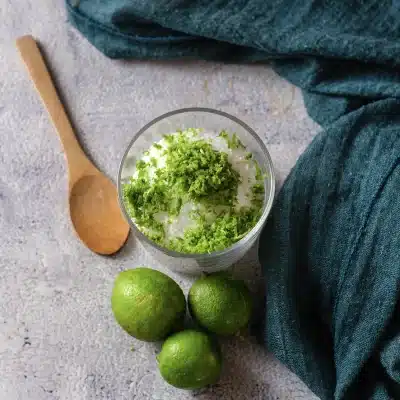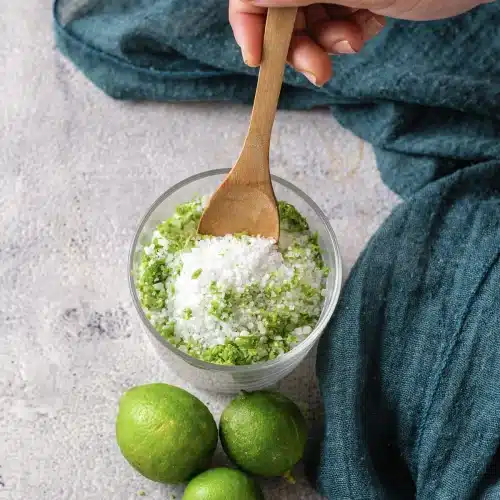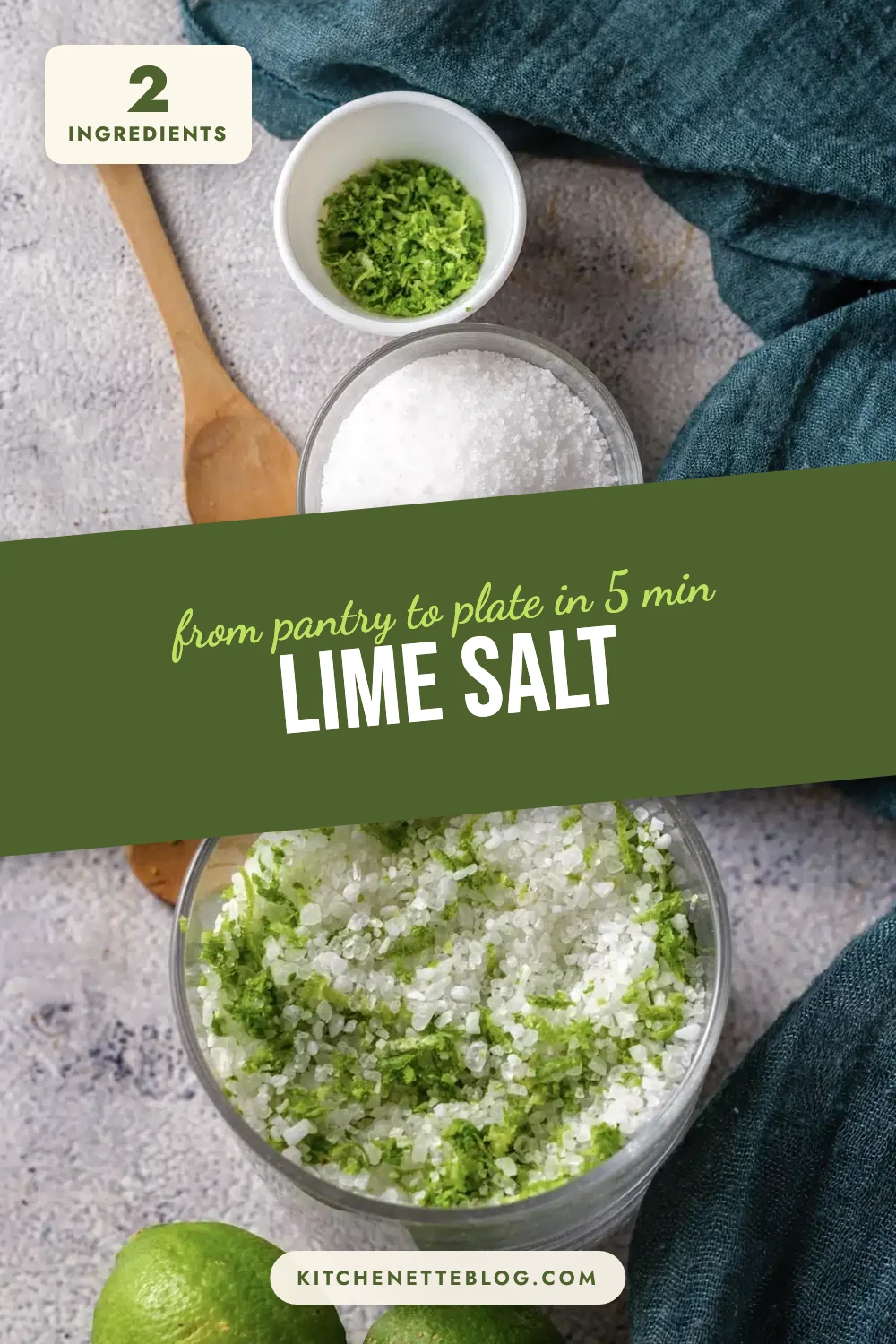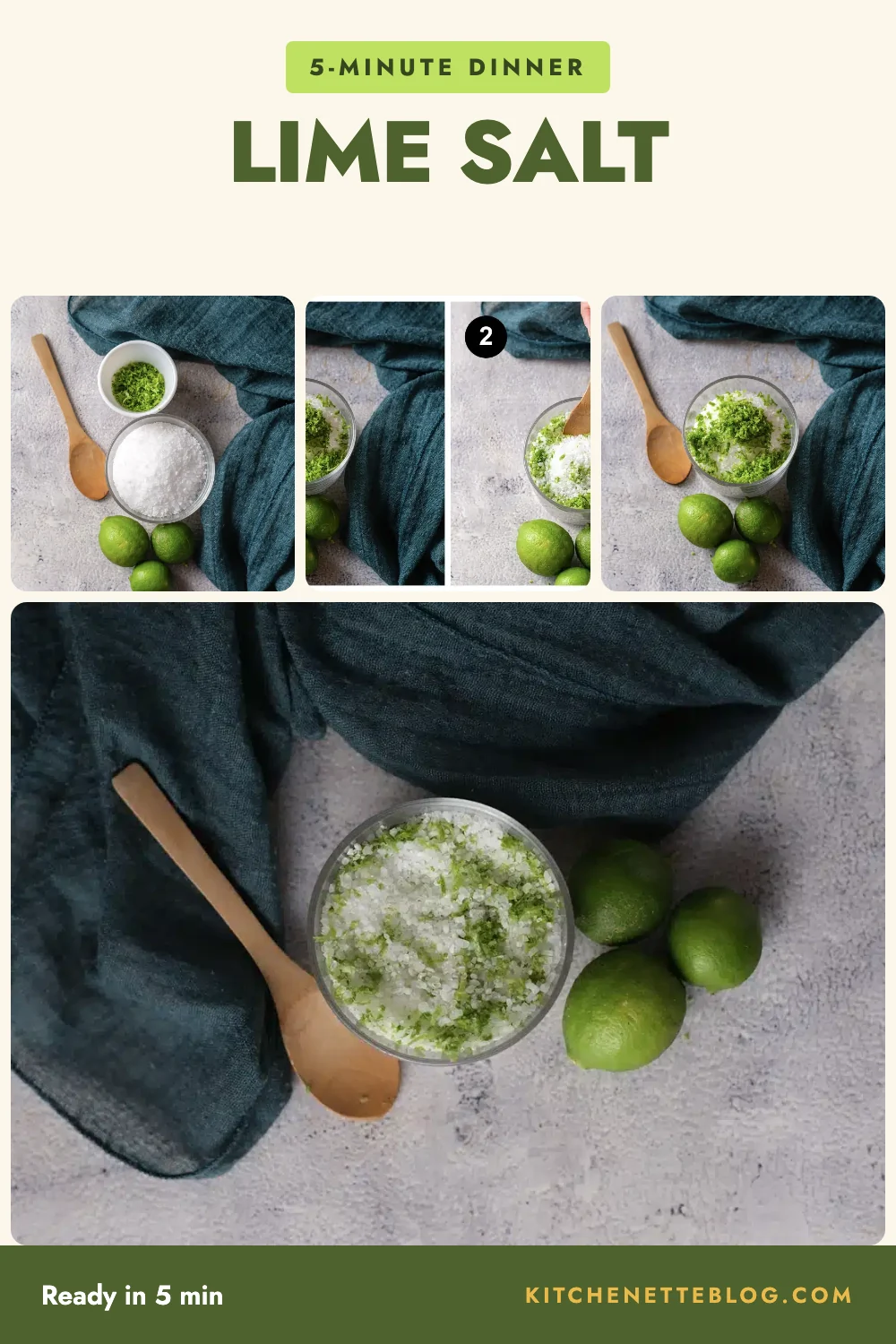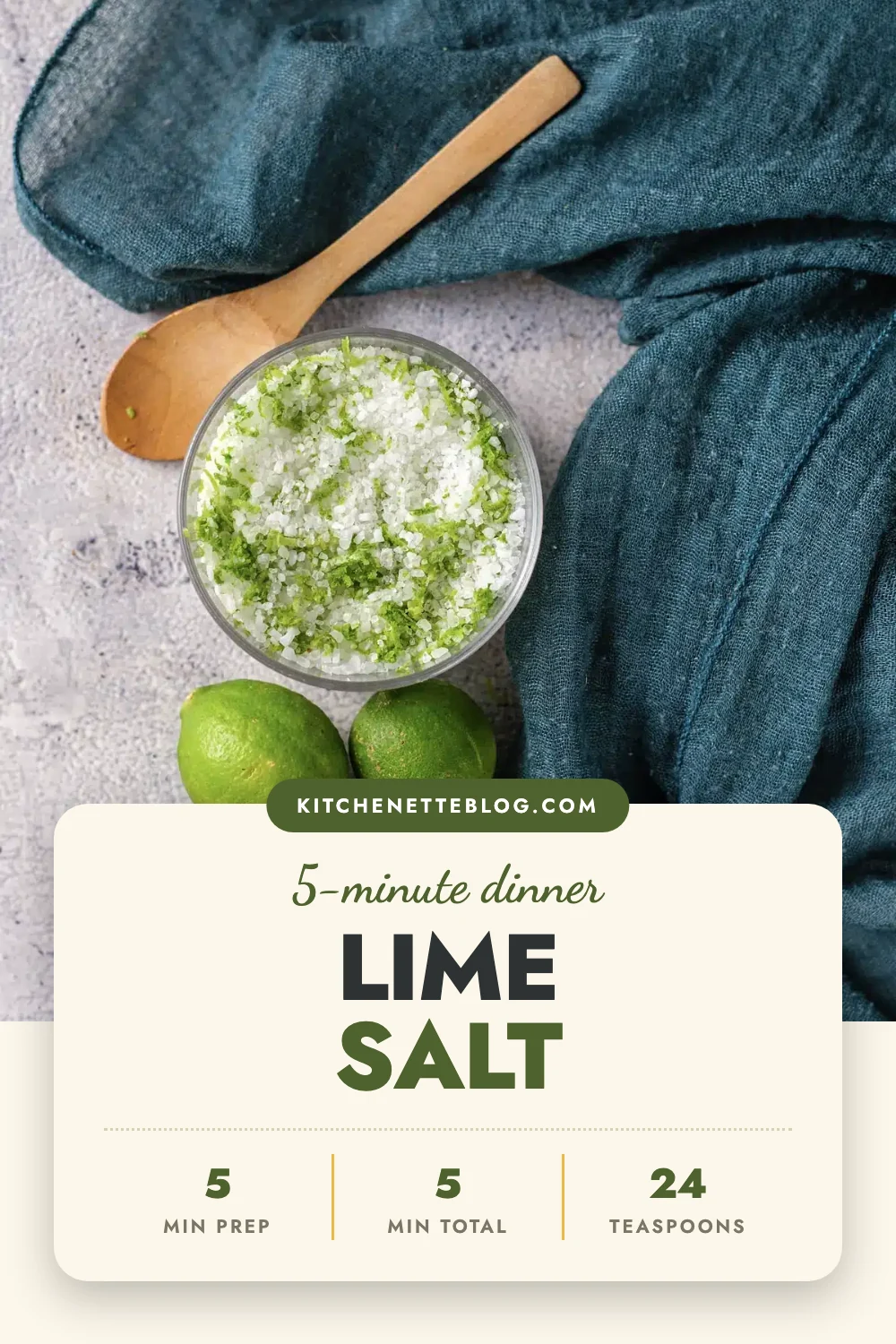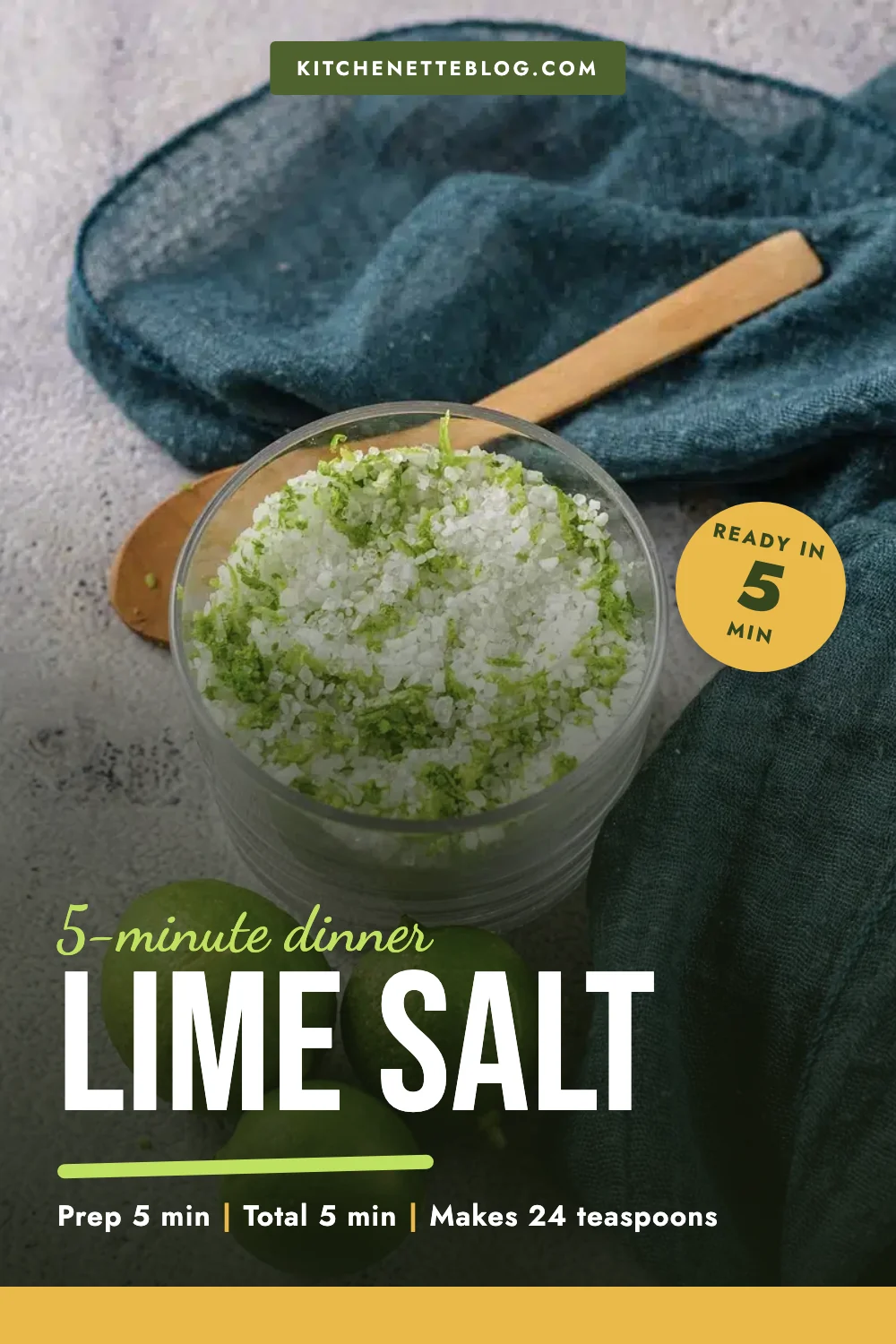
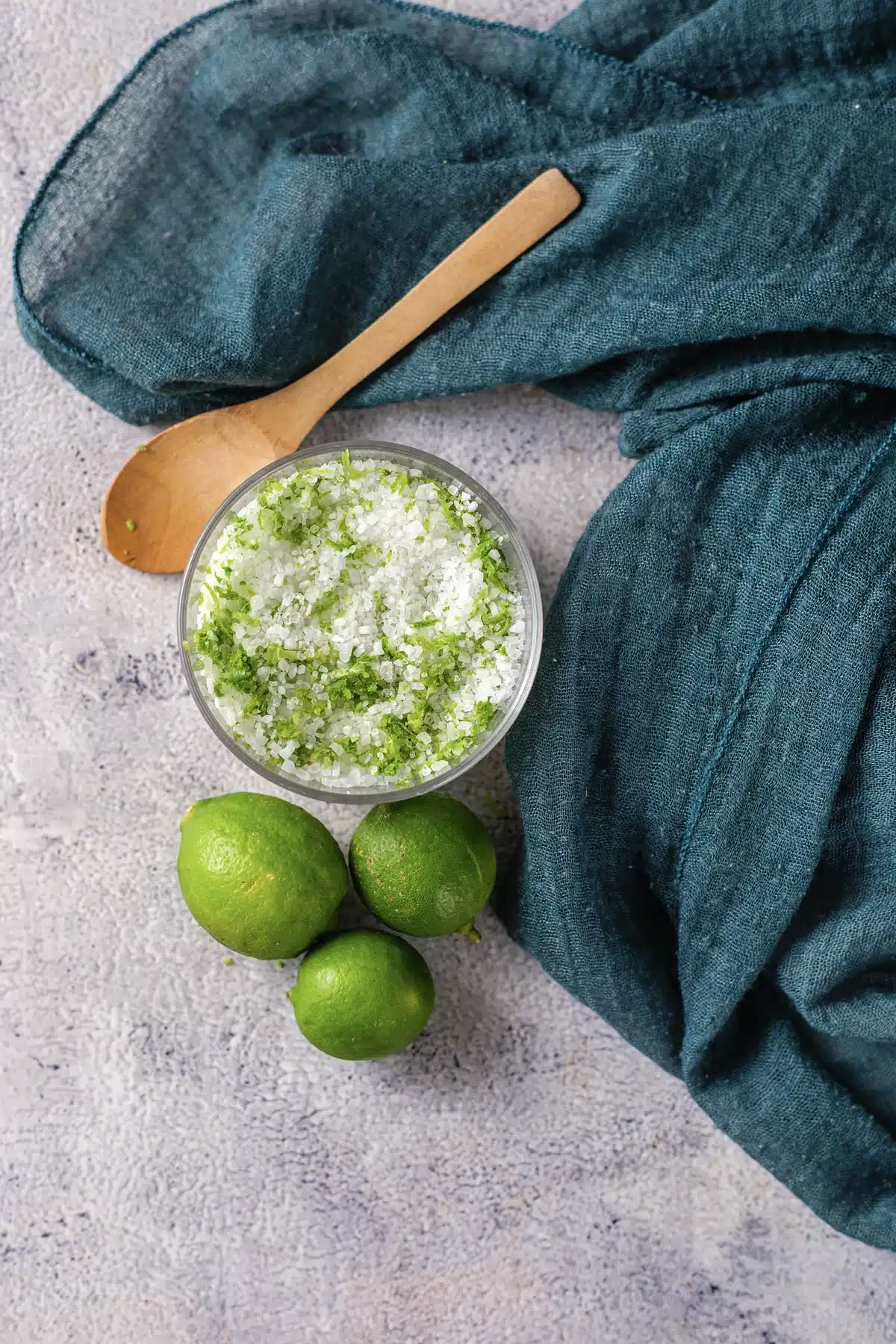
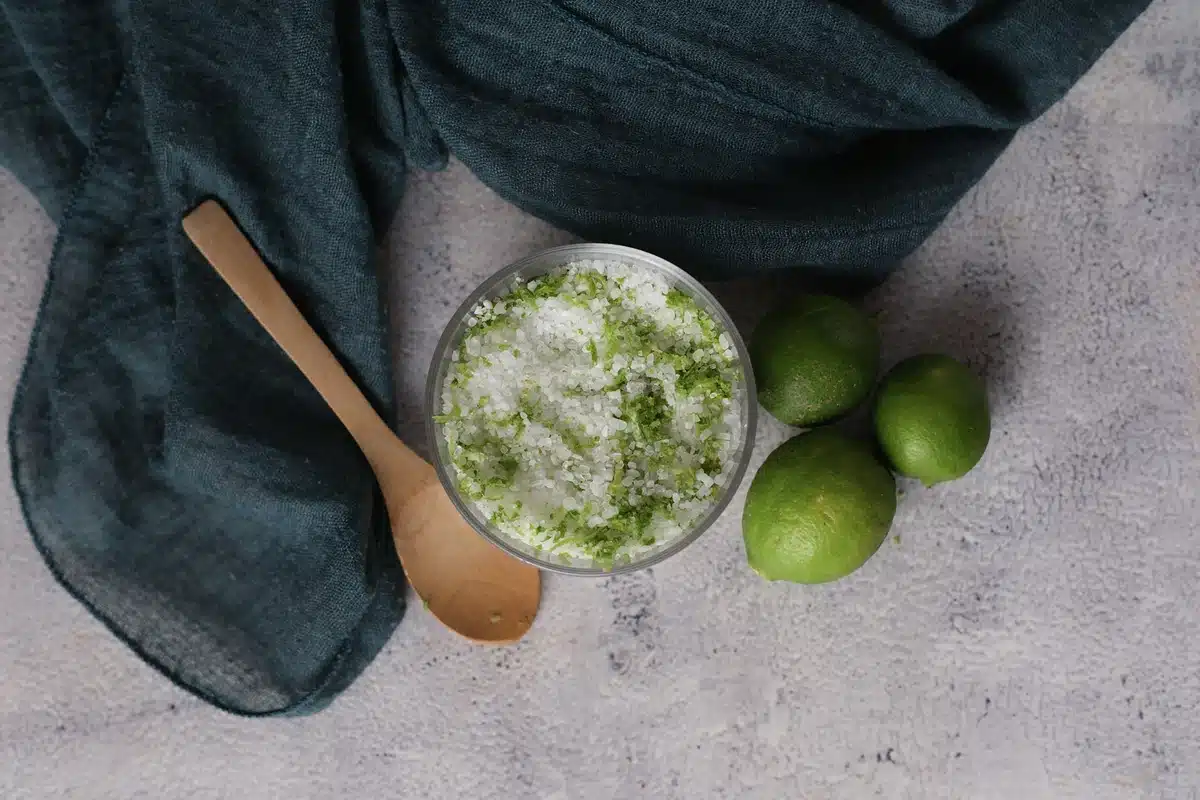
Lime salt is coarse sea salt rubbed with fresh lime zest until every crystal is flecked green and smells like a cut lime. It takes two ingredients and about five minutes to make, it yields half a cup, enough for a small jar, and it is ready to use on a margarita rim or a plate of tacos the moment it is mixed.
The trick is in the rubbing, not the recipe. Lime zest is mostly oil, and pressing it into salt with the back of a spoon or your fingers breaks the zest open and coats the crystals with that oil, so the flavor lives in the salt rather than sitting beside it. Left uncovered for a day, the jar dries out and keeps for a month. Oven-dried, it keeps for longer. Both ways are below.
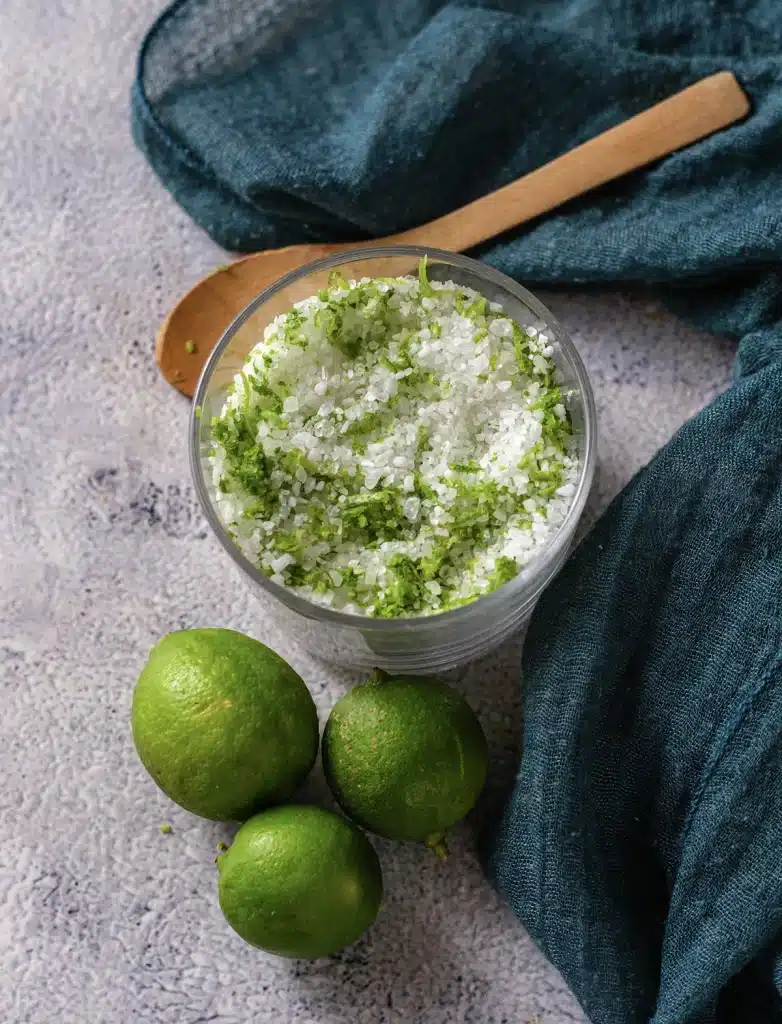
- Two ingredients, a zester and five minutes, with nothing to cook
- Lime salt that tastes like fresh lime rather than a dusty seasoning packet
- Rims a margarita, finishes tacos and grilled fish, and wakes up corn, popcorn and fruit
- Keeps for a month at room temperature once it has dried
- Scales up for gifts: one batch fills a small jar, four batches fill four
- Works with lemons, oranges and grapefruit the same way

What Is Lime Salt?
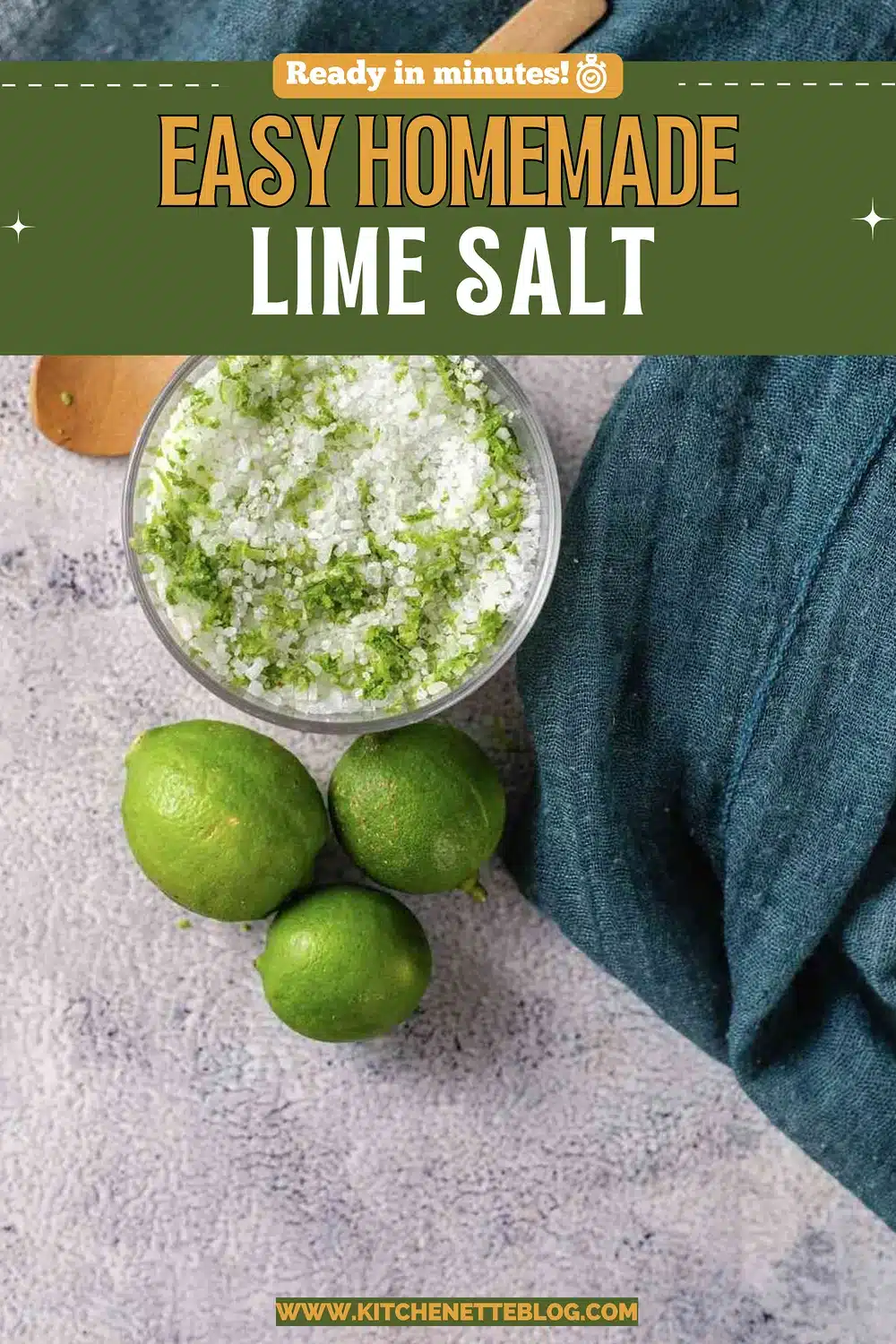
Lime salt is a finishing salt infused with lime zest. The green outer layer of a lime peel holds the fruit’s aromatic oils, and when that zest is rubbed into coarse salt, the oil clings to the crystals and the whole jar takes on the smell and sharp, floral flavor of fresh lime. It is not sour, because the juice never goes in; it is salt that tastes of lime.
Store-bought versions exist, usually sold as margarita salt or Tajín-style seasoning with chili and dehydrated lime. Homemade lime salt is a different thing: brighter, fresher and without the anti-caking agents, and it costs the price of two limes. It belongs in the same drawer as the flaky salt you keep for finishing, and it gets used the same way, sprinkled on at the end rather than cooked in.
It is also the easiest edible gift there is. A batch takes five minutes, and four batches in small jars with a ribbon take fifteen.
Save this recipe
Enter your email and I’ll send this recipe straight to your inbox.
Ingredient Notes
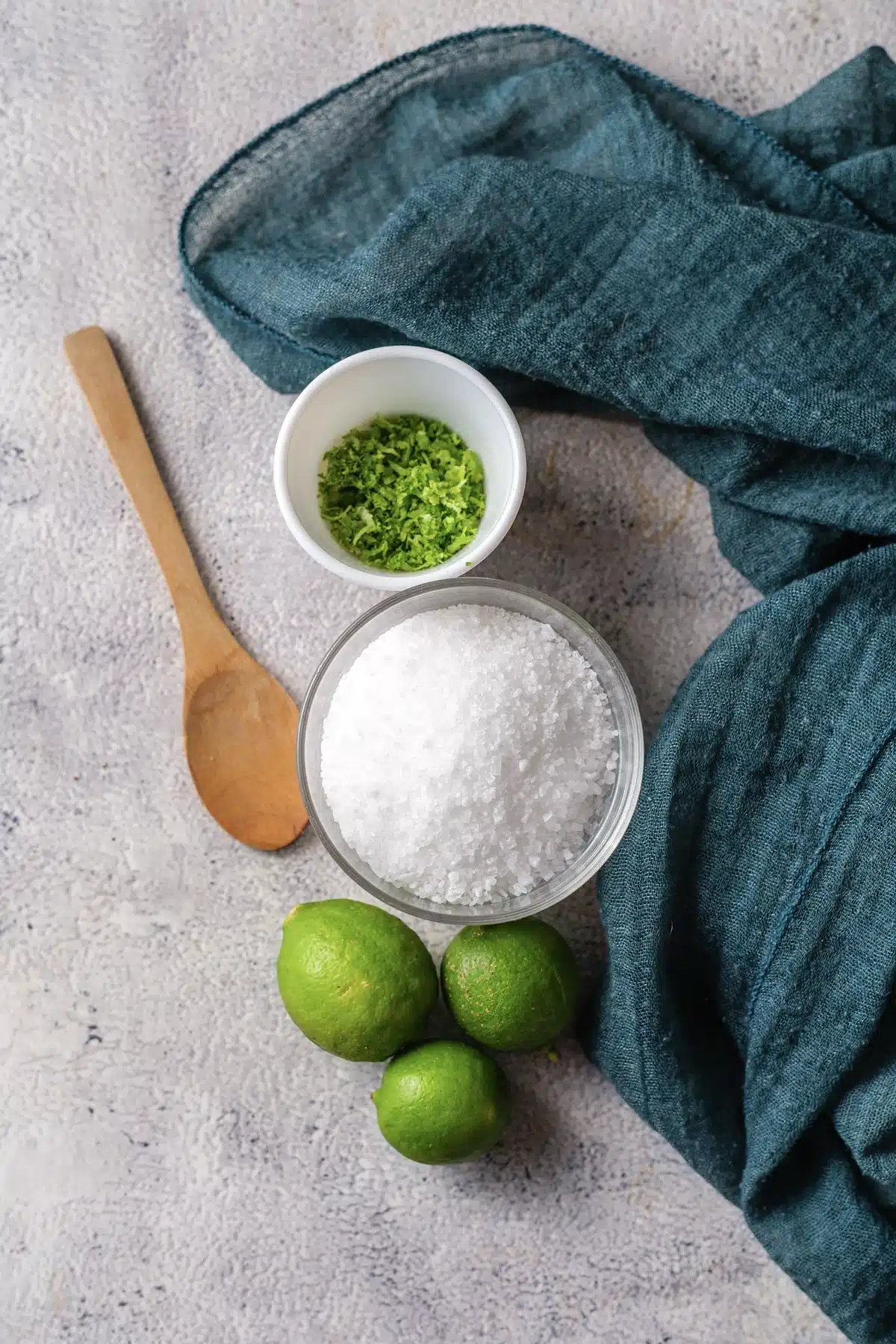
- Limes. Two, for about two tablespoons of zest. Choose firm, bright green limes with smooth, glossy skin; dull or yellowing limes have lost most of their oil. Scrub and dry them first, because the zest is the part you eat, and unwaxed or organic limes make that step easier.
- Coarse sea salt. Half a cup. Flaky salt such as Maldon gives the prettiest, crunchiest result, and coarse sea salt or kosher salt works almost as well. Avoid fine table salt: it clumps with the zest oil and dissolves on contact with anything wet.
- Optional extras. A teaspoon of chili powder or a pinch of cayenne for a chili lime salt, a teaspoon of sugar for a sweet-and-salty rim, or a little black pepper. Add them at the rubbing stage so they distribute evenly.
Which Salt to Use
The salt decides the texture, so it is worth a sentence on each. Flaky sea salt has thin, wide crystals that take on the green oil beautifully and crumble between your fingers, which makes it the best choice for finishing a plate or rimming a glass. Coarse sea salt is denser and crunchier, holds up longer in storage and is the better choice for seasoning meat before grilling. Kosher salt sits between the two and is the cheapest, so it is the one to use for a big batch.
Whatever you choose, the ratio stays the same: about one tablespoon of zest for every quarter cup of salt. More zest makes a greener, more fragrant lime salt that takes longer to dry; less makes a subtler one that keeps for longer. Pink Himalayan salt works too and looks striking with the green flecks, though its mineral flavor is a touch stronger.
Skip iodized table salt entirely. The grains are too fine to hold the zest, and the iodine flavor competes with the lime.
How To Make Lime Salt
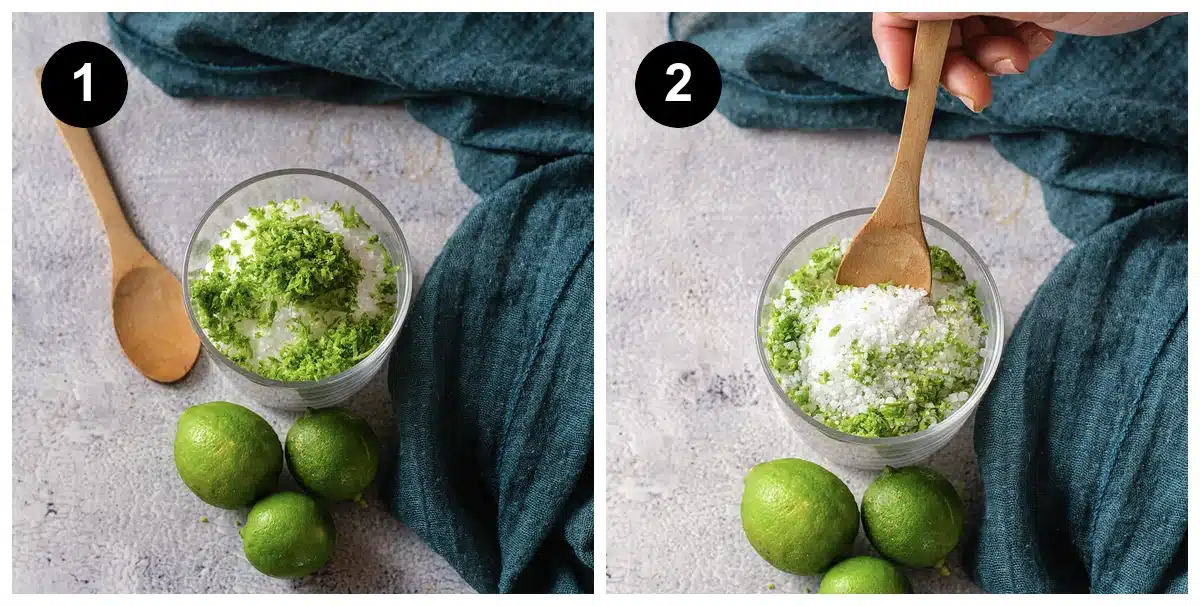
Wash and dry the limes well. First, zest them with a microplane straight into the jar or bowl holding the salt, turning each lime as you go and stopping as soon as white shows through. The Illinois Extension makes the same point about every citrus: take only the colored outer peel, because the white pith beneath is bitter. Two limes give about two tablespoons of zest.
Next, stir the zest and salt together with a spoon, then rub the mixture between your fingers or press it against the side of the jar with the back of the spoon for a minute or so. You will feel the zest break down and smell the lime oil release, and the salt will turn pale green and slightly damp. That rubbing is what turns zest and salt into lime salt; stirring alone leaves the two sitting next to each other.
Drying It
The lime salt is ready to use right away, but it is damp, and damp salt clumps and fades in a sealed jar. To dry it, spread it on a plate or leave the jar uncovered on the counter for 24 hours, stirring once or twice, until the zest feels dry and papery and the salt runs freely. In a humid kitchen, or if you want it shelf-stable for months, spread it in a thin layer on a parchment-lined sheet pan and bake at 200°F for 30 minutes, stirring halfway, then cool it completely before it goes in the jar.
How To Tell When Lime Salt Is Dry
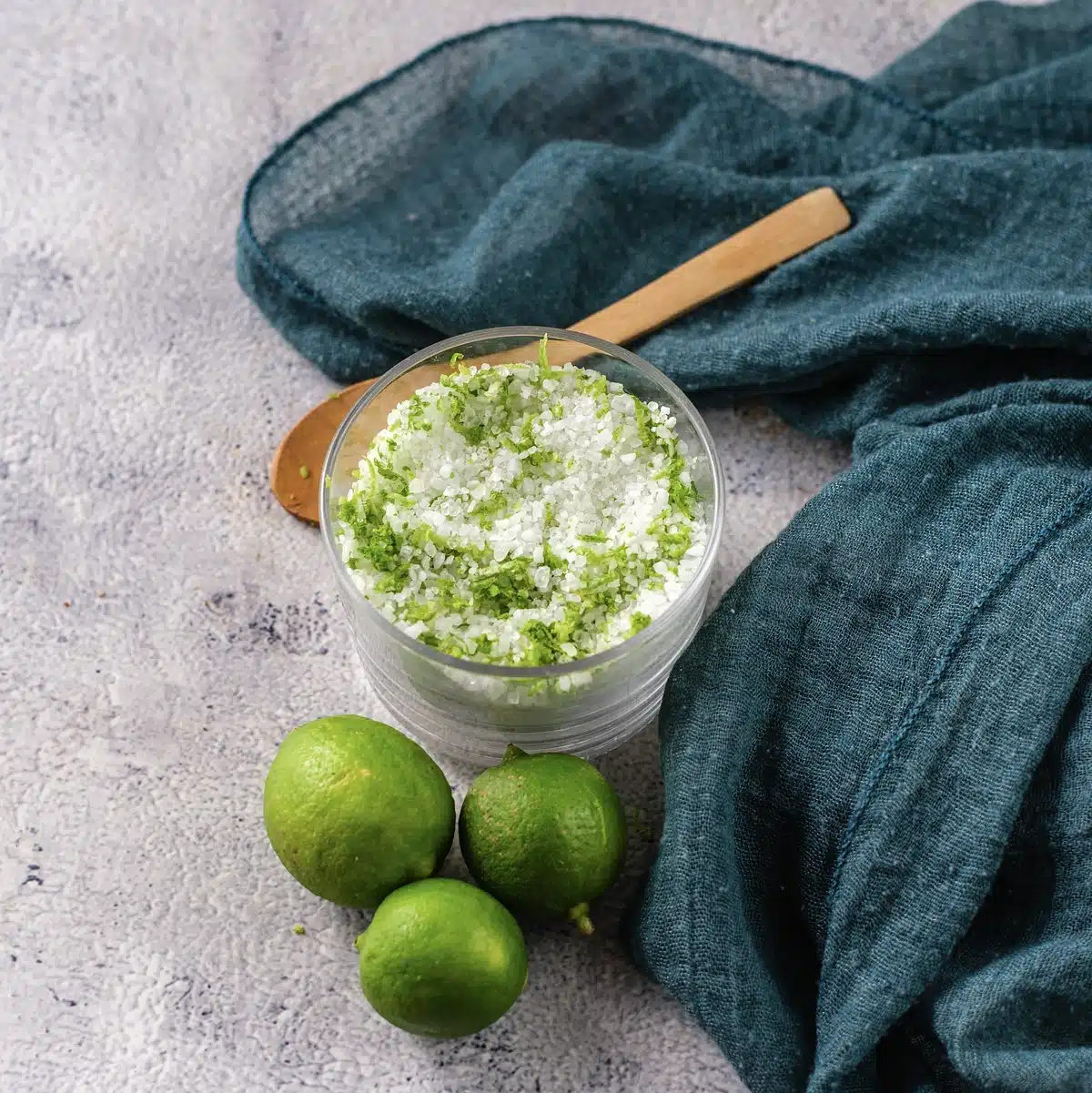
Lime salt is dry when the flecks of zest have shrunk, darkened a shade and feel papery rather than soft, and when the salt pours from the jar without sticking in clumps. Pinch a little between your fingers: dry lime salt feels like plain coarse salt with a faint tackiness from the oil, while damp lime salt packs together like wet sand. On the counter that takes about a day; in a 200°F oven it takes 30 minutes plus cooling.
Do not judge by smell. Freshly mixed lime salt smells strongest of all, and the aroma settles a little as it dries without losing flavor. If the color fades to gray-green after a week, the zest went in with too much pith or the jar sat in sunlight.
Ways to Use Lime Salt
Think of it as a finishing salt with a built-in squeeze of lime. On the rim of a glass it is the obvious use: run a lime wedge around the edge, dip it in a saucer of lime salt and pour a margarita, a paloma or a Kentucky mule. A basil gimlet with a half rim of lime salt is a nice trick for people who find a full salt rim too much.
At the table, sprinkle it over tacos and grilled fish, roasted or grilled corn, sliced avocado, watermelon, mango and cucumber, and anything fried. It is excellent on a bowl of popcorn, where it does what lemon and Parmesan do in that recipe with less effort, and on a charred corn salad it stands in for the squeeze of lime you would otherwise add. For jicama and mango it is the whole dressing.
Before cooking, use coarse lime salt as a dry seasoning on shrimp, chicken thighs, pork chops or steak, applied an hour ahead so the salt has time to work. The lime oil blooms in the heat of the grill. On spare ribs, a sprinkle at the table rather than in the rub keeps the lime fresh.
Make It Ahead
Lime salt is a make-ahead ingredient by nature. Mix it the day before a party so it has time to dry, and it will be at its best for rimming glasses when the guests arrive. For gifts, make it a week ahead, dry it in the oven so it is fully shelf-stable, and pack it into small jars once it is completely cool. Label the jars with the date; it is at its brightest in the first month.
Zest can also be frozen on its own. Zest a bag of limes when they are cheap, freeze the zest flat in a zip-top bag, and rub it into salt straight from the freezer when you need a new jar. The frozen zest is damper than fresh, so give the salt an extra day on the counter.
Storing Lime Salt
Once it is dry, store lime salt in an airtight jar at room temperature, away from the stove and out of direct sun, for up to a month at full strength. It is still safe and pleasant well beyond that, but the lime aroma fades after four to six weeks as the oils evaporate, and the green flecks turn khaki. Salt itself never spoils, so there is no food-safety deadline, only a flavor one.
If the salt clumps, it absorbed moisture: break it up with a fork and leave the jar open overnight, or give it 15 minutes in a 200°F oven. Oven-dried lime salt lasts the longest, up to three months before it tastes tired. For longer storage, freeze it in a zip-top bag for up to six months; it thaws in minutes and loses very little.
Variations and Substitutions
Other Citrus Salts
Lemon salt. Same method, same ratio. Lemon zest is a little less oily than lime, so rub it a touch longer. Beautiful on fish, asparagus and roast chicken.
Orange or blood orange salt. Two tablespoons of zest per half cup, sweeter and warmer than lime. Good on pork, carrots and chocolate desserts.
Grapefruit salt. Slightly bitter and very aromatic. Use it on a paloma rim or over avocado toast.
Mixed citrus. A tablespoon each of lime and lemon zest, or lime and orange, in the same half cup of salt.
Flavored Versions
Chili lime salt. Add a teaspoon of chili powder or half a teaspoon of cayenne, plus a pinch of smoked paprika, to the zest before rubbing. The closest homemade version of the chili-lime seasoning sold in shakers, and the one to use on corn, mango and cucumber.
Sweet lime salt. A tablespoon of sugar in the mix for cocktail rims and fruit. It dissolves a little faster on a wet rim, which is no bad thing.
Herb lime salt. A teaspoon of finely chopped cilantro or mint, oven-dried with the salt so it does not spoil. Use within two weeks.
Smoked lime salt. Start with smoked sea salt. Excellent on grilled shrimp and in a Bloody Mary rim.
Lime Salt FAQ
Frequently Asked Questions
Do you have to bake or dry lime salt?
No. Lime salt is ready to use as soon as the zest is rubbed in. Drying it, either 24 hours uncovered on the counter or 30 minutes at 200°F, is only for storage: it keeps dry lime salt from clumping in the jar and stretches its life to a month or more.
What is lime salt used for?
Rimming margaritas and palomas, finishing tacos, grilled fish, corn, avocado and fried food, and seasoning fruit such as mango, watermelon and cucumber. It also works as a dry seasoning on shrimp, chicken and pork before grilling, and on popcorn.
How much lime salt does this recipe make?
About half a cup, or 24 teaspoons, from 2 limes and 1/2 cup of coarse salt. That fills one small spice jar. Double or quadruple it for gifts; the rubbing takes a little longer with a bigger batch, so work in handfuls.
Can I use bottled lime juice instead of zest for lime salt?
No. Juice is water and acid, and it dissolves the salt into a brine rather than flavoring it. The aroma of lime lives in the oil in the peel, which is why zest is the only part that goes in. Dried lime peel from the spice aisle works in a pinch, with about half the flavor.
More Questions About Citrus Salt
Good to Know
Why did my lime salt turn brown?
Usually because the zest included white pith, the jar sat in sunlight, or the salt was dried at too high a temperature. Zest only the green layer, keep the oven at 200°F or lower, and store the jar in a cupboard. A gray-green color after a month is normal fading, not spoilage.
Can I make lime salt with a vegetable peeler instead of a microplane?
Yes. Peel wide strips of green zest, avoiding the pith, then chop them very finely with a knife before rubbing them into the salt. The pieces will be larger than microplaned zest, so the salt takes an extra day to dry and looks more speckled than green.
Is lime salt gluten-free?
Yes, as written: limes and salt contain no gluten. If you add chili powder or another blend, check its label, because some seasoning mixes use wheat-based anti-caking agents.
How long does lime salt last?
About 1 month at full flavor in an airtight jar kept at room temperature, once it has dried, and up to 3 months if it was oven-dried. It also freezes for up to 6 months. Salt never spoils, so the limit is flavor, not safety.
Zest, salt, rub, and leave the jar open overnight. A jar of lime salt on the counter makes a weeknight taco, a Tuesday margarita or a bowl of popcorn taste like you made an effort, and it costs the price of two limes.
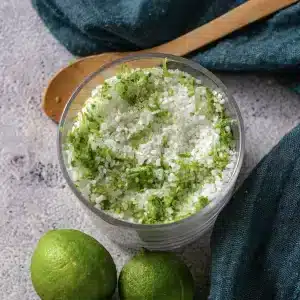
Lime Salt
Save this recipe
Enter your email and I’ll send this recipe straight to your inbox.
Ingredients
Lime Salt
- 2 limes zest only, about 2 tablespoons; scrubbed and dried
- 1/2 cup coarse sea salt or flaky salt such as Maldon
Equipment
- Microplane or fine grater
- Oven
- Baking tray
- Parchment paper (optional)
- Airtight jar
Instructions
Make the Lime Salt
- Zest the limes into the salt. Put the salt in a small jar or bowl. Zest the limes over it with a microplane, taking only the green outer layer and stopping as soon as white pith shows.

- Rub and dry. Stir the zest through the salt, then rub the mixture between your fingers or press it against the jar with the back of a spoon for about a minute, until the salt turns pale green and smells of lime. Use at once, or leave the jar uncovered for 24 hours to dry before sealing.